
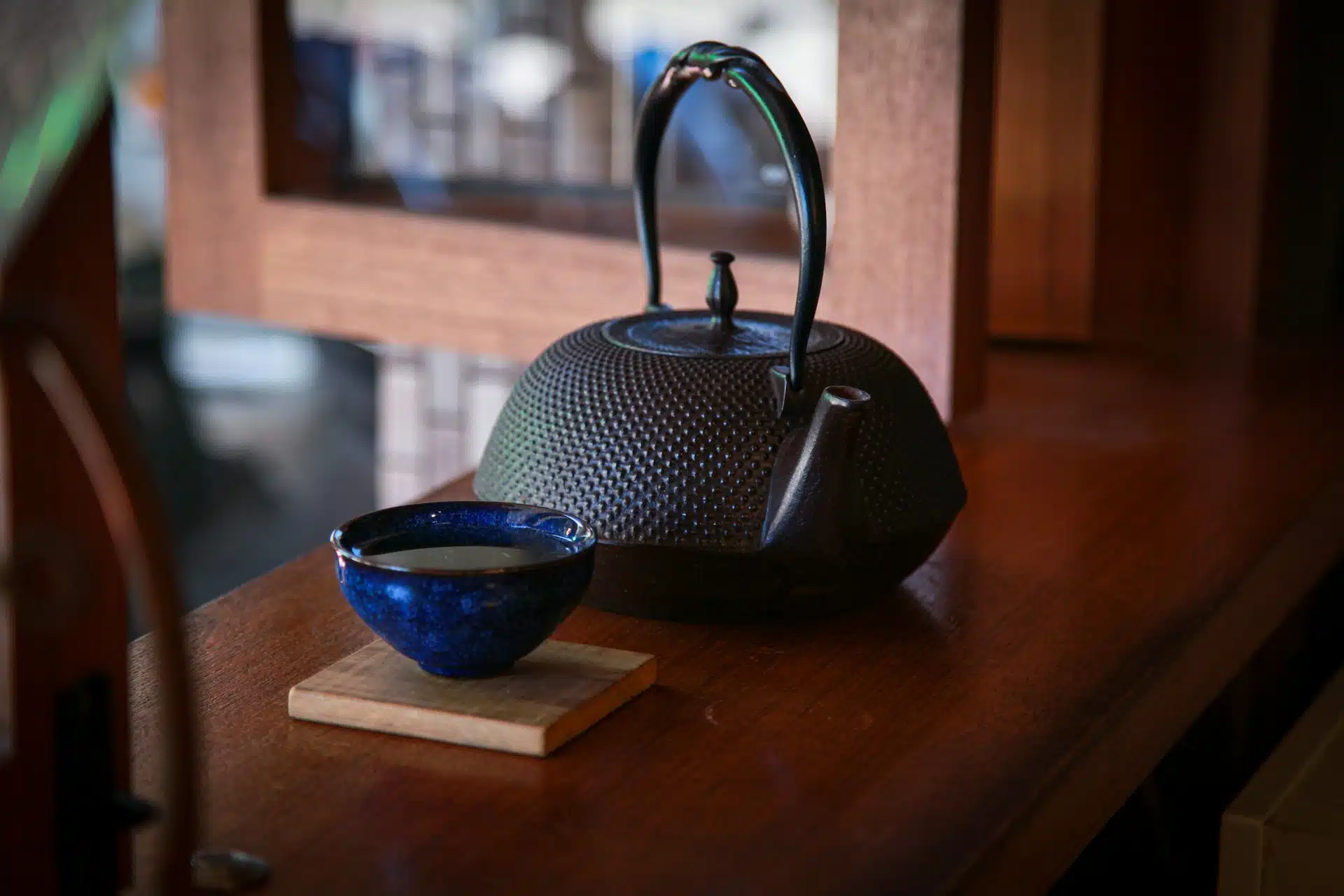

In the midst of busy and fast-paced modern life, we all need a place to pause, rest, and reconnect with ourselves. A Zen tea nook is more than just a space for making and drinking tea, it is a peaceful sanctuary, a quiet refuge where we can step away from the noise of everyday life.
Using authentic Japanese tea ware on a Zen tea nook table will enable even the humble of spaces to become a peaceful retreat.
What Is a Zen Tea Nook?
A Zen tea nook is a place in your home where you can sit and prepare and serve tea. This is a minimalist space designed to create a meditative atmosphere through the use of natural materials and harmonious design.
It eschews elaborate decorations and ornate furnishings, instead using natural wood objects and soft lighting to create a tranquil ambiance.
A set of Japanese tea sets with subtle colors, natural textures, and handcrafted imperfections can play a significant role in this. It’s not just a place to drink tea, but a space where one can let go of distractions, focus on the present moment, and return to inner peace.
You don’t need to have a large space or a lot of money to prepare an altar for tea. Any windowsill in your home, corner of your living room, a Japanese tea table or low wooden shelf is adequate.
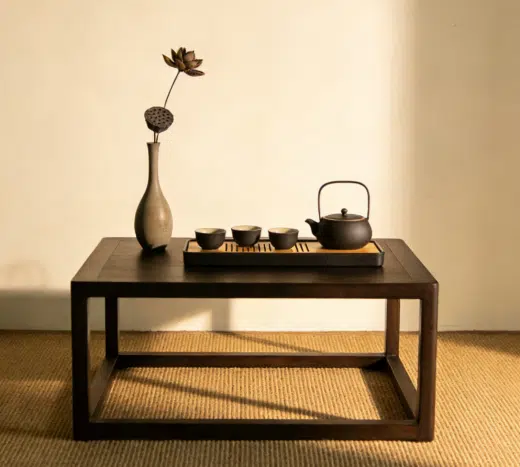
Why Japanese Tea Sets Are Perfect for a Zen Space
Japanese tea sets reflect fully the principles of Japanese design such as minimalism, natural materials, great attention to detail and the “wabi-sabi” beauty which is the aesthetic of the Japanese interior design style and describes the cultivation and appreciation of simplicity and beauty by embracing imperfection, impermanence, and simplicity.
All the elements of the Japanese Tea Ceremony like harmony, respect, purity, tranquility reflect the Zen aspirations present in all Zen spaces.
A traditional Japanese tea set may include:
• A teapot, such as a “kyusu”
· Matching teacups
· A small tea tray
· A tea canister for storage
· Optional accessories like a tea scoop or tea cloth
You can brew and drink tea from them and they will make your tea time atmosphere even more natural and more beautiful. The characteristics of the ceramic, the softness of the glaze and the beautiful handmade elements all blend together in harmony and express the spirit of wabi-sabi.
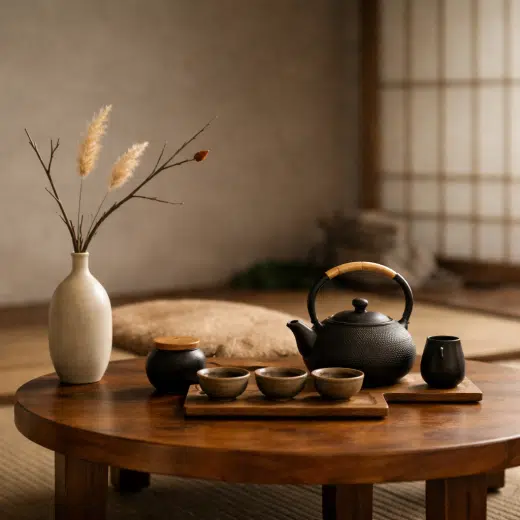
How Can We Create a Wabi-sabi Tea Corner?
Step 1: Choose the Right Location
The first step is selecting a space that feels peaceful. Natural light is always a good choice, preferably by a window. As light from the window has a calming affect which will also be reflected in the Calming Space where you will practice your mindfulness exercises. Ideally the area should also be away from the negative effects of noisy appliances, crowds, traffic, as well as noise and distractions.
Good locations include:
• A quiet corner in the living room
• A bedroom window area
• A sunroom or balcony corner
• A reading nook with a small table
• A dedicated shelf in a calm part of the home
Step 2: Start with a Simple Base
Zen design is fundamentally about simplicity. To create a zen space you start by preparing an empty surface. This can be anything from a wooden tray, a low table or a bamboo mat, right up to a minimalist shelf or a few well-placed objects. It’s generally considered more zen to use natural materials. Examples include wood, linen, ceramic and stone. These materials look warm and unobtrusive.
Avoid adding too many items at once. Follow the principle of “less is more” in your arrangements (such as a single flower in a niche or minimalist ceramic pieces). A Zen tea nook should feel open, quiet, and balanced.
Step 3: Select a Japanese Tea Set That Matches the Mood
Your tea set will be the centerpiece of the nook, so choose one that reflects the mood you want to create. Soft neutral colors, earthy textures, low colour saturation and traditional craftsmanship are all good choices.
For a serene and authentic look, consider:
• A ceramic kyusu teapot in matte or rustic glaze
• Small matching yunomi cups
• A simple tea tray in bamboo, stone or wood
• A minimalist tea canister
• Handcrafted pieces with natural imperfections
Most of the utensils are only for design, and serve the purpose of demonstrating the art of serving tea. An authentic Japanese tea set can easily turn the daily, ordinary tea ceremony into a meditative occasion for tranquility and peace.
Step 4: Keep the Color Palette Calm
Zen-inspired spaces work best with soft, natural colors. Think of tones like off-white, sand, grey, sage green, muted brown, or charcoal. These colors help create a restful visual atmosphere and allow the tea set itself to stand out. Bright or overly bold colors can make the space feel more energetic than calming, so it is best to keep the palette restrained and harmonious.
Look for tea sets with:
• Soft, earthy colors such as beige, grey, green, or matte black
• Natural ceramic or porcelain textures
• Simple design and comfortable handles
• A design that feels calm rather than flashy
• A size that fits your daily tea habits
Step 5: Add Natural Elements
While we believe that your tea nook should be free from clutter and unnecessary items, adding a few natural elements can make a dramatic difference in both the ambiance and energy of your space. Just use restraint when doing so, too many natural elements and you may have overdone it.
You might add:
• A small bonsai or potted plant
• A vase with a single branch or seasonal flower
• A stone ornament
• A linen tea cloth
• A bamboo mat or coaster
These small additions help connect the space to nature, which is an important part of Zen-inspired design.
Step 6: Create a Mindful Tea Ritual
Form is immaterial in a Zen tea nook, and what is important is how the space is used. Turning one’ back on the bustling world outside, a true tea ceremony takes place when, in a calm, meditative state, one slowly prepares the simple yet delicious tea.
Incorporating this simple ceremony into everyday life can also be very calming to the mind.
You do not need a formal tea ceremony. Simply heating the water, placing loose tea into the pot, pouring carefully, and sitting quietly for a few minutes can be enough. The purpose is to be present.
We would like to encourage you to try Japanese green teas like sencha, hojicha or genmaicha. These teas have a delicate aroma and a perfectly balanced taste. They are certainly suitable for a wonderful tea ritual at home.
Step 7: Remove Distractions
Ideally a tea nook should be a peaceful place so anything that’s distracting should be left out. So no work, cables, TVs etc and nothing too busy or attention grabbing. A tea nook should be a defined space in a room.
When you sit down with your tea, let it be a break from screens, noise, and constant activity. Even ten quiet minutes can help restore your focus.
Step 8: Refresh the Space with the Seasons
One beautiful idea is to let your tea nook change slightly with the seasons. In spring, you might add fresh flowers. In autumn, a warm-toned cloth or darker ceramic tea cups may feel more fitting. In winter, deeper glazes and roasted teas can make the space feel cozy and grounding.
It is the tiny movements that are seasonal, the air is warmer in spring, drier in autumn and cold in winter. But the overall state of the space remains one of tranquillity and purity.
The Beauty of a Small Tea Space
You do not need a large home to enjoy the benefits of a Zen tea nook. In fact, small spaces often feel the most intimate and comforting. The key to any tea space is intention.
By using a Japanese tea set and a clever arrangement of objects and materials, even the small corner can become a haven for rejuvenation and relaxation. A place to not only cultivate the body but soothe the mind and spirit, a place to escape to every day and rejuvenate the spirit.
Final Thoughts
Creating the perfect Zen space or possessing beautiful and elaborate Japanese tea sets is not really what it is about. Nor is it about luxury or even perfection.
It is really about choosing to live more simply, to take time to slow down in our rushed lives and to take time to be present with each other and with ourselves in stillness.
A thoughtfully selected Japanese tea set can do more than serve tea. It can help shape an experience, turning a small corner of your home into a place of calm, reflection, and beauty.

With a Master in Architectural Studies from University of Pennysylvania, Marwa Haydar has pioneered living spaces since 2005. Her expertise, initially honed in a prestigious architectural firm, is evident in her approach to creating environments. Marwa became part of our team in 2019 and has since been a driving force in our home improvement section, known for her practical yet stylish solutions. She’s been spearheading our design workshops since then, infusing her passion for teaching into her work. In her leisure time, Marwa enjoys exploring historic architecture and is an enthusiastic pottery hobbyist, further enriching her understanding of form and texture.