
A messy room does not just look bad; it is annoying. It affects mood, focus, and even sleep quality. Most people know they need to clean up, but they do not know where to start.
That is the real problem. Not the clutter itself, but the lack of a clear plan. Learning how to organize your room does not require a full weekend or expensive storage bins.
It just takes the right order of steps and a few simple daily habits. This blog breaks it all down in a simple, practical way, so let’s begin.
Key Elements that Keep a Room Organized
Knowing how to organize your room is one thing, but keeping it that way requires building the right habits and making smart placement choices from the start.
The simplest habit to build is returning items immediately after use. It stops small messes from turning into bigger ones over time.
Pairing that with a quick five-minute evening reset each day prevents clutter from piling up overnight, and it takes less effort than most people expect.
Flat surfaces like desks and dressers tend to attract random items, so keeping them clear should be a daily priority. It also helps to check storage areas every few weeks and remove anything that has outgrown its usefulness.
Smart Ways to Organize Different Room Types
Applying the right approach for each space makes a real difference. Here is how to organize your room based on its specific purpose and layout.
1. Bedroom Organization
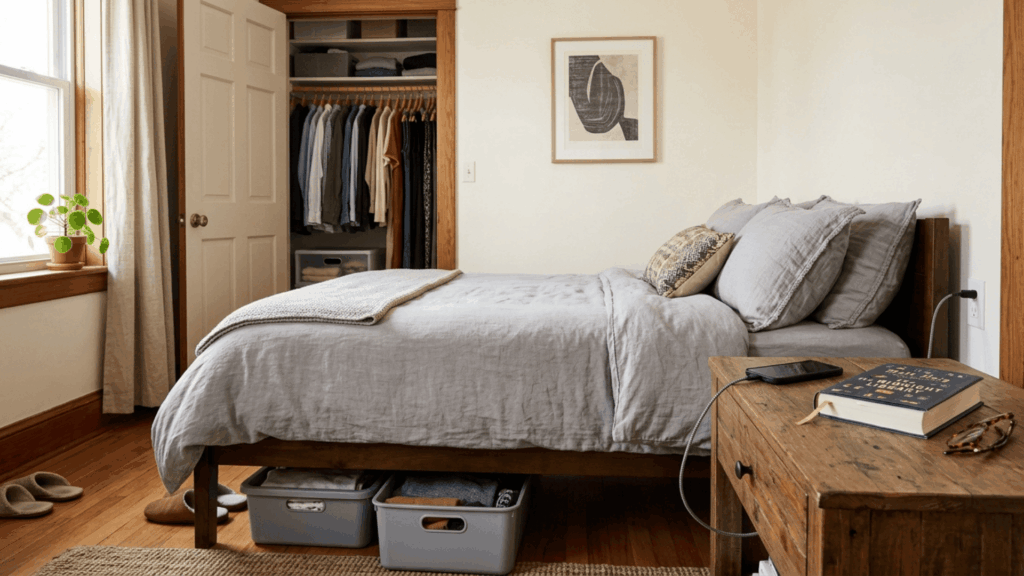
- Keep daily essentials like phone chargers, books, and glasses within arm’s reach of the bed.
- Store seasonal clothing, extra bedding, and rarely used items in separate bins or under-bed storage to free up closet space.
- Flat surfaces are the biggest clutter trap in most bedrooms.
- Limit items on nightstands and dressers to only what is used daily, and make a habit of clearing them off every night before bed.
2. Small Room Organization
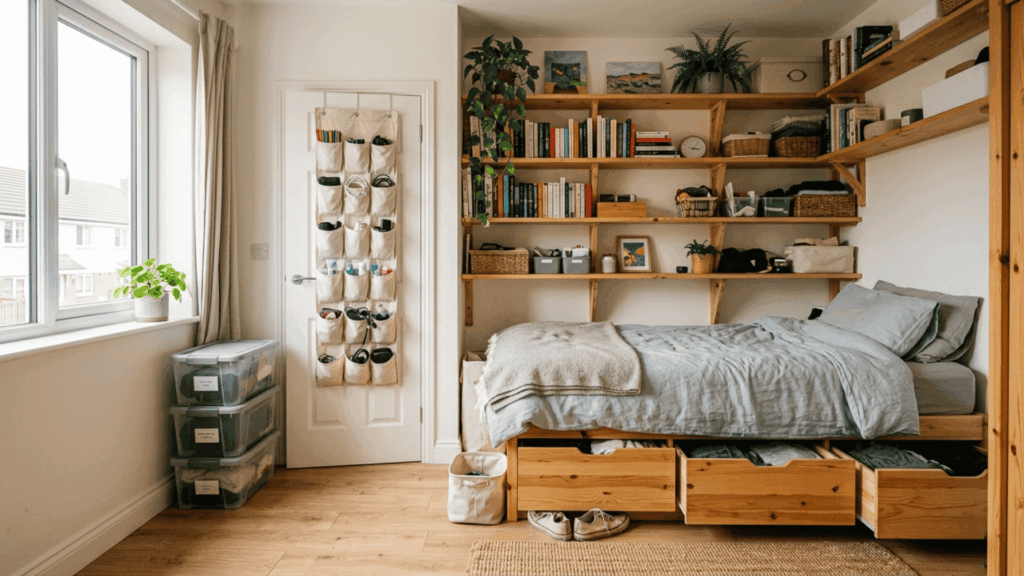
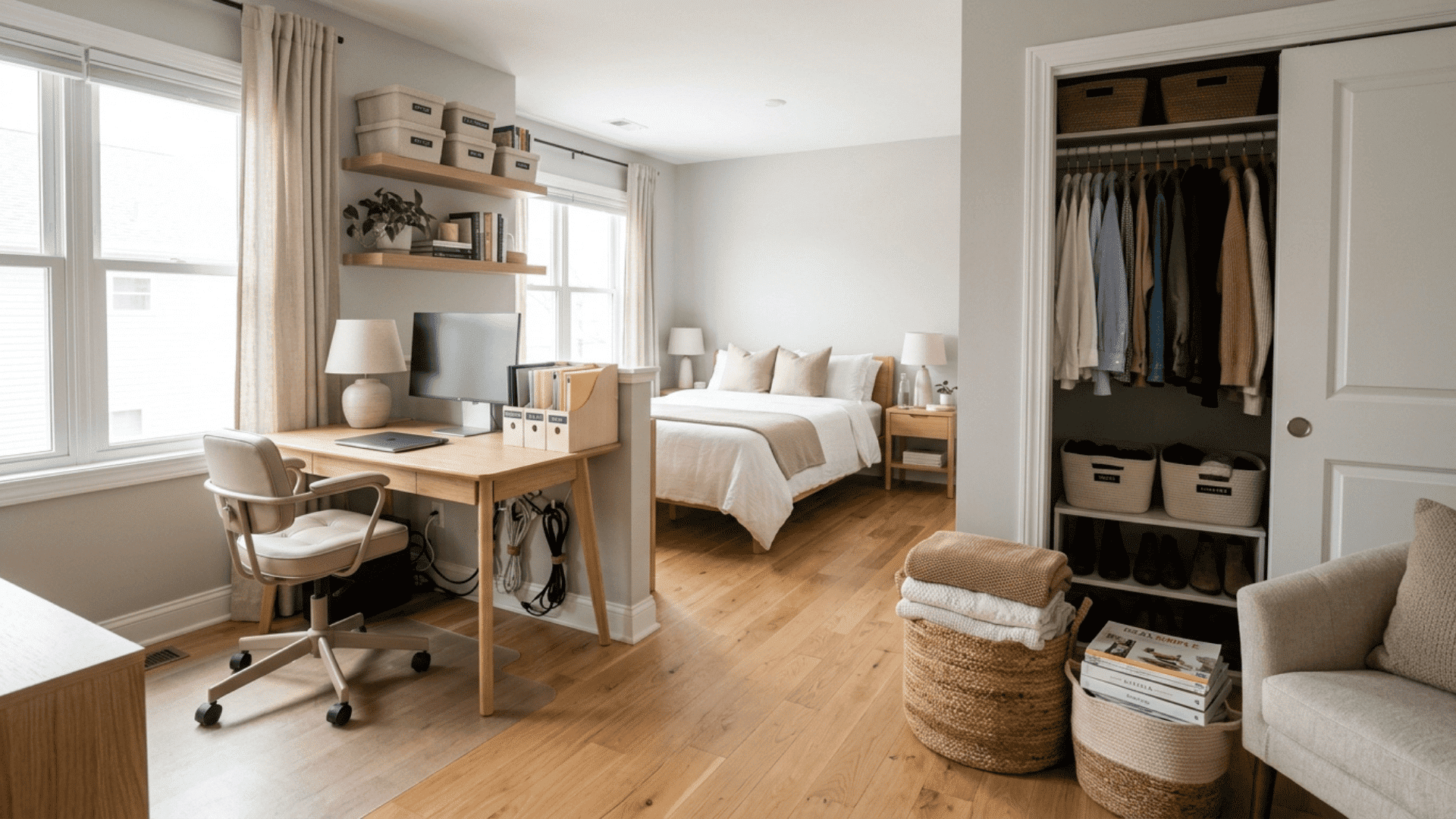
- The key is to think vertically by using wall shelves, over-door organizers, and stackable bins to store items without taking up floor space.
- Multi-purpose furniture, like storage ottomans or beds with built-in drawers, also helps a lot.
- Keep only the essentials inside the room and move anything rarely used to another storage area.
- The less that is stored inside a small room, the easier it is to keep it clean and functional.
3. Living Room Organization
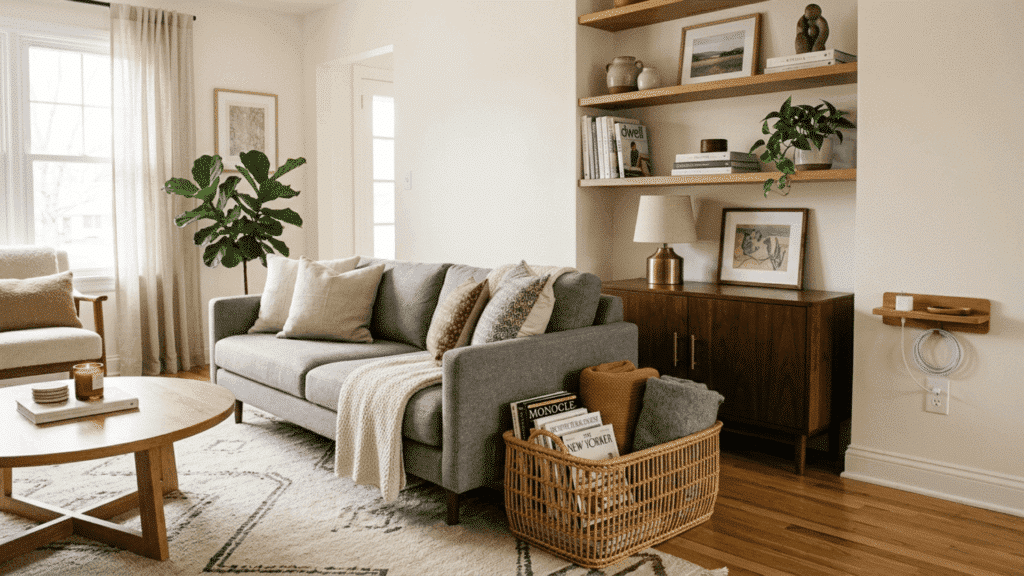
- Limit decorative items to a few meaningful pieces, and use closed storage, such as cabinets and baskets, to hide remote controls, cables, and miscellaneous items.
- Create a clear spot for things that tend to pile up, like magazines, chargers, and throw blankets.
- Keeping these items in a dedicated spot keeps the living room looking clean with minimal daily effort.
4. Study or Work Room Organization
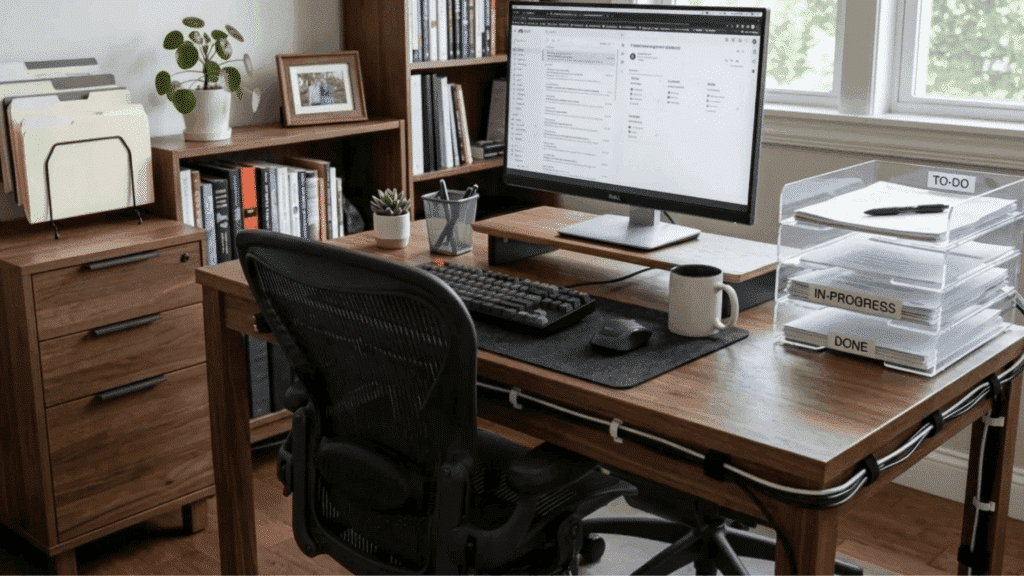
- Keep the desk surface clear except for the items in use, and store everything else in labeled drawers or file organizers.
- Cables should be managed with clips or ties to avoid a visual mess. Papers and documents tend to build up fast.
- Sorting them into labeled sections, such as to-do, in-progress, and done, keeps the workspace functional and easy to reset at the end of each day.
5. Shared Room Organization
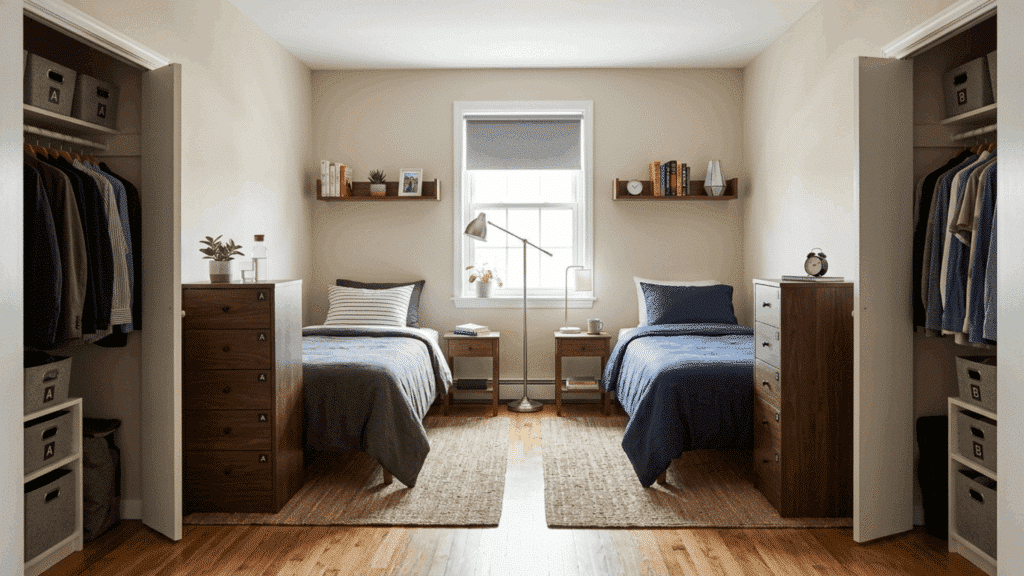
- Assign a separate storage area to each person, whether a specific shelf, drawer, or section of the closet, so belongings do not mix and cause confusion.
- Knowing how to organize your room when sharing it also means setting simple ground rules.
- Agreeing on a basic tidying routine and respecting each other’s storage zones goes a long way in maintaining order for everyone involved.
6. Closet Organization
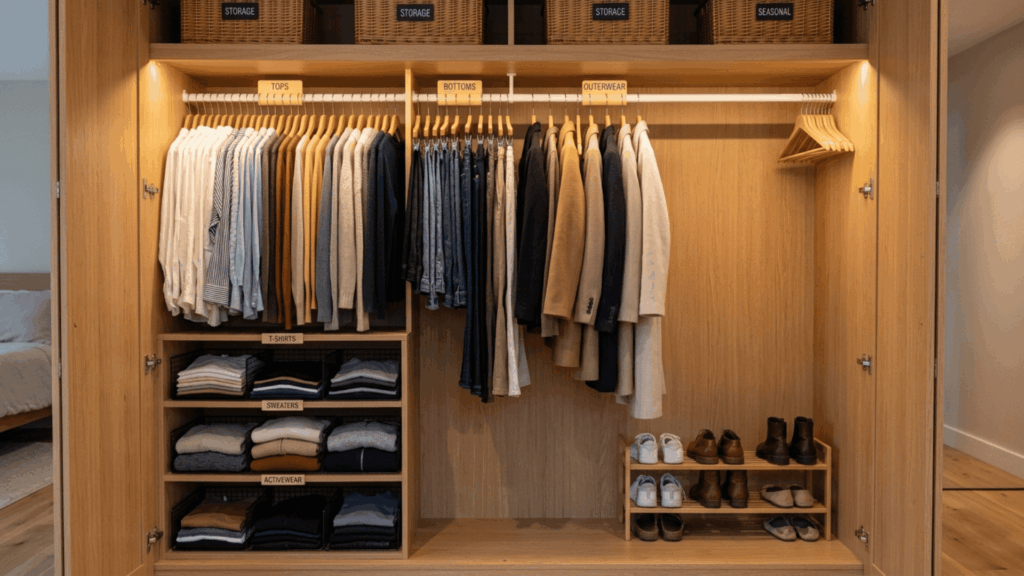
- Hang clothes by category, such as tops, bottoms, and outerwear, and use shelf dividers or bins to separate folded items.
- Remove anything that hasn’t been worn for several months to free up usable space.
- The floor of the closet is often overlooked but valuable. Use it for shoe racks or small storage bins rather than letting items pile up randomly at the bottom.
What to Prioritize when a Room Is Too Cluttered?
Knowing where to begin is half the battle when a room feels completely out of hand. This breakdown helps prioritize the right areas when figuring out how to organize your room from scratch.
| Area | Priority Level | Why It Matters |
|---|---|---|
| Floor space | High | Clearing visible clutter quickly makes the room feel more open |
| Bed and seating | High | Improves daily comfort and sets a positive tone for the space |
| Desk and work area | Medium | Supports focus and productivity during work or study time |
| Closet and storage | Medium | Reduces hidden clutter that builds up out of sight |
| Decorative items | Low | Should be the final step once all essentials are sorted |
Common Mistakes that Make Rooms Messy Again
Even after putting in the effort to clean up, certain habits quietly undo all that progress. Avoiding these mistakes is just as important as the organizing process itself.
- Keeping Items without a Clear Purpose: Holding onto things out of habit or guilt takes up valuable space and makes it harder to maintain a clean room long-term.
- Skipping Decluttering Before Organizing: Arranging clutter into neat piles is not the same as organizing. Removing unnecessary items must always come before sorting what remains.
- Using Storage that Is Hard to Access: If putting something away requires extra effort, it will end up on the nearest flat surface instead of its proper place.
- Letting Small Messes Sit Overnight: A few misplaced items left unattended have a way of growing into larger piles within just a couple of days.
- Overfilling Storage Spaces: Stuffing drawers and shelves beyond their capacity makes it nearly impossible to find things and puts the room right back into disorder.
Wrapping It Up
Knowing how to organize your room is only useful when paired with consistent follow-through. The process does not have to be perfect from day one.
Start with one small area, build a simple routine, and stay patient with the progress. Small daily habits shape how the room looks over time, and they will not get organized overnight either.
People may find it difficult and time-consuming, but with the right habits in place, maintaining order becomes far less demanding over time.
The goal is not a flawless space. It is a functional one that supports daily life without added stress.

Tommy Hardy, an alumnus of the Georgia Institute of Technology with a degree in Mechanical Engineering, has been a go-to figure in residential upkeep and innovation for over 18 years. His career commenced in a leading home appliance manufacturing company, where he mastered the intricacies of household systems. Joining our platform in 2020, Tommy quickly became a reader favorite for his practical and easy-to-follow guides. He took the helm of our DIY section in 2019, consistently delivering content that empowers homeowners. Beyond his professional pursuits, Tommy is a passionate gardener and enjoys woodworking, skills enhancing his hands-on approach to home care.