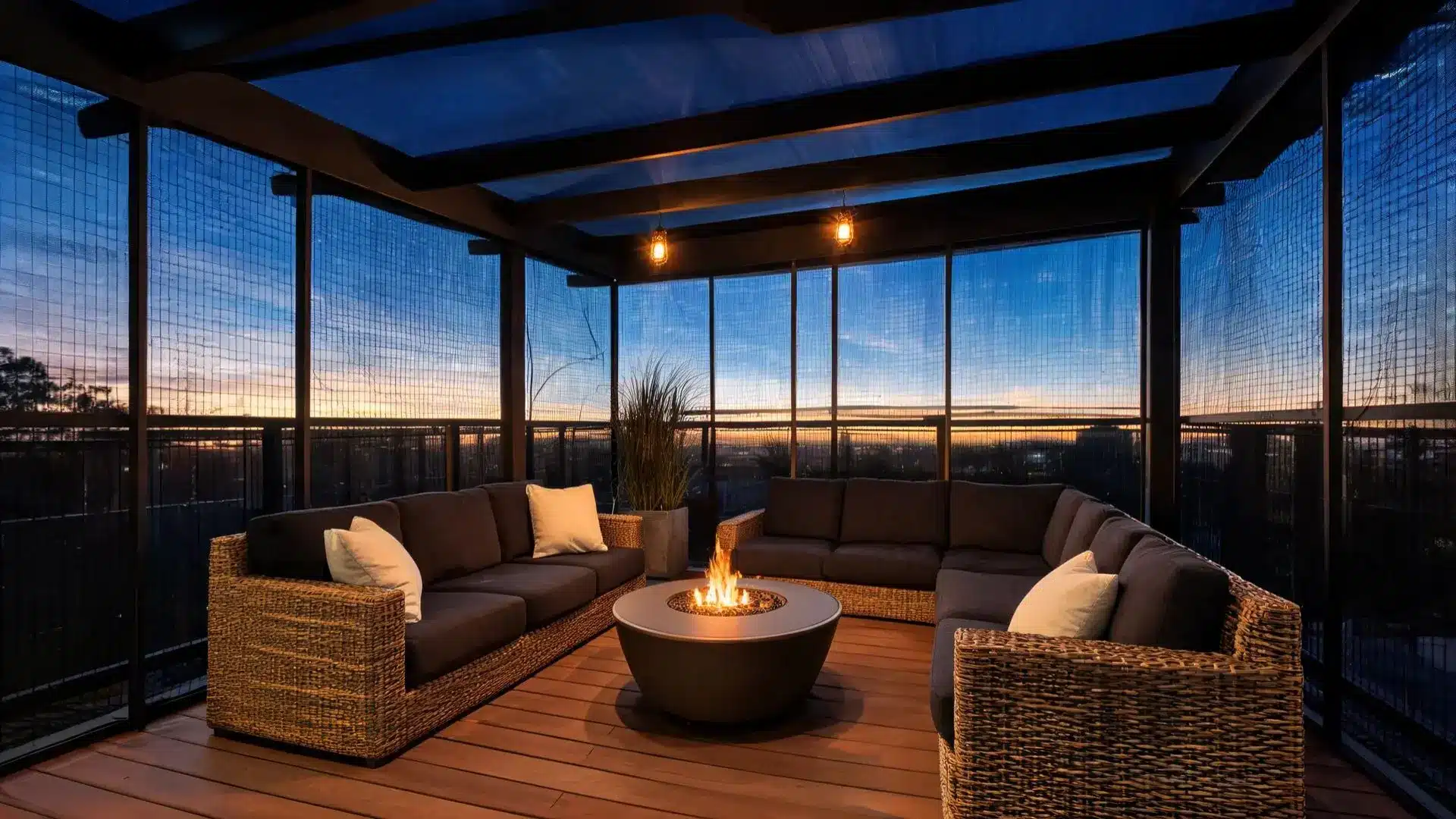

What if your backyard could become the best room in your whole house?
A screened-in porch keeps bugs out, brings in fresh air, and creates a universal space for family dinners, relaxing mornings, or working from home. The possibilities go far beyond a couple of chairs and a rug.
These screened-in patio ideas offer real options for every style and budget.
You can see what clicks with your space and start building something worth spending time in.
Understanding Screened In Patios and Finding the Right Fit
A screened-in patio is an outdoor space wrapped in mesh screen panels, set into a wood, aluminum, or vinyl frame. It can be attached to the back or side of your house, or stand on its own in the yard.
Unlike a sunroom with glass walls, a screened porch stays open to the air.
You get natural light and a breeze without dealing with bugs, light rain, or harsh sun beating down on you.
Choosing the right style depends on your house’s appearance, intended use, and local weather.
How to Plan Furniture Layout Before Buying Anything
Measure the finished floor area and mark it on paper or a free tool like Planner 5D before visiting furniture stores.
- Define one anchor piece first, sofa, daybed, or dining table, then build outward.
- Never place furniture flush against screen walls; leave a minimum of 6–8 inches to protect the mesh.
- Identify traffic paths: at least 36 inches for main walkways and 24 inches for secondary ones.
- Account for the door swing radius before finalizing any corner placement.
Ceiling height matters, too.
Furniture scaled for standard 8-foot indoor rooms can feel undersized beneath a 10-foot porch ceiling.
Size up by one scale category, and the space immediately feels intentional rather than borrowed from indoors.
Screened In Patio Ideas with Clean Architectural Appeal
Clean lines, tiniest ornamentation, and right material choices define modern screened-in patio designs, where the structure itself does the decorative work.
1. Bohemian Layered Lounge
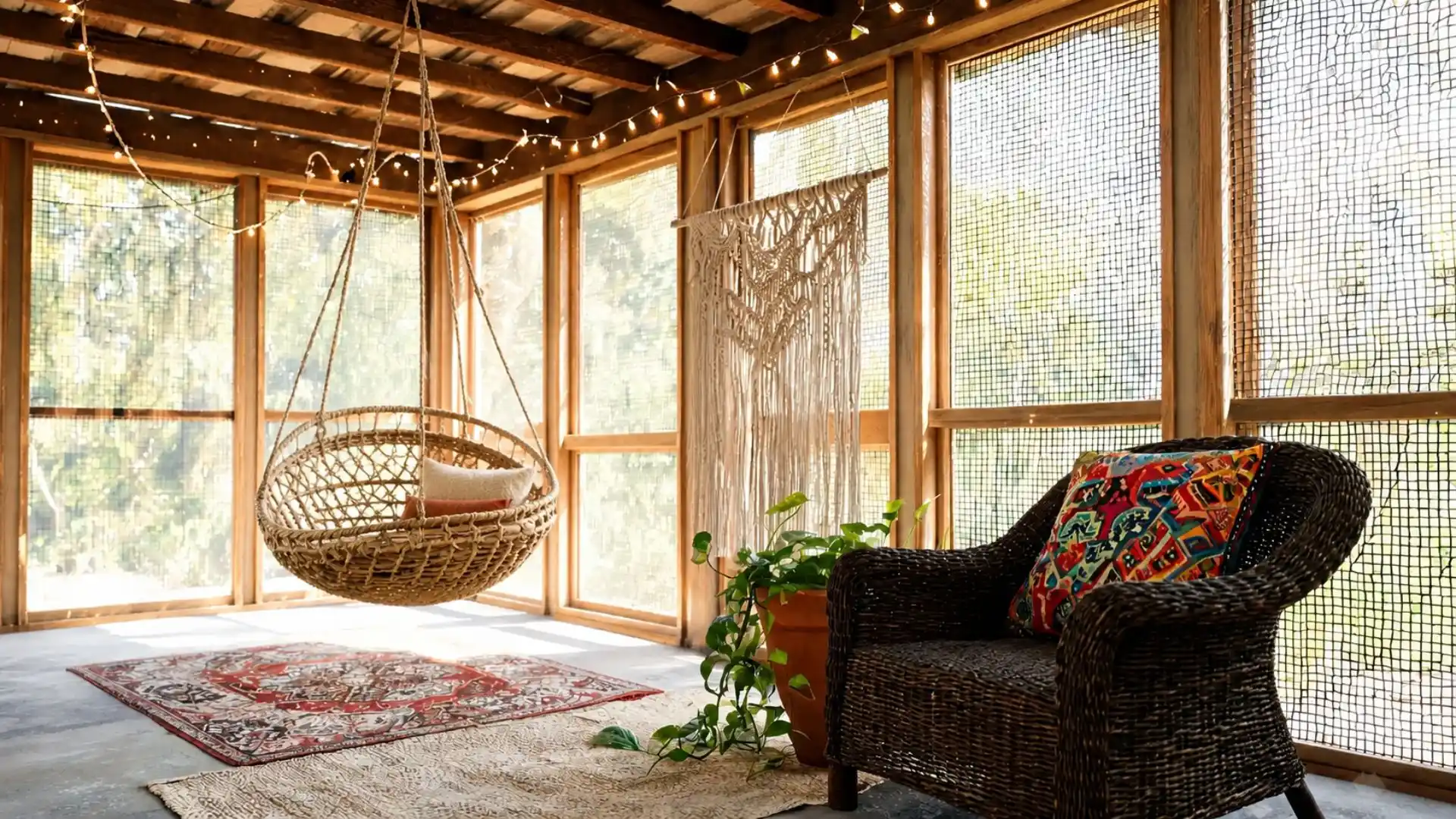
Forget matching sets. This style earns its personality through mismatched textures, collected pieces, and layers that no interior designer can replicate on a deadline.
Warm, earthy tones do the heavy lifting. The more personal the curation, the better the space reads.
Design Element: Ceiling-hung rattan daybed.
Budget: $1,500 – $3,500
2. Japanese Zen Garden Enclosure
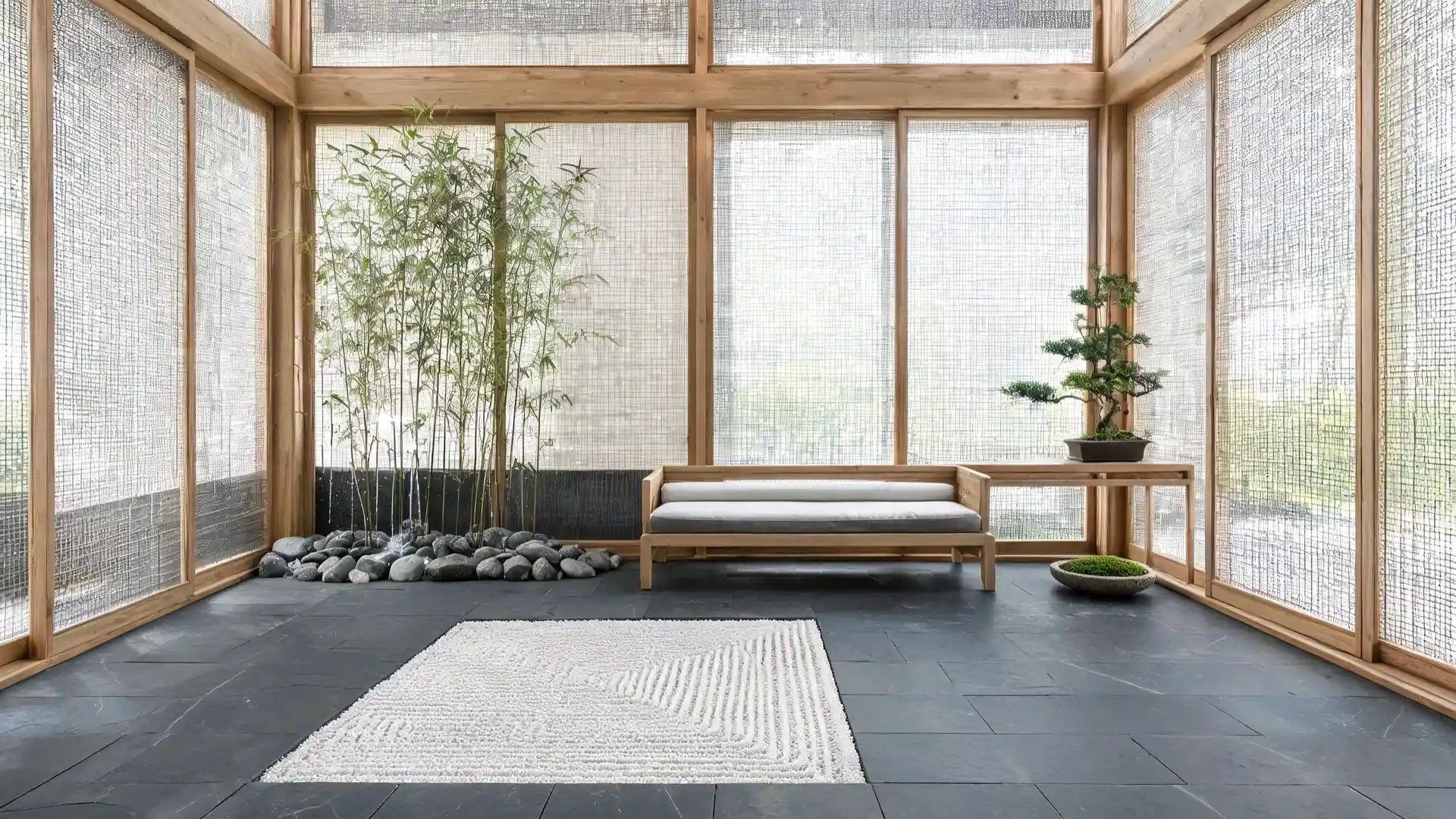
Every object either earns its place or gets removed.
Raked gravel panels sit flush with the floor, a bamboo water feature runs along one wall, and silence becomes the atmosphere. This is the only screened patio style where doing less is a deliberate structural decision.
Design Element: Recessed floor-level raked gravel panels.
Budget: $2,000 – $5,000
3. Classic Farmhouse Screened Porch
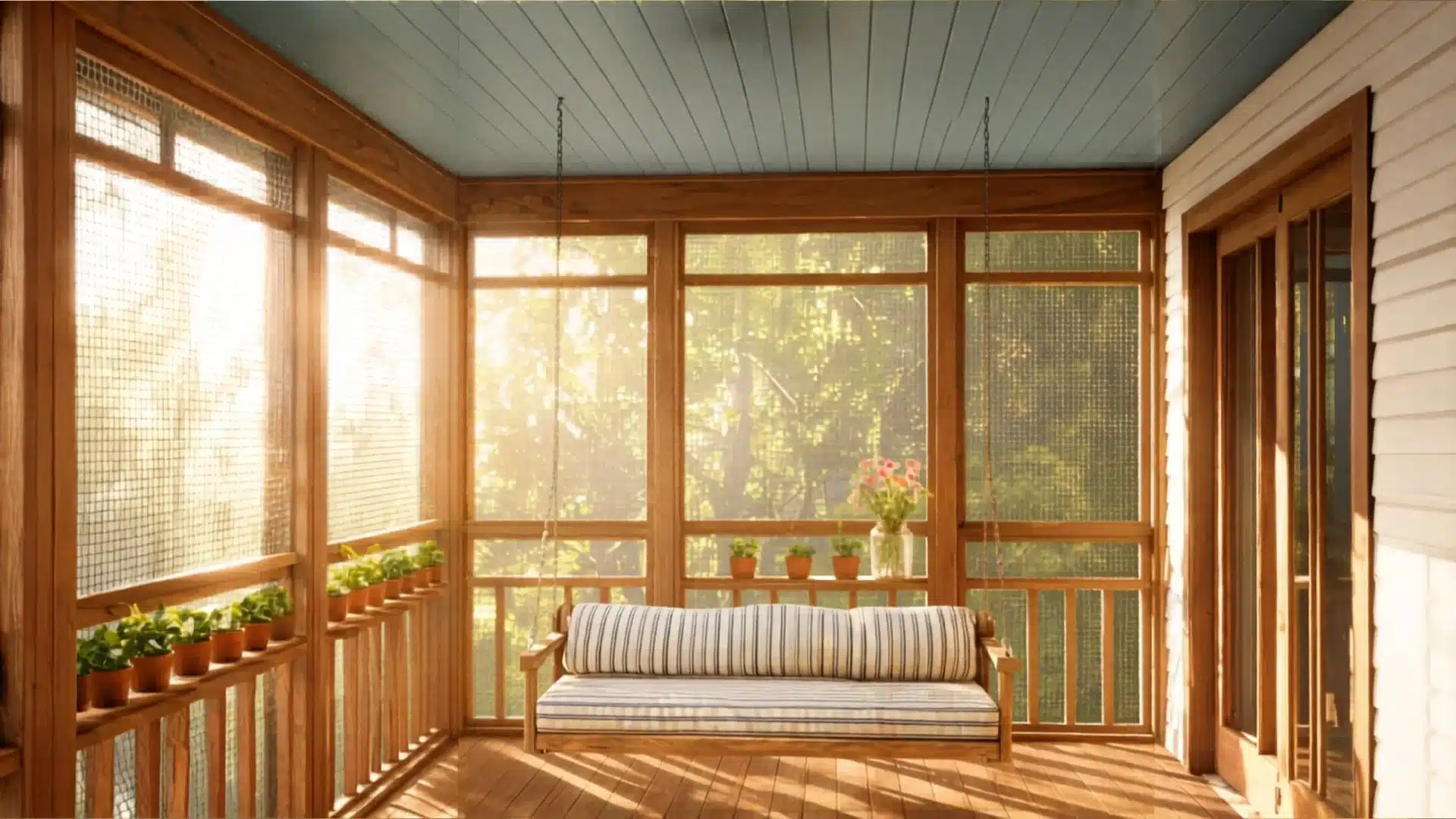
Haint blue beadboard overhead, shiplap walls, and a wide porch swing.
This style gets used daily, not saved for weekends.
It’s the porch neighbors stop to comment on, and families argue over leaving at the end of summer.
Design Element: Haint blue beadboard ceiling.
Budget: $3,000 – $7,000
4. Mid-Century Modern Sunroom Patio
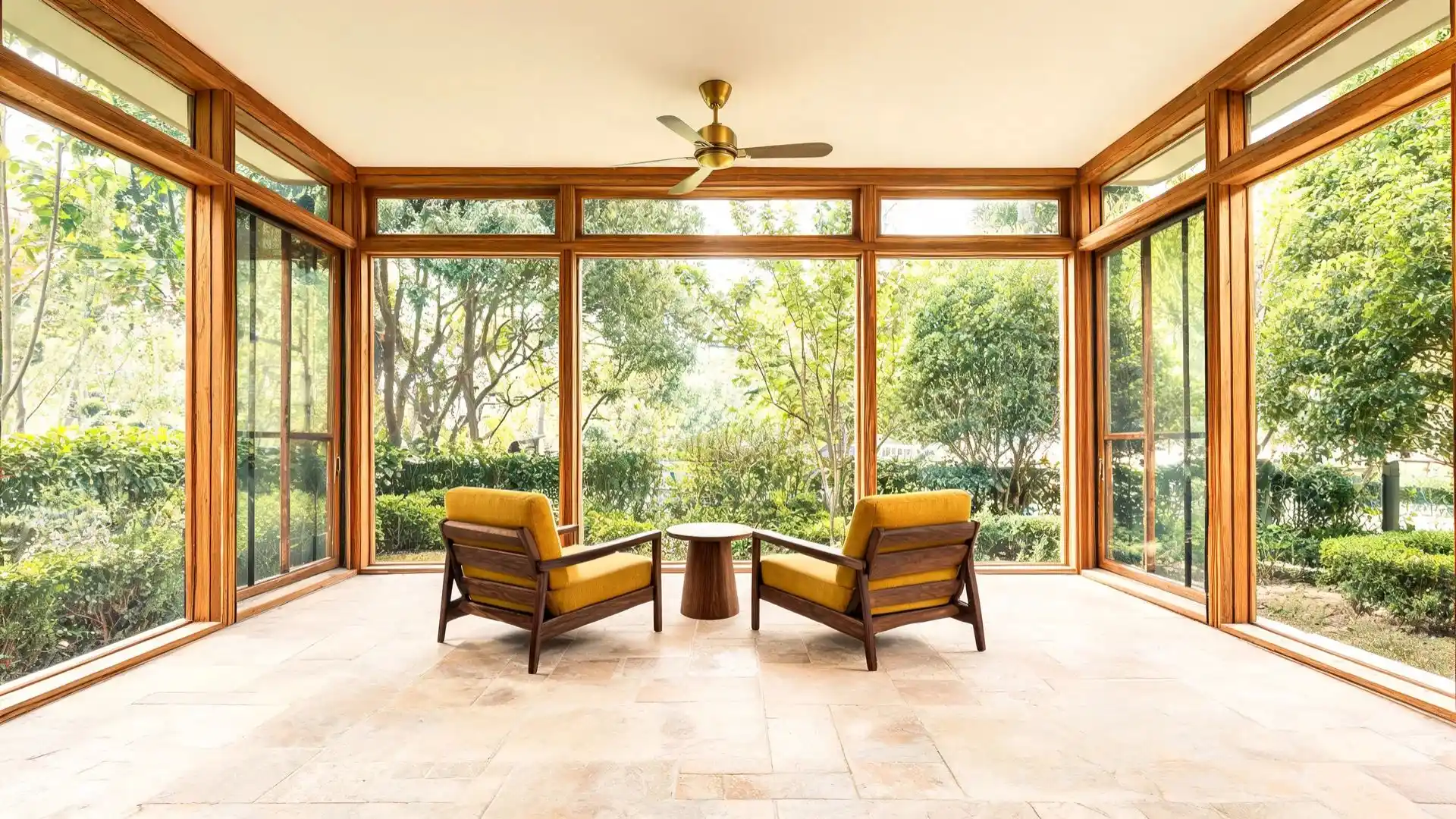
Terrazzo flooring, tapered legs, warm controlled palette, nothing here is accidental.
A single oversized ceramic globe pendant on a long drop cord anchors the ceiling and sets the entire room’s proportions without competing with anything below it.
Design Element: Oversized ceramic globe pendant light.
Budget: $4,000 – $9,000
5. Rainforest Tropical Retreat
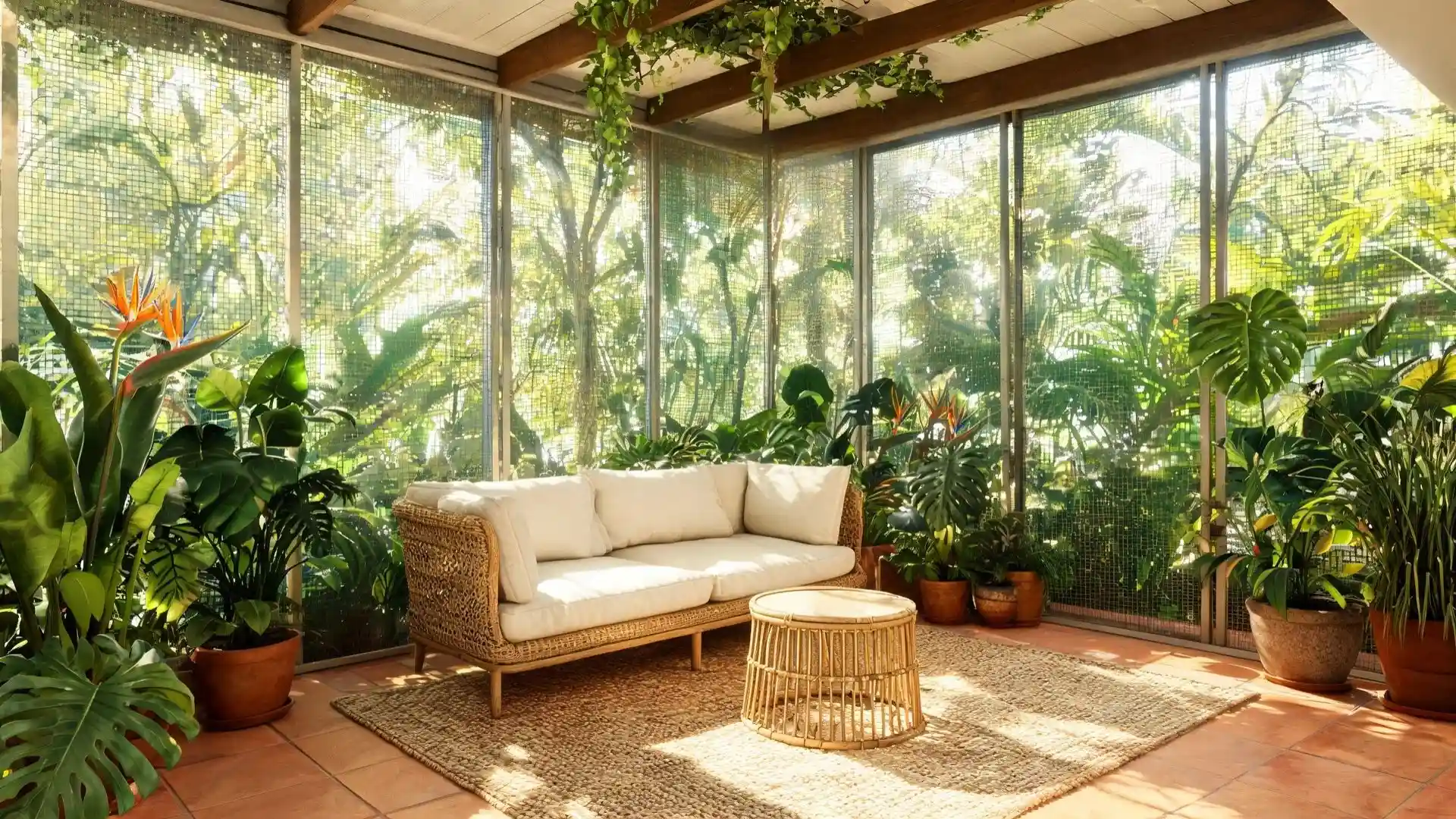
Monstera, bird-of-paradise, cascading pothos, every vertical surface works. The enclosure traps the humidity these plants need, while the misting fan noticeably lowers the perceived temperature.
Composite or teak flooring handles the moisture load that standard decking cannot.
Design Element: Ceiling-mounted misting fan system.
Budget: $2,500 – $6,000
6. Outdoor Gourmet Kitchen and Dining Room
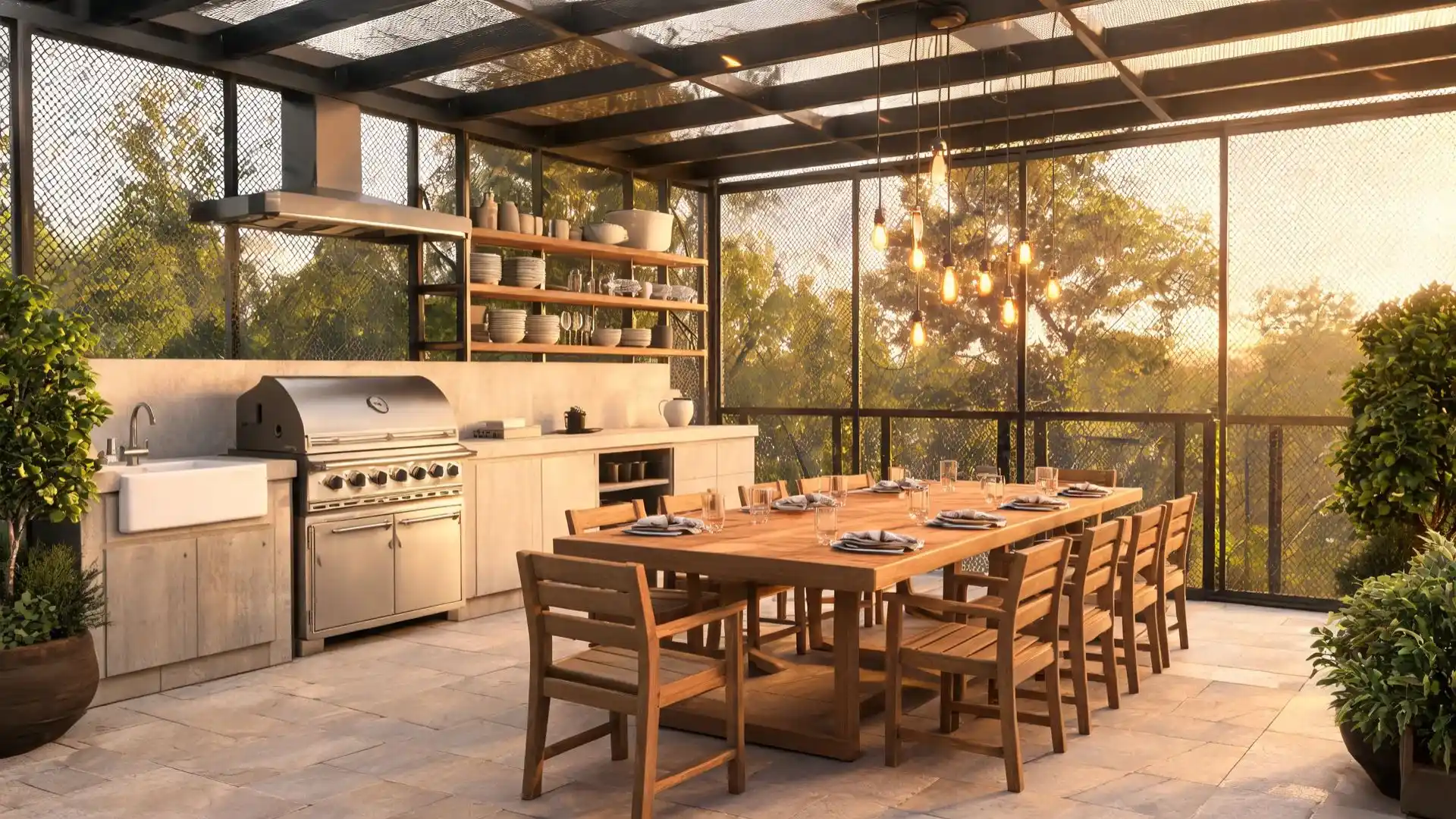
Cooking and entertaining happen simultaneously here, not in shifts.
A concrete prep counter with an integrated utility sink anchors the layout.
Confirm gas line permits and outdoor-rated exhaust hood CFM requirements before finalizing, as both are commonly overlooked until inspections.
Design Element: Built-in concrete counter with utility sink.
Budget: $8,000 – $25,000
7. Work-From-Home Outdoor Office
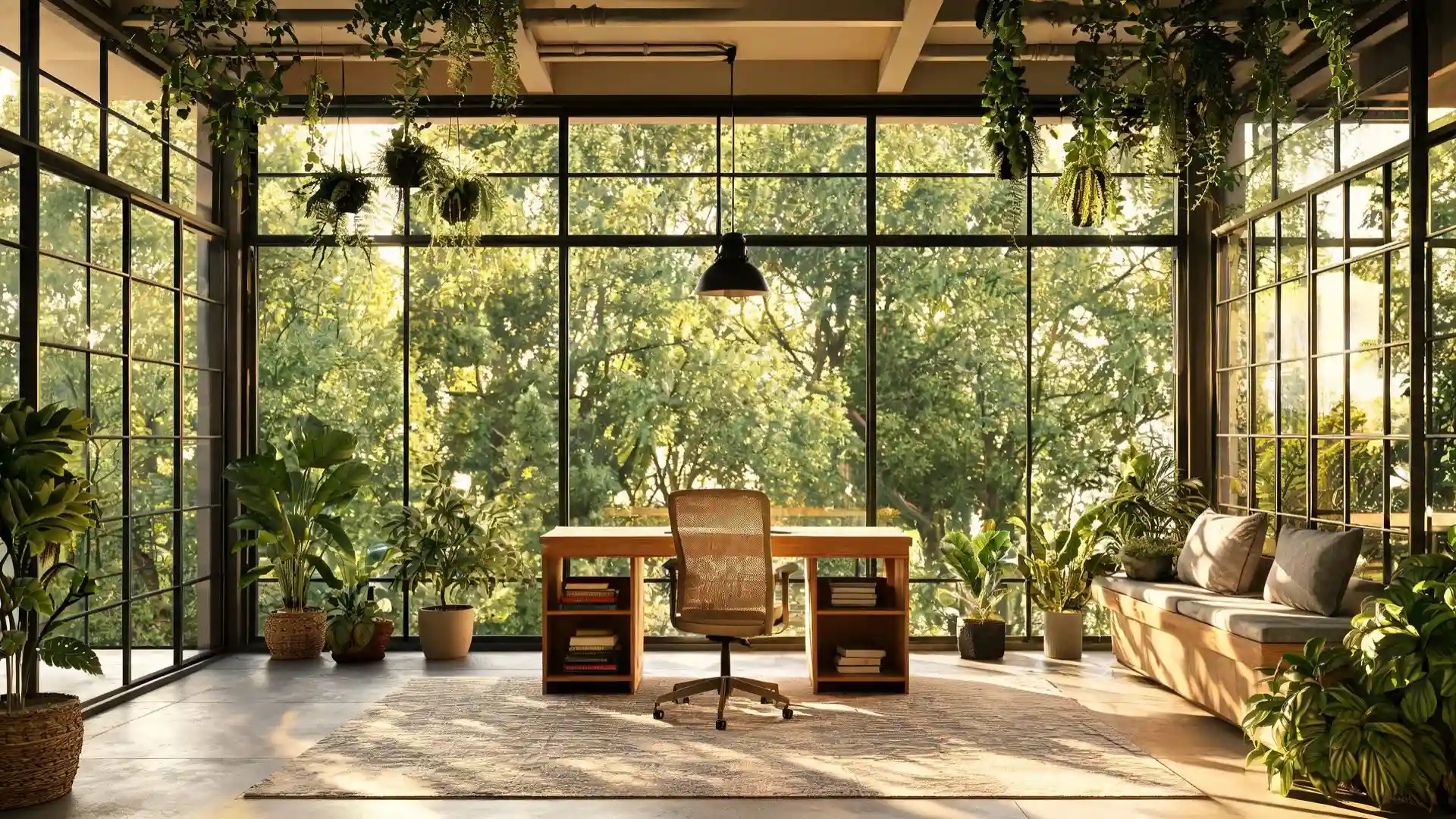
Screen glare, wind noise, and spotty Wi-Fi kill outdoor productivity fast.
Blackout roller shades on a ceiling track handle glare without blocking airflow. A north-facing patio naturally eliminates direct sun, which is worth considering before choosing which exterior wall to build against.
Design Element: Ceiling-track blackout roller shades.
Budget: $1,500 – $4,000
8. Bibliophile’s Reading Nook Porch
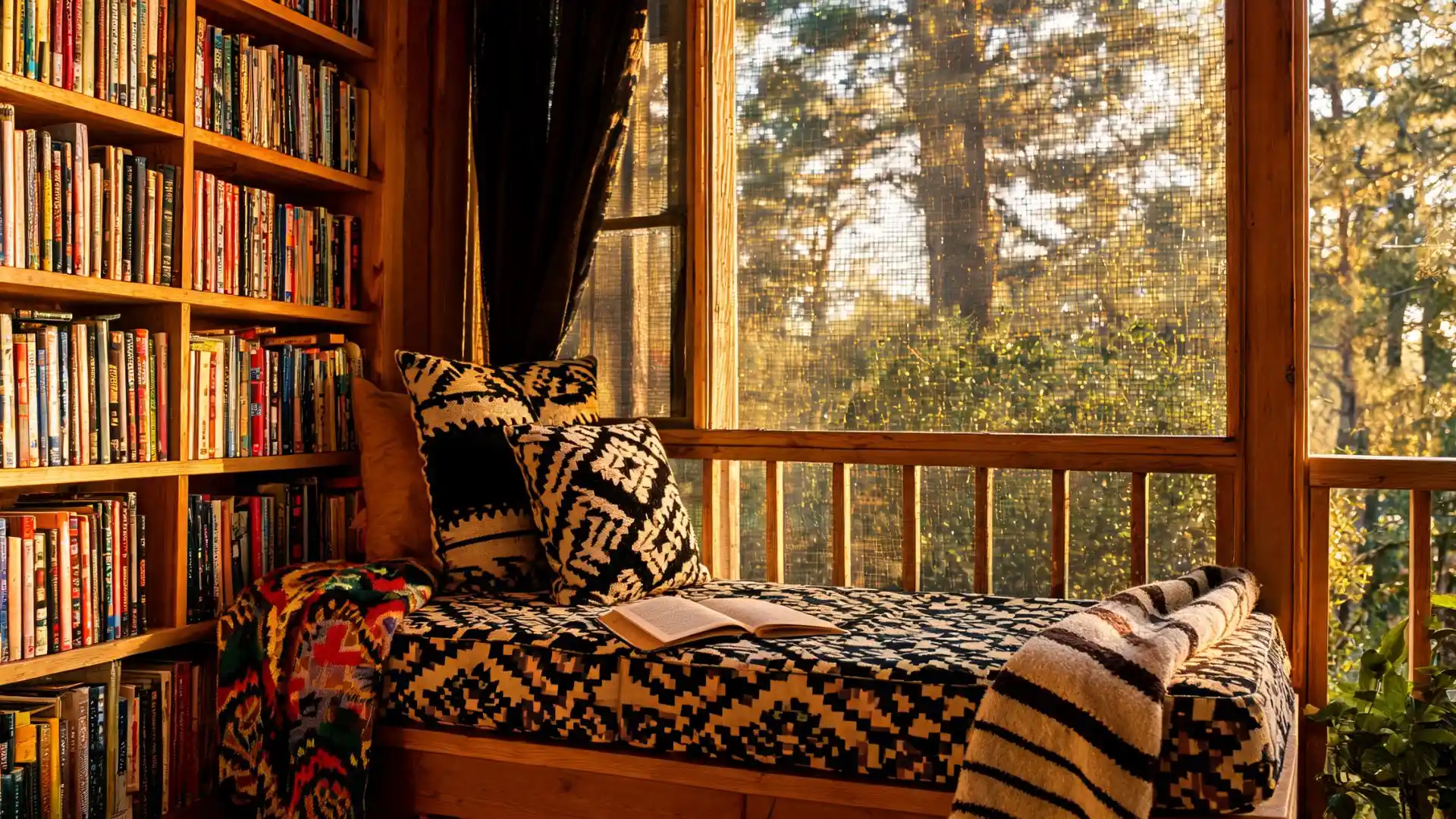
Glass-front built-ins flush to the screen wall frame keep the collection visible and humidity-controlled.
In climates with average humidity above 60%, add a 30-pint dehumidifier set to 45–50% RH, the actual archival standard that prevents paper from warping over time.
Design Element: Glass-front built-in screen wall shelving.
Budget: $2,000 – $5,500
9. Children’s Imagination Playroom
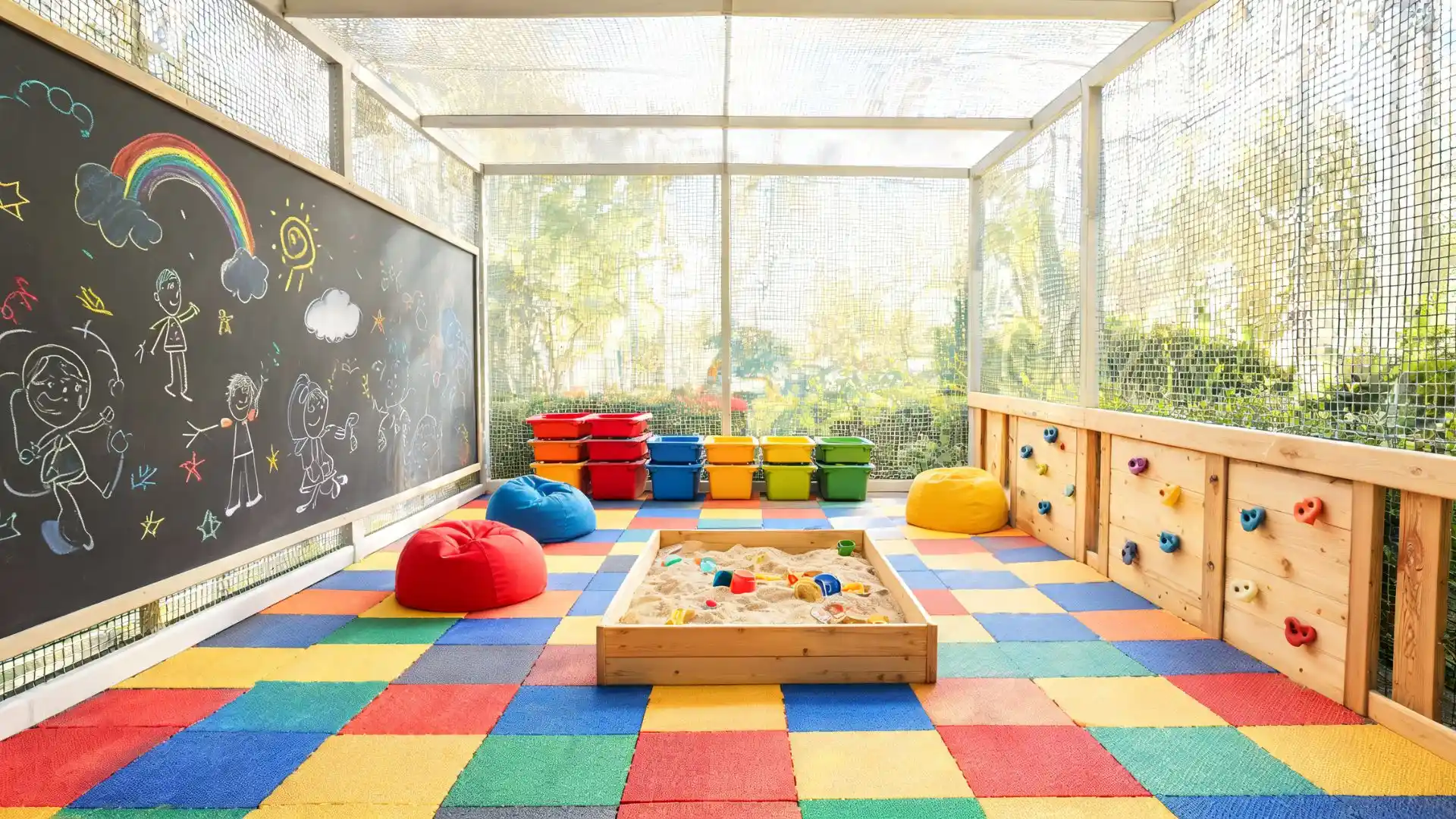
One wall goes full chalkboard, and the floor gets impact-absorbing rubber tiles.
A climbing section runs the interior frame. The hinged trap door sandbox pit underneath is what makes this genuinely interactive, not just an outdoor room with kid-friendly colors.
Design Element: Hinged trap door floor sandbox pit.
Budget: $1,500 – $4,000
10. Yoga and Mindfulness Studio
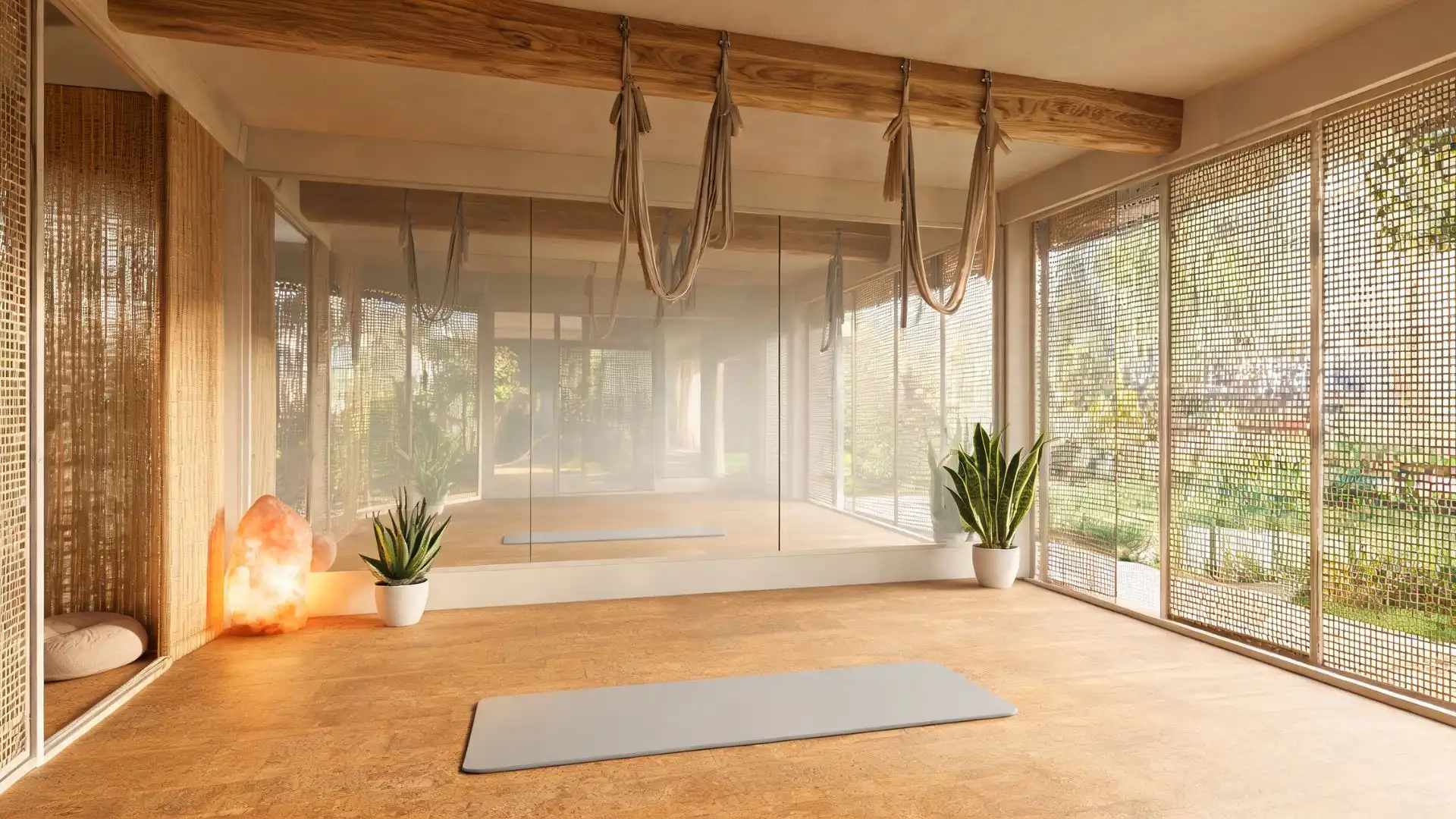
Cork underfoot, a mirrored wall panel, and a garden view through the mesh create conditions no indoor studio matches at this price point.
Industrial-grade ceiling beam anchors safely handle yoga strap loads; standard drywall anchors for indoor use cannot make the same claim.
Design Element: Beam-mounted industrial yoga strap anchors.
Budget: $1,000 – $3,500
11. Artist’s Open-Air Studio
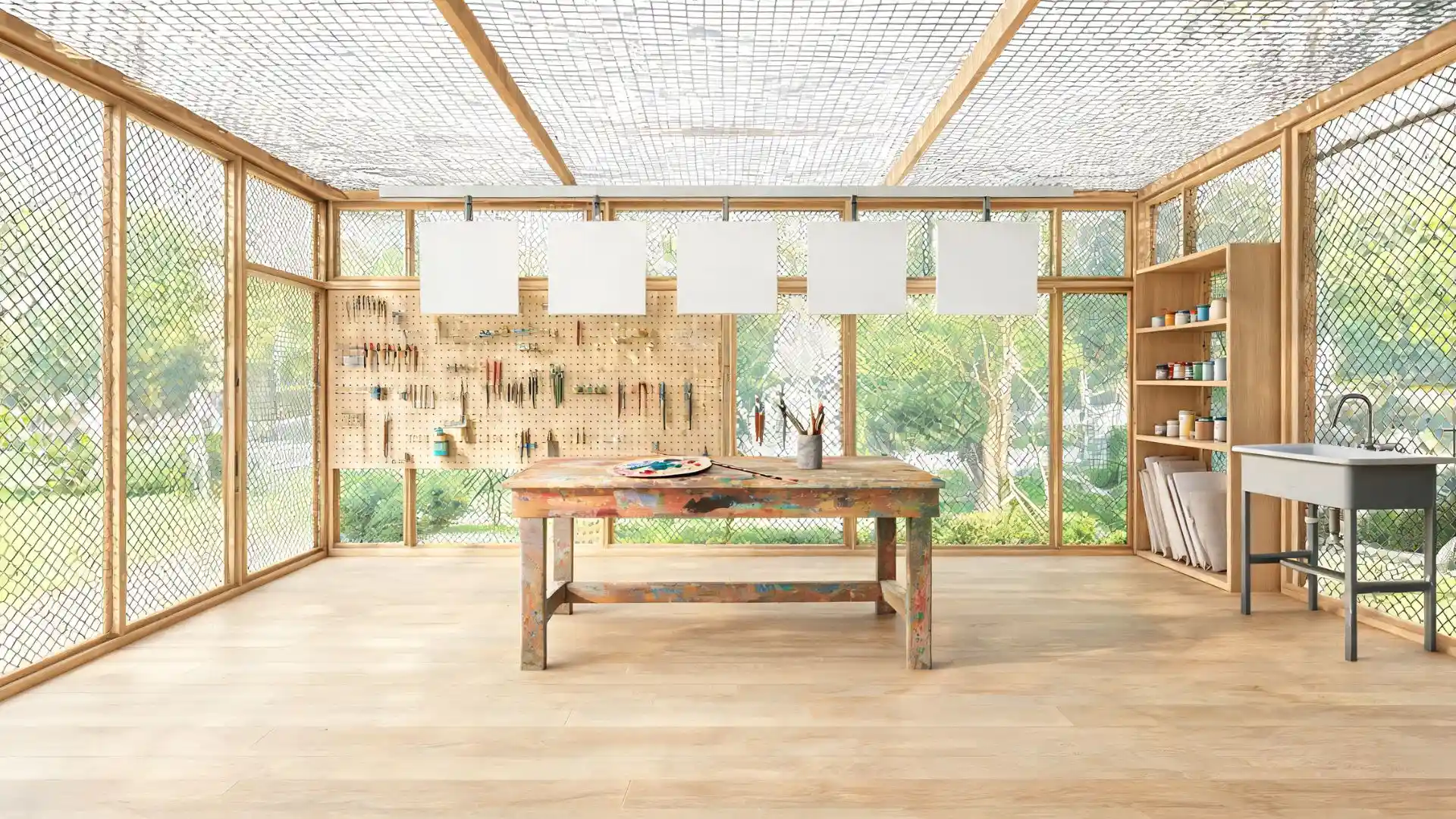
Clerestory screens on all four sides deliver even, diffused light from multiple angles.
the one thing indoor studios consistently fail to provide. Epoxy floors handle spills, pegboard handles organization, and a ceiling track display system lets finished work hang under natural light.
Design Element: Full-length ceiling-mounted track display system.
Budget: $2,000 – $5,000
12. Outdoor Home Theater
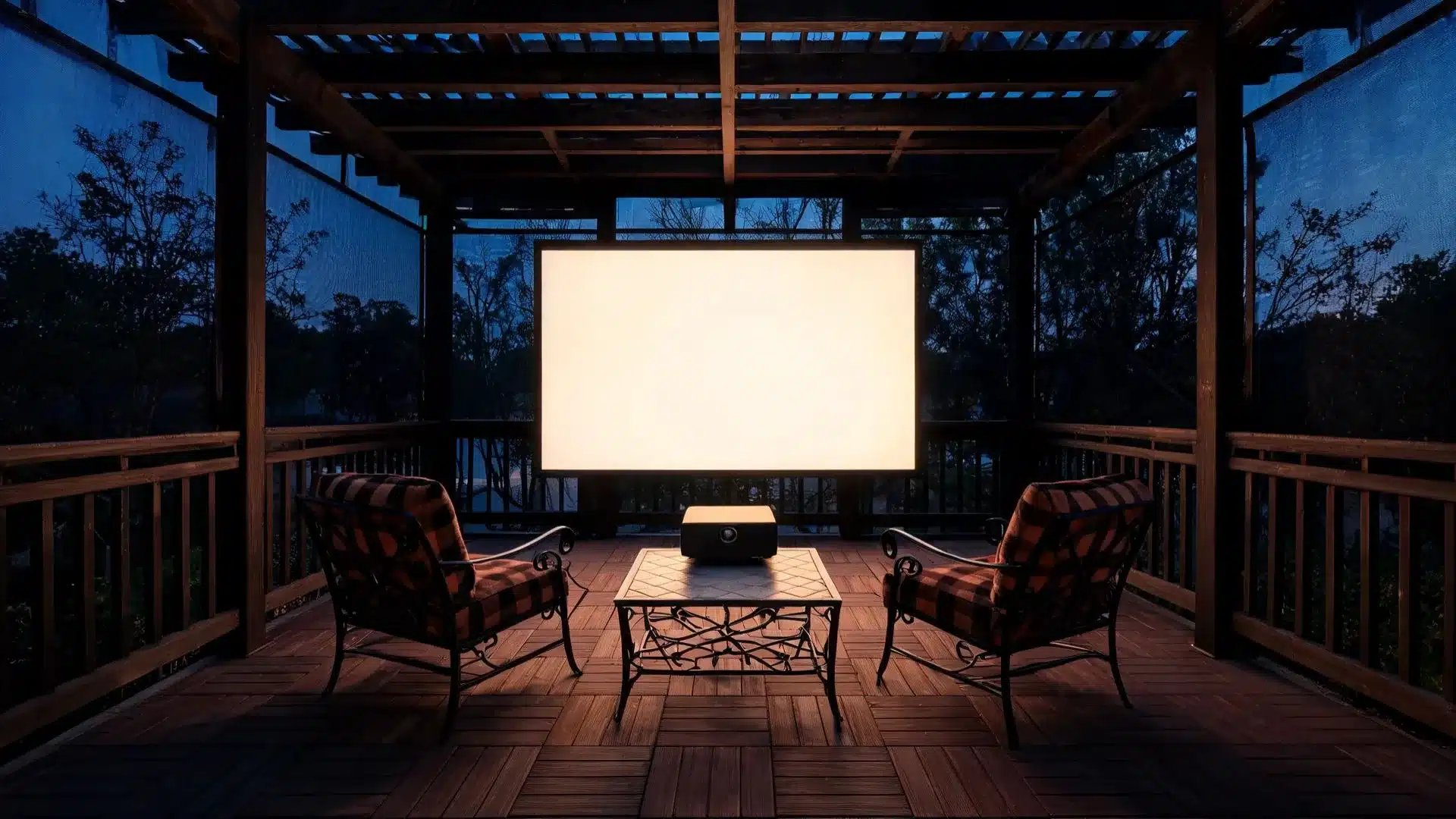
A weatherproof projector hits a 120-inch motorized screen that disappears into a recessed ceiling housing when not in use.
Acoustic panels on the rear wall, stadium-style flooring, and a sectional that fits more people than any indoor living room comfortably holds.
Design Element: Recessed motorized 120-inch retractable screen.
Budget: $5,000 – $15,000
13. Wine Bar and Tasting Lounge
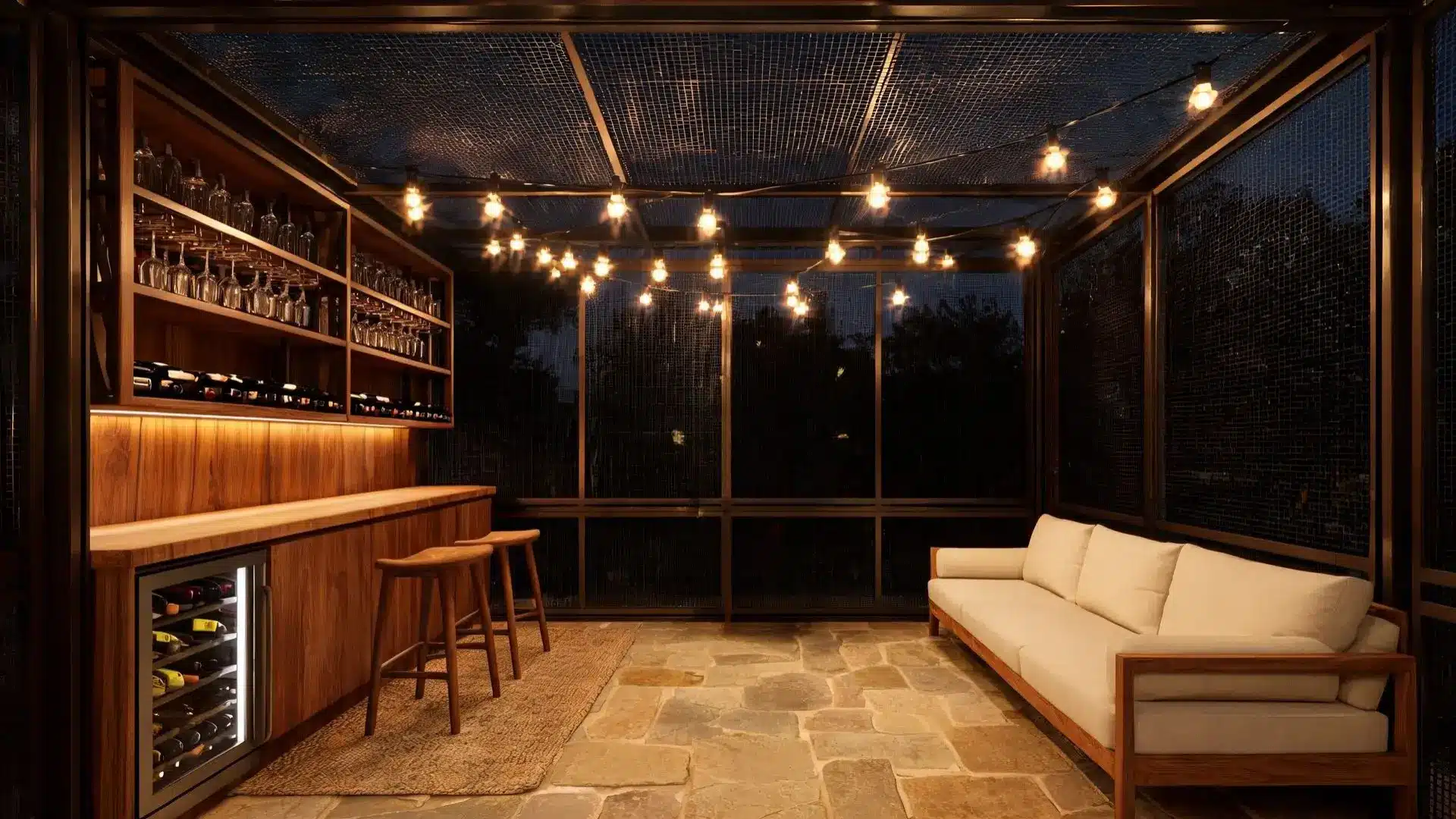
Floor-to-ceiling lattice wine racks integrate directly into the screen wall’s interior, framing the structure itself as the storage system. A marble-topped bar counter runs beneath, with an inset wine refrigerator below.
Dedicated display and tasting, fully separated from the main dining room.
Design Element: Full-wall lattice wine racks in screen framing.
Budget: $4,000 – $10,000
14. Indoor-Garden Plant Conservatory
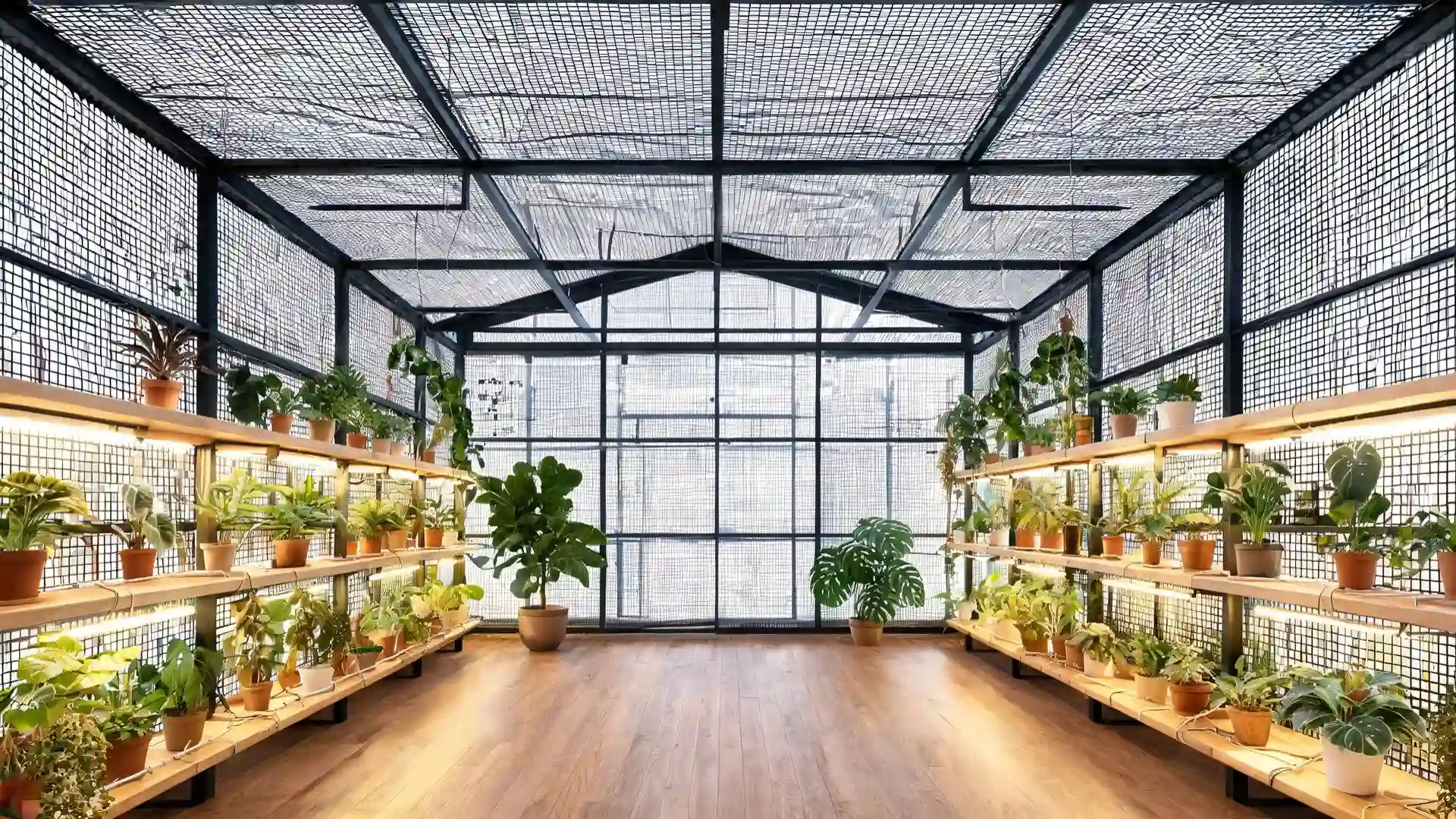
Tiered shelving, leather-strap ceiling hangers, and a programmable drip irrigation loop connected to the main water line handle plant care automatically.
This is the only screened patio style where the watering system is built into the structure rather than wheeled in later.
Design Element: Built-in programmable drip irrigation loop.
Budget: $1,500 – $4,500
15. Pet Paradise Enclosure
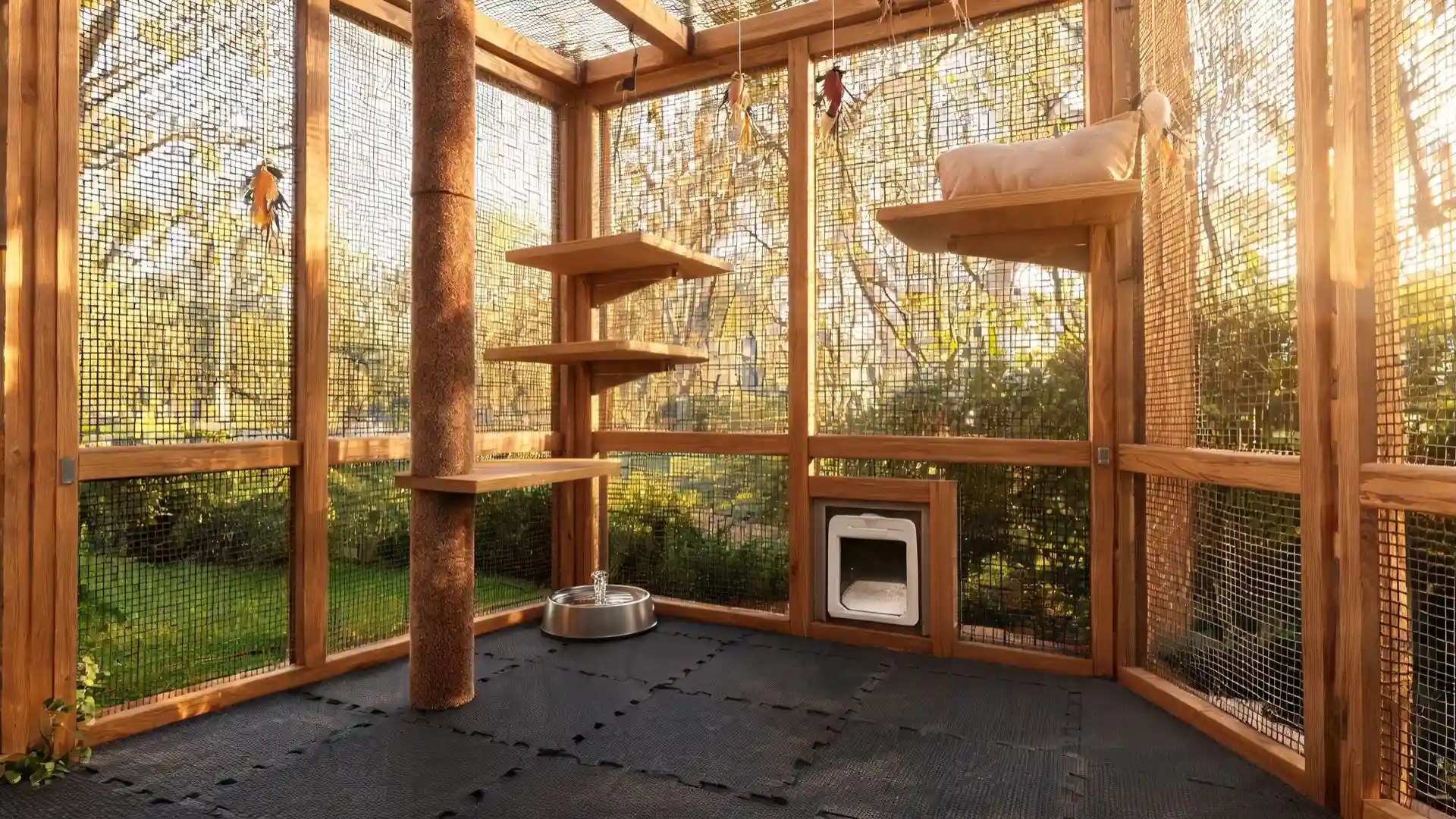
Elevated platforms at four heights, a flush-mounted pet fountain, and a direct yard-access pet door give animals genuine enrichment.
Heavy-gauge, pet-resistant fiberglass mesh rated for repeated claw contact is what makes every other material choice in this enclosure viable in the long term.
Design Element: Heavy-gauge pet-resistant fiberglass screen mesh.
Budget: $1,000 – $3,500
16. Hammock Garden Room
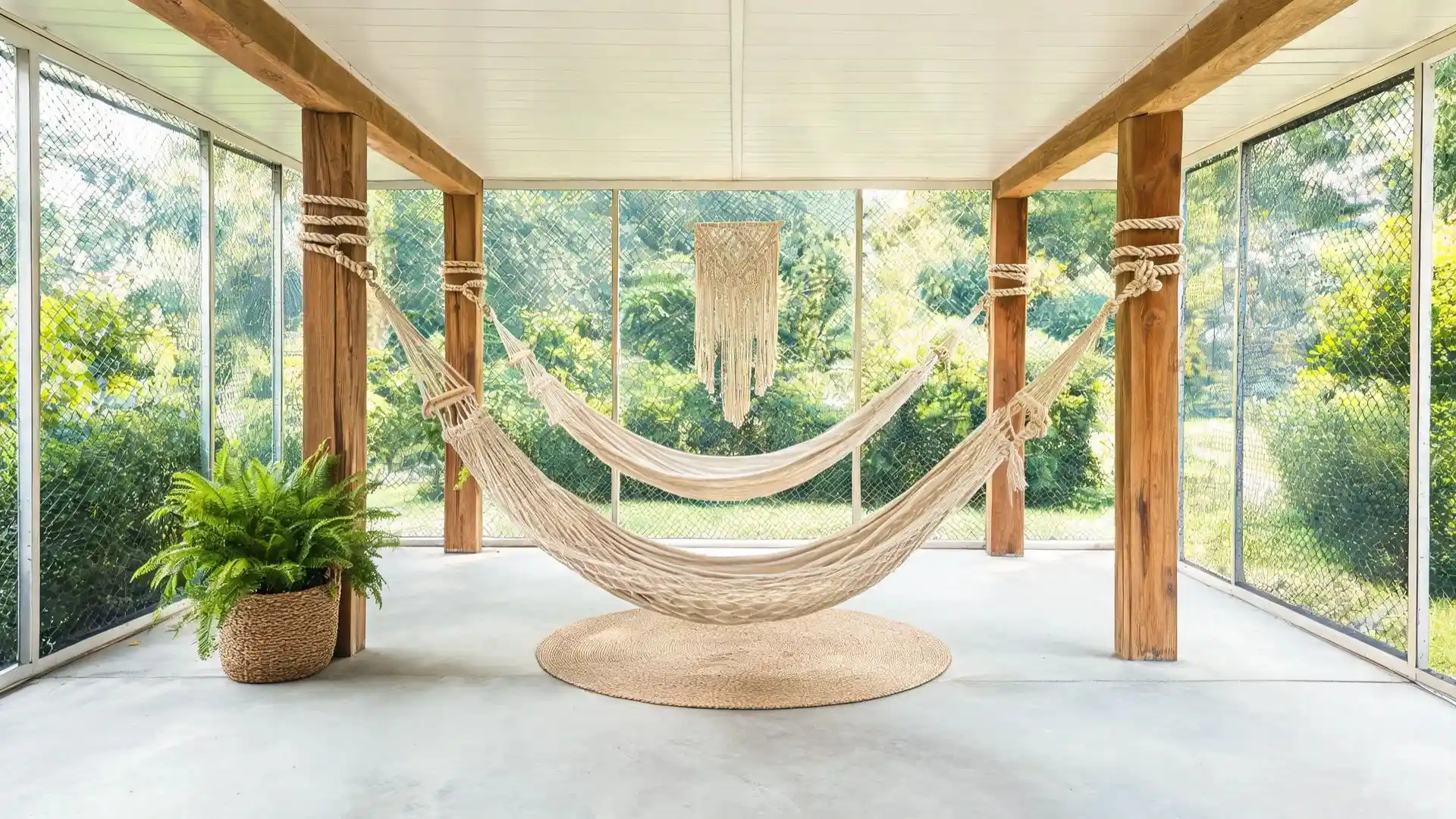
No conventional furniture at all. Three ceiling hooks set at staggered angles, not parallel, allow multiple hammock styles to hang simultaneously without tangling.
Macramé wall art and potted ferns carry the visual weight that everything else leaves open.
Design Element: Staggered-angle triple ceiling hammock hooks.
Budget: $800 – $2,500
17. Spa and Hot Tub Sanctuary
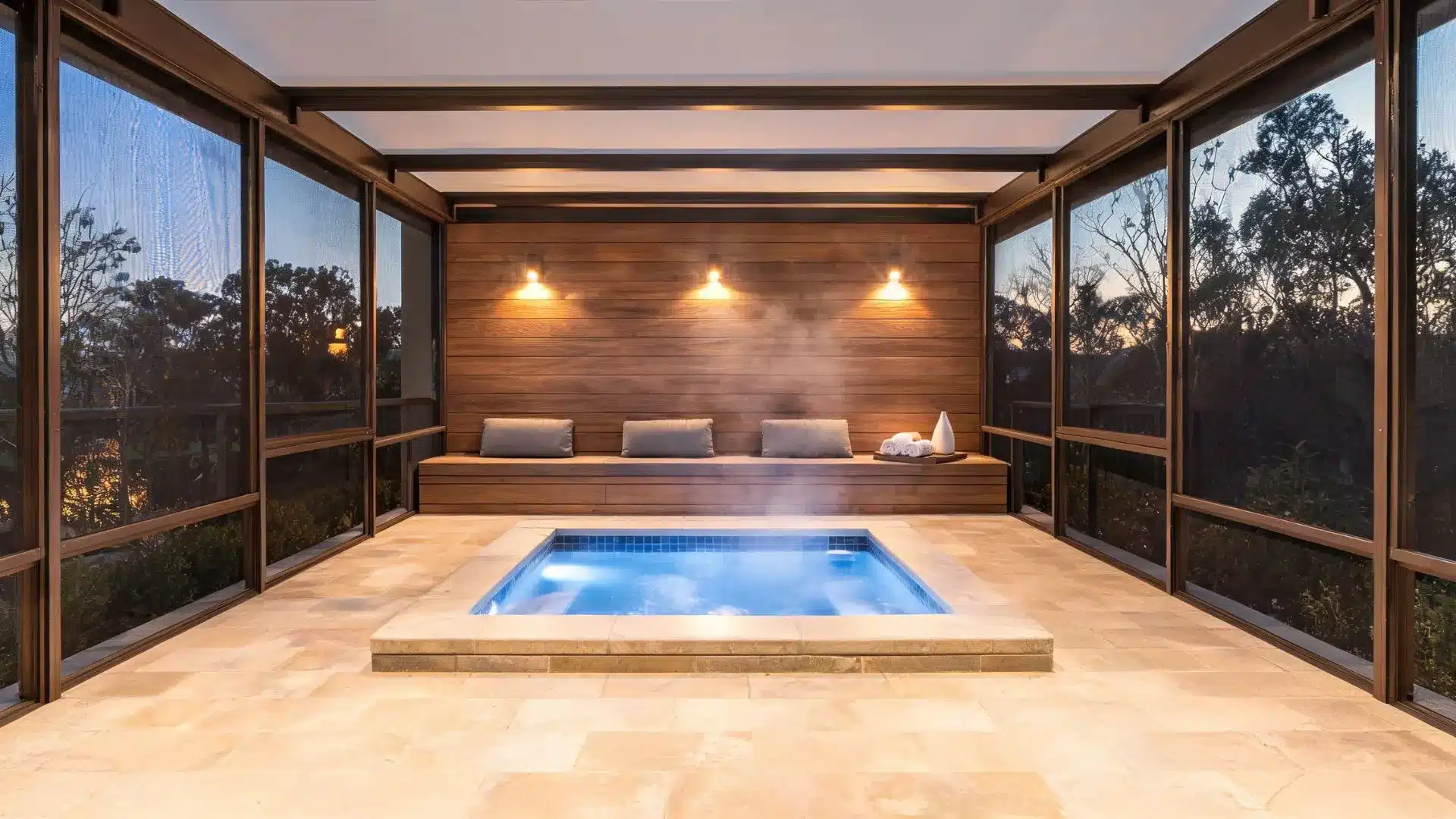
Teak decking, cedar benches, waterproof cushions, and a ridge exhaust fan sized correctly for the enclosure’s cubic footage. Undersized fans leave condensation on the ceiling framing.
The screen removes debris from the water, directly reducing monthly chemical maintenance costs.
Design Element: Correctly sized ceiling ridge exhaust fan.
Budget: $5,000 – $15,000
18. Game Night Lounge
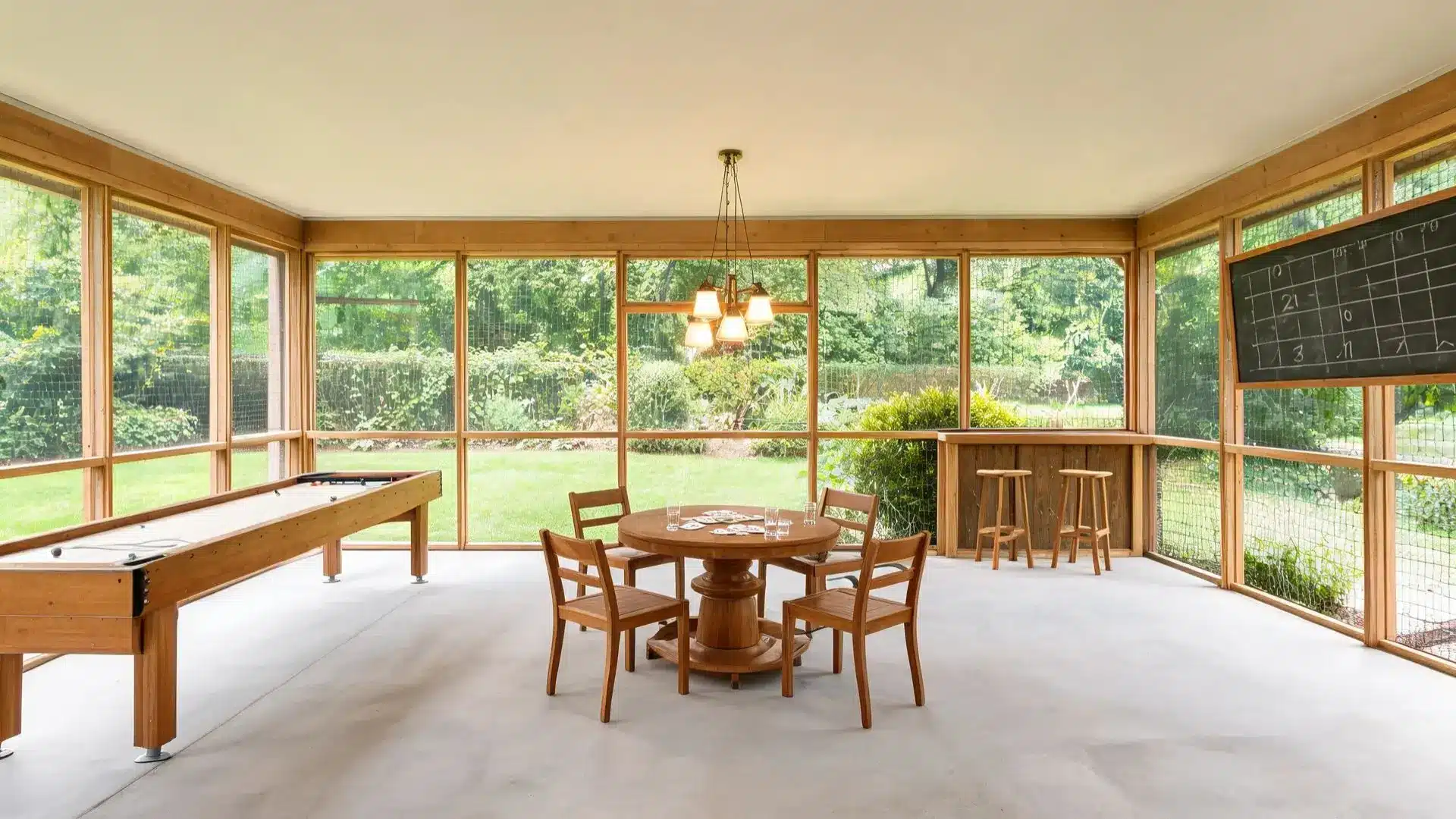
Shuffleboard flush to one wall, dartboard on a pegboard across from it, a round pedestal table centered for cards.
A full bar counter along the back wall keeps everything within reach. This porch makes staying in genuinely more appealing than going out.
Design Element: Flush wall-mounted built-in shuffleboard table.
Budget: $2,500 – $6,000
19. Acoustic Music Room
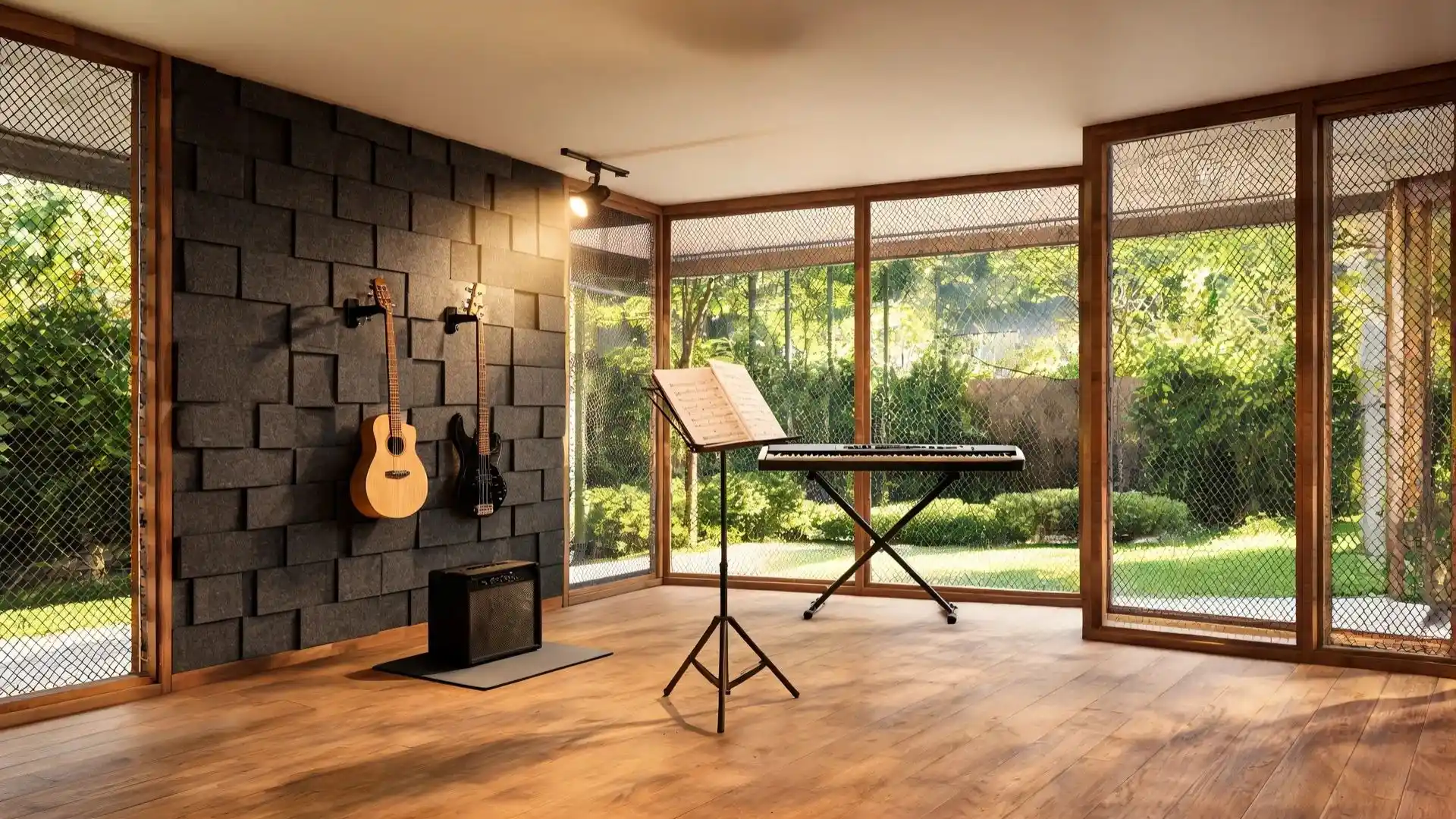
Mesh panels dissipate sound outward rather than reflect it, a natural acoustic advantage over most indoor rooms at the hobbyist level. Staggered acoustic felt panels manage the remaining echo.
Design Element: Staggered acoustic felt interior wall panels.
Budget: $3,000 – $8,000
20. Stargazing Observatory
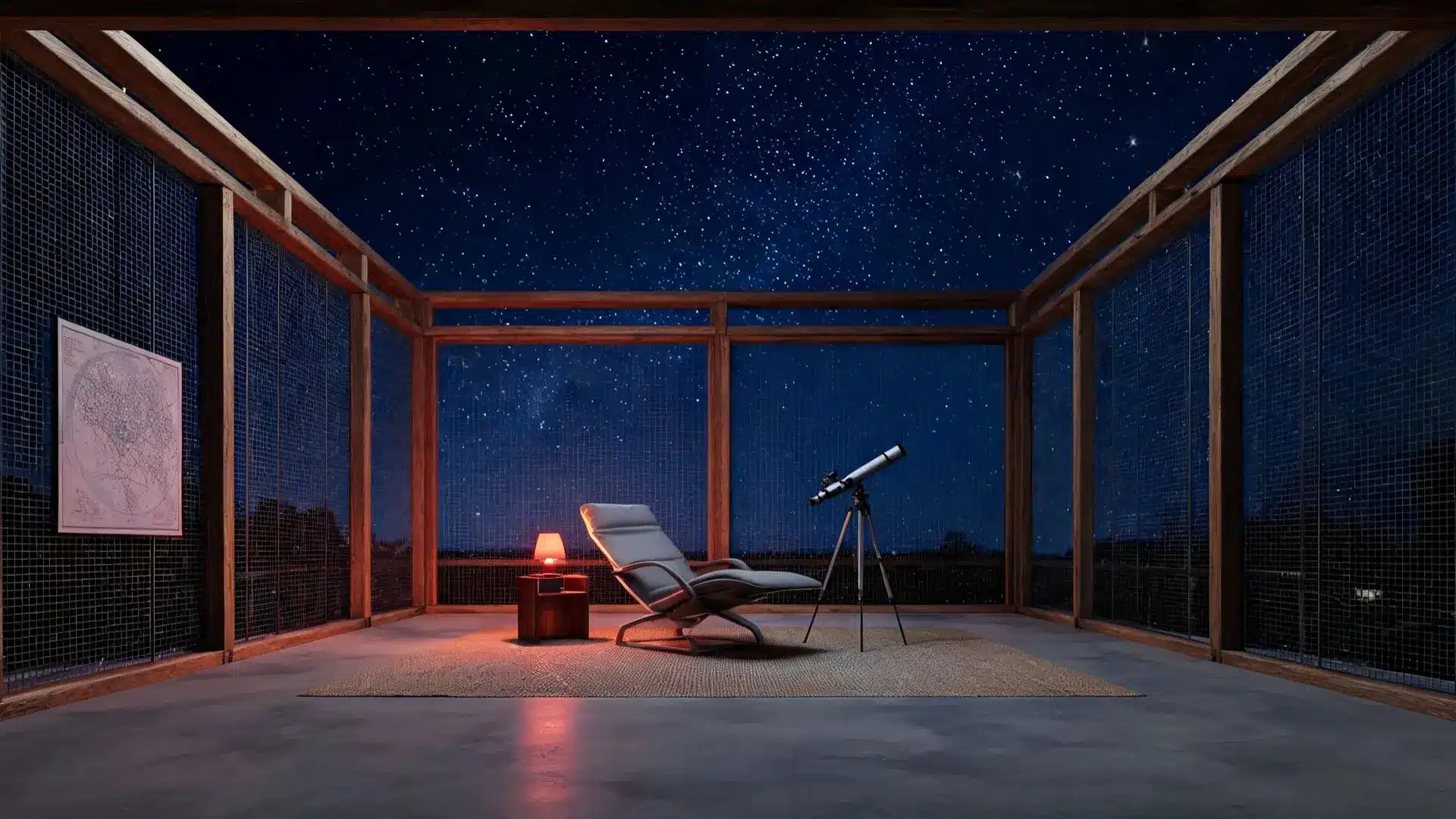
Motorized retractable roof panels open fully on clear nights while keeping insects out.
Specify gasket seals at panel tracks; overlap-fit systems leave gaps that insects can immediately exploit.
A dedicated red bulb near the entry preserves the 20–30 minutes of dark adaptation serious stargazing requires.
Design Element: Motorized retractable roof screen panel system.
Budget: $2,000 – $6,000
21. Grill and Smoker Station Deck
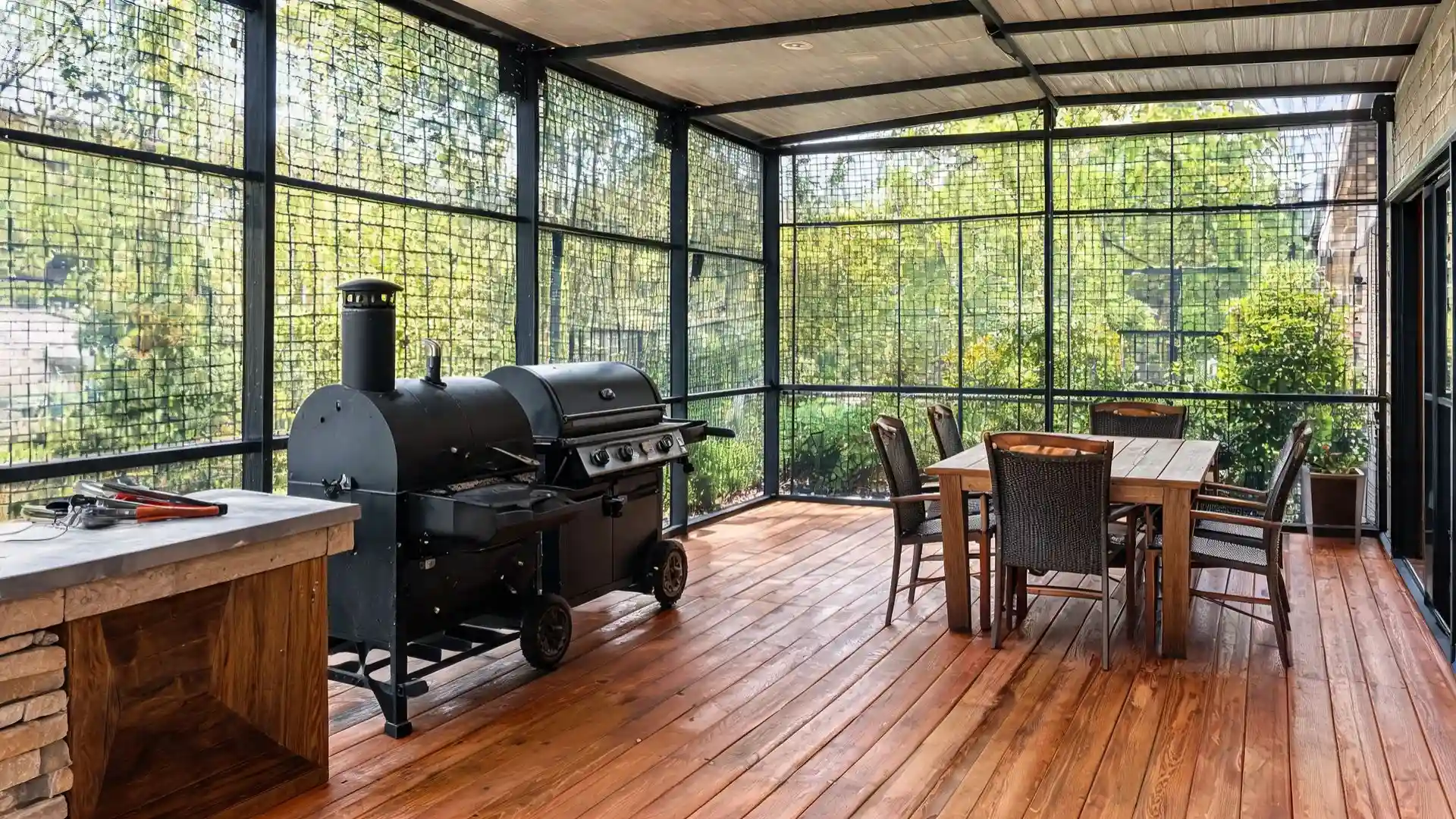
Separate cooking and dining levels keep the layout organized during gatherings.
Black mesh screen walls, a dedicated smoker station, and hardwood deck layering give this setup a purposeful, workshop-like quality that casual outdoor kitchens never quite achieve.
Design Element: Dedicated smoker station with layered hardwood decking.
Budget: $12,000 – $25,000
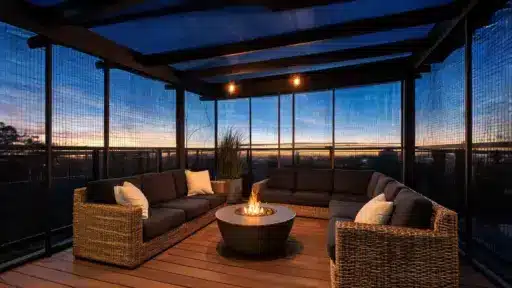
22. String Light Evening Entertainment Deck
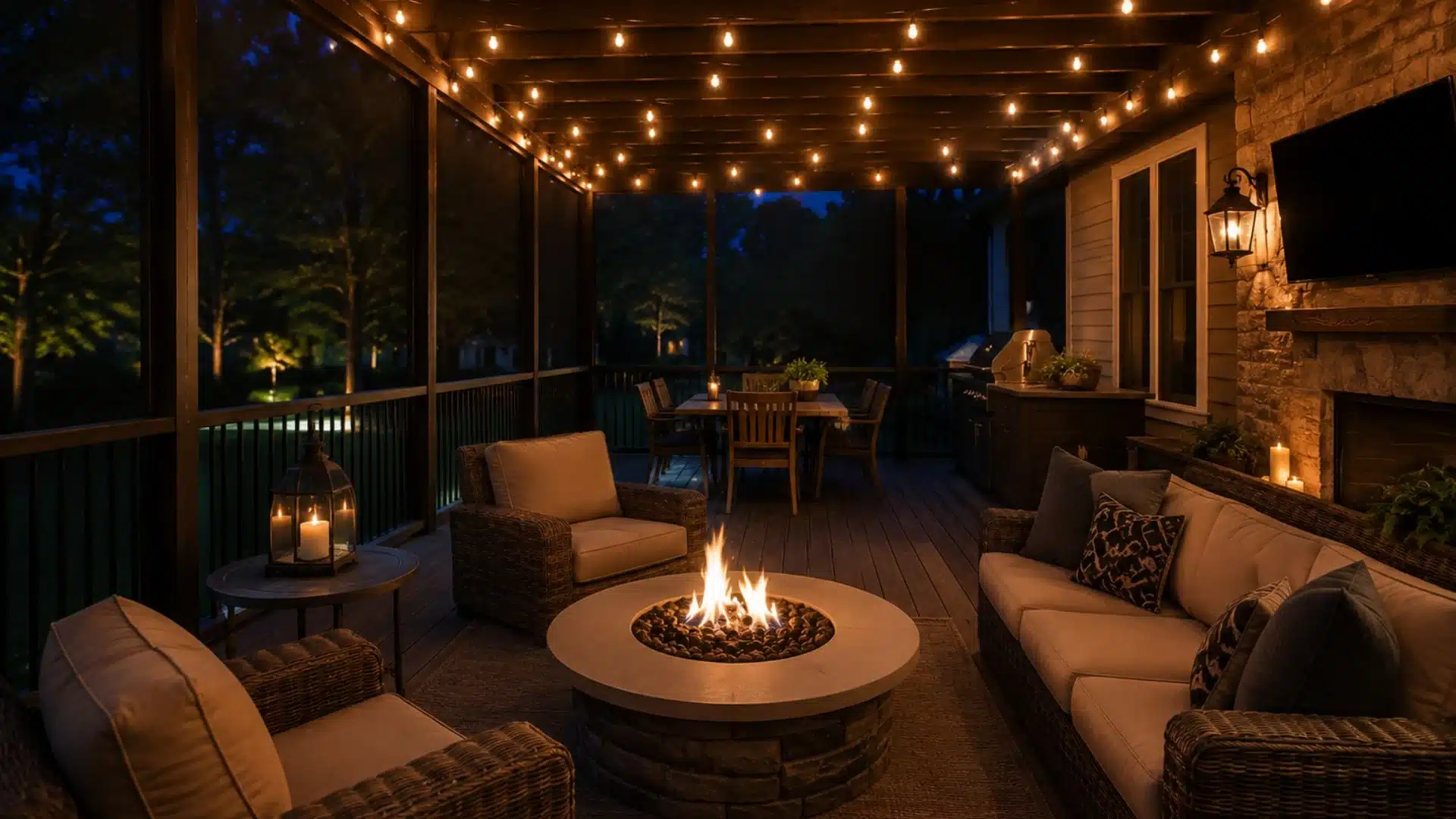
Soft string lights stretched across black mesh walls shift the entire mood after sunset without a single structural change.
Layered wood deck levels and cushioned lounge seating keep the setup relaxed, approachable, and genuinely comfortable for evening gatherings of any size.
Design Element: String lights across black mesh screen walls.
Budget: $4,000 – $10,000
23. Fireplace-Centered Gathering Deck
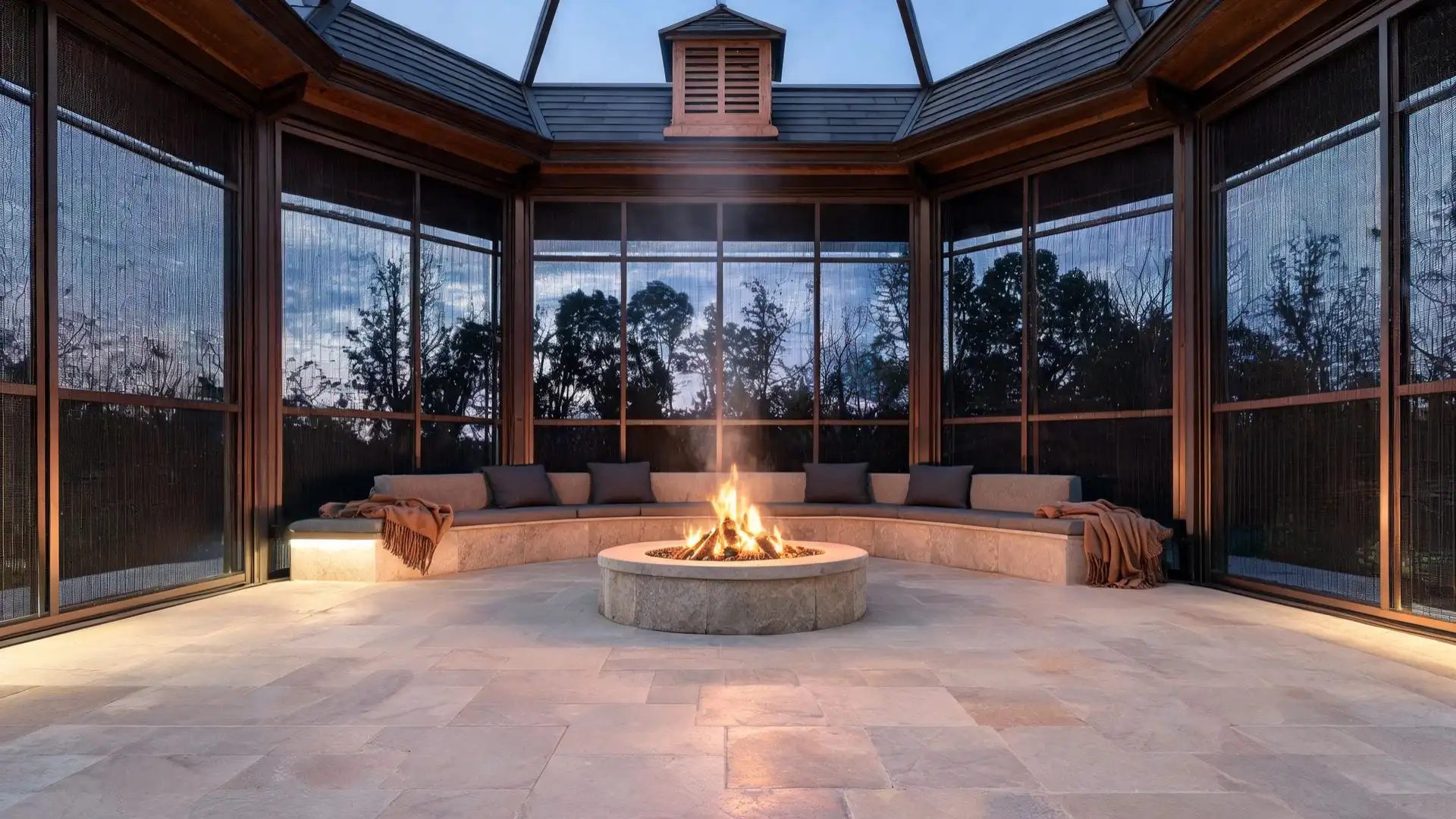
A modern gas fireplace positioned between split deck levels becomes the reason people stay outside well into cooler months. Recessed floor lighting and black mesh walls frame the fire without competing with it.
This is the screened deck that meaningfully extends the outdoor season.
Design Element: Gas fireplace between layered deck levels.
Budget: $22,000 – $45,000
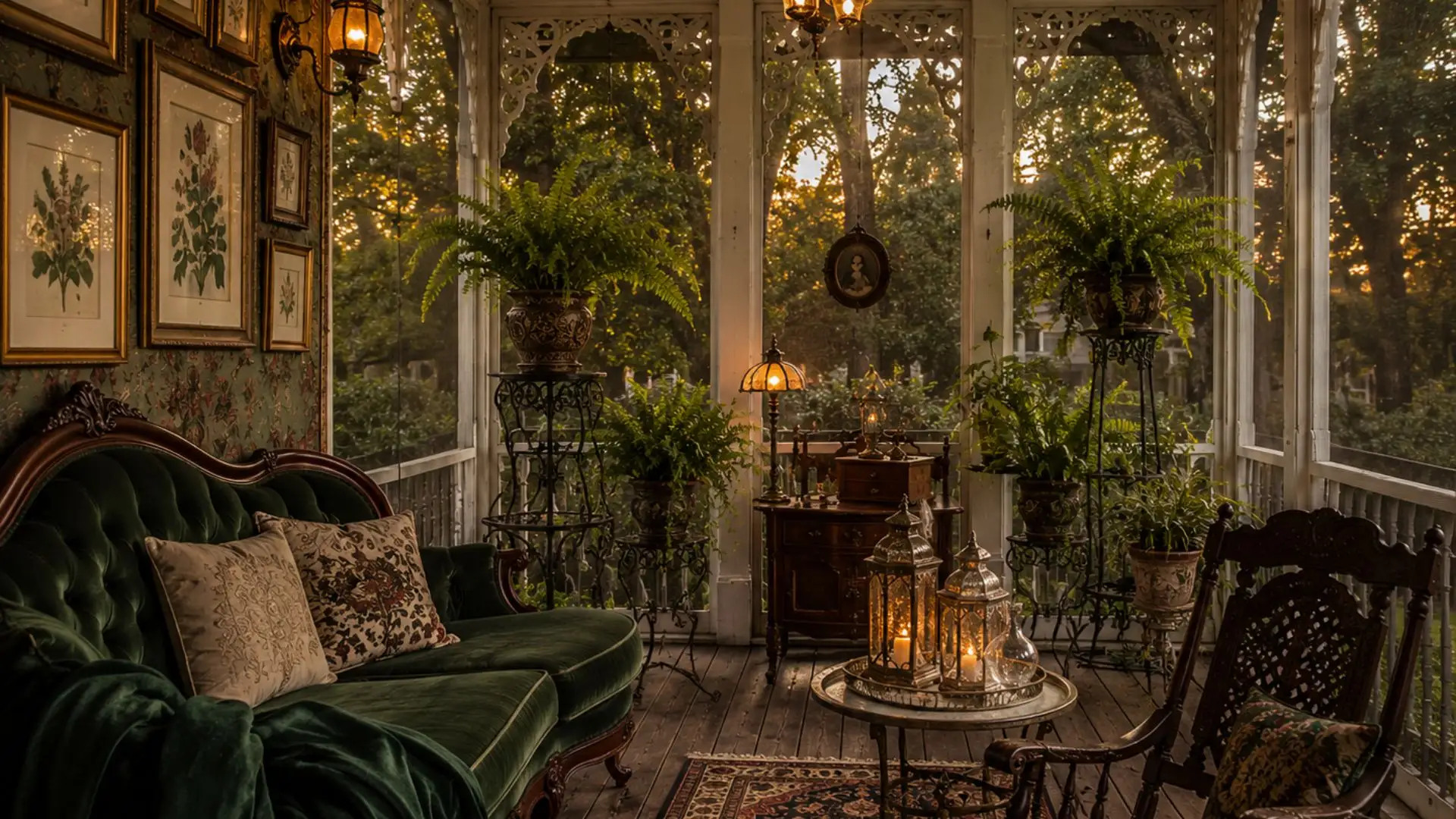
24. Victorian Vintage Collector’s Porch
White-painted gingerbread trim on the interior screen frame face turns the structural border into the room’s primary decorative feature.
A velvet fainting couch, antique botanical prints, and mercury-glass lanterns complete the look.
Nothing here was bought new, and it shows in the best way.
Design Element: Victorian gingerbread trim on interior screen frame.
Budget: $2,500 – $6,500
25. Coastal Nautical Escape
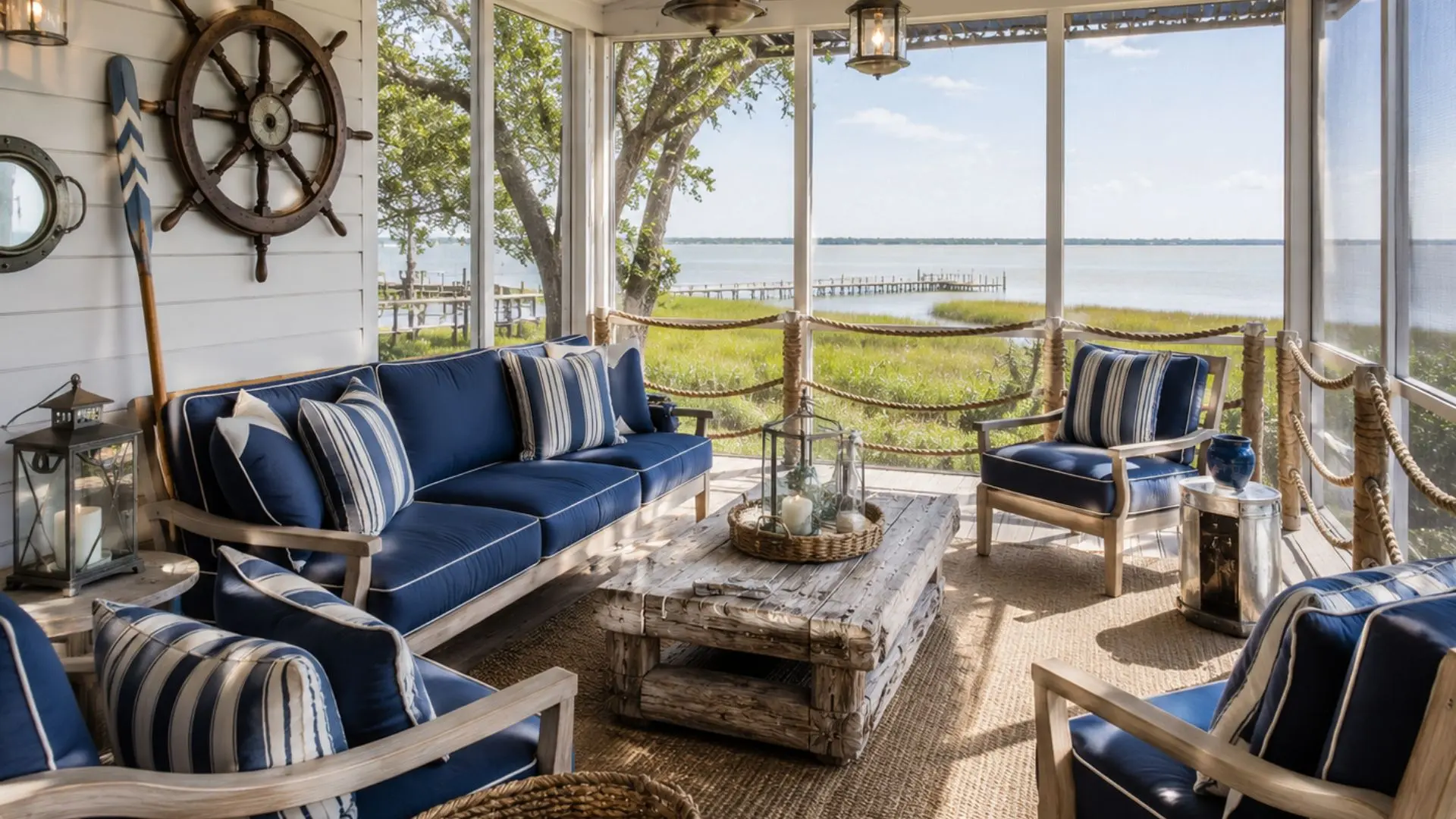
Using marine-grade stainless steel on every fastener and hinge is the key to long-term durability here.
Standard zinc fittings rust visibly within one season in salt air.
Rope railings, driftwood surfaces, and navy stripe cushions carry the look without forcing it.
Design Element: Marine-grade stainless steel hardware throughout.
Budget: $2,500 – $6,000
26. Desert Southwest Adobe Patio
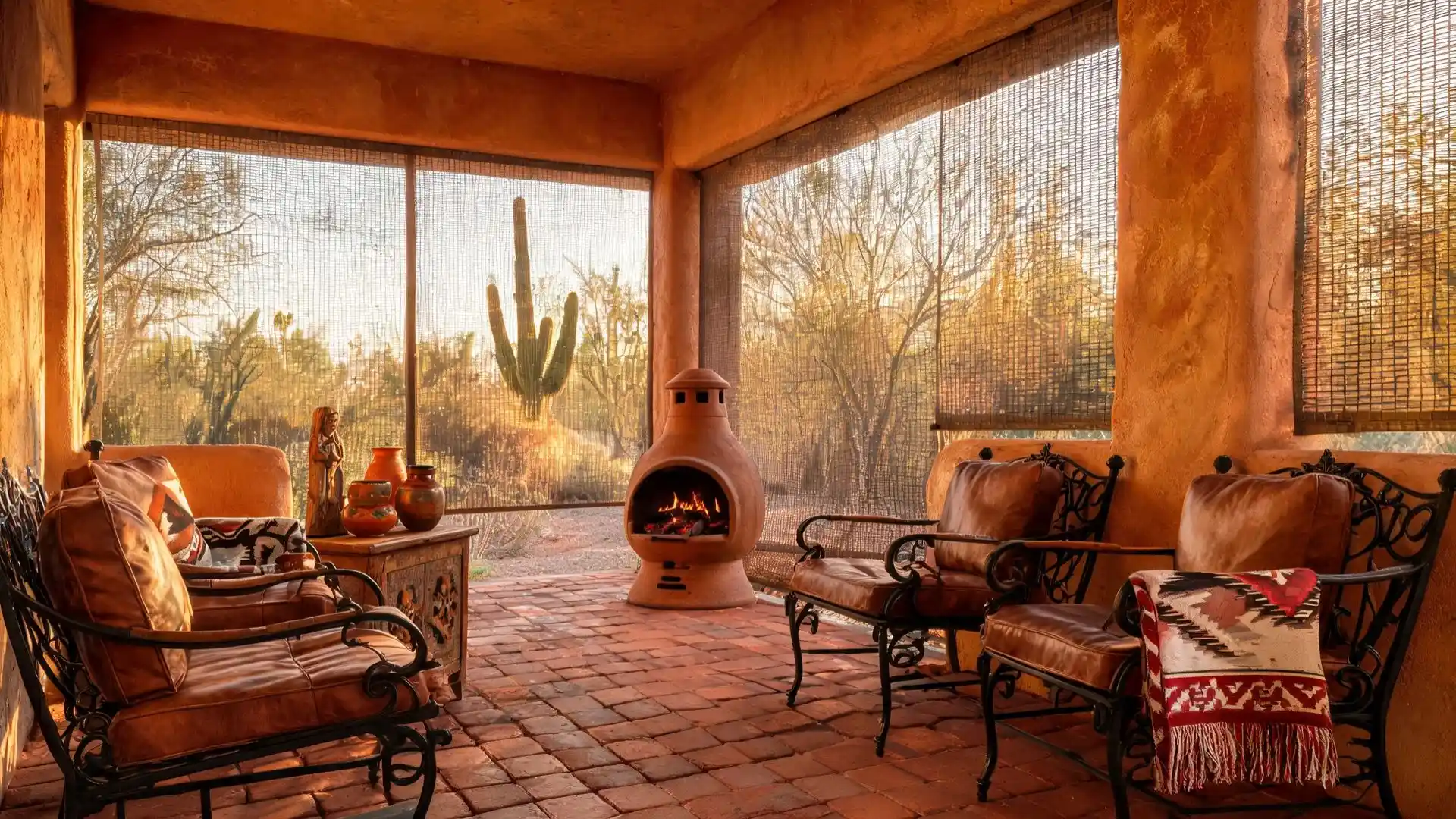
Hand-applied stucco, finished with a warm ochre wash, gives this screened patio its regional identity, extending outward from the walls.
Saltillo tile, wrought iron, hand-tooled leather cushions, and a clay chiminea complete the atmosphere.
The enclosure keeps scorpions and dust out, a practical advantage unique to this climate.
Design Element: Hand-applied ochre stucco interior wall finish.
Budget: $2,000 – $5,500
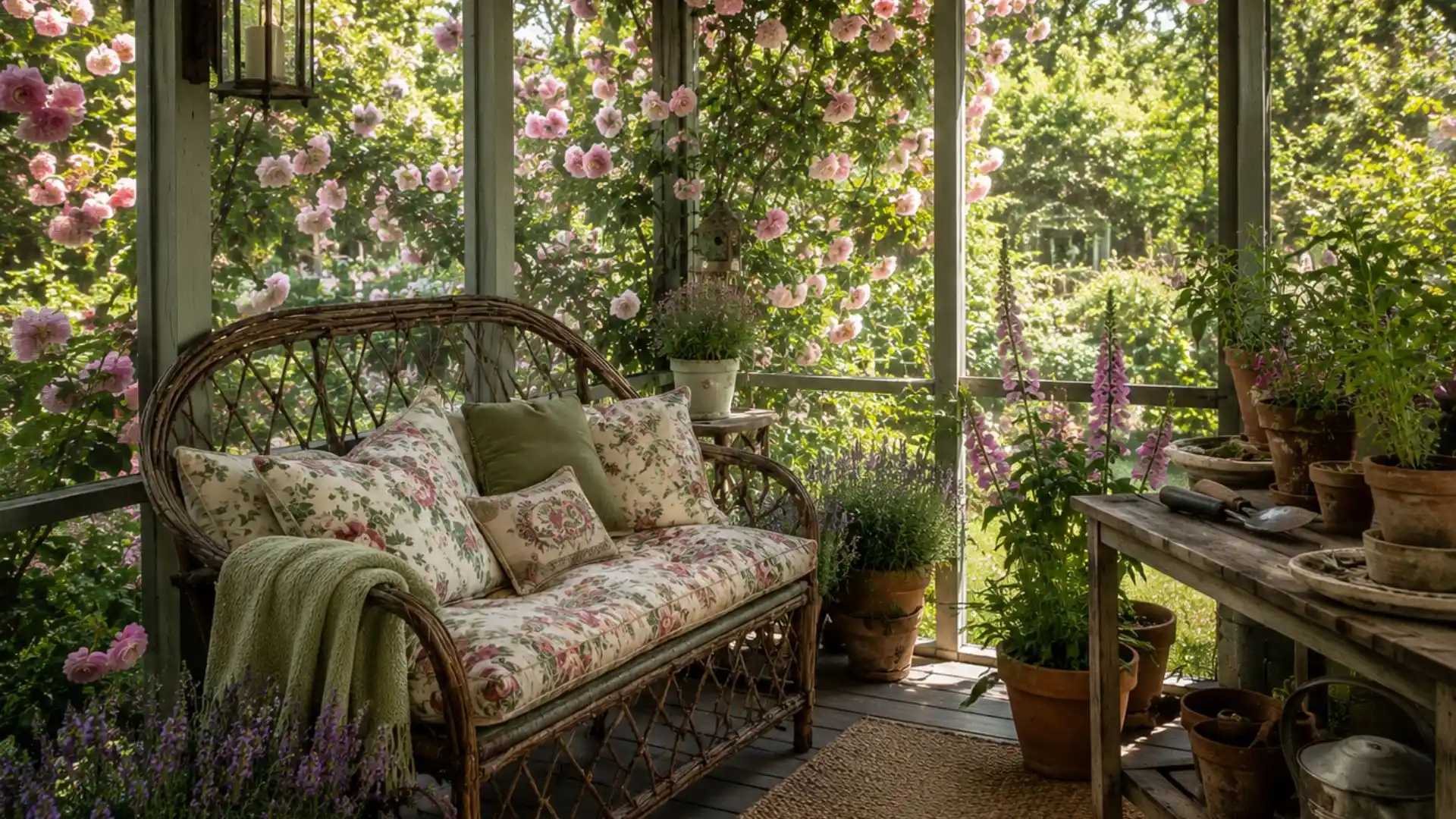
27. English Cottage Garden Porch
Climbing roses anchored to the exterior screen frame use the enclosure itself as a living trellis, perfuming the interior through the mesh.
A twig-willow loveseat, chintz cushions, and a small potting bench lean deliberately into asymmetry, the quality that separates cottage style from simply cluttered.
Design Element: Climbing roses trained on exterior screen frame.
Budget: $1,500 – $4,000
28. Rustic Cabin-Style Screened Deck
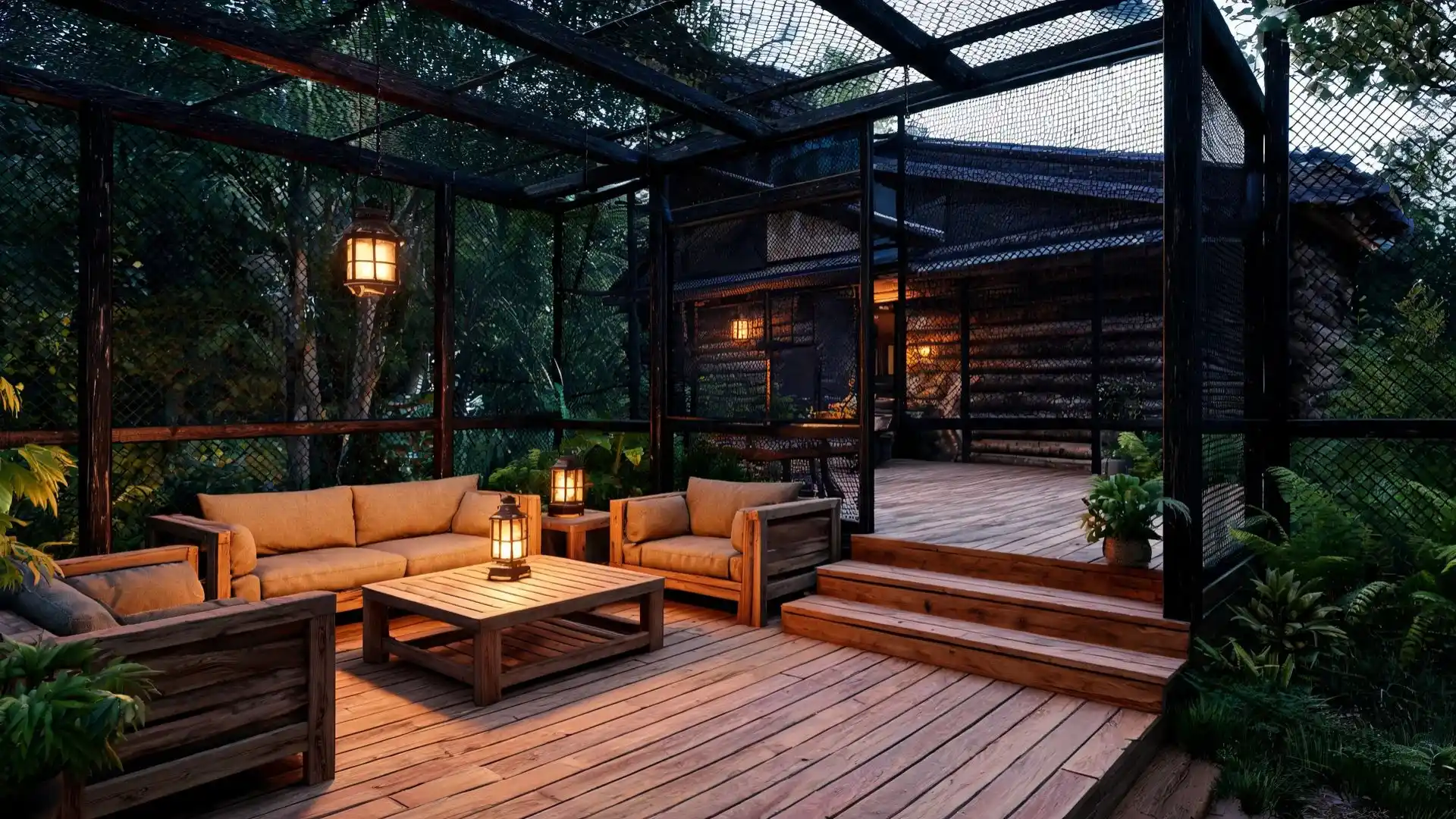
Cedar decking, stone planters, lantern lighting, and built-in storage benches give this multi-level deck a grounded, unhurried quality.
Designed for families who want a space that handles quiet evenings and weekend meals equally well without requiring any reconfiguration between the two.
Design Element: Cedar deck levels with built-in storage benches.
Budget: $18,000 – $35,000
29. All-Season Enclosed Deck Room
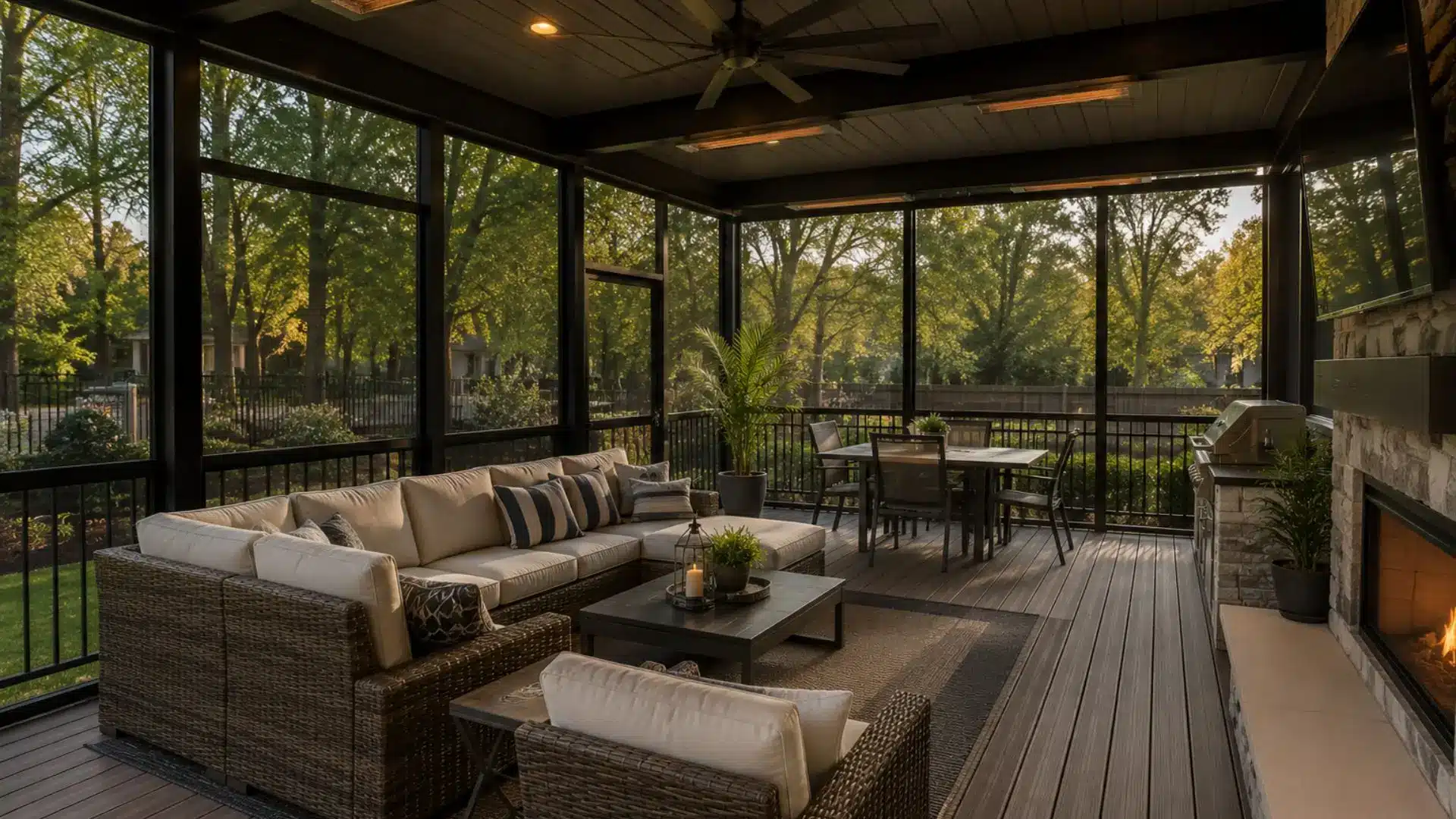
Sliding glass panels, ceiling heaters, and weather-resistant seating make this the most functionally universal screened deck on the list.
Black mesh walls handle the warmer months; the glass panels take over when temperatures drop.
One structure that genuinely earns use in every season.
Design Element: Sliding glass panels with ceiling heaters.
Budget: $18,000 – $42,000
Disclaimer: Budget estimates rely on average material and labor costs. Final prices may vary with deck size, wood type, screen material, furniture, lighting, custom features, contractor rates, and local conditions.
Mistakes that Make a Screened-in Porch Feel Cheap or Uncomfortable
Many screened-in porch ideas look good in photos, but become difficult to use when comfort and daily function are ignored. Adding too much furniture makes the patio feel crowded and restricts movement.
- Oversized furniture kills flow. Leave at least 36 inches of clearance between seating and any walkway.
- Use two or three light sources at different heights instead of harsh single-bulb fixtures, which flatten the space.
- Ceiling fans not rated UL Damp or Wet will corrode and fail; the label is on the spec sheet, not the box.
- Heavy drapes block the breeze that makes a screened porch worth having in the first place.
- Skipping a ceiling fan in climates above 85°F in the summer makes the space unusable from June through August
- All-neutral color schemes photograph well but feel cold at night without warm-toned bulbs.
- Concrete or tile without an outdoor rug creates echoes and a sense of institutionalism rather than relaxation.
- Ignoring the sun’s direction when placing seating means glare or direct heat ruins the space for half the day.
Realistic Upgrades that Increase Home Value
A screened-in porch consistently returns 50–70% of its build cost at resale.
Upgrades that move the needle most: electrical rough-in with dedicated circuits, ceiling fans with UL Wet ratings, composite or cedar flooring, and a permitted structure.
Buyers discount unpermitted additions during inspection, pulling the permit upfront protects your investment from day one.
Frequently Asked Questions (FAQ’s)
1. What is the Average Cost of a Screened-In Patio?
Most screened-in patios cost $4,000 to $40,000 based on size, materials, lighting, and features.
2. Does a Screened-In Porch Increase Property Taxes?
A screened-in porch may slightly raise property taxes by adding covered living space.
3. What are the Disadvantages of a Screened-In Porch?
It requires maintenance, can feel hot in summer, and may become expensive with custom materials and features.
4. Are Screened Patio Ideas Good for All Seasons?
Yes, screened patio ideas work year-round with heaters, weather-resistant furniture, and optional glass panels.
5. Which Screen Material Works Best for Screened Patios?
Black aluminum mesh screens are ideal due to their durability, airflow, visibility, and low maintenance.
Final Thoughts
A well-designed outdoor space can turn an unused patio into the most comfortable part of the house.
The best screened-in patio ideas combine comfort, privacy, lighting, and practical seating without making the area feel crowded or difficult to maintain. Each setup should support the way the space will actually be used every day.
A screened patio improves comfort by providing a protected outdoor space year-round.
Use these ideas as inspiration, mix elements that fit your layout.
Start creating an outdoor space that feels comfortable year-round.

Robert Thompson, a proud alum of the University of Oregon with a degree in Landscape Architecture, has been a leading figure in outdoor space enhancement for over 17 years. He started his career with a landscape design firm, gaining invaluable experience creating functional and attractive outdoor living areas. Robert joined our website in 2018, where he quickly became known for his innovative yet practical advice on outdoor renovations. He has been the chief editor of our deck and patio section ever since then, helping readers transform their outdoor spaces into personal retreats. When not drafting designs or writing, Robert is an avid kayaker, often drawing inspiration from nature for his creative projects.