
The Death of the Dedicated Game Room
Space is dead. Urban density killed the basement den. We now live in micro-apartments where the bedroom is the office, the kitchen is the lounge, and the gaming setup is a contested zone. The modern hobbyist faces a brutal architectural reality. You cannot afford a separate room for your rig. You have to carve a functional nook out of a tight floor plan without ruining your sanity. Cluttered spaces spike cortisol levels. Your brain needs hard boundaries to separate work from play. You need structural tricks.
The closet-office strips a standard 48-inch closet of its clothes and packs it with a custom desk. This setup hides the hardware behind a door when you log off. Out of sight means out of mind. That barrier is crucial.
The dopamine setup follows a similar logic. You build a space loaded with personalized RGB lighting and carbon fiber textures to trigger immediate positive neurological feedback when you sit down. You walk away, and the footprint vanishes into the living room.
Spine Geometry and the M57 Mandate
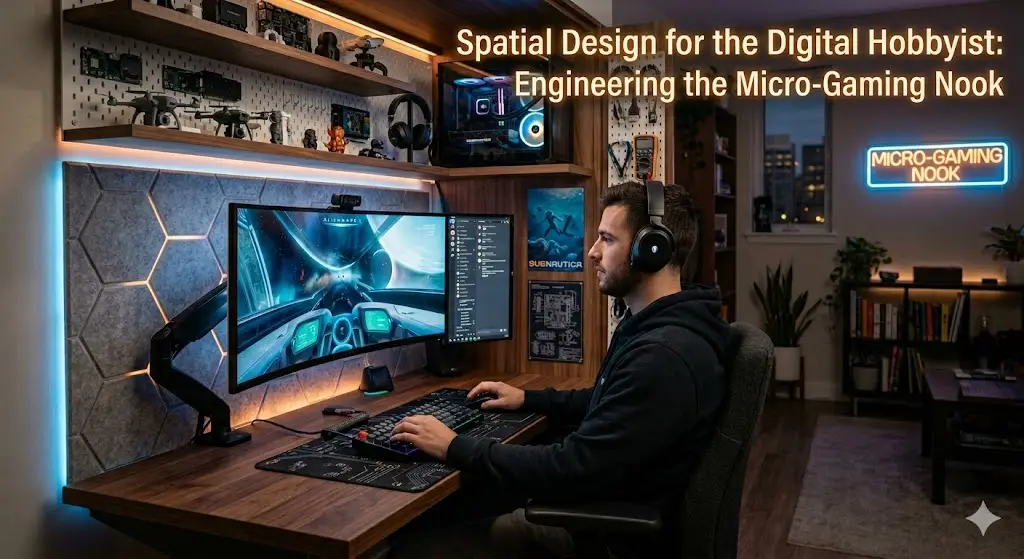
Your musculoskeletal system hates tiny spaces. Shoving a backless stool into a tight corner guarantees cervical spine damage. Ergonomics dictate exact geometry to stop you from crippling yourself. The monitor must sit exactly an arm’s length away. That means a precise 20 to 40-inch gap from your cornea to the screen. The top bezel aligns perfectly with your resting eye level. You tilt the screen back roughly 15 degrees.
Bifocal wearers drop the screen two inches lower and tilt it up to 40 degrees. This specific adjustment stops you from craning your neck to see through the bottom of your lenses. Optometric protocols also demand the 20-20-20 rule.
You stare at something 20 feet away every 20 minutes for 20 seconds. Tiny apartments block that sightline. You fix this by mounting a mirror opposite your desk. The reflection artificially doubles the focal distance. Your ciliary muscles relax.
Seating requires ruthless compromise. Massive executive chairs consume half the room and trap you against the desk. You need multi-axis adjustability trapped in a microscopic footprint. The M57 series chair solves this exact friction.
It gives you 25 inches of total depth alongside heavy-duty lumbar support. You get full spinal alignment during a raid. You flip the armrests up and shove the chair flush under the desk when you finish. You instantly reclaim a square meter of floor. That matters. Correct lower-body posture anchors the entire ecosystem. Your feet stay flat. Your spine stays straight. Your eyes stay sharp.
Kelvins, Sconces, and Photonic Zoning
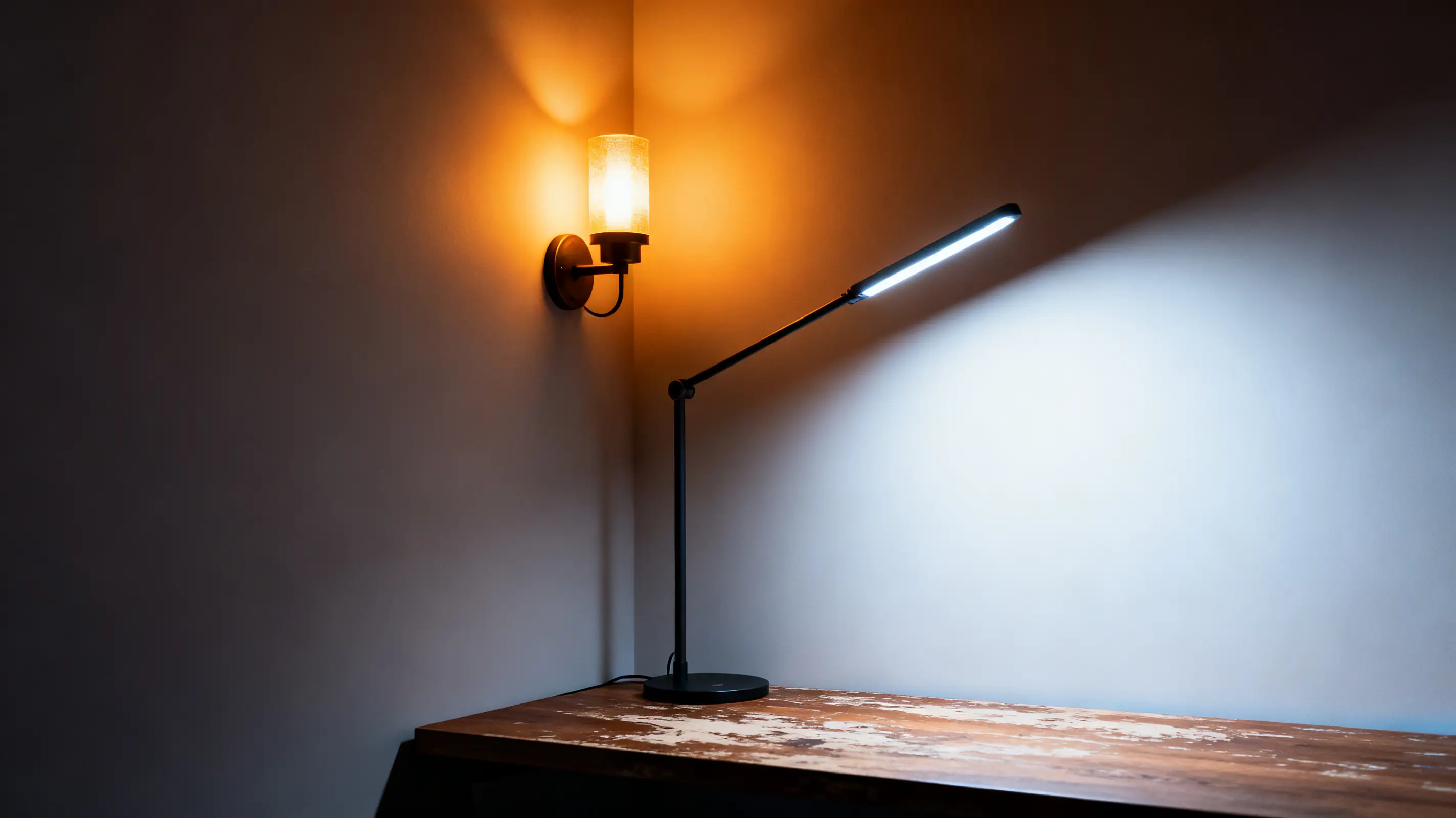
Light builds walls where drywall cannot. A single overhead bulb ruins a small room. It flatlines the atmosphere and creates aggressive shadows. You need layered lighting to trick the brain and establish functional zones. Color temperature dictates your neurological state.
Bright light measuring 4000K mimics the midday sun. It blocks melatonin production and forces your brain into high-alert focus. You use this temperature for intense productivity or competitive ladder climbs. Warm light measuring 2700K acts like a sunset. It signals your nervous system to calm down. Smart LED arrays let one tight corner serve both masters seamlessly.
You must overlap three lighting layers to expand the room. Flush ceiling mounts provide ambient glow without eating vertical airspace. Task lighting targets the desk directly. You aim an articulating lamp at the keyboard to kill monitor glare. This highly focused light is especially critical for digital blackjack game platforms, where missing subtle UI details or card text costs matches.
The localized beam keeps your focus locked on the strategy while the peripheral room stays comfortably dim. Wall sconces provide the final accent layer. Fixtures like the Angelica design or a slim Panthella floor lamp bounce soft light off tight corners. This setup creates visual depth. It eliminates the flat shadows of a tiny apartment.
The Seven-Inch Footprint
Renters cannot tear down walls. They buy their way out of spatial constraints. The commercial fold-down desk market offers instant relief for a premium price. The Friday Furniture Clamshell desk compresses a full tech ecosystem into a cabinet protruding just seven inches from the drywall. You open it up. You find an integrated 27-inch monitor, a heavy-duty articulating arm, and a studio-grade ring light.
You shut it. The room returns to normal. Pith and Stem’s DropTop hides dual screens behind a customizable faux art print. These units cost serious money but offer immediate structural safety.
The DIY route demands less cash and more engineering. A custom Murphy desk fits the exact weird angles of an old apartment. You build a rigid chassis from 1×8 pine boards. You cut a 3/4-inch sanded plywood leaf for the main fold-down surface. You assemble the entire frame using a pocket hole jig. You drive 15-degree angled screws to hide the hardware and maximize clamping force.
Drywall anchors will fail catastrophically under this dynamic weight. You must drive three-inch wood screws directly into the architectural wall studs. Heavy-duty gas struts are mandatory. You mount pneumatic pistons inside the lower shelf frame.
They lock at a rigid 90-degree angle to hold your gear. They dampen the drop when you pull the leaf open. You wrap the raw plywood edges in heat-activated birch banding. You paint the closed face to look like abstract wall art.
Optical Illusions for the Concrete Box
Hardware is just the skeleton. You still need to fool the eye. Dark paint traps light and suffocates the room. You paint the surrounding nook in high Light Reflectance Value colors. Pale neutrals and bright whites bounce photons around the alcove. You position a mirror across from the nearest window. The room feels twice as deep. You place a tall, slender lamp in a dark corner to draw the eye upward. Vertical space expands the mind.
Nature cuts the tension of a digital rig. A massive Monstera plant acts as an organic room divider. It blocks the glare of the setup from the sofa without building a physical wall. Plants lower systemic cortisol levels. Chaos ruins these optical tricks immediately.
Cable management is mandatory. Messy HDMI cords and massive power bricks destroy the minimalist illusion. You route every wire through under-desk raceways. You strap loose cables together with heavy-duty zip-ties.
You mount a pegboard on the back wall to hold your headset and controllers. You buy a lift-top storage ottoman. It holds your extra gear and acts as a seat for guests. You strip away all visual noise. The setup vanishes when you walk away.

Dylan Reyes, BSc in Game Design, has spent eleven years developing indie titles and analyzing esports strategies. He joined our site in 2025 to unpack mechanics, lore, and hardware essentials for gamers of every skill level. Off-keyboard, Dylan teaches coding to teens and speedruns retro classics.