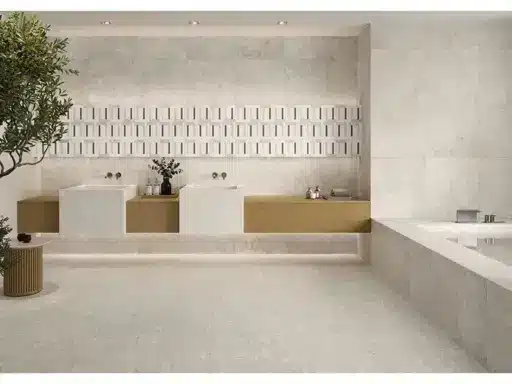
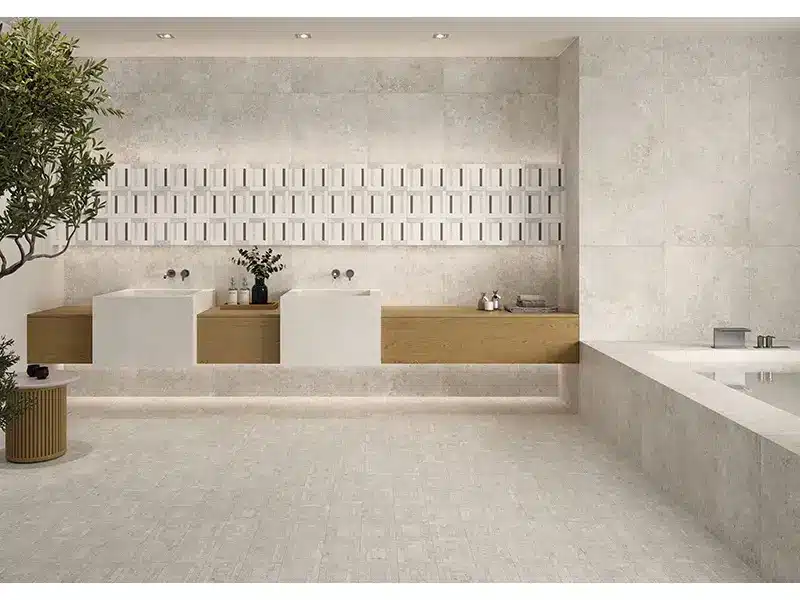

Surface design has a powerful influence on the way an interior is perceived. Beyond color alone, texture, tonal variation, and the interaction with light can make a room feel softer, more dynamic, more intimate, or more expansive.
This is especially true with stone look porcelain tiles, where the visual richness associated with natural stone can be interpreted through a wide range of patterns, shades, and finishes.
By carefully balancing these elements, designers can create surfaces that feel layered and expressive without overwhelming the space. The result is an interior where material character contributes directly to atmosphere and visual depth.
Understanding the Role of Texture
Texture is one of the first qualities that defines how a stone-inspired surface is experienced. Some interpretations feature very subtle movement, with delicate mineral traces and a restrained appearance. Others display stronger markings, deeper contrasts, or more pronounced surface variation.
These differences have a significant impact on the overall mood of a room. A softer texture can support calm, minimal interiors, while a more expressive surface introduces energy and a stronger material presence.
Texture also affects how a surface responds to its surroundings. Paired with smooth furniture, glass, or metal, a mineral-inspired finish can introduce contrast and tactile richness. When combined with wood or fabrics, it can reinforce a warmer and more layered aesthetic.
Using Tone to Shape Atmosphere
Color and tonal variation play an equally important role in defining the character of stone look porcelain tiles. Light shades can make interiors feel brighter and more open, especially when used across large surfaces. Beige, sand, ivory, and pale gray tones often create a soft, balanced backdrop that supports a relaxed and contemporary atmosphere.
Deeper shades, by contrast, can add definition and visual weight. Charcoal, graphite, or dark stone tones can create a stronger sense of intimacy and help anchor a room within a larger architectural composition. The effect also depends on tonal consistency. More uniform surfaces tend to feel quiet and controlled, while greater variation introduces movement and individuality.
How Light Reveals Surface Character
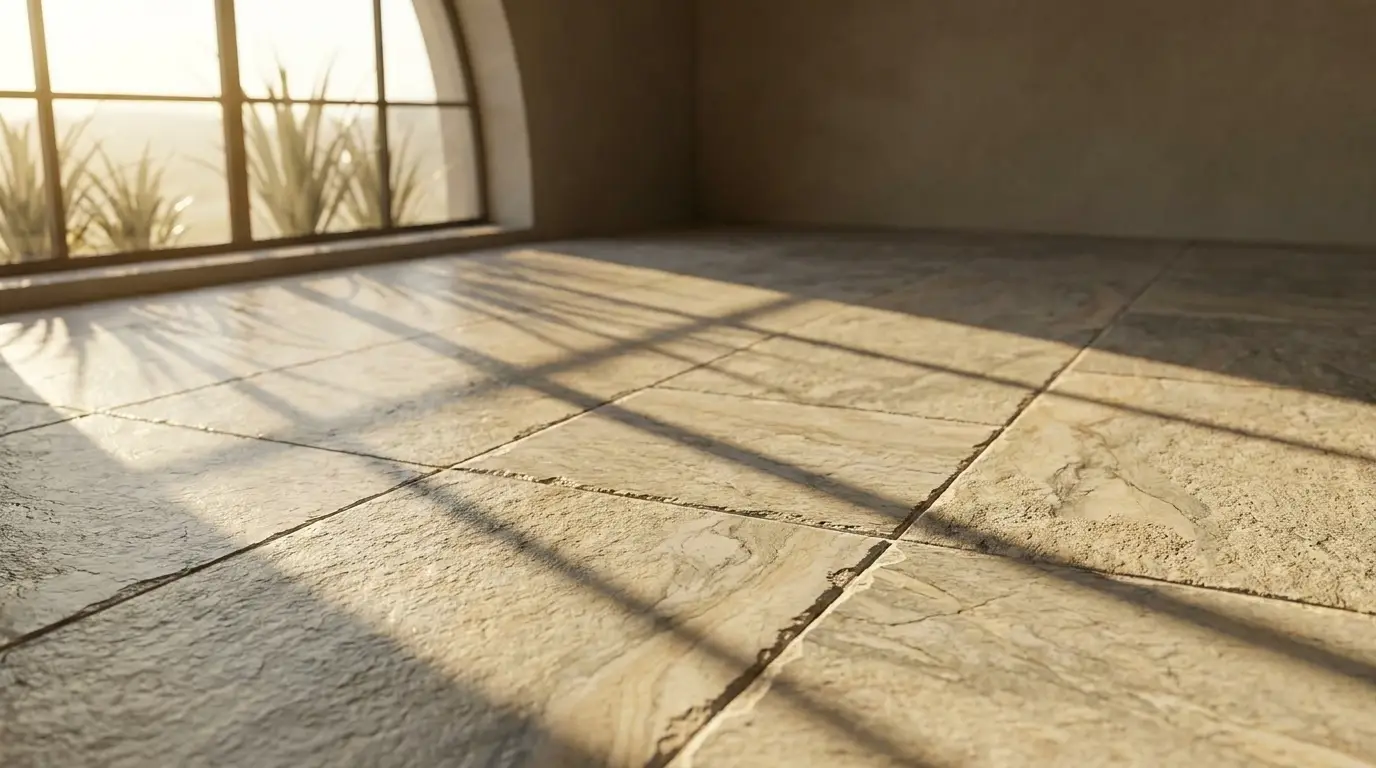
The appearance of a stone-inspired surface is never completely static. Natural and artificial light change the way textures, colors, and patterns are perceived throughout the day.
Direct light can emphasize surface variation and reveal subtle differences in tone, while softer illumination tends to create a more uniform and understated effect. Shadows can make certain textures appear deeper, adding dimension to walls or floors that might otherwise seem flat.
This interaction becomes especially important in spaces with large windows or carefully planned lighting schemes. The same stone look porcelain tiles can appear crisp and defined in bright daylight and noticeably softer under warmer evening light.
Creating Depth Without Visual Excess
Visual depth does not require highly dramatic patterns. In many interiors, the most sophisticated results come from subtle layering: gentle shifts in tone, restrained textural variation, and a balanced relationship between surfaces and surrounding materials.
Stone-inspired porcelain can introduce complexity without relying on ornament. A floor with nuanced tonal movement or a wall with soft mineral detail can enrich an environment while preserving a clean architectural language.
The key is to control the amount of visual information within the space. When texture, tone, and light are carefully balanced, stone look porcelain tiles become a precise tool for shaping the character and perception of contemporary interiors.
Architecture, Materials, and Innovation: the Ceramiche Keope Approach
Architecture increasingly relies on surfaces that can do more than satisfy a visual brief. They must support different uses, respond to technical constraints, and remain coherent as projects move between interior and exterior environments.
This broader understanding of material performance is central to the way Ceramiche Keope has developed its porcelain stoneware offering since 1995. As part of the Concorde Group, the company combines Italian design culture with industrial research and advanced manufacturing technologies to support residential, commercial, and public projects.
Stone-effect porcelain stoneware is one expression of this approach. By interpreting the veining, textures, and tonal depth associated with natural stones such as slate, travertine, Lecce stone, and Portland stone, ceramic surfaces can introduce a strong material identity while retaining the durability and practicality of porcelain stoneware. Resistance to wear, scratches, impacts, weathering, and water absorption makes these solutions suitable for demanding applications, while simplified maintenance supports everyday use over time.
Project flexibility is further enhanced through a wide range of formats, finishes, and thicknesses. Options from 9 to 20 mm make it possible to respond to different indoor and outdoor requirements, while slip-resistant finishes ranging from R9 to R11 extend the range of potential applications.
Surface research also includes ULTRAsilky, with its extra-smooth, velvety satin feel and enhanced slip resistance for interior wet areas, and ULTRAmatt, characterized by a deep extra-matt appearance, soft uniform touch, and R10 A+B performance for residential and commercial floors and walls.
Innovation at Ceramiche Keope also extends to the manufacturing process itself. Water used in production is fully recovered and reused, fired ceramic waste is recycled, and raw material residues are reintegrated into the production cycle. Approximately 75% of the energy required is generated internally, while the remaining share comes exclusively from certified renewable sources.
Rather than treating environmental responsibility as separate from product development, this system makes it part of the same design and industrial logic. ISO 17889, WELL Building Standard V2, and Declare reflect that integrated approach, linking material quality, production transparency, and long-term architectural value within a single vision of contemporary ceramic design.

Millie Anderson, a graduate of Textile Design from the Fashion Institute of Technology, has carved her name in fabric and material finishes for over 16 years. Her career took flight in a renowned textile manufacturing company, where she mastered combining textures and patterns. Millie joined our team in 2018, becoming a cornerstone for readers interested in the latest trends in textiles. Since then, she has been the lead editor for our home decor fabrics section, blending her deep knowledge of materials with a flair for contemporary design. Beyond her professional achievements, Millie is an enthusiastic quilter and often participates in community arts and crafts workshops, further nurturing her passion for fabrics and design.