
You probably saw it on Pinterest first. Then in person, under showroom lighting, on a floor model that had never been sat on by anyone with crumbs in their lap or a cat with opinions. You bought the bouclé sofa. For about three weeks, it looked exactly like the photo.
Then ordinary life moved in. Nothing dramatic: a dropped cracker, a dog who has chosen the left cushion as his permanent address, an afternoon sun that lands on one armrest for two hours a day. Bouclé and velvet are both having a long moment in interiors, and both are genuinely nice to live with. They simply behave differently from the flat, smooth upholstery most of us grew up with, and that part rarely comes up at the point of sale.
So here is what actually happens day to day with these fabrics, and how to stay a step ahead of it.
Bouclé Looks Cozy Until You Actually Live With It
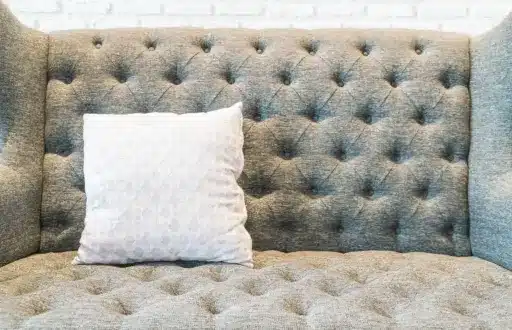
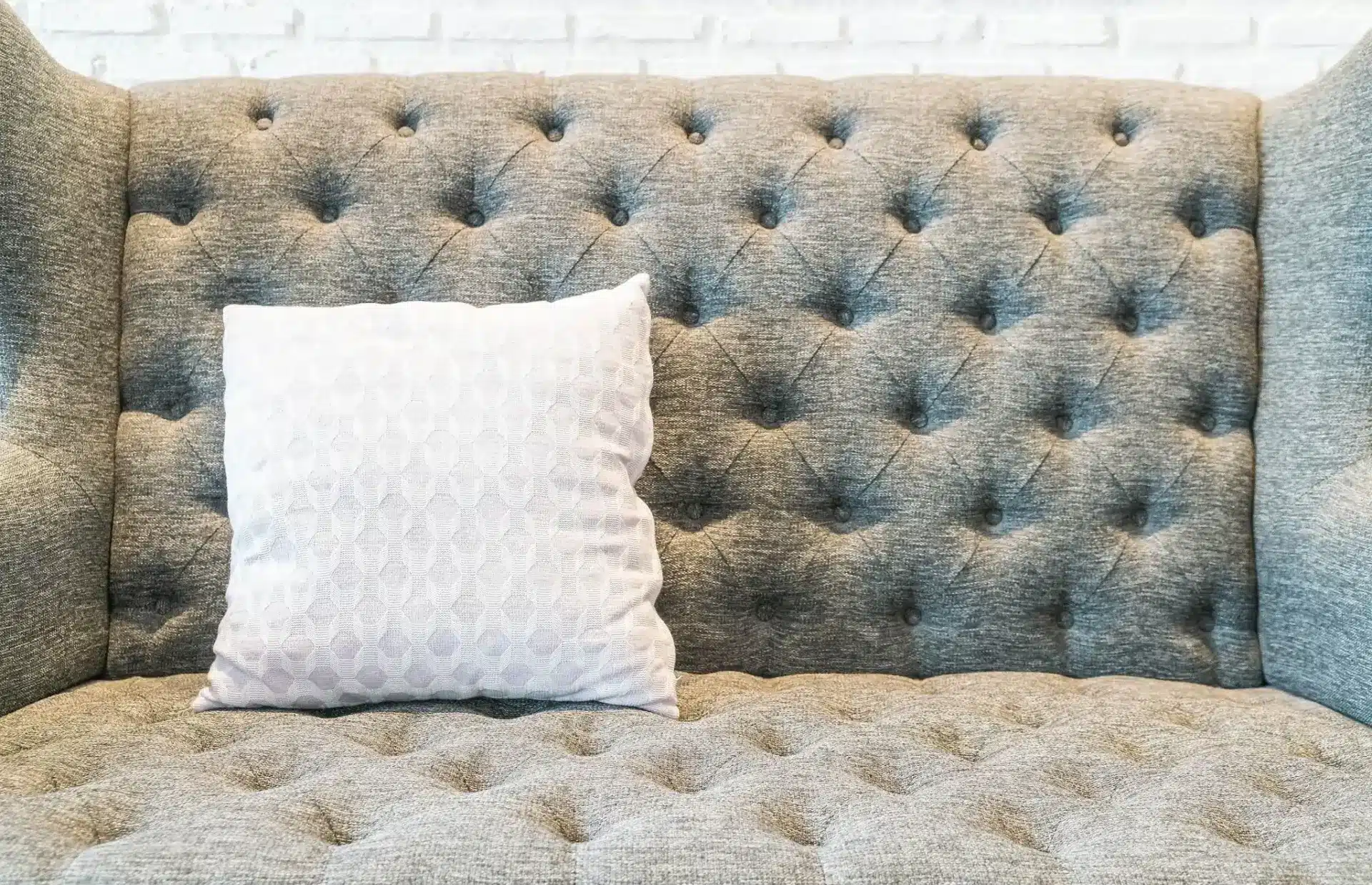
The whole appeal of bouclé upholstery is the looped surface. All those little curls catch light in a way flat weaves never do, which is exactly why the fabric photographs so well. The same loops also catch everything else.
Pet hair does not sit on top of bouclé the way it sits on a smooth cotton weave, waiting to be brushed off. It works its way between the loops and settles in. Crumbs do the same. So does lint from a fleece blanket, and the occasional strand of your own hair. A quick swipe with your hand, which is enough on flat fabric, mostly just rearranges things. An upholstery attachment with gentle suction does far more in ten seconds than a lint roller does in five minutes.
The other bouclé specialty is the snag. A loop gets hooked by a claw, a zipper, a ring, a watch clasp, the corner of a laptop, and suddenly one strand stands taller than its neighbors. It looks worse than it is. The instinct is to pull it, which is the one thing not to do, since you are then tugging the thread out of the weave. Trimming it level with small scissors usually makes it disappear.
And like any textured fabric, bouclé shows where life happens. Armrests, the front edge of the seat, the spot where a head rests during television. The loops compress and the surface thins slightly in those places. None of this is a flaw in the fabric. It is just what everyday wear looks like on a textured surface, and it is much easier to live with when you expect it rather than discover it.
Velvet Has a Different Set of Rules
If you own both fabrics, you learn quickly that they are not two versions of the same problem. Velvet upholstery has a pile, and the pile has a direction, and the direction is the whole story.

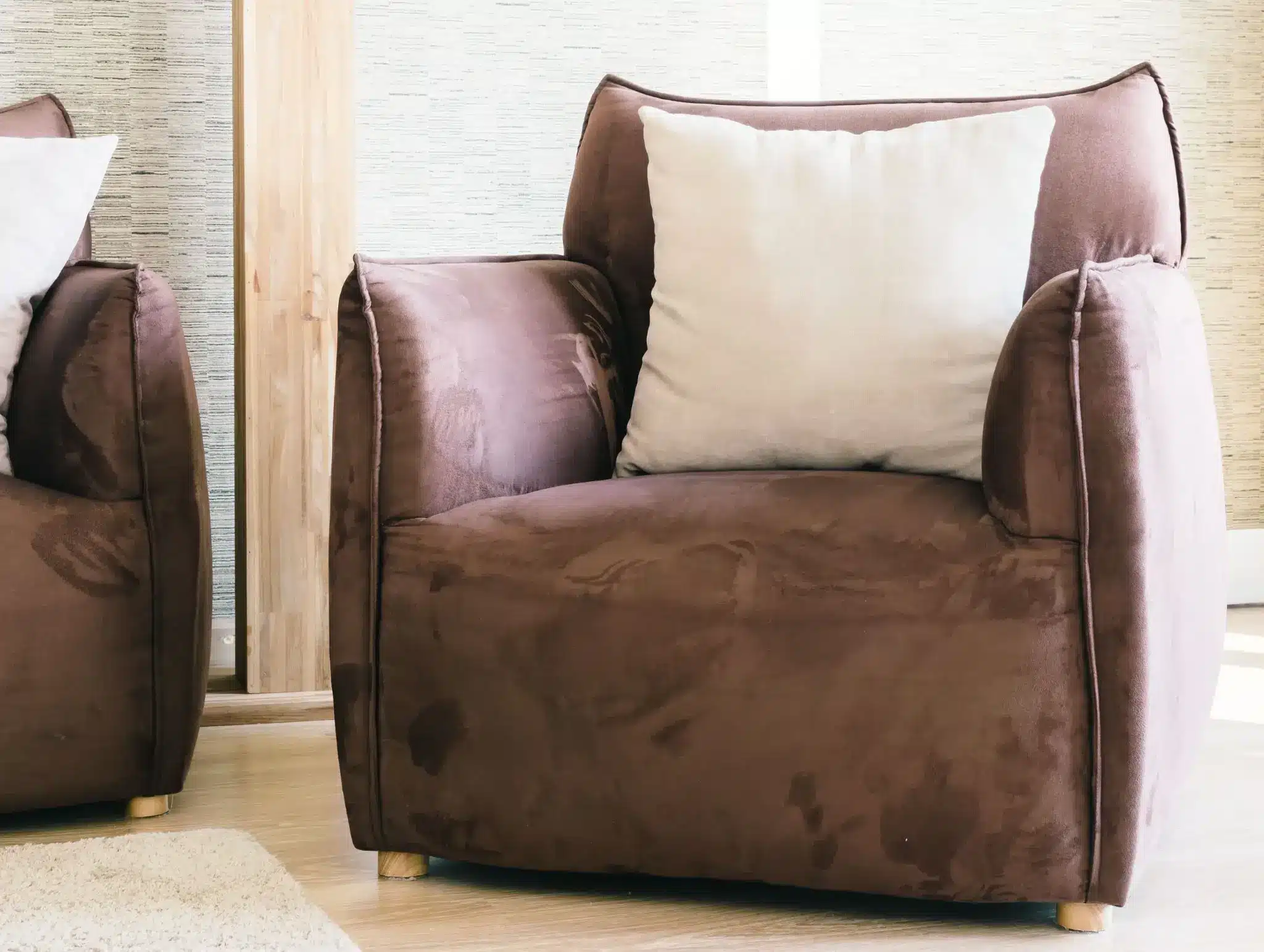
Press a palm into a velvet cushion and you leave a mark. Sit down, get up, and there is a faint map of where you were. Run a hand across the seat and the color appears to change, lighter one way, deeper the other. Furniture people call this shading or pile crush, and on most velvets it is temporary. A soft brush or a hand moving in one consistent direction usually resets it, if the manufacturer says brushing is appropriate for that particular fabric. Some velvets, especially crushed ones, are designed to keep the marks on purpose.
Water is the real variable. A damp cloth used generously on velvet can dry with a visible ring at the edge of the wet area, which is frustrating, because the spill itself may have come out perfectly. The mark is not dirt. It is the pile drying in a different direction than its neighbors. Less water, blotting rather than scrubbing, and feathering outward instead of stopping in a hard circle all help.
The upside, and velvet owners rarely say this out loud, is that velvet is noticeably better about debris than bouclé. Crumbs sit on the surface and slide off. Pet hair gathers in a visible layer instead of embedding itself, which looks worse and cleans up faster. Different fabric texture, different trade-off.
The Myths vs. What Actually Happens
Most of the fear around these fabrics comes from comment sections, where one person’s bad afternoon becomes everyone’s cautionary tale. A few of the standard warnings deserve a closer look.
“Bouclé stains instantly.” Overstated. Plenty of bouclé sold today is woven from performance yarns, and liquid often beads for a moment before anything happens. The genuine issue is not speed, it is depth. A looped surface holds a spill in three dimensions, so a spot that looked handled can wick back up as it dries. Blot longer than feels necessary and check it again an hour later.
“Velvet is impossible to keep looking good.” Not impossible, just honest. Velvet shows pressure the way a lawn shows footprints, and most of it brushes out. What people read as permanent damage after a month is usually pile that has never once been smoothed back into line.
“Pets and textured upholstery don’t mix.” Partly fair. Hair is a nuisance, not a catastrophe, and a vacuum solves it. Claws are the actual concern on bouclé, because loops snag. A throw over the favorite corner is less about protecting the fabric from fur and more about keeping toenails out of the weave.
“Every spill needs professional cleaning.” No. The large majority of household spills, caught early and blotted correctly, never go further than a clean cloth and a little patience. Spot cleaning exists for a reason, and reaching for a specialist over a splash of water is how people end up resenting their own sofa.
Small Habits That Make a Real Difference
None of this requires a maintenance schedule on the fridge. It is more a matter of five small habits that quietly do most of the work.
- Vacuum more often than feels necessary. Once a week with an upholstery attachment, low suction, soft brush head. On bouclé this is the single highest-value habit there is, because debris that never settles into the loops never has to be dug out later.
- Read the care tag before the internet. Fabric care codes exist, they differ by fabric, and the manufacturer’s instructions outrank any general advice, including this article. Water-safe for one velvet does not mean water-safe for the next.
- Reset the pile in one direction. For velvets where brushing is recommended, a soft brush drawn consistently one way after vacuuming puts the surface back in order. It takes a minute and undoes a week of sitting.
- Blot early, blot gently, work inward. Lift what you can with a dry cloth first, then dampen slightly if the care code allows. Press, do not rub. Move from the outside of the spot toward the center so you are not widening it.
- Rotate the cushions and rearrange the room. If cushions are reversible, flip and swap them so one seat does not age alone. The same goes for sunlight, which fades trendy fabric slowly and unevenly, usually in whatever stripe the window throws.
These habits handle a surprising share of everyday life. In some situations, though, a deeper clean by an upholstery cleaning company makes more sense than a fourth round of home experiments on a delicate texture, since the thing most likely to damage bouclé or velvet is an improvised method applied with enthusiasm.
When to Call in Backup
There is a point where doing it yourself stops being thrift and starts being risk. A few signals are worth taking seriously.
A stain that has been sitting for weeks has had time to bond with the fiber, and surface blotting will not reach it. Odors, from pets or from a spill that soaked through into the cushion, live in the foam rather than the fabric, which is why they keep coming back after every cleaning. Water rings on velvet that are still visible once the area has fully dried are not going to fade on their own. And any spill large enough to go through the fabric and into the filling is now a structural issue, not a cosmetic one.
In those cases, professional upholstery cleaning is the measured response, not the last resort. Professional cleaners can assess the fabric, select an appropriate cleaning method, and use equipment suited to the material and the type of soiling. Calling one is not an admission that you failed at sofa ownership. It is the same logic as taking a wool coat to a dry cleaner instead of hoping for the best in the washing machine.
The Showroom Version Was Never the Real One
Bouclé and velvet are not difficult fabrics; they simply need different care. Bouclé loops can trap debris, while velvet pile shows where people sit. Once you understand these differences and follow the right care routine, everyday wear becomes easier to manage. Your sofa may look less like a showroom display, but that is part of making it feel at home.

Millie Anderson, a graduate of Textile Design from the Fashion Institute of Technology, has carved her name in fabric and material finishes for over 16 years. Her career took flight in a renowned textile manufacturing company, where she mastered combining textures and patterns. Millie joined our team in 2018, becoming a cornerstone for readers interested in the latest trends in textiles. Since then, she has been the lead editor for our home decor fabrics section, blending her deep knowledge of materials with a flair for contemporary design. Beyond her professional achievements, Millie is an enthusiastic quilter and often participates in community arts and crafts workshops, further nurturing her passion for fabrics and design.