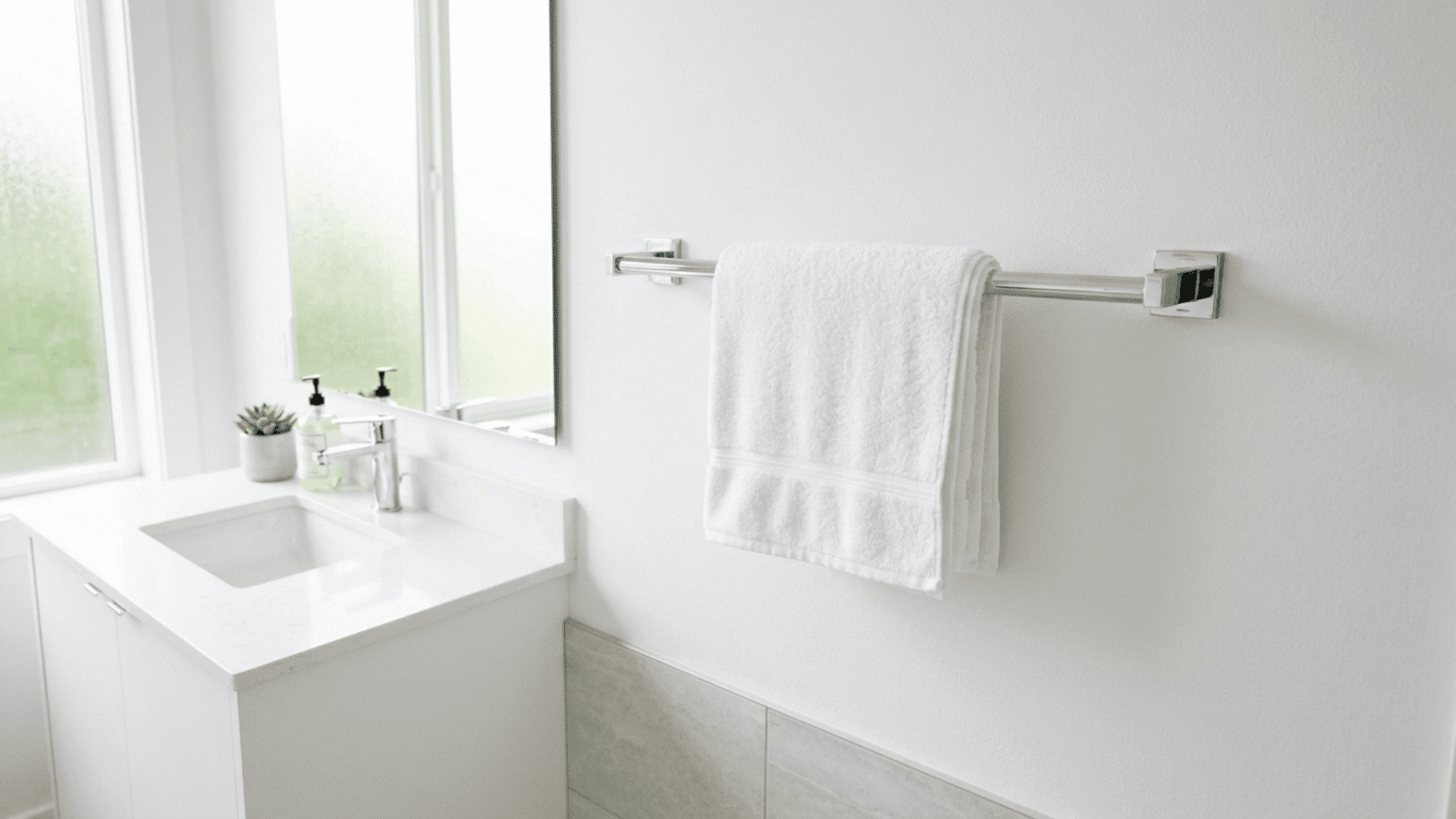

Towel bar placement is often overlooked, but it plays a key role in how functional your bathroom feels. When positioned poorly, even simple tasks like reaching for a towel can become inconvenient.
Getting the height right improves both usability and efficiency by keeping towels accessible and allowing them to dry properly.
It also adds a sense of order, making the space feel more comfortable without major changes.
This blog covers the ideal towel bar height along with the key factors that help you place it correctly for the best results.
What Determines the Right Towel Bar Height for Your Bathroom?
The right height ensures smooth daily use by keeping towels within comfortable reach. It also supports proper hanging, which helps maintain hygiene and keeps towels fresh.
Proper placement enhances the overall bathroom layout by aligning with other fixtures. When done right, it creates a more balanced and visually organized space.
Since every bathroom setup is different, a few practical factors help determine the best placement, rather than relying solely on standard measurements.
Key Factors that Determine the Height of The Tower Bar:
- User Height and Reach: Adjust placement based on who uses the space most often.
- Type of Towel: Larger towels need more vertical clearance to hang properly.
- Wall Space and Layout: Ensure the bar fits naturally without crowding the area.
- Proximity to Fixtures: Leave enough space from sinks, toilets, and showers for convenience.
- Mounting Surface: Install securely to maintain correct height and long-term stability
Types of Towel Bars
Knowing the different types helps decide which one best suits the bathroom, since each type affects how towel bar height is measured and installed.
1. Single Towel Bar
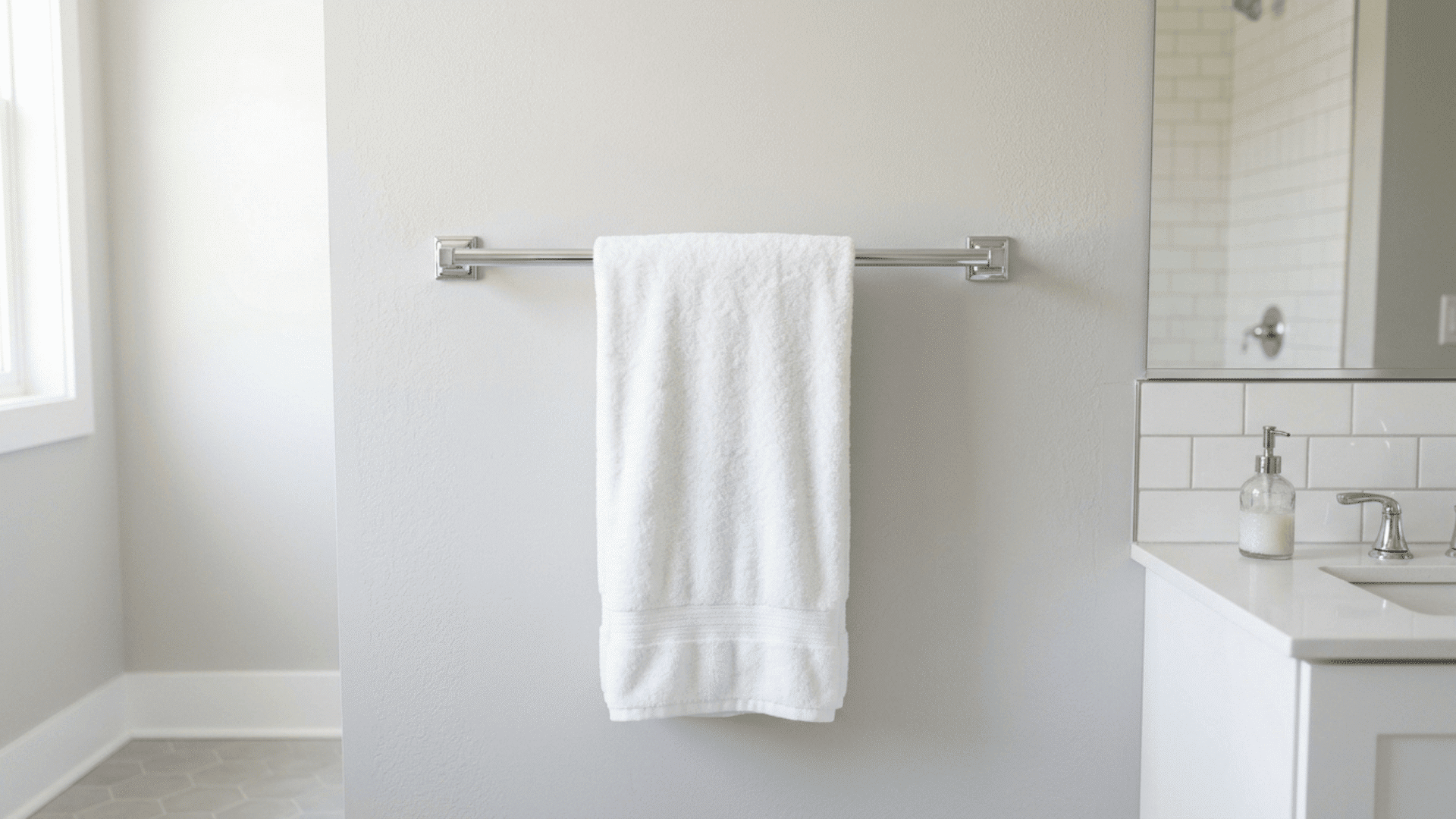
A single towel bar is the most common option found in standard bathrooms. It holds one towel at a time and works well for most everyday setups.
It is easy to install and fits most walls without taking up much space. The placement usually follows standard height guidelines.
Recommended Height:
- 48 inches from the floor
- Adjust slightly based on user height if needed
2. Double Towel Bar
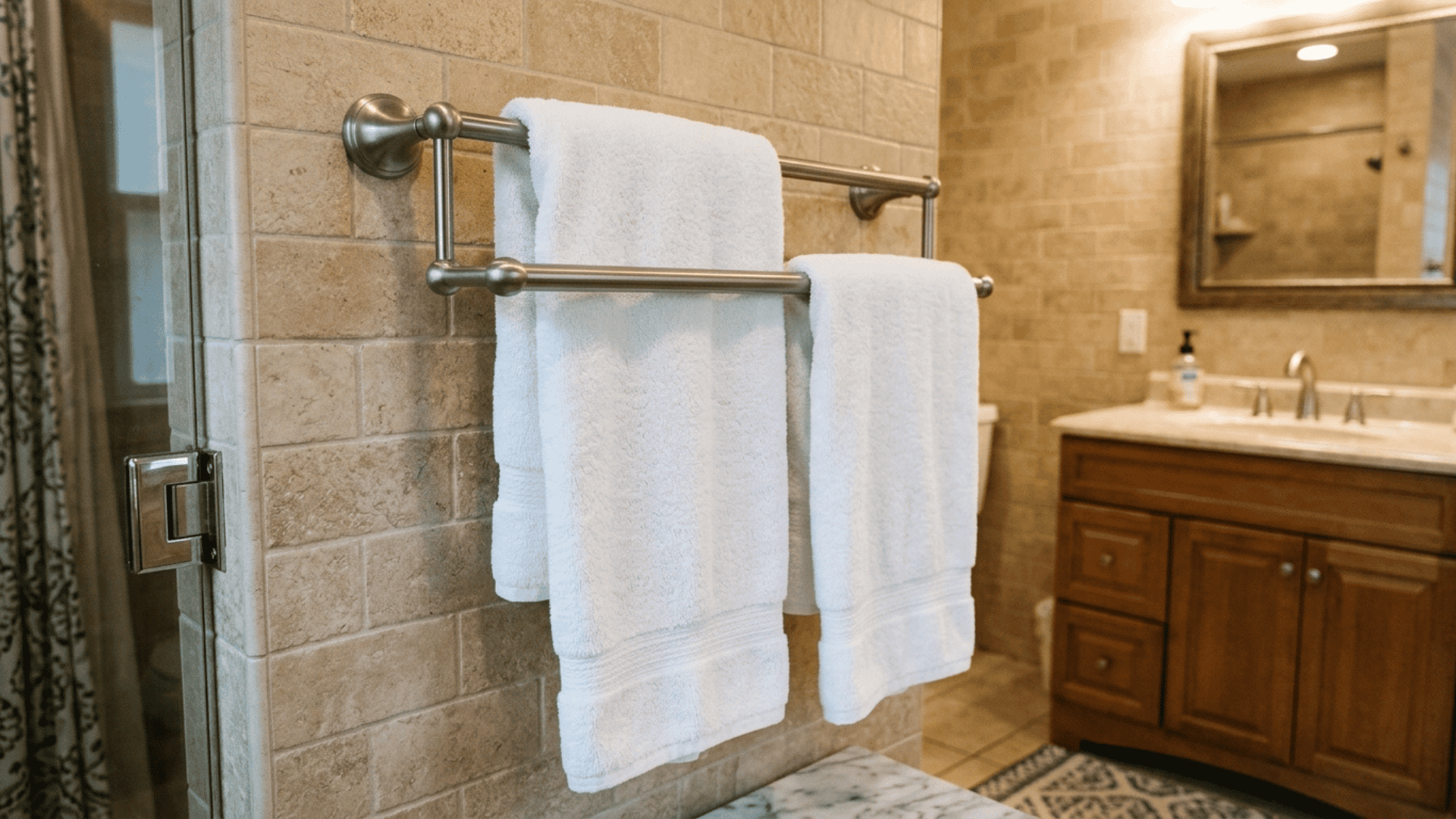
A double towel bar holds two towels at once, making it ideal for shared bathrooms. It features two horizontal bars stacked on a single frame.
Proper spacing between the bars is important to allow both towels to hang freely without overlapping.
Recommended Height:
- Lower bar: 44–48 inches from the floor
- Upper bar: 52–56 inches from the floor
3. Towel Ring
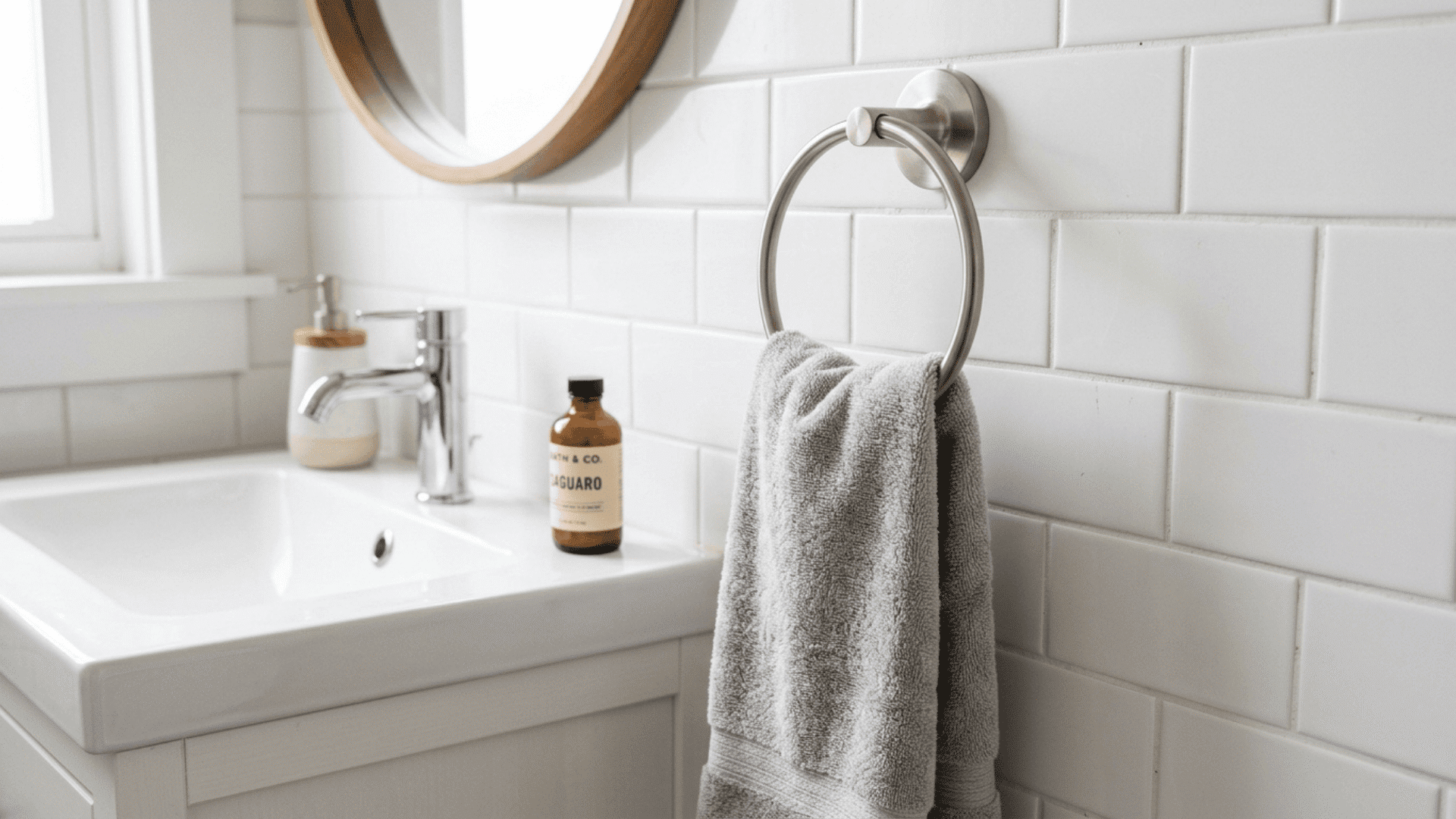
A towel ring is a circular or oval-shaped fixture used for hand towels near the sink. It takes up very little wall space and works especially well in smaller bathrooms or powder rooms.
Since hand towels are shorter, placement focuses more on convenience than height.
Recommended Height:
- 50–52 inches from the floor
- Or 6–10 inches above the sink/vanity
4. Wall-Mounted Towel Rack
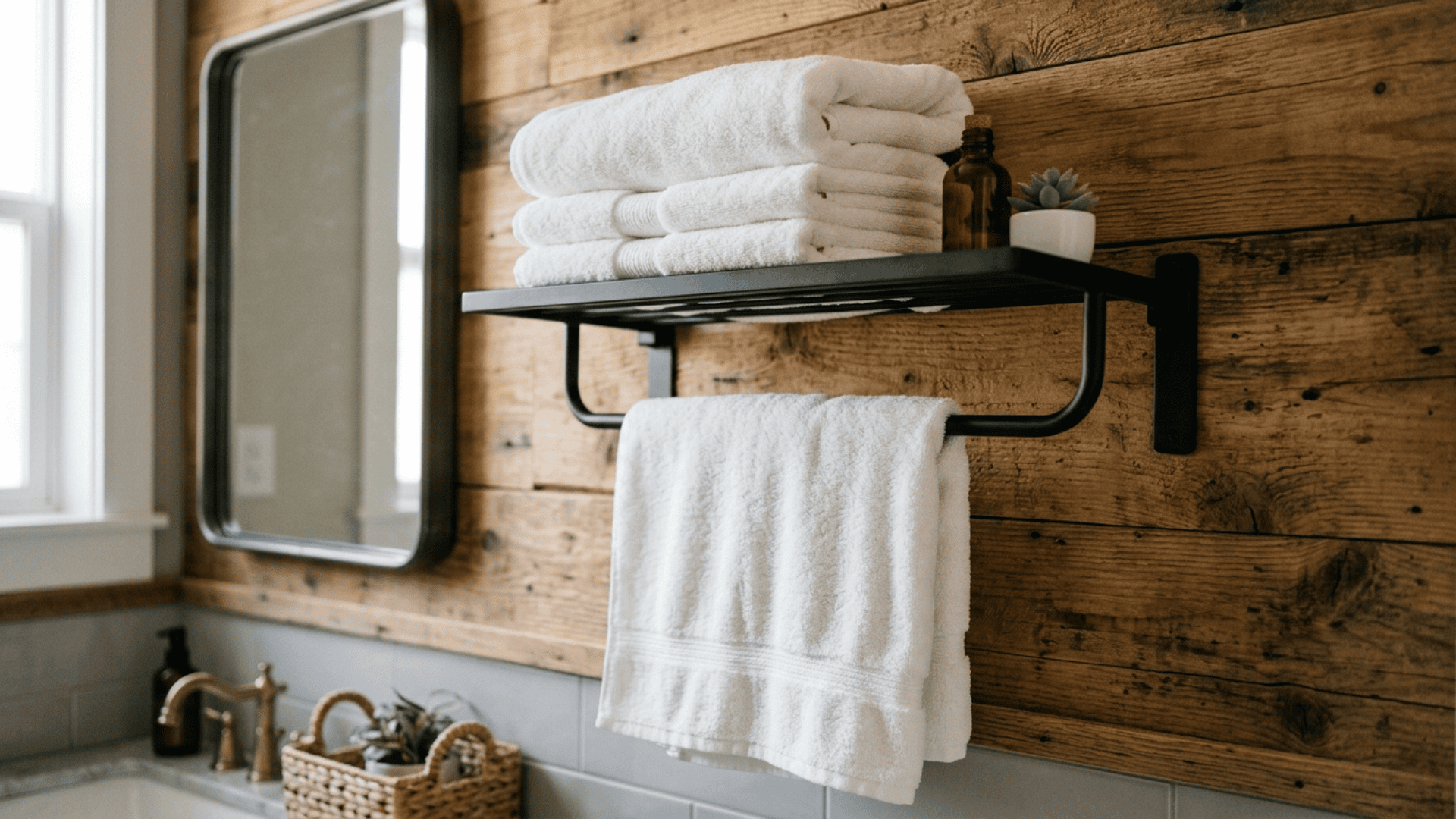
A wall-mounted towel rack combines a hanging bar with an upper shelf, offering both hanging space and a surface for folded towels or small items. It is a good option for bathrooms that need extra storage without adding furniture.
The added shelf means the bar is usually placed slightly higher than standard.
Recommended Height:
- Towel bar: 48–52 inches from the floor
- Shelf: 60–65 inches from the floor
5. Freestanding Towel Bar
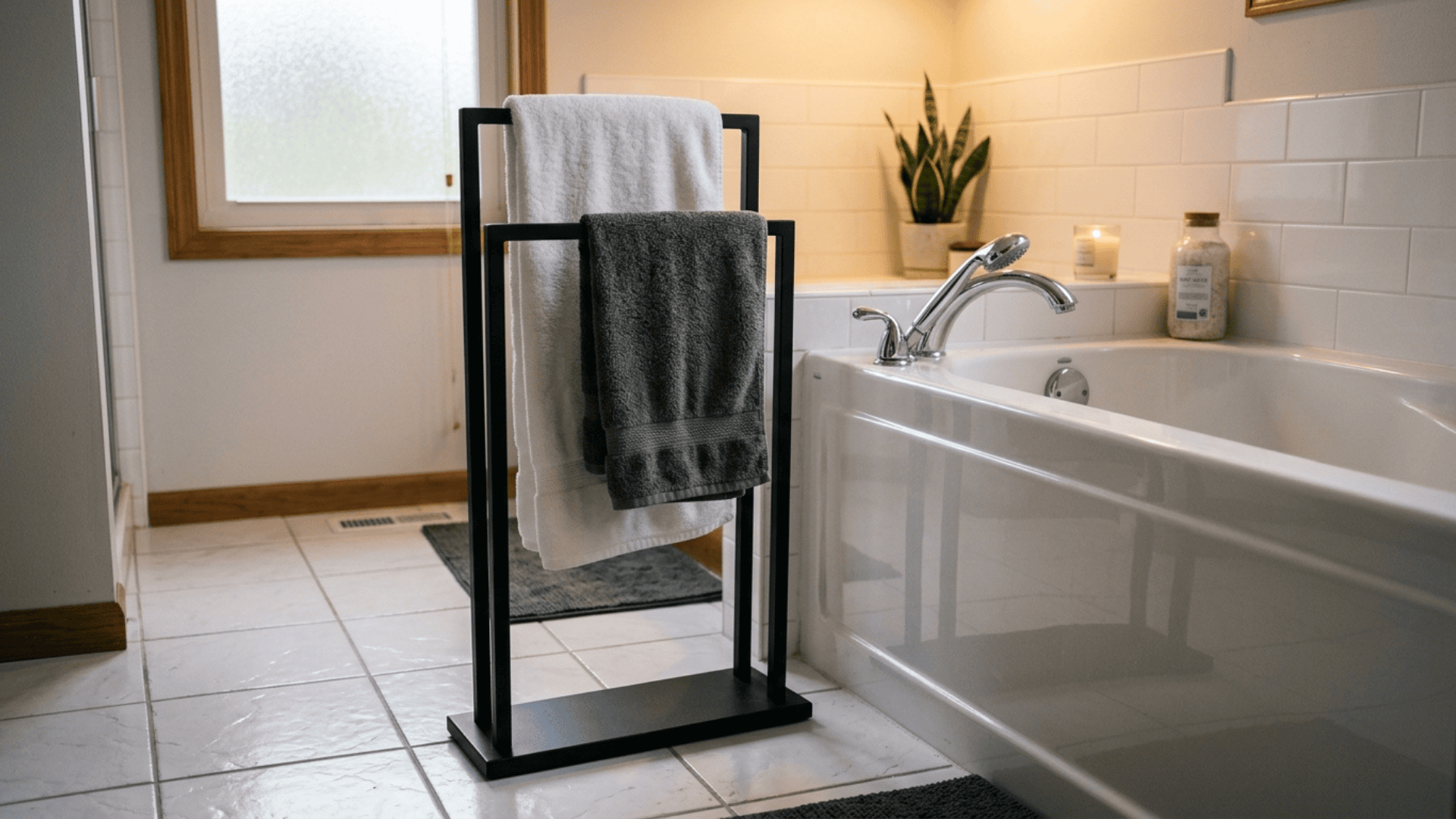
A freestanding towel bar does not require installation and can be moved easily. It’s ideal for rentals or flexible layouts. Height varies by design, but most models fall within a practical range.
Recommended Height:
- 44–48 inches from the floor
- Multi-bar designs may vary in levels
Comparison with Other Bathroom Fixtures
Learning how towel bar height compares to other fixtures helps plan a balanced, well-spaced bathroom layout.
| Fixture | Typical Height | Placement Purpose |
|---|---|---|
| Towel Bar | 44″ – 48″ from floor | Easy reach and proper towel drying |
| Towel Ring | 48″ – 52″ from floor | Near sink for hand drying |
| Toilet Paper Holder | 26″ from the floor | Easy access while seated |
| Vanity / Sink | 32″ – 36″ from floor | Comfortable daily use |
| Mirror | 5″ – 10″ above sink | Proper viewing height |
| Robe Hook | 60″ – 70″ from floor | Hanging towels or robes |
How to Mount a Towel Bar Correctly
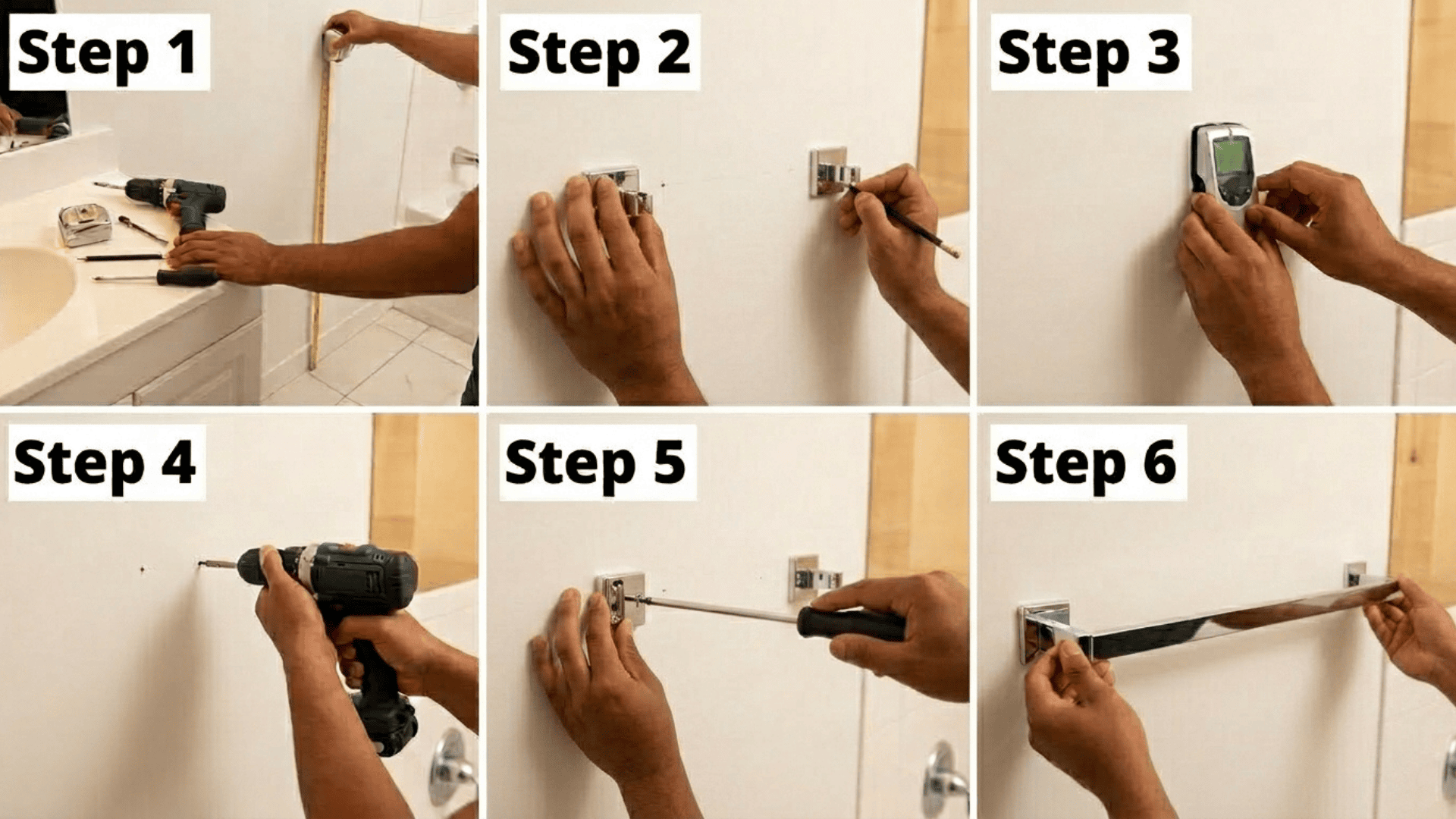
Following each step carefully ensures the bar stays secure and sits at the correct towel bar height for comfortable daily use.
Step 1: Gather Tools and Mark the Height
Collect all required tools, including a tape measure, pencil, drill, level, and screwdriver, then measure up from the floor and mark the desired height clearly on the wall.
Step 2: Mark the Bracket Positions
Hold the brackets against the wall at the marked height and outline each screw hole with a pencil.
Step 3: Check for Studs or Use Anchors
Use a stud finder to locate wall studs, and insert wall anchors if studs are not available at the marked spots.
Step 4: Drill the Holes
Drill into each marked position using a bit size that matches the anchors or screws being used.
Step 5: Attach the Mounting Brackets
Screw each bracket firmly into place, avoiding over-tightening to prevent damage to tiles or drywall.
Step 6: Attach the Bar and Test for Stability
Slide the bar onto the brackets, secure it using the set screw if required, then give it a firm tug in different directions to confirm it holds securely before use.
How Many Towel Bars Should You Install?
The number of towel bars needed depends on the size of the bathroom and how many people use it regularly. A single bar works fine for a personal bathroom, but shared spaces often need more.
For a standard full bathroom shared by two users, two bars at the correctheight are a practical setup. Each person gets their own bar, and towels have enough space to dry properly between uses.
Larger family bathrooms may benefit from three or more bars, each on a different wall. This keeps the space organized and prevents towels from overlapping.
For smaller bathrooms or powder rooms, a single towel ring or one compact bar is usually enough. The goal is to match the number of bars with the actual needs of the space without overcrowding the walls.
Common Mistakes When Setting Towel Bar Height
Even a small error during installation can affect daily use, so avoiding these common mistakes ensures the height works well for everyone in the household.
- Installing Without Measuring: Skipping measurements and relying on guesswork often results in a bar placed too high or too low for comfortable everyday use.
- Ignoring the Type of Towel: Using the same height for both bath and hand towels is a common oversight, as each requires a different level of clearance to hang properly.
- Placing the Bar Too Close to Fixtures: Mounting the bar too near a toilet, sink, or shower door creates an awkward setup where towels are constantly in the way or get wet.
- Skipping Proper Wall Anchoring: Fixing the bar into drywall without studs or proper anchors results in an unstable mount that shifts over time.
- Not Accounting for User Needs: Installing at a standard height without considering shorter users or children leads to a setup that feels uncomfortable for regular use.
Conclusion
Setting the righttowel bar height depends on layout, users, and nearby fixtures.
A standard 48-inch placement works for most bathrooms, but small adjustments based on layout and user needs can make a real difference in daily comfort.
Take the time to measure properly, account for who uses the bathroom, and align the placement with nearby fixtures.
A little planning before installation saves a lot of inconvenience later and keeps the bathroom functional for everyone who uses it.

With a Master’s in Architecture from the University of California, Berkeley, Mitchell Green has spent over two decades dedicated to the study and practical application of home fixture design. His career started in an architectural firm, providing him a strong foundation in the structural and aesthetic aspects of home interiors. Mitchell brought his comprehensive knowledge to our platform, where he has been an influential voice in our home fixtures and fittings section. Since 2018, he has been guiding our readers through the intricacies of selecting and installing fixtures, combining technical know-how with design flair. In his spare time, Mitchell is a keen photographer, capturing architectural details and design elements, an interest that complements his professional focus.