
If you are hauling equipment, materials, or debris every day, you cannot afford to guess on capacity. One of the most important numbers tied to any trailer is its GVWR. Yet many buyers still ask the same question: What does it actually mean, and how does it apply to real work?
Understanding what the GVWR of a trailer means is not about memorizing a spec sheet. It is about knowing how much weight your trailer can safely handle, its effect on road performance, and its impact on long term durability.
Before comparing different dump trailers for sale, it is important to understand how GVWR directly relates to the work you plan to run. Choosing the wrong rating does not just limit productivity; it creates safety risks and shortens your equipment’s lifespan.
What GVWR Actually Means
GVWR stands for Gross Vehicle Weight Rating. It represents the maximum total weight a trailer can safely carry, including:
- The trailer itself
- The cargo loaded onto it
- Any additional equipment or attachments
This is not a suggestion, it is a limit set by engineering, based on axle ratings, frame strength, suspension components, and braking systems.
When you hear someone ask what GVQR on a trailer means, the real question behind it is: “How much can I safely haul without damaging my trailer or putting myself at risk?”
That answer depends entirely on how the trailer is built.
Why GVWR Matters in Real Work Conditions
On paper, capacity looks straightforward. On a jobsite, it rarely is.
Loads shift. Materials vary in weight. Conditions change. What feels manageable on a short haul can become a problem over longer distances or uneven terrain.
Operating beyond GVWR creates issues that show up quickly:
- Increased stopping distance
- Brake strain and overheating
- Premature suspension wear
- Frame stress and flex
- Uneven tire wear
Over time, these issues compound into downtime. For professionals, downtime is lost revenue.
Understanding what the GVQR on a trailer means helps you avoid running equipment at the edge of its limits. Instead, you operate within a range that supports consistent performance.
GVWR vs. Payload Capacity
GVWR is often confused with payload capacity, but they are not the same.
- GVWR is the total allowable weight of the trailer and everything on it.
- Payload capacity is how much cargo you can carry after subtracting the trailer’s empty weight.
For example, if a trailer has a GVWR of 14,000 pounds and weighs 4,000 pounds empty, your payload capacity is 10,000 pounds.
This distinction matters when hauling dense materials like gravel, concrete debris, or wet soil. It also matters when transporting equipment that adds weight through attachments or modifications.
If you misunderstand this difference, you risk overloading even when you think you are within limits.
Matching GVWR to the Job
Different types of work require different GVWR ranges. There is no one size fits all answer.
Construction and Material Hauling
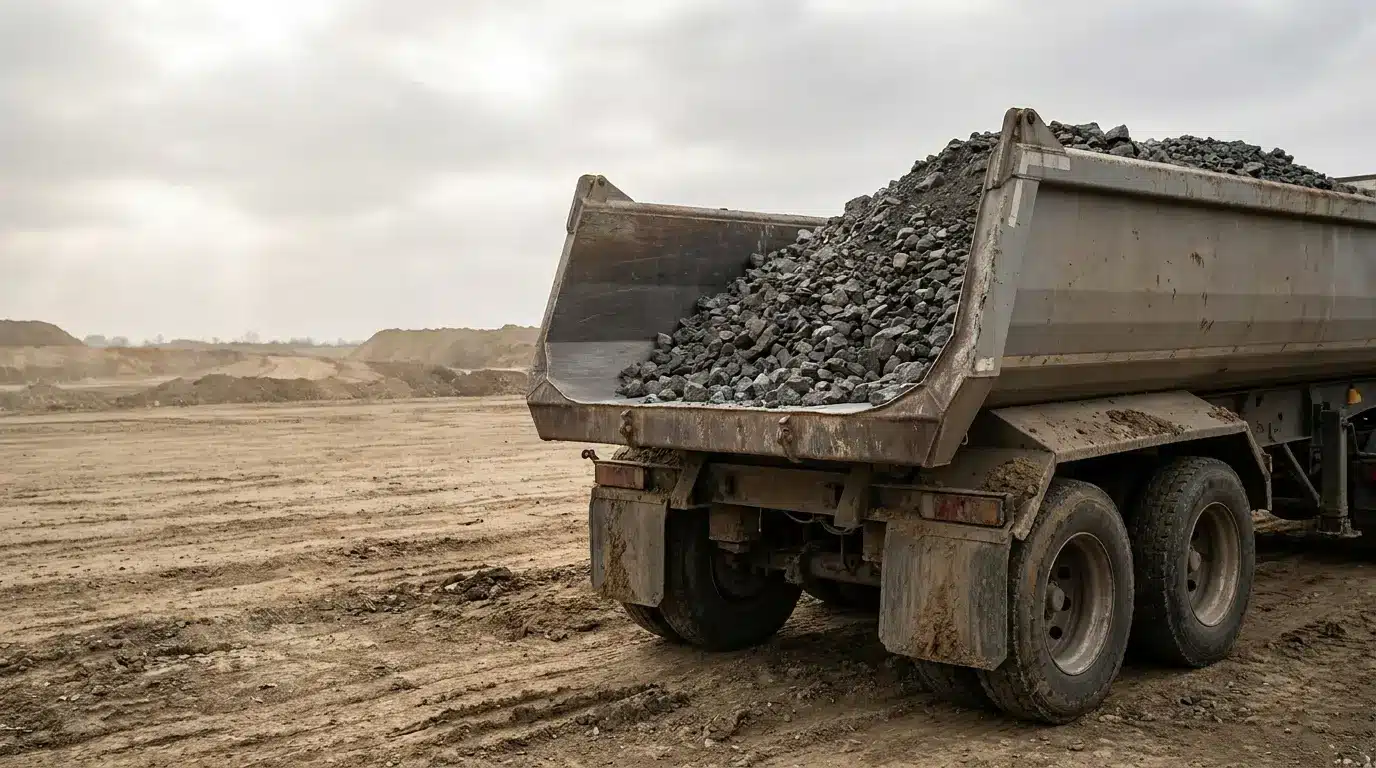
If you move heavy loads daily, such as aggregate, demolition debris, or building materials, you need a higher GVWR to withstand repeated cycles. A properly speced construction material trailer is built with reinforced frames, heavy duty axles, and braking systems designed for sustained use.
In this environment, underestimating GVWR leads to immediate wear.
Landscaping and Property Maintenance
Loads may vary between light and heavy depending on the day. One trip could involve mulch. The next could involve stone or equipment. A moderate GVWR with some flexibility keeps operations efficient without overloading smaller tow vehicles.
Equipment Transport
Moving machines introduce concentrated weight. A skid steer or compact excavator places stress in specific areas of the deck. GVWR must account for both the total weight and the distribution of that weight across axles.
Choosing correctly provides greater stability during transport and reduces structural strain.
Why Running at Capacity Is a Problem
Many first time buyers assume that if a trailer is rated for a certain weight, it should operate at that level consistently.
In practice, that approach shortens the life of the trailer.
Running at or near GVWR on every trip increases:
- Fatigue on welds and joints
- Stress on suspension systems
- Brake wear under repeated stopping
- Heat buildup during longer hauls
Professionals spec trailers with a buffer. That margin allows the trailer to operate without constant strain, which extends service life and improves reliability.
When evaluating what a trailer’s GVWR means, the goal is not to match your load exactly. It is to build in capacity for real world conditions.
How GVWR Connects to Trailer Construction
GVWR is not just a number on a label. It reflects how the trailer is built.
Higher GVWR ratings typically mean:
- Thicker steel frames
- Stronger crossmembers
- Heavier duty axles
- Upgraded braking systems
- Reinforced connection points
These features work together to manage load stress and maintain structural integrity over time.
Two trailers may look similar in size, but their GVWR ratings can differ significantly based on how they are constructed. That difference shows up quickly once the trailer is put to work.
Practical Steps Before Choosing a GVWR
Before selecting a trailer, take a realistic look at your operation.
Ask yourself:
- What is the heaviest load I will carry, not the average?
- How often will the trailer run per day?
- What conditions will it operate in?
- Will my workload increase over time?
Answering these questions helps you choose a trailer with a GVWR that supports your work rather than limits it.
It also prevents the need to upgrade sooner than expected.
Frequently Asked Questions
What Is the Most Important Thing to Know About GVWR?
It defines the maximum safe operating weight of your trailer. Exceeding it risks both safety and long term durability.
How Do I Calculate Payload From GVWR?
Subtract the empty weight of the trailer from its GVWR. The result is your usable cargo capacity.
Can I Exceed GVWR for Short Trips?
No. Even short hauls place stress on braking, suspension, and frame components. Exceeding GVWR increases risk regardless of distance.
Should I Buy a Trailer With a Higher GVWR Than I Need?
Yes, within reason. A higher rating provides a buffer for heavier loads and reduces wear over time.
Why Do Two Similar Trailers Have Different GVWR Ratings?
Construction differences, such as frame thickness, axle capacity, and braking systems, directly impact how much weight a trailer can safely handle.
Built for Safe, Consistent Performance
Understanding the meaning of a trailer’s GVWR helps protect your equipment, crew, and schedule.
When you match GVWR to real workloads, you avoid unnecessary strain, reduce downtime, and keep operations moving. When you ignore it, problems show up fast.
If you are evaluating trailers, start with capacity. Build in margin. Focus on construction that holds up over time.

Holding a Master’s in Construction Management from Purdue University, William Ray has dedicated more than two decades to studying and applying construction principles. His professional journey includes a tenure with a prominent construction firm, where he specialized in project management and building technologies. William brought his knowledge to our team, providing in-depth insights into practical construction techniques. As the leader of our beginner’s guide to building since 2019, he has a knack for breaking down intricate processes into easily digestible content. When not involved in writing or onsite consultations, William enjoys woodworking and volunteering in community building projects, which aligns with his passion for hands-on construction and community service.