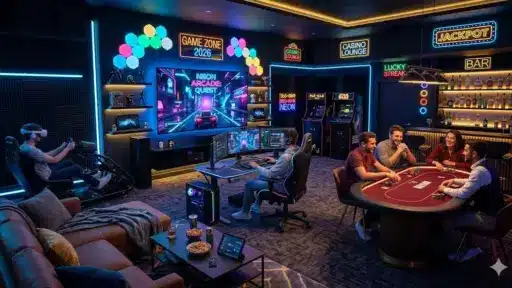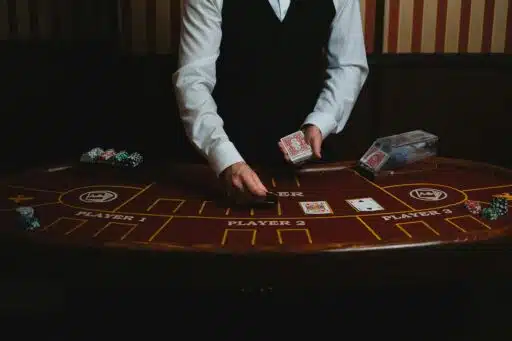
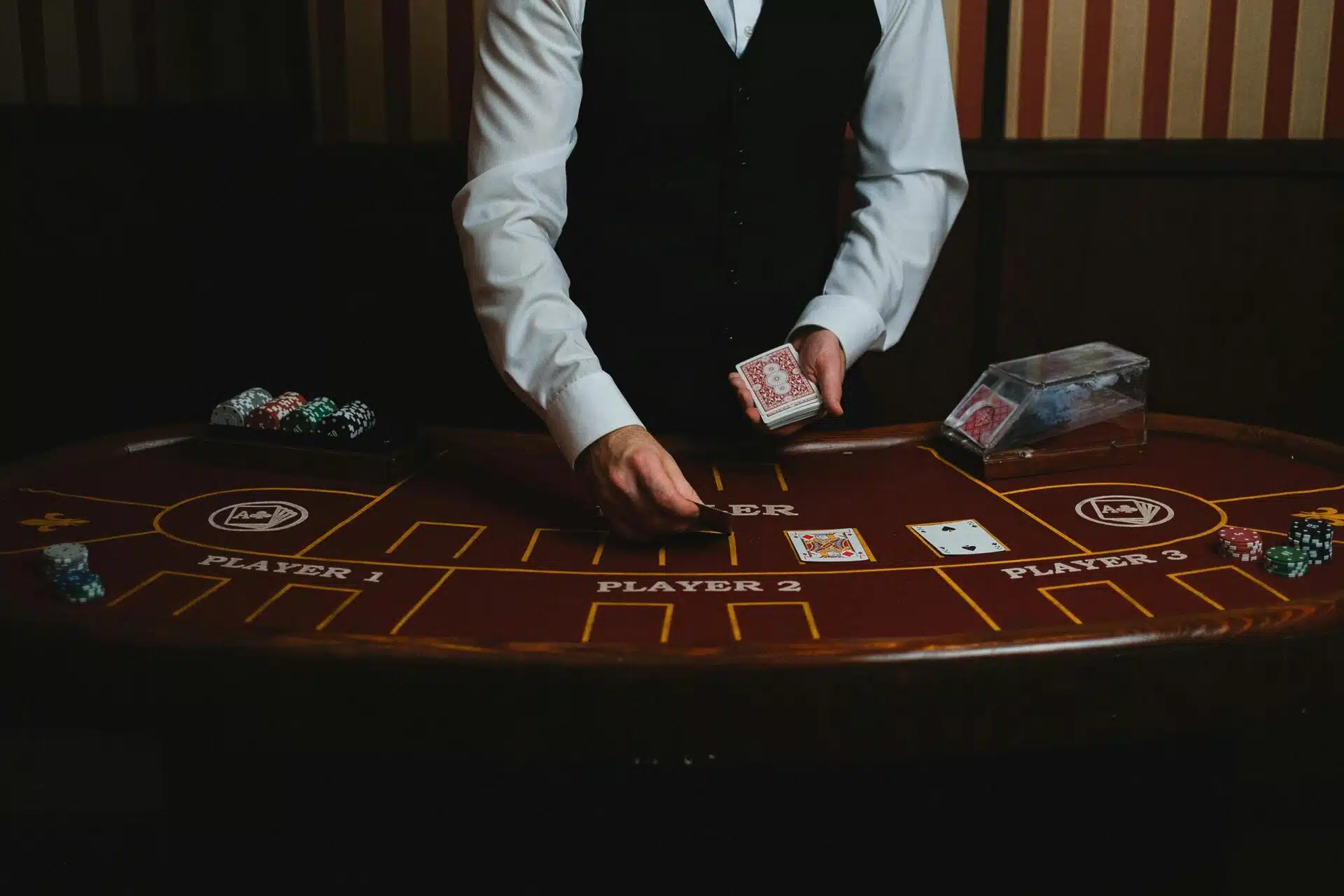
Picture a blackjack table. Felt surface, quiet dealer, the soft sound of cards hitting the mat. For decades, that image was the whole point — the casino as a place of controlled tension and focused play. Now picture something else entirely: a spinning money wheel thirty feet tall, a host in a sequined jacket calling out multipliers, a chat window exploding with reactions from players across six countries. Same stakes. Completely different experience. That contrast explains everything happening right now in the online casino industry.
The Format That Changed the Equation
Traditional table games moved online with minimal reinvention. Roulette stayed roulette. Blackjack stayed blackjack. The rules carried over, and so did the stripped-down feel — functional, but not exactly compelling for someone who’d never sat at a real table before.
Live dealer game shows took a different approach. Instead of replicating the casino floor, they borrowed from television production. Studios with multi-camera setups, trained hosts with broadcasting backgrounds, interactive bonus rounds, and mechanics that reward audience participation rather than pure card skill. The result is something that appeals to a much wider audience than traditional games ever could.
The growth numbers tell the story. Evolution Gaming — the studio behind titles like Crazy Time, Monopoly Live, and Lightning Roulette — has seen its market share expand consistently year over year, with live game shows now accounting for a growing slice of total live casino revenue globally.
Why Players Are Making the Switch
The shift isn’t just about novelty. There are structural reasons why game shows are pulling players away from traditional formats.
- Accessibility. Classic table games carry a learning curve. Blackjack strategy charts, baccarat drawing rules, poker hand rankings — these aren’t barriers for experienced players, but they push away casual ones. Game shows are built to be picked up in minutes. Spin a wheel, pick a multiplier, watch what happens. The learning curve flattens almost completely.
- Energy. A live blackjack table — even a well-run one — has natural lulls. Hands resolve, players think, the pace ebbs. Game shows are engineered to eliminate dead air. Countdown timers, bonus round animations, host commentary, and real-time leaderboards keep the energy steady regardless of what’s happening in any individual player’s game.
- Shared experience. This one is underappreciated. When a bonus round triggers in Crazy Time, everyone in the session sees it simultaneously. The chat reacts. Players who are losing still get to watch the spectacle. That communal element doesn’t exist in traditional table games, where your hand is your hand and everyone else’s is irrelevant. It’s one of the reasons a well-curated Wild Panda Live Casino section now reads more like a streaming platform than a game lobby — because the social layer is part of the product.
How Studios Are Building the Next Generation
The studios producing these games have moved well past the first wave of wheel-spinners. Current development focuses on a few specific directions:
- Narrative layers — games with recurring characters, seasonal storylines, and unlockable content that give regular players something to track over time.
- Hybrid mechanics — formats that combine skill-based decisions (like card draws) with chance-based spectacle (like multiplier wheels), so there’s something for both strategic players and casual audiences.
- Personalization — some platforms now let players choose camera angles, adjust audio, and filter the chat — moving toward an experience that feels customized rather than broadcast.
- Faster session lengths — rounds designed for mobile play, where someone might join a game show between meetings rather than sitting down for a dedicated session.
These aren’t incremental tweaks. They represent a genuine rethinking of what a casino game can be when it’s built for a screen rather than adapted from a table.
Where Traditional Games Still Hold Ground
It would be wrong to call this a complete takeover. Traditional live table games retain a loyal base, and for good reason.
Serious players — particularly those using established strategies at blackjack or baccarat — aren’t looking for a show. They want favorable rules, low house edges, and fast hands. Game shows typically carry higher house edges than optimal-play blackjack, and the spectacle can actually work against players who prefer to focus.
There’s also the matter of trust. Players who grew up with traditional casino formats sometimes view the game show aesthetic with skepticism — it can feel more like entertainment than gambling, which creates uncertainty about fairness. Established table formats carry decades of understood mechanics and verified return-to-player standards. The same loyalty to familiar formats shows up across gambling categories: slot players who gravitate toward titles like Wild Panda aren’t chasing innovation — they want a game they understand and trust. That preference doesn’t disappear just because flashier options exist.
The Overlap Zone
The most interesting space right now is where the two formats intersect. Lightning Roulette runs on a standard roulette wheel but adds multiplied payouts to random numbers each round. It plays like roulette but feels like a game show. Infinite Blackjack uses traditional card rules but seats unlimited players simultaneously, adding side bets and real-time statistics. These hybrid titles are pulling audiences in both directions — giving game show players a taste of table mechanics, and giving table players a reason to stay engaged.
This is also where platform curation becomes visible. Players browsing a live casino section today will typically find both categories side by side, with game shows occupying more of the featured real estate than they did even two years ago — a clear signal of where operator attention and player demand are aligning.

Film-buff journalist Felix Moreno earned his Film Studies degree at NYU and has reviewed cinema and streaming culture since 2012. Joining us in 2025, he spotlights must-watch releases, crafts spoiler-free synopses, and interviews behind-the-scenes talent. Felix’s playful trivia keeps readers ahead of the pop-culture curve. Offscreen, he runs a community film club and experiments with short-film screenwriting in his Brooklyn studio.