
Commercial buildings are valuable long-term investments that require ongoing care to remain safe, attractive, and efficient. Whether a property is an office building, retail center, industrial facility, medical clinic, or multi-tenant complex, routine maintenance plays an essential role in protecting the structure while creating a positive experience for employees, customers, tenants, and visitors.
Many property owners rely on professional Commercial Cleaning in Toronto providers as part of a broader maintenance strategy that helps preserve building appearance and reduce long-term repair costs. Routine maintenance is about much more than keeping a property clean—it is about protecting assets, extending the lifespan of building materials, and preventing small issues from becoming expensive problems.
Well-maintained buildings are often more efficient, safer, and better prepared to meet the demands of daily operations.
Routine Maintenance Protects Your Investment
Commercial properties represent significant financial investments.
Like any valuable asset, buildings require regular attention to maintain their condition over time.
Without ongoing maintenance, normal wear and environmental exposure gradually affect building components.
Routine maintenance helps protect:
- Exterior walls
- Windows
- Roofing systems
- Sidewalks
- Parking lots
- Entryways
- Drainage systems
Consistent care allows property owners to maximize the lifespan of these assets while reducing the need for major repairs.
Protecting existing infrastructure is often far more cost-effective than replacing damaged components.
Small Issues Are Easier to Fix Early
Many expensive repairs begin as relatively minor problems.
For example:
- A clogged gutter may eventually lead to water damage.
- Dirt buildup can stain exterior materials over time.
- Small cracks may expand after repeated freeze-thaw cycles.
- Debris can block drainage systems and create standing water.
Routine inspections and maintenance help identify these issues before they escalate.
Addressing problems early typically requires less time, fewer resources, and lower repair costs.
Preventative action almost always costs less than emergency restoration.
Clean Buildings Create Positive First Impressions
The appearance of a commercial building influences how people perceive the businesses operating inside.
Customers, visitors, employees, and prospective tenants often form opinions before entering the building.
A well-maintained property communicates:
- Professionalism
- Attention to detail
- Reliability
- Pride of ownership
Clean windows, tidy entrances, maintained walkways, and attractive exterior surfaces all contribute to a welcoming environment.
First impressions often influence customer confidence and business reputation.
Property Maintenance Supports Workplace Safety
Routine maintenance is also an important part of creating safe environments.
Commercial properties experience constant foot traffic, vehicle movement, and exposure to changing weather conditions.
Regular maintenance helps identify hazards such as:
- Slippery walkways
- Damaged pavement
- Poor drainage
- Accumulated debris
- Loose exterior materials
- Obstructed entrances
Addressing these issues promptly reduces the risk of accidents for employees, customers, and visitors.
Safer buildings contribute to better overall operations.
Preventative Maintenance Reduces Long-Term Costs
Some property owners delay maintenance to reduce short-term expenses.
Unfortunately, deferred maintenance often leads to larger repair bills later.
Routine maintenance helps reduce costs by:
- Preventing premature deterioration
- Extending equipment life
- Reducing emergency repairs
- Protecting building materials
- Improving operational efficiency
A proactive maintenance plan helps businesses control expenses instead of reacting to unexpected problems.
Long-term savings often outweigh routine maintenance costs.
Exterior Cleaning Helps Preserve Building Materials
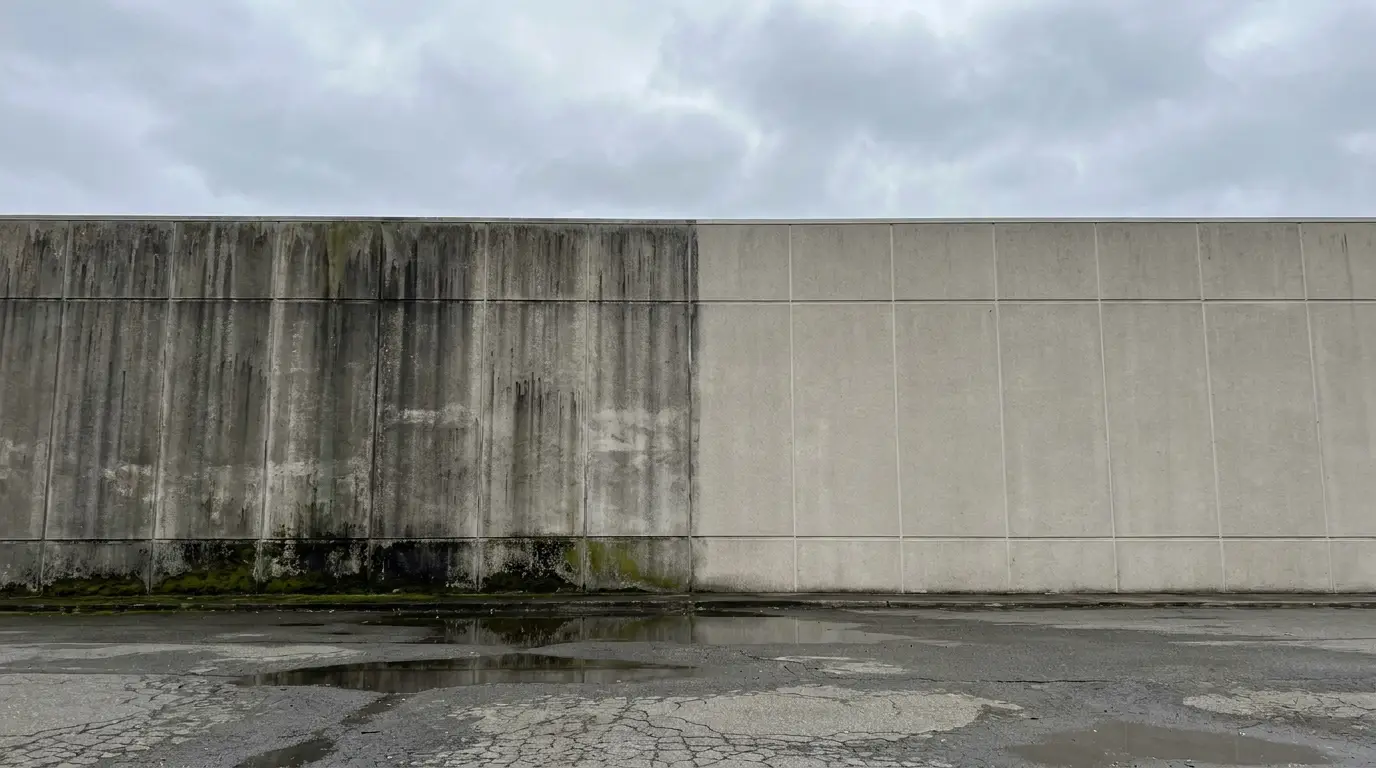
Commercial buildings are constantly exposed to environmental conditions.
Over time, surfaces accumulate:
- Dirt
- Dust
- Air pollution
- Organic growth
- Salt residue
- Debris
These contaminants may gradually affect the appearance and condition of building materials.
Routine cleaning helps remove these substances before permanent staining or deterioration occurs.
Exterior maintenance supports both aesthetics and long-term structural preservation.
Routine Maintenance Improves Energy Efficiency
Building performance is closely connected to maintenance.
Clean windows improve natural lighting.
Proper drainage helps protect insulation and foundations.
Well-maintained building systems operate more efficiently.
Routine maintenance may contribute to:
- Lower energy consumption
- Improved indoor comfort
- Better heating and cooling performance
- Reduced operating costs
Although maintenance requires ongoing investment, improved efficiency often provides measurable long-term benefits.
Tenants Appreciate Well-Maintained Properties
For commercial property owners, tenant satisfaction is a major priority.
Businesses want facilities that reflect positively on their own operations.
Routine maintenance helps create environments that are:
- Clean
- Safe
- Attractive
- Comfortable
- Professional
Well-maintained properties often experience:
- Higher tenant retention
- Fewer maintenance complaints
- Greater tenant satisfaction
- Stronger occupancy rates
Maintaining the building demonstrates commitment to providing quality commercial space.
Maintenance Helps Protect Property Value
Commercial real estate values depend on many factors, including property condition.
Buildings that receive regular maintenance generally retain their value better than neglected properties.
Potential buyers and investors often evaluate:
- Exterior appearance
- Maintenance history
- Structural condition
- Cleanliness
- Overall presentation
Consistent maintenance helps preserve both market value and long-term investment potential.
Protecting property value begins with routine care.
Seasonal Maintenance Prevents Weather Damage
Each season introduces different maintenance challenges.
For example:
Spring
- Heavy rainfall
- Drain inspections
- Exterior cleaning
Summer
- UV exposure
- Window cleaning
- Parking lot maintenance
Fall
- Leaf removal
- Gutter cleaning
- Drainage preparation
Winter
- Snow removal
- Ice management
- Walkway safety
Preparing buildings for seasonal conditions helps reduce weather-related damage while supporting year-round operations.
Seasonal planning is an essential part of effective property management.
Maintenance Supports Business Operations
Unexpected building problems can interrupt normal business activities.
Water leaks, unsafe walkways, blocked entrances, or damaged facilities may disrupt employees, customers, and tenants.
Routine maintenance helps minimize these interruptions.
Businesses benefit from:
- Fewer unexpected repairs
- Reduced downtime
- Better customer experiences
- More reliable operations
Reliable facilities allow organizations to focus on serving customers instead of responding to avoidable maintenance emergencies.
Professional Maintenance Provides Consistency
Many commercial properties benefit from working with professional maintenance providers.
Routine service schedules help ensure maintenance tasks are completed consistently rather than only when problems become visible.
Professional maintenance programs often include:
- Exterior cleaning
- Window cleaning
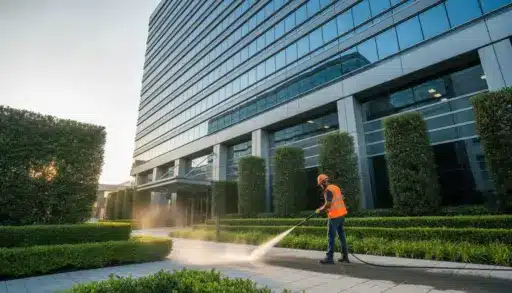
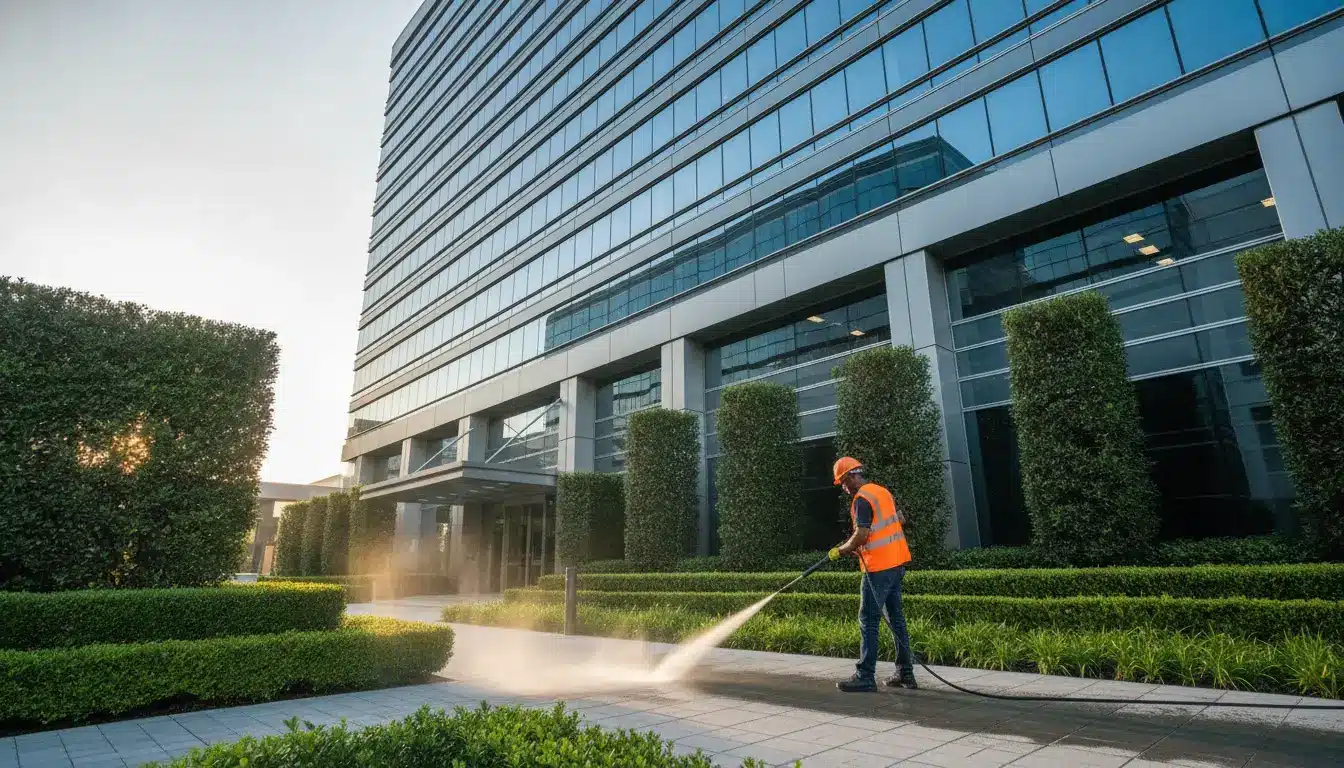
- Pressure washing
- Building inspections
- Seasonal maintenance
- Property appearance management
Consistent service helps buildings remain attractive throughout the year.
It also simplifies maintenance planning for property managers.
Clean Properties Strengthen Brand Image
The condition of a commercial building reflects directly on the businesses operating inside.
Customers often associate a clean, organized property with professionalism and quality service.
A well-maintained building helps reinforce:
- Customer confidence
- Brand reputation
- Employee pride
- Business credibility
Even before entering the building, visitors begin forming opinions based on what they see outside.
Routine maintenance helps ensure those first impressions are positive.
Sustainability Benefits From Routine Maintenance
Maintaining existing building materials is often more sustainable than replacing them.
Routine cleaning and preventative maintenance help extend the life of:
- Exterior finishes
- Pavement
- Windows
- Roofing
- Drainage systems
Longer-lasting materials reduce waste while minimizing the need for replacement projects.
Preventative maintenance supports both financial and environmental goals.
The Takeaway
Routine property maintenance is an essential part of responsible commercial building management.
Rather than waiting for problems to occur, proactive maintenance helps protect investments, improve safety, reduce operating costs, and create better experiences for everyone who uses the property.
A comprehensive maintenance strategy helps commercial buildings:
- Protect long-term property value
- Reduce expensive repairs
- Improve building appearance
- Support workplace safety
- Increase energy efficiency
- Enhance tenant satisfaction
- Strengthen brand image
- Prepare for seasonal challenges
- Improve operational reliability
- Extend the lifespan of building materials
The goal of routine maintenance is not simply to keep a property looking clean.
It is to preserve the building’s value, improve day-to-day operations, and create a professional environment that reflects positively on every business inside.
For commercial property owners and managers, consistent maintenance remains one of the smartest long-term investments they can make.

Tommy Hardy, an alumnus of the Georgia Institute of Technology with a degree in Mechanical Engineering, has been a go-to figure in residential upkeep and innovation for over 18 years. His career commenced in a leading home appliance manufacturing company, where he mastered the intricacies of household systems. Joining our platform in 2020, Tommy quickly became a reader favorite for his practical and easy-to-follow guides. He took the helm of our DIY section in 2019, consistently delivering content that empowers homeowners. Beyond his professional pursuits, Tommy is a passionate gardener and enjoys woodworking, skills enhancing his hands-on approach to home care.