
A high ceiling living room brings openness, natural light, and a strong sense of space, but it also requires thoughtful design choices to feel complete.
Tall walls and extended ceiling height can easily feel empty or unbalanced without the right elements in place.
From wall treatments and lighting placement to furniture scale and decor selection, each decision plays a role in shaping how the room functions and feels.
This article shares 30 high ceiling living room ideas grouped into practical categories.
Each idea focuses on proportion, visual balance, and everyday comfort, helping tall living rooms feel structured, connected, and welcoming without losing their openness.
Wall Design Ideas for a High Ceiling Living Room
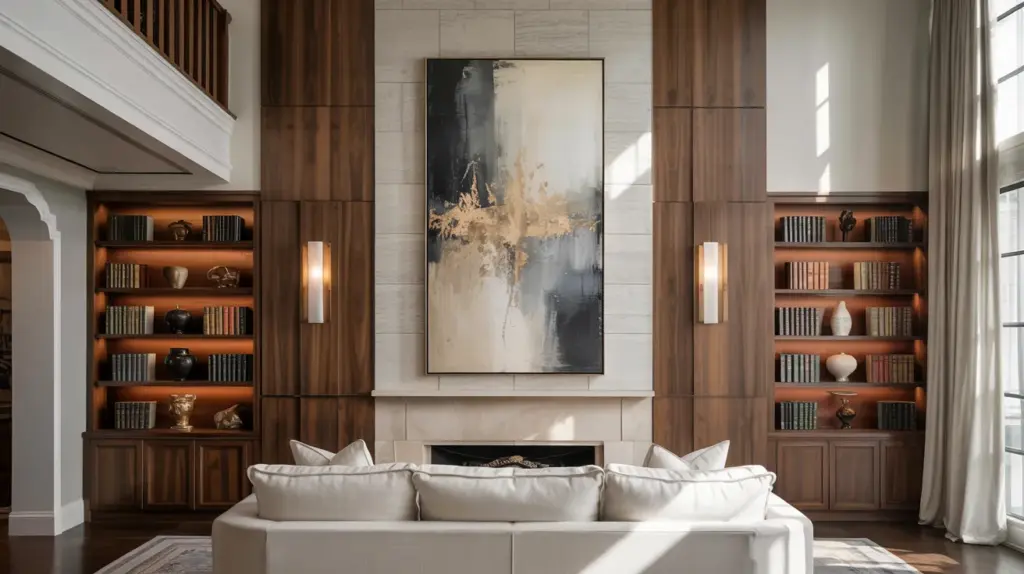
Wall treatments play a key role in managing height and visual proportion.
1. Floor-To-Ceiling Accent Walls
A floor-to-ceiling accent wall helps visually ground a high-ceiling living room by giving the eye a clear vertical reference point.
Using materials such as paint, textured panels, stone, or wood creates a strong focal area without overwhelming the space.
Choosing a slightly deeper or warmer shade than the surrounding walls can also reduce the feeling of excessive height while maintaining openness.
2. Large-Format Wall Art
Large-format wall art suits high-ceiling living rooms better than small, scattered frames.
Single statement pieces or coordinated multi-panel artwork help maintain visual order while matching the scale of the room.
Art with simple compositions, balanced colors, or subtle textures works well in tall spaces, as it adds interest without creating visual clutter.
3. Vertical Wood Paneling
Vertical wood paneling adds both texture and structure to tall walls. The consistent lines help control how the eye moves upward, making the height feel intentional rather than empty.
Light wood tones support an airy look, while darker finishes add contrast and warmth.
Paneling can cover an entire wall or be used selectively to frame specific areas such as seating zones or media walls, improving overall balance.
4. Built-in Shelving Units
Built-in shelving units that extend upward help break large wall surfaces into functional sections. These shelves add storage while filling unused vertical space in a practical way.
When styled with a mix of books, decor objects, and closed storage, they prevent the wall from feeling flat or unfinished.
Built-ins also allow consistent spacing and alignment, which supports a more structured look in high-ceiling living rooms.
5. Two-Tone Wall Finishes
Two-tone wall finishes help visually divide wall height into manageable sections. Using one shade on the lower portion and a lighter or neutral tone above creates a natural horizontal break.
This technique reduces the sense of excessive height without closing in the room.
Paint, paneling, or molding can define the transition point, usually placed slightly above eye level for the best visual balance.
Lighting Ideas That Work Well in High-Ceiling Living Rooms
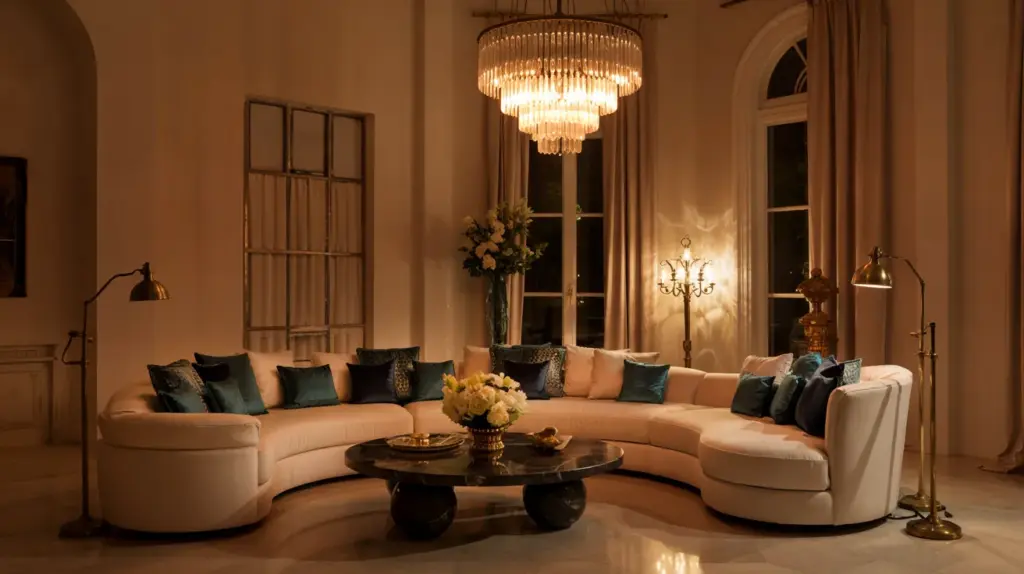
Lighting helps define scale and prevents tall rooms from feeling hollow.
6. Oversized Pendant Lighting
Oversized pendant lighting works especially well in a high-ceiling living room because it visually fills the vertical space that might otherwise feel empty.
Larger pendants help draw attention toward the center of the room, creating a clear focal point above the main seating area.
Hanging the pendant lower than standard height often improves proportion, ensuring the ceiling height feels intentional rather than excessive.
7. Tiered Chandeliers
Tiered chandeliers add dimension by extending downward in layers, making them suitable for tall living rooms with open vertical space.
The layered structure creates visual depth while maintaining airflow and openness. These chandeliers work well in rooms where the ceiling height exceeds standard measurements, as they help visually connect the ceiling to the furniture below.
Choosing a design with clean lines or subtle detailing prevents the fixture from feeling heavy. Placement above a central seating area helps anchor the room layout.
8. Wall-Mounted Sconces
Wall-mounted sconces placed higher than the typical installation height support layered lighting in high-ceiling living rooms.
They help distribute light across tall walls while reducing shadows near the upper sections of the room. Sconces also add visual rhythm along long walls, preventing them from appearing flat or bare.
9. Recessed Ceiling Lights
Recessed ceiling lights provide consistent illumination without adding visual clutter to tall ceilings.
When evenly spaced, they help brighten the entire room while supporting other lighting layers.
In high-ceiling living rooms, recessed lights work best when combined with accent or task lighting, rather than serving as the sole light source.
Proper planning ensures light reaches both upper and lower areas of the space.
10. Tall Floor Lamps
Tall floor lamps help bridge the gap between furniture height and tall walls. Their vertical form connects seating areas to the overall scale of the room, improving balance.
Floor lamps placed near sofas or reading chairs provide focused lighting while adding height variation within the layout.
Designs with extended stems or multi-arm structures work well in high-ceiling living rooms.
When paired with other lighting types, tall floor lamps help create a layered and well-distributed lighting setup.
Furniture Layout Ideas for Tall Living Rooms
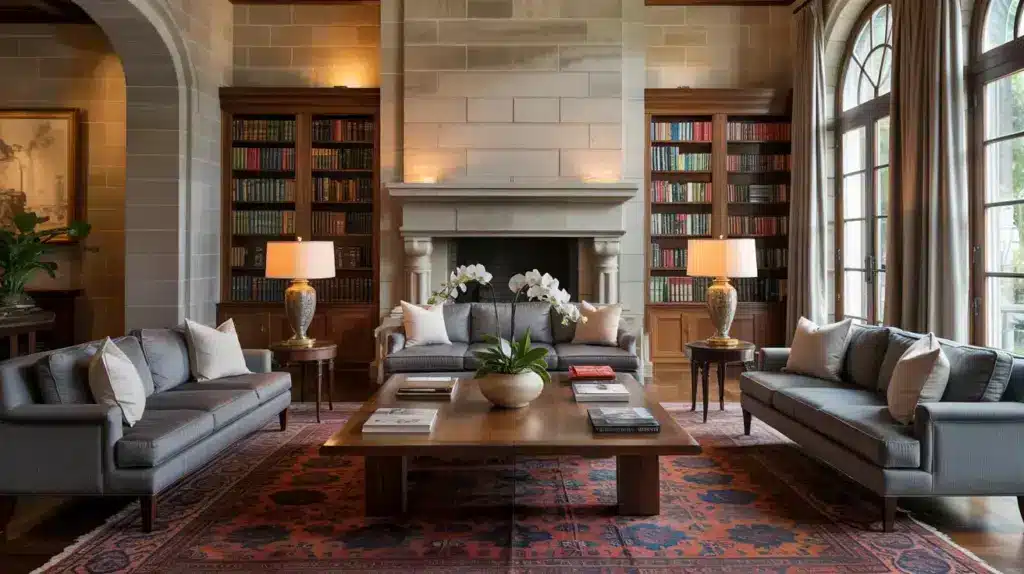
Furniture scale and placement help ground the room.
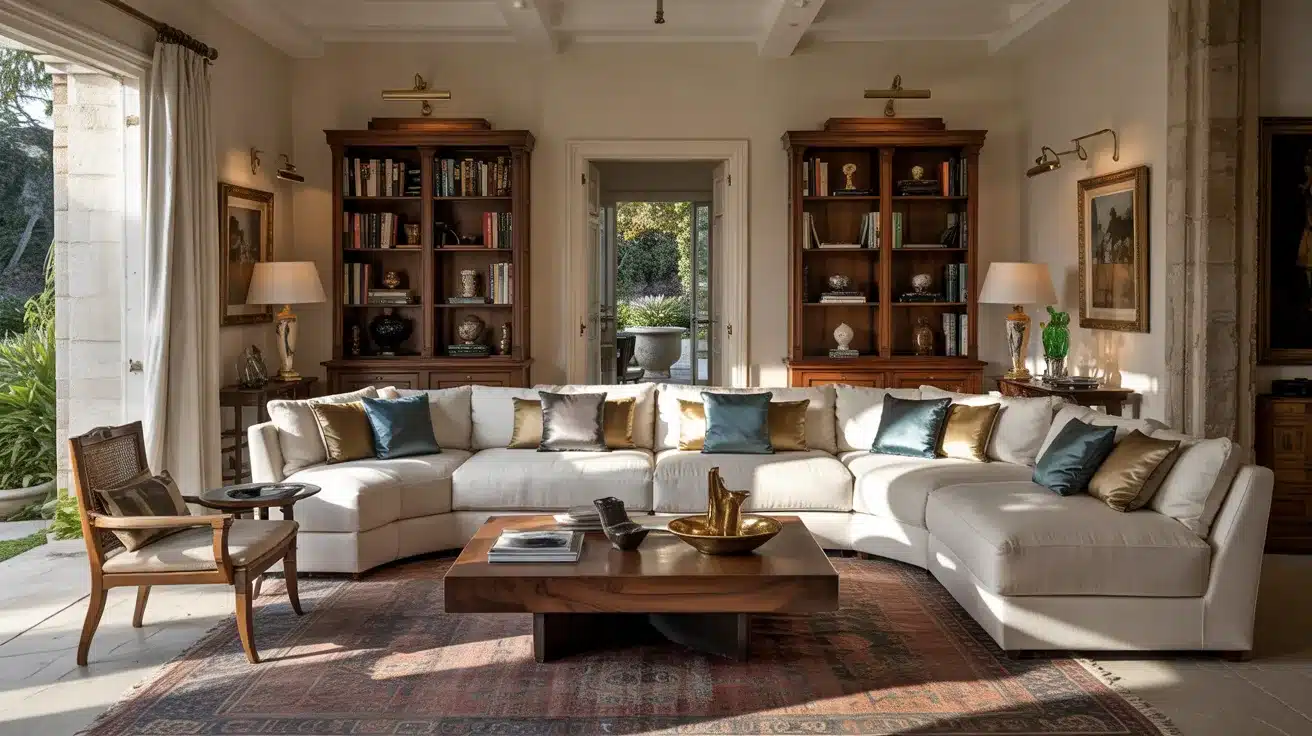
11. Tall Bookcases
Tall bookcases that extend close to the ceiling help reduce unused vertical wall space in high-ceiling living rooms.
They visually connect the lower furniture area with the upper wall section, making the room feel more proportionate. Full-height bookcases also add storage without spreading clutter across the floor.
Styling shelves with a mix of books, closed cabinets, and decorative objects prevents the unit from feeling heavy.
Built-in or wall-mounted options work especially well for maintaining a clean and organized layout.
12. High-Back Seating
High-back sofas and chairs help balance the scale of a living room with tall ceilings by adding vertical presence at seating level.
These pieces prevent furniture arrangements from appearing undersized within a large open space.
Taller seating also creates a sense of enclosure, which improves comfort in expansive rooms.
13. Layered Seating Zones
Creating more than one seating area helps divide the room into smaller, usable sections without the need for physical walls.
A main seating group can be paired with a reading corner or secondary conversation area. Rugs, lighting placement, and furniture orientation help define each zone clearly.
This approach supports better flow and improves everyday use of large living spaces.
14. Solid Coffee Tables
Solid coffee tables add visual weight that helps anchor furniture layouts in high-ceiling living rooms.
Lightweight or narrow tables often feel out of place in large, open spaces. Tables with thicker tops or sturdy bases create a stronger focal point within the seating area.
Materials such as wood, stone, or metal support a grounded look while remaining practical. The table size should align with the seating arrangement to maintain balance and proportion.
15. Raised Seating Platforms
Raised seating platforms introduce subtle level changes that help organize expansive living rooms.
Even a slight elevation can separate seating areas from surrounding spaces, such as dining or entry zones. Platforms also add visual interest without reducing openness.
Ceiling Design Ideas for Added Visual Structure
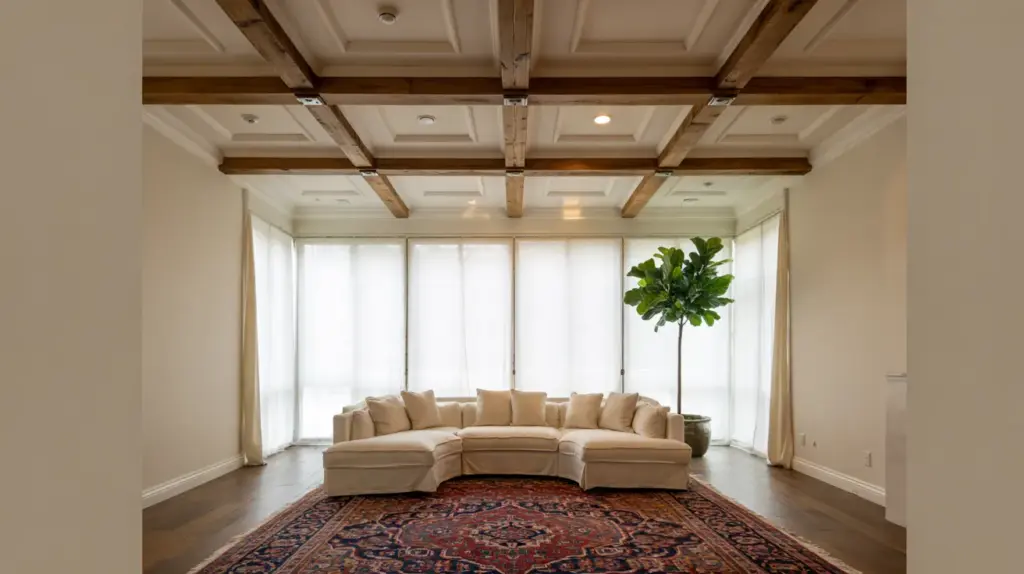
Ceiling treatments turn height into a design feature.
16. Exposed Ceiling Beams
Exposed ceiling beams help add definition to a high ceiling living room by visually breaking up large overhead surfaces.
They create clear horizontal lines that reduce the sense of excessive height while adding structure to the space.
Beams work well in both traditional and modern interiors, depending on material and finish.
Proper spacing ensures the ceiling feels organized rather than crowded, especially in wide living rooms.
17. Coffered Ceiling Patterns
Coffered ceiling patterns introduce depth by dividing the ceiling into recessed sections. This design adds visual interest without lowering the ceiling height physically.
Coffered ceilings work particularly well in large living rooms where plain ceilings may feel empty. The grid layout helps guide the eye across the ceiling instead of straight upward.
18. Painted Ceilings
Painting the ceiling in a contrasting or slightly deeper shade helps manage the perception of height in a tall living room. A darker or warmer ceiling color brings the ceiling visually closer to the seating area below.
This approach works well when walls are kept light to maintain brightness. Matte finishes are often preferred to reduce glare and reflections.
Ceiling paint can also coordinate with wall or furniture tones for a more connected look.
19. Hanging Ceiling Details
Hanging ceiling details helps visually connect the upper and lower sections of a high-ceiling living room.
Elements such as decorative panels, suspended features, or extended light fixtures draw the eye downward in a controlled way.
These details should be placed thoughtfully to avoid blocking sightlines or natural light.
20. Wood Ceiling Finishes
Wood ceiling finishes add warmth and visual weight to tall living rooms. The natural texture of wood helps soften large ceiling surfaces that might otherwise feel cold or distant.
Lighter wood tones support an open atmosphere, while medium tones add contrast without overpowering the room.
Wood ceilings also improve visual connection with flooring or furniture made from similar materials. Proper lighting ensures the ceiling remains bright and welcoming rather than heavy.
Color and Material Choices for High Ceiling Living Rooms
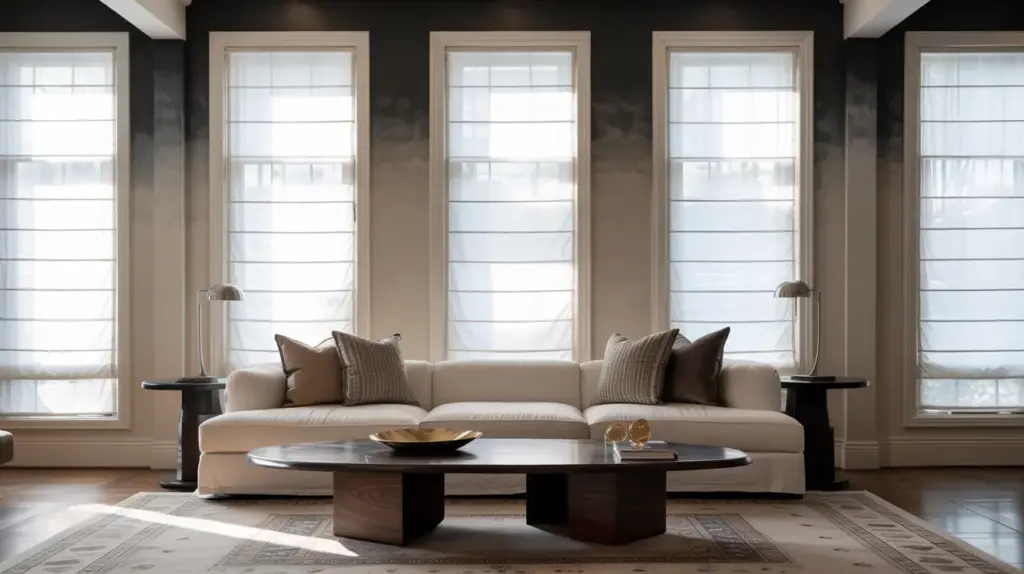
Color placement affects how height is perceived.
21. Warm Neutral Tones
Warm neutral tones help soften large vertical surfaces in a high-ceiling living room.
Shades such as beige, soft taupe, warm gray, or off-white reduce the sharp contrast created by tall walls. These colors make the space feel more connected and comfortable without reducing brightness.
Warm neutrals also work well as a base for layered furniture and decor, allowing other elements to stand out naturally.
22. Darker Upper Walls
Using slightly darker tones on the upper portion of walls helps reduce the stretched appearance caused by tall ceilings.
This color placement visually lowers the ceiling line, making the room feel more balanced. Darker upper walls can be achieved through paint, paneling, or textured finishes.
When paired with lighter, lower walls, the transition feels intentional rather than abrupt.
23. Mixed Material Finishes
Mixed material finishes add depth and visual interest to high-ceiling living rooms.
Combining fabric upholstery, wood surfaces, metal accents, and subtle stone details prevents the space from feeling flat.
Material variation helps distribute visual weight across the room rather than concentrating it at floor level.
Repeating similar materials in different areas also improves overall consistency.
24. Consistent Color Flow
Consistent color flow helps visually connect tall walls, furniture, and decor elements. Repeating the same color tones across different heights prevents the room from feeling fragmented.
This approach works especially well in open layouts where the living room connects to other spaces. Even small repetitions, such as matching cushions with wall accents, support a cohesive look.
25. Low-Gloss Finishes
Low-gloss finishes help manage light reflection on large wall and ceiling surfaces.
Matte or soft finishes reduce glare, which can be more noticeable in tall rooms with strong natural light.
These finishes also add a calmer visual texture, preventing surfaces from feeling harsh.
Styling and Decor Ideas for Tall Living Rooms
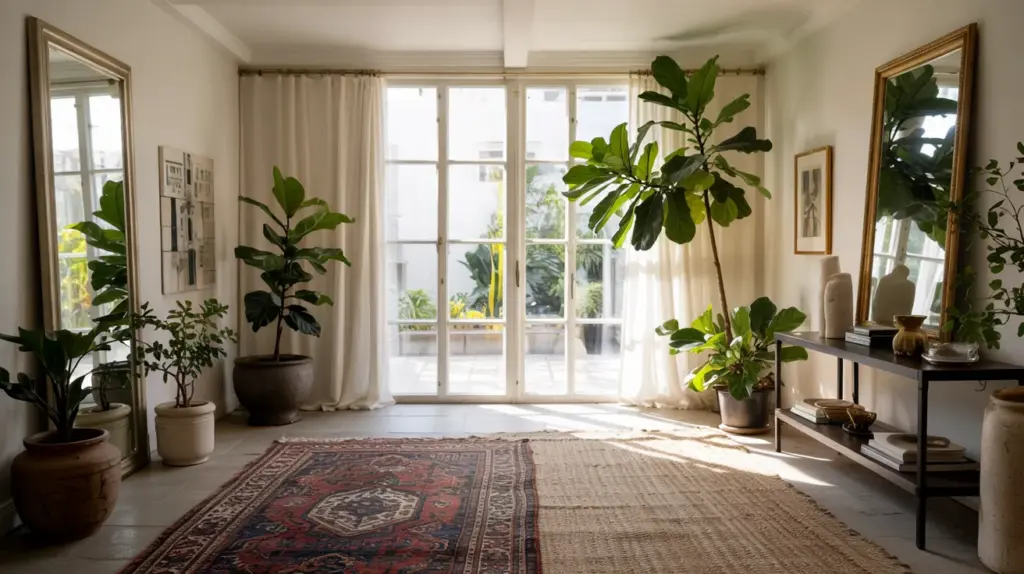
Decor choices help complete the visual balance and connect tall walls with the living space below.
26. Ceiling-Height Curtains
Ceiling-height curtains help visually link tall walls to windows, making the height feel intentional rather than excessive. Hanging curtains close to the ceiling draws the eye upward in a controlled way while framing the room evenly.
Longer curtains also make windows appear larger and more proportionate to the wall height.
27. Tall Indoor Plants
Tall indoor plants help fill vertical gaps in high-ceiling living rooms without adding visual heaviness.
Large plants placed near corners, windows, or seating areas soften hard lines created by tall walls. Their natural height helps balance the scale of furniture and decor below.
Grouping plants of varying heights can also add depth while keeping the space cohesive.
28. Layered Rugs
Layered rugs help ground furniture arrangements in tall living rooms by adding visual weight at floor level.
Using more than one rug defines seating zones and prevents the room from feeling too open.
Neutral base rugs paired with patterned or textured top rugs work well together. Proper rug sizing ensures furniture feels anchored and proportionate.
29. Vertical Mirrors
Vertical mirrors help balance wall height while reflecting light across the room. Tall mirrors placed strategically can make the space feel brighter without increasing visual clutter.
Their vertical shape aligns naturally with high ceilings and long walls. Mirrors also help connect the upper and lower areas of the room by extending visual lines.
Framed mirrors add structure, while simple frames keep the look clean.
30. Grouped Decor Displays
Grouped decor displays feel more intentional than single scattered items in high-ceiling living rooms.
Arranging decor in clusters creates stronger focal points that hold visual weight. Grouping items by color, material, or height improves consistency across tall walls or shelving.
Larger groupings work better than small accents in expansive spaces.
Conclusion
A high ceiling living room can feel comfortable and well put together when the height is planned carefully.
Tall walls and open space work best when they are supported by the right mix of design choices.
Wall treatments, lighting, furniture size, ceiling details, colors, and decor all help shape how the room looks and feels.
Even small changes in these areas can make a big difference. Using ideas from different sections allows the room to match the layout and daily needs of the space.
When everything works together, a high ceiling living room feels balanced, usable, and welcoming. Feel free to share ideas or thoughts in the comments below.

Ava Taylor, holding a Bachelor’s degree in Interior Design from the Pratt Institute, has made her mark in creating engaging and functional living spaces for over 14 years. She began her career with a New York-based design studio, where she gained a reputation for her innovative and user-centric designs. Ava joined our team in 2019, bringing a blend of artistic flair and practicality to our home improvement section. Since the she has been the lead contributor to our room transformation series, inspiring readers with her unique approach to maximizing space utility and aesthetic appeal. Beyond her professional work, Ava is a passionate collector of vintage furniture, a hobby that enriches her design perspective.