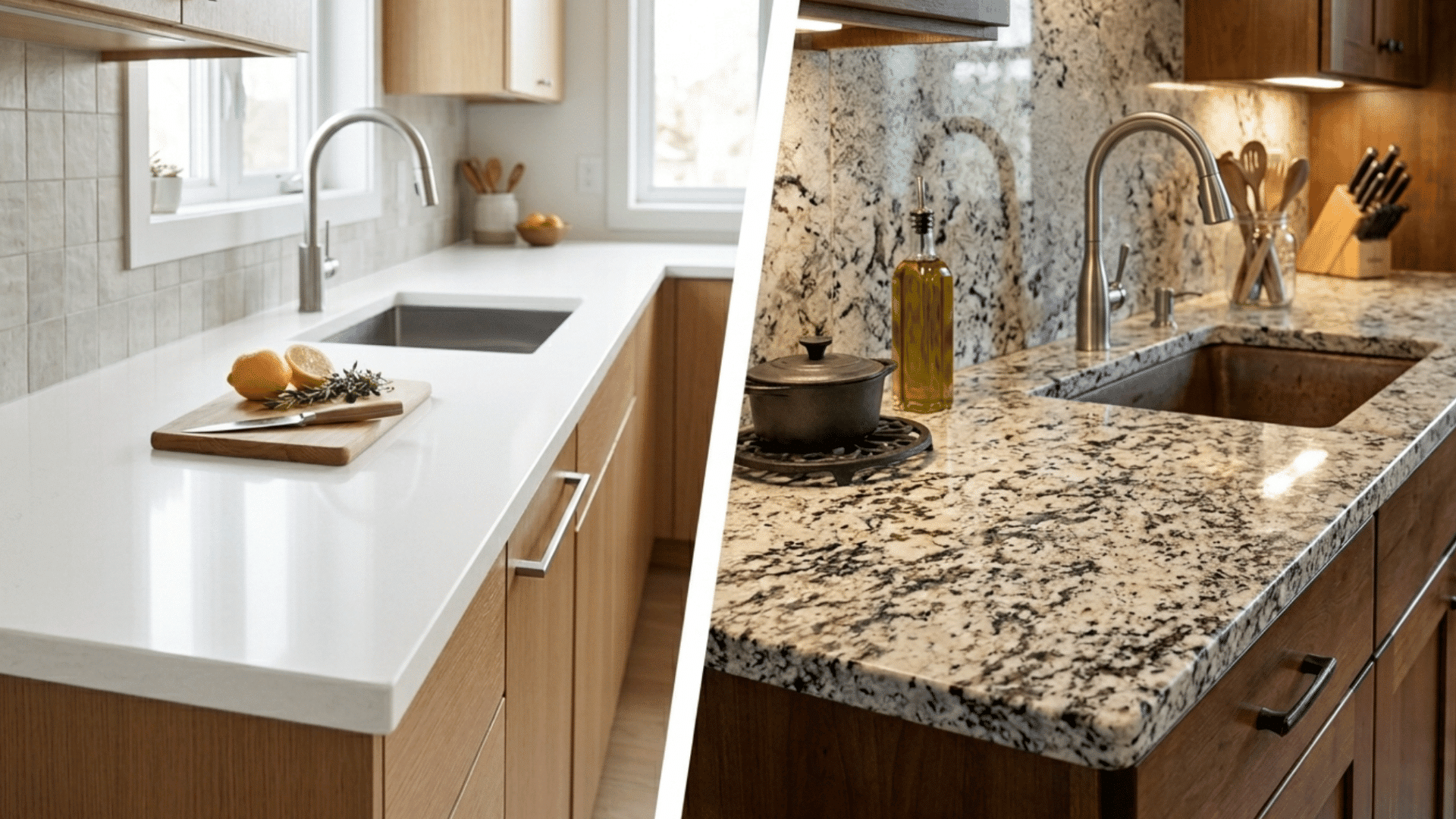

Choosing the right countertop is one of the most debated decisions in any kitchen renovation.
And when it comes to quartz countertops vs granite, most people find themselves stuck; both look great, both last long, and both come with their own set of trade-offs.
That is exactly what makes this comparison so tricky. This blog breaks down the real differences between quartz and granite in terms of cost, maintenance, durability, and appearance.
By the end, anyone reading this will have a clear enough picture to make a confident choice for their kitchen or bathroom.
What are Quartz Countertops?
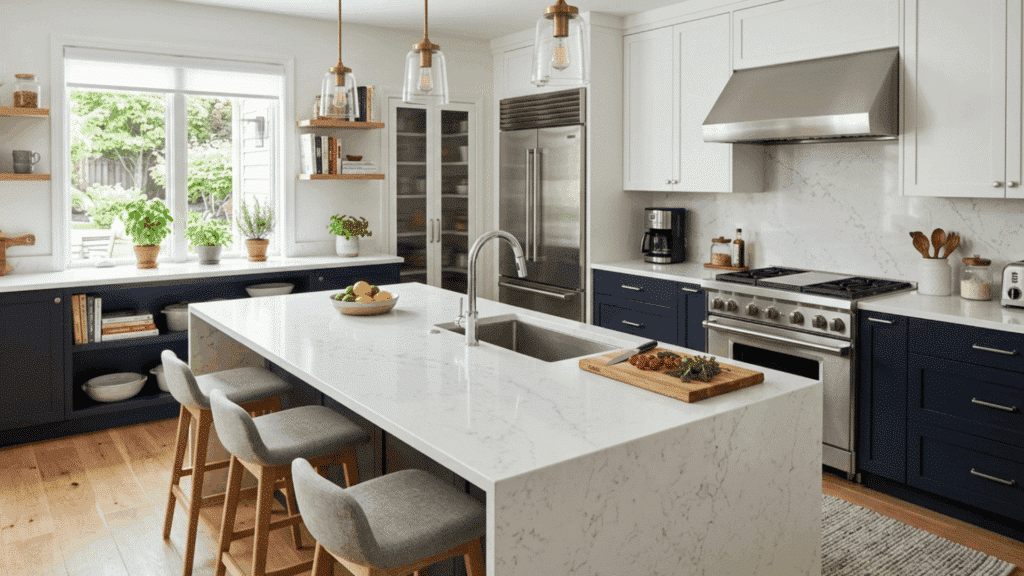
Quartz countertops are man-made surfaces created using crushed natural quartz mixed with resins and pigments.
This combination is pressed into slabs under high pressure, which gives the surface a dense and uniform structure. The added resins help bind the material, while pigments create different colors and patterns.
Because of this process, quartz countertops have a smooth, polished finish that appears clean and consistent.
Unlike natural stone, quartz is engineered, so the color and pattern stay the same across the slab without unexpected variations.
They are commonly used in kitchens and bathrooms due to their neat appearance and ability to fit both modern and simple design styles.
Pros and Cons of Quartz Countertops
Quartz countertops are easy to clean and maintain, but they come with a few trade-offs. Here are their pros and cons.
| Pros of Quartz Countertops | Cons of Quartz Countertops |
|---|---|
| Low maintenance and no sealing required | Not fully heat-resistant |
| Non-porous, resists stains and bacteria | Can be slightly more expensive |
| Consistent patterns and uniform look | Lacks natural stone variation |
| Durable for everyday use | May discolor with long sun exposure |
| Wide range of colors and styles | Not ideal for outdoor use |
What are Granite Countertops?
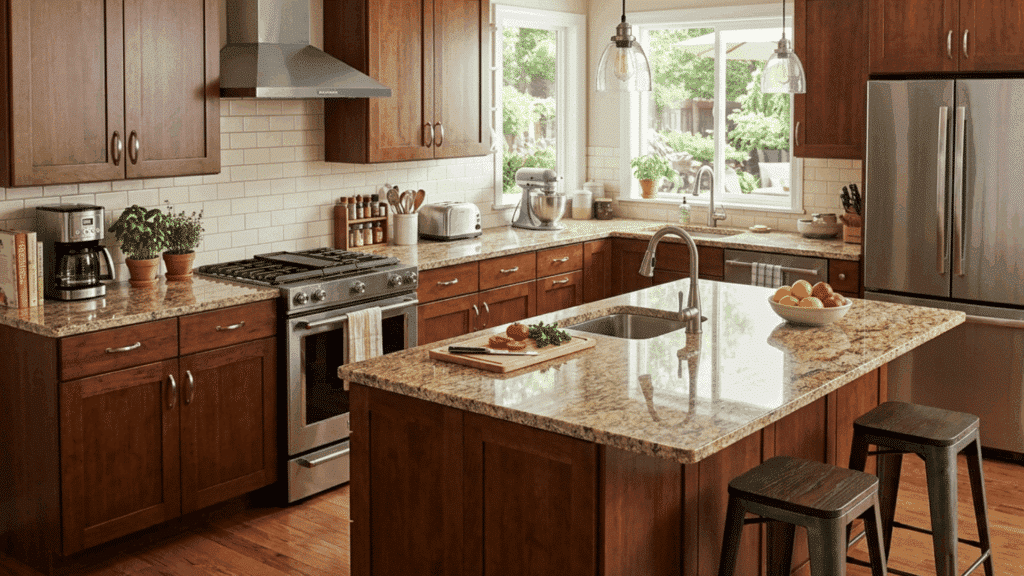
Granite countertops are natural stone surfaces cut from large slabs of granite, which form deep within the earth over time.
Each slab is unique, with natural patterns, colors, and textures that cannot be exactly replicated. The stone is cut, polished, and sealed to create a smooth and usable surface for homes.
Granite countertops are commonly chosen for kitchens and bathrooms because they are made of natural material and offer a more varied, organic look than engineered options.
Pros and Cons of Granite Countertops
Granite countertops offer a natural look and a strong surface, but they also need a bit more care. Here are their pros and cons.
| Pros of Granite Countertops | Cons of Granite Countertops |
|---|---|
| Natural stone with unique patterns | Requires regular sealing |
| Highly heat-resistant | Can stain if not sealed properly |
| Strong and durable surface | Needs more maintenance than quartz |
| Adds natural character to spaces | Can chip or crack under heavy impact |
| Wide range of natural colors | Seams may be more visible |
Quartz Countertops Vs Granite: The Key Difference
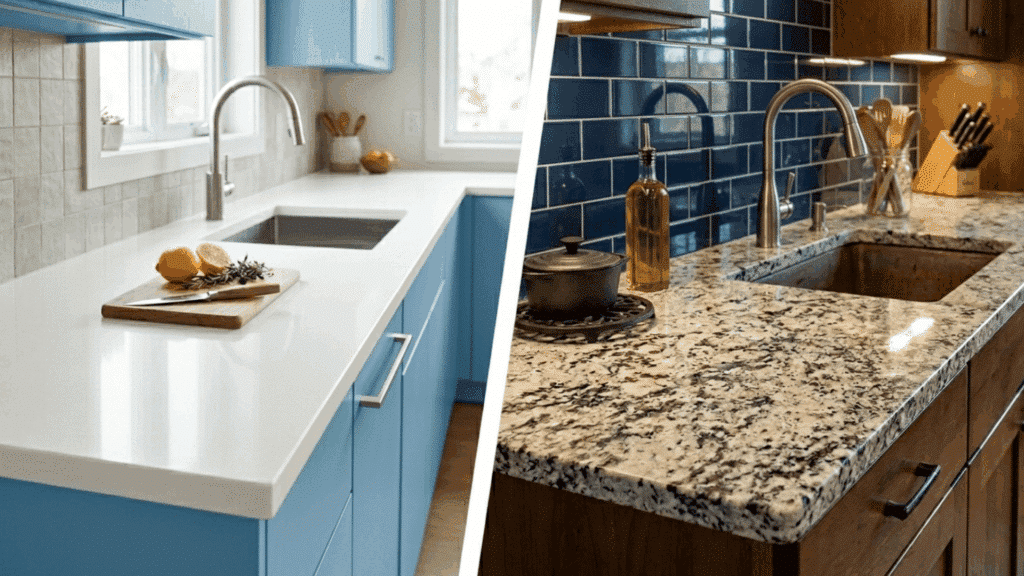
Quartz and granite may seem similar at first, but their differences in material, performance, and cost can significantly impact your final choice.
1. Appearance
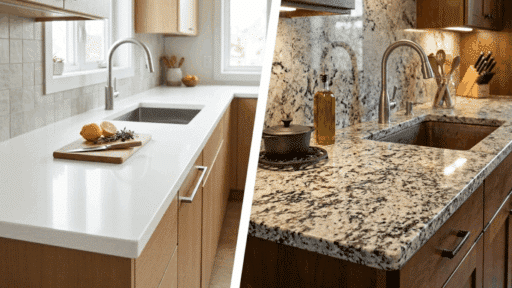
Granite brings natural artistry to any space, with organic speckles, veins, and earthy tones like beige, brown, grey, and black, giving each slab its own unique character. This makes it a perfect choice for traditional, rustic, and luxury kitchen designs.
Quartz, by contrast, is engineered for consistency. Its uniform patterning, crisp solid whites, bold colour options, and convincing marble mimics make it the go-to material for modern and contemporary kitchens.
If your kitchen features warm wood cabinetry, ornate hardware, or classic shaker-style doors, a granite countertop will complement the design beautifully.
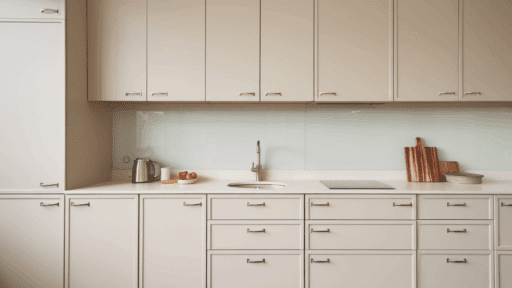
For sleek handle-less cabinets, waterfall islands, or an all-white palette, quartz delivers the polished, smooth finish that modern interiors demand.
2. Durability
Quartz scores around 7 on the Mohs scale and resists scratches well due to its resin coating. But that same resin is exposed to high heat and can discolour or warp under direct contact with hot pans, so trivets are a must.
Granite sits at 6 to 7 on the Mohs scale, handles heat far better than quartz, but is more prone to cracking under heavy impact, especially along the edges.
Both materials can chip at the edges with forceful impact, but in day-to-day kitchen use, quartz edges out granite thanks to its consistent hardness and resin-enhanced surface resilience.
For most people, quartz offers the more dependable everyday durability.
3. Maintenance and Care
Quartz is non-porous and never needs sealing, making it incredibly easy to maintain with just mild soap and water; harsh chemicals should be avoided, as they can damage the resin over time.
Granite is porous and requires resealing every 1 to 3 years to prevent staining, but daily cleaning is just as simple with warm, soapy water and a soft cloth.
For people who want a truly low-maintenance surface, quartz is the clear winner, thanks to its zero-maintenance nature and superior stain resistance.
4. Cost Comparison
Quartz typically ranges from $50 to $200 per square foot, depending on the brand and design, and with zero sealing or maintenance costs, it proves to be a cost-efficient choice over the long run.
Granite ranges from $40 to $200 per square foot based on the rarity and origin of the stone, but factors in ongoing sealing costs that can add up to a few hundred dollars over the years.
While both materials sit in a similar price range upfront, quartz offers better long-term value for most people thanks to its negligible ongoing maintenance costs.
5. Environmental And Health Considerations
Quartz countertops are manufactured by combining natural quartz with resins, a process that requires more processing. Their non-porous surface helps reduce bacterial buildup, keeping the surface cleaner.
Granite countertops are natural stone, so they involve quarrying and transportation but fewer synthetic materials. When sealed properly, they also provide a safe and usable surface for daily use.
Each option has different environmental factors: quartz is engineered, while granite is naturally sourced. In my opinion, quartz feels slightly better for daily hygiene.
6. Return On Investment (ROI) And Resale Value
Quartz countertops are often seen as a modern upgrade because of their clean look and low maintenance. Many buyers appreciate the convenience they offer.
Granite countertops have long been valued for their natural look and remain a desirable feature in many homes. Their classic appeal continues to attract buyers.
Both can add value to a home, with the choice depending on buyer preference and overall design style. I’d say quartz has a slight edge today, but granite still holds strong appeal.
So Which One Should You Choose?
Choosing between quartz and granite ultimately comes down to your lifestyle, kitchen habits, and design preferences. Both are premium materials, but each has qualities that suit different people better.
Choose Quartz If:
- You want low maintenance: Quartz never needs sealing and cleans up with just soap and water, making it ideal for people who want a beautiful surface without the upkeep.
- You prefer consistent colour and pattern: If a uniform, predictable look is part of your design vision, quartz delivers the same pattern across every slab.
- You have a busy kitchen: Quartz handles daily spills, stains, and heavy use without demanding much attention, making it a practical choice for active households.
- You have young children: Its non-porous surface resists stains from food, drinks, and everyday messes, giving parents one less thing to worry about.
- You are renovating a bathroom: Quartz resists moisture, cosmetics, and cleaning products, with zero maintenance, making it the stronger, more practical choice for bathrooms.
Choose Granite If:
- You Prefer A Unique Natural Look: Every granite slab is unique, offering a natural beauty and character that no engineered material can truly replicate.
- You value natural stone prestige: Granite offers a classic, luxurious appeal that adds authenticity and craftsmanship to any kitchen.
- You are building an outdoor kitchen: Granite handles UV exposure and temperature changes far better than quartz, making it the smarter choice for outdoor applications.
Final Thoughts
When it comes to quartz vs granite, there is no single right answer. Quartz suits people who prioritise low maintenance, consistent aesthetics, and everyday practicality.
Granite wins for those who value natural beauty, heat resilience, and a surface that is truly one of a kind.
The granite vs quartz countertops debate ultimately comes down to how you live and what your space demands. Both materials are premium, long-lasting investments that add real value to your home.
Still unsure which one is right for you? Take your time, weigh your priorities, and choose the material that fits your lifestyle and your kitchen’s demands.

With a Master’s in Architecture from the University of California, Berkeley, Mitchell Green has spent over two decades dedicated to the study and practical application of home fixture design. His career started in an architectural firm, providing him a strong foundation in the structural and aesthetic aspects of home interiors. Mitchell brought his comprehensive knowledge to our platform, where he has been an influential voice in our home fixtures and fittings section. Since 2018, he has been guiding our readers through the intricacies of selecting and installing fixtures, combining technical know-how with design flair. In his spare time, Mitchell is a keen photographer, capturing architectural details and design elements, an interest that complements his professional focus.