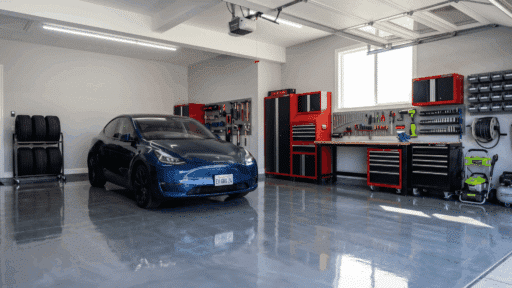
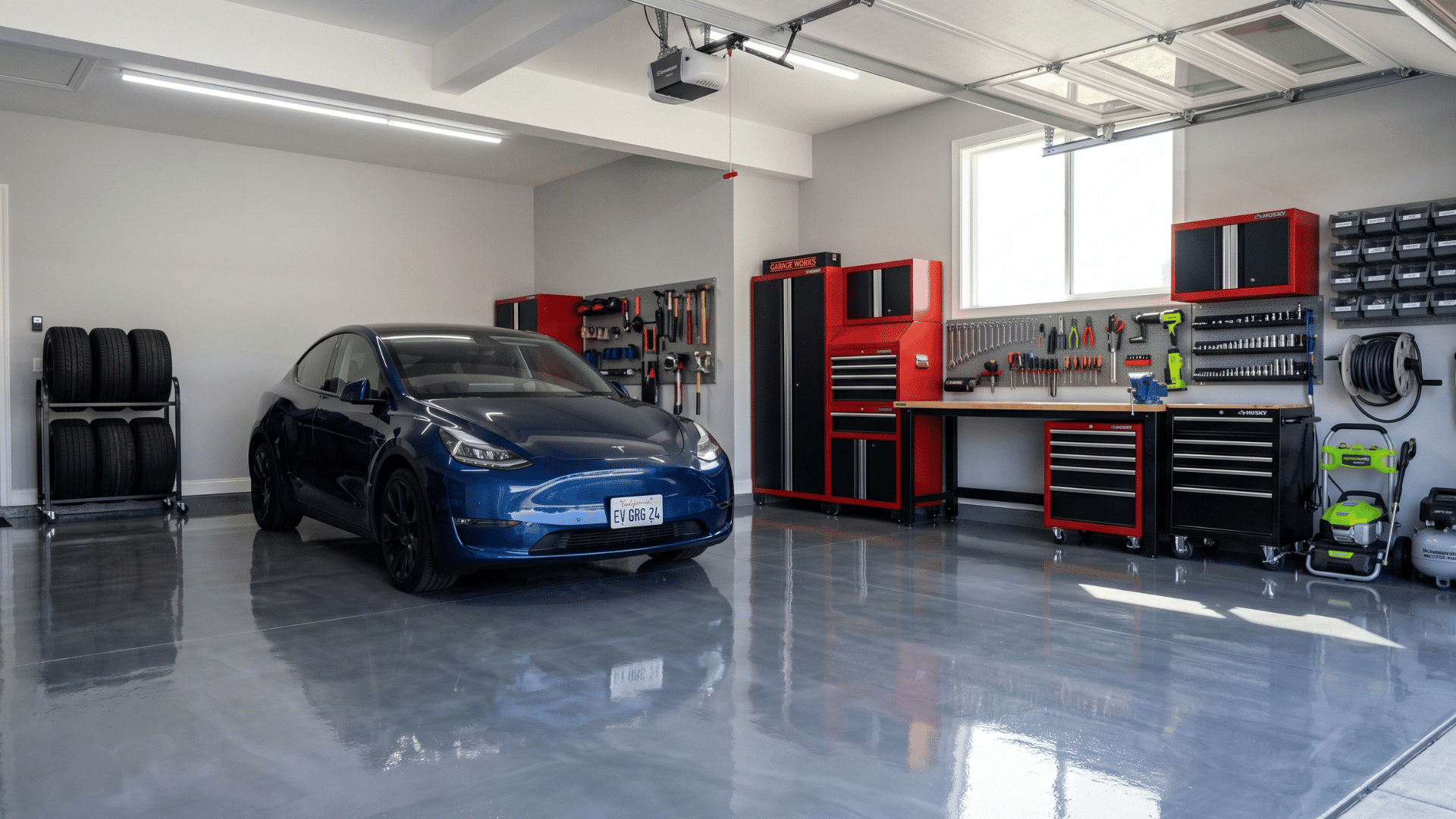

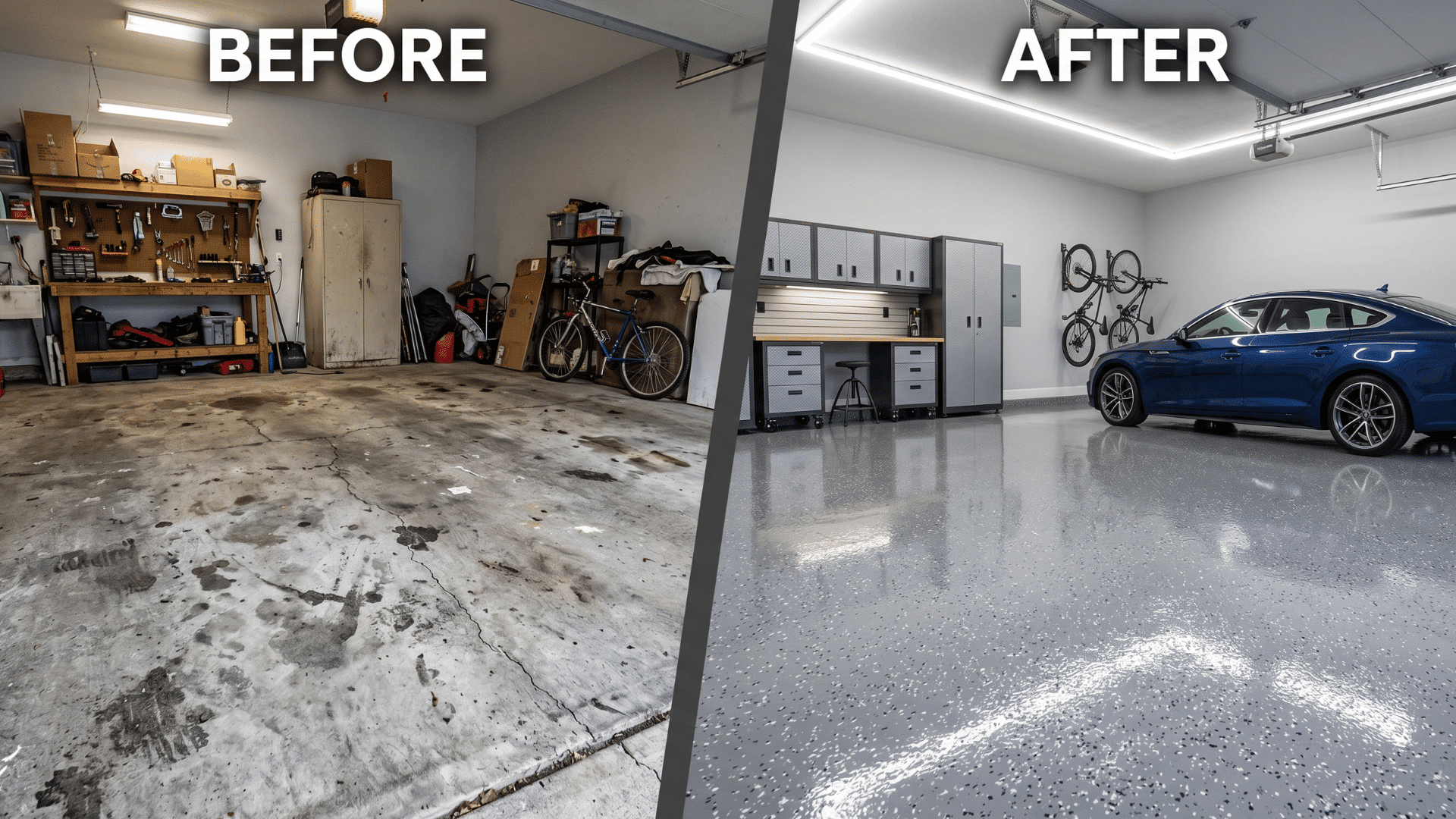
Most garage floors take a beating long before anyone thinks about protecting them. Oil stains, surface cracks, and ground-in grime build up over time and become harder to ignore.
A quality coating changes that in a way most people do not expect. It adds more than just protection; it changes how the whole space feels to work in and look at.
The problem is that not every product lives up to what it promises on the label. Picking the best garage floor coating means knowing what separates a coating that lasts from one that peels within a season.
What Makes a “Good” Garage Floor Coating?
Not every coating sold for garage use is worth the time or money it takes to apply. A good coating does more than sit on the surface; it bonds with the concrete and holds under real conditions.
Durability is the first measure the coating needs to handle vehicle weight, foot traffic, dropped tools, and temperature changes without peeling or cracking.
Resistance to oil, chemicals, and moisture matters just as much, particularly in working garages where spills are routine.
The best garage floor coating strikes a balance across all of these qualities rather than excelling at one while falling short on the others.
Choosing the Best Garage Floor Coating
Picking the best garage floor coating comes down to three practical filters budget, how the garage gets used, and how the coating gets installed.
- Set Budget: Decide upfront whether you are working with a low, mid, or premium spend before comparing any coating types or products.
- Assess Usage: Consider how often the garage is used, what vehicles or equipment it holds, and how much chemical or moisture exposure it sees daily.
- Check Durability: Match the coating’s rated lifespan and load tolerance to the actual conditions your garage floor deals with every week.
- Plan Installation: Decide early whether the job is DIY or professional, as some coating types require equipment and experience that go beyond basic home application.
- Compare Costs: Factor in both material and labor costs together rather than looking at product price alone, especially for premium coating systems.
Garage Floor Coating Types Worth Knowing
Not every coating works the same way or suits the same garage; knowing the key differences between them makes the final choice far easier to land on.
1. Epoxy Garage Floor Coating
Epoxy is one of the most widely used options and a practical starting point for most residential garage projects. Here are the key points to help you decide whether epoxy is the right fit for your garage.
- What it is: A two-part resin and hardener system that bonds directly to concrete and cures into a hard, seamless surface.
- Why people choose it: It costs less than most coating types while still delivering solid durability for everyday residential garage use.
- The maintenance: Mop with mild detergent regularly and avoid prolonged exposure to harsh acids or standing water.
2. Polyaspartic Coating
Polyaspartic is a fast-curing, high-performance option that suits homeowners who want results without a long wait. Here are the key points that explain why this coating consistently ranks as the best garage floor coating.
- What it is: A fast-curing polyurea-based coating that can be applied and walked on within hours of a single-day installation.
- Why people choose it: It resists UV fading, cures quickly, and holds up under heavy use without yellowing the way some epoxy products do.
- The maintenance: Sweep regularly and mop occasionally with a pH-neutral cleaner to keep the surface in good condition long term.
3. Polyurea Coating
Polyurea is built for demanding conditions and performs well in garages that see heavy or consistent daily use. Here are the key points to help you assess whether polyurea meets the demands of your space.
- What it is: A flexible, high-performance coating that bonds tightly to concrete and adjusts with temperature changes rather than cracking.
- Why people choose it: Its flexibility prevents chipping and cracking under conditions that would compromise a more rigid coating type.
- The maintenance: The surface resists most stains and chemicals, so routine cleaning with water and mild cleaner is all it needs.
4. Acrylic and Paint Coatings
Acrylic and paint coatings are the most accessible entry point for anyone working with a tight budget or timeline. Here are the key points that will help you set the right expectations before choosing this coating type.
- What it is: Single-component products that apply like standard paint and sit on top of the concrete rather than bonding chemically.
- Why people choose it: The low cost and straightforward application make it accessible for lightly used garages or as a temporary solution.
- The maintenance: These coatings chip and scuff under regular traffic and will likely need reapplication within one to three years.
5. Polyurethane Coating
Polyurethane falls between epoxy and polyurea in performance and is a strong mid-range option for finished garages. Here are the key points to help you determine whether polyurethane is a good fit for your garage and budget.
- What it is: A single or two-component topcoat that applies over a base layer and adds a durable, chemical-resistant finish to the concrete surface.
- Why people choose it: It offers better scratch and abrasion resistance than epoxy and works well as a topcoat over existing coatings that need an added layer of protection.
- The maintenance: Clean with a neutral pH cleaner and avoid dragging heavy or sharp objects across the surface to prevent premature scratching.
DIY vs. Professional Installation
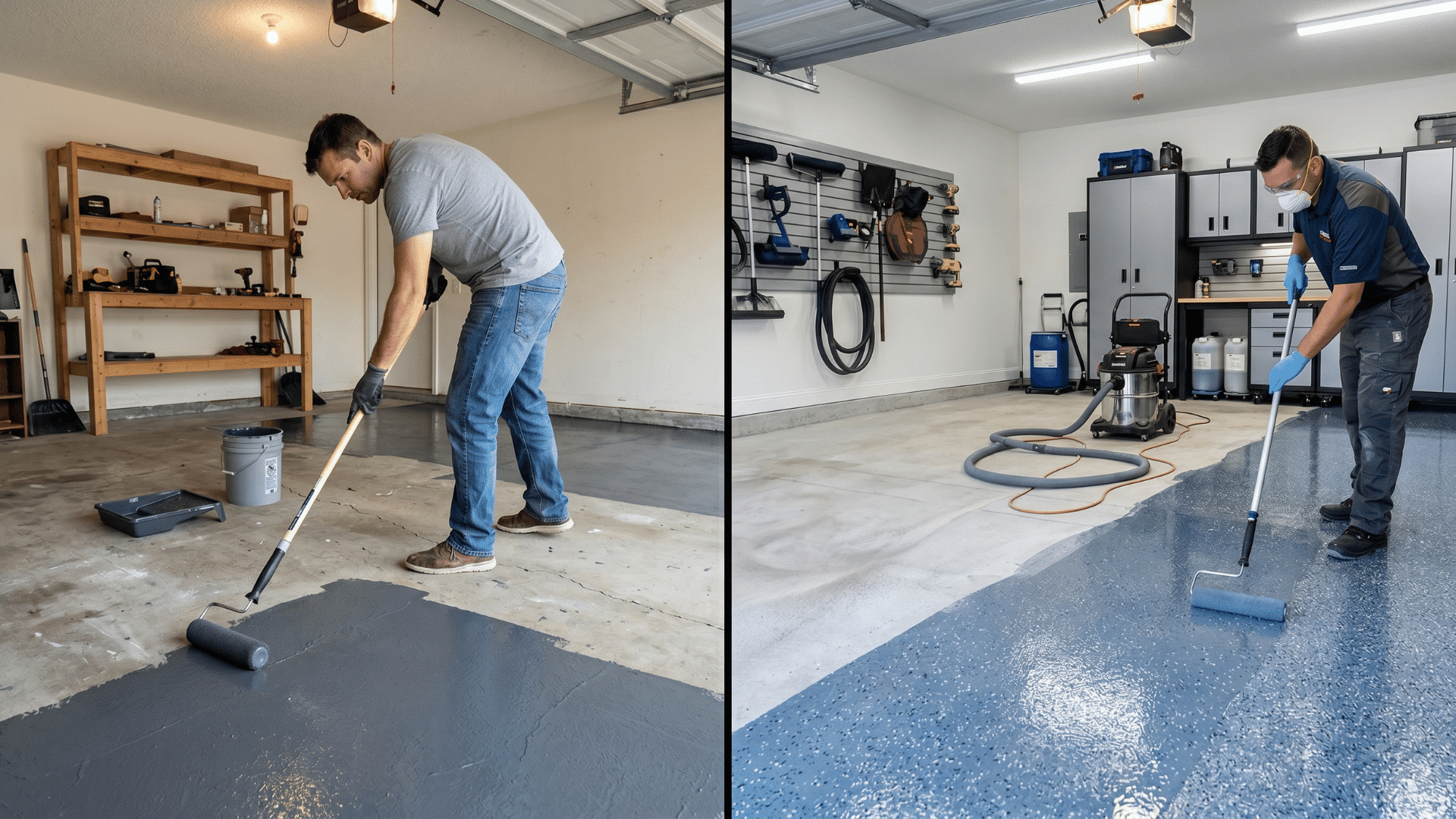
The table below provides a quick comparison of DIY and professional installation to help you understand costs, effort, and overall results.
| Method | DIY Installation | Professional Installation |
|---|---|---|
| Cost | Lower overall cost | Higher due to labor charges |
| Time Required | Takes longer to complete | Completed quickly |
| Skill Level | Basic skills needed | Handled by experts |
| Finish Quality | May look uneven | Smooth and polished finish |
| Durability | Moderate lifespan | Longer-lasting results |
Garage Floor Coating Products Worth Considering
These are some of the most consistently rated options available right now, covering every coating type and budget range.
- Rust-Oleum EpoxyShield Coating Kit: A widely used DIY-friendly epoxy kit that works well for standard residential garage floors on a moderate budget.
- GlobMarble Polyaspartic Coating Kit: A fast-curing, high-durability option suited for homeowners who want professional-level results without hiring a contractor.
- Rust Bullet DuraGrade Concrete Coating: A polyurethane-based coating that applies directly to concrete without acid etching and resists UV, chemicals, and hot tire pickup.
- KILZ 1-Part Epoxy Acrylic Floor Paint: A budget-friendly option for lightly used garages or temporary coverage needs before a permanent solution is applied.
- Rust-Oleum RockSolid Polycuramine Floor Kit: A polycuramine-based kit rated twenty times stronger than standard epoxy and walk-ready within ten hours of application.
Final Thoughts
A garage floor that holds up year after year does not happen by accident. It starts with choosing a coating that matches the demands of the space rather than just the lowest price on the shelf.
Every coating type covered here serves a different need, and the best garage floor coating for one garage may be entirely wrong for another.
The right choice comes down to how the space is used, what the budget allows, and how much time is available for installation.
Use the information here to match it to your garage, and make a decision that will last.

Tommy Hardy, an alumnus of the Georgia Institute of Technology with a degree in Mechanical Engineering, has been a go-to figure in residential upkeep and innovation for over 18 years. His career commenced in a leading home appliance manufacturing company, where he mastered the intricacies of household systems. Joining our platform in 2020, Tommy quickly became a reader favorite for his practical and easy-to-follow guides. He took the helm of our DIY section in 2019, consistently delivering content that empowers homeowners. Beyond his professional pursuits, Tommy is a passionate gardener and enjoys woodworking, skills enhancing his hands-on approach to home care.