
A weekend project has a way of starting small.
You’re only painting the basement ceiling. Only replacing an old outdoor faucet. Only tearing out a little trim, patching one wall, moving one outlet, borrowing one ladder, and renting one tool.
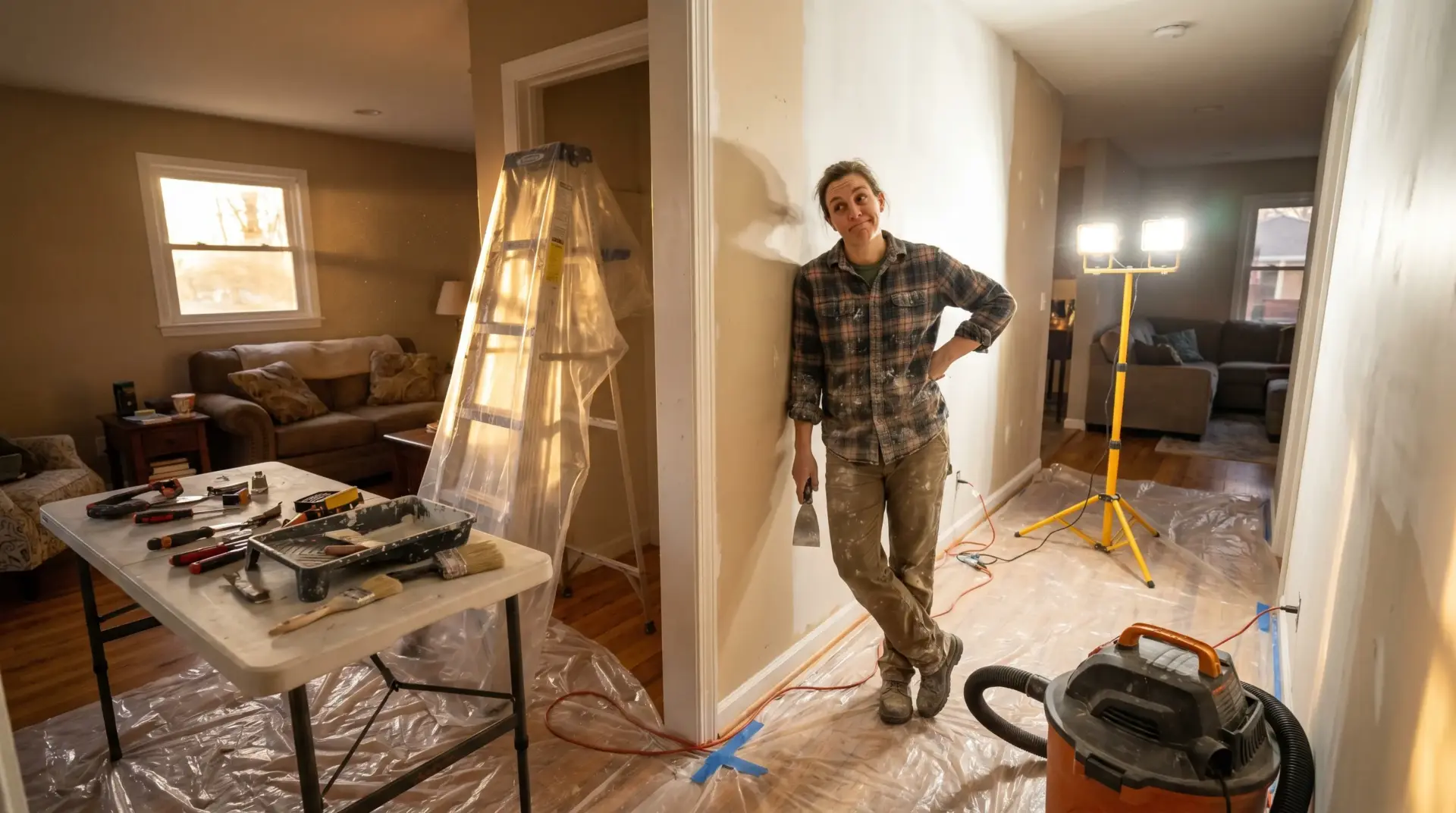
Then Saturday afternoon hits, and the house looks less like a home and more like a work zone. There’s dust in the hallway, plastic on the floor, a shop vac running, a ladder blocking the back door, and someone asking whether it’s fine to stand on the second-to-last step “just for a minute.”
That’s usually the moment the project has changed. The problem is that most homeowners notice it after the job has already become messy, rushed, and a little too casual for the risks involved.
The Project Changes When More People, Height, Dust, or Power Get Involved
A home project starts feeling like a jobsite when the consequences stop being limited to a bad paint color or a crooked shelf. Once people are climbing, cutting, wiring, hauling, sanding, spraying, or working around old materials, the project needs more planning than a normal weekend refresh.
That doesn’t mean every DIYer needs a clipboard and a hard hat by the coffee maker. It means the project needs someone to slow the room down before the messy part begins. Who is using the ladder? Where does the dust go? What gets turned off first? Is the back door still usable if something goes wrong? Where are the kids and pets while the work is happening?
The shift is especially obvious when paid help enters the picture. A friend helping paint a bedroom is one thing; a small crew opening walls, demoing tile, installing exterior fixtures, or working overhead is different. A supervisor who has been through the OSHA Education Center is usually trained to think beyond the task itself, including fall hazards, electrical exposure, struck-by risks, and the kind of sequencing mistakes homeowners often don’t see until everyone is already standing in the same cramped corner.
The homeowner version of that thinking is simpler, but it matters. Before the first tool comes out, walk the space as if you’re not the person excited about the finished result. Look for where people will trip, where cords will run, where wet paint or adhesive will trap someone, and where heavy material might get staged without blocking a walkway.
A basement is a perfect example. It’s easy to focus on the fun part, like flooring, paint, gym equipment, storage, or an exposed ceiling. But a project like a basement home gym on a budget can quickly involve concrete dust, electrical access, ventilation, heavy equipment, and low overhead clearances. None of those are dramatic on their own. Together, they can turn a casual room makeover into a space that requires actual work habits.
The small details are usually what make the difference. Tape down cords instead of stepping over them all day. Keep one clear path from the work area to an exit. Put the tools back on a table instead of the floor. Label what has been shut off. Move paint, solvent, adhesive, and sharp scraps out of the traffic path before everyone is tired.
Good execution often looks boring from the outside. That’s the point.
The most dangerous part is often the “quick” task
The risky part of a home project is rarely the thing people respect. Homeowners are careful around obvious danger: a roofline, a saw, a panel box, a trench. They get casual about the quick task that feels familiar.
Changing an exterior fixture. Cleaning gutters. Painting a stairwell. Cutting one more board. Sanding a patch near an old window.
That last one is where a lot of judgment disappears. OSHA’s guidance on extension ladders is written for workers, but the basic idea applies at home: choose the right ladder, set it on stable ground, secure it properly, and don’t stretch beyond a safe position while working. The OSHA ladder safety fact sheet is useful because it treats ladder setup as part of the job, not as a quick setup before the “real” job begins.
The same goes for small plumbing repairs. A project involving an old outdoor faucet may look harmless until water shutoffs, wall penetrations, stuck fittings, or hidden rot get involved. The mistake is treating the whole job like the first visible step. Turning a handle is simple. Removing corroded hardware from an exterior wall after years of weather is not always simple.
A good rule: if the “quick fix” depends on luck, stop calling it quick.
That includes the extra cut at the end of the day, the second coat of paint after the room is poorly ventilated, the last trip up a ladder when the light is fading, and the little electrical change someone insists is “probably fine.” Tired people make confident choices because they want to be done. The house doesn’t care that it’s 6 p.m.
The better move is to define the stopping point before the project starts. Not the dream-stopping point. The practical one. For example: “If the fixture doesn’t come loose after 20 minutes, we pause and reassess.” Or, “If the wall opens and we find moisture, we stop covering it up.” Or, “No ladder work after dark.” Those rules sound excessive until they prevent one bad decision.
Dust, Fumes, and Old Materials Deserve More Respect Than They Get
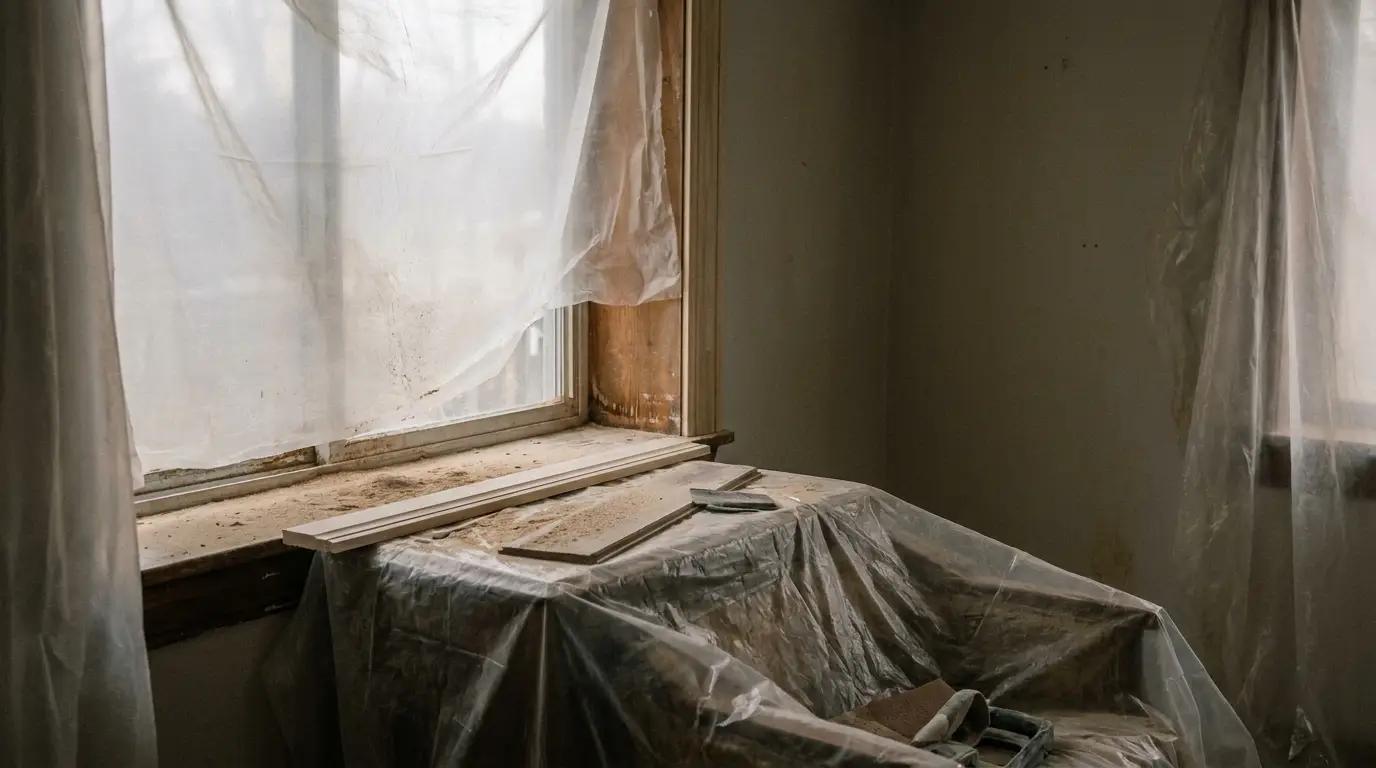
Weekend projects can make a house feel productive and dirty in a satisfying way. A little dust on your clothes, a pile of scraps, primer under your fingernails. It feels like progress.
Some mess is just mess. Some mess is a hazard.
The difference depends on what you’re disturbing. Sanding new joint compound is annoying, but manageable with ventilation, containment, and cleanup. Sanding old paint in a pre-1978 house can be a very different issue. The EPA’s Renovation, Repair, and Painting rule says that firms paid to disturb paint in homes and child-occupied facilities built before 1978 generally need to be certified in lead-safe work practices. The EPA lead renovation program is worth knowing about before you treat old trim, doors, windows, and painted built-ins like ordinary surfaces.
This is where homeowners often get tripped up. They think the question is, “Can I do this?” A better question is, “What am I disturbing?”
Painting a modern cabinet door in the garage is one kind of project. Scraping layers of paint from old window casing in a nursery is another. Pulling down a newer drop ceiling is different from opening a basement ceiling, where you don’t know what has been patched, leaked on, or wired around over the years.
Even a design-forward project like a creatively exposed basement ceiling idea has a less pretty first phase. Before you paint joists black or white, you may be cleaning dust, checking pipes, identifying wires, covering stored items, and figuring out how to keep overspray from traveling into the rest of the house. The finished look gets the photos, but containment is what keeps the project from following you upstairs.
Ventilation is another place where people guess too much. Opening one window may not be enough if you’re using paint, primer, adhesive, stain, spray products, or a generator nearby during a power-related project. Smell is not a safety meter. Some fumes are obvious; some hazards are not.
Portable generators are a good example because they feel like a practical backup tool, especially during storms or exterior work. The National Fire Protection Association warns that generators produce carbon monoxide and should never be used indoors, in garages, or near openings where exhaust can enter the home. Their generator safety guidance is blunt because the danger isn’t visible and doesn’t wait for a project to look chaotic.
The same principle applies across the house: don’t let a project’s ordinary appearance lower your standards. Dust gets contained before sanding. Fans and windows get planned before the first coat. Old materials get identified before demo. Cleanup happens before the space becomes normal again, not three days later when everyone has already tracked the mess through the hallway.
A Jobsite Mindset Does Not Mean Overcomplicating the Project
There’s a difference between careful and complicated. Most home projects don’t need formal systems. They need a few decisions made early, while everyone is still calm and the room is still clean.
Start with the scope. Write down what the project actually includes and what it does not include. “Paint the ceiling” is not specific enough if it also requires moving insulation, removing fixtures, spraying joists, masking walls, and working around wiring. “Replace the faucet” is not specific enough if the shutoff valve is old and the siding around the spigot is soft.
Then decide what would make you stop. This is the part homeowners skip because it feels pessimistic. It isn’t. It keeps the project from becoming a stubbornness contest.
Useful stop signs include:
- Moisture, mold, rot, or unexplained staining
- Frayed wiring, warm outlets, or unknown circuits
- Paint dust from older surfaces
- A ladder setup that feels unstable
- Structural pieces you didn’t expect to remove
- A tool you don’t know how to use confidently
- A second person is needed for lifting, spotting, or holding material
The smartest DIYers aren’t the ones who do everything themselves. They’re the ones who know which part of the job belongs to them. You can prep a room, remove hardware, paint trim, install simple storage, or plan finishes without pretending every trade skill is just a YouTube video away.
That matters when the project touches systems. Electrical, gas, roofing, structural framing, major plumbing, and anything involving serious height should make you pause. Not because homeowners are helpless, but because mistakes there don’t stay cosmetic. A crooked shelf is annoying. A hidden leak, an overloaded circuit, or a bad ladder fall changes the entire story.
It also helps to assign roles when more than one person is working. One person should be in charge of the plan, not in a bossy way, but in a “we are not all making separate decisions at once” way. Someone tracks shutoffs. Someone keeps the work path clear. Someone watches the ladder. Someone takes kids and pets out of the zone instead of assuming they’ll understand.
Good home projects have a rhythm. Prep, work, clean, reset. When that rhythm disappears, the project starts running on adrenaline and clutter. That’s when the saw gets set on the floor, the paint can sits open by the doorway, the extension cord snakes under a rug, and nobody remembers whether the breaker is off or just the switch.
A jobsite mindset simply means you notice those moments before they become normal.
Wrap-Up Takeaway
A weekend project doesn’t have to be scary to deserve more structure. The shift usually happens when the work adds height, dust, fumes, old materials, power, water, heavy lifting, or extra people. Once those pieces show up, the smartest move is to treat planning as part of the project, not a delay before the satisfying work begins. You’ll still get the finished room, the cleaner exterior, the better basement, or the fixed fixture.

Holding a Master’s in Architecture from the University of Texas at Austin, Emily Rodriguez has dedicated more than two decades to the art and science of building renovation. Starting her journey in historic preservation, she developed a profound respect for blending old with new in building design. Emily became a vital part of our team in 2019, renowned for her insightful and innovative renovation tips. She has been leading our DIY home improvement series since ever since, where she shares her wealth of knowledge in turning outdated spaces into modern havens. When not engaged in writing or consulting, Emily is a passionate advocate for heritage conservation and enjoys exploring vintage architecture, a hobby that complements her professional expertise.