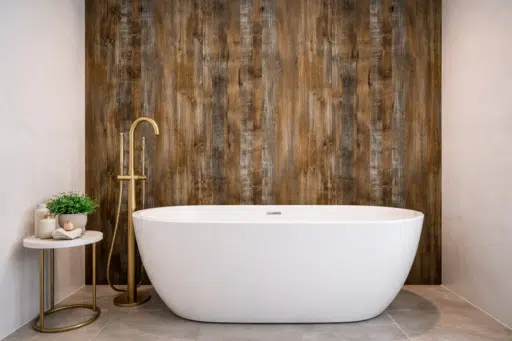
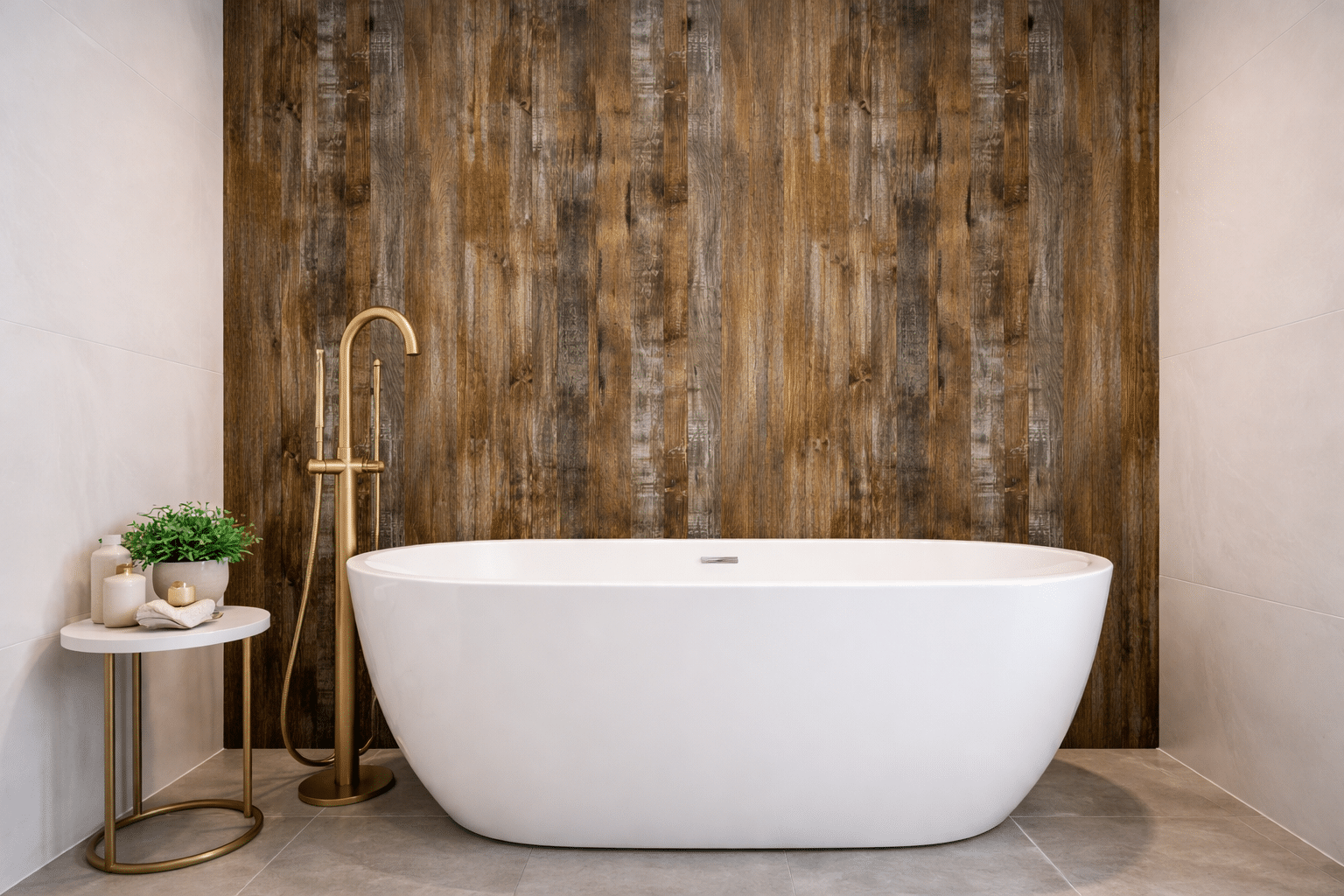
A bathroom feature wall can change the whole feel of the room without a full remodel. It can add colour, texture, contrast, or a clear focal point in a space that might otherwise feel plain.
Tiles are a classic choice, but they are not the only option. Stone-look, timber-look, concrete-look, tile-look, and colour-based finishes can all create a stylish bathroom wall when used in the right place.
The best choice depends on the wall location, the level of water exposure, the look you want, and how easy the surface needs to be to clean.
Why Create a Bathroom Feature Wall Without Tiles?
Tiles are a classic bathroom choice, but they are not the only way to create a feature wall. A tile-free finish can give the room a cleaner, more continuous look without relying on small-format patterns, grout lines, or a full tiling job.
One of the biggest advantages is that some tile-free wall finishes are more DIY-friendly. Depending on the product and the condition of the existing wall, homeowners may be able to update a dated bathroom wall without removing old tiles or paying for a tiler. This can make the project faster, cleaner, and more achievable as a simple bathroom refresh.
Larger surfaces can also make the room feel calmer, especially in small bathrooms where too many joins can look busy. For homeowners who want a more continuous wall finish, choosing a tile alternative for bathroom walls can help create a bathroom feature wall with fewer grout lines and less visual interruption.
Choose the Right Wall for the Feature
A bathroom feature wall works best when it has a clear purpose. The right wall is usually the one that naturally draws the eye when someone enters the room, such as the wall behind the vanity, beside a freestanding bath, or facing the doorway.
In a small bathroom, an end wall can also work well because it adds interest without overwhelming the whole space. If you are working with a compact room, browsing small bathroom accent wall ideas can help you decide which wall should become the focal point before choosing the finish.
The wall location also affects the material choice. A decorative finish that works behind a vanity or in a powder room may not be suitable inside a shower. For shower feature walls, always choose a material designed for wet areas and direct water exposure.
Stone and Marble-Look Feature Walls
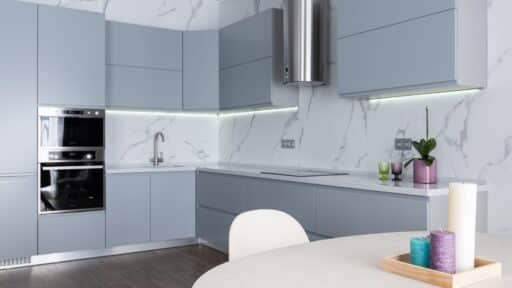
Stone-look and marble-look finishes work well when the goal is to make a bathroom feel refined without adding too much pattern. They can create a soft focal point while keeping the room calm, clean, and easy to style.
White marble-look walls can brighten a small bathroom and make it feel more open. Grey stone-look finishes suit modern bathrooms where the aim is a quiet, balanced look. Warm travertine-style tones can add a softer natural feel, while darker stone-look walls can create drama behind a bath, vanity, or powder room basin.
Larger surfaces can also look more seamless than small tiles. With fewer visual breaks, the feature wall feels smoother and less busy, which is especially helpful in compact bathrooms.
Timber-Look Bathroom Feature Walls
Timber-look finishes are a simple way to add warmth and softness to a bathroom. They can stop the room from feeling too hard or clinical, especially when paired with white fixtures, simple mirrors, and clean wall surfaces.
Light oak-look finishes work well in Scandinavian, coastal, or relaxed bathrooms. Walnut-look walls create a richer, moodier feel. Vertical timber-look lines can also help draw the eye upward, making the wall feel taller.
A timber-look feature wall is often effective behind a vanity, where it can soften white basins, stone-look benchtops, or plain cabinetry. Timber tones also pair well with matte black, brushed brass, chrome, or white fittings.
The main caution is moisture. Timber-look finishes must be suitable for bathroom use. Many decorative timber, MDF, or veneer products should not be used in direct wet areas unless they are specifically rated for that purpose.
Tile-Look Walls Without Traditional Tiling
Some homeowners still like the look of tiles but not the grout maintenance, installation time, or disruption that can come with traditional tiling. A tile-look wall finish can give the bathroom a familiar style without installing individual tiles.
Subway tile-look finishes suit classic bathrooms, while larger tile-look patterns create a cleaner, more modern effect. Neutral tile-look walls can work well in small bathrooms because they add detail without making the space feel too busy.
This style can work behind a vanity, along a bath wall, or inside a shower if the material is suitable for wet areas. For homeowners who still like the look of tiles but want fewer grout lines, wet wall panels can be a practical way to create a clean feature wall without installing individual tiles. Wet Wall Works offers designs suited to this kind of tile-free bathroom refresh.
Concrete-Look Feature Walls
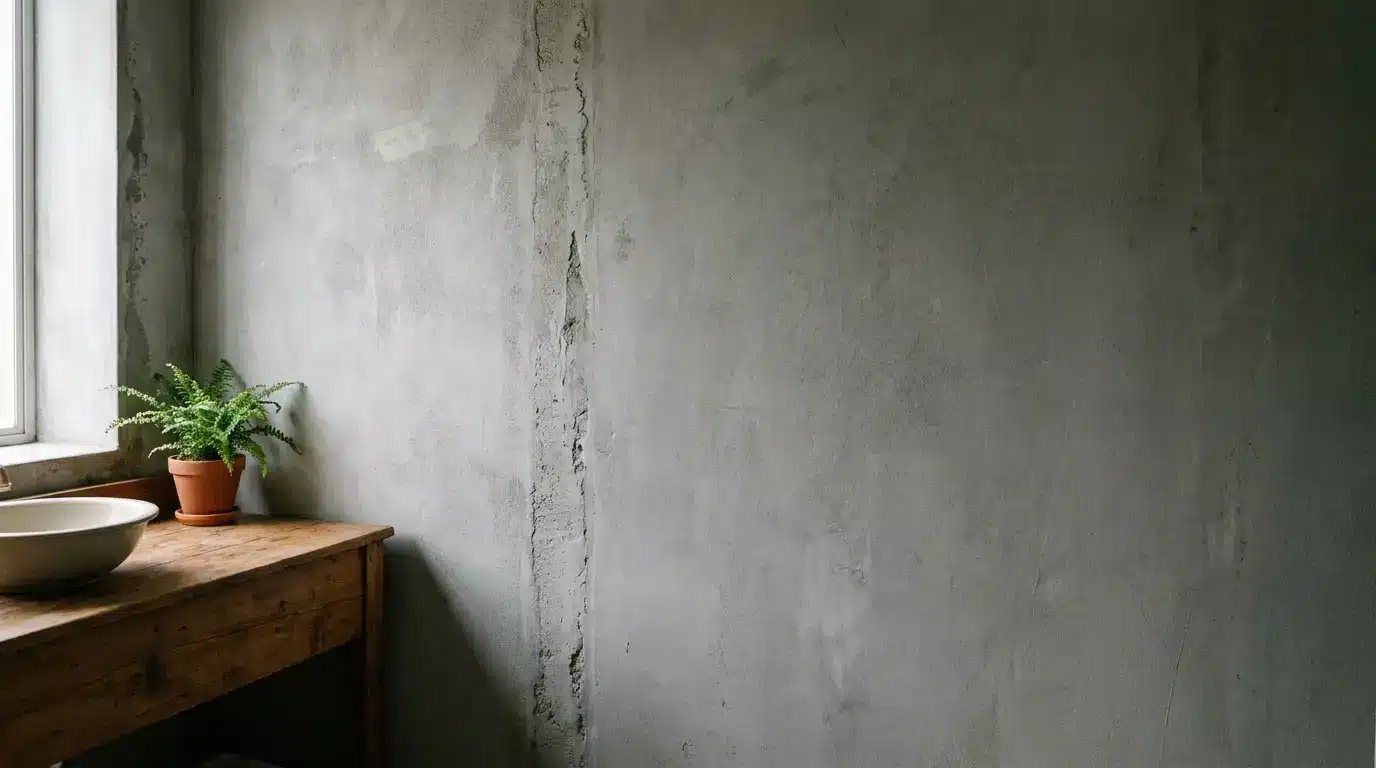
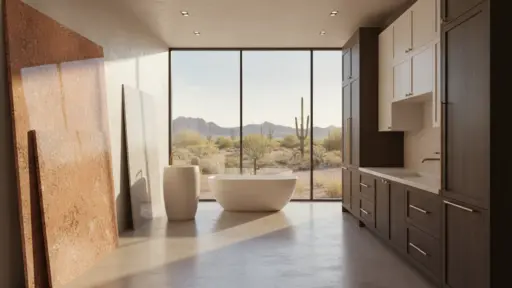
Concrete-look finishes suit modern, industrial, minimal, and urban-style bathrooms. They add texture without needing a busy pattern, which makes them useful in small bathrooms or simple spaces that need more depth.
A light concrete-look wall can create a soft contemporary background. Mid-grey concrete tones work well with black fittings for a stronger industrial feel. Warmer concrete shades can also pair nicely with timber vanities, soft towels, and brushed metallic fixtures.
The key is balance. Concrete-look finishes can feel cold if the rest of the room is too plain. Add warmth through timber, plants, round mirrors, soft textiles, or warm-toned accessories so the bathroom still feels inviting.
Colour-Based Feature Walls
A bathroom feature wall does not always need a strong pattern or textured finish. Colour alone can create a focal point, especially when the rest of the room is simple.
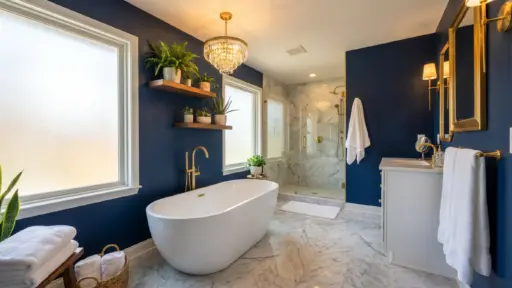
Soft sage or muted green can make the bathroom feel calm and fresh. Deep navy or charcoal adds contrast and works well with white fixtures. Warm beige, sand, blush, or clay tones can soften the room and create a more relaxed feel. A crisp white textured wall can also work in a minimalist bathroom where the aim is clean and simple.
Colour works best when it is repeated in small ways. Pick up the wall tone through towels, artwork, planters, soap dispensers, or other small décor pieces so the feature wall feels connected to the rest of the bathroom.
Keep the Rest of the Bathroom Simple
A feature wall works best when the rest of the bathroom supports it rather than competing with it. This is especially important in a small bathroom, where too many patterns, colours, or finishes can quickly make the room feel crowded.
Choose a simple mirror shape, keep tapware and hardware finishes consistent, and avoid adding another strong pattern nearby. Plain towels and simple accessories will help the feature wall stand out without making the space feel overdone.
For a more pulled-together look, repeat one or two colours from the feature wall in small details, such as a bath mat, artwork, tray, or soap dispenser. This keeps the bathroom feeling connected while still letting the wall remain the main focal point.
Check Cleaning, Moisture, and Installation Before Choosing
Before choosing a tile-free bathroom feature wall, check that the material suits the wall location. A finish that works behind a vanity may not be suitable inside a shower or beside a bath.
Look at whether the product is made for bathrooms or wet areas, how it should be cleaned, and whether the wall needs preparation first. If the feature wall has joins, trims, edges, or seals, these also need to suit the level of moisture exposure.
Some materials are simple enough for DIY installation, while others need professional measuring or fitting. Choosing the right product for the right zone will help the feature wall look good and last longer.
Final Thoughts
A bathroom feature wall does not need traditional tiles to feel stylish or intentional. Stone-look, marble-look, timber-look, concrete-look, tile-look, and colour-based finishes can all create a strong focal point when used in the right location.
The key is to choose a finish that suits the wall, the moisture level, and the overall bathroom style. The best bathroom feature wall is not just the one that stands out. It is the one that suits the room, handles moisture properly, and makes the space feel more intentional every day.

NKBA-certified designer Harper Williams holds a degree in Interior Architecture from Auburn University and has specialized in high-function kitchens and spa-inspired baths since 2011. She joined us in 2024 to simplify layout planning, fixture selection, and budget tricks for remodelers. Away from CAD files, Harper restores vintage cookstoves and crafts small-batch soaps.