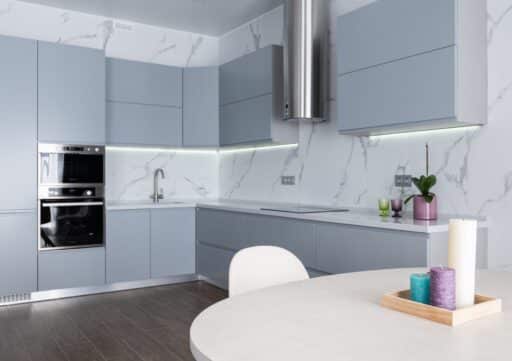
Most homeowners don’t make the decision to renovate their kitchen overnight. It usually builds over months or years — a cabinet door that won’t close properly, a countertop that refuses to come clean no matter how hard you scrub, or a layout that turns simple weeknight dinners into a logistical challenge.
The kitchen is one of the most frequently used rooms in any home, and because of that constant daily demand, the signs of wear tend to stack up gradually until they’re impossible to overlook.
The real question isn’t whether the kitchen looks a little worn. It’s whether the problems are purely cosmetic or whether they signal something deeper — a kitchen that has genuinely outlived its design and functionality.
Understanding that difference is what separates a well-timed renovation from one made too late or without a clear plan.
Is Your Kitchen Telling You Something?
Kitchens rarely fail all at once. The warning signs tend to creep in slowly, and because they develop over time, many homeowners adjust to them without realizing how much they’ve been compensating for a space that simply doesn’t work. These are the signals worth taking seriously.
Your Cabinets Are Warping, Swelling, or Falling Apart
Cabinets absorb more daily punishment than almost anything else in the kitchen. They’re exposed to steam, humidity, and grease on a regular basis while bearing the weight of dishes, canned goods, and small appliances — all without complaint, until they reach a breaking point.
For cabinets built from lower-quality materials, that point tends to arrive sooner than most homeowners expect.
If your cabinets are warping, swelling, or falling apart at the hinges, it’s a clear sign to upgrade — and making the switch to solid wood cabinets is one of the most impactful first steps you can take in a kitchen refresh.
Solid wood holds its shape over time, resists moisture far better than particleboard or MDF, and delivers a level of durability that cheaper materials simply cannot match over the long run.
New hardware and a coat of paint won’t fix a cabinet box that has gone soft, shelves that sag under normal weight, or doors that no longer hang level. When the structural integrity of the cabinets is gone, repair is no longer a practical solution — replacement is the only real path forward.
The Layout Works Against You at Every Turn
A poorly designed kitchen layout is one of the most common frustrations homeowners have — and one of the most frequently dismissed as just “the way the kitchen is.” But a bad layout isn’t something that has to be accepted indefinitely.
If two people can’t occupy the kitchen at the same time without getting in each other’s way, or if getting from the refrigerator to the stove to the sink requires crossing the room twice for a single task, the design itself is the problem.
Kitchens work best when they follow a logical workflow. When the layout disrupts that natural movement, meal preparation becomes unnecessarily complicated, and the kitchen stops feeling like an asset to the home.
A renovation offers the opportunity to rethink the entire floor plan from scratch — and the improvement to daily life that comes from a well-planned layout is one of the most underrated benefits of taking on a kitchen project.
The Surfaces Have Gone Past the Point of Cleaning
There is a point at which cleaning a surface stops being enough. Countertops that are deeply scratched or chipped, grout lines that are permanently stained regardless of how much effort goes into them, laminate that has peeled and bubbled, or floor tiles that have cracked and begun collecting moisture underneath — these are not maintenance issues. They are signs of material failure.
In a space dedicated to preparing food, damaged surfaces also create genuine hygiene concerns. Cracked countertops and deteriorated grout harbor bacteria in ways that household cleaners cannot fully address.
Once a surface has reached that stage, restoration is no longer realistic. Replacement is the only option that returns the kitchen to a truly clean and functional condition.
Your Appliances Are No Longer Performing as They Should
Appliances have defined lifespans, and most homeowners push them well past those limits before considering a replacement. The trouble is that aging appliances tend to show their decline in ways that are easy to rationalize as minor annoyances rather than actual performance failures.
Some of the most telling signs include:
- The oven heats unevenly or takes noticeably longer to reach the set temperature
- The dishwasher requires multiple cycles to clean a single load
- The refrigerator runs almost constantly but still struggles to hold a consistent temperature
- The range hood no longer effectively removes smoke, steam, or cooking odors
Beyond the performance issues, older appliances also tend to consume significantly more energy than modern equivalents, which adds up on monthly utility bills.
When several appliances are underperforming at the same time, a renovation becomes a smart opportunity to replace them together rather than staggering replacements over a span of years.
The Kitchen Feels Out of Step With the Rest of the Home
Design sensibilities shift over decades, and a kitchen updated in the late 1990s or early 2000s often feels visually disconnected from the rest of a more contemporary home.
Dark wood finishes, closed-off floor plans, ornate detailing, and outdated color palettes don’t just look dated — they affect how the whole home feels to live in and how it’s perceived by anyone who walks through the door.
If the kitchen reads like a completely different era compared to the surrounding rooms, a renovation isn’t purely a matter of style. It’s about making the home feel cohesive, comfortable, and current — which carries real weight both in terms of daily enjoyment and long-term property value.
Where to Start a Kitchen Renovation
Deciding to renovate is one thing. Knowing where to begin is another. A kitchen has so many interconnected components that it can feel overwhelming to figure out what to address first without wasting money or creating delays that stretch the project far beyond its original scope.
The key is identifying which decisions drive all the others — and working from that point outward.
Start With Cabinets — Everything Else Follows
Cabinets are almost always the right place to begin a kitchen renovation. Their placement and dimensions determine where everything else goes — countertops, appliances, the sink, and even the lighting plan.
Making cabinet decisions first means every subsequent measurement and purchase can be made accurately, in the right order, without guesswork or costly revisions down the line.
Once the cabinet layout and style have been finalized, countertops can be templated and ordered to fit correctly. The backsplash, plumbing fixtures, and lighting can then be selected to complement the overall direction of the design.
Homeowners who skip ahead to finishes before the cabinetry is settled often find themselves backtracking — and paying for it.
Resolve Plumbing and Electrical Before Materials Are Ordered
If the renovation involves relocating the sink, adding water access to a new island, moving the range, or upgrading the electrical panel to support modern appliances, those decisions need to be part of the initial planning conversation — not an afterthought discovered after tile has been purchased and cabinets have been ordered.
Plumbing and electrical changes that surface mid-project can stall the entire renovation and significantly reshape the budget.
Before finalizing any layout, it’s worth consulting with a licensed contractor to clarify:
- Which structural or plumbing changes are feasible within the existing footprint
- What local permits are required for electrical, plumbing, or wall modifications
- How moving key components will realistically affect the project timeline and total cost
Getting those answers at the start keeps the project moving forward without the disruptions that derail so many kitchen renovations.
Leave Flooring and Finishes for Last
It’s tempting to start selecting floor tile and paint colors early in the process, but decorative finishes and flooring should come toward the end — not the beginning.
Cabinet installation determines exactly how flooring needs to be cut and placed, and choosing flooring before those dimensions are confirmed often results in waste, poor transitions, or installation complications that could have been easily avoided.
The same principle applies to paint, cabinet hardware, and light fixtures. Once the major structural elements are in place, coordinating finishes that work together becomes a much simpler task than trying to match everything to selections made months before the cabinets arrived.
A Kitchen That Works Is Worth the Investment
A kitchen renovation is one of the more significant projects a homeowner can take on, but it is also one of the most rewarding.
A kitchen that functions well saves time every day, reduces the low-level frustration that builds up over years of working around a flawed space, and adds real value to the home — both in how it feels to live there and what it’s worth on the market.
When the signs are there — cabinets breaking down, a layout that fights back, surfaces that can’t be restored, appliances falling short — the right move isn’t to keep tolerating it. It’s to start in the right place, work in the right order, and build something that’s designed to last.

NKBA-certified designer Harper Williams holds a degree in Interior Architecture from Auburn University and has specialized in high-function kitchens and spa-inspired baths since 2011. She joined us in 2024 to simplify layout planning, fixture selection, and budget tricks for remodelers. Away from CAD files, Harper restores vintage cookstoves and crafts small-batch soaps.