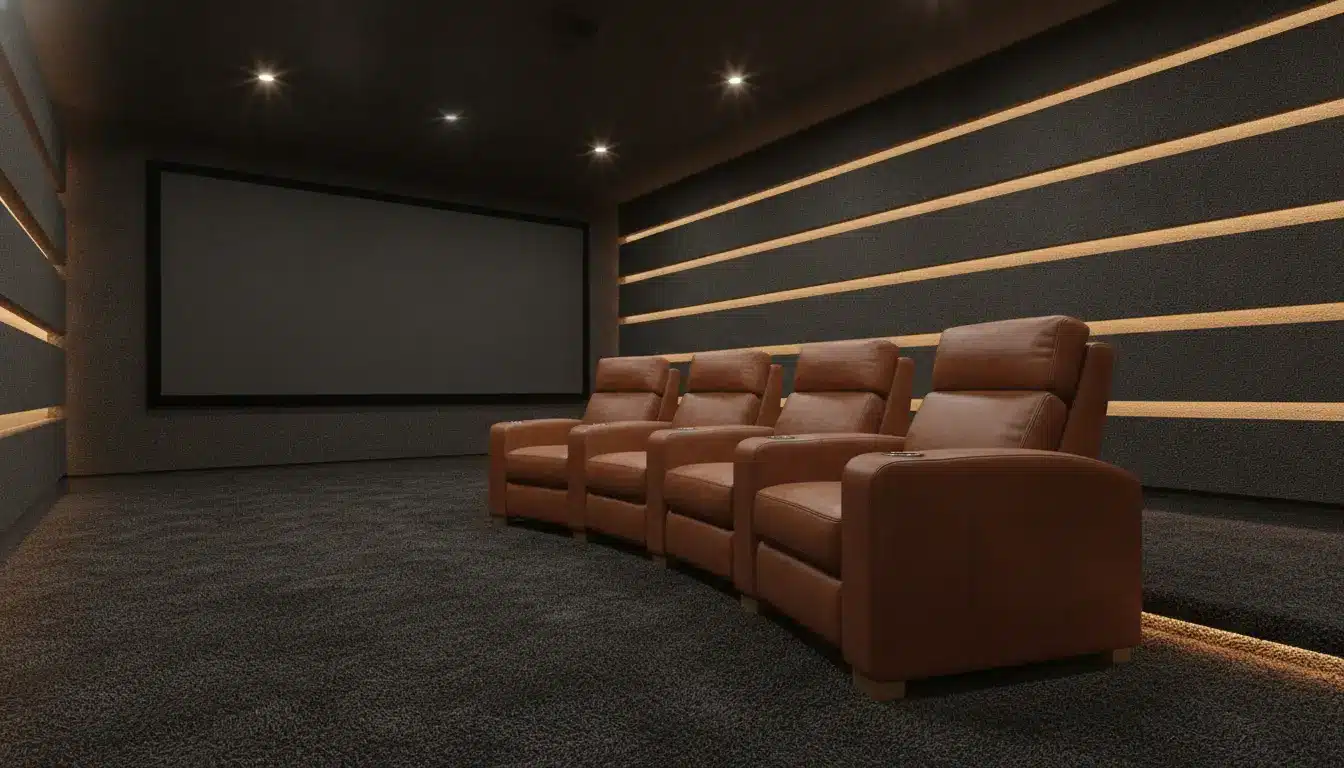

High-end theater seating is no longer just a style upgrade; it is a comfort-and-value decision that changes how a home cinema performs over time. Ergonomic seating research consistently points to one practical conclusion: when seat height, back support, and screen alignment are matched to the user, discomfort drops and long sitting becomes easier to sustain.
If you have ever noticed that a movie night feels less “premium” after 90 minutes of shifting around, the issue is usually not the screen. It is the seating geometry. The best luxury theater chairs solve that problem with better posture support, smarter adjustability, and materials built for repeated use—so the room feels more usable from day one and more durable years later.
Why Theater Seating Has Become a Serious Home Investment
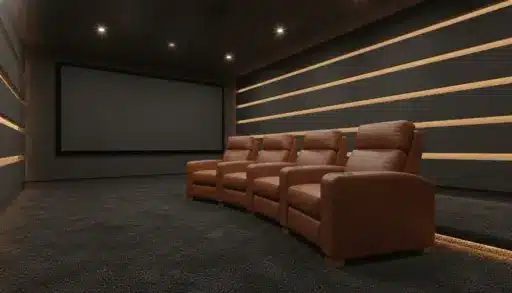
Luxury theater seating has moved from novelty to core feature because dedicated entertainment rooms now serve more than one purpose. A premium chair is expected to support film viewing, gaming, sports nights, and family use without feeling like a temporary accessory. That expectation raises the technical bar: owners want seat height, lumbar support, recline behavior, and spacing to work as a system, not as isolated features.
The ergonomics literature supports that direction. A 2024 systematic review in Heliyon covering 2012 to 2022 found that furniture ergonomics is usually assessed with quantitative tools such as EMG, heart rate variability, anthropometric analysis, REBA, RULA, and discomfort screening. The review’s broader takeaway was that no single metric captures the full sitting experience; comfort is best understood through a combination of posture, pressure distribution, and subjective ratings.
Comfort Is Now Part of Asset Quality
In premium interiors, “luxury” is not just about appearance. It is about whether a room is consistently used. A theater room with poor seating often becomes underused space, while a room with well-designed chairs feels intentionally built and easier to enjoy for longer sessions. That functional difference matters because usability is one of the clearest signals of perceived value in a finished home.
This is where premium home theater seating has an edge over standard recliners. Premium models typically offer tighter control over dimensions, better padding consistency, stronger frames, and more configuration options. Buyers comparing next-generation lines, including luxury theater chairs 2.0, should look for the same balance of ergonomic fit, durable materials, and room-ready styling. Those details reduce the gap between a beautiful room and a room that actually gets used.
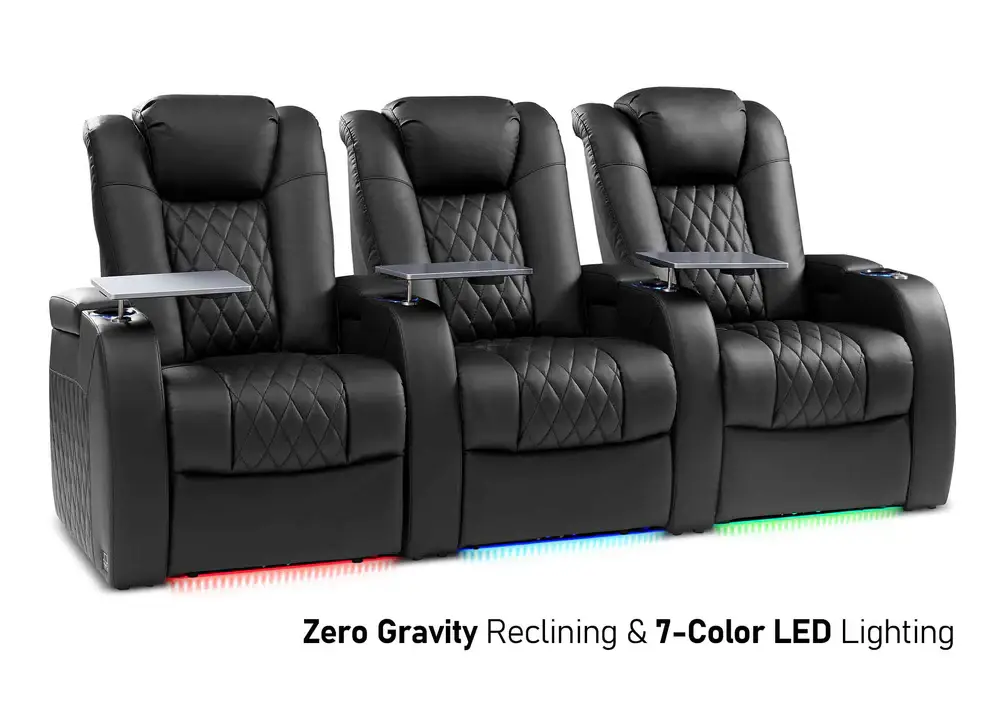
The Ergonomics That Matter Most in Premium Seating
The most valuable ergonomic variables are not decorative. They are measurable design choices that change how the body loads over time. Seat height, backrest support, shoulder position, and viewing angle all influence whether the user stays neutral or drifts into awkward posture during long sessions.
Research on sitting-work ergonomics shows that adjusting chair and desk dimensions to match body size helps avoid sustained awkward positions, especially in the spine and shoulders. While home theater seating is not an office chair, the same mechanics apply: the more the chair fits the body, the less the body has to compensate.
Seat Height, Back Support, and Postural Load
In aged-care seating research, higher seat height reduces the effort needed to rise from a chair. That finding matters in home theater design because sit-to-stand effort affects daily comfort, especially for older adults or households that use the room often. A chair that is too low may feel luxurious at first, but it can become tiring to exit repeatedly.
Back support is equally important. Dental ergonomics research emphasizes a supported, upright lumbar position, relaxed shoulders, and elbows kept close to the body to reduce static load. In theater seating, the exact posture is different, but the principle remains: a seat should support the spine without forcing the user to hold tension in the neck, shoulders, or lower back.
<
Comfort Is Not Always the Same as “Most Upright”
p>One useful nuance from posture research is that the most comfortable sitting posture is not always the most erect one. A study on comfortable sitting postures found that users vary meaningfully in what they perceive as comfortable, and that an overly rigid upright posture can increase fatigue. For theater seating, that means the goal is not a uniform “perfect” posture; it is a sustainable posture with enough support to prevent strain during a full movie.
That is why high-end theater chairs increasingly combine lumbar support with adjustable recline and leg support. The best setups allow the body to settle without collapsing into a slouch. In practical terms, that balance is what makes a chair feel premium after two hours, not just for the first ten minutes.
Smart Features That Actually Improve the Experience
Smart theater seating works best when technology supports comfort rather than distracting from it. In seating research, pressure sensors embedded in the seat and backrest are used to detect occupied status and posture patterns. That same logic is showing up in consumer furniture: seating systems can now respond to occupancy, posture, and use patterns in ways that were not available in older recliners.
The useful version of “smart” is not just motors and lights. It is adjustability, repeatability, and feedback. A modular smart chair concept highlighted in the research uses pressure-sensor-based posture monitoring in load-bearing contact areas, especially the seat and backrest, to infer seated position and posture distribution. In a home theater, that kind of design logic can translate into better pressure management and more consistent support.
What Features Deserve Real Attention
For buyers, the most meaningful smart features tend to be:
- Power recline with stable positioning
- Adjustable lumbar support
- Headrest tuning for screen alignment
- Seat heat or vibration only if it does not interfere with posture
- Memory presets for different users
- Pressure-aware cushioning or posture assistance in advanced models
These features matter because they reduce the number of micro-adjustments a viewer has to make. Less shifting usually means better attention, better relaxation, and a more polished experience overall.
Smart Does Not Replace Structure
A common mistake is to overvalue electronics and undervalue build quality. The research on ergonomic seating is clear that comfort depends on the whole system: shape, support, fit, and user behavior. A chair with advanced controls but poor geometry will still feel wrong after a long session. A well-built chair with simpler controls often ages better and delivers more reliable comfort.
That is why premium buyers should treat smart features as a layer, not the foundation. Structure comes first.
Materials, Durability, and Lifecycle Value
For a home theater chair, durability is part of the return on investment. Premium seating is used repeatedly, often by multiple people, and it faces more wear than decorative lounge furniture. Strong frames, resilient foam, quality upholstery, and serviceable components matter because they determine whether the chair still feels supportive years later.
The current ergonomics literature also warns against relying on a single assessment method or a single comfort signal. In the same way, buyers should not judge theater seating by appearance alone. The real test is whether the chair holds its shape, preserves support, and remains comfortable after repeated use.
What to Evaluate in High-End Builds
Look closely at:
- Frame construction and joint stability
- Foam density and rebound consistency
- Upholstery resistance to abrasion and cleaning
- Motor reliability and service access
- Warranty length and parts availability
- Chair width, depth, and armrest geometry
Seat height is especially important for physical fit. Higher seating generally makes standing easier, which improves usability in multi-user households. That point is often overlooked in luxury design, but it strongly affects how “premium” the seating feels after months of regular use.
Comfort Is a Lifecycle Feature
A theater room that is comfortable on installation day but frustrating after a year is a poor investment. Lifecycle value comes from chairs that stay aligned, stay supportive, and stay easy to maintain. Premium materials can help, but only if the design also respects body dimensions and actual use patterns.
That is why luxury buyers often get the best long-term value from seating that balances aesthetics with serviceability. Replaceable components, accessible mechanisms, and easy-to-clean surfaces may not be the most glamorous features, but they are the ones that protect the investment.
How to Choose Seating That Fits the Room and the User
A high-end theater chair should fit the room first and the body second—or ideally both at the same time. That means thinking through viewing distance, row spacing, aisle clearance, screen height, and the number of users before choosing a model. Even the most advanced chair can feel awkward if the layout forces the viewer to twist, strain, or sit too close to the screen.
Ergonomic seating research consistently favors matching seat and screen positions to the body rather than forcing the body to adapt to the furniture. In home theater terms, that means the chair should work with the room design, not fight it.
A Practical Buying Checklist
Start with these variables:
- Seat height: easier standing and better fit for the primary users
- Back support: enough lumbar support to reduce fatigue without forcing rigidity
- Recline range: enough adjustment to support relaxed viewing without compromising screen angle
- Chair width and depth: enough space for comfortable sitting without excessive reach to the armrests
- Row layout: clearance for movement, recline, and line of sight
- Material finish: durable, cleanable, and consistent with the room’s design
- Smart controls: useful only if they improve fit and repeatability
When possible, test the chairs with real use conditions. Sit for longer than a minute. Recline. Stand up. Check whether your neck stays relaxed, your shoulders stay down, and your lower back feels supported. Those practical checks matter more than showroom impressions.
Match the Chair to the Household
A good theater room often serves multiple users, not just one owner. Families with children, older adults, or mixed heights should prioritize adjustability and easy entry/exit. Households that use the room for gaming or long-form viewing may benefit more from firmer support and configurable headrests than from ultra-soft cushioning alone.
That flexibility is part of the investment logic. The more people a seating system fits well, the higher its long-term value.
Why Premium Seating Supports Property Value and Usability
Luxury theater seating can improve the perceived value of a home because it signals a finished, intentional space. Buyers do not just see a room with seats; they see a dedicated media environment that has been designed for comfort, function, and presentation. That matters in premium homes, where differentiation often comes from how spaces are executed rather than how many rooms exist.
The value argument is not limited to resale. Even before any future sale, a high-end seating system improves the day-to-day utility of the room. If the room is more comfortable, it gets used more. If it gets used more, it becomes a true asset rather than an occasional feature.
The Best-Case Outcome Is Usability Plus Identity
A well-designed theater room does three things at once:
- Supports better posture and less discomfort during long sessions
- Enhances the visual identity of the home
- Makes the room more likely to be used consistently
That combination is what turns a furniture purchase into a home investment. It is not about claiming that every premium seat increases resale price by a fixed amount. It is about building a room that functions better, feels better, and presents better.
In that sense, high-end theater seating sits in the same category as other smart home upgrades: the payoff is both immediate and cumulative.
Final Takeaway
High-end theater seating is becoming a serious home investment because it does more than look expensive. The strongest models improve posture support, reduce discomfort during long viewing sessions, and fit the room in a way that makes the space more usable over time.
If you are choosing premium seating, focus on fit first, then durability, then smart features. The best chairs are not simply the softest or the most feature-rich; they are the ones that combine body-matched ergonomics, durable materials, and thoughtful adjustability so the room feels better now and remains valuable later.

Ava Taylor, holding a Bachelor’s degree in Interior Design from the Pratt Institute, has made her mark in creating engaging and functional living spaces for over 14 years. She began her career with a New York-based design studio, where she gained a reputation for her innovative and user-centric designs. Ava joined our team in 2019, bringing a blend of artistic flair and practicality to our home improvement section. Since the she has been the lead contributor to our room transformation series, inspiring readers with her unique approach to maximizing space utility and aesthetic appeal. Beyond her professional work, Ava is a passionate collector of vintage furniture, a hobby that enriches her design perspective.