
Picking new floors? Yeah, it can make your head spin. You want something that looks amazing, laughs off spills, and doesn’t drain your bank account. Good news: SPC flooring might just be your perfect match.
So let me be your guide here, no confusing jargon, I promise. We’ll start with the basics: what SPC flooring actually is and what those three little letters even mean. Then we’ll crack it open and peek at what it’s made of, layer by layer, plus how the stuff is built.
I’ll show you how to read the specs so no salesperson can talk you into overpaying, what to check to keep your air clean, and the honest pros and cons (yep, it has a few flaws).
We’ll also pit SPC against vinyl, WPC, and laminate, see how long it really lasts, and tackle your burning questions.
Ready? Let’s dig in.
What is SPC Flooring?
SPC (Stone Plastic Composite) flooring is a tough, waterproof floor built on a rock-solid core. The center of each plank is made from limestone powder, a bit of plastic (PVC), and a few stabilizers, all pressed into a dense, sturdy base.
You might also see it called Stone Polymer Composite, but it’s the same thing, just a different word for the plastic part. That “stone” piece is the key.
The limestone powder is what makes the core so dense and hard, and it’s why SPC handles heavy furniture, dropped pans, and busy foot traffic better than softer floors.
On top of the core sits a printed design that copies the look of real wood, stone, or tile, finished with a clear protective coat.
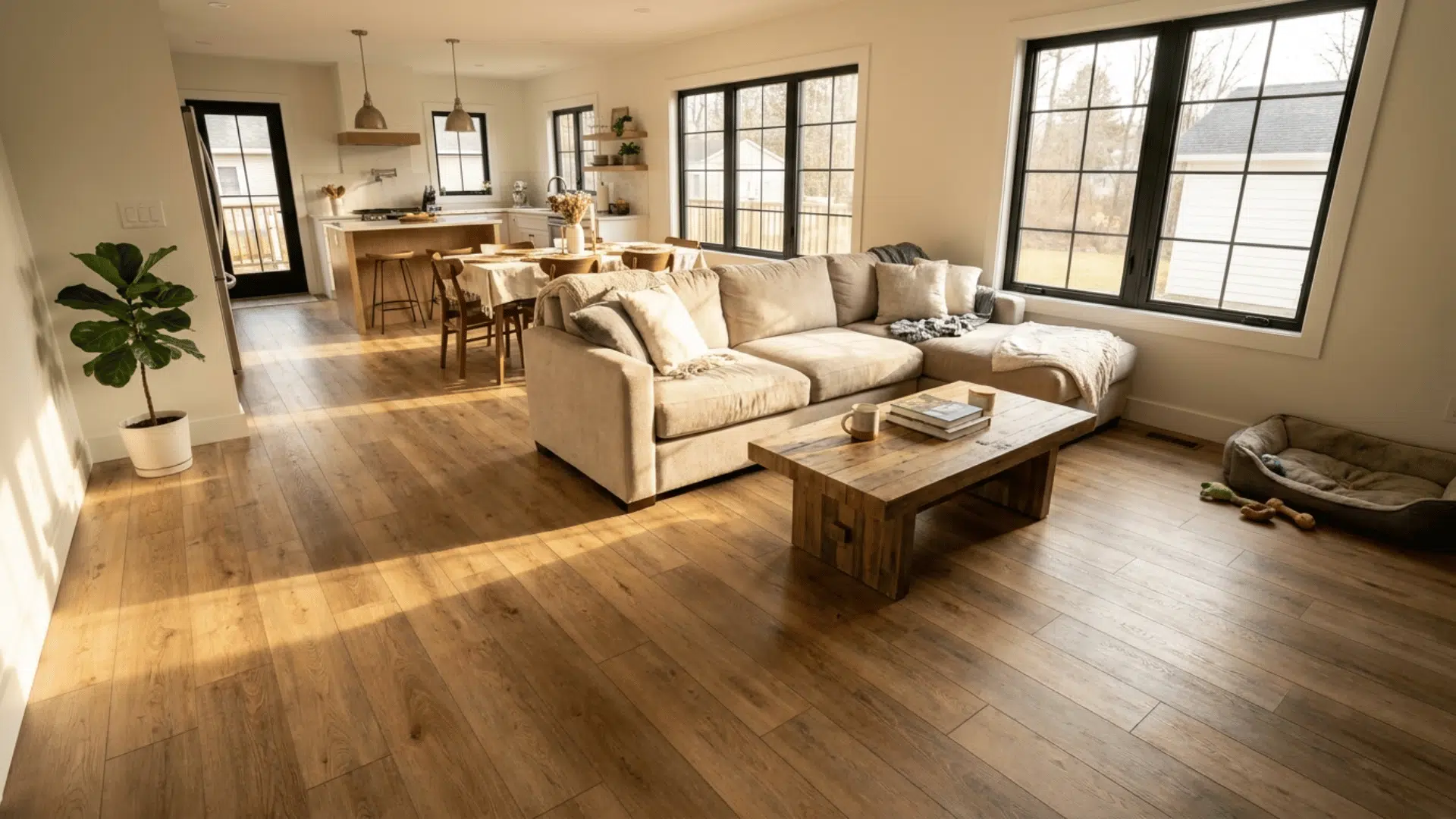
What I like most about it is the mix it pulls off. You get the warm look of hardwood without the price tag or the worry about water.
What is SPC Flooring Made Of?
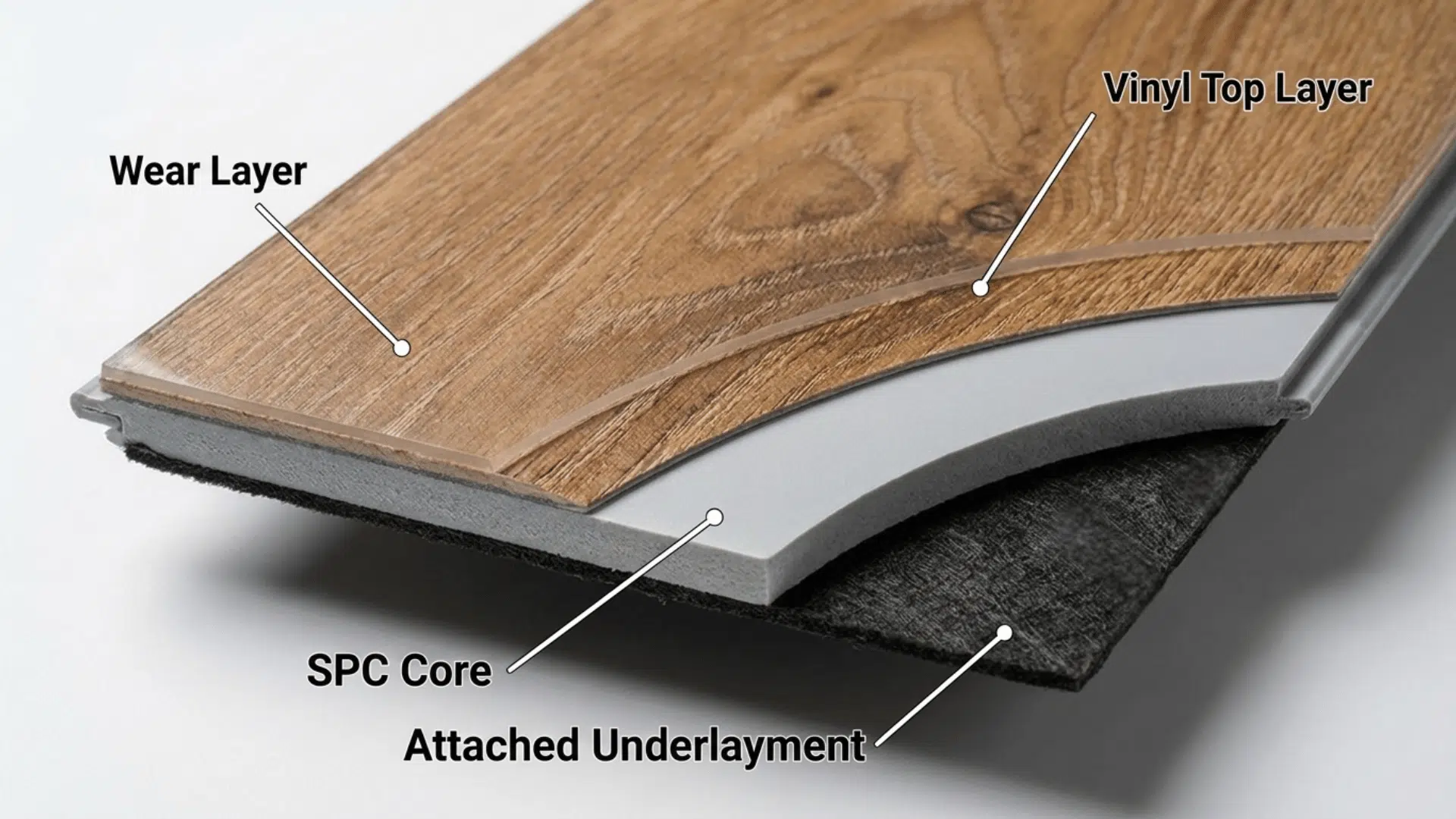
Every SPC plank is built like a little sandwich, with four layers stacked together. Each one has a job, and together they’re what makes the floor so tough and easy to live with.
Once you know what each layer does, reading a product label gets a whole lot easier. Let me walk you through them from top to bottom.
1. Wear Layer
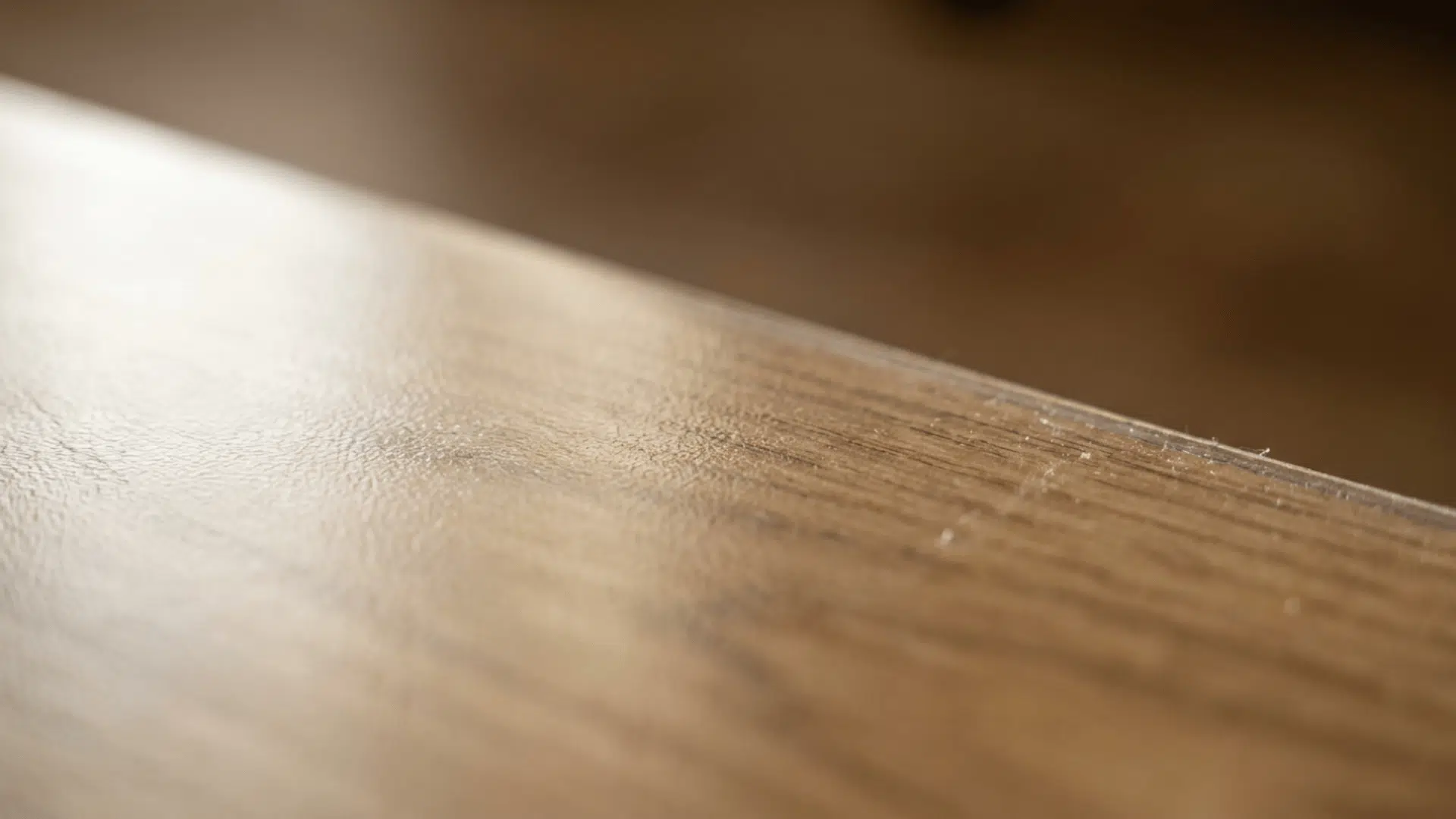
This is the clear, see-through coat right on top. You can’t see it, but it’s doing the heavy lifting every day. It takes the scratches, scuffs, and dirt so the pretty design underneath stays safe. Most are coated with something tough like aluminum oxide.
The thicker this layer is, the longer your floor keeps looking new. It’s the single biggest clue to how well a floor will hold up, which is why I’ll come back to it later.
2. Vinyl/Decorative Layer
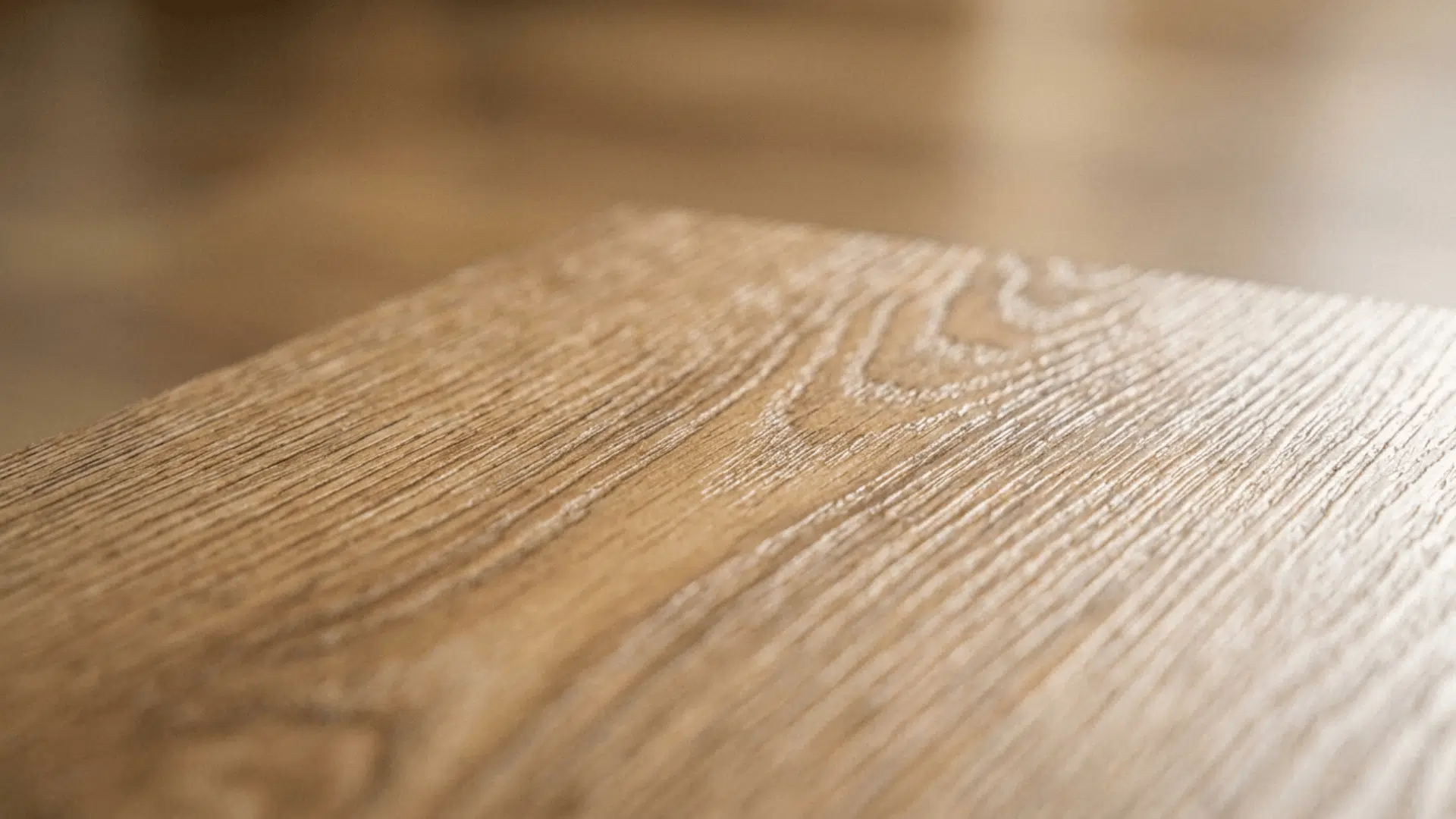
Right below the wear layer sits the part you actually look at. It’s a high-quality printed image, and the printing these days is sharp enough to copy real wood grain, stone, or tile almost perfectly.
This is where your floor gets its color and style. Want gray oak, warm hickory, or a stone tile look? It all lives here. Two planks with the same print will look alike, which is worth keeping in mind if you love the random feel of real wood.
3. Rigid Stone Core
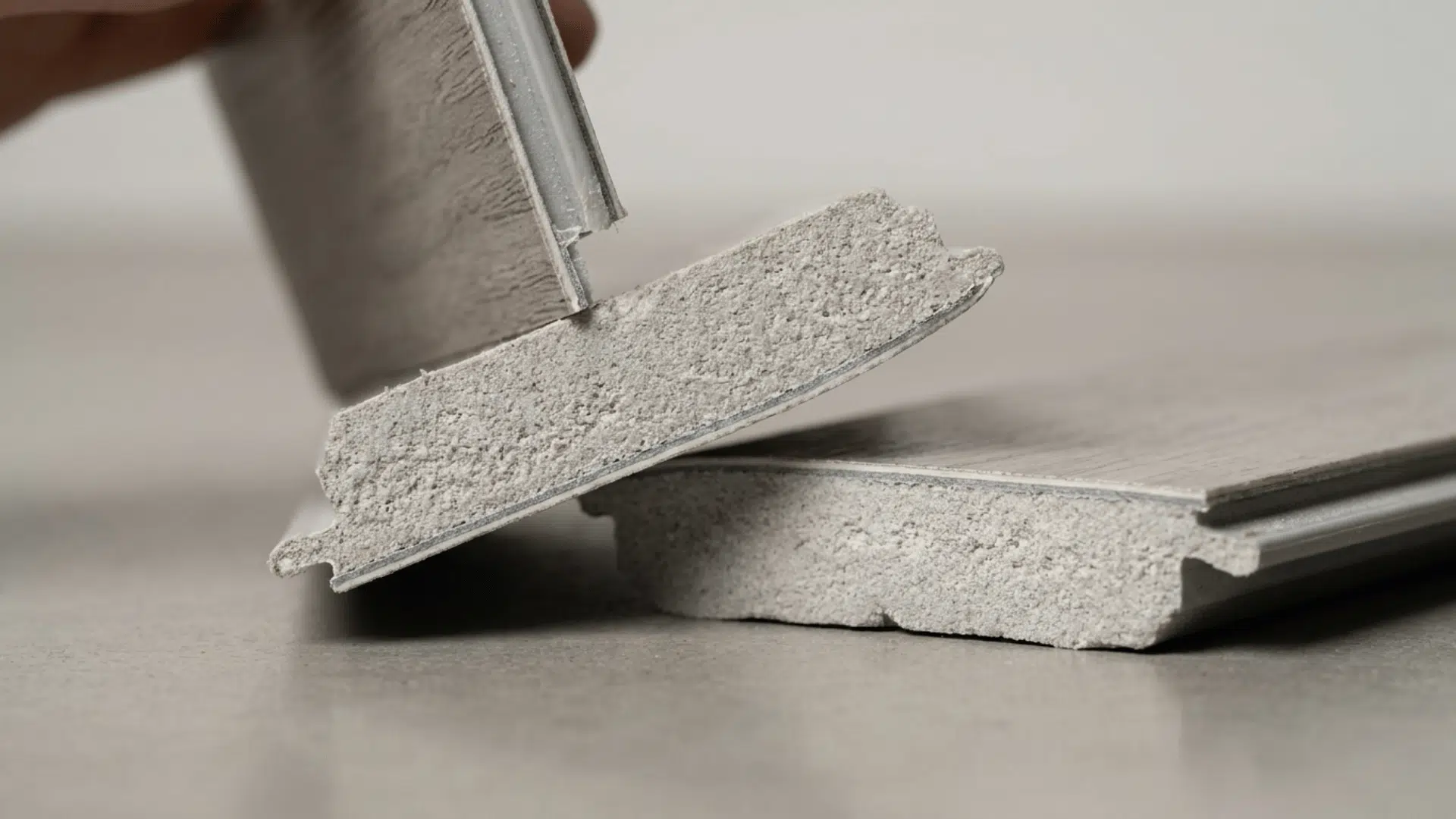
Here’s the heart of the whole thing, and where the “stone” in SPC comes from. This thick, dense center is made from limestone powder mixed with plastic and stabilizers. It’s what makes the plank stiff, strong, and fully waterproof.
Because it’s so solid, it won’t swell or buckle when water hits it or when the room gets hot and cold. This core is the main reason SPC handles drops, heavy furniture, and busy rooms so well.
4. Backing/Underlay Layer
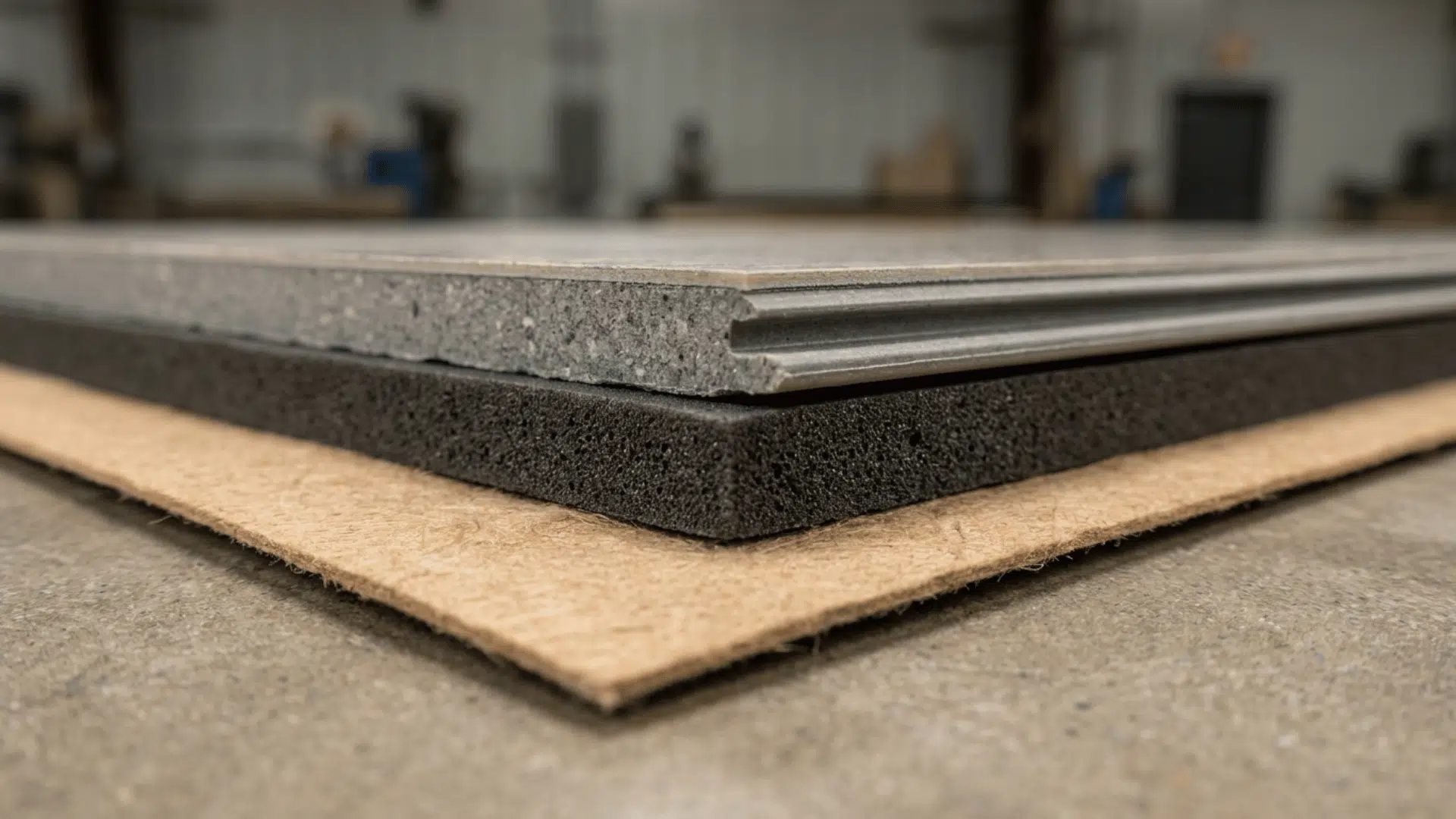
The bottom layer is the floor’s cushion and base. Many SPC planks come with an attached pad, often made of IXPE foam, built directly into the back. It softens each step a little, reduces noise so the room sounds quieter, and helps the plank sit flat and steady.
It also resists mold and mildew, which is handy in damp spots. With this layer built in, you often skip buying a separate underlay, saving a step and some cash.
How Much does SPC Flooring Cost?
SPC flooring usually sits in the mid-range of resilient flooring. Most materials cost around $2–$5 per sq ft, while budget options may start near $1.50 per sq ft, and premium 20-mil designer planks can reach $6+ per sq ft.
Professional installation usually adds $1.50–$4 per sq ft, depending on labor rates and floor prep. Since SPC often uses a click-lock system, it is also a DIY-friendly option that can help reduce installation costs.
| Cost Item | Typical Price |
|---|---|
| Budget SPC planks | $1.50 per sq ft |
| Standard SPC materials | $2–$5 per sq ft |
| Premium 20-mil SPC planks | $6+ per sq ft |
| Professional installation | $1.50–$4 per sq ft |
| 200 sq ft kitchen installed | $700–$1,800 |
For a 200 sq ft kitchen, expect to spend about $700–$1,800 installed. That is usually much less than hardwood, while still giving you strong durability and full waterproof protection.
How is SPC Flooring Made?
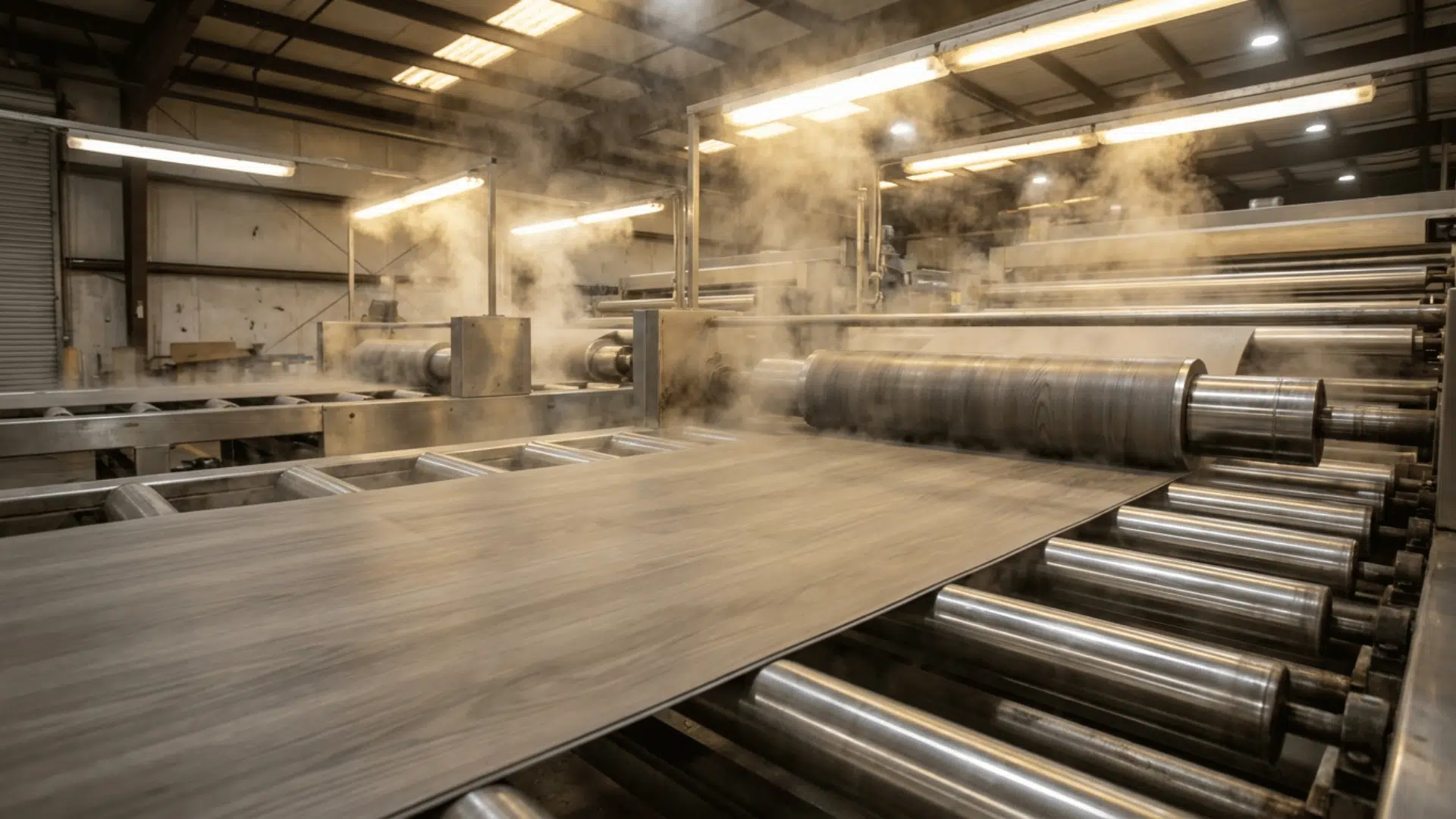
You don’t need to know the factory steps to enjoy SPC floors, but a quick peek helps you see why they turn out so tough. The whole thing comes down to heat, pressure, and good timing. Here’s how a plank comes together:
- Mixing: The raw stuff, mostly limestone powder, plastic, and stabilizers, gets blended and heated to pull out any moisture, then cooled so it sets up right.
- Extrusion: That mix is heated again and pushed through a machine that forms the dense core.
- Calendering: Hot rollers press the material into a smooth, even sheet, locking in the exact thickness.
- Embossing and coating: While it’s still warm, textured rollers stamp a wood or stone grain onto the surface, and the clear top coat goes on to guard against scratches.
- Cutting: The long sheet gets sliced into planks of the same size.
- Stacking and packing: The finished planks are stacked and boxed up, ready to ship.
The result is a plank that’s even, sturdy, and ready to click into place in your home.
How to Read SPC Specs: Wear Layer Thickness Explained
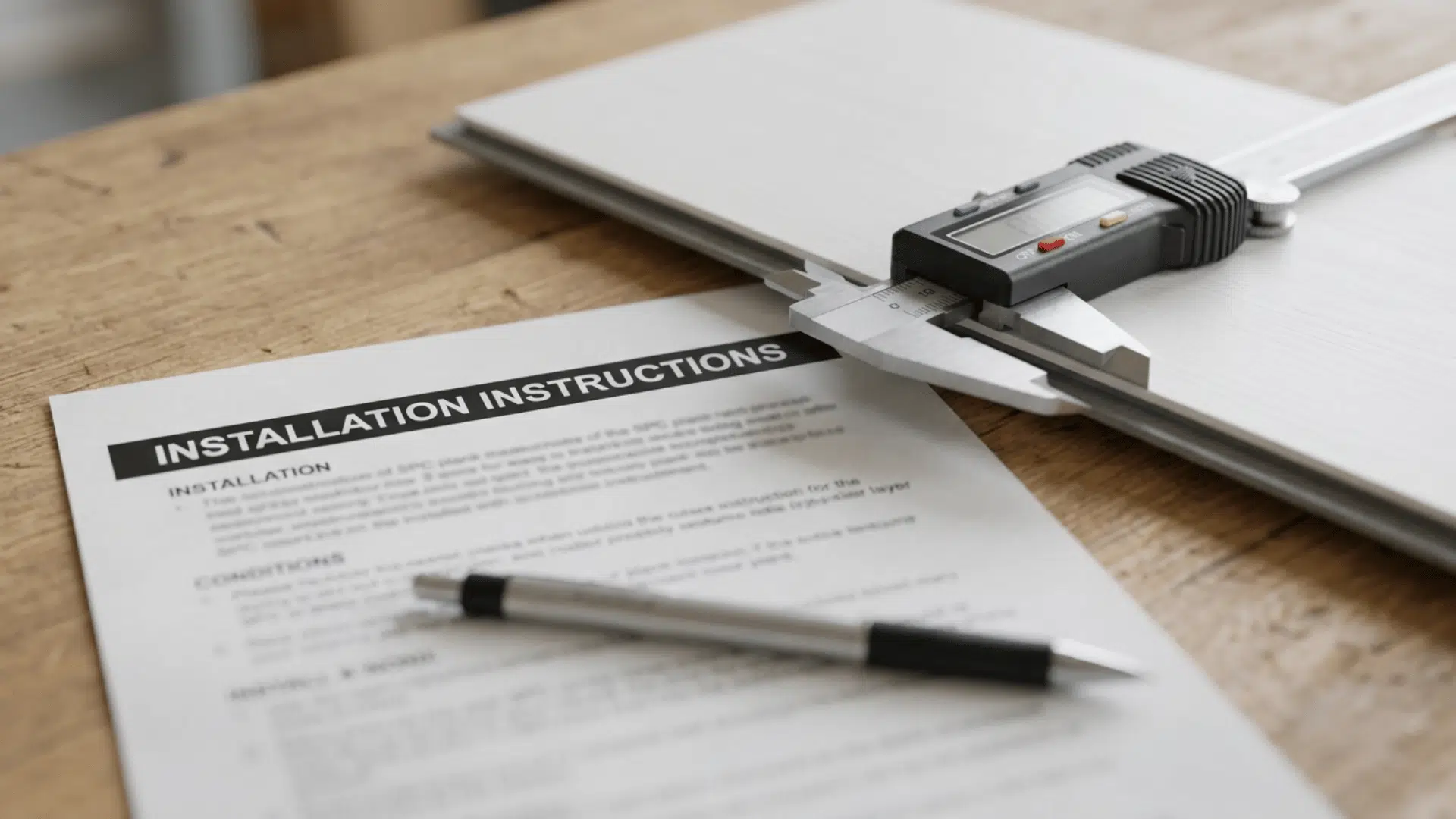
Here’s the part most shoppers miss, and it’s the one that saves you real money. When you compare SPC floors, the number that matters most is the wear layer thickness. It tells you how much daily wear your floor can take before it starts to show.
It’s measured in mils (that’s thousandths of an inch, not millimeters, which trips up a lot of people). You’ll sometimes see it listed in millimeters too, so I’ve matched both below.
The trick is buying the right thickness for your room. Going too thin in a busy kitchen means the floor wears out fast. Going too thick in a quiet bedroom means you paid for muscle you’ll never use. Match the floor to the traffic, and you get the best deal.
Here’s a quick guide:
| Wear layer | Best for | Typical warranty |
|---|---|---|
| 6–8 mil (0.15–0.2mm) | Bedrooms, guest rooms, low-traffic spots | Around 10–15 years |
| 12 mil (0.3mm) | Living rooms, dining rooms, and normal home use | 15–25 years |
| 20 mil (0.5mm) | Kitchens, hallways, homes with pets or kids | 25 years to a lifetime |
| 28–30 mil (0.7mm+) | Shops, offices, heavy commercial use | Commercial-grade |
One more thing people mix up: wear layer thickness is not the same as total plank thickness. The whole plank usually runs 3.5 mm to 8 mm thick.
That number affects how sturdy and solid the floor feels underfoot, as well as how quiet it is, but it does nothing to protect against scratches. So check both numbers. A thick plank with a thin wear layer still scratches easily.
When you walk into a store like Home Depot, Lowe’s, or Floor & Decor, these two specs are all you need to compare floors fairly and skip the sales pitch.
SPC Flooring & Indoor Air Quality: What to Check Before You Buy
Here’s something most floor guides skip, and I think you deserve to know it. Since SPC contains plastic (PVC), it’s smart to check what your floor gives off into the air before you buy.
New floors can release small amounts of gases called VOCs, and you don’t want those floating around your home. The good news? It’s easy to shop safely once you know what to look for.
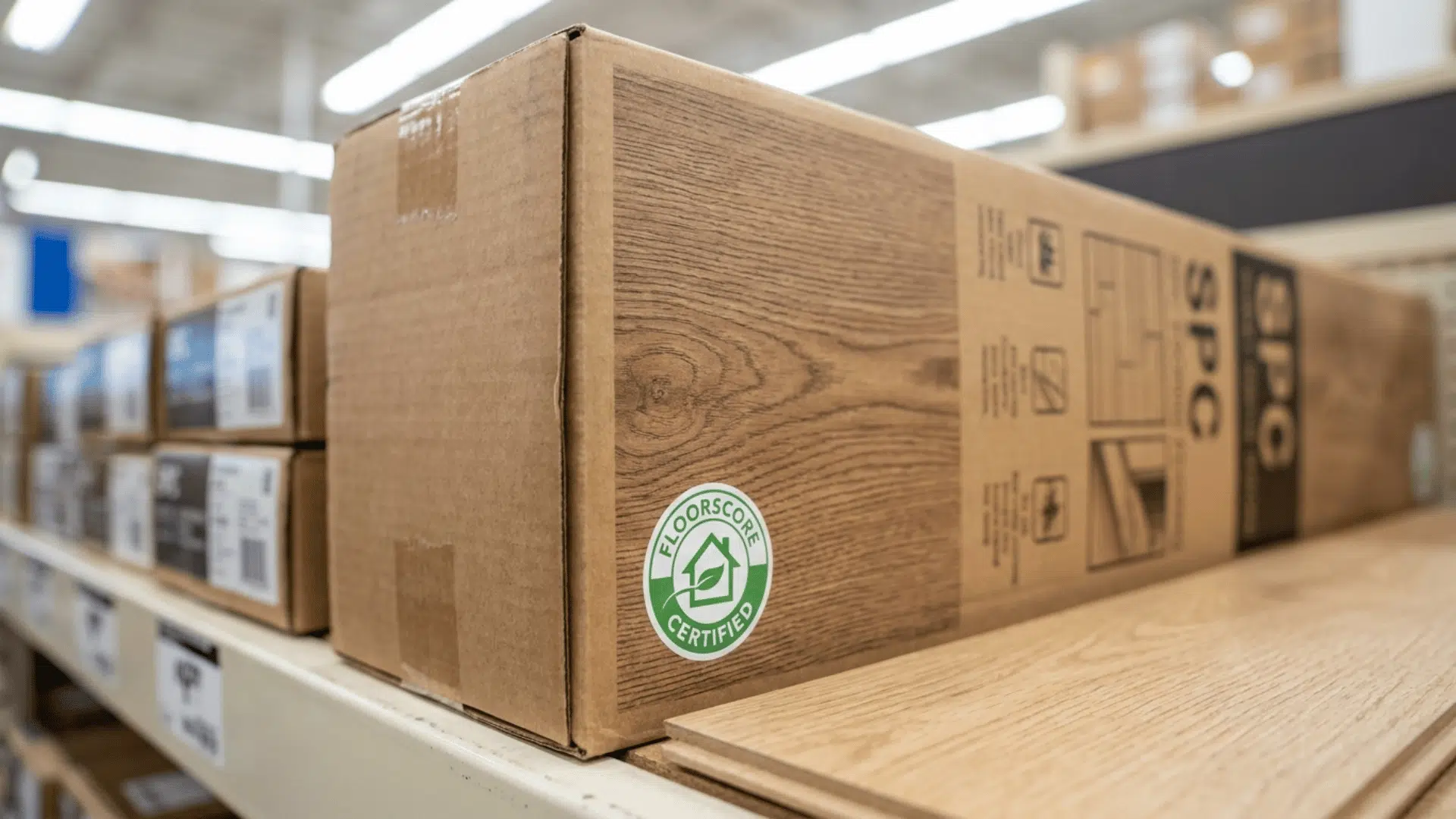
Start by looking for a FloorScore label. This is a trusted, independent stamp run by SCS Global Services along with the flooring industry group RFCI.
To earn it, a floor gets tested against a strict California air-quality rule (Section 01350) for VOC emissions. Big green building programs like LEED, WELL, and BREEAM also accept it, so it’s a name you can lean on.
But here’s the honest part. FloorScore checks air emissions, not everything. It does not promise that a floor is “lead-free” or “phthalate-free” on its own. That mostly matters with very cheap planks made from low-quality recycled PVC, which can carry leftover heavy metals.
So, for budget floors, ask the seller for REACH or CE content papers as well, which cover what’s actually inside the plank.
A few quick tips before you buy:
- Look for the FloorScore seal on the box or product page.
- For homes with kids, check for GREENGUARD Gold, which uses even stricter limits.
- Be cautious with no-name bargain planks that list no certifications at all.
- A strong chemical smell straight out of the box is a red flag.
Stick with a certified floor from a brand that’s open about its testing, and you can breathe easy, literally.
Advantages and Disadvantages of SPC Flooring
No floor is perfect, so before you commit, here’s an honest look at where SPC shines and where it falls short.
Advantages
Here are the advantages of SPC flooring:
- 100% waterproof, so it works in kitchens, bathrooms, and basements.
- Dense stone core shrugs off dents, heavy furniture, and heavy traffic.
- Scratch-resistant, which is great for homes with pets and kids.
- Easy to install, since planks click together and often go right over your old floor.
- Holds steady in heat and cold and works with underfloor heating.
- Low upkeep, with no sanding or sealing, just a damp mop.
- Easy on allergies, since the hard surface doesn’t trap dust.
- Budget-friendly, giving you the hardwood look for a lot less money.
That’s a strong list of perks, but no floor is flawless, so let’s flip the coin and look at the downsides too.
Disadvantages
Here are some of the disadvantages of SPC flooring:
- Hard underfoot, so standing a long while can tire you out. A soft rug helps.
- Not the real wood feel, since it won’t warm up as much as true hardwood.
- Repeating patterns, because the design is printed, the planks can look alike.
- Can still get damaged if a heavy, sharp object lands just right.
- Quality varies widely, so cheap planks with thin wear layers wear out quickly.
For most homes, the wins clearly outweigh the trade-offs, especially if you pick a quality plank with a solid wear layer.
SPC vs. WPC vs. Vinyl vs. Laminate: The Difference
SPC isn’t your only option, and it helps to see how it stacks up against the floors people most often weigh it against.
Each one has a different core, and that core decides almost everything: how it feels, how it handles water, and what it costs. Here’s the quick comparison:
| SPC | WPC | Standard Vinyl | Laminate | |
|---|---|---|---|---|
| Core | Stone and plastic (limestone + PVC) | Wood and plastic | Flexible PVC, no rigid core | Wood-based (pressed fiberboard) |
| Waterproof | Yes, 100% | Yes, but slightly less tough | Water resistant, varies by type | No, swells if water sits |
| Feel underfoot | Firm and hard | Softer and warmer | Soft, a bit flexible | Firm, slightly warmer than SPC |
| Sound | Average | Quieter, absorbs more | Average | Can sound hollow |
| Heat and cold | Very stable, barely moves | Stable, moves a little more | Can expand more | Sensitive to moisture and heat |
| Best for | Kitchens, baths, busy rooms | Comfort-first living spaces | Budget jobs, soft feel | Dry rooms, low-moisture areas |
| Price | Mid-range | Often a bit higher | Usually cheapest | Budget-friendly |
Pick SPC for the toughest, most waterproof option. Go WPC if comfort and a quieter room top your list. Choose standard vinyl to save money or get a softer step, and save laminate for dry rooms where water won’t be an issue.
The Lifespan Question: How Long does SPC Really Last
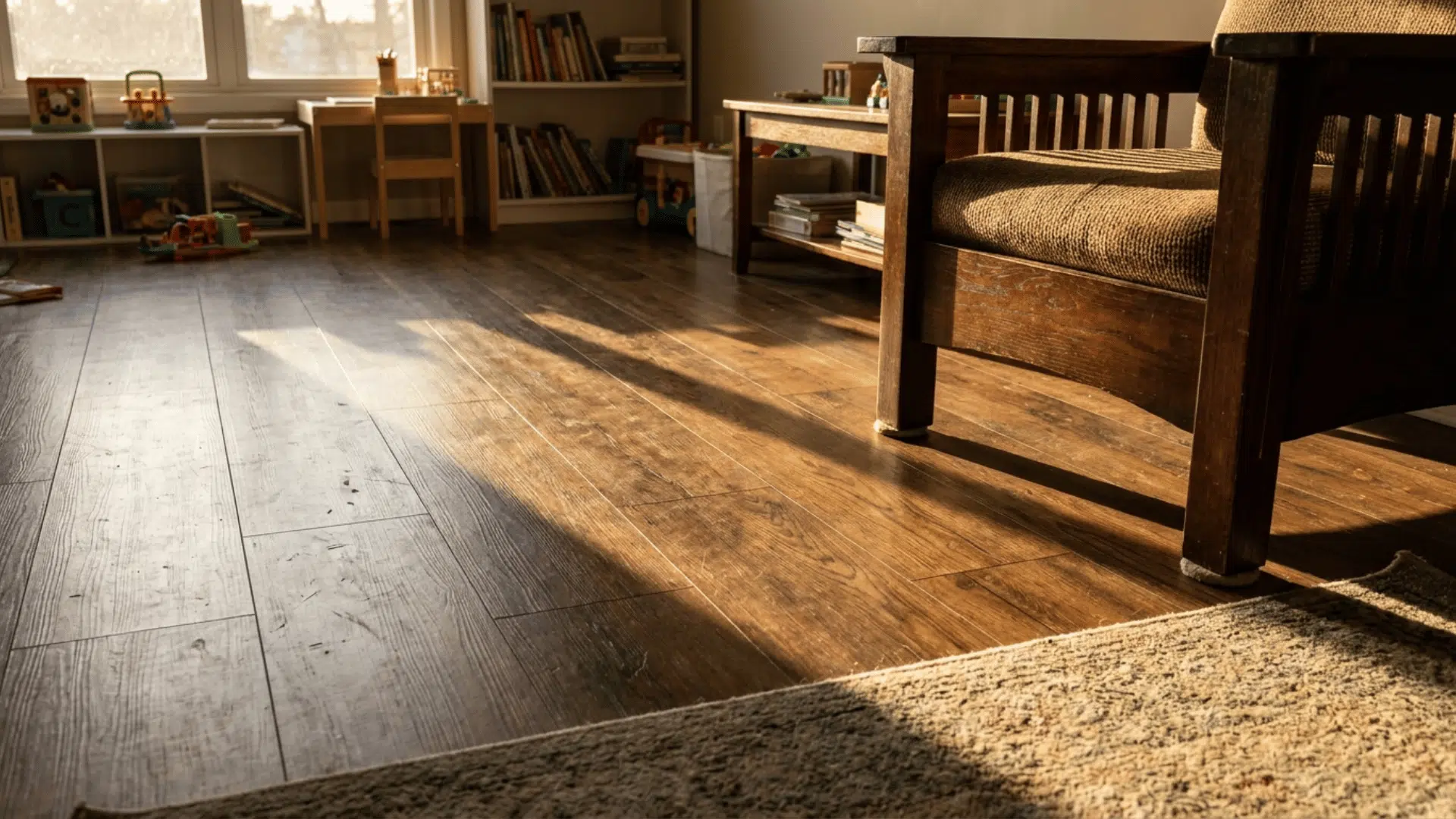
Good news here: SPC is built to stick around. With normal care, most SPC floors last 20 to 25 years, and the better ones can go even longer. That’s a solid run for a floor that costs far less than hardwood.
A few things decide where your floor lands on that scale. The wear layer is the big one (remember those mil numbers?), since a thicker top coat takes more years of scuffing to show.
After that comes install quality, how much foot traffic the room sees, and the grade of plank you started with. Keeping it clean with a damp mop and adding pads under heavy furniture will stretch those years out nicely.
Should You Buy SPC?
For most homeowners, SPC flooring is a smart investment. It combines waterproof protection, high durability, realistic wood-and-stone visuals, and a relatively affordable price point.
That said, SPC is not the perfect choice for every situation. If you love the natural character, warmth, and unique grain patterns of real hardwood, or prefer a softer feel underfoot, you may find SPC less appealing.
While modern SPC products look impressive, they still do not completely replicate the feel of genuine wood.
However, if your priorities are durability, low maintenance, moisture resistance, and long-term value, SPC is hard to beat. It works especially well in busy households with children, pets, or high-traffic areas where floors need to withstand everyday wear.
Before buying, focus on quality rather than just price. Look for a reputable brand, a solid wear layer, and certifications that confirm safety and performance.
Choosing the right product from the start can help ensure your floor looks great and performs well for many years to come.
Wrapping It Up
So there you have it. SPC flooring gives you a floor that handles water, takes a beating, and still looks sharp without emptying your wallet. We broke down what it’s made of, how those four layers work together, and how it’s built in the factory.
You also learned the one spec that matters most when you shop: the wear layer, measured in handy mils.
From checking for clean-air labels to weighing the ups and downs, you’re now ready to shop like a pro and skip the sales fluff. You know which rooms suit it best and roughly how many years it’ll serve you.
Got a flooring project coming up? Use this guide as your checklist, and drop a comment below with the room you’re planning to redo. I’d love to hear about it!
Frequently Asked Questions
Can I Install SPC Flooring Over Existing Tile?
Yes, as long as the tile is clean, level, and firmly stuck down. Fill grout lines and deep gaps first, since SPC follows any bumps underneath.
Does SPC Flooring Fade in Direct Sunlight?
It can. Long hours of strong sun may fade the color or cause planks to expand. For sunny rooms, pick UV-stable planks and use blinds or curtains.
Do you Need Underlayment Under SPC Flooring?
Often no, since most planks have a foam pad attached. Adding extra padding can void the warranty, but a vapor barrier may be needed over concrete.
Will Pets and Furniture Scratch SPC Flooring?
SPC resists scratches well, but pet claws, grit, and dragged furniture can still leave marks on it. Use felt pads, trim nails, and a 20-mil wear layer for safety.

Holding a Master’s in Library and Information Science from the University of Illinois, Josh Clarke has dedicated more than 15 years to managing and disseminating information across various platforms. His professional journey includes significant experience as a research librarian, where he developed an expertise in sourcing and providing accurate and comprehensive answers to diverse questions. In 2018, Josh brought his rich experience to our platform, quickly establishing himself as a reliable source for general FAQs. He has been overseeing our information curation since then, combining his research skills with a flair for engaging content delivery. When not involved in information management, Josh enjoys exploring digital photography and participating in local quiz competitions, hobbies that complement his inquisitive nature and love for learning.