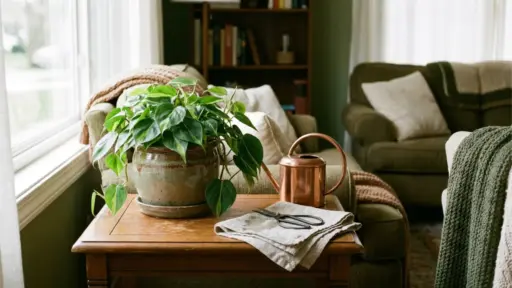
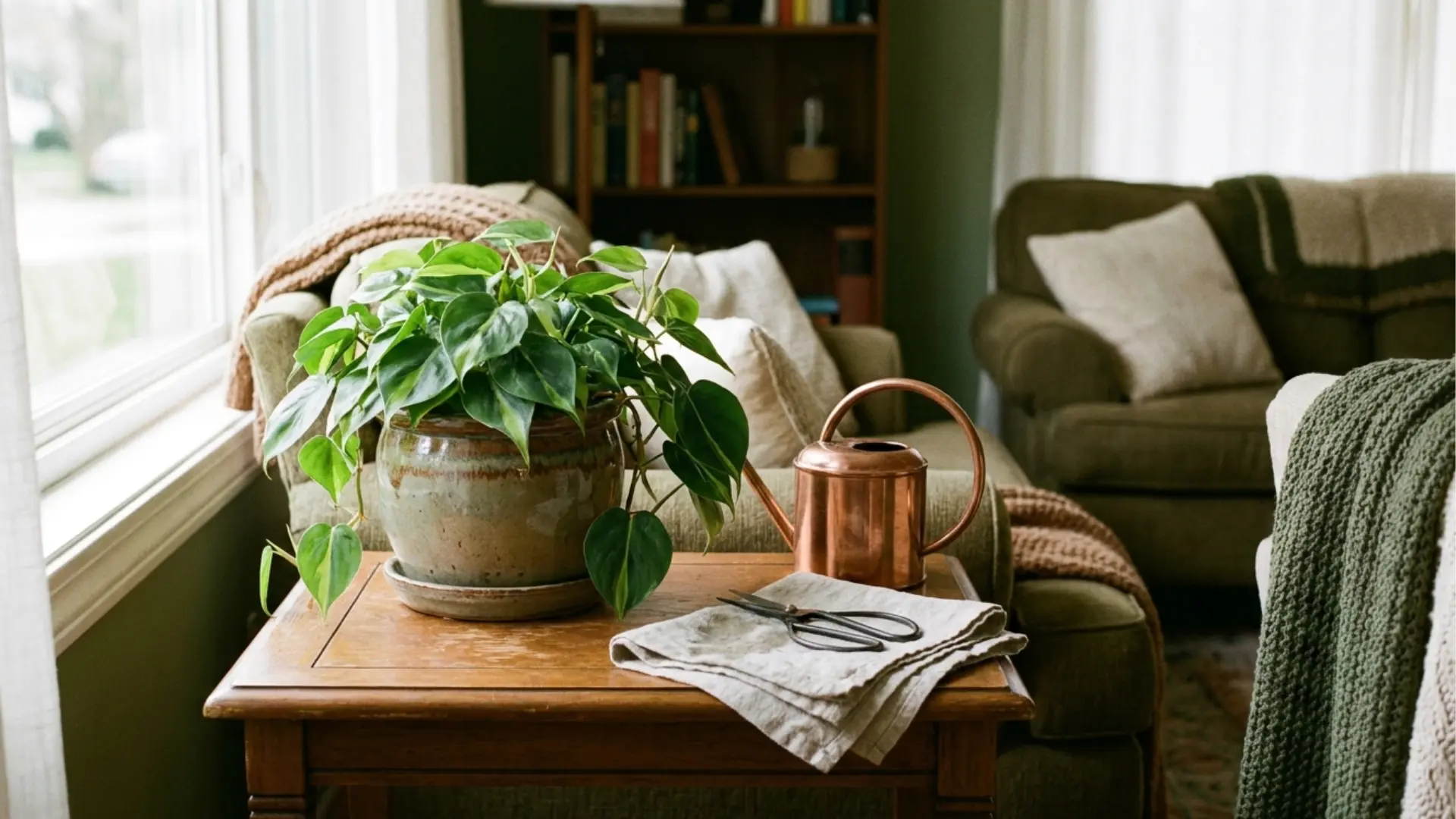

Philodendron plant care is simple once you understand what this plant really needs. When I first kept a philodendron indoors, I thought it needed a lot of attention, but I soon learned that small habits matter more than complicated care.
Bright indirect light, well-draining soil, and careful watering can keep it growing fresh and green. I like this plant because it forgives small mistakes, which makes it perfect for beginners. You do not need fancy tools or a strict routine to keep it healthy.
You just need to check the soil, protect it from harsh sun, clean the leaves, and watch for early signs of stress. This guide will help you care for your philodendron with confidence.
Philodendron Plant Care: Quick Start for Beginners
A philodendron is one of the easiest houseplants to care for when its basic needs are met. It grows best in bright, indirect light, loose soil, and a pot with drainage holes.
I like to water mine only when the top inch of soil feels dry because soggy soil can quickly harm the roots. A simple weekly routine is enough: check the soil, wipe dusty leaves, rotate the pot, and remove any yellow leaves.
A healthy philodendron usually has firm stems, fresh green leaves, and steady new growth. In my opinion, it is a great beginner plant because it forgives small mistakes.
Simple Weekly Philodendron Care Routine
A simple weekly routine can keep your philodendron healthy without making plant care feel like extra work. I like checking mine once a week because it helps me catch small problems early.
- Check the soil: Water only if the top inch feels dry.
- Wipe the leaves: Use a soft, damp cloth to remove dust.
- Rotate the pot: Turn it slightly so all sides get light.
- Remove old leaves: Cut yellow or damaged leaves with clean scissors.
- Look for pests: Check under leaves and along stems.
This small habit keeps the plant fresh, balanced, and easier to manage indoors.
Pick the Right Philodendron for Your Home
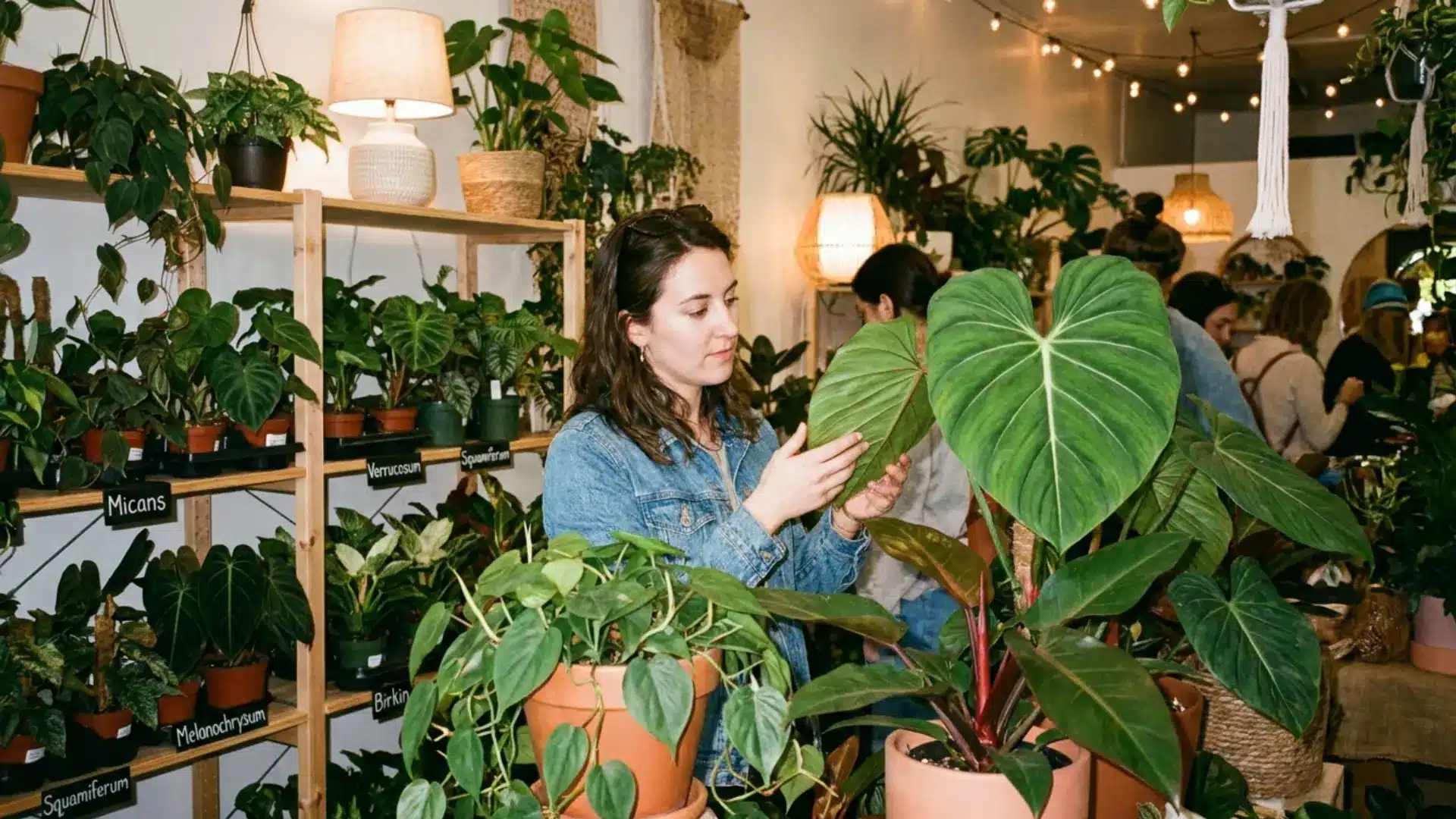
Picking the right philodendron for your home makes care much easier, especially if you are new to indoor plants.
A heartleaf philodendron is one of the best beginner choices because it grows well indoors, trails beautifully, and requires little attention.
You can also choose between upright and vining types. Upright philodendrons work well as floor plants, while vining ones look nice on shelves, hanging baskets, or plant stands.
Before buying, choose a plant with firm stems, fresh green leaves, and healthy soil. Avoid plants with sticky spots, pests, yellow leaves, or mushy soil.
Give Your Philodendron the Right Light
Philodendrons grow best in bright, indirect light, which means they like a bright room but not harsh sun on their leaves.
A spot near an east-facing window or a few feet away from a sunny window usually works well. They can grow in low light, but the growth may become slower, and the leaves may look smaller.
If the stems stretch, the plant leans toward the window, or new leaves look pale, it may need more light. Too much direct sun can burn the leaves, so soft filtered light is the safest choice for steady indoor growth.
Water Your Philodendron the Right Way
Watering is one of the most important parts of philodendron plant care.
- How often to water: Water when the top inch of soil feels dry, not on a fixed schedule.
- Finger test: Push your finger into the soil. If it feels dry, water. If it feels damp, wait.
- Soggy soil: Too much water can block air around the roots and may cause root rot.
- Seasonal change: Water more often in warm summer months and less often in winter when growth slows.
The goal is to keep the soil lightly moist, never soaked or fully dry for too long.
Note: houseplants should not be watered only by schedule, and testing soil moisture with a finger about two inches deep is a useful method for many indoor plants.
Use the Best Soil and Pot for Philodendrons
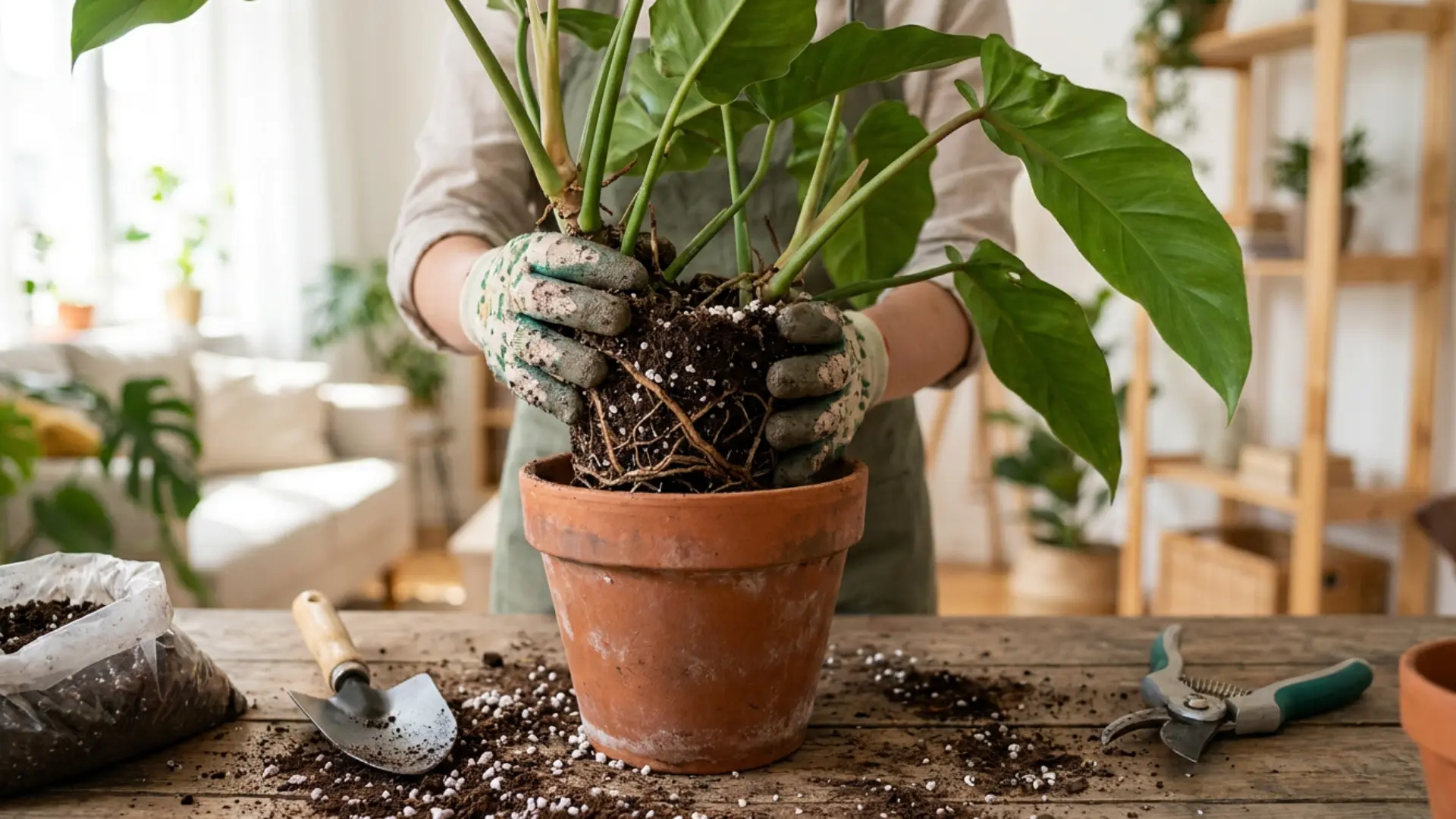
The right soil and pot can make philodendron plant care much easier. I prefer using a loose indoor potting mix because it allows water to drain while still retaining a little moisture for the roots.
A pot with drainage holes is very important, since extra water needs a way to escape. If the roots are circling the pot or the water dries too quickly, it may be time to move the plant into a slightly larger pot.
Soil that stays wet for many days, smells bad, or feels heavy can be a warning sign. In my opinion, good drainage prevents most beginner problems.
Keep Humidity and Temperature Comfortable
Philodendrons like the same comfort most homes already have, but steady conditions help them grow better.
- Ideal temperature: Keep the plant in a warm room, away from cold spots. Normal indoor temperatures usually work well.
- Add humidity: Use a pebble tray, group plants together, or run a small humidifier if the air feels dry. Avoid vents and drafts: Heating vents, AC, and cold windows can dry or shock the leaves.
- Winter care: Check soil less often, protect the plant from dry air, and move it away from heaters.
A stable room with gentle humidity keeps philodendron leaves fresh and healthy.
NOTE: Most foliage houseplants grow well around normal indoor temperatures, and indoor humidity often drops in winter; grouping plants, using pebble trays, or using a humidifier can help raise nearby humidity.
Tips for Placing a Philodendron Indoors
The right indoor spot can help your philodendron grow fuller, greener, and healthier with less stress. Since this plant prefers soft light and steady room conditions, small placement choices can make a big difference.
You can add these tips under “Best Places to Keep a Philodendron Indoors”:
| Tip | Why It Helps |
|---|---|
| Keep it near bright indirect light | Philodendrons like a bright room, but strong direct sun can burn the leaves. Your draft already explains that soft filtered light is safest for steady growth. |
| Use an east-facing window | Morning light is usually gentle, so it gives the plant brightness without too much heat. |
| Avoid AC and heating vents | Hot or cold air can dry the leaves and stress the plant. Your draft also mentions keeping it away from vents, drafts, and cold windows. |
| Place varying types on shelves | Their trailing stems look nice on shelves, plant stands, or hanging baskets. |
| Keep upright types on the floor | Bigger upright philodendrons work well in empty corners with soft light. |
| Rotate the pot often | Turn the pot every week or two so the plant grows evenly on all sides. |
| Keep it away from pets and kids | Place it on a high shelf or safe stand because philodendrons are not safe to chew. |
| Watch the leaves after moving them | Pale leaves may mean low light, while brown patches may mean too much sun. |
A good spot gives your philodendron enough light, protects it from drafts, and keeps it safe from pets and kids.
Feed Your Philodendron without Overdoing It
Feeding your philodendron helps it grow, but too much fertilizer can do more harm than good. Use a balanced liquid houseplant fertilizer during spring and summer when the plant is actively growing.
For beginners, I think a diluted liquid fertilizer is easiest because it spreads evenly through the soil and is simple to control. Feed lightly once a month, or follow the product label at half strength.
Brown leaf tips, yellow leaves, crusty soil, or weak growth can mean too much fertilizer. Pause feeding in winter because the plant grows more slowly and does not need as many extra nutrients.
Philodendron Care by Season
Philodendron care varies slightly with each season, so adjusting light, watering, humidity, and feeding helps the plant stay healthy year-round.
1. Spring
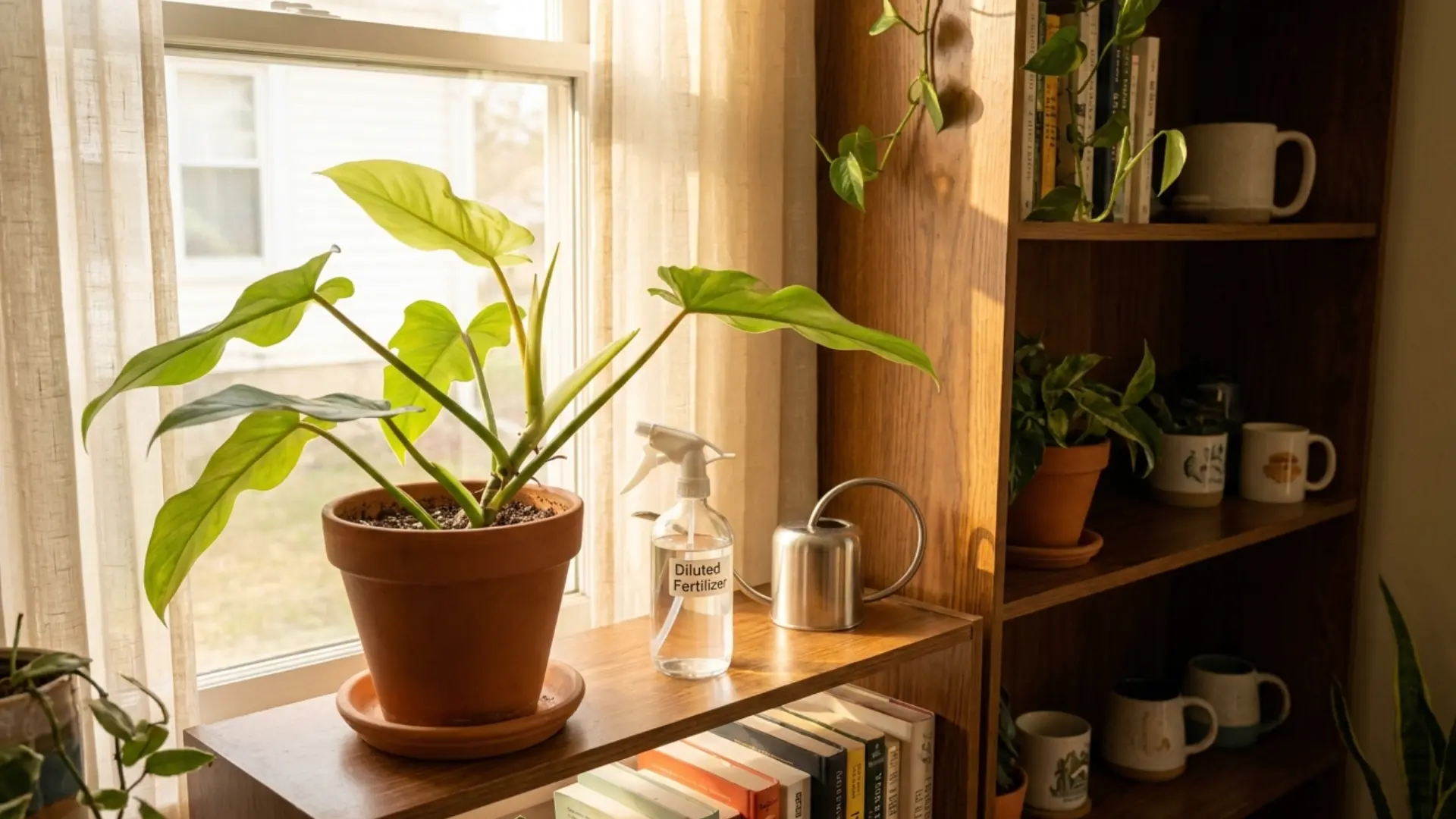
Spring is the main growing season for a philodendron, so this is when the plant usually starts making fresh leaves and longer stems.
Keep it in bright indirect light and check the soil more often, as it may dry out faster. Water when the top inch feels dry, not while the soil is still wet. You can also start feeding with a diluted liquid fertilizer once a month.
2. Summer
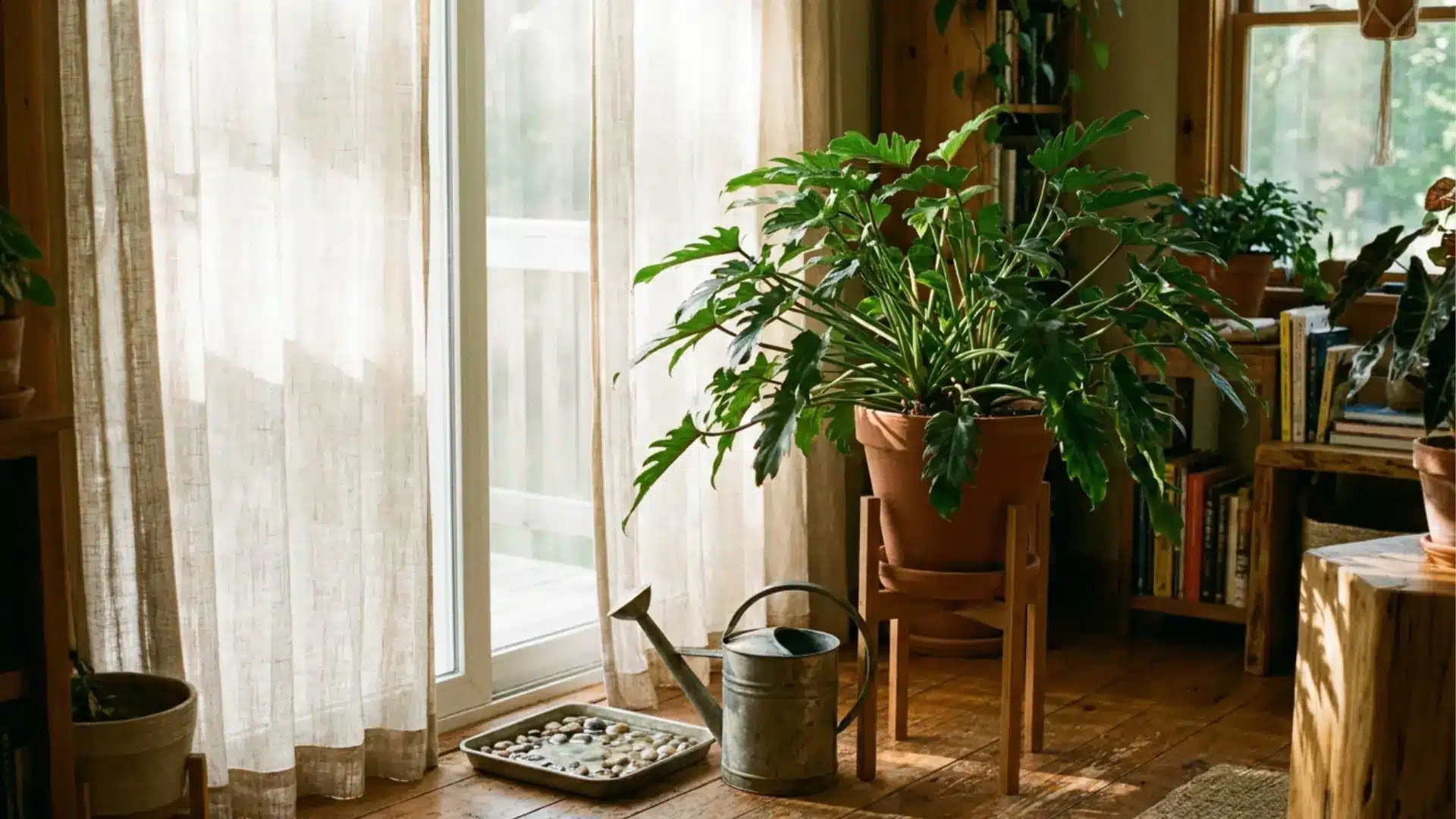
In summer, philodendrons may grow faster because the days are warmer and brighter. Keep the plant away from direct, harsh sunlight, as it can burn the leaves.
Water a little more often if the soil dries quickly, but never let the pot sit in water. If indoor air feels dry, use a pebble tray, group plants together, or place a humidifier nearby.
3. Fall
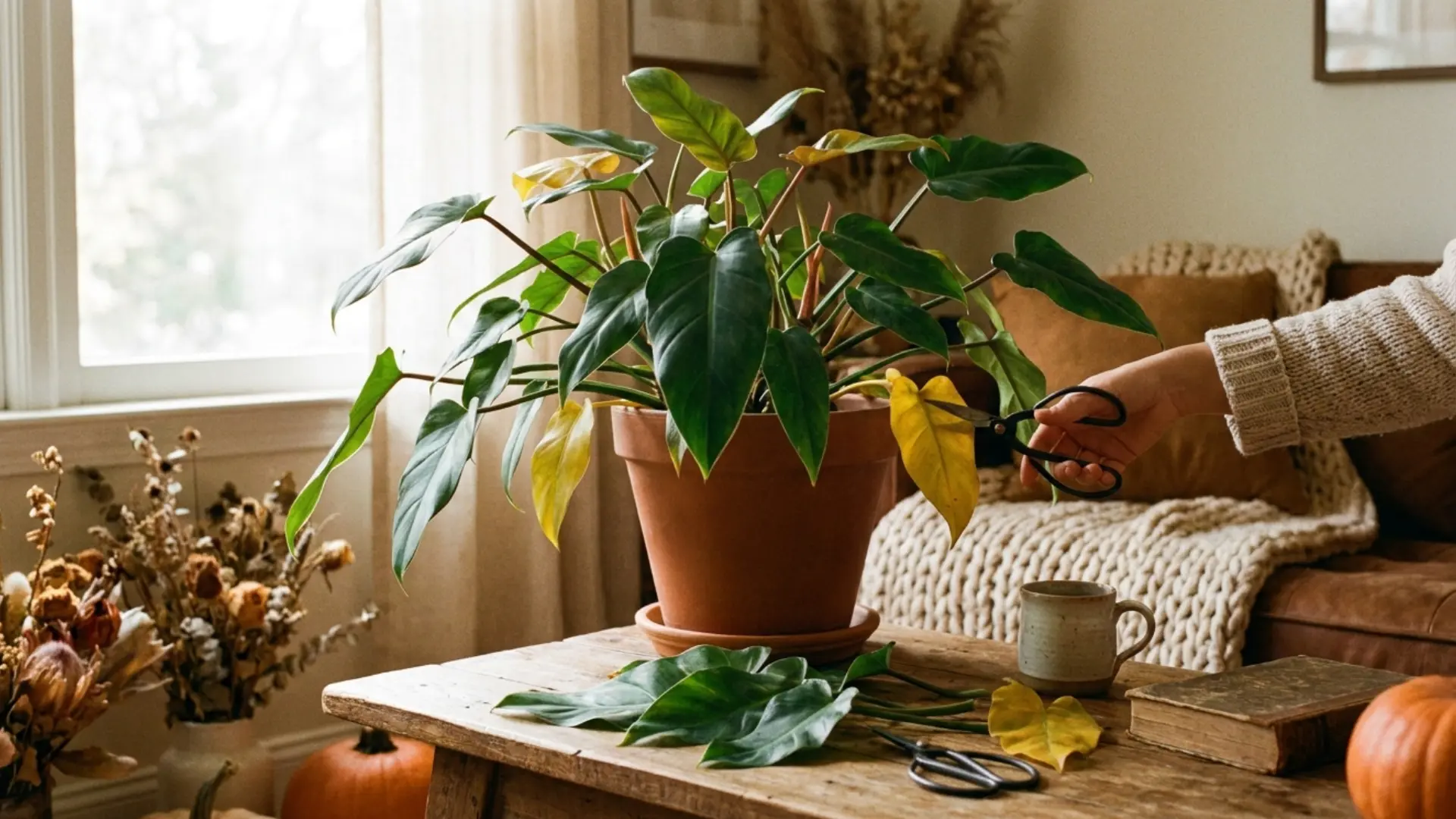
Fall is the time to gradually reduce care as the plant’s growth slows. Your philodendron may need less water because the soil stays moist longer.
Check the soil before watering and avoid feeding too often. This is also a good time to remove yellow leaves, trim leggy stems, and move the plant closer to soft natural light before the shorter winter days arrive.
4. Winter
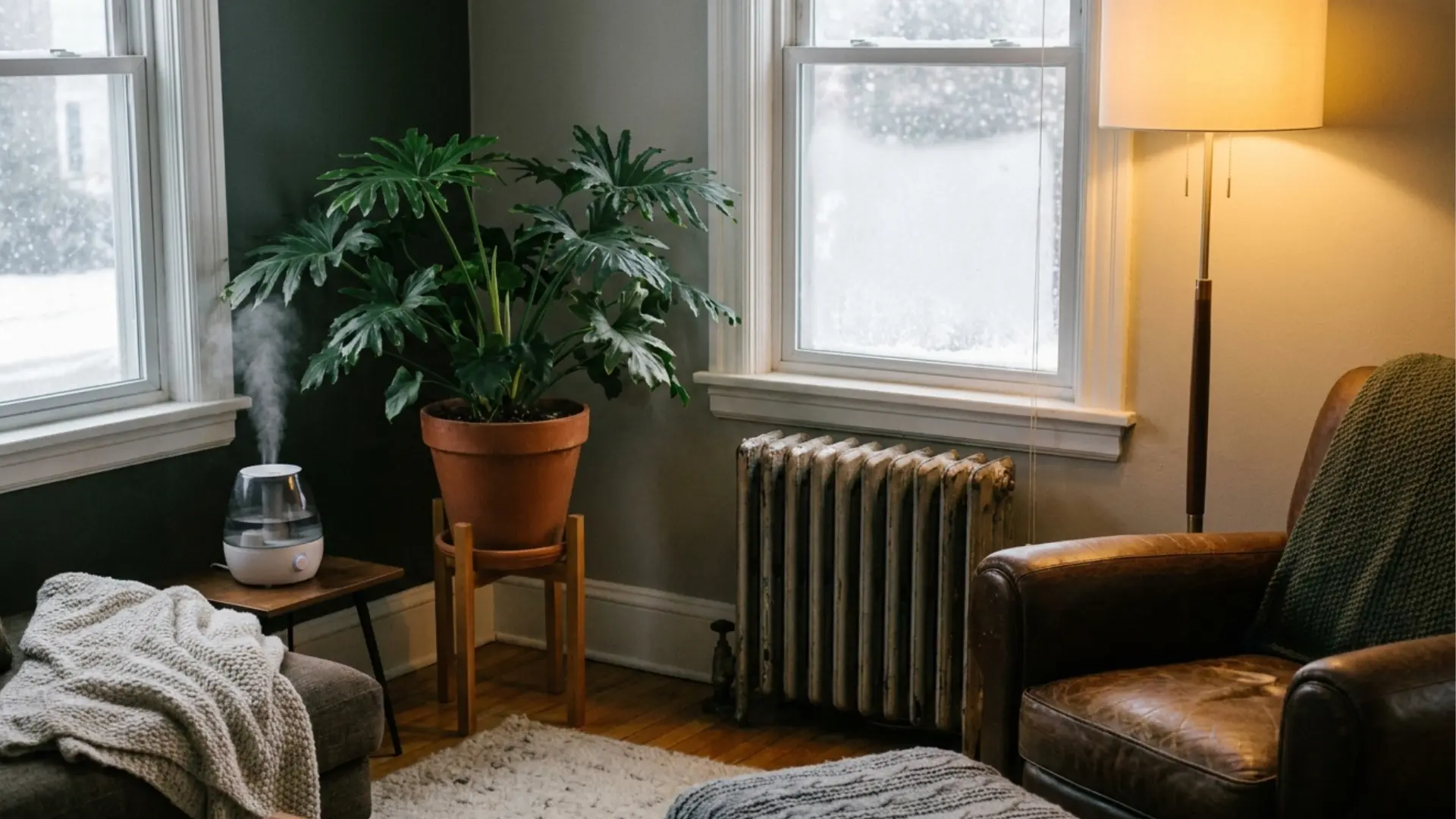
In winter, philodendrons need a little extra care because indoor air can become drier and the plants grow more slowly. Water less often, but do not let the soil stay dry for too long.
Keep the plant away from heaters, cold windows, and strong drafts. Pause fertilizer this season, as the plant does not need much extra food while growth is slow.
Prune and Shape Your Philodendron
Pruning helps a philodendron stay neat, full, and healthy indoors.
- Long stems: Trim long or leggy stems when the plant starts looking thin or stretched.
- Yellow leaves: Cut off yellow, brown, or damaged leaves close to the base with clean scissors.
- Pinching: Pinch back soft stem tips to encourage new side growth and a fuller shape.
- Training vines: Guide vining philodendrons up a moss pole, trellis, or plant stake for better support.
Regular light pruning keeps the plant fresh, controls its size, and helps it grow in a shape that fits your space.
Clean and Maintain Your Philodendron
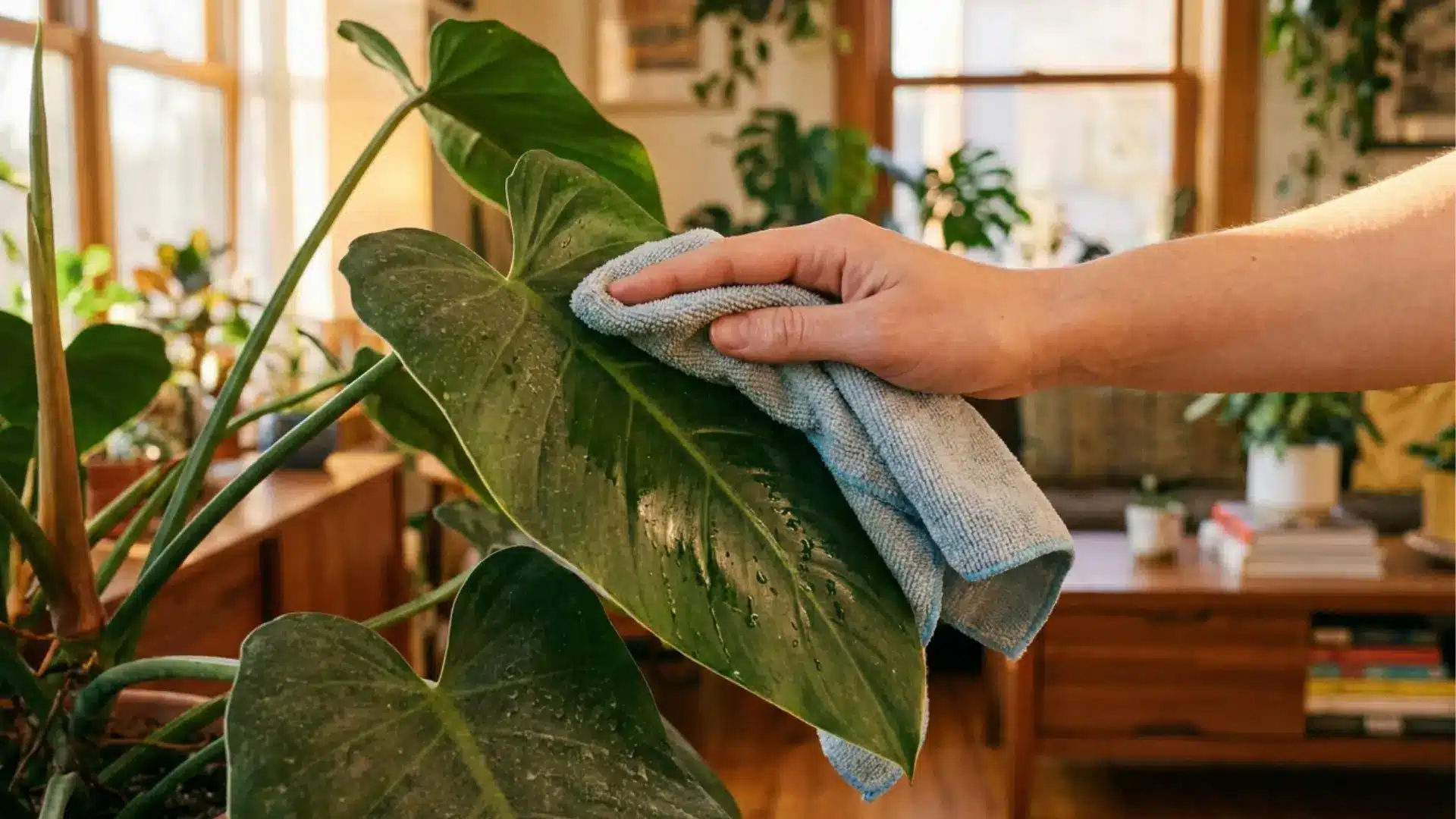
Cleaning and maintaining a philodendron is a small habit that makes a big difference. Dust can block light from reaching the leaves, so wipe each leaf gently with a damp, soft cloth.
I like to rotate the pot every week or two because one side often grows toward the window. While cleaning, look under the leaves and along the stems for tiny pests, sticky spots, or yellowing.
Once a month, remove dead leaves, test the soil, wash the saucer, and trim messy stems. In my experience, this quick routine keeps the plant looking fresh and helps catch problems early.
Fix Common Philodendron Problems
Most philodendron problems are easy to fix when you notice the signs early.
- Yellow leaves: This often means overwatering, poor drainage, or old leaves naturally aging.
- Brown leaf tips: Dry air, too much fertilizer, or uneven watering can cause crispy edges.
- Drooping leaves: The plant may be too dry, too wet, or sitting in a cold spot.
- Leggy growth: Long, weak stems usually mean the plant needs brighter indirect light.
- Root rot signs: Watch for mushy stems, bad-smelling soil, and roots that look dark or soft.
- Common pests: Spider mites, mealybugs, and scale can be removed early with gentle cleaning.
Clemson notes that yellowing, browning tips, weak growth, insects, and root rot can show up when watering, light, fertilizer, drainage, or pests are not managed well.
Keep Philodendrons Safe Around Pets and Kids
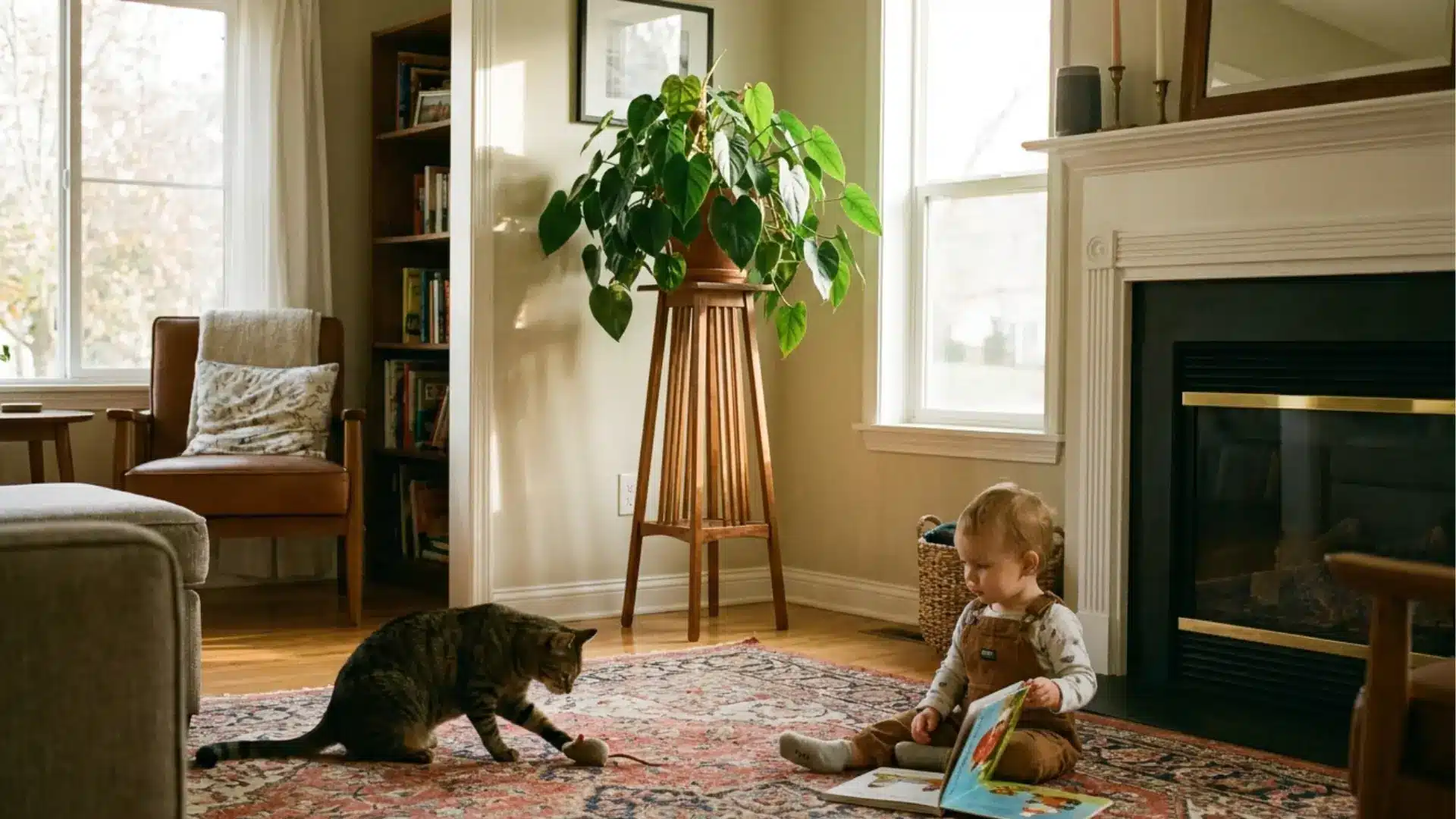
Philodendrons are beautiful indoor plants, but they should be kept away from pets and small children. The leaves and stems contain calcium oxalate crystals, which can irritate the mouth if chewed.
Pets may drool, vomit, or have trouble swallowing, so it is best to place the plant on a high shelf, plant stand, or in a room they cannot reach.
In family homes, avoid low tables or floor spots where kids or pets can pull the leaves. If a pet chews the plant, remove any pieces from the mouth and call a vet or poison helpline for advice.
Beginner Mistakes to Avoid
Beginner mistakes are common with philodendrons, but most are easy to fix once you know what to watch for.
| Mistake | Solution |
|---|---|
| Watering on a fixed schedule | Test the soil first. Water only when the top inch feels dry, because indoor conditions change by season. |
| Keeping the plant in direct, harsh sunlight | Place it in bright, indirect light. Strong sun can burn the leaves and leave brown patches. |
| Using a pot without drainage | Use a pot with drainage holes so extra water can escape and roots do not sit in soggy soil. |
| Feeding too often | Fertilize lightly during spring and summer only. Pause feeding in winter when growth slows down. |
| Ignoring early leaf changes | Watch for yellow leaves, drooping, crispy tips, or weak growth early so you can fix the issue before it spreads. |
Small care changes can keep a philodendron healthy, full, and easier to manage indoors.
Final Thoughts
Philodendron plant care becomes much easier when you follow a simple routine and pay attention to small changes.
In my experience, the biggest difference comes from watering only when the soil feels dry, keeping the plant in bright indirect light, and using a pot that drains well.
I also like to wipe the leaves and rotate the pot because it keeps the plant looking even and fresh. You do not have to be perfect every day.
A philodendron can handle minor mistakes as long as you catch and fix problems early. With the right light, soil, and humidity, along with light pruning, this plant can stay healthy for years.
Comment below and tell me what type of philodendron you are growing and what care problem you are trying to fix.
Frequently Asked Questions
Do Philodendrons Need Direct Sunlight?
No. Most philodendrons prefer bright indirect light. Strong direct sun can scorch leaves, leaving brown patches. Place them near a bright window with filtered light for steady, healthy indoor growth.
Why are My Philodendron Leaves Turning Yellow?
Yellow leaves often come from overwatering, poor drainage, low light, or natural aging. Check the soil first, remove old leaves, and adjust watering before the problem spreads to other leaves.
Should I Mist My Philodendron?
Misting can add brief moisture, but it does not raise humidity for long. A pebble tray, grouped plants, or a small humidifier works better for dry indoor air.
Is a Philodendron Safe for Pets?
No. Philodendrons can irritate the mouth if chewed because they contain calcium oxalate crystals. Keep them away from pets and small children to avoid drooling, vomiting, or discomfort.

Jordan Mathews, who has a degree in horticulture from Texas A&M University, has been a guiding force in plant health and sustainable gardening for over 16 years. His career began with a role at a renowned botanical garden, where he deepened his understanding of plant physiology and eco-friendly cultivation methods. Jordan joined our website as a freelancer in 2020, becoming a go-to expert for readers seeking advice on nurturing diverse plant species apart from offering insights grounded in scientific knowledge and practical experience. Beyond his professional achievements, Jordan is a keen nature photographer, capturing the beauty of flora in its immensely diversified forms.