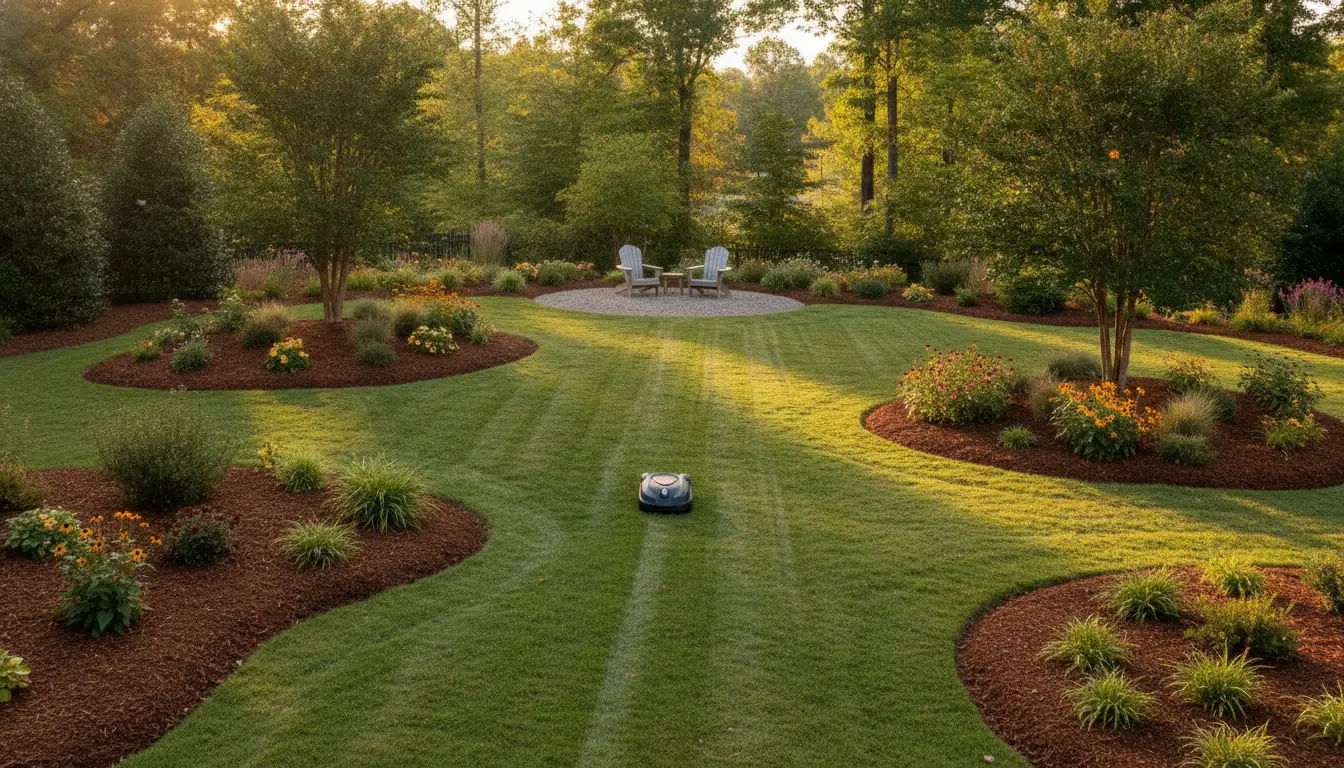

A good backyard should feel like a place to relax, not a chore that eats every Saturday. Yet for many homeowners the yard becomes a to-do list: mow, weed, water, repeat. In the Raleigh area, the local climate makes it worse — hot, humid summers, sudden downpours, and heavy clay soil all add to the upkeep. The fix is not more effort but smarter choices: a handful of well-considered upgrades can cut the work while making the space look finished. Below are the changes that give the best return for the least effort, and the order to tackle them in.
Start at Ground Level With Mulch
Before spending on furniture or lighting, look at the beds. Bare or patchy soil is where most yard work comes from — it invites weeds, dries out fast, and makes the whole space look unkempt. A fresh layer of landscape mulch solves several problems at once: it locks moisture into the soil so you water less, blocks light from weed seeds so you pull fewer of them, and gives beds a clean, uniform finish.
Depth is what makes mulch work. Aim for a two-to-three-inch layer, kept pulled back from tree trunks and plant stems so nothing sits in trapped moisture. Thinner than that and weeds push through; much thicker and you risk suffocating roots and holding water against them, which matters on Raleigh’s slow-draining clay. Refresh the top inch once a year rather than piling on a full new layer each season — old mulch underneath keeps working as it breaks down.
Type matters too. Shredded hardwood is the reliable all-round choice because it tends to stay in place better than lighter mulches and breaks down gradually, adding organic matter to the soil. Pine straw is lighter and suits natural or wooded areas, while dyed hardwood holds its color longest in high-visibility beds. Whatever you pick, estimate volume before you buy: one cubic yard covers roughly 100 square feet at three inches deep, so a few beds usually add up faster than people expect. If you are covering more than a couple of hundred square feet, bagged mulch gets expensive quickly. For larger projects, regional suppliers such as BOSS Supply in Wake Forest offer bulk mulch by the cubic yard for homeowners across the Raleigh area, which is both cheaper and far fewer trips.
Fix Drainage Before It Becomes a Problem
Nothing undoes a backyard refresh faster than standing water. A soggy low spot kills grass, drowns plantings, creates conditions where mosquitoes can breed, and turns a patch of lawn into a mud pit after every storm. Drainage is the least glamorous upgrade on this list, but it is the one that protects everything else you do — there is little point mulching beds or reseeding a lawn that floods twice a month.
Start by watching where water goes. During the next heavy rain, note where it pools, how long it sits, and which way it runs off. That tells you what kind of fix you need. A regraded swale — a shallow, planted channel — guides surface water away from the house and toward a better outlet. A French drain, a perforated pipe set in gravel and wrapped in fabric, handles water that lingers below the surface. A dry well gives runoff somewhere to collect and soak in slowly. Many yards need a simple combination rather than one big project, and the basic yard drainage supplies involved — pipe, fittings, gravel, and filter fabric — are inexpensive relative to the damage standing water causes.
Many common residential drainage issues can be improved with relatively straightforward measures, though persistent water near a foundation, serious erosion, or a yard needing major regrading is worth a professional assessment before you dig. Putting drainage in before you replant also means you are not tearing up finished beds later, which is why it belongs early in the sequence, not after the pretty work is done.
Automate the Mowing
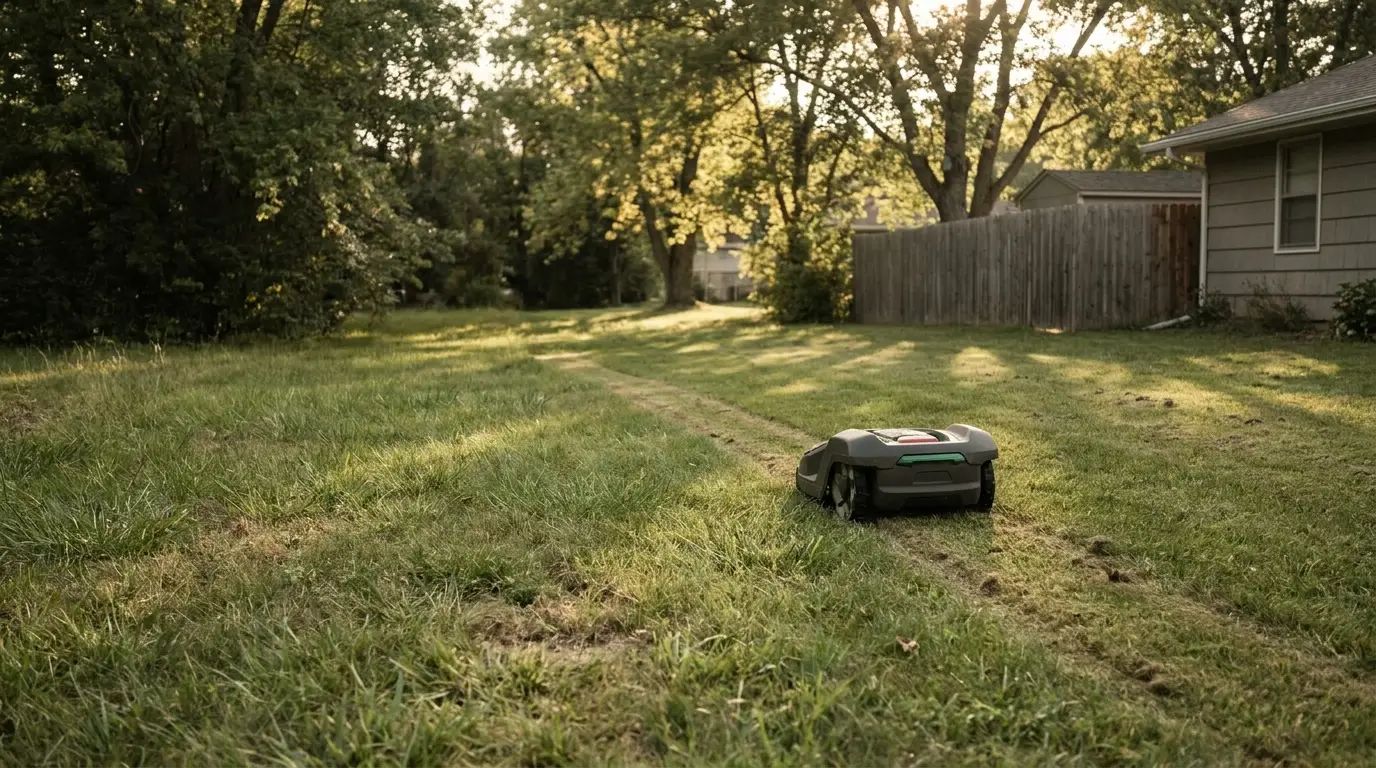
Mowing is the single most repetitive yard task on the calendar, and it is also the easiest one to hand off completely. For years that meant hiring a service, but the technology has caught up. A machine can now keep the lawn cut on its own, trimming a little every day instead of all at once on a weekend. Today’s robotic mowers handle real yards, not just tidy squares of lawn, keeping the grass at a steady height and dropping fine clippings that break down and quietly feed the lawn — which also means you are not bagging and hauling clippings every week.
Before buying, match the model to your yard. Check the coverage area it is rated for and leave some headroom for growth flushes. Confirm it handles your slopes, since few Piedmont yards are flat. Look at how it navigates — older units follow a buried boundary wire, while newer models may use GPS- or RTK-based navigation and can be easier to adjust when the lawn layout changes. Weather monitoring or rain-delay settings can be useful in a climate with frequent summer storms, and if the mower lives outdoors, anti-theft features like a PIN lock or GPS tracking are worth the small premium.
Upkeep is minimal but not zero: plan on occasional blade changes, a seasonal clean, and bringing the unit in over winter. Set up well, it is close to a set-and-forget upgrade that removes the chore people most often dread — and it pairs naturally with the first two steps, since a healthy, well-drained, mulched yard is exactly the kind a robotic mower keeps looking sharp with no weekly effort from you.
Tie It Together With a Few Low-Effort Touches
With the fundamentals handled, a few small additions finish the space without adding upkeep:
- Group plants by water needs so you are not dragging a hose to mismatched beds, and lean on species suited to the local climate rather than thirsty ones that struggle in summer.
- Choose perennials over annuals where you can — they come back each year instead of needing replanting, cutting both cost and labor.
- Add solar path or accent lighting for evening use with zero wiring and no running cost.
- Define edges between lawn and beds so mulch stays put, the mower tracks cleanly, and the whole yard reads as intentional.
- Add a simple gravel or paver sitting area to replace a patch of hard-to-maintain lawn with usable, no-mow space.
Where to Start
Order matters more than budget here. Fix drainage first, because everything else sits on top of it and redoing finished beds is wasted work. Next, refresh the soil and mulch, which does the most visible tidying for the least money. Then automate the mowing, so the lawn maintains itself while the beds settle in. Finally, layer in the finishing touches once the working parts are handled. Tackled in that sequence, a backyard refresh stops being a recurring project and becomes a one-time setup.
None of these upgrades is dramatic on its own, but together they change the math of yard ownership. Mulch and drainage protect the bones of the space, a robotic mower removes the weekly grind, and the finishing touches make it feel done — a backyard that looks cared for and gives you the weekends back.

With a Master’s in Landscape Architecture from the University of Virginia, Sophia Stephenson has dedicated the last 20 years to creating and maintaining vibrant outdoor spaces. Her professional journey started in landscape design, where she gained a reputation for innovative and sustainable approaches. Sophia became a part of our editorial team as a freelancer in 2019, offering a fresh perspective on outdoor living. Since 2020, she has been the chief for our outdoor design content, blending aesthetic appeal with environmental stewardship. In her leisure time, Sophia is a keen photographer, capturing the beauty of natural landscapes, a hobby that complements her professional expertise.