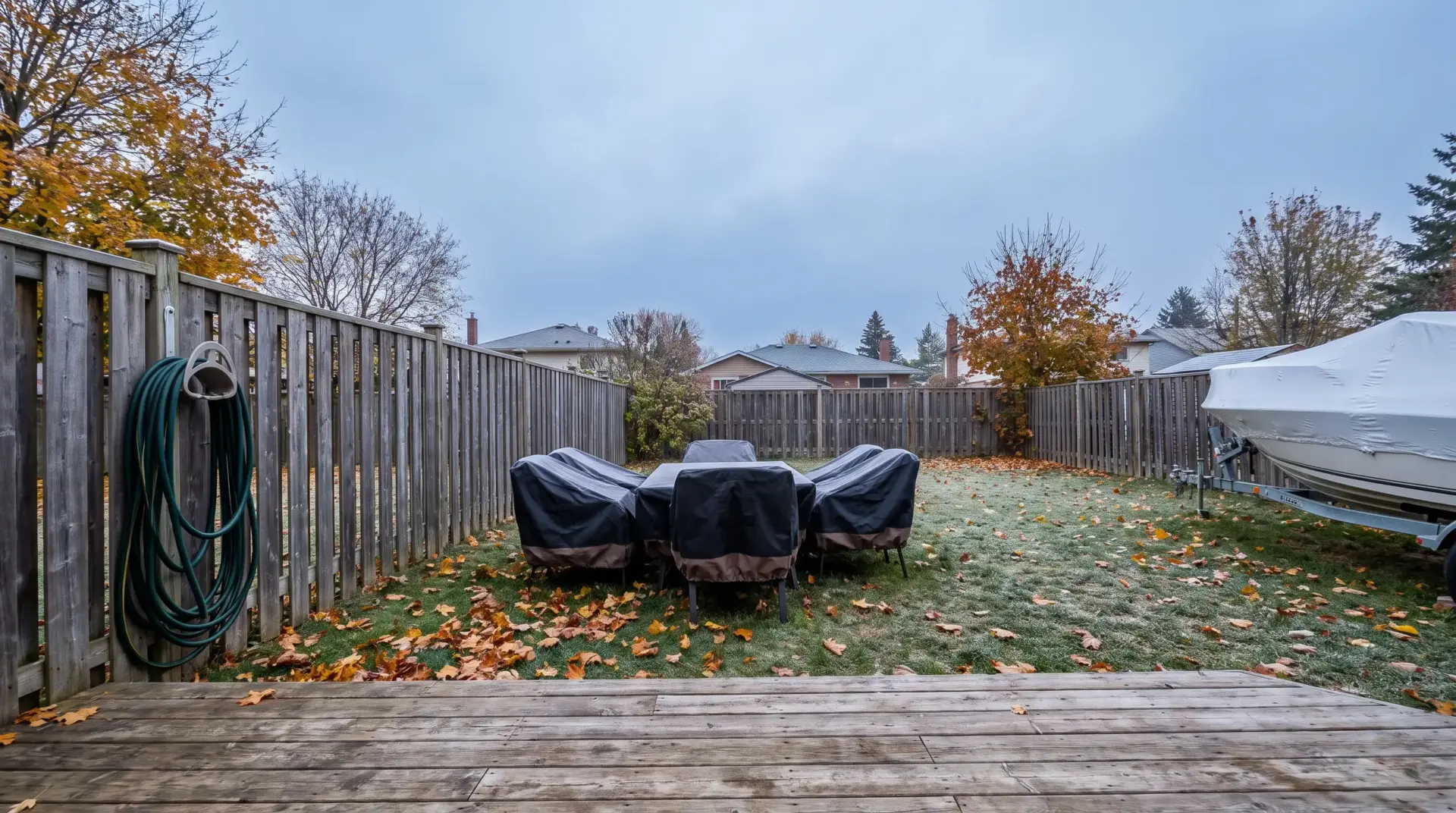

I know winterizing the backyard isn’t the most exciting weekend project, but skipping it almost always costs more later.
Every fall, I walk around my own property and go through the same routine: check the deck, drain the hoses, cover the furniture, and make sure nothing gets left out to freeze, crack, or rot over the winter.
It doesn’t take a lot of time, but it does take a plan. Below is the checklist I use every year, broken down room by room (or in this case, corner by corner) so nothing gets missed.
Why Backyard Winterizing Matters
Cold weather is hard on anything sitting outside. Wood swells and cracks when it freezes and thaws. Metal rusts faster when moisture gets trapped against it. Plastic gets brittle in the cold and can snap under weight it would normally handle just fine.
A little prep in the fall means less repair work in the spring, and it usually means spending less money overall since you’re catching small problems before they turn into big ones.
Start With Your Deck and Patio
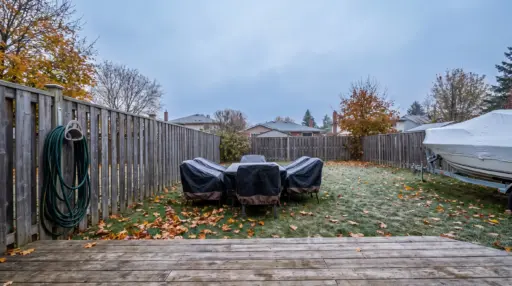
Your deck takes a beating all year, and winter is when that damage tends to show up. Before the first hard freeze, I clear off any furniture, sweep away leaves and debris that hold moisture against the boards, and check for loose nails or screws.
If your deck is due for a fresh coat of sealant, early fall is the time to do it. Once temperatures drop consistently below 50 degrees, sealant doesn’t cure the way it should.
Protect Outdoor Furniture and the Grill
Not everyone has room to store patio furniture indoors, and that’s fine. What matters is giving it some kind of barrier against snow and ice.
- Use fitted furniture covers instead of a loose tarp, which tends to trap moisture underneath.
- Store cushions and pillows somewhere dry, like a garage or shed, rather than leaving them outside.
- Cover the grill and disconnect the propane tank if it has one, storing the tank upright outdoors.
A few years ago I left a cushion out through a wet November and found mildew on it by December. Now I bring the soft stuff inside no matter what.
Drain and Store Hoses and Irrigation Lines
Water left in a hose or sprinkler line will freeze and expand, and that’s usually what cracks the fittings or splits the hose itself. Disconnect hoses from the spigot, drain them completely, and coil them up somewhere protected.
If you have an in-ground irrigation system, it’s worth having it blown out with compressed air before the first freeze. It’s a small cost compared to replacing burst pipes underground.
Take Care of Boats, RVs, and Other Big Equipment
This is the step people forget most, mainly because boats and RVs don’t live right next to the house where you see them every day.
If you keep a boat in the driveway or side yard over the winter, it needs more than a basic tarp. Tarps shift in the wind, pool water in low spots, and rarely seal tight enough to keep snow out of the interior.
That’s why a lot of homeowners in colder climates use shrink wrap for boats instead. It forms a tight seal around the whole hull, which keeps moisture, pests, and debris out of the cabin and away from the engine through the off-season.
The same thinking applies to RVs, trailers, and even riding mowers. Anything with an engine or upholstery benefits from being sealed off from direct exposure to snow and freezing rain.
Check Gutters and Downspouts Before the Cold Hits
Clogged gutters are one of the most common causes of ice dams, and ice dams can force water back up under your roofline. Clear out leaves and debris, and make sure downspouts are directing water away from the foundation rather than dumping it right next to the house.
The Short Version
If you only have an afternoon to spare, focus on the items that cause the most expensive damage when skipped:
- Drain hoses and irrigation lines
- Seal or cover any boat, RV, or large equipment left outside
- Clear gutters and downspouts
- Store cushions and soft furniture indoors
Conclusion
None of this takes a full weekend once you know what you’re looking for. A little time spent in October or November saves a lot of frustration in March, when you’re pulling gear out of storage and hoping it survived the winter in one piece.
Walk your property once before the first hard freeze, work through this list, and you’ll head into spring with a lot less to fix.

Tommy Hardy, an alumnus of the Georgia Institute of Technology with a degree in Mechanical Engineering, has been a go-to figure in residential upkeep and innovation for over 18 years. His career commenced in a leading home appliance manufacturing company, where he mastered the intricacies of household systems. Joining our platform in 2020, Tommy quickly became a reader favorite for his practical and easy-to-follow guides. He took the helm of our DIY section in 2019, consistently delivering content that empowers homeowners. Beyond his professional pursuits, Tommy is a passionate gardener and enjoys woodworking, skills enhancing his hands-on approach to home care.