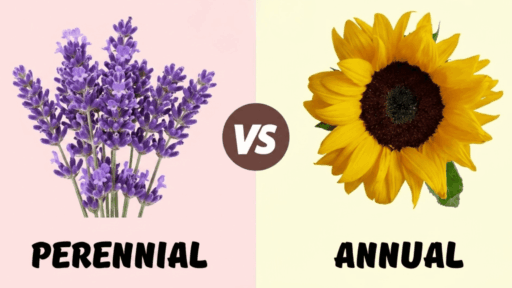
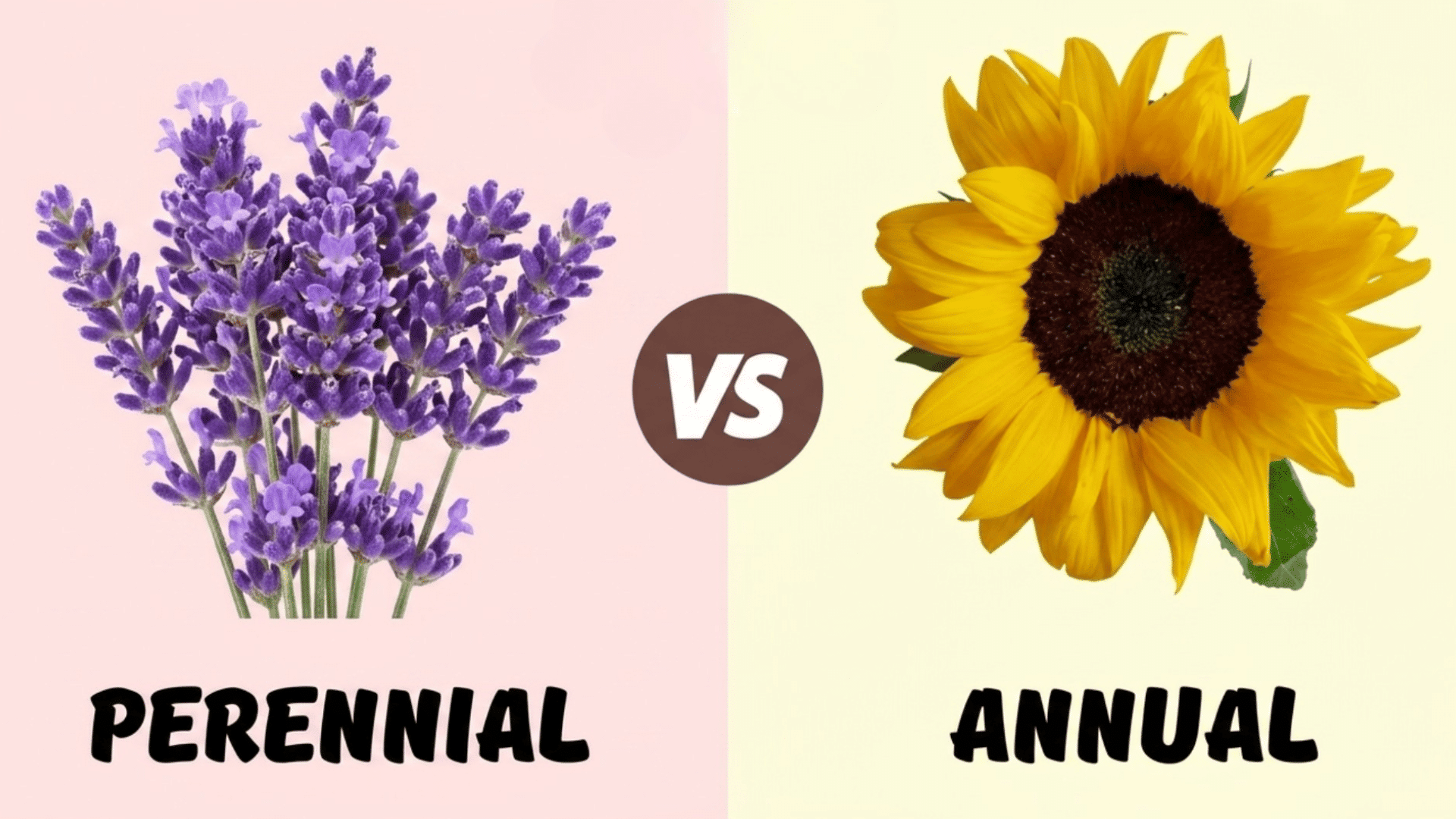

Ever stood in a garden center, staring at plant tags and wondering why some come back every year while others just don’t?
Understanding the difference between perennial and annual plants is one of those things that sounds complicated but really isn’t once someone breaks it down simply.
And honestly, knowing this one thing can completely change how you plan your garden. No more wasted money on plants that vanish after a single season unless, of course, that’s what you’re going for! So let’s get into it.
What are Annual Plants?
Annual plants live fast and complete their entire life cycle in just one growing season.
They start from seeds, grow into full plants, bloom with bright flowers, produce new seeds, and then die within the same period.
This quick process makes them a great choice for adding instant color and variety to a garden or pots. Since they don’t return the next year, fresh seeds need to be planted every season.
Characteristics of Annual Plants
Annual plants come with some pretty handy traits that make them a favorite among both beginner and seasoned gardeners. Here’s what makes them stand out:
- Bright flowers that last longer during the season
- Perfect for filling empty garden spots
- Grow well in containers and garden beds alike
- Great for experimenting with new colors and varieties each season
Types of Annual Plants
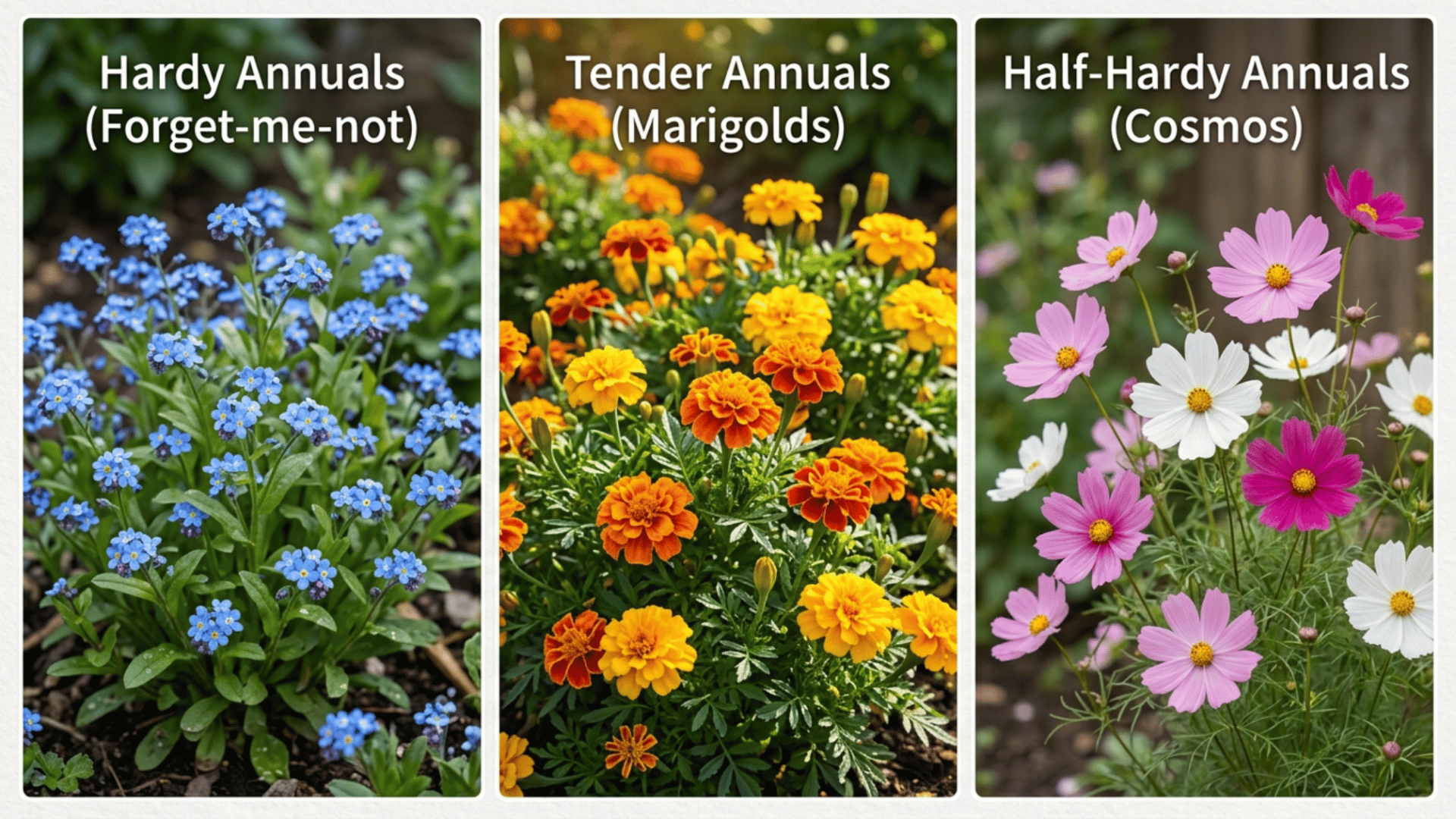
Not all annuals behave the same way, and their performance largely depends on temperature and climate. Here’s a simple breakdown of the three main types:
Type | Also Known As | Temperature Preference | Examples | Key Trait |
Hardy Annuals | Cool-season annuals | Cool to moderate | Forget-me-not, Larkspur | Can tolerate light frost |
Tender Annuals | Warm-season annuals | Warm to hot | Marigolds, Petunias | Need heat; struggle in cold |
Half-Hardy Annuals | In-between annuals | Wide range | Various common garden plants like Cosmos, Sunflowers, and Zinnias | Most adaptable of the three |
What are Perennial Plants?
Perennial plants stay with you for the long run, coming back year after year, unlike short-lived plants.
They grow and bloom during the active season, then slow down or go dormant when conditions are harsh, like in winter.
Once the season changes, they regrow again from the same roots, making them reliable and low-maintenance over time.
Characteristics of Perennial Plants
Perennial plants come with some solid traits that make them a smart, long-term investment for any garden. Here’s what sets them apart:
- Live for more than two years without needing to be replanted
- Deep root systems that make them drought-tolerant
- More cost-effective in the long run since you buy them once
- Spread and multiply over time, filling garden space naturally
- Great for creating a stable, long-lasting garden structure
Types of Perennial Plants
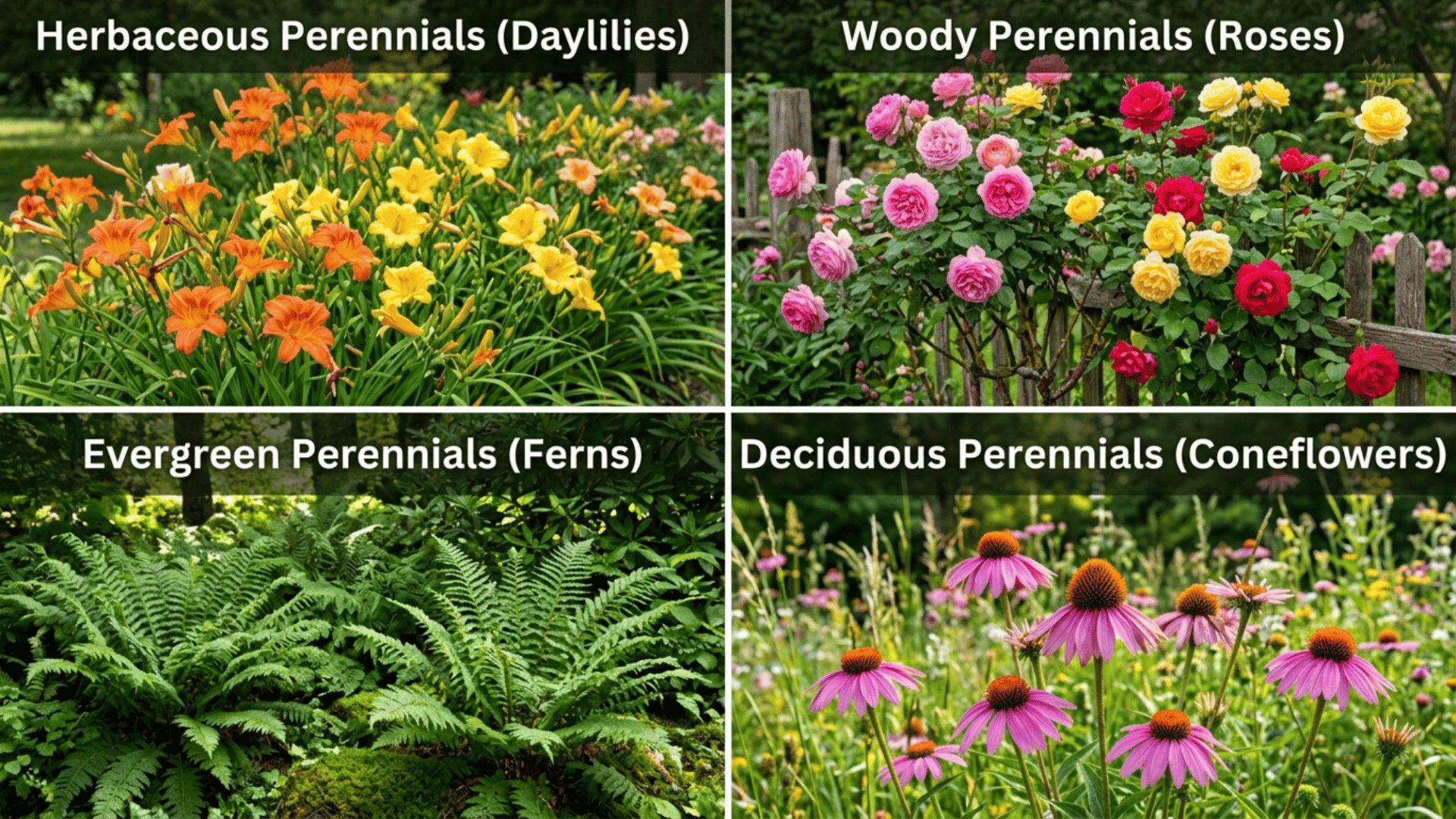
Not all perennials look or behave the same way. Depending on their structure and seasonal habits, they fall into four main categories.
Type | Examples | Key Traits |
Herbaceous Perennials | Daylilies, Hostas, Peonies | Die back to the ground in winter, regrow from roots in spring, with soft, non-woody stems |
Woody Perennials | Roses, Lavender, Hydrangeas | Hard stems that stay alive year-round, do not die back in winter, and grow bigger over time |
Evergreen Perennials | Ferns, Heuchera | Keep their leaves in all seasons, and add constant greenery to a space |
Deciduous Perennials | Coneflowers, Black-eyed Susans | Lose leaves during colder months, go dormant in winter, and regrow leaves in spring |
Difference Between Perennial and Annual Plants
A few more differences can help clear things up and make plant choices easier.
1. Growth Speed
Annuals grow quickly and reach their peak in one season, making them perfect for instant results. You plant them, and in no time, they’re full of blooms and color.
Perennials, on the other hand, take their time. They grow more slowly in the beginning but build stronger roots and fuller plants over the years.
In the end, annuals give fast results, while perennials focus on steady, long-term growth.
2. Water Needs
Annuals usually need more frequent watering because their roots stay shallow and dry out faster. This means they need regular attention, especially in hot weather.
Perennials develop deeper roots over time, which helps them hold moisture better and survive with less watering once established.
So, annuals need more regular care, while perennials become easier to manage as they mature.
3. Time to First Bloom
Annuals are quick to bloom, often showing flowers within weeks of planting. This makes them a great choice for anyone who wants fast color in their space.
Perennials take more patience, as many of them need a full season or even longer to bloom properly. Over time, though, they reward that patience with consistent blooms.
In short, annuals bloom quickly, while perennials take longer to bloom but last longer.
4. Garden Planning
Annuals are ideal if the goal is to change the look of a garden often. They allow flexibility to try new colors and styles each season.
Perennials work better for building a stable layout since they return year after year and fill space over time.
Both have their place, but it depends on the plan. Annuals suit short-term changes, while perennials help create a long-lasting garden setup.
Perennial Vs Annual: Which One Should You Choose
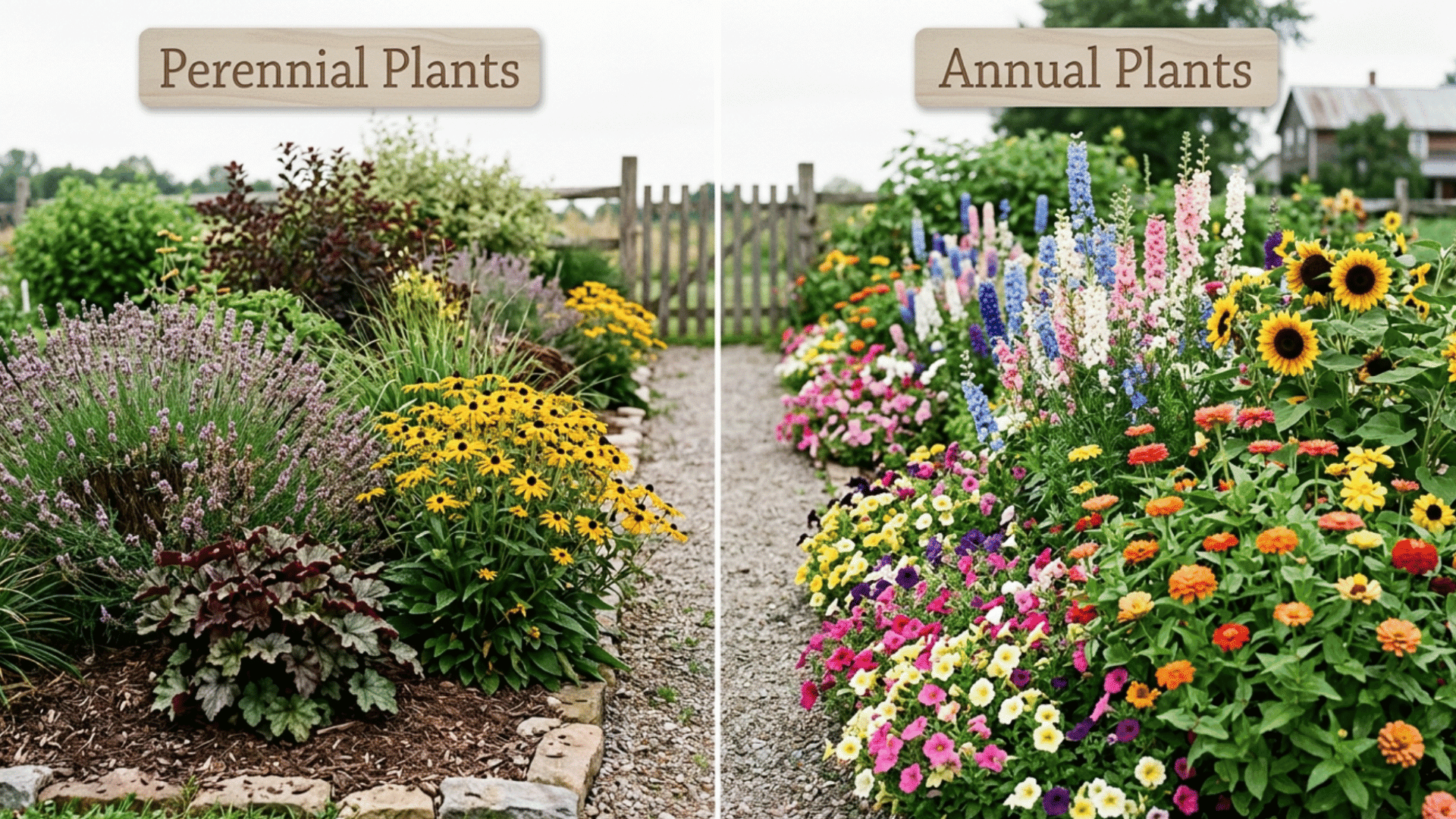
Choosing between annuals and perennials really comes down to what you want from your garden. Some people love quick results and change, while others prefer something that grows over time with less effort.
Choose Annuals If You Want:
- Quick Color: Annuals bloom fast and fill your space with bright flowers within weeks, making them perfect for immediate impact.
- Seasonal Variety: You can switch plants each season, keeping your garden looking fresh and different year-round.
- Easy for Beginners: They are simple to grow and give quick results, which helps build confidence if you’re just starting out.
- Flexible Design: Great for trying new layouts, colors, and combinations without long-term commitment.
Choose Perennials If You Want:
- Long-Term Growth: These plants come back every year, so you don’t need to start from scratch each season.
- Low Effort Over Time: Once established, they require less care than annuals, especially in watering and replanting.
- Consistent Garden Look: They help create a steady, structured garden that doesn’t change too much from year to year.
- Better Value Over Time: You invest once, and they keep growing, which makes them more cost-effective in the long run.
Final Thoughts
At the end of the day, your garden is a reflection of how you like to grow things. Some people love the freedom of switching things up every season, and that’s where annuals shine.
Others prefer planting once and watching something come back stronger each year, and that’s the perennial way of doing things.
The difference between perennial and annual isn’t really about which one is better. It’s about what works for your space, your budget, and honestly, your patience level too.
So take this knowledge, head to your nearest nursery, and start building a garden that actually fits your lifestyle.

With a Master’s in Landscape Architecture from the University of Virginia, Sophia Stephenson has dedicated the last 20 years to creating and maintaining vibrant outdoor spaces. Her professional journey started in landscape design, where she gained a reputation for innovative and sustainable approaches. Sophia became a part of our editorial team as a freelancer in 2019, offering a fresh perspective on outdoor living. Since 2020, she has been the chief for our outdoor design content, blending aesthetic appeal with environmental stewardship. In her leisure time, Sophia is a keen photographer, capturing the beauty of natural landscapes, a hobby that complements her professional expertise.