
Finding the right chicken run ideas becomes urgent the moment a flock starts running out of space. A cramped run is a real problem, and the cost of fixing it stops most people from taking action
The truth is, building a safe and functional chicken run does not have to drain the budget. There are practical chicken run ideas that work with basic tools, affordable materials, and simple planning.
This blog covers real, budget-friendly options that are easy to follow and actually get the job done.
What Makes a Good Chicken Run
A good chicken run keeps your chickens safe, comfortable, and active throughout the day. The right setup also makes maintenance easier and helps prevent common issues.
- Strong, secure fencing: Use sturdy wire mesh to keep predators out and keep chickens safely enclosed. Proper fencing reduces the risk of escapes and attacks.
- Enough space to move around: Chickens need room to walk, scratch, and stretch their wings. A spacious run keeps them healthy and less stressed.
- Weather protection: Add a covered area to protect chickens from rain, harsh sun, and wind. This helps maintain their comfort year-round.
- Easy access for cleaning: A well-designed run should allow you to clean and maintain it without difficulty. This keeps the space hygienic and reduces odor.
- Good ventilation: Proper airflow prevents moisture buildup and keeps the environment fresh. It also reduces the risk of respiratory issues.
- Safe flooring or ground cover: Use materials like sand, grass, or wood chips to keep the ground clean and dry. This also makes it easier for chickens to scratch naturally.
Easy Chicken Run Ideas You Can Build at Home
Not every chicken run idea requires advanced skills or expensive materials. The options below are based on real builds, simple methods, and practical choices that work for most backyard setups.
1. Post and Wire Chicken Run
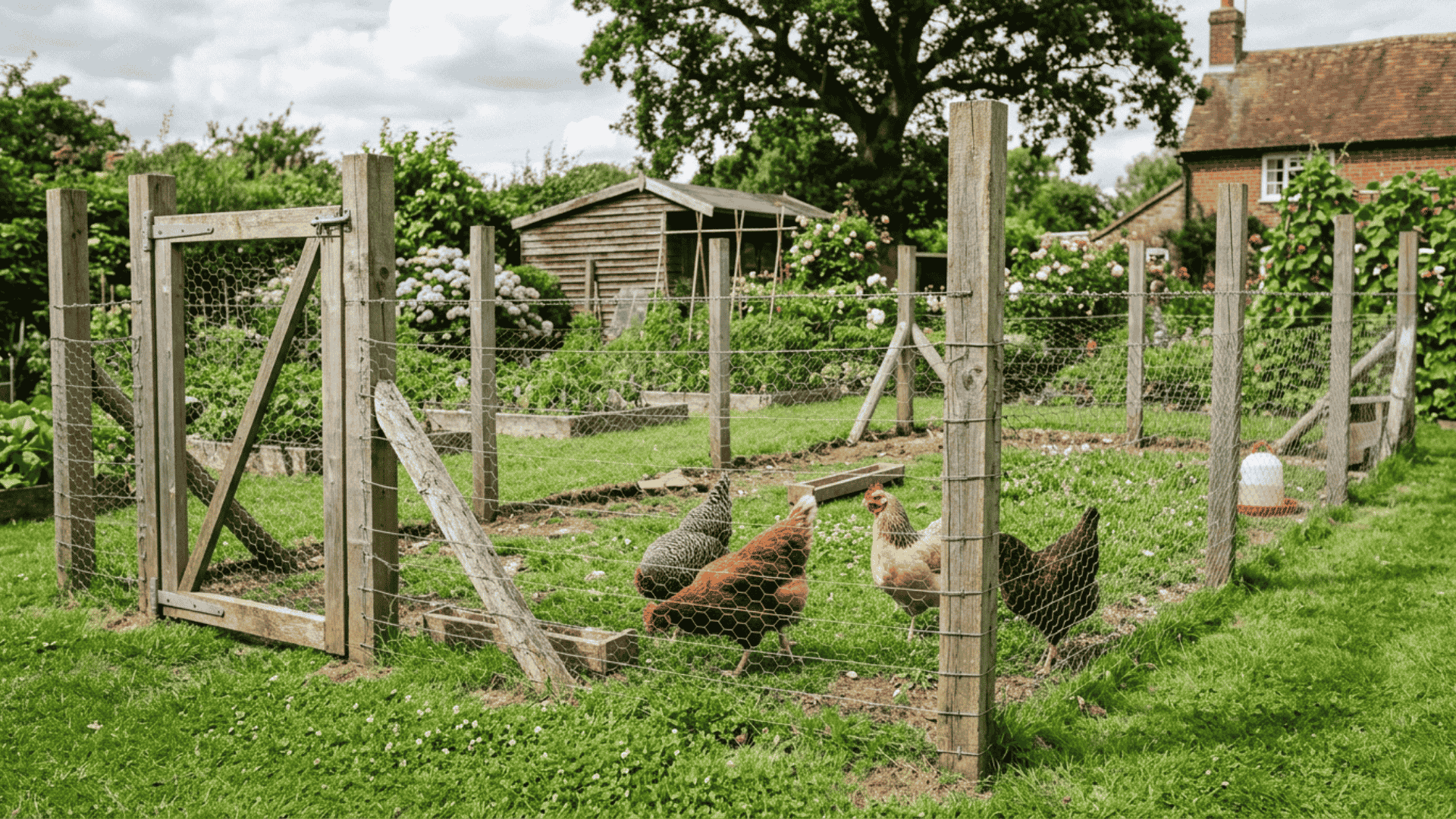
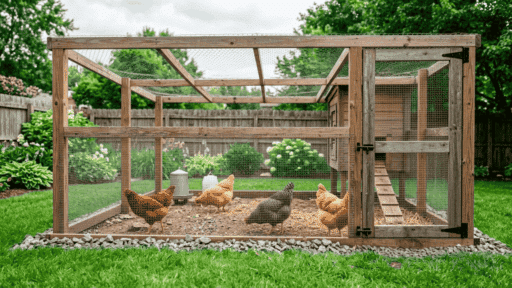
A post and wire chicken run is one of the most straightforward chicken run ideas out there.
It uses vertical posts set into the ground with wire fencing stretched around the perimeter, creating a secure and open enclosure.
The setup is simple to follow, works well for most flock sizes, and can be completed over a weekend with basic tools. It is the most practical starting point for anyone who wants results without overcomplicating the build.
2. Chicken Run with Landscape Timber Posts
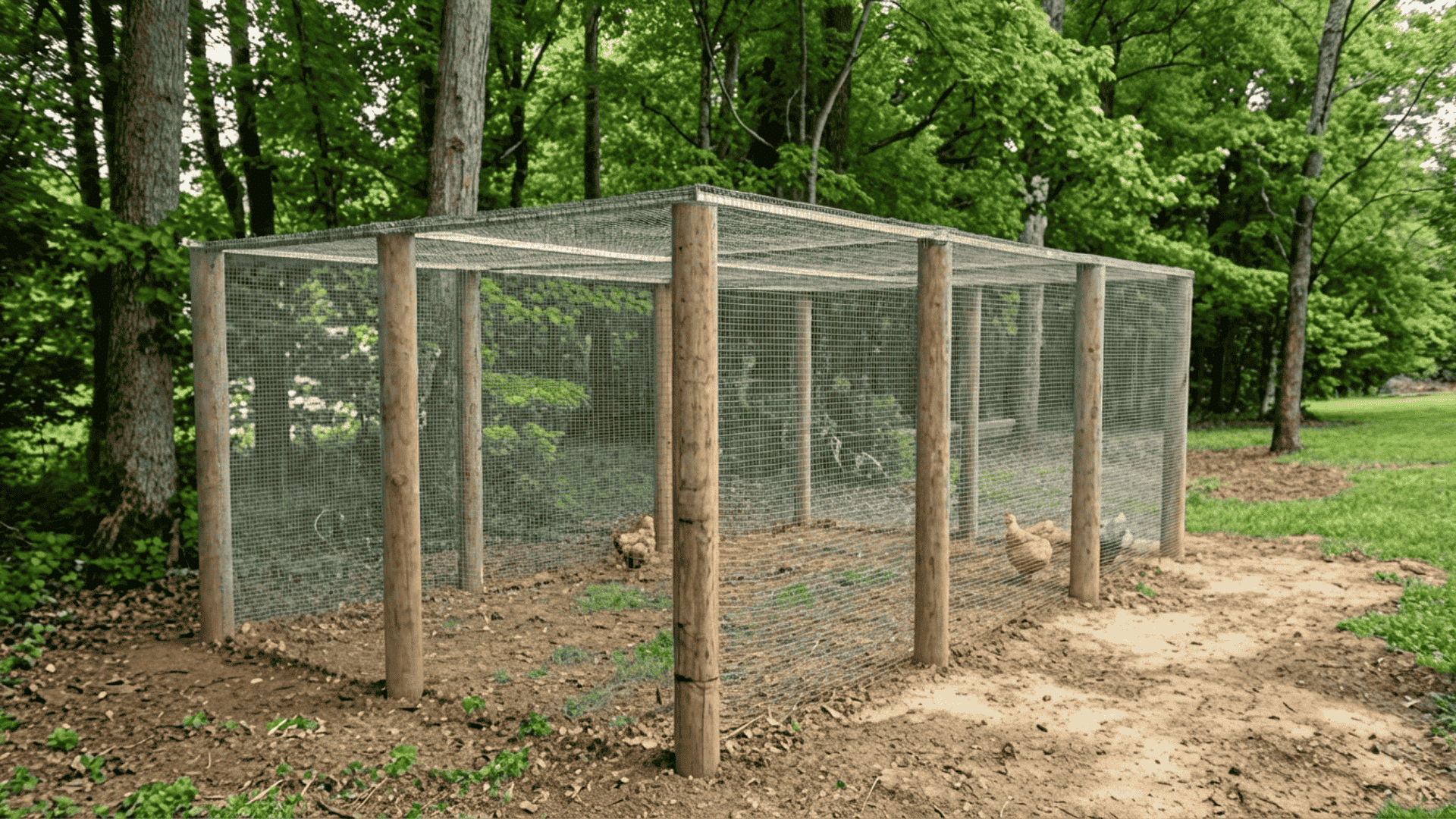
One of the smartest budget-friendly chicken run ideas is swapping standard 4×4 posts for landscape timbers. At around five dollars per post compared to seventeen dollars for a 4×4, the savings add up quickly across an entire build.
Landscape timbers are pressure-treated, strong, and built to last just as long as heavier posts. A solid chicken run does not always require the most expensive materials.
3. Chicken Run with Bottom Hardware Cloth
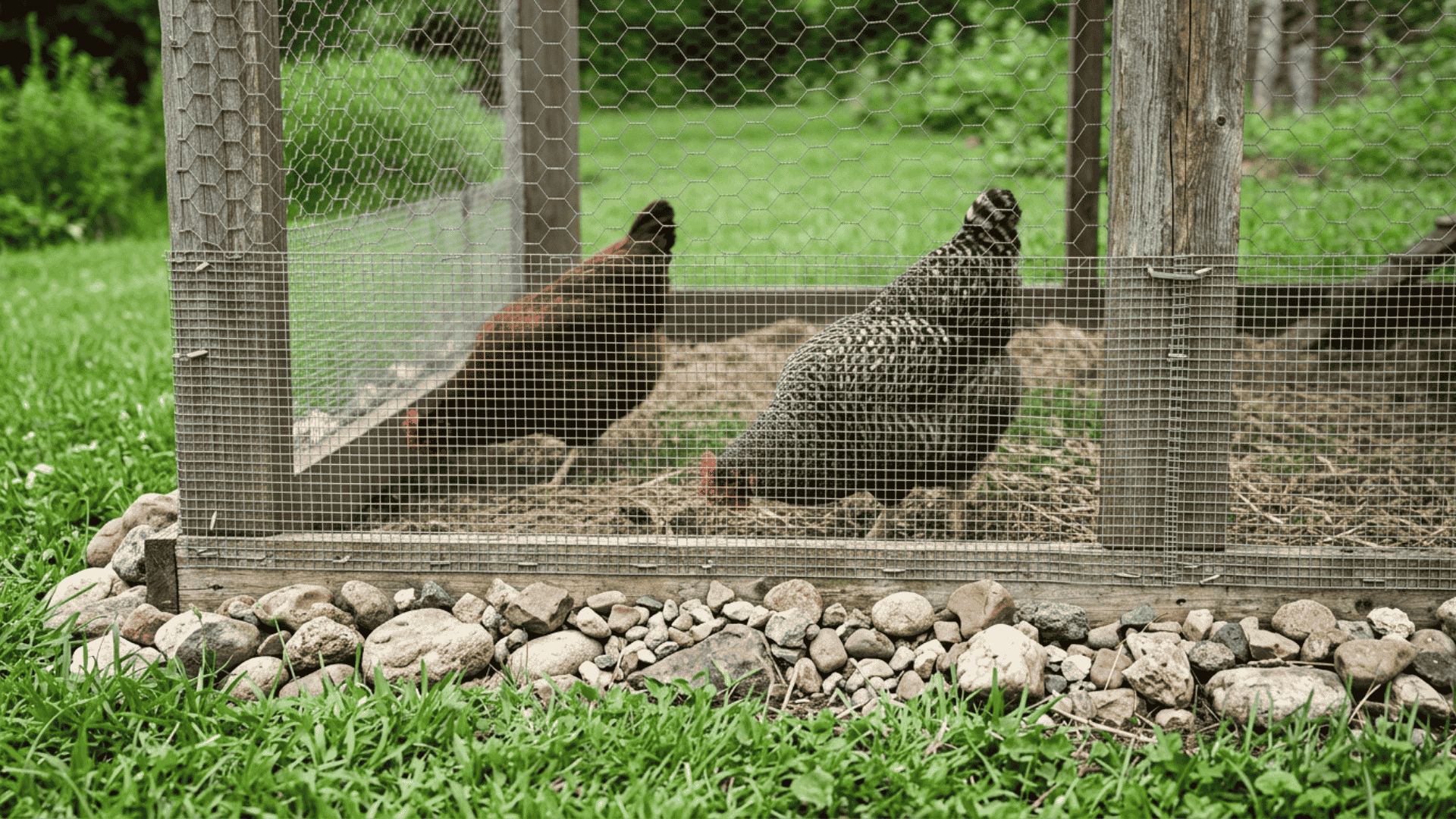
Wire fencing alone is not always enough to keep predators out.
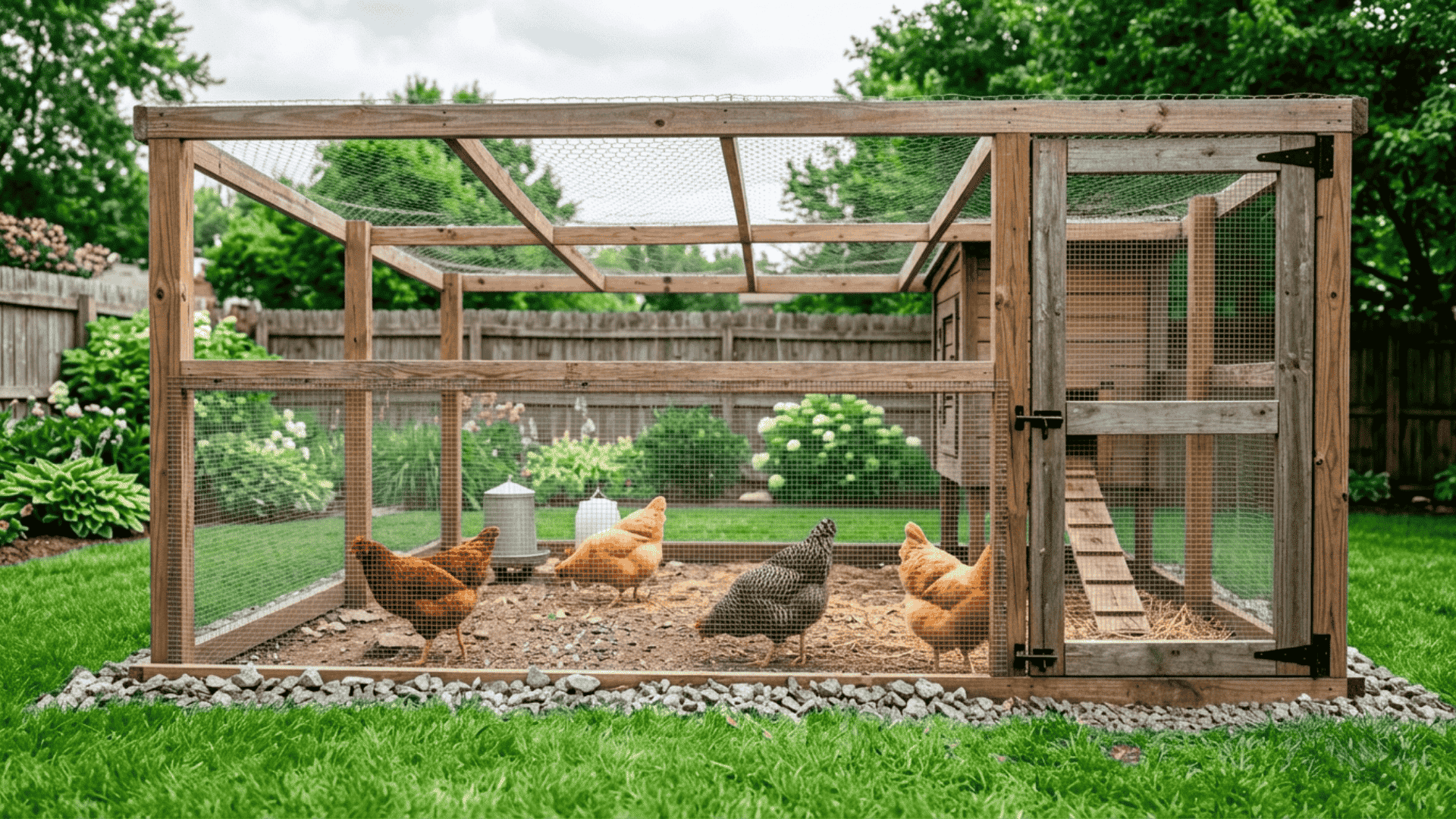
Adding hardware cloth along the bottom two feet of the run creates a much tighter barrier that stops animals from reaching inside or pulling chickens through the gaps.
It does not need to cover the entire enclosure. Using it only at the lower section keeps the cost reasonable while still adding serious protection where it matters most.
4. Chicken Run with Covered Top
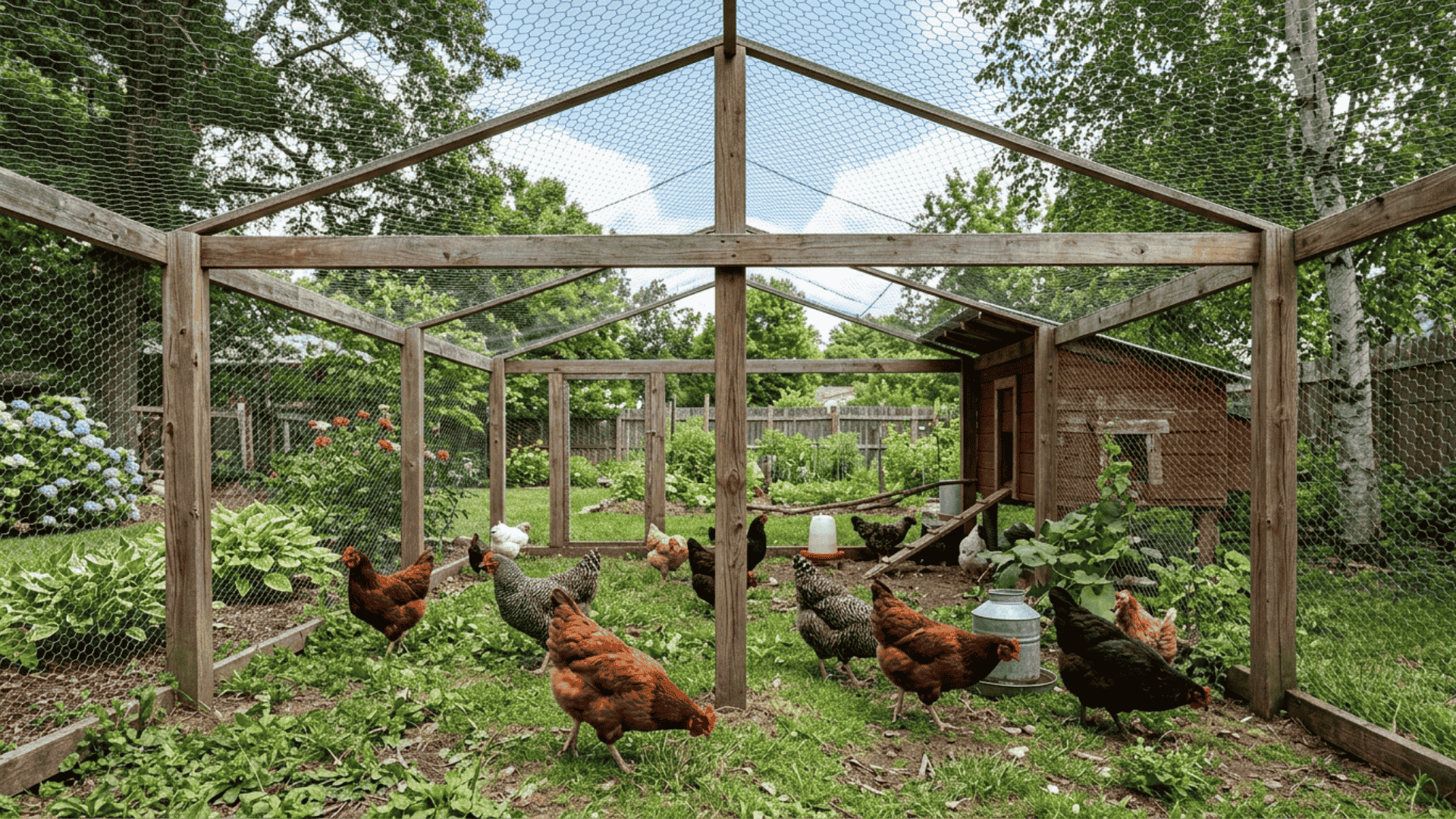
Leaving the top of a chicken run open is one of the most common mistakes backyard flock owners make. Hawks and other birds can easily get in and cause real damage fast.
Covering the top with lightweight chicken wire is a straightforward fix that most people overlook.
Adding a center post and a beam across the middle keeps the wire from sagging over time.
5. Reinforced Frame Chicken Run
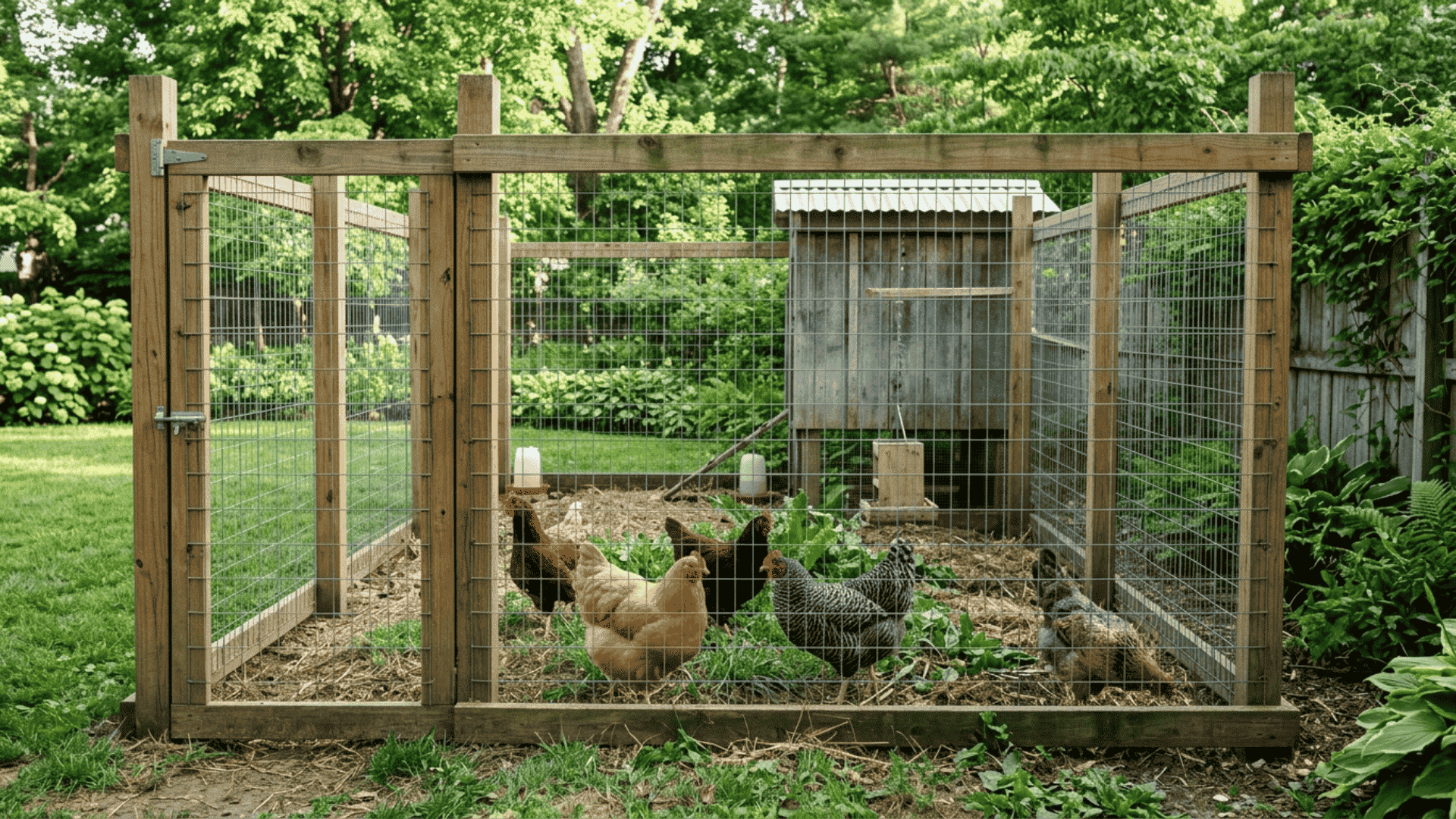
A basic wire enclosure can lose shape over time without proper support.
Running a horizontal board along the top and another along the ground level adds stability to the whole structure.
Deck boards cut in half work perfectly for this and cost less than standard two-by-fours. It is a simple addition that keeps the entire structure firm and upright for much longer.
6. Walk-In Chicken Run
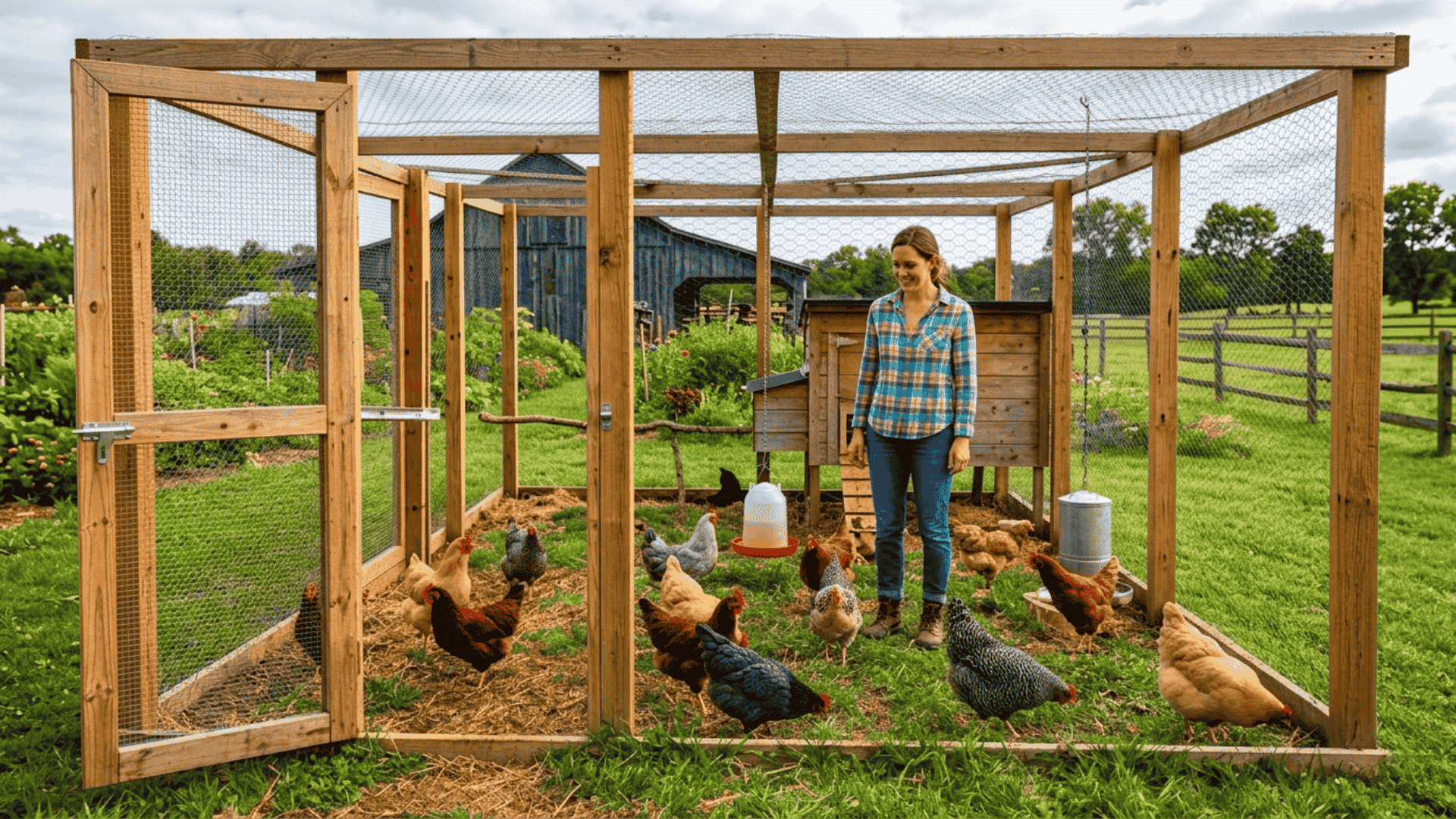
Not all chicken run ideas are about safety alone. Some focus purely on making daily life easier for the owner.
Increasing the height of the posts to around six feet means walking in and out without bending over every single time.
It removes a small but daily inconvenience that adds up quickly. It is especially useful for larger runs where regular maintenance is part of the routine.
7. Chicken Run with Ground Rock Barrier
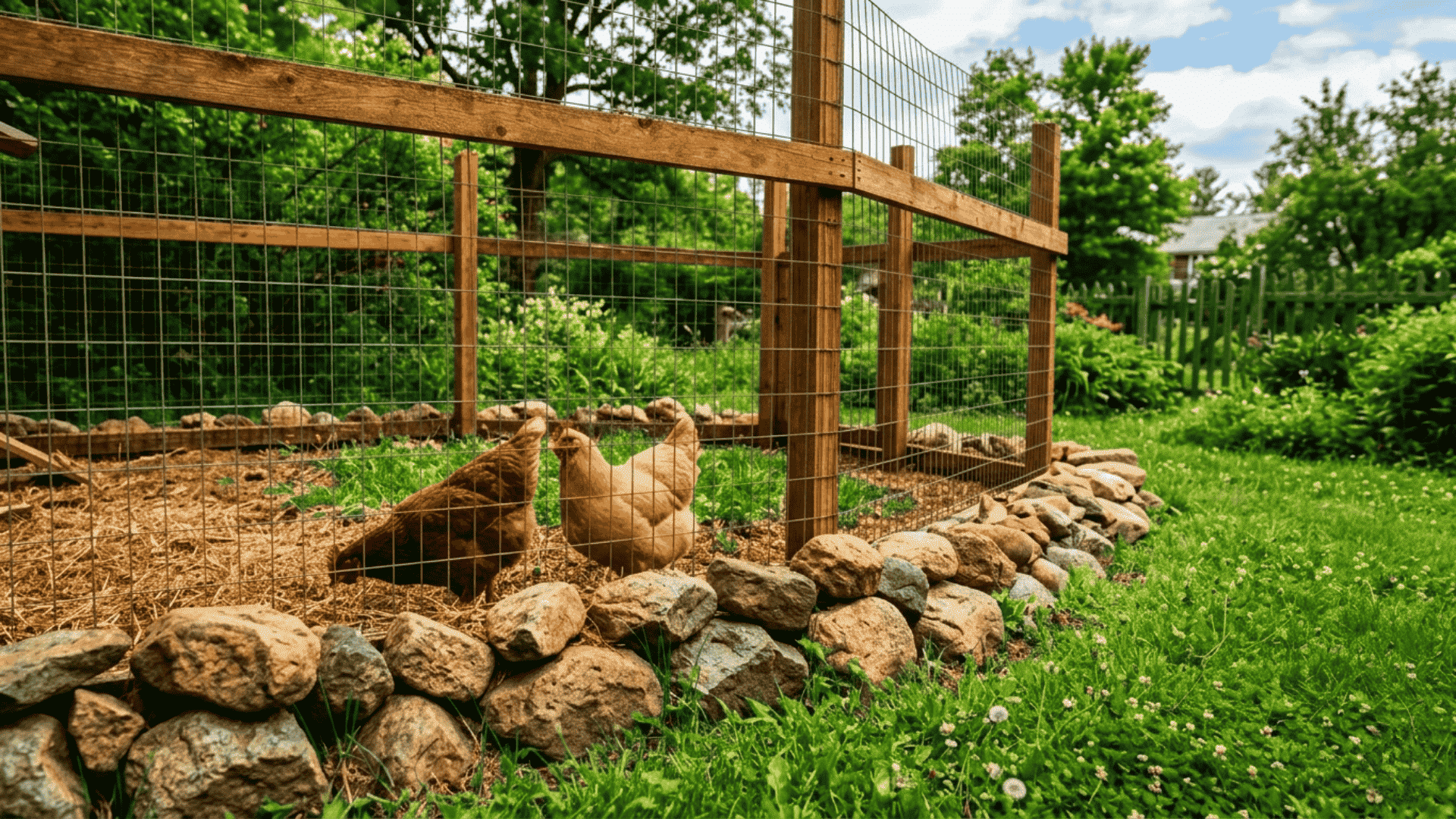
Digging animals are harder to stop than most people expect. Placing rocks along the outside perimeter is a simple and effective way to stop this.
As an animal tries to dig, the rocks shift and fill the hole back in. Larger rocks work better for this.
They can be sourced from a local landscape supply by the bucket, which keeps the cost low.
8. Chicken Run with Layout Marking Method
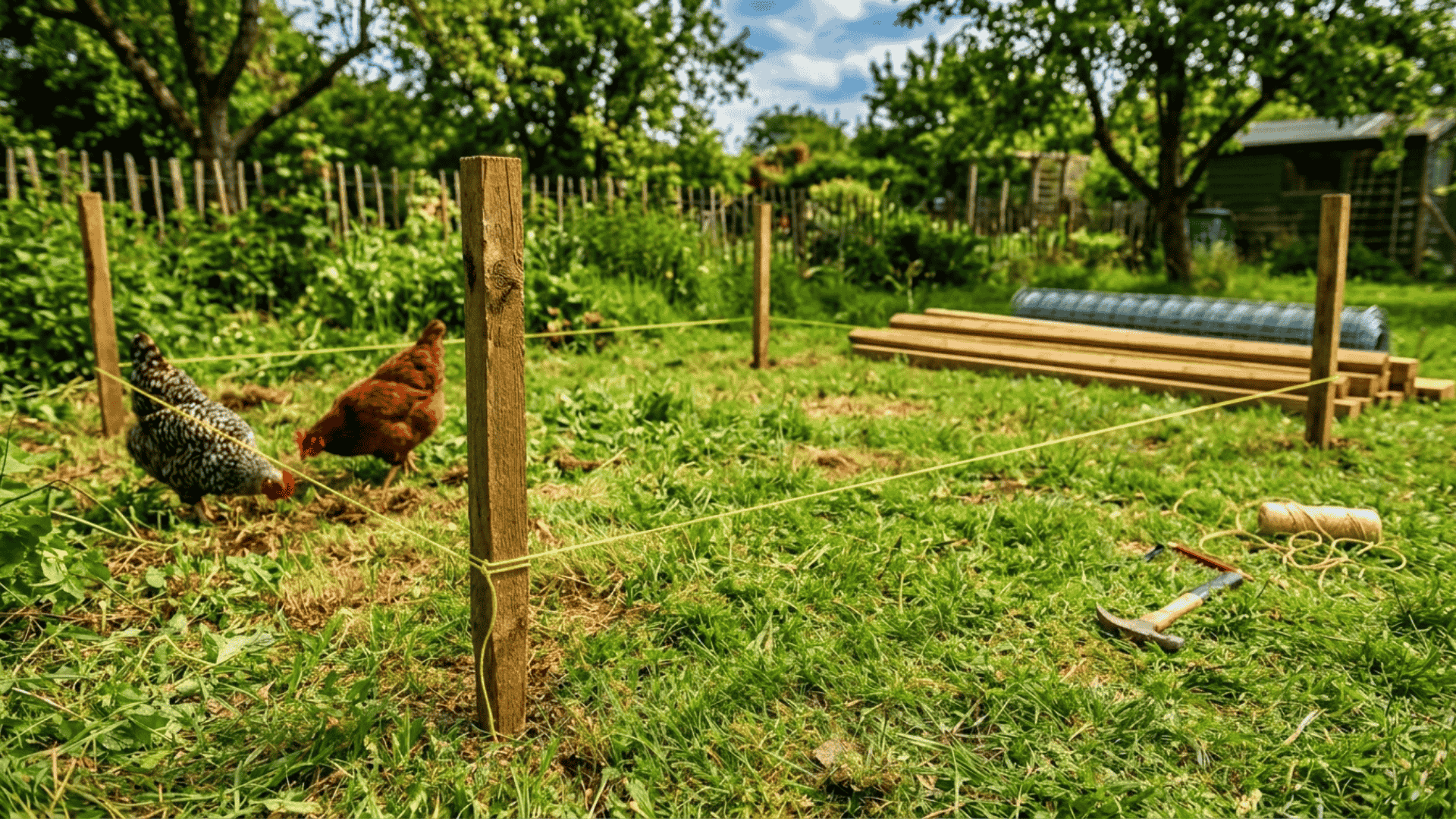
Before any post goes into the ground, planning the layout properly saves a lot of time and frustration later.
Using stakes at each corner with a string stretched between them gives a clear visual of the size and shape before anything is built.
This is one of those chicken run ideas that requires no extra budget and makes the whole build go much more smoothly from start to finish.
9. Extended Chicken Run for More Space
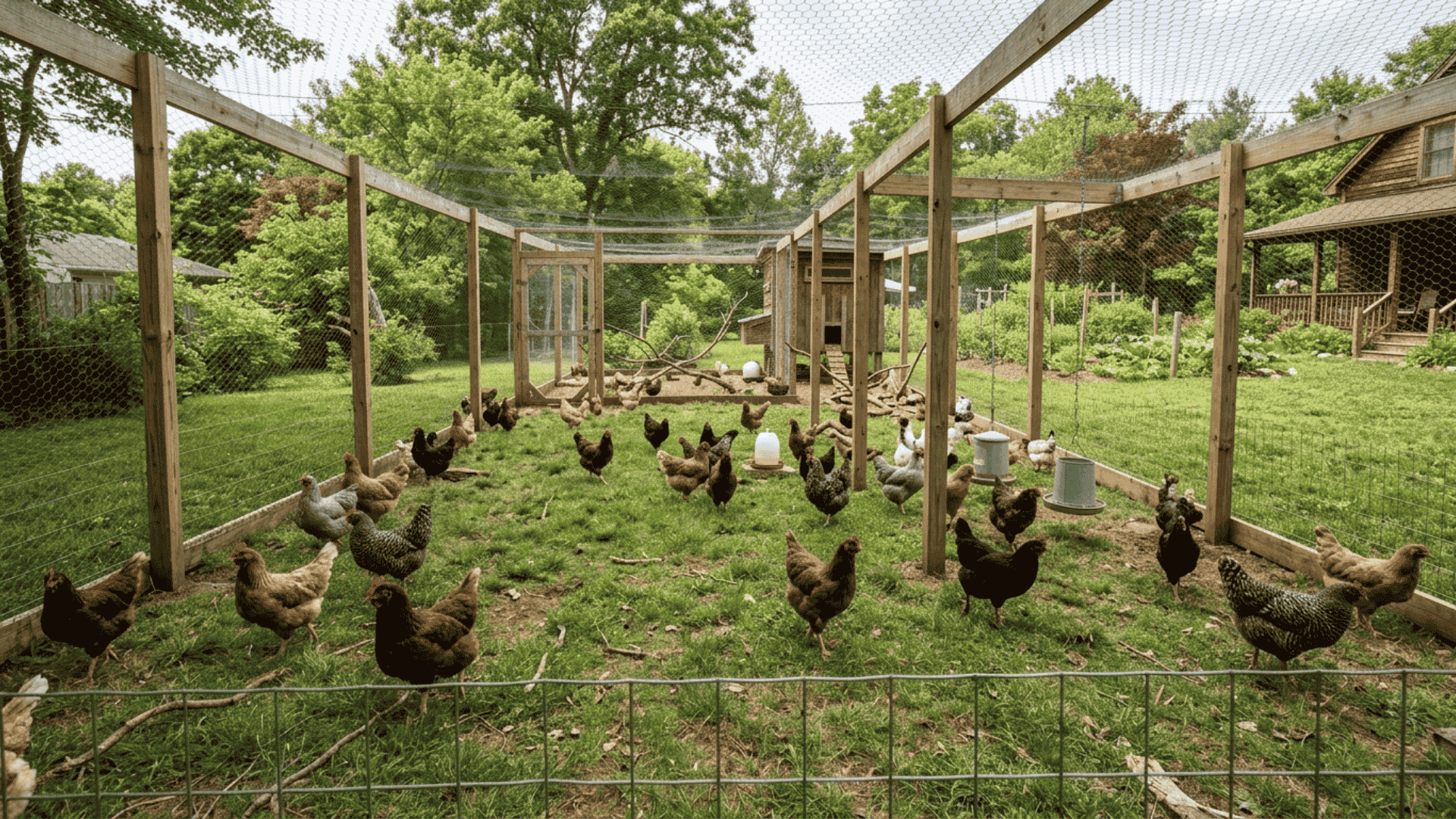
Crowding is a real problem in smaller runs and directly affects how chickens behave toward one another. When space is tight, chickens tend to get aggressive and start picking at each other.
Expanding with this chicken run idea gives each bird enough room to move freely, reduces stress within the flock, and makes the whole flock easier to manage day to day.
More space also means less damage to the ground inside the run.
How to Build a Simple Chicken Run: Quick Guide
Building a chicken run gives your chickens more space while keeping them safe from predators. Follow these simple steps to create a secure and budget-friendly enclosure.
Tools & Materials Needed
| Item | Use |
|---|---|
| Measuring Tape & String | Mark layout |
| Post Hole Digger | Dig holes |
| Posts/Timbers | Support structure |
| Fencing | Enclosure |
| Chicken Wire | Top cover & protection |
| Screws/Staples | Fix materials |
| Level | Keep posts straight |
| Rocks | Stop digging predators |
Steps to Follow
- Step 1 – Measure and Mark The Area: Measure the space, place stakes at corners, and run string to outline the layout.
- Step 2 – Dig Post Holes: Dig holes 2–2.5 feet deep along the marked lines for each post.
- Step 3 – Set the Posts: Place posts in holes, backfill with dirt, and use a level to keep them straight.
- Step 4 – Install Fencing: Wrap fencing around the posts and secure it tightly to form the enclosure.
- Step 5 – Add Bottom Protection: Attach smaller mesh or chicken wire along the lower section to block predators.
- Step 6 – Strengthen With Boards: Fix wooden boards along the top and bottom edges for added support.
- Step 7 – Cover the Top: Install chicken wire across the top to protect from aerial and climbing threats.
- Step 8 – Secure Wire Seams: Overlap and tie wire sections together to avoid gaps.
- Step 9 – Create Coop Access: Open a doorway between the coop and the run for easy chicken movement.
- Step 10 – Level the Ground: Rake and smooth the ground inside to prevent deep digging spots.
- Step 11 – Add Perimeter Rocks: Place large rocks around the outside base to stop animals from digging underneath.
Check out a full video-based tutorial below:
Final Thoughts
Building a safe and functional space for a flock does not require a big budget or professional skills. The chicken run ideas covered in this blog prove that the right materials, a clear layout, and a few practical steps are all it takes.
Every option in this guide is built around one simple goal: keeping the flock safe without overspending.
Start with the idea that fits the available space and budget. Get the layout right, use the right materials, and the results will speak for themselves.

With a Master’s in Architecture from the University of California, Berkeley, Alexander Martin has dedicated the last 18 years to enhancing outdoor living through thoughtful and robust structure design. His career kicked off in urban planning, giving him a unique perspective on integrating structures into diverse environments. In 2019, Alexander brought his expertise to our website, offering insights into creating versatile outdoor spaces. Since then, he has been the lead advisor for our outdoor design projects and is known for his ability to merge functionality with environmental consciousness. Alexander enjoys rock climbing outside of work and participates in community development projects, activities that reflect his passion for the outdoors and sustainable design.