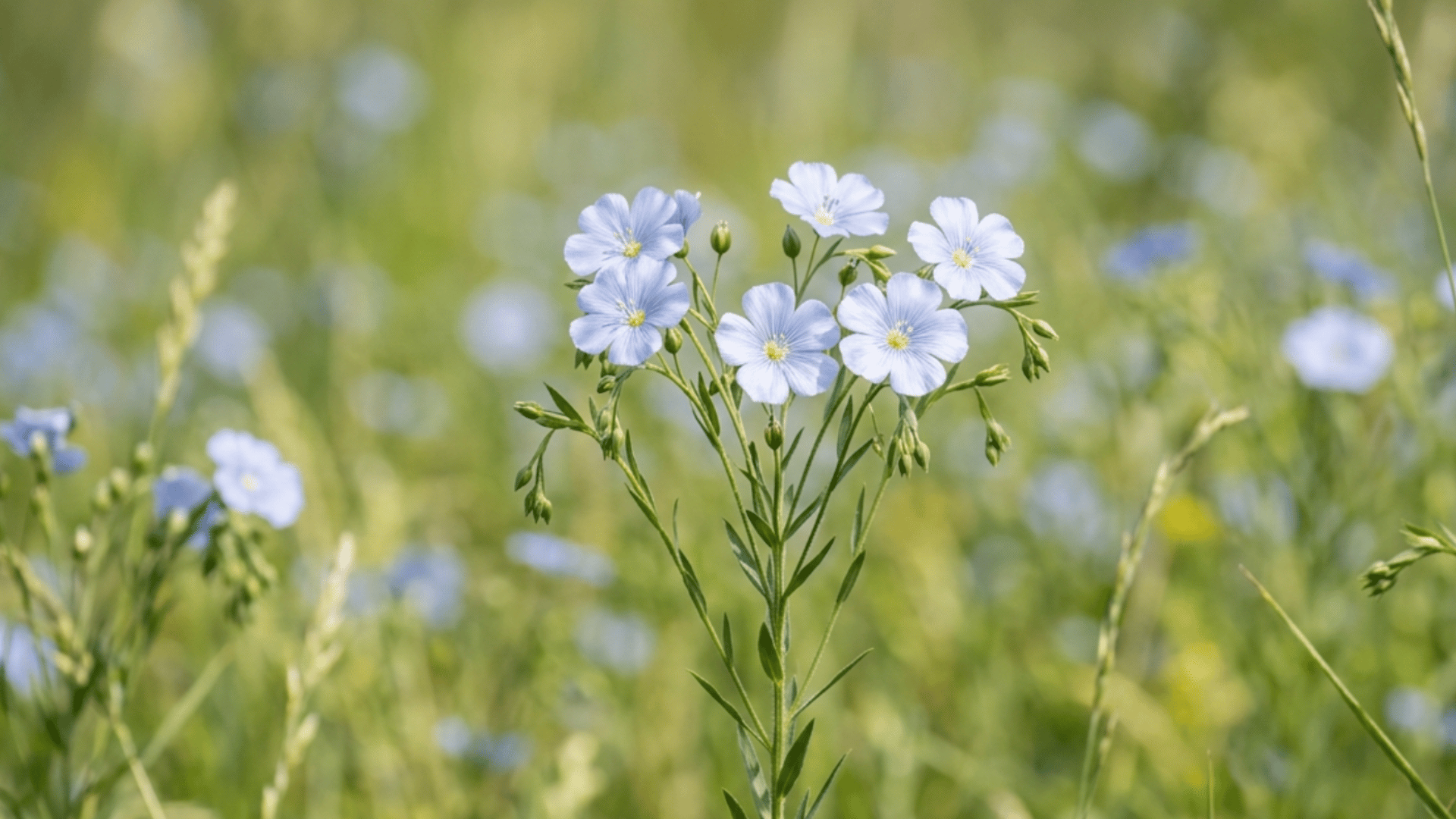

Ever wondered where that breezy, high-end fabric in your closet actually comes from? It all starts with the linen plant. While we usually associate it with summer suits and fancy tablecloths, this hardy crop is a true multitasker.
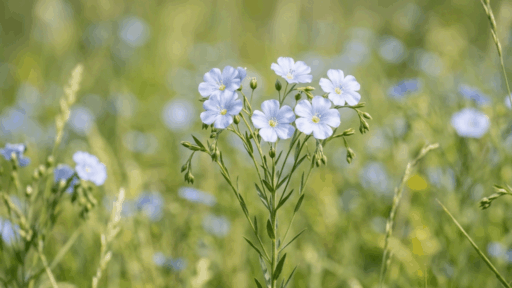
From its dainty blue flowers to the tough fibers tucked inside the stalk, it’s an interesting species to get to know. It is eco-friendly, strong, and surprisingly versatile for a plant that looks so delicate in the field.
In this blog post, you will read about how this plant grows, its unique characteristics, and the many ways we use it today.
Basics of Linen Plant
The linen plant, also known as the flax plant, is a small but highly useful plant grown for both its fibers and seeds. Its scientific name is ‘Linum usitatissimum’, which means “most useful,” and that name fits well.
It’s called the linen plant because its fibers are used to make linen fabric, a material known for its strength and breathability.
This plant has been grown for thousands of years and still holds value today for its role in clothing, nutrition, and eco-friendly products.
Physical Characteristics of the Linen Plant
This plant is simpler than you’d expect, but don’t let that fool you. Here’s what it actually looks like up close:
- Height & Stems: It grows to 30-100 cm tall, with smooth, slender stems that stand perfectly upright.
- Leaves: The leaves are narrow, lance-shaped, and deep green, arranged alternately along the stem in a clean, orderly way.
- Flowers: It produces delicate 5-petal blooms in pale blue, white, or purple, but they only open in the morning light and drop by afternoon.
- Seeds: The seeds, commonly known as flaxseed or linseed, are small, brown or golden, and sit neatly inside round capsules.
- Root System: Its roots are shallow and fibrous, which makes it naturally well-suited to loose, well-drained, loamy soils.
- Stem Anatomy: Inside the stem, a ring of fibers wraps between the bark and the woody core, and that’s exactly where your linen fabric comes from.
Types of Linen Plants
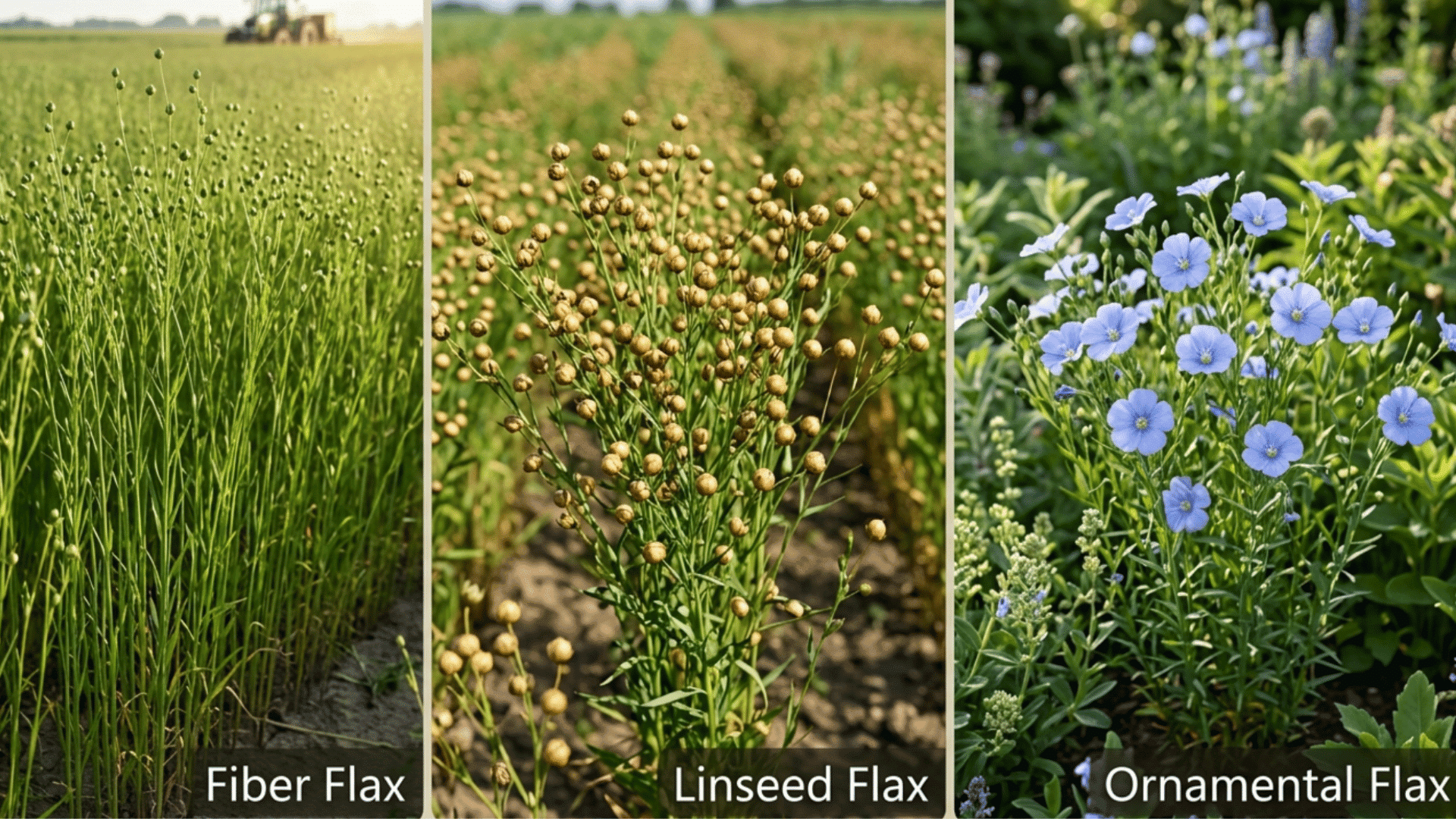
Not all linen plants are grown for the same purpose. Depending on what farmers need, different varieties of the flax plant are cultivated around the world. Here’s a quick look at the three main types:
| Type | Primary Use | Key Trait |
|---|---|---|
| Fiber Flax | Textile production | Long, fine stems are ideal for spinning into linen fabric |
| Linseed Flax | Oil and seed extraction | Shorter stems but produces more seeds and oil |
| Ornamental Flax | Garden decoration | Grown purely for its delicate, colorful blooms |
What is This Ancient Crop Actually Used For?
Most people only associate the flax plant with fabric, but honestly, it does so much more than that. Here’s a look at all the ways this incredible plant shows up in everyday life.
- It covers textiles like fashion, bed linen, table linen, and industrial canvas, making it one of the most widely used natural fiber crops.
- The seeds are packed with omega-3 fatty acids and show up in everything from morning smoothies to daily health supplements.
- Linseed oil from the plant is used directly in paints, varnishes, linoleum flooring, and printing inks.
- Long before modern materials existed, flax was the primary source of high-quality paper and sturdy rope.
- After oil extraction, the leftover linseed meal gets used as a nutritious feed for livestock, so nothing goes to waste.
- Painters have trusted fine linen canvas for centuries because of its strength, durability, and clean surface.
- Even after harvest, the roots left behind naturally enrich the soil for up to six to seven years.
Best Growing Conditions for the Linen Plant
The flax plant is easy to grow, but it does best under the right conditions. It prefers cool, temperate climates and is commonly grown in countries like France, Belgium, and the Netherlands.
The plant grows well in deep, well-drained loamy soil, though it can handle slightly poorer soil better than crops like cotton.
It doesn’t need much watering and relies mostly on natural rainfall, making it a low-maintenance option. The full growing cycle takes around 100 days from sowing to harvest.
Instead of cutting, plants are pulled from the roots to keep fibers long and strong. Soil and climate also affect fiber quality, underscoring the importance of growing conditions.
From Linen Plant to Linen Fabric: Extraction Process
Turning a simple plant into the fabric you know and love takes more steps than you’d think. It’s an interesting process that’s been refined over thousands of years. Here’s how it all comes together, one step at a time:
Step 1: Retting
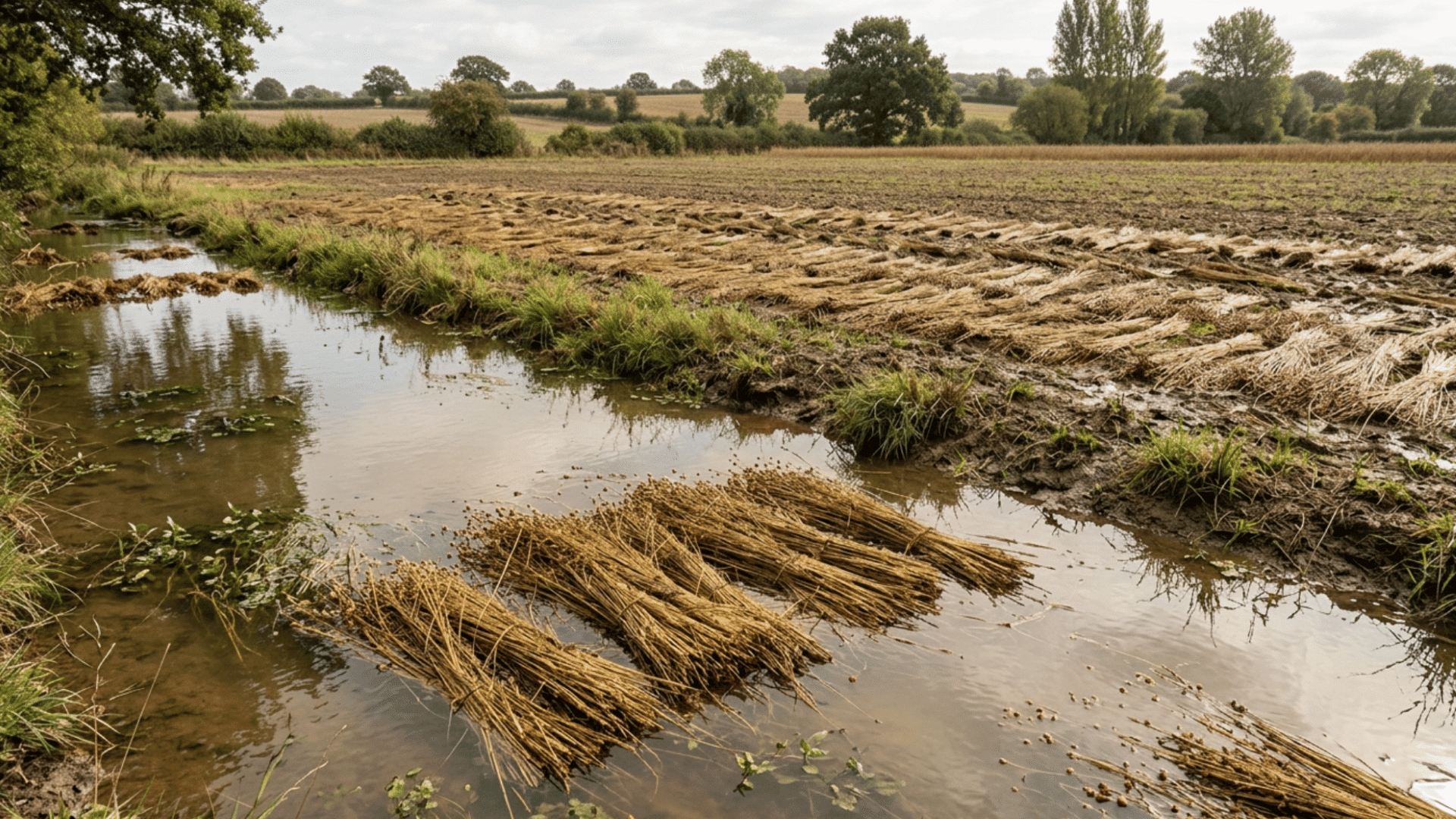
This is where it all begins. Once the plant is harvested, the stems are either soaked in water or laid flat in open fields. The goal is to loosen the fibers from the woody part of the stem.
This can be done using water, morning dew, or even running streams. It’s a slow process, but getting it right at this stage makes a big difference to the final quality of the linen.
Step 2: Drying and Grassing
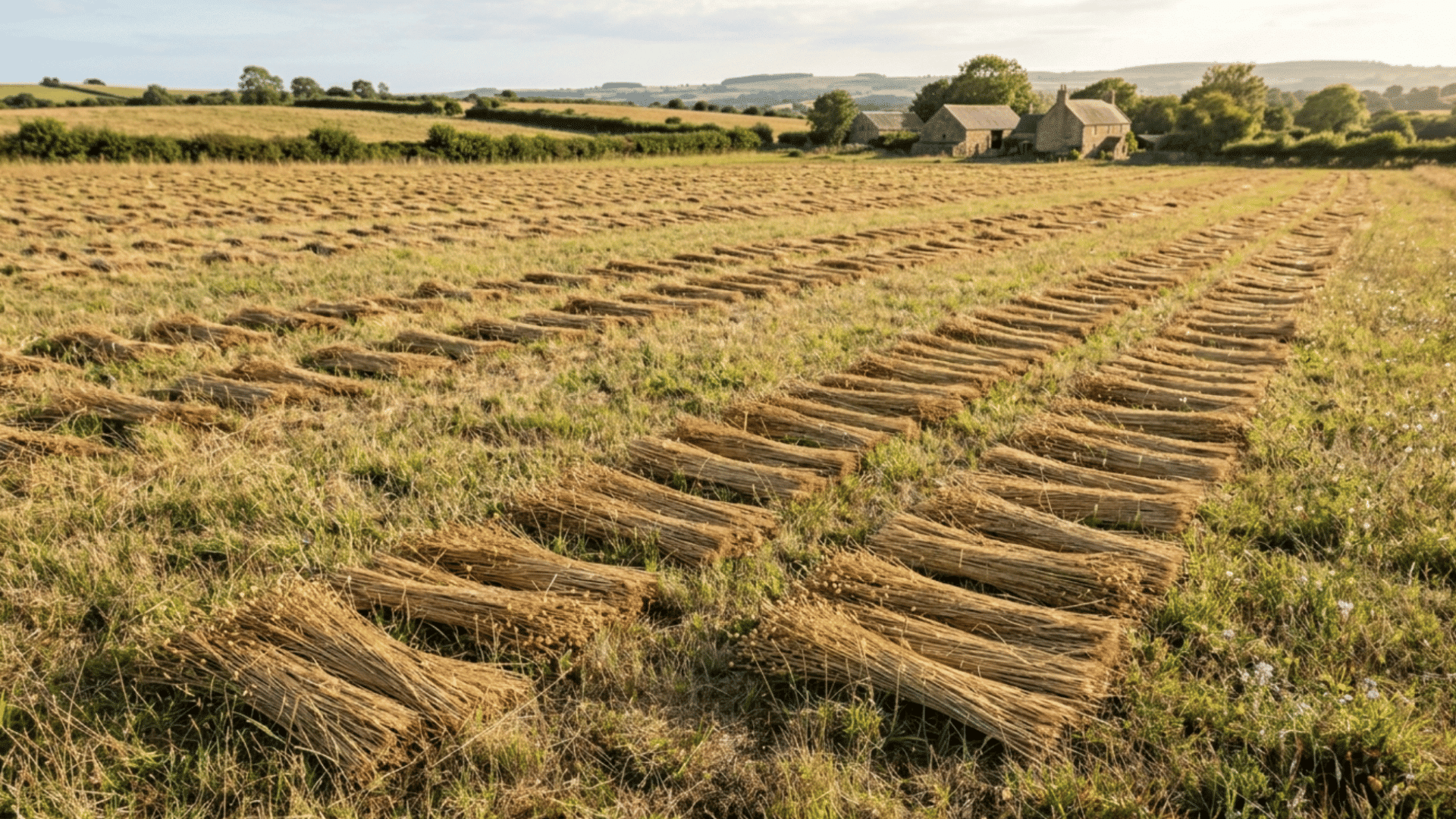
After retting, the bundles are spread out across open fields to dry naturally. This stage is called grassing, and it’s as simple as it sounds.
The plants dry on one side first, then get turned over so the other side can dry too. Once fully moisture-free, they’re stacked and left to age for a few more weeks before moving to the next stage.
Step 3: Scutching and Hackling
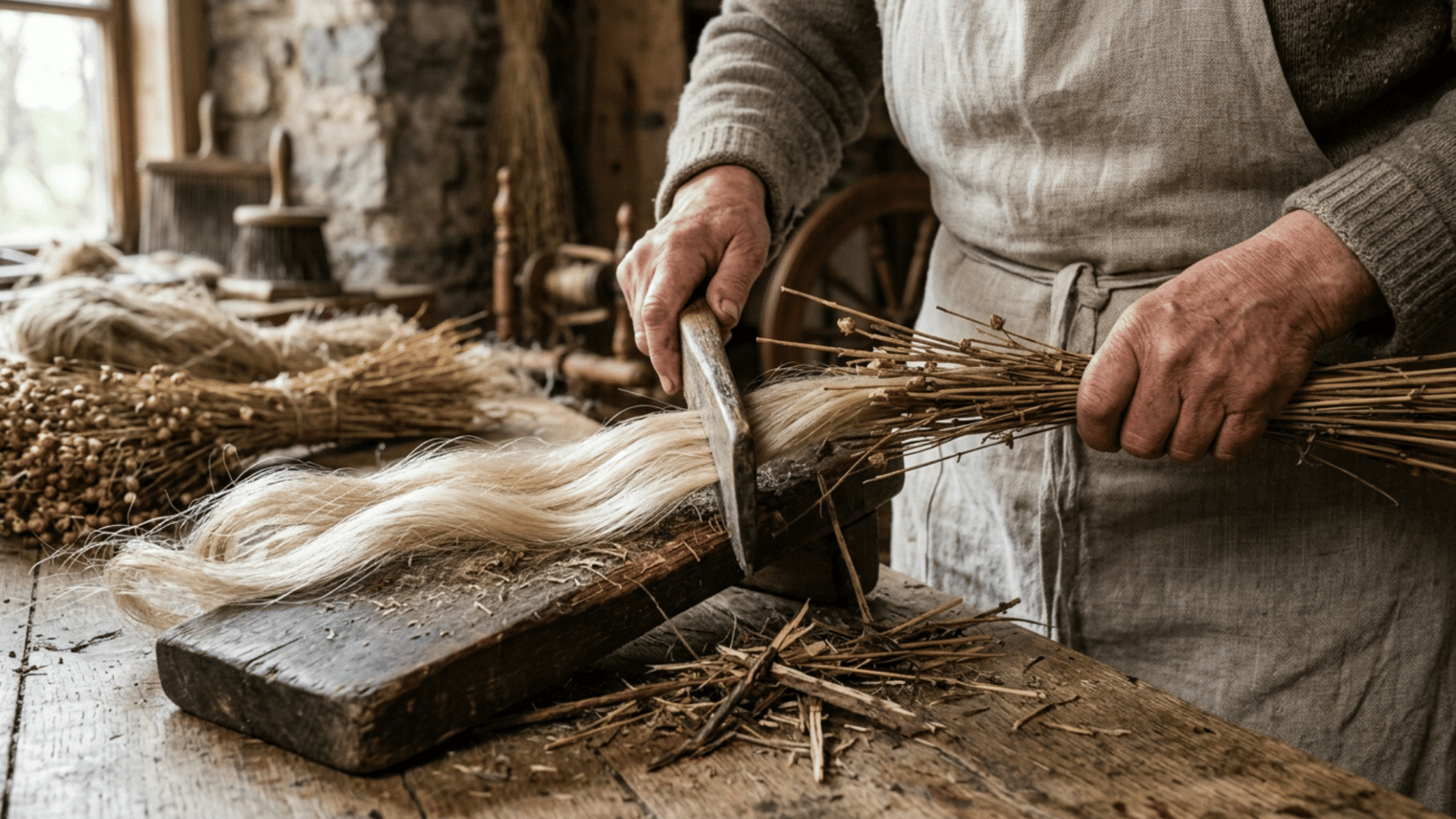
Now comes the separation work. Scutching breaks away the woody outer parts of the stem, while hackling combs through the remaining material to separate the long, smooth line fibers from the shorter, rougher tow fibers.
The long fibers go on to make fine linen fabric, and the shorter ones are used for coarser textile products.
Step 4: Spinning
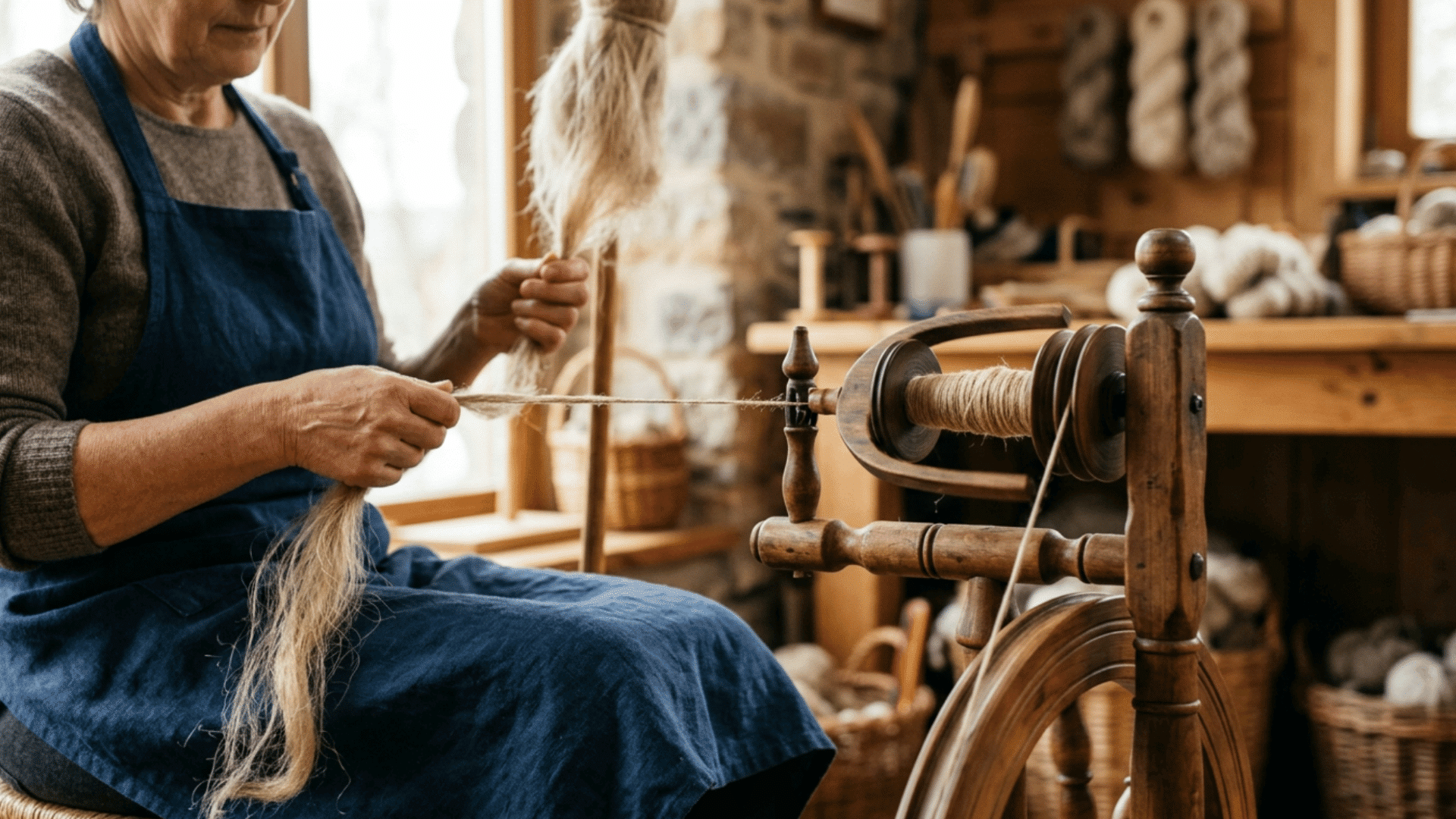
At this point, the fibers are clean, straight, and ready to be spun. They’re twisted together into yarn or thread, and the thickness can vary depending on the type of linen fabric being made.
Wet spinning is often used for finer yarns because it produces a smoother, stronger thread that holds together beautifully during weaving.
Step 5: Weaving
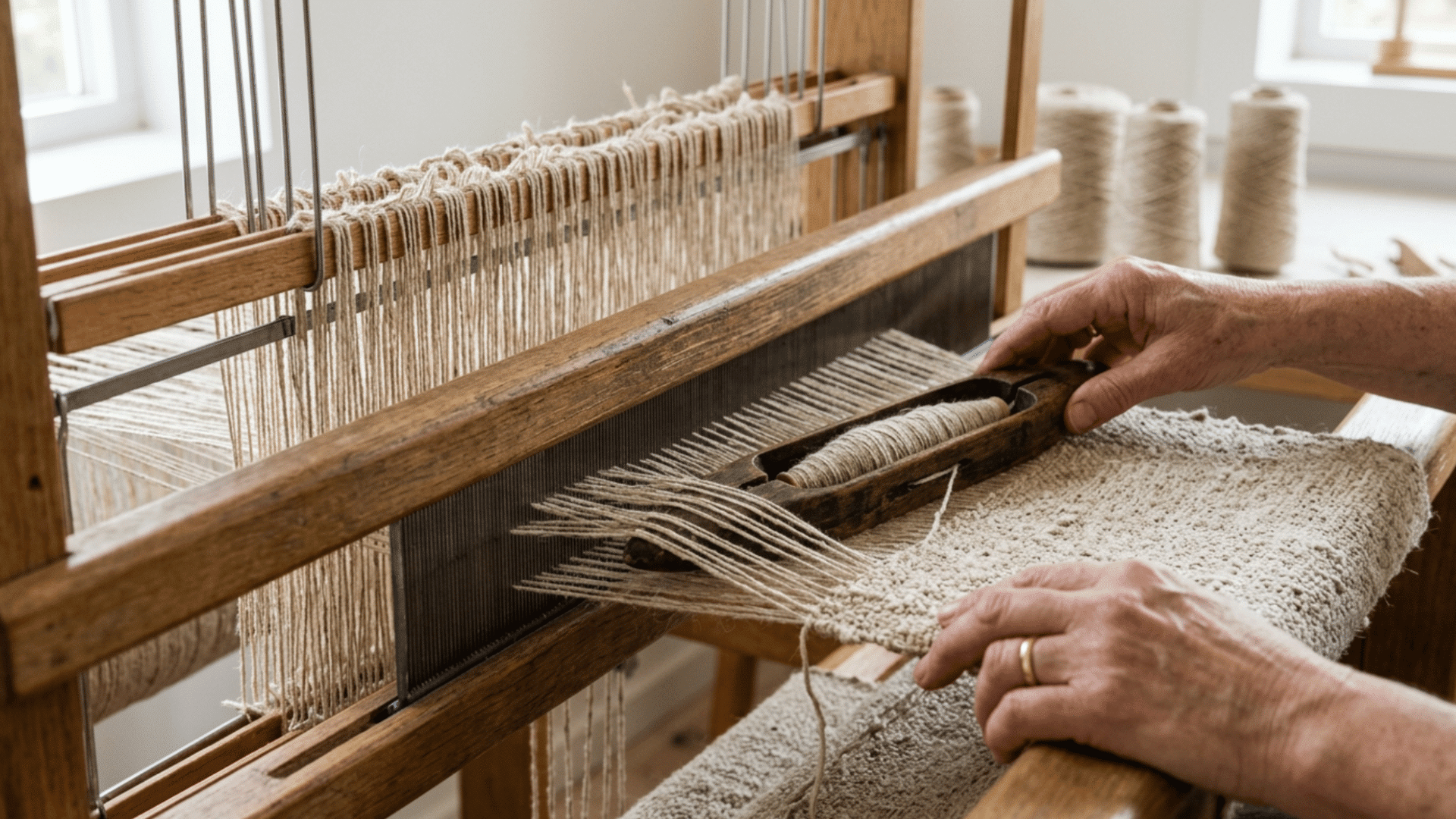
This is the final step and the most satisfying one. The spun yarn is loaded onto looms and woven into linen fabric. The weave pattern, thread count, and tension all contribute to how the finished fabric looks and feels.
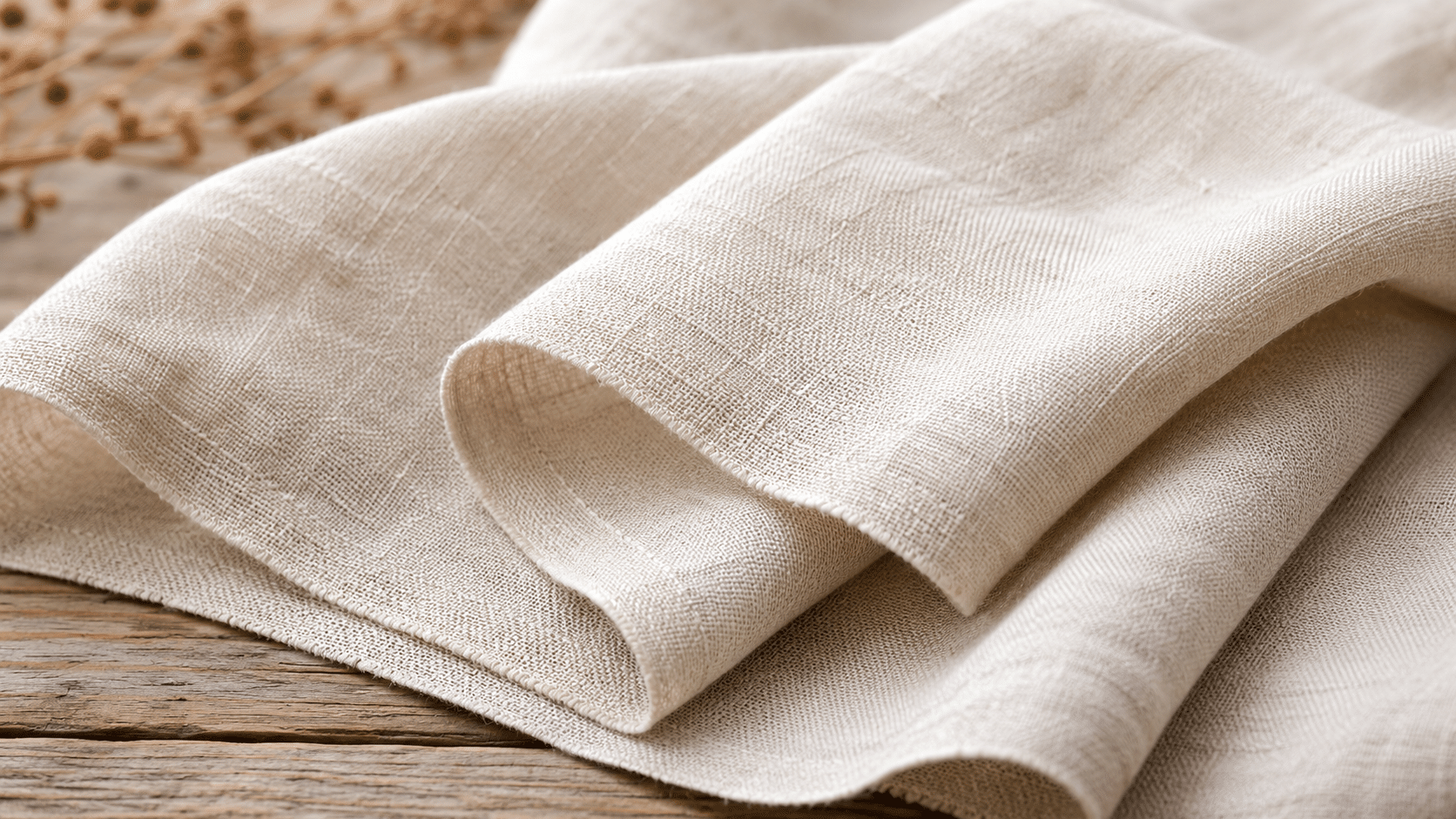
And just like that, what started as a small blue-flowered plant is now the linen fabric on your shelf:
The Final Product
Linen Plant Vs Other Fiber Plants
The flax plant stands out among other fiber plants for its low water needs and strong natural fibers. Here’s a simple comparison to help understand how it differs from other commonly used plants:
| Feature | Linen Plant | Cotton | Hemp |
|---|---|---|---|
| Water Use | Low | High | Medium |
| Fiber Strength | Strong | Medium | Very strong |
| Texture | Smooth | Soft | Slightly rough |
| Growth Time | ~100 days | Longer | Medium |
| Eco Impact | Low | Higher | Low |
Final Thoughts
When you look at the big picture, the linen plant is a quiet powerhouse.
It’s pretty amazing how one simple crop can provide so much, from the clothes on our backs to sustainable materials, all while staying low-maintenance.
Its ability to stay relevant without needing a fancy makeover proves just how much value it brings to the table. Understanding how this plant works really highlights how easy it can be to choose practical, earth-friendly options.
So if you’re after something trustworthy that doesn’t cost the planet, this plant is definitely the way to go.

With a Master’s in Landscape Architecture from the University of Virginia, Sophia Stephenson has dedicated the last 20 years to creating and maintaining vibrant outdoor spaces. Her professional journey started in landscape design, where she gained a reputation for innovative and sustainable approaches. Sophia became a part of our editorial team as a freelancer in 2019, offering a fresh perspective on outdoor living. Since 2020, she has been the chief for our outdoor design content, blending aesthetic appeal with environmental stewardship. In her leisure time, Sophia is a keen photographer, capturing the beauty of natural landscapes, a hobby that complements her professional expertise.