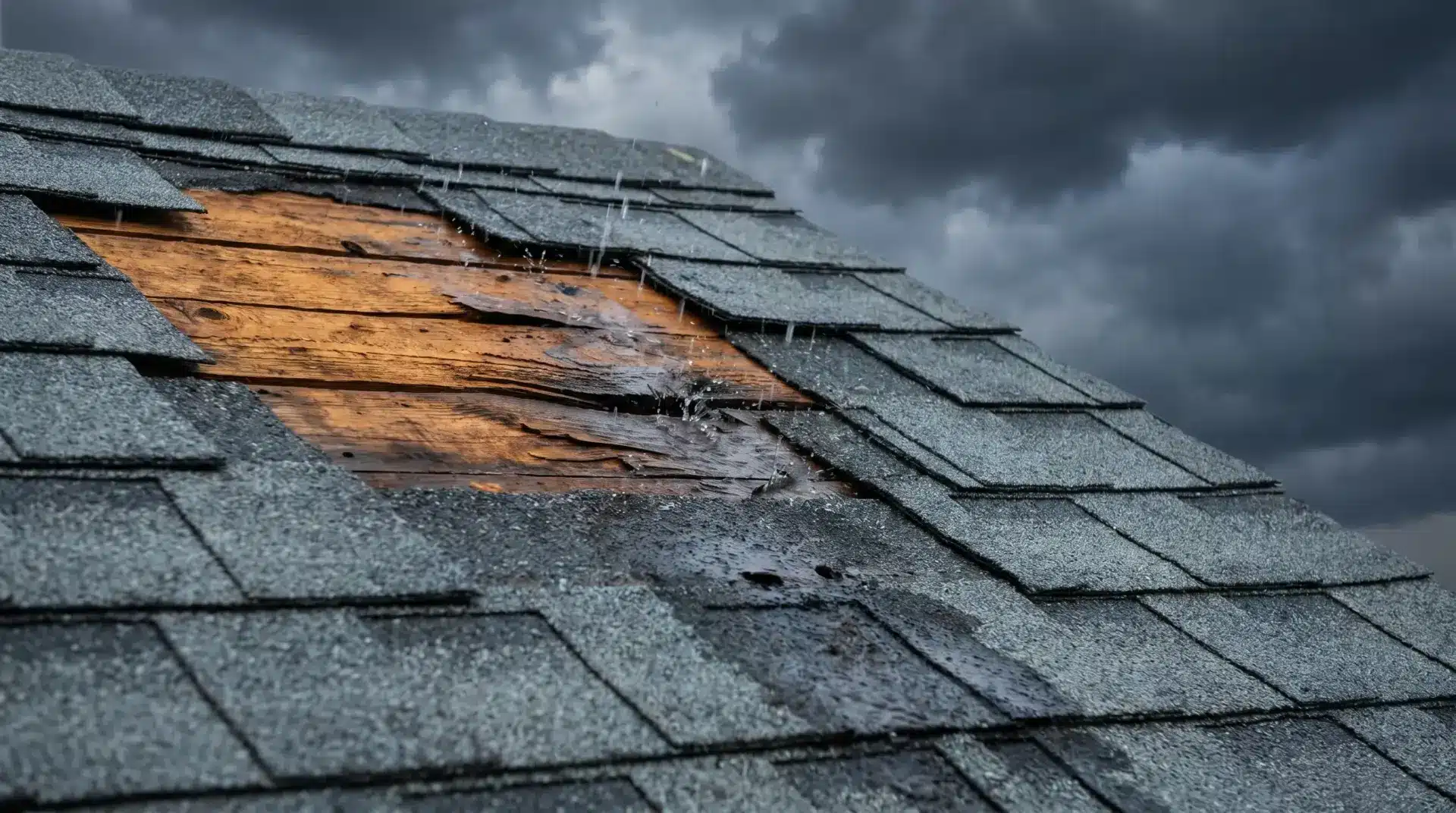

Few things look more harmless than a single bare patch on an otherwise tidy roof. Yet that missing shingle can unleash a slow-motion avalanche of headaches. A roof depends on overlapping layers to shed water and shield against wind, sun, and pests. Once that overlap is breached, every gust or drizzle gains a backstage pass to the sheathing beneath.
Because attics usually stay dark and ceilings remain spotless at first, homeowners often postpone repairs. Unfortunately, damage likes to hide in insulation, wiring, and framing, where it stays invisible until costs skyrocket and structural stress shows. A quick patch today prevents cascading expenses.
Water Intrusion Starts Small
Rain rarely falls straight down; wind flips water sideways, lifting loose edges and driving moisture under neighboring shingles. With even one tile missing, capillary action pulls water along exposed decking, saturating it during mild drizzles. Swelling wood loosens nails, and curled shingle corners soon join the gap, enlarging the bullseye.
In colder regions, damp deck boards encourage ice dams that back up water beneath seemingly intact rows above. Heat compounds the issue, baking surface tar and turning shingles brittle. Within weeks, what began as a postcard-sized breach can funnel steady drips into the attic, soaking insulation, blotching ceilings, and breeding spores. Left unchecked, decks rot and repair bills snowball quickly.
Hidden Rot and Mold
Moist decking is a feast for decay, and once fungal spores find fuel, rot spreads like wildfire through rafters, trusses, and fascia. Dark, dank cavities also create paradise for mold colonies that compromise indoor air quality and trigger allergies. Because this destruction hides behind paint and plaster, many homeowners remain blissfully unaware until musty odors waft through vents or walls feel spongy to the touch.
Calling an experienced roofing contractor at the first sign of a missing shingle secures a thorough inspection, early detection of soft spots, and straightforward replacement of damaged boards before the job escalates into structural surgery. Timely action preserves strength and protects the home’s resale value.
Energy Efficiency Takes a Hit
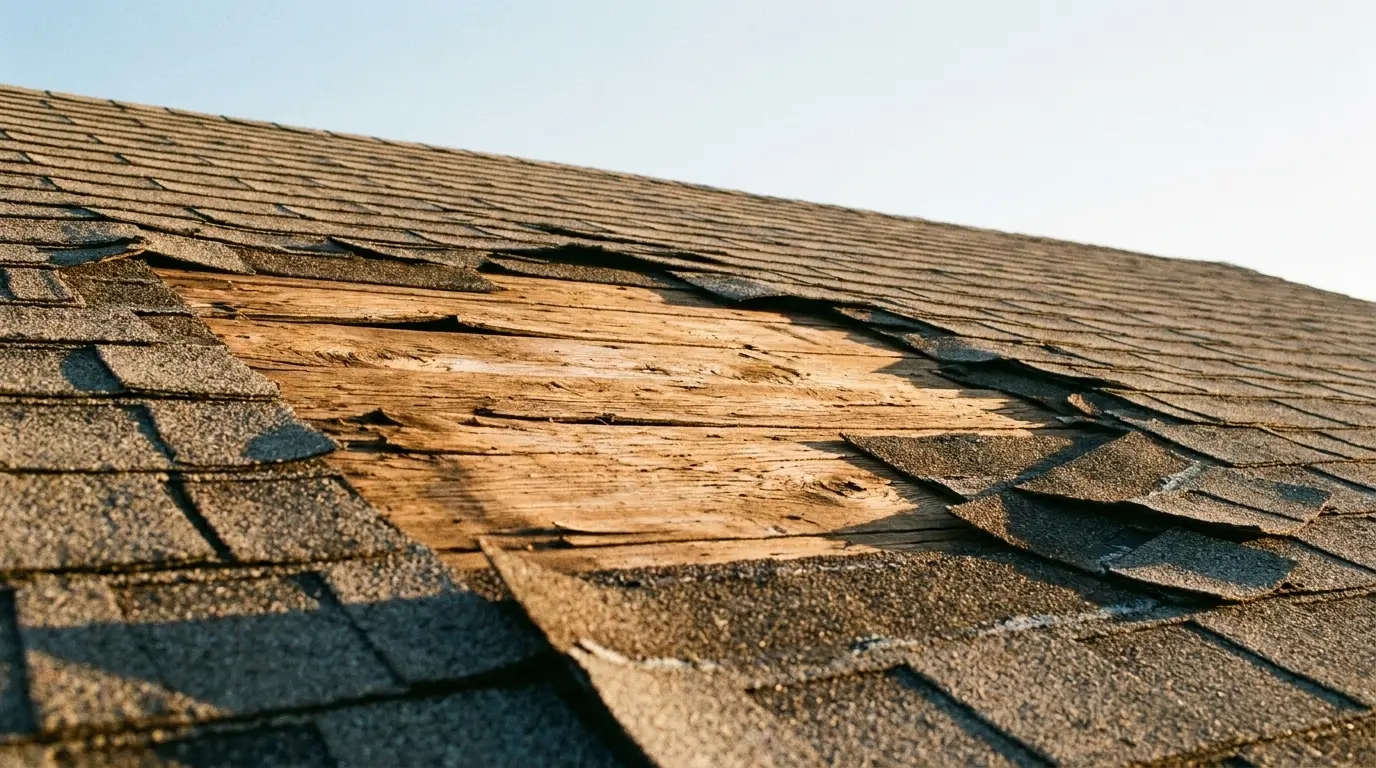
Shingles do more than repel water; they shield roofing felt and decking from relentless ultraviolet punishment. When wood or underlayment sits bare under the sun, it bakes, dries, and cracks, allowing hot air to penetrate the attic. That surplus heat forces air-conditioning units to run longer, inflating utility bills during already steamy months.
In winter, the same warmth melts snow unevenly, causing refreezing at colder eaves and producing ice dams that pry shingles even farther. The constant thermal cycling shortens the life of surrounding materials, meaning homeowners pay for premature roof replacement and elevated energy costs in a single misstep. Proper ventilation helps, but intact shingles remain the first defense.
Structural Strain and Safety Risks
A roof also works as a structural diaphragm, bracing walls against sideways wind pressure. When portions weaken through moisture and rot, loads shift unpredictably, stressing connections at ridge beams, collar ties, and wall plates.
Over time, this imbalance shows up as sagging rooflines, cracked interior plaster, and sticky windows as frames rack out of square. Add a heavy snowfall or a fallen branch, and compromised sections may collapse with little warning, endangering occupants and valuables.
Restoring integrity often demands partial reframing, new sheathing, and engineered reinforcements—projects far more expensive and disruptive than replacing a handful of missing shingles immediately. Such reactive repairs can empty savings and disrupt life for weeks.
Conclusion
A missing shingle rarely feels urgent, yet it foreshadows far greater trouble. Silent leaks, mold, soaring energy bills, and hidden structural sag follow quickly. Regular roof checks, prompt shingle replacement, and timely professional help translate into big savings and years of dry, comfortable living. When sunlight glints off a bare patch, treat it as a call to action, and your home will reward your vigilance for many secure, worry-free seasons.

Tommy Hardy, an alumnus of the Georgia Institute of Technology with a degree in Mechanical Engineering, has been a go-to figure in residential upkeep and innovation for over 18 years. His career commenced in a leading home appliance manufacturing company, where he mastered the intricacies of household systems. Joining our platform in 2020, Tommy quickly became a reader favorite for his practical and easy-to-follow guides. He took the helm of our DIY section in 2019, consistently delivering content that empowers homeowners. Beyond his professional pursuits, Tommy is a passionate gardener and enjoys woodworking, skills enhancing his hands-on approach to home care.