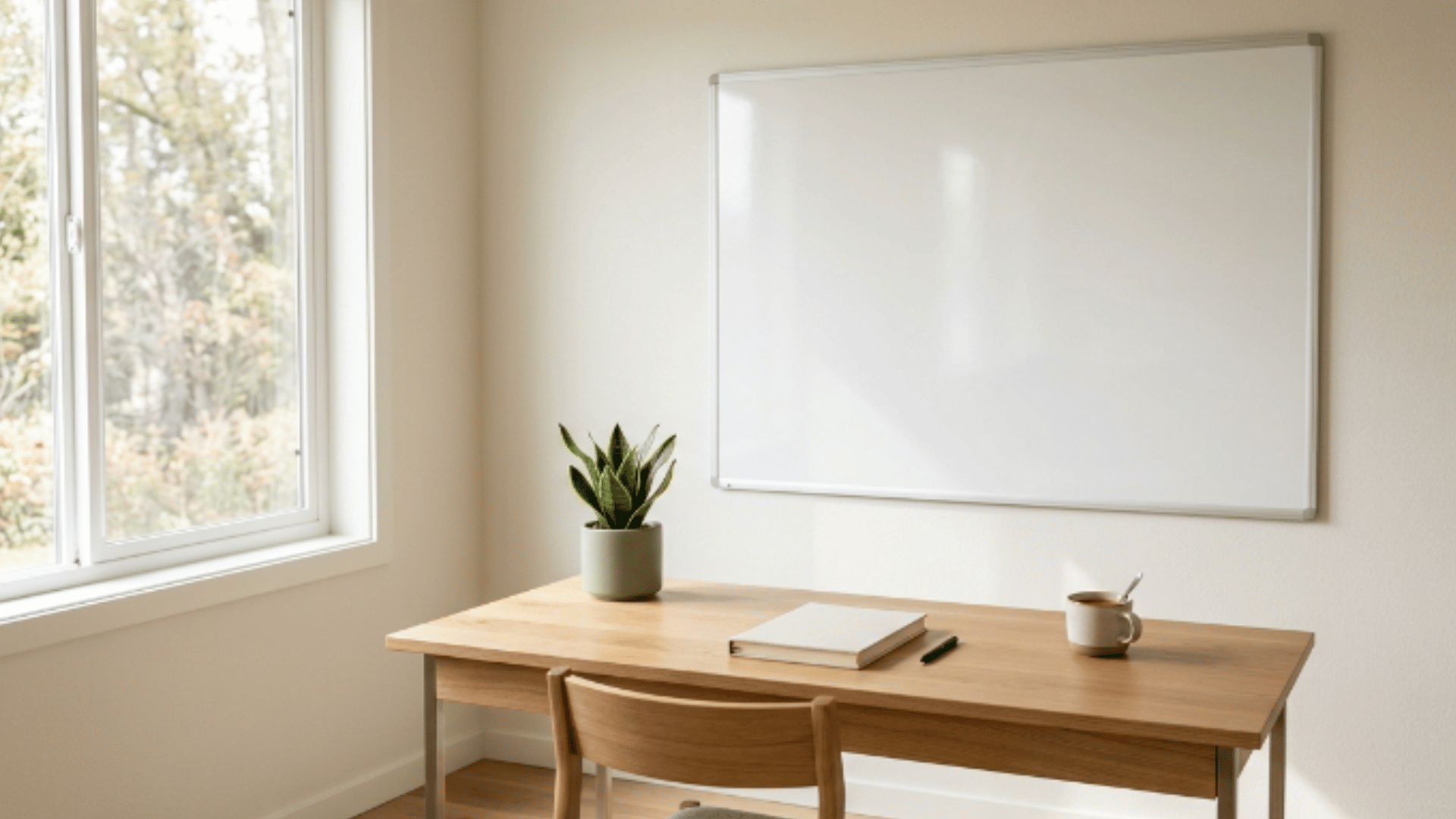

Whiteboards are among the most commonly used surfaces in classrooms, offices, and home workspaces. They collect marker stains, smudges, and ghosting faster than most people expect.
Knowing how to clean a whiteboard properly makes a real difference in how long the surface lasts and how well it performs.
Most people assume they need special products, but that is rarely the case. Common household items get the job done just as well when used the right way.
This blog covers daily cleaning habits, deep cleaning methods, and practical tricks that actually work without damaging the surface.
Why Whiteboards Get Dirty Fast?
Before cleaning, it helps to know what causes stains in the first place. Ink contains pigments and solvents that bond to the whiteboard surface over time, especially when left without cleaning for extended periods.
Marks that sit for days or weeks become significantly harder to remove than fresh ones. Low-quality markers leave behind oily residue that builds up with each use, leading to ghosting, the faint shadow that remains even after wiping.
Dust particles and natural skin oils transferred through touch also stick to the surface, trapping more dirt over time. Understanding these causes is the first step in figuring out how to clean a whiteboard the right way.
Signs Your Whiteboard Needs Deep Cleaning
Some whiteboard problems go beyond what a standard wipe-down can fix. Watch for these signs that your board needs a more thorough cleaning.
- Ghosting Marks: Faint outlines of old writing remain on the surface even after wiping with a dry eraser. This means the ink has bonded to the coating and needs a stronger method.
- Streaky Surface: Wiping the board leaves visible streaks or smear marks rather than a clean finish. This is a sign that residue and dried ink have built up.
- Marker Skipping: A dry-erase marker skipping or leaving patchy lines means the board surface has lost its smoothness. A deep clean helps restore the texture for even writing.
- Strong Marker Smell: A persistent chemical odor emanating from the board indicates an ink buildup settled into the surface. Cleaning removes the residue that causes the odor.
- Discoloration: If the board looks yellow, grey, or off-white rather than bright white, surface contamination has built up. Only a thorough clean will restore it to its original condition.
What the Community Recommends
People online share what actually worked for them when dealing with a dirty or stained whiteboard answered how to clean a whiteboard.
One user explained that going over old marks with a fresh dry-erase marker can actually mix with the dried ink, making it much easier to clean the board.
“I have found that using a dry erase marker on the dried permanent marker will actually “blend” the two pigments together and re-activate the permanent marker into a liquid state for a milisecond.” — Phlume, Lifehacks Stack Exchange
One user suggested using a diluted bleach solution to remove tough stains, noting that it can also help restore the board’s brightness if allowed to dry fully afterward.
A solution of chlorine bleach and water will both remove the permanent marker and brighten the white board. You need to allow the white board to dry completely before using it again.- Adam Zuckerman, Lifehacks Stack Exchange
One user shared that using an insect repellent spray like Aeroguard helped remove stubborn permanent marker, saying the ink came off easily after a couple of applications.
What I have found works better than any of the above, bar none, is spraying Aeroguard on it. Stinks but the permanent marker just flows off. Couple of applications may be required but I am looking at my board now and after trying everything else, Aeroguard has left it looking like new. TJB, Lifehacks Stack Exchange
Best Ways to Clean a Whiteboard
These are the most searched-for and effective methods for cleaning a whiteboard, covering different types of stains and board conditions.
1. Rubbing Alcohol
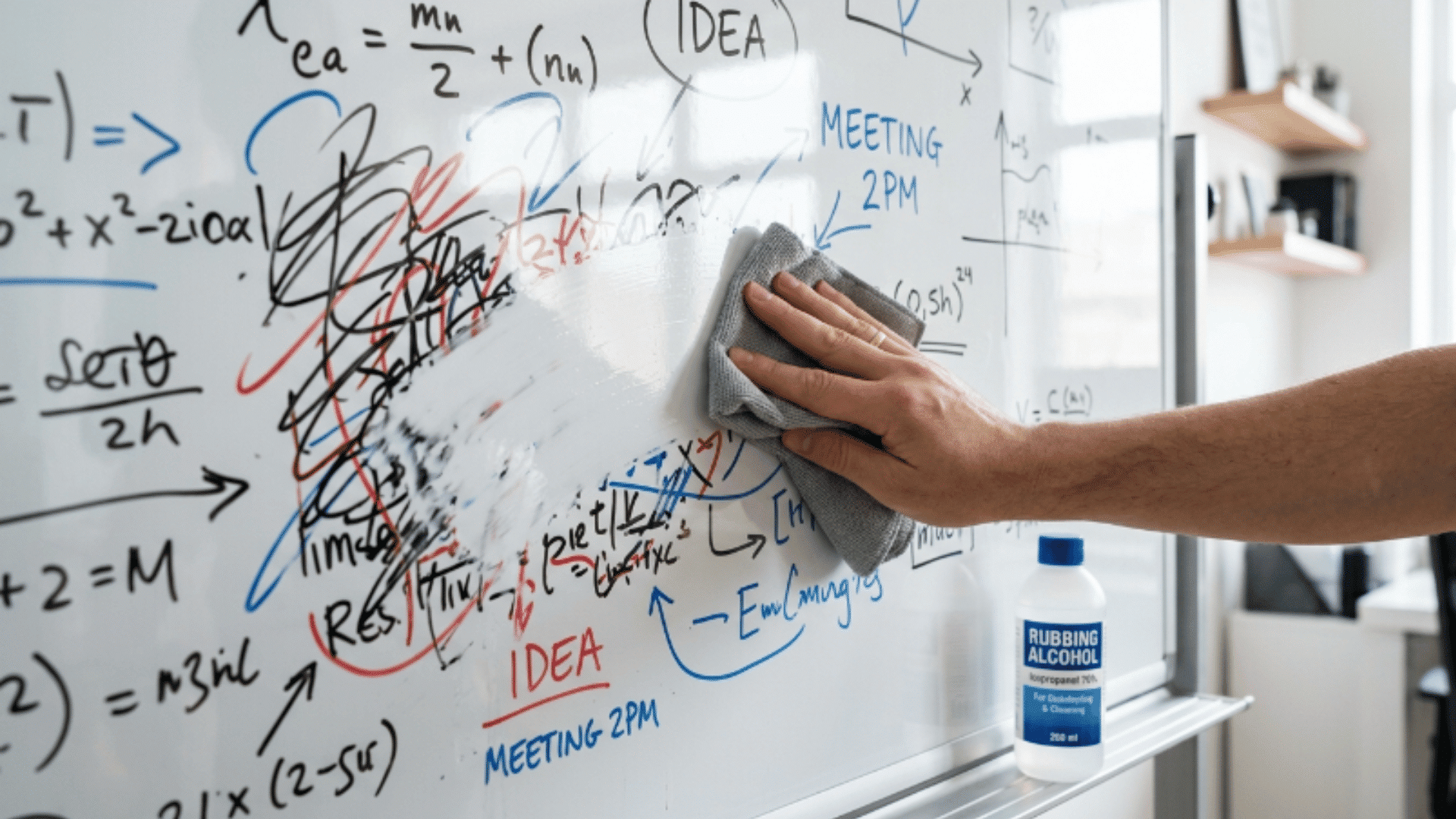
Rubbing alcohol is the most recommended solution for removing marker ink from a whiteboard.
It breaks down the pigments in dry-erase markers quickly and works on both fresh marks and older buildup. Apply a small amount to a soft cloth and wipe the surface in even strokes.
Avoid using rough materials that can scratch the board over time. For most people, rubbing alcohol is the first product to reach for when dealing with marker stains.
2. Vinegar and Water Solution
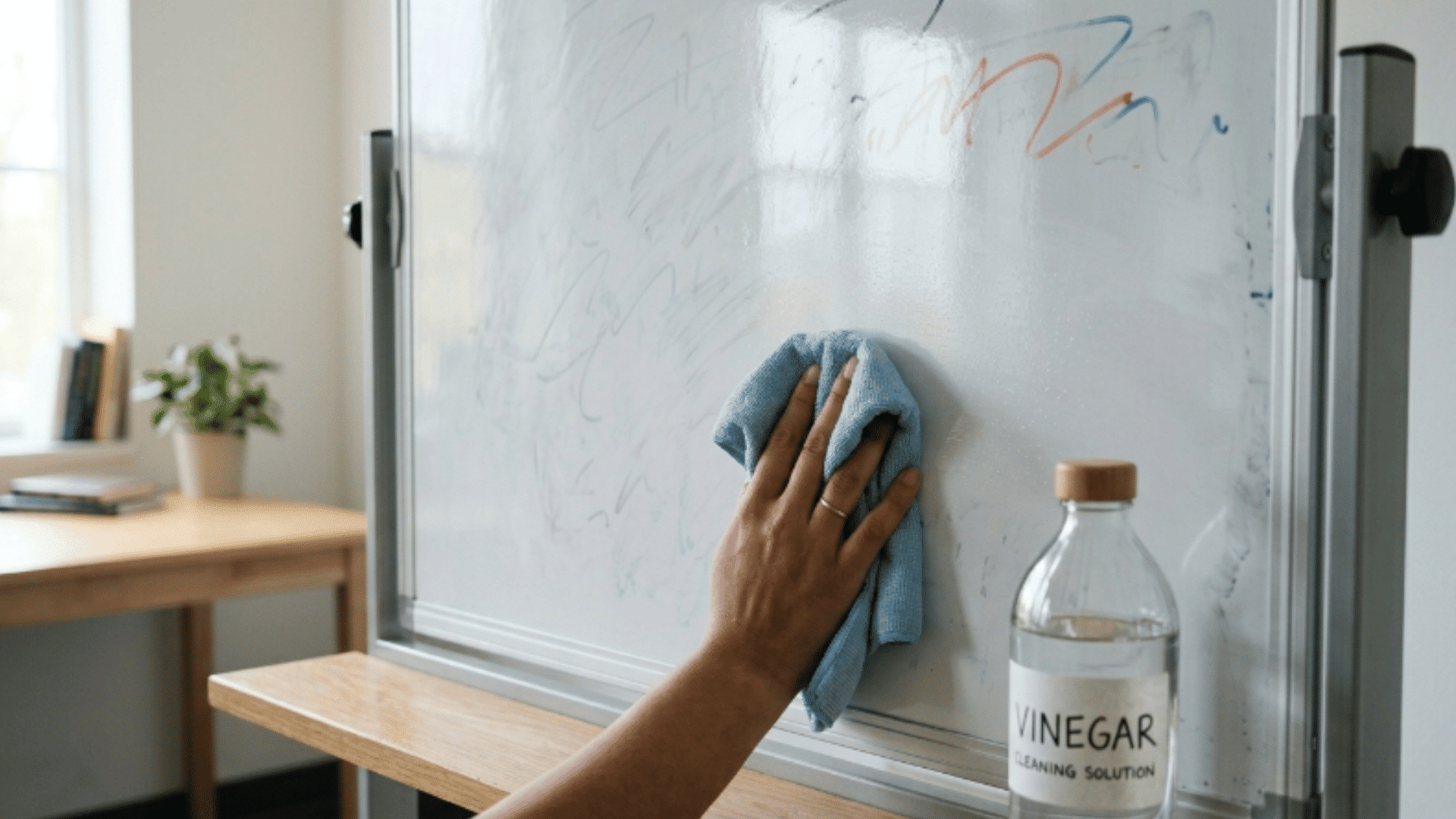
A vinegar-and-water solution is a reliable option for tackling older or stubborn stains. Mix one part white vinegar with water and apply with a soft cloth.
Let it sit on the stain for a few seconds before wiping in circular motions. The mild acidity helps lift dried ink without damaging the board surface.
This method is cost-effective and easy to prepare at home. It works well as part of a regular cleaning routine for boards that see heavy daily use.
3. Whiteboard Cleaner Spray
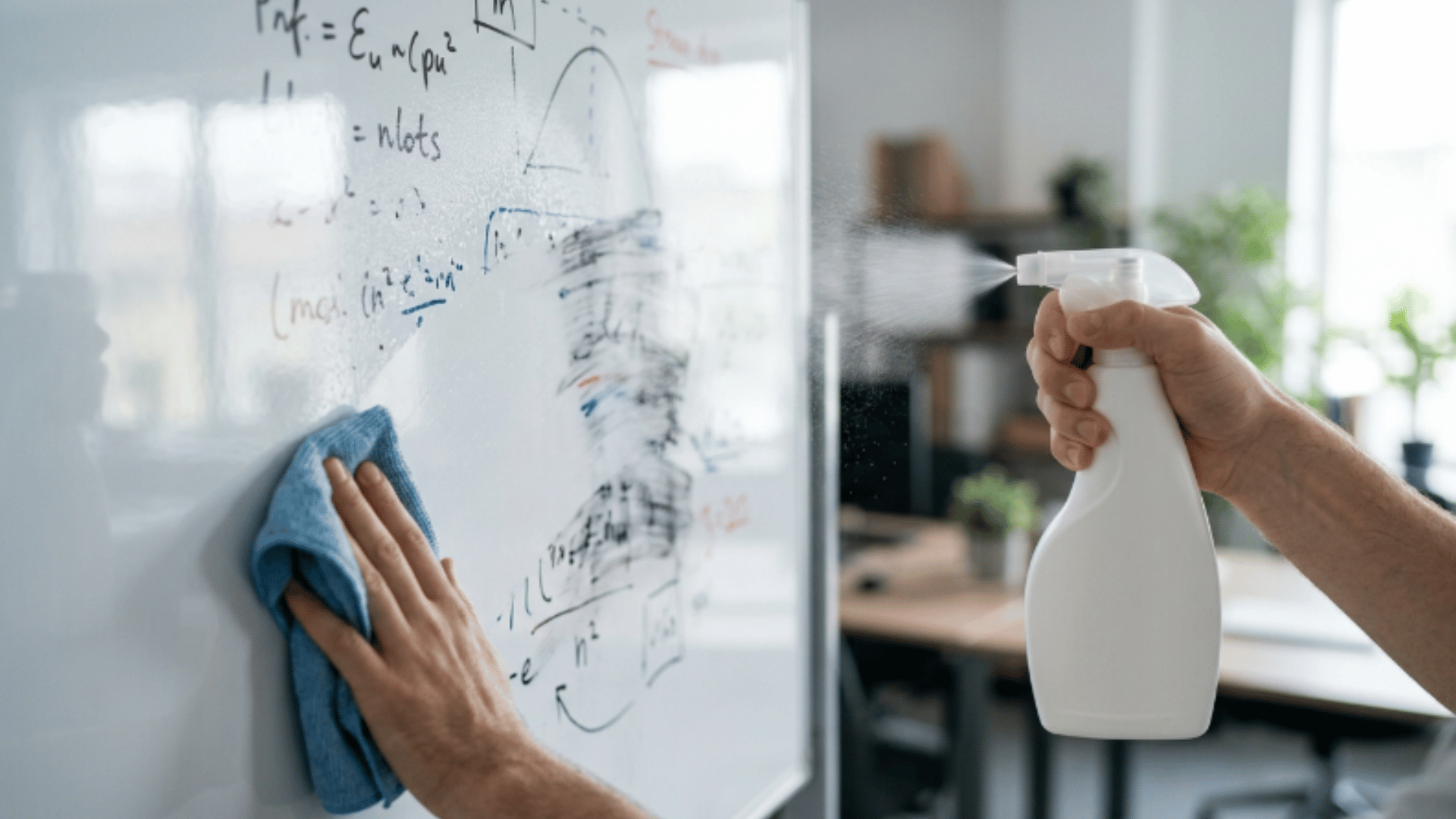
Whiteboard cleaner spray is made specifically for dry-erase surfaces and frequent use. It removes ink, ghosting, and residue without breaking down the board’s protective coating.
Spray light amount directly onto the board and wipe with a clean microfiber cloth. It works faster than most DIY solutions and suits office or classroom settings well.
Knowing how to clean a whiteboard the right way means matching the method to the level of dirt. Cleaner spray is the most reliable choice for boards used multiple times a day.
4. Hand Sanitizer
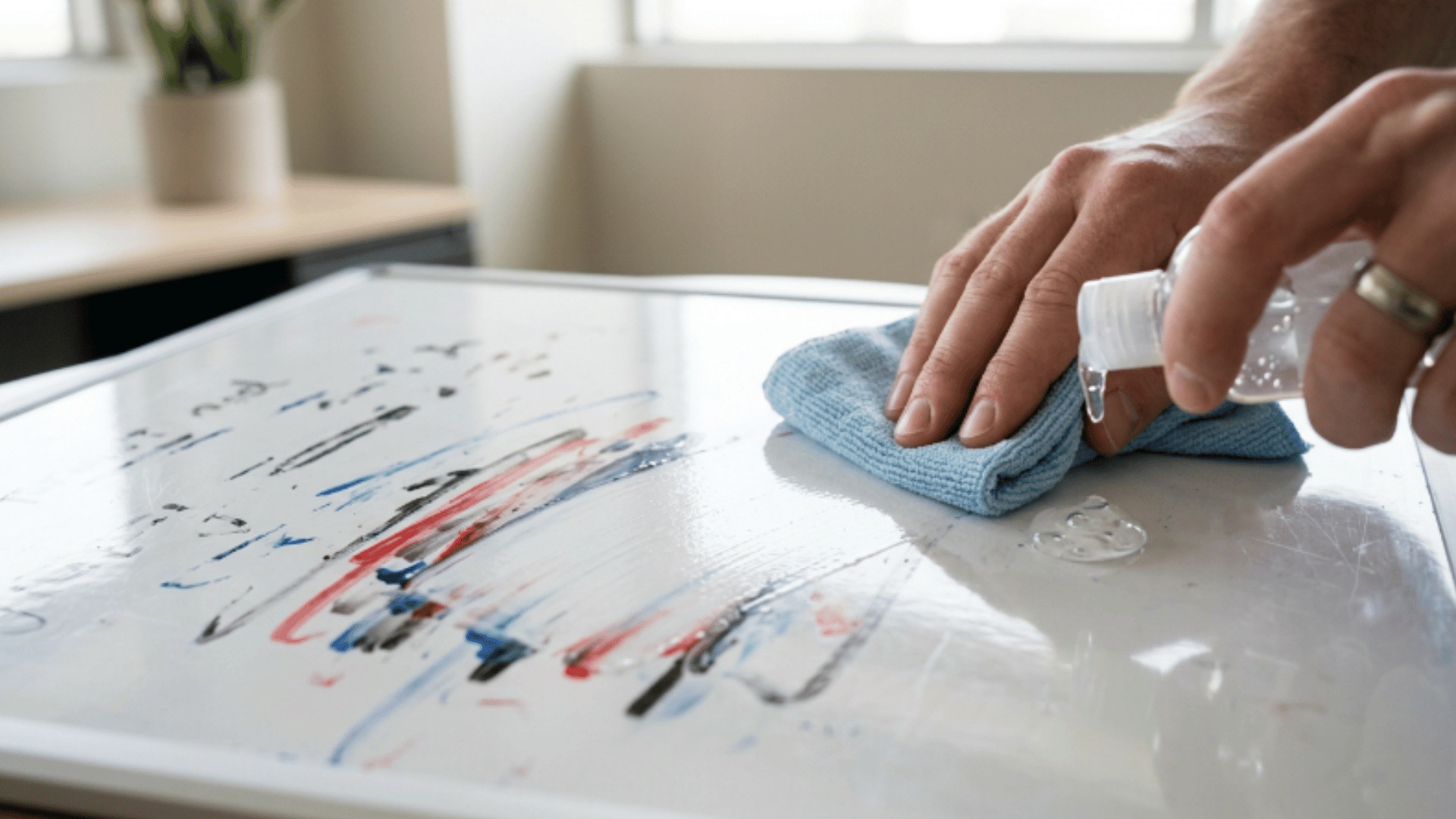
Hand sanitizer is a practical quick fix when no other cleaning product is available. It contains alcohol as its active ingredient, which breaks down dry-erase marker ink on contact.
Apply a small amount to a cloth and rub it over the stained area. It works best on fresh marks rather than older, dried-in stains on the surface.
It is not a long-term replacement for dedicated cleaning products. However, it gets the job done in a pinch and is something most people already have within reach.
5. Dry Erase Marker Trick
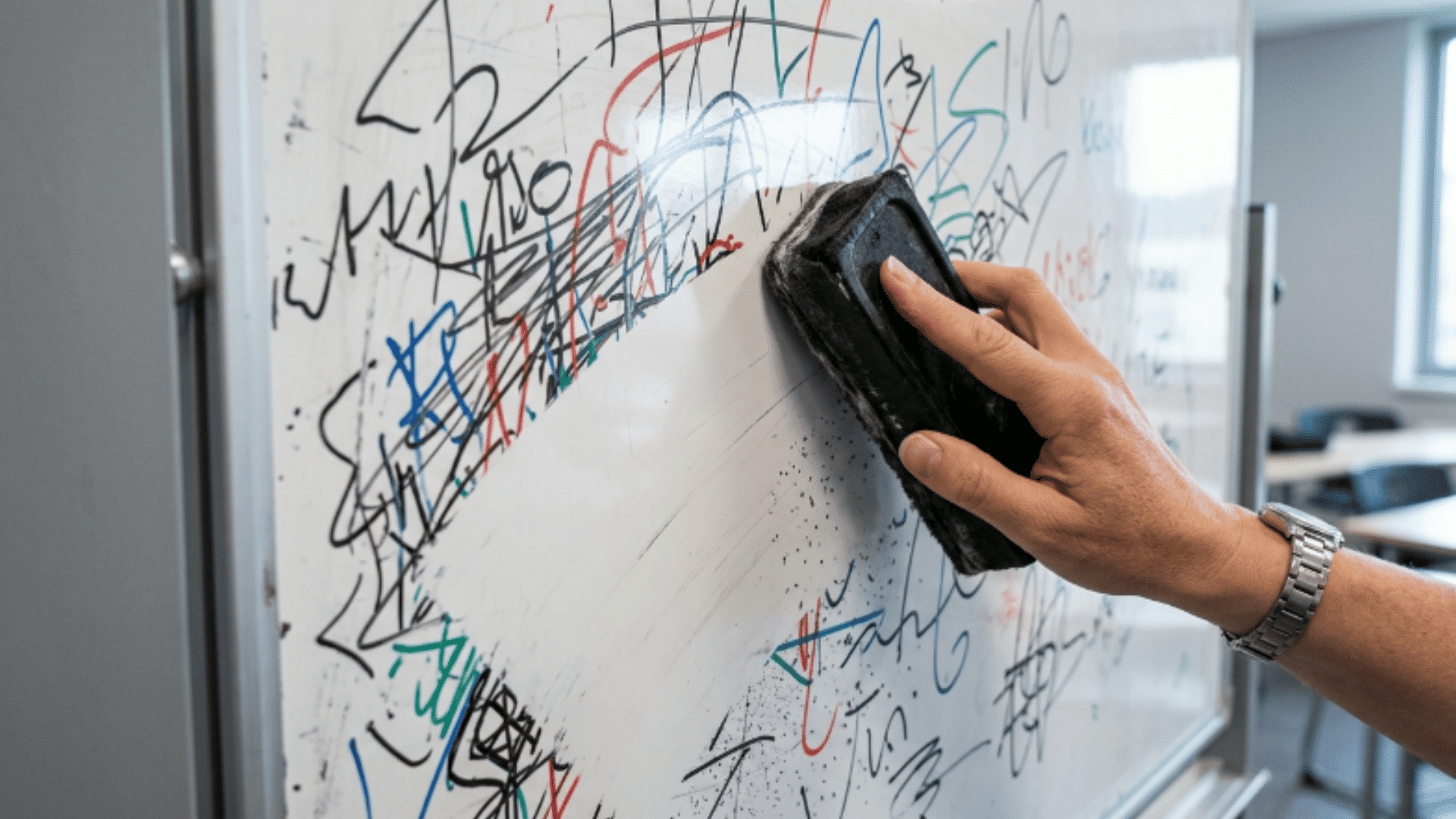
Running a fresh dry-erase marker over an old or stubborn mark is one of the most commonly shared tricks. The fresh ink reactivates the dried pigment underneath, making both easier to wipe away together.
Trace directly over the old mark, then wipe immediately with a dry eraser. This method works particularly well on marks that have been sitting on the board for several days.
It requires no additional products and takes less than a minute to carry out. Keep this trick in mind for situations where standard cleaning methods have not fully worked.
What Not to Use on A Whiteboard
Using the wrong products can damage the board surface permanently and make how to clean a whiteboard properly much harder going forward.
- Abrasive Scrubbers: Rough scrubbing pads scratch the whiteboard surface and break down the smooth coating that allows markers to wipe off cleanly.
- Harsh Chemicals: Products containing ammonia or bleach can cause permanent staining, ghosting, and a surface that no longer responds well to dry-erase markers.
- Steel Wool: Coarse materials like steel wool or rough kitchen cloths cause the same damage as abrasive scrubbers.
- Permanent Markers: Using a permanent marker on a whiteboard by mistake does not wipe off with a standard eraser.
- Excess Water: Soaking the board with too much water can seep into the edges and frame, causing warping or rust over time.
Wrapping Up
A clean whiteboard performs better and lasts longer than one that has built-up stains. The right products, used correctly, make the process quick without causing damage.
Small habits like wiping the board after each use go a long way. Most problems with how to clean a whiteboard come from waiting too long or using the wrong materials.
A dry eraser works best when cleaned regularly and replaced before it starts smearing. Using a dirty eraser is one of the most overlooked reasons boards stay marked after wiping.
The methods covered here work for all board types, from classroom walls to home office setups. Picking the right one for your situation speeds up the entire process.

Stephanie Grace, a graduate with a degree in Fine Arts from the Savannah College of Art and Design, has been inspiring DIY enthusiasts with her creative and practical guidance for over 14 years. Her career in design and crafting began in a small artisan workshop, where she developed a passion for transforming everyday materials into beautiful and functional items. Stephanie joined our website in 2018, rapidly gaining popularity for her easy-to-follow DIY tutorials and innovative project ideas. Since then, she has been the creative mind behind our DIY section, helping readers bring their artistic visions to life. Outside her professional pursuits, Stephanie enjoys pottery and urban gardening, hobbies that showcase her love for hands-on creativity and nature.