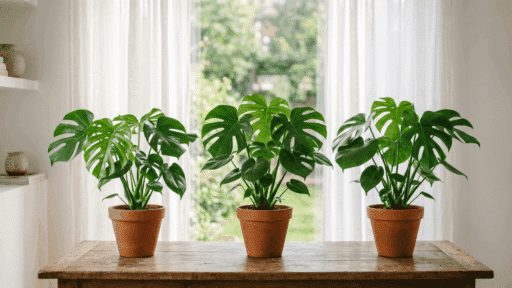
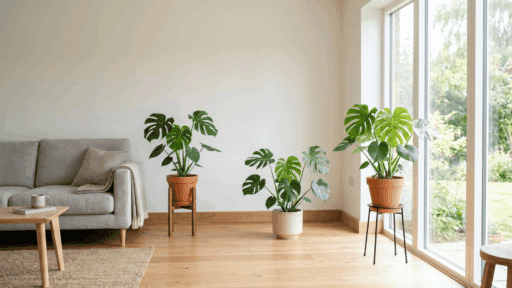
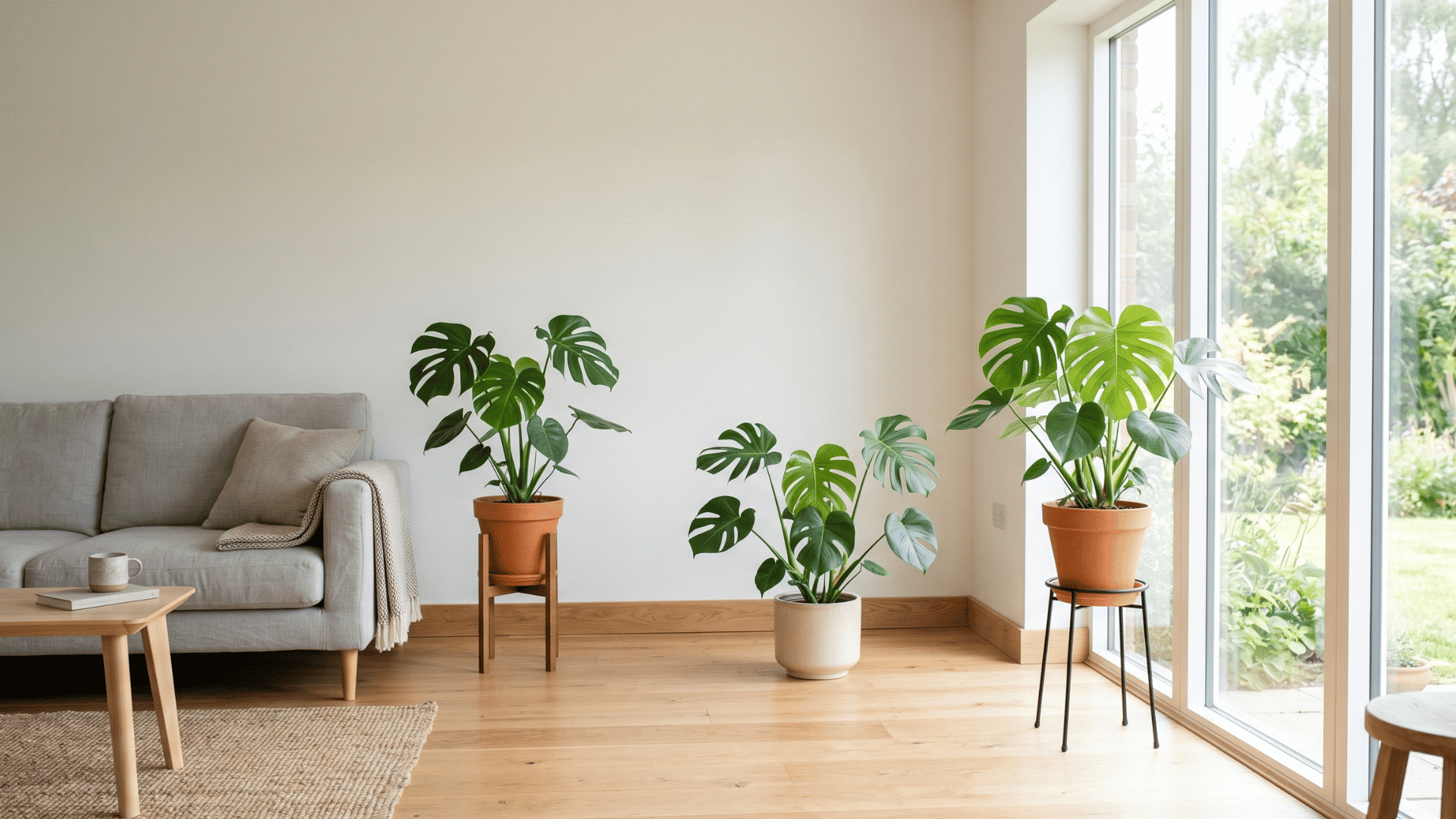

A Monstera sits by the window. The leaves look a little off: some are yellowing, some are turning pale, and new growth is barely showing.
Most people have been right there. They water it regularly, move it around the house, but nothing really seems to work. More often than not, the real issue comes down to light.
Getting the Monstera light requirements right makes a huge difference in how healthy and full the plant actually grows.
This guide breaks down exactly what light a Monstera needs, the best spots in your home, and the signs of too much or too little light.
How Much Light Does a Monstera Need Daily?
A Monstera grows best with five to eight hours of light each day. It can survive on less, but growth slows, and leaves may stop developing splits over time.
The key is finding a spot where the light stays consistent rather than shifting between full shade and direct sun.
Keeping the plant a few feet back from the glass prevents direct sun from reaching the leaves during peak hours.
A sheer curtain between the plant and the window filters the light without blocking it. Light intensity and duration both matter equally for a Monstera to grow well.
Best Window Spots in Your Home for Monstera
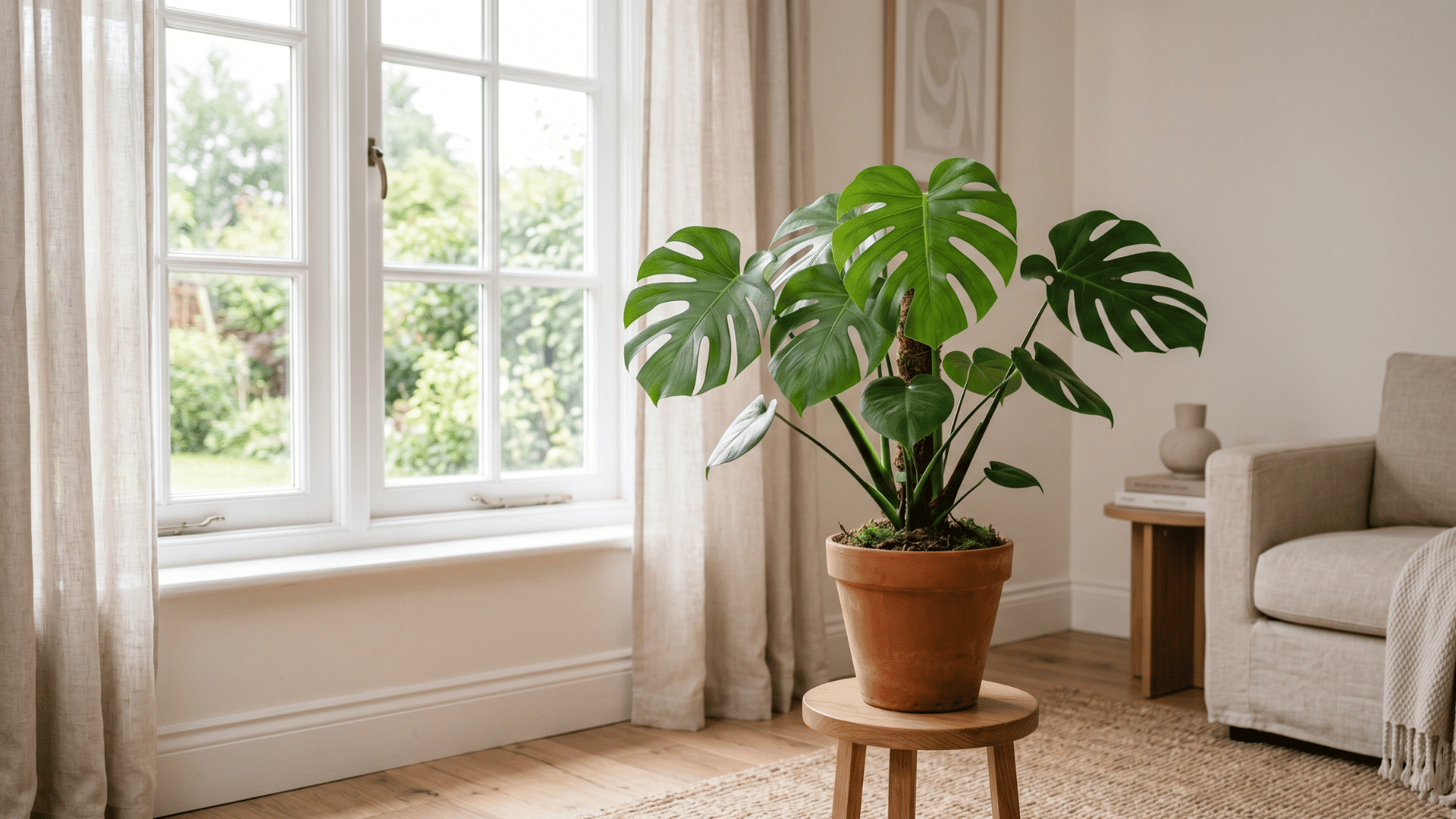
Finding the right spot makes all the difference when it comes to meetingmonstera light requirements without exposing the plant to conditions that slow growth or damage the leaves.
Window Direction Guide
Not all windows provide the same quality of light, so choosing the right direction is one of the most practical steps in figuring out how much light a monstera needs indoors.
| Window Direction | Light Quality | Suitability For Monstera |
|---|---|---|
| East | Soft morning light | Best option for most homes |
| South | Bright and consistent | Good with a sheer curtain |
| West | Strong afternoon sun | Risky without filtering |
| North | Low and diffused | May be too dim for steady growth |
Ideal Distance from Window
The distance between the plant and the window affects how much usable light the Monstera actually receives throughout the day.
- A distance of 2 to 6 feet from the window works best for most indoor Monstera plants in average light conditions.
- Placing the plant closer to the window in north-facing rooms helps compensate for the lower light intensity in that direction.
- Moving the plant farther back from a south- or west-facing window reduces the risk of direct sunlight reaching the leaves during peak hours.
- Adjusting the distance by even one or two feet can make a noticeable difference if the plant is showing signs of too much or too little light.
What the Community Says About Monstera Light
Plant owners have shared their experiences with Monstera light requirements online, and the advice consistently points to bright indirect light as the most reliable condition for growth.
One user suggested moving the plant as close to the window as possible rather than placing it across the room, noting that stems visibly stretch when the light source is too far away.
Monsteras like light. I would move it in front of the window in a way that leaves face the window, at least partially. In my experience location where it’s now is gonna result in half of the leaves turning toward one window and half towards the other. Or even start facing upwards. purpleowlie, Reddit
One user pointed out that keeping a Monstera close to the window is always the better choice, as stems have to stretch noticeably when the plant is placed too far from its light source.
I’d always opt for a monstera being in a windowsill over it being halfway across a room. The petioles will thank you when they aren’t having to be stretched to reach the light. BeApplePie, Reddit
One plant resource page noted that direct sunlight is the one light condition to actively avoid with a Monstera, as it can cause brown or tan burn spots that will not recover.
Direct light isn’t the best for a monstera and is the one light condition you should try to avoid. Bright, direct sunlight can burn the leaves, leaving ugly brown or tan spots that won’t recover. Monstera Plant Resource Center, Facebook
Another commenter advised placing the plant near a window with filtered sunlight and warned that direct sunlight can cause visible leaf scorching that is difficult to reverse once it occurs.
“Place your plant near a window with filtered sunlight or provide it with bright, indirect light indoors. Avoid exposing it to direct sunlight, as it can scorch the leaves.” inthegarden_101, Facebook
Can You Use LED Grow Lights for Monstera Indoors?
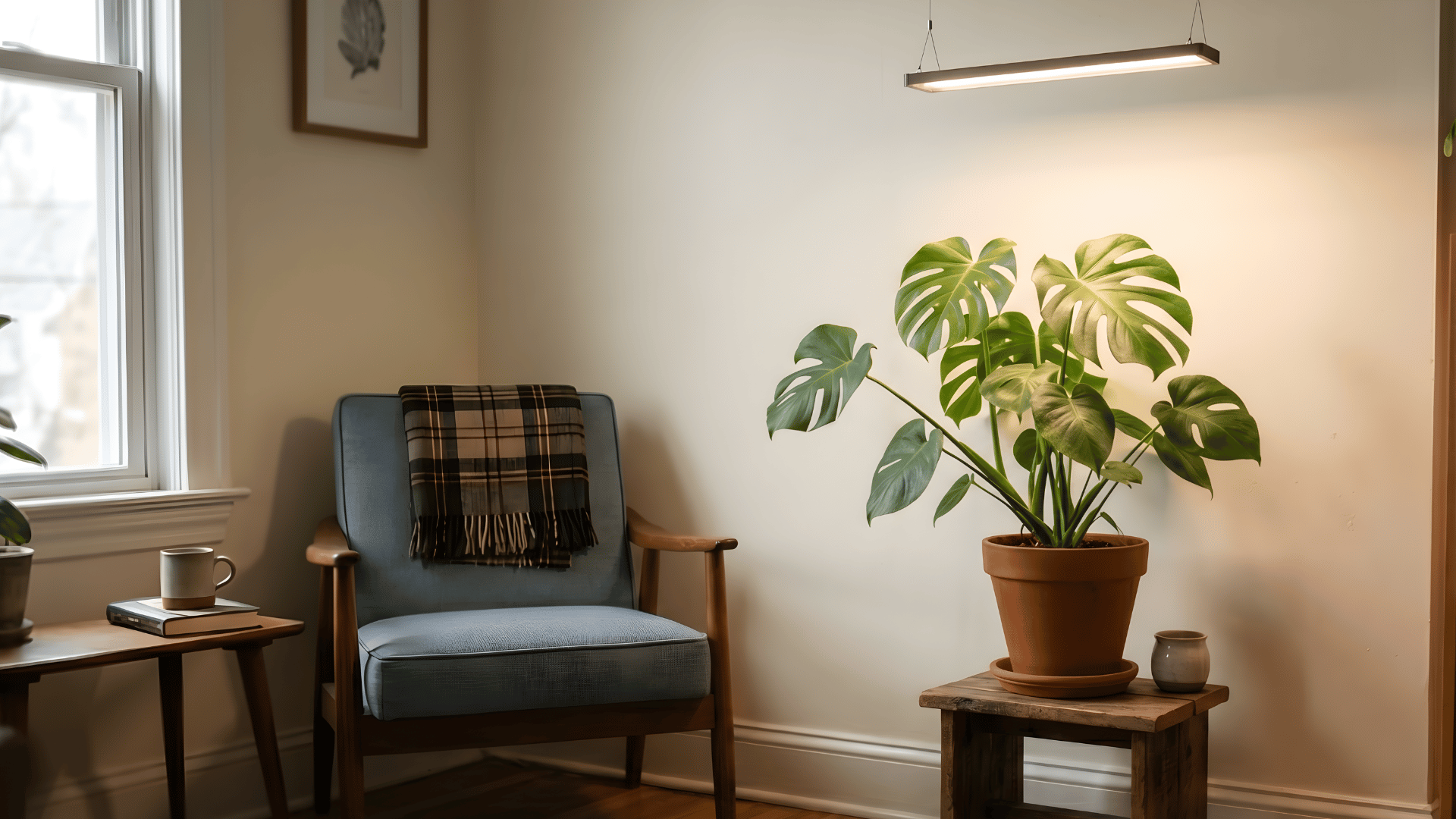
LED grow lights offer a practical solution for meeting monstera light requirements when natural light is limited or inconsistent throughout the year.
They are particularly useful in north-facing rooms, small apartments, and during winter months when daylight hours are shorter and less intense.
How much light does a monstera need in a low-light home is a question grow lights answer directly by providing a controlled and consistent light source regardless of the season or window placement.
Setting the lights at the correct height, running them for the right number of hours, and choosing a full-spectrum LED make a noticeable difference in how the plant grows and develops indoors.
Signs Your Monstera Needs More Light
This is one of the most common concerns among plant owners and often the first sign that monstera light requirements are not being met in the current placement.
- Small Leaves: New leaves that come in noticeably smaller than older ones are a reliable sign that the plant is not receiving enough light to support full leaf development.
- No Leaf Splits: A Monstera that stays in low light for too long will stop producing the characteristic splits and holes in its leaves, as the plant lacks the energy to develop them.
- Slow Growth: If the plant has not produced a new leaf in several weeks or months, insufficient light is one of the most likely causes worth addressing before anything else.
- Stretching Stems: When stems grow long and lean noticeably toward the nearest light source, the plant is signaling that its current position is not providing enough light for it to grow upright and healthy.
- Yellowing Leaves: Leaves that turn yellow gradually without any clear watering issue are often a sign that the plant is not getting enough light to maintain consistent leaf color.
Final Thoughts
A Monstera placed in the right light conditions will show the difference within a few weeks through stronger growth and healthier leaves.
The plant communicates clearly when something is off, stretching stems, small leaves, and fading color are all signals worth paying attention to before making any changes.
Getting the placement right does not require expensive equipment or a perfectly lit home; it just requires a consistent spot with the right balance of brightness and shade.
Good knowledge of Monstera light requirements is the simplest and most effective way to keep this plant growing well long term.

With a Master’s in Landscape Architecture from the University of Virginia, Sophia Stephenson has dedicated the last 20 years to creating and maintaining vibrant outdoor spaces. Her professional journey started in landscape design, where she gained a reputation for innovative and sustainable approaches. Sophia became a part of our editorial team as a freelancer in 2019, offering a fresh perspective on outdoor living. Since 2020, she has been the chief for our outdoor design content, blending aesthetic appeal with environmental stewardship. In her leisure time, Sophia is a keen photographer, capturing the beauty of natural landscapes, a hobby that complements her professional expertise.