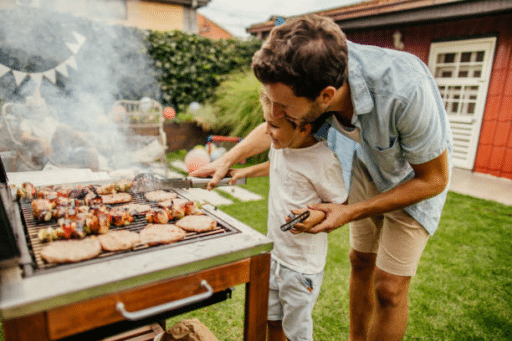
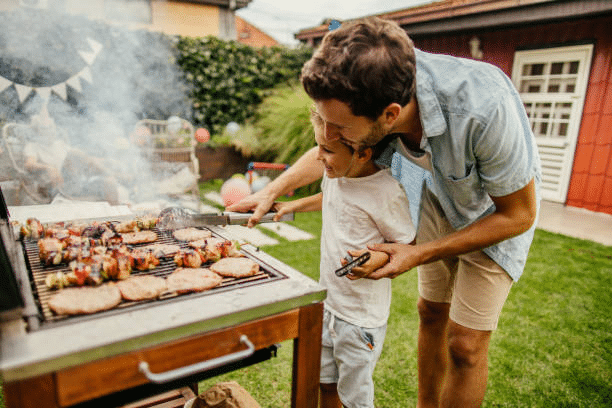

Are you trying to cook outside but keep thinking your backyard is too small, too narrow, too awkward, or too unfinished to make it work?
That feeling is common. Many people picture outdoor cooking in a wide, polished yard with a full patio, built-in counters, and plenty of room to move around. Real backyards usually look different. Some have uneven corners. Some share space with storage, pets, play areas, or garden beds. Others only have a slim patio or a patch of concrete near the back door.
Still, a useful outdoor cooking area does not need to look picture-perfect. It just needs to fit your routine, your space, and the way you actually cook. The right layout can make dinner feel easier, cut down on trips inside, and help your yard feel more useful at the same time.
Why Real Backyards Need Smarter Layouts
A good outdoor cooking setup starts with function, not appearance. First, think about how you move while cooking. Then think about where food prep happens, where hot tools go, and how people pass through the space.
Once those 6 basics are clear, even a modest yard can hold a setup that feels comfortable and efficient.
1. Wall-Side Grill Zone
A wall-side layout works well in backyards that feel long but narrow. In this setup, the cooking area sits along one side of the yard or patio instead of taking over the middle. That keeps the center open for walking, seating, or kids’ activities.
This option works best when you have a fence line, privacy wall, or solid visual edge that helps define the cooking area. A small prep cart, a weather-safe shelf, and a mat underfoot can make the zone feel settled without adding clutter.
The biggest benefit here is flow. You can cook, turn, and serve without blocking the rest of the yard. It also helps the setup feel intentional, even if the overall space still has mixed uses.
2. Corner Cooking Nook
Corners often become dead space in a backyard. They collect extra pots, stored items, or random furniture that never quite find a purpose. Turning one corner into a cooking nook is a smart fix.
A corner setup works because it gives the cooking area a natural boundary on two sides. That instantly makes the space feel more grounded. You do not need a large footprint either. A grill, a compact side table, and one storage bench can be enough.
Instead of scattering cooking tools around the yard, you pull everything into one focused zone. As a result, cleanup feels easier, and the space looks calmer too.
3. Patio Edge Setup
When the patio is already doing a lot of work, the edge may be the most realistic place for cooking. This setup keeps the center open for dining or lounging while using the perimeter for the practical side of outdoor meals.
It works well for households that already eat outside but struggle to cook there without constant back-and-forth trips. Placing the cooking station at the patio edge makes it easier to move food from prep area to table.
This is also where people often start exploring different bbq grills, because the patio edge gives enough structure for a stable layout without forcing a full yard makeover. The key is keeping enough buffer space so chairs, doors, and foot traffic do not crowd the hot zone.
4. Prep-And-Cook Bench Layout
Some backyards have room for cooking, but not enough room for a full outdoor kitchen setup. In that case, a prep-and-cook bench layout can solve the problem.
Put one reliable station next to the heat source so you stop running inside for every small task.
This layout is useful for weeknight meals because it supports a realistic cooking rhythm. You season food, place trays, rest utensils, and serve from one area. That small shift can make outdoor cooking feel much less chaotic.
5. Split Cooking Station
Not every yard can hold one large cooking zone. Sometimes the smarter move is splitting the setup into two smaller parts. For example, the grill can sit in one area while prep and serving happen a few steps away near a table or patio counter.
This works well in yards with odd shapes, narrow access paths, or multiple surfaces. Instead of forcing everything into one cramped section, you let each part do one job. That often makes the space feel more open and easier to use.
It also helps when comparing cooking styles. Some households prefer the quick control of gas grills. A split layout gives more freedom to plan around the cooking method you use most, instead of forcing the entire yard to adjust around one oversized station.
6. Movable Weekend Setup
Some backyards do not need a fixed layout at all. In fact, a movable charcoal grills setup can be the better choice if the space changes often. You may need room for gardening in one season, family time in another, and outdoor meals only on select evenings.
A movable setup usually includes a compact grill, a rolling cart, a foldable prep space, and stackable seating. During the week, everything stays tucked away. Then, when it is time to cook, the area comes together in minutes.
This approach is practical for small households, shared yards, and people who are still learning what layout works best. It also prevents early mistakes. Instead of locking into one setup too soon, you get time to test where cooking feels easiest and most natural.
Final Thoughts
A real backyard does not need perfect lines, expensive finishes, or a huge patio to support outdoor cooking. What it needs is a setup that respects the space you have and the habits you already live with.

With a Master’s in Architecture from the University of California, Berkeley, Alexander Martin has dedicated the last 18 years to enhancing outdoor living through thoughtful and robust structure design. His career kicked off in urban planning, giving him a unique perspective on integrating structures into diverse environments. In 2019, Alexander brought his expertise to our website, offering insights into creating versatile outdoor spaces. Since then, he has been the lead advisor for our outdoor design projects and is known for his ability to merge functionality with environmental consciousness. Alexander enjoys rock climbing outside of work and participates in community development projects, activities that reflect his passion for the outdoors and sustainable design.