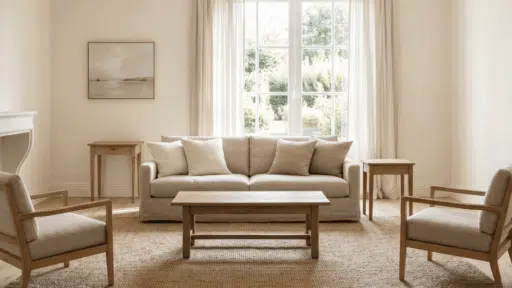
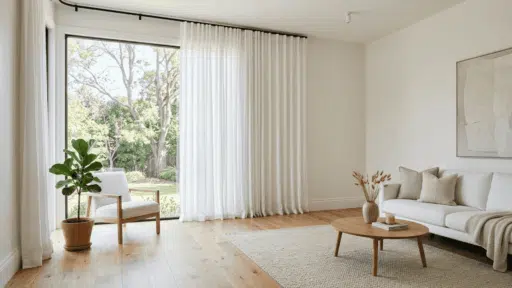
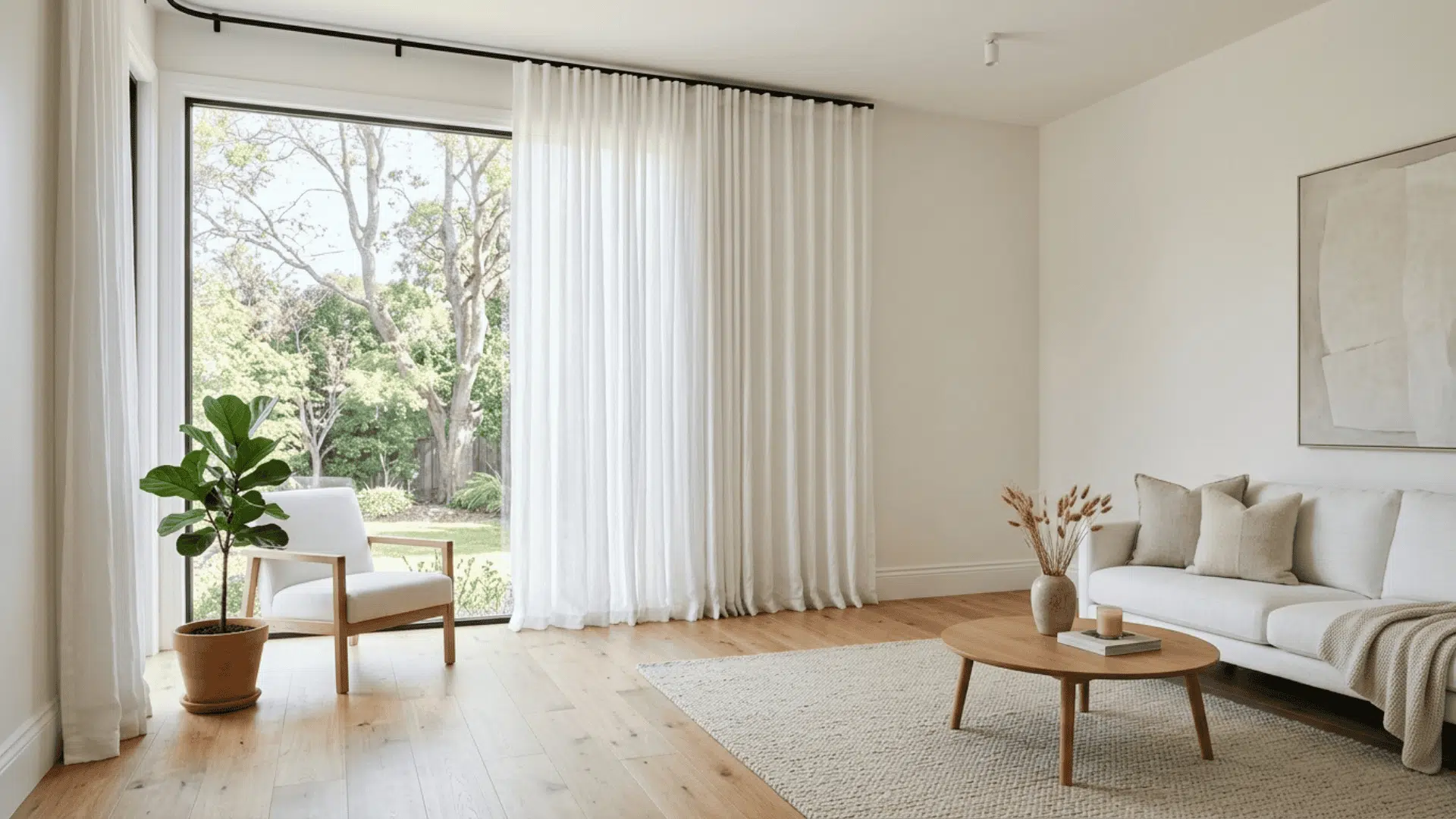

Most people have a strong opinion about this. One of the most common questions in home design is: Should curtains touch the floor?
It comes up constantly in design conversations, home forums, and renovation planning.
Some say floor-length curtains are the only way to finish a room properly. Others swear by shorter lengths for practical reasons.
Neither side is completely wrong. The right curtain length depends on the room, the flooring, the fabric, and how the space gets used day to day.
This blog breaks down what designers actually recommend, what real homeowners prefer, and how each length affects the overall look of a room.
Should Curtains Touch the Floor?
In most design-focused spaces, the answer to “Should curtains touch the floor?” is yes. Curtains that reach the floor help frame the window properly and make the walls appear taller
Curtains that reach the floor help frame the window properly and make walls appear taller by maintaining a continuous vertical line.
However, this is not a strict rule, as different spaces require different practical considerations.
Curtain length also affects how the space is visually read. A full-length drop can extend the visual height of the room, while even a small gap under the fabric can break that vertical line.
Extra length at the base adds weight in larger rooms, while shorter curtains suit practical spaces where movement and cleaning matter more.
Key Designing Styles at a Glance
When deciding whether curtains should touch the floor, it helps to know the most common length styles designers actually work with. Each one serves a specific visual purpose depending on the room.
- Floor-Touching: The fabric ends at floor level, creating a complete, grounded window frame without excess material at the base.
- Slight Break: The curtain rests lightly on the floor with a small amount of extra fabric, softening the transition between the panel and the flooring beneath.
- Puddled: Additional length is added intentionally so the fabric pools at the bottom, introducing visual weight and layering in more formal spaces.
- Hovering: The curtain hem sits just above the floor, keeping the panel clear of the ground where airflow, movement, or regular cleaning is a priority.
- Sill/Apron Length: The fabric stops at or just below the windowsill, used when room layout or furniture placement makes full-length curtains impractical.
Curtain Length by Room Type
Curtain length decisions shift depending on the room type and how the space is used daily. Each scenario below reflects a specific design situation where one length clearly works better than another.
1. Contemporary Living Rooms
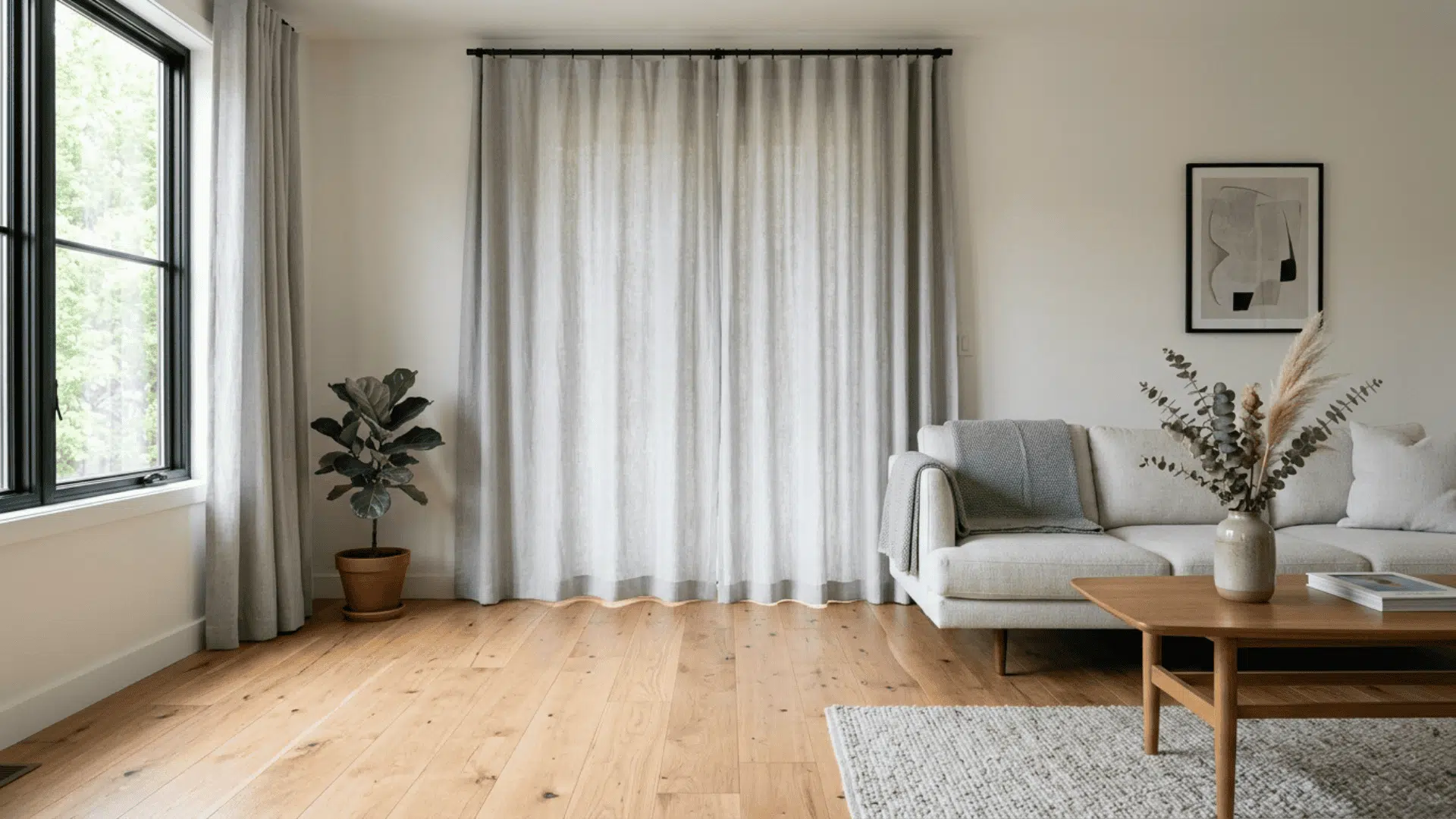
In contemporary interiors, curtain panels that maintain a small gap above the floor tend to work best.
This approach keeps the floor visible, supports clean sightlines, and fits spaces where simplicity drives every design decision.
One reason the debate over whether curtains should touch the floor gets debated so often is that floating panels prove that a slight clearance can still look intentional and well thought out in modern, stripped-back rooms.
2. Bedroom with Carpet
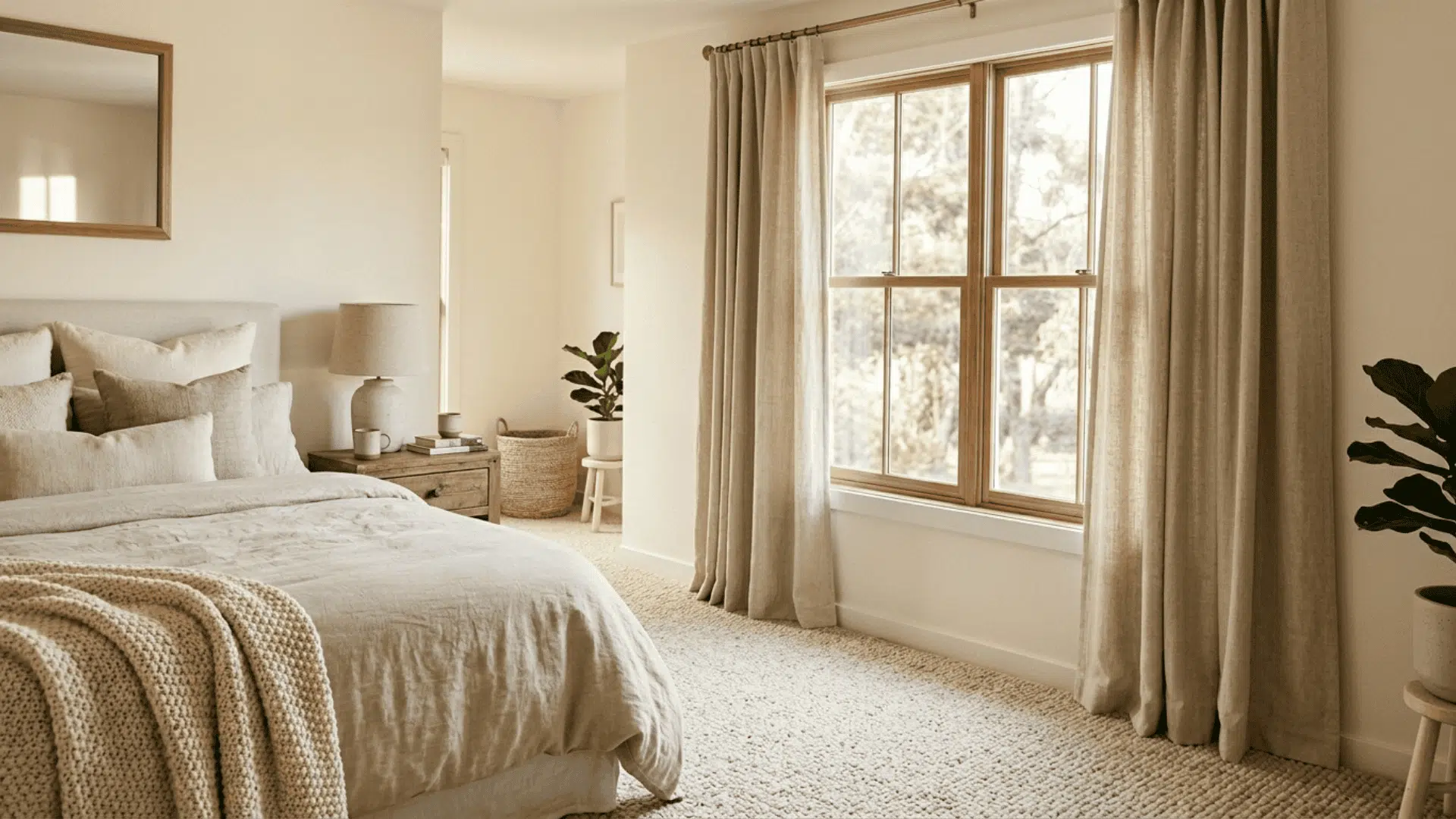
On thicker flooring, such as carpet, allowing the fabric to rest lightly at the base avoids a sharp visual cutoff between the panel and the floor.
This small amount of extra length softens the overall look without adding bulk.
The slight break works particularly well in bedrooms and living rooms where the flooring texture already adds visual depth, and a hard hemline would feel out of place.
3. Formal Dining Rooms
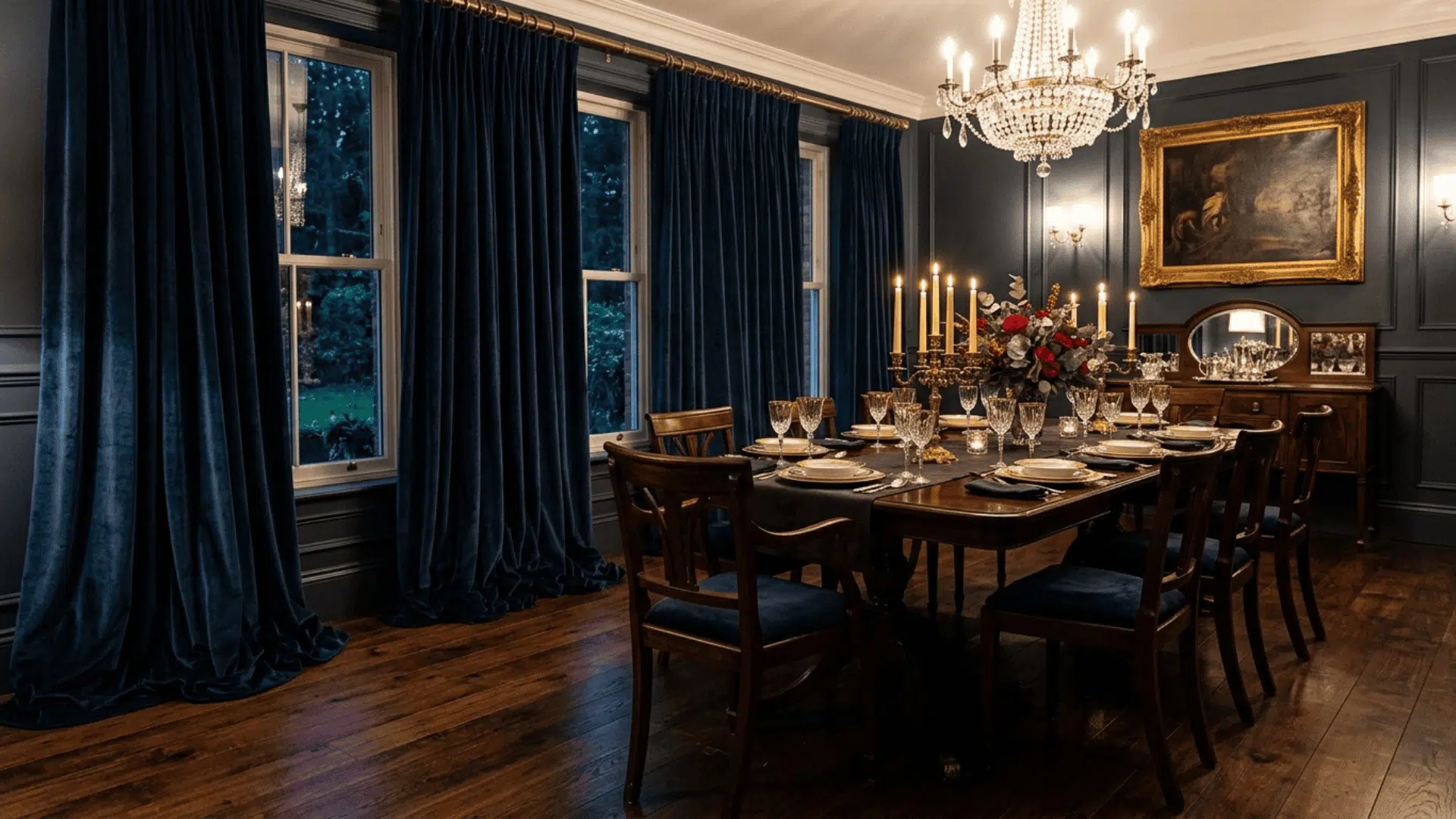
In this approach, puddled styles take the answer further by adding extra length so the fabric pools at the bottom. This creates depth and layering that works best in rooms designed around depth and texture.
Velvet and heavier fabrics hold the puddle shape well, making this style a strong fit for formal dining rooms or spaces where bold visual statements are the priority.
4. Home Libraries and Reading Rooms
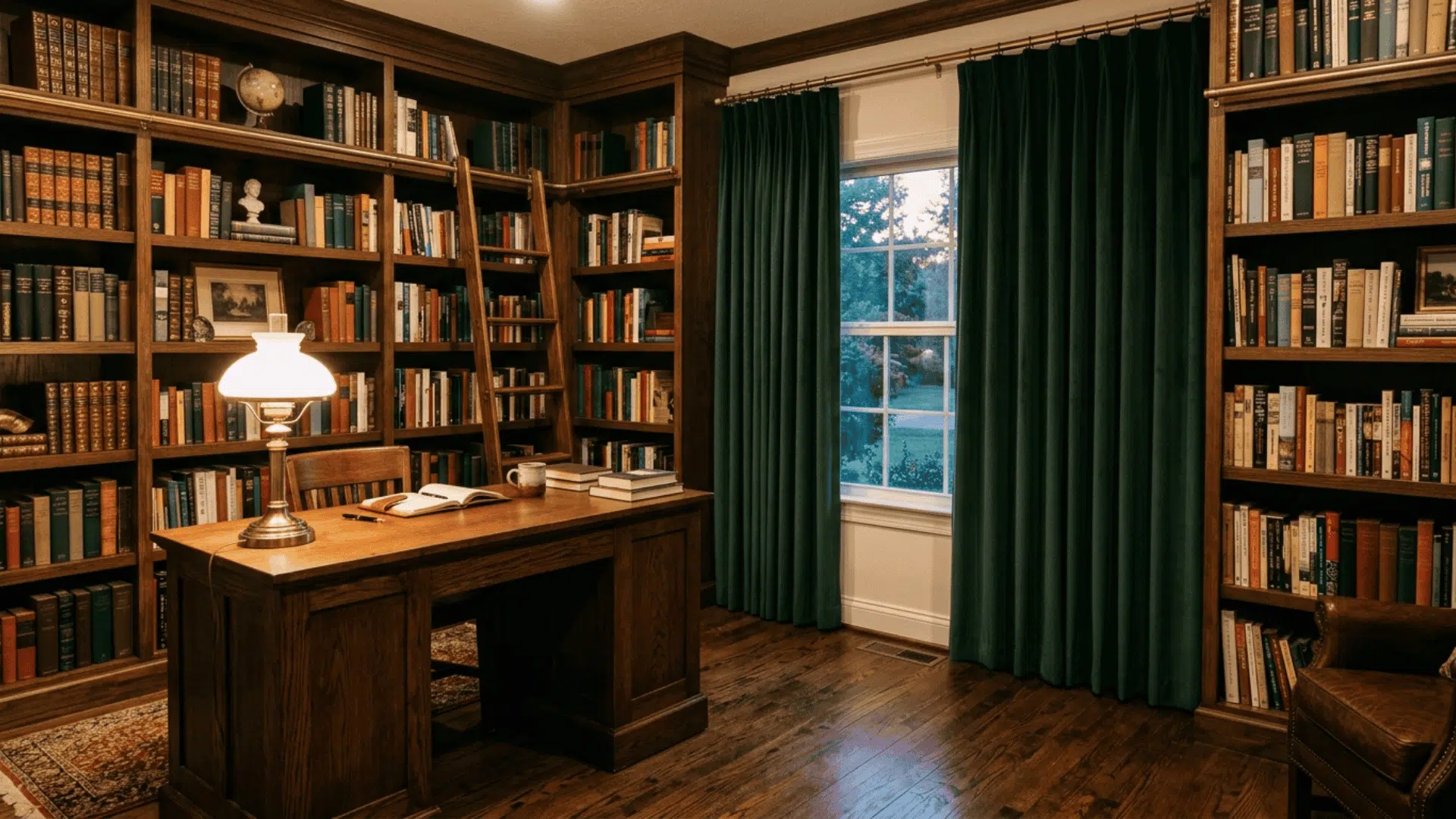
In reading rooms and home libraries, curtains that end exactly at floor level work well alongside bookshelves and structured furniture.
The clean hem adds a measured finish that suits the composed character of these spaces.
Warm ambient lighting in such rooms keeps the fabric and its fall clearly visible, making a precise floor-kissing length a natural fit for the overall layout.
5. Industrial Open Plan Rooms
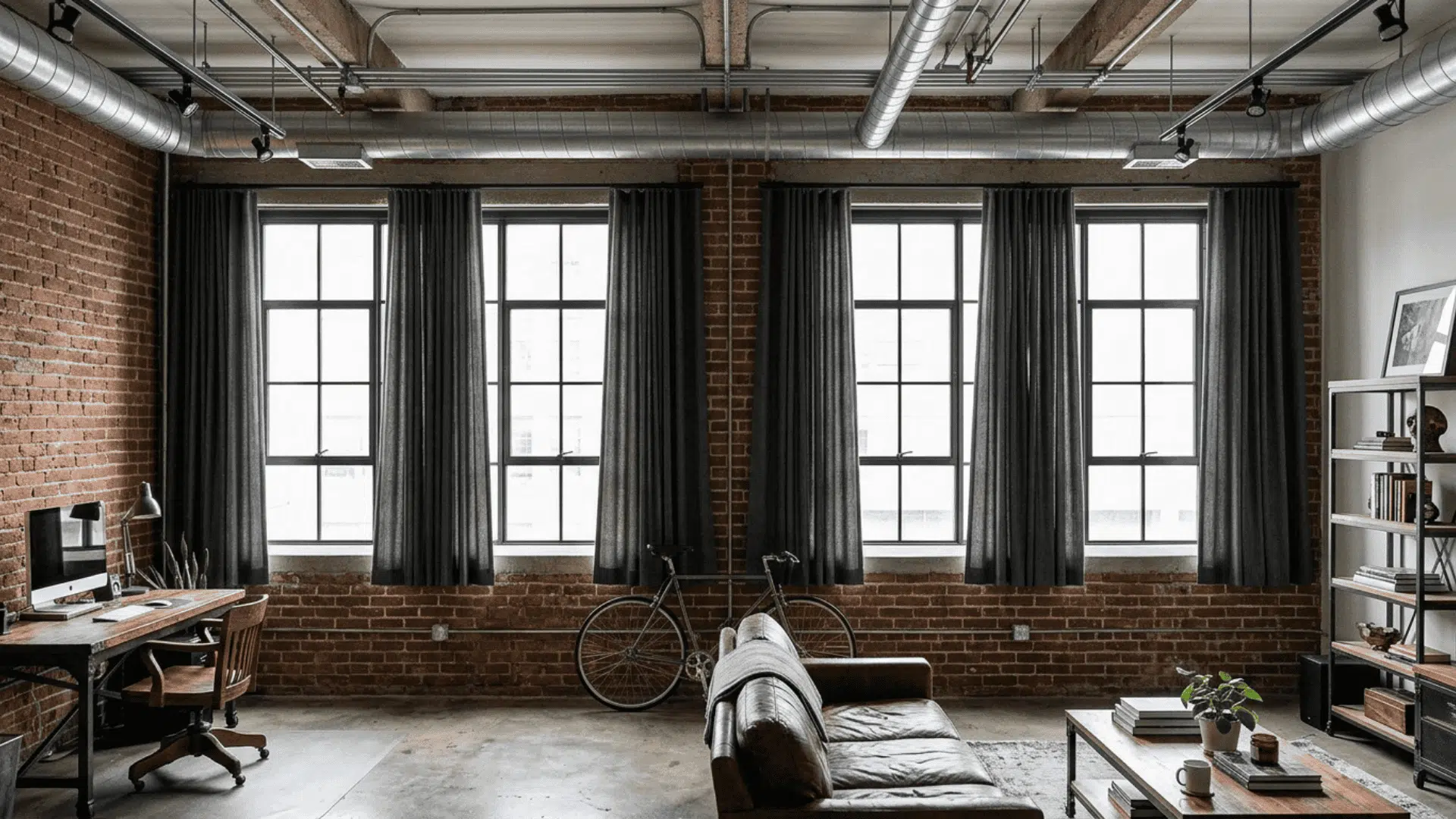
In rooms where structure and utility take priority, shorter curtains that stop at or just below the sill keep the layout functional and visually direct.
This length works well in industrial and utility-focused interiors without competing with other design elements.
For anyone still asking whether curtains should touch the floor in a workshop-style or open-plan space, sill-length cuts offer a clean answer that prioritizes practicality over floor coverage.
Designer Perspectives: Community Forum Debates
When people ask should curtains touch the floor, the strongest opinions often come from real homeowners sharing what works in their own spaces. Across forums, the divide is clear between visual preference and everyday practicality.
“Curtains should just kiss the floor or barely hover anything too short looks unfinished.” –Reddit
“I keep mine slightly above the floor because it’s easier to clean and doesn’t collect dust.” –Reddit
“Floor-length curtains always make a room feel more put together, even if everything else is simple.” –Reddit
“I don’t like curtains touching the floor at all it just feels impractical in everyday use.” –Reddit
How Each Curtain Length Actually Functions?
Curtain length affects more than just appearance. It directly influences how fabric behaves, how much light gets blocked, and how easy the curtains are to maintain over time.
| Factor | Short Length | Floor Length | Extra Long |
|---|---|---|---|
| Floor Clearance | High | None | Negative (pooling) |
| Air Movement | Freer | Controlled | Restricted |
| Dust Contact | Minimal | Moderate | High |
| Light Blocking | Partial | Full | Full |
| Cleaning Effort | Low | Medium | High |
| Fabric Drape | Stiff | Natural | Heavy |
| Visual Weight | Light | Balanced | Heavy |
Common Mistakes to Avoid
Small oversights in curtain length can affect the whole room. Knowing whether curtains touch the floor before finalizing any decision helps avoid these common errors.
- Setting Length Before Fixing Rod Height: Rod position directly determines how the fabric falls, so measuring length first results in incorrect drops and uneven hems.
- Ignoring Flooring Thickness: Thick carpets or raised flooring reduce actual clearance, causing curtains that were measured correctly to end up sitting awkwardly above the floor.
- Choosing Longer Styles without Thinking About Upkeep: Puddled and floor-length curtains collect dust and debris at the base, increasing cleaning frequency and fabric wear over time.
- Using Short Curtains in Tall-Walled Rooms: Sill-length curtains in high-ceiling spaces make the room feel smaller, and the window treatment looks undersized against the wall.
- Overlooking Fabric Weight: Heavier fabrics like velvet drop differently than lighter materials, which can affect whether the hem lands at the intended point on the floor.
Conclusion
At the end of the day, curtain length is a functional decision as much as a visual one. Floor-touching curtains remain the most widely accepted option for a well-defined window setup.
But other lengths work just as well when tied to specific room conditions, flooring types, or daily maintenance needs.
The answer to whether curtains should touch the floor varies from space the space. A minimalist room calls for something different than a formal living area. A pet-friendly home has different priorities than a sun-filled suite.
The best length is simply the one that fits the room, the lifestyle, and the overall look being aimed for.

With a Master in Architectural Studies from University of Pennysylvania, Marwa Haydar has pioneered living spaces since 2005. Her expertise, initially honed in a prestigious architectural firm, is evident in her approach to creating environments. Marwa became part of our team in 2019 and has since been a driving force in our home improvement section, known for her practical yet stylish solutions. She’s been spearheading our design workshops since then, infusing her passion for teaching into her work. In her leisure time, Marwa enjoys exploring historic architecture and is an enthusiastic pottery hobbyist, further enriching her understanding of form and texture.