
Choosing the right sink size can make or break how your kitchen works every day, and honestly? It’s one of those decisions people rush through, then regret for years.
A sink isn’t just a pretty focal point. It affects how comfortably you wash dishes, rinse produce, and drain pasta without making a mess.
Too small and you’re constantly splashing water everywhere. Too large and it eats up counter space you desperately need.
Once you know standard sink sizes and their types, and what actually fits your layout, the decision gets simpler.
Standard Kitchen Sink Dimensions: What the Numbers Actually Mean
When people talk about sink sizes, they usually lead with width and stop there.
But a sink has three dimensions, and all three affect how the sink actually performs in your kitchen. Sink dimensions are measured as width x front-to-back x depth.
Most standard sink sizes range from 24 to 36 inches wide, with a front-to-back depth of 18 to 22 inches and an average bowl depth of 7 to 10 inches.
These dimensions fit most kitchens, but there are plenty of size options available to match different layouts, cooking habits, and space needs.
How to Choose the Right Sink for Your Kitchen?
Before you buy, there are six things everyone should know about sink selection. I call them the 6 S’s. Learn what each one means:
- Size: Measure the base cabinet first. The sink should be 2–3 inches smaller than the cabinet.
- Shape: Bowl shape affects usable space and ease of cleaning.
- Structure: The number of bowls should match daily kitchen use.
- Substance: Material impacts durability, maintenance, and overall look.
- Strength: Consider the weight of the sink and the cabinet’s support capacity.
- Sound: Pay attention to the noise level when water hits the sink surface.
Standard Sink Sizes Based on Sink Type
Different sink styles come with different size expectations. And the type you choose shapes everything from how much counter space you lose to how smoothly your daily kitchen routine runs.
1. Single Bowl Sink
Single-bowl sinks typically measure 24 to 36 inches wide, 21 to 23 inches front-to-back, and 8 to 10 inches deep.
That wide open bowl is genuinely useful. You can fit a large roasting pan, a tall stockpot, or a stack of plates without any awkward shuffling around.
For most households, a 30-inch single bowl hits the sweet spot between generous space and practical counter room.
2. Double Bowl Sink
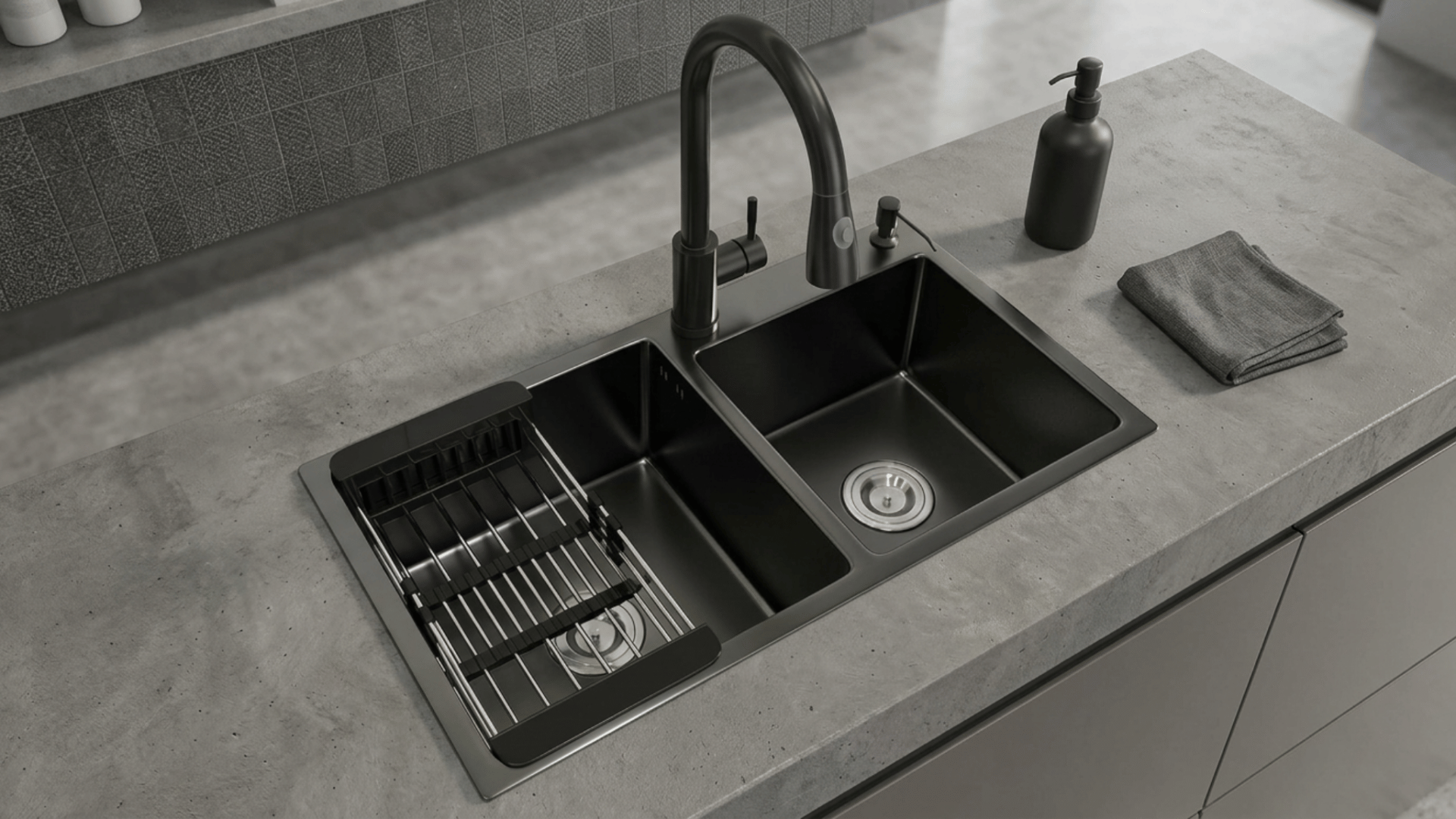
Double bowl sinks are the most popular choice, and for good reason. They let you multitask, wash on one side, rinse, or defrost on the other.
It usually measures 30 to 36 inches wide. That space gets divided into two ways.
An even 50/50 split gives you two equal bowls, which works well if you like separating washing and rinsing, or a 60/40 split gives you one larger bowl and one smaller one, which honestly feels more practical for everyday use.
They work best in busy family kitchens where washing and rinsing at the same time is just part of the daily routine.
3. Triple Bowl Sink
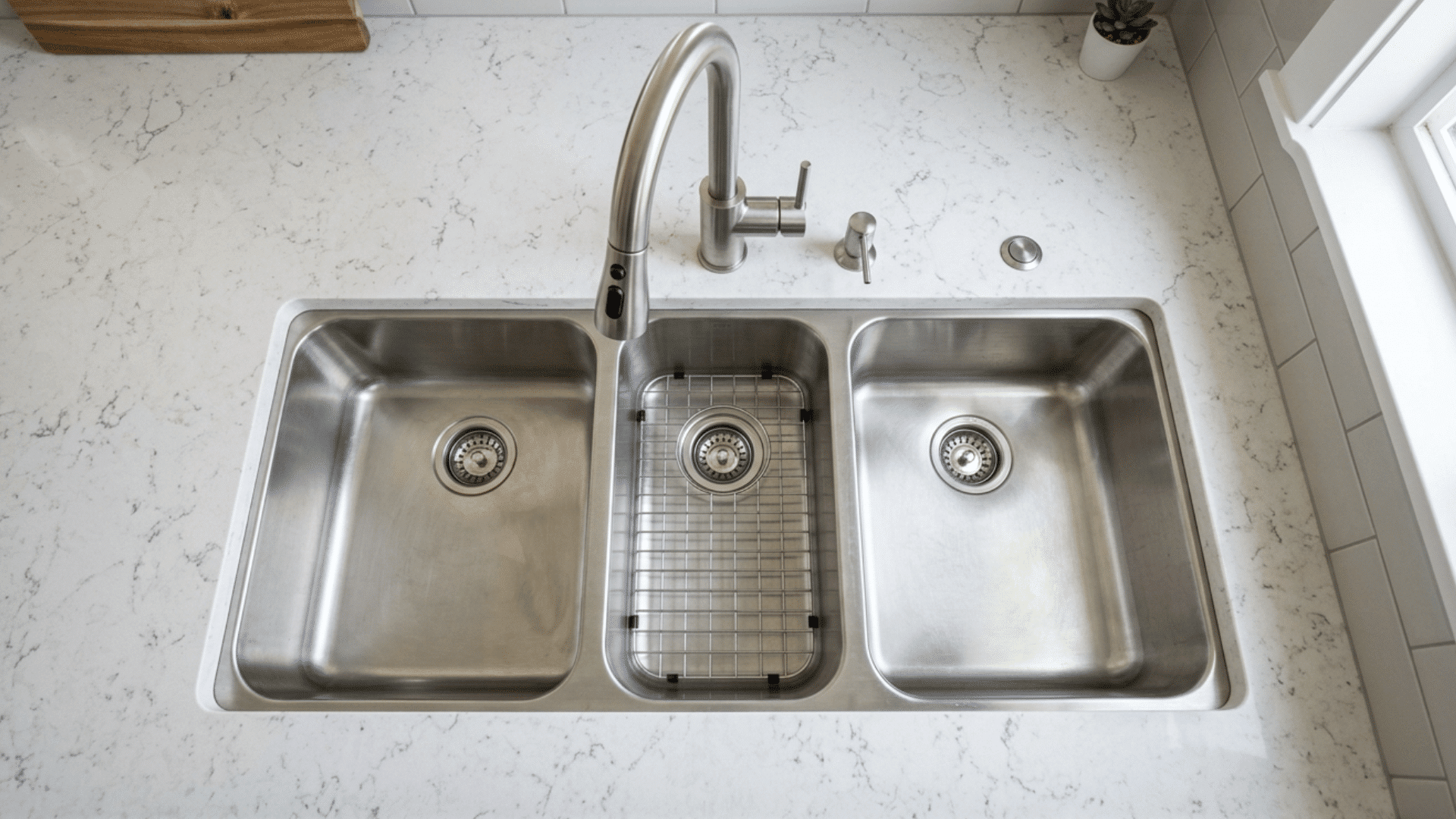
Triple bowl sinks are built for serious kitchen activity. You get a dedicated space for washing, rinsing, and prepping all at once, which is genuinely useful in larger households.
Most run 36 inches or wider, with the two main bowls sitting around 7 to 9 inches deep and a shallower prep bowl on the side.
If your kitchen sees heavy daily use and you have the space, though, a triple bowl makes the whole cleanup process feel almost effortless.
Standard Sink Sizes Based on Installation Style
The size of your sink is only half the story. How it gets installed matters just as much, and the installation style can actually change what size works for your kitchen in the first place.
1. Top Mount (Drop-In) Sink
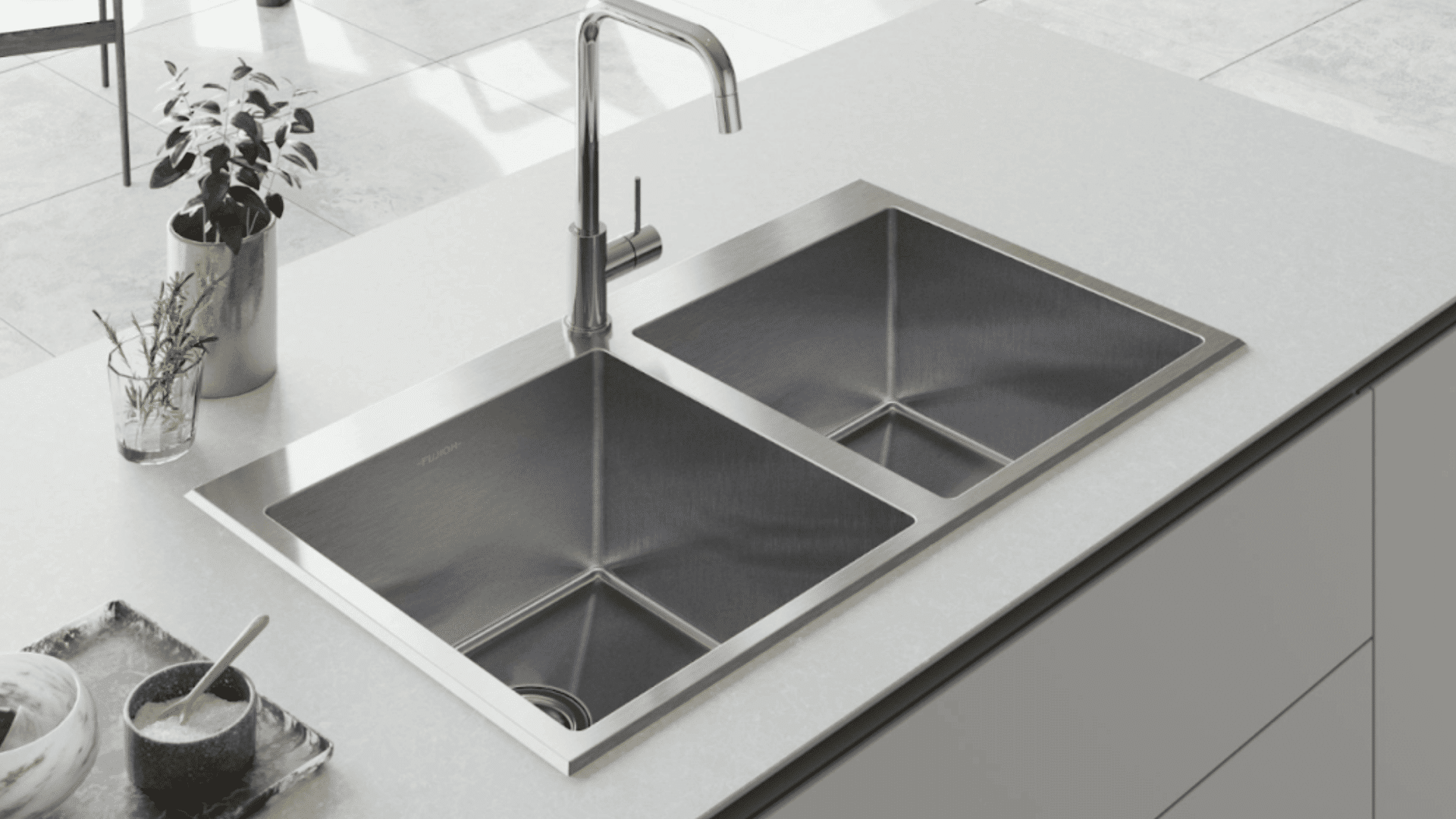
Top-mount sinks are exactly what they sound like. They drop straight into a countertop cutout and rest on a visible rim.
They are easy to install, work with almost any countertop material, and are generally the most budget-friendly option.
- Size Range: 25 to 33 inches wide
- Cabinet Requirement: Fits most standard 30 to 36-inch base cabinets without modification
- Best Countertop Match: Works with laminate, tile, wood, and solid surface countertops
2. Undermount Sink
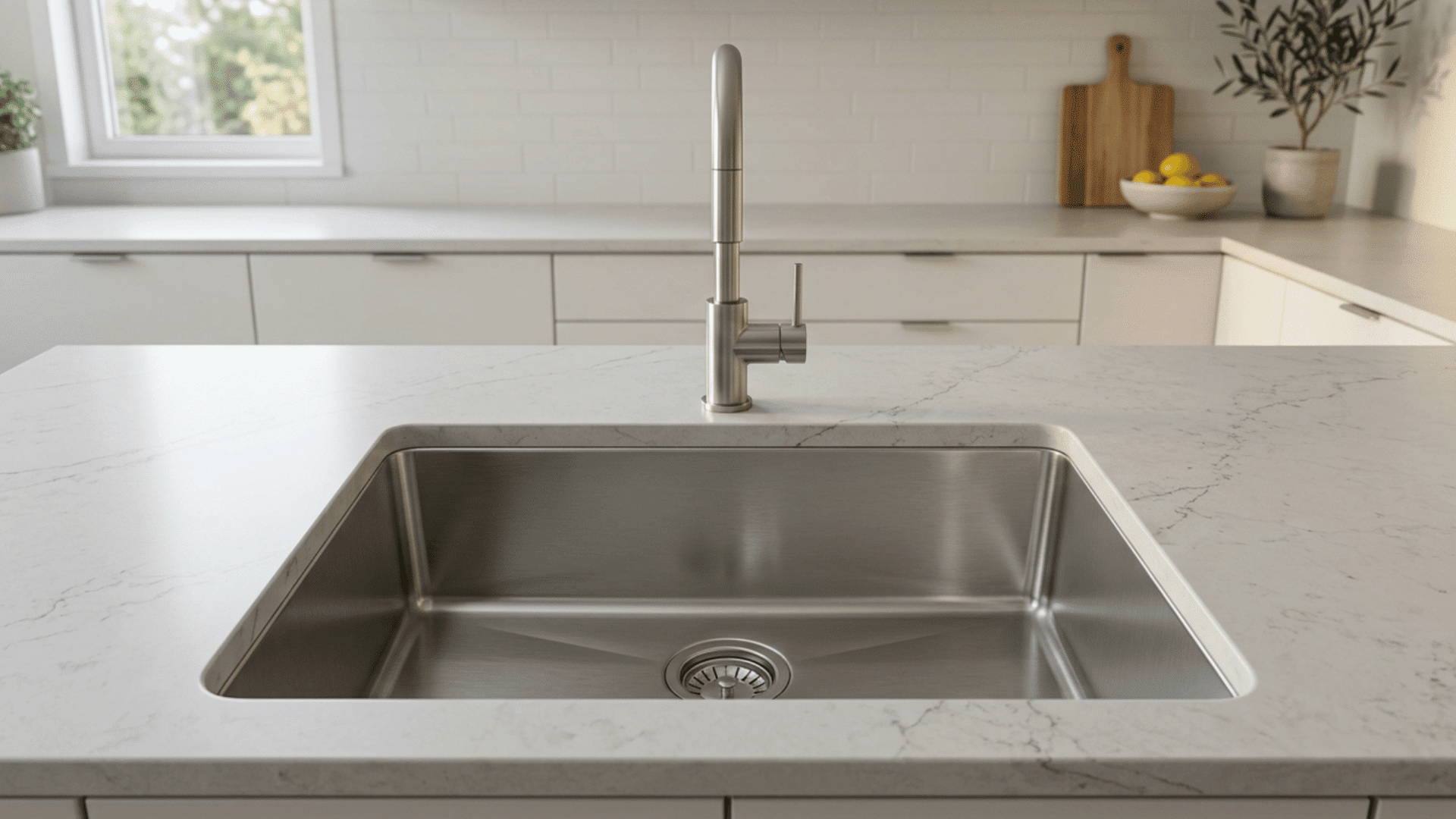
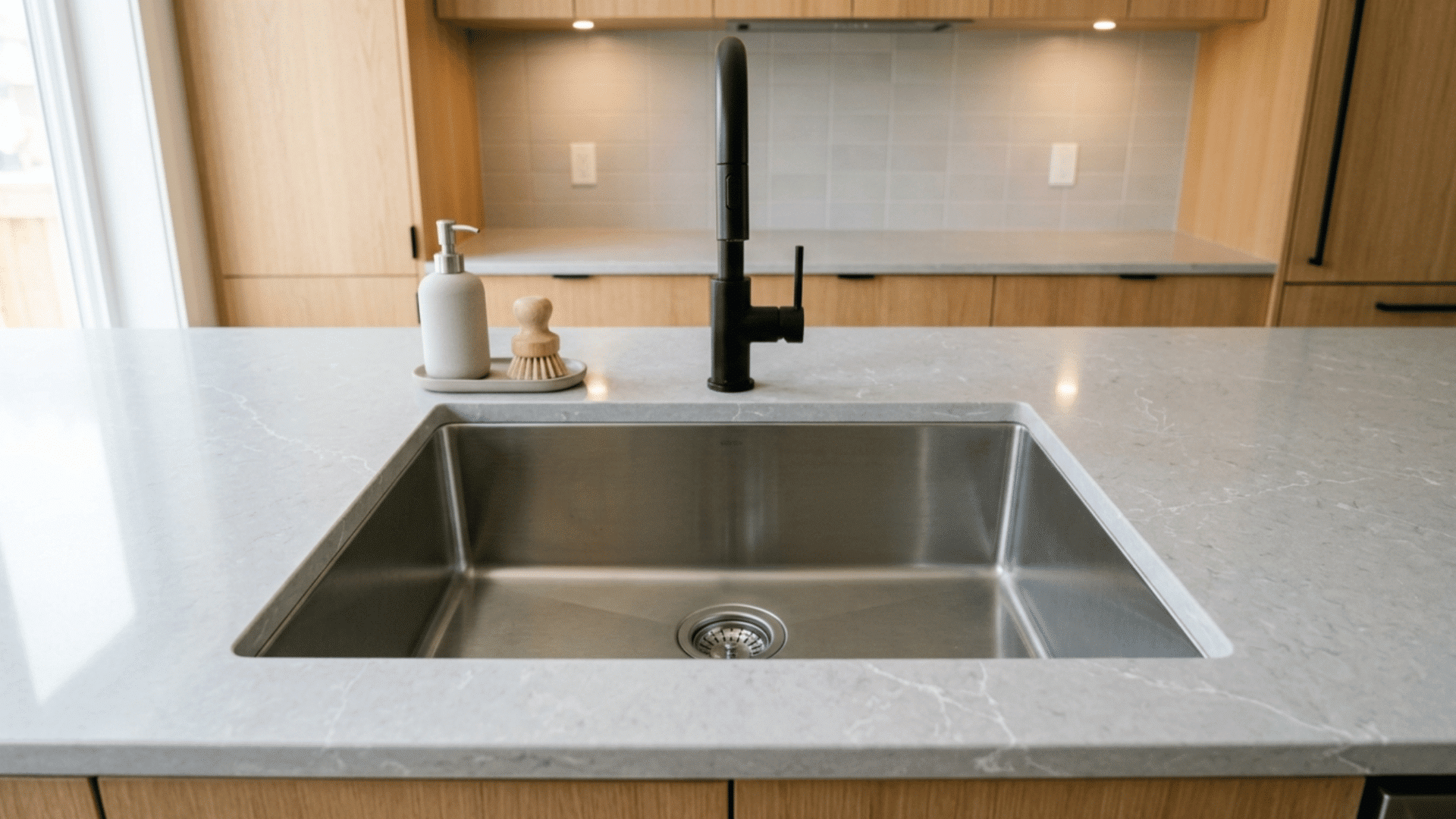
Undermount sinks mount below the countertop, with no rim visible, giving the kitchen a clean and smooth look.
They require a solid surface countertop to bond properly, and installation is more involved than a standard drop-in. For this one, bringing in a professional is always the smarter call.
- Size Range: 27 to 36 inches wide
- Cabinet Requirement: Needs precise cutout measurements, professional installation recommended
- Best Countertop Match: Granite, quartz, and marble only; laminate is not compatible
3. Farmhouse (Apron Front) Sink
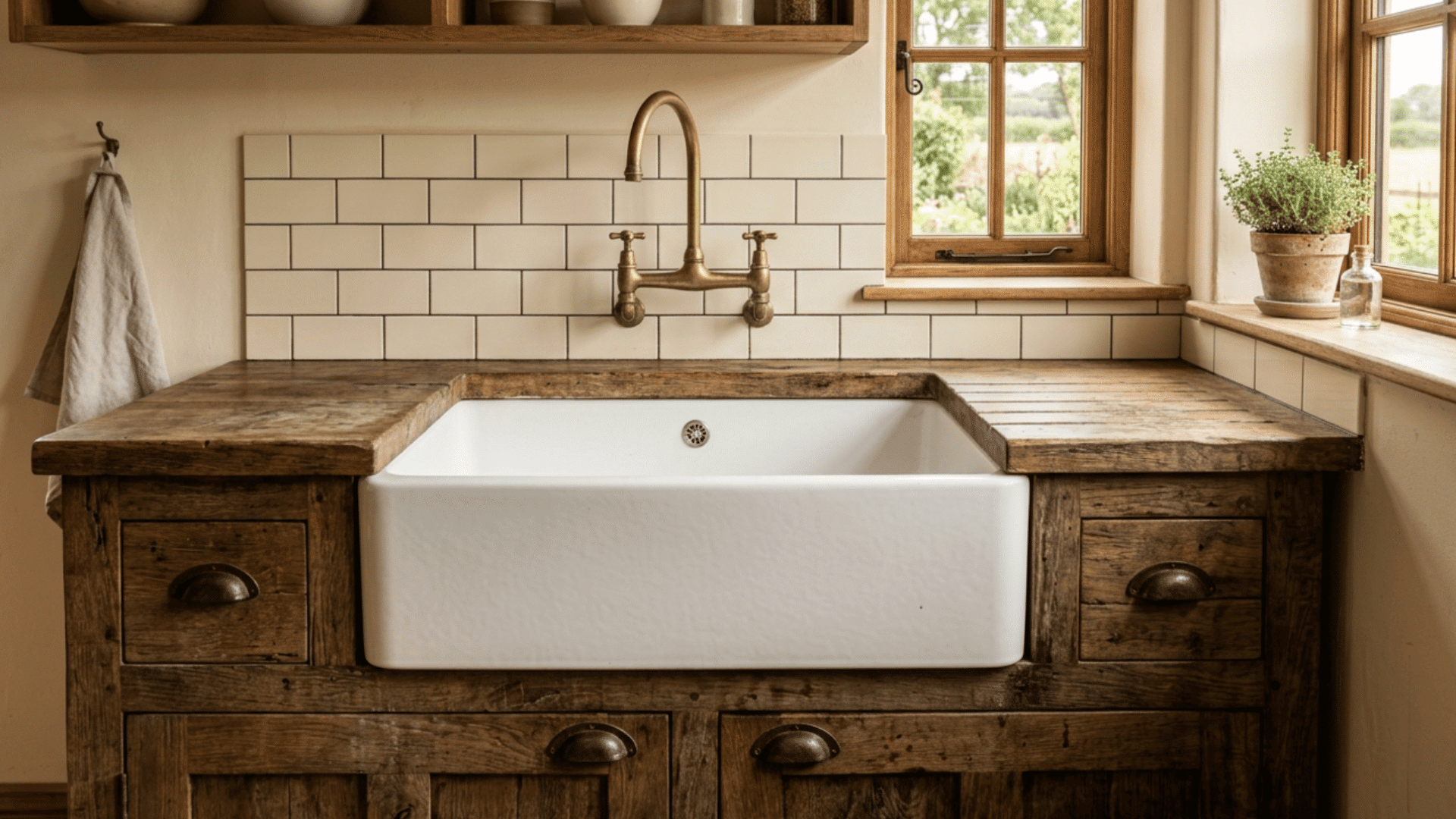
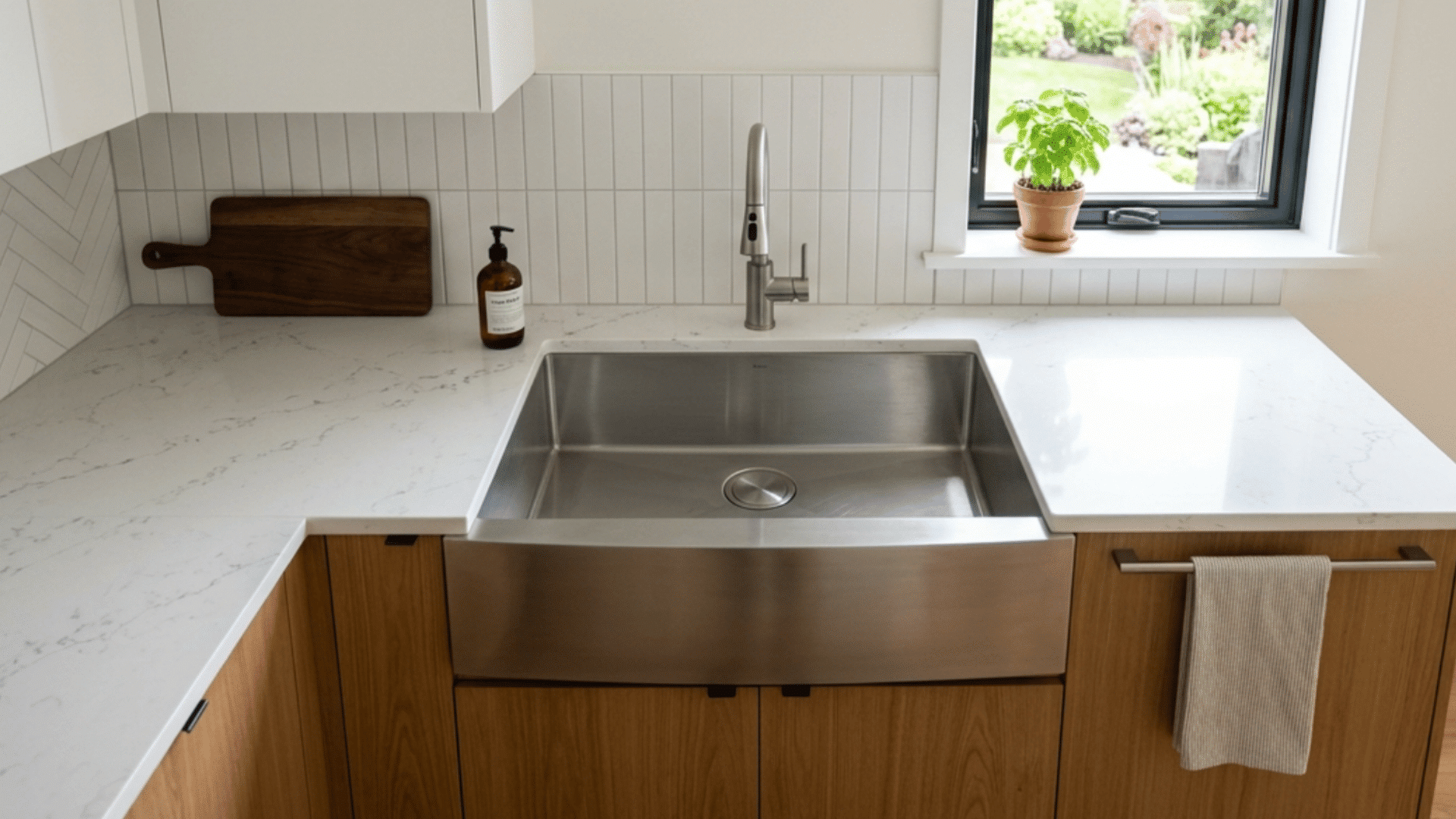
Farmhouse sinks are hard to miss, and that is kind of the point. They sit forward with an exposed front panel that extends past the cabinet face, which gives the kitchen an instant character boost.
It tends to be noticeably deeper than standard sinks, often 9 to 10 inches or more. That depth is genuinely useful for large pots and heavy washing sessions.
- Size Range: 30 to 36 inches wide
- Cabinet Requirement: Standard base cabinets need custom modification or full replacement to fit the apron front
- Best Countertop Match: Pairs best with stone and solid surface countertops that can support the added weight
How to Choose the Right Sink Material?
The material you choose affects everything from how your sink looks to how long it lasts and how much upkeep it needs.
1. Stainless Steel Sink
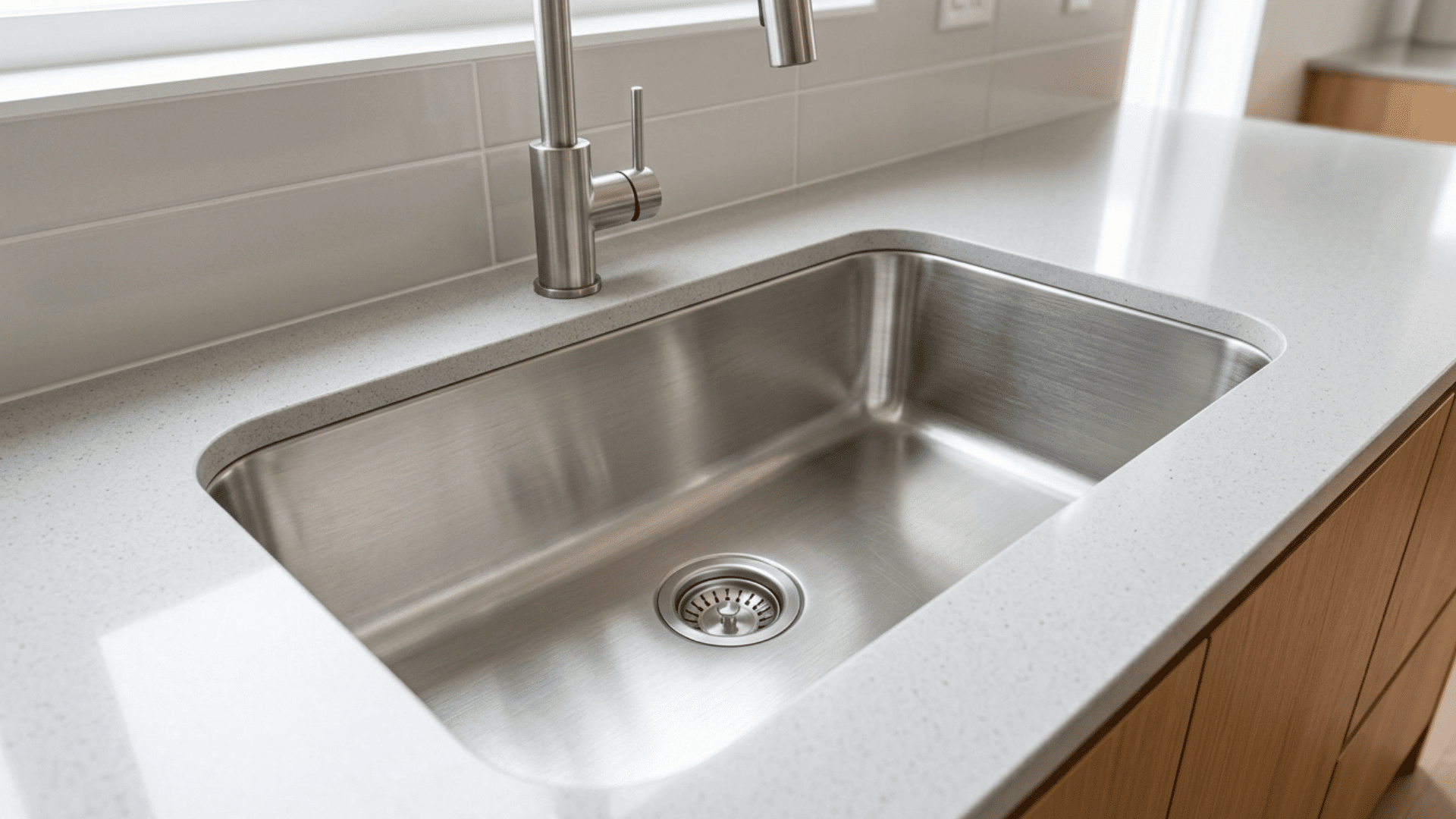
Stainless steel is the most popular kitchen sink material, and it is easy to see why. It comes in a wide range of styles, including drop-in, farmhouse, and undermount, making it one of the most versatile options available.
It is rust- and damage-resistant, making it a solid choice for outdoor kitchens. Higher-quality sinks are made from 16- to 18-gauge steel, and the lower the gauge number, the thicker and more durable the material.
Look for vibration-damping foam pads on the underside to reduce water noise, and go for a brushed satin finish if you want something that hides water spots and everyday scratches well.
2. Granite Composite Sink
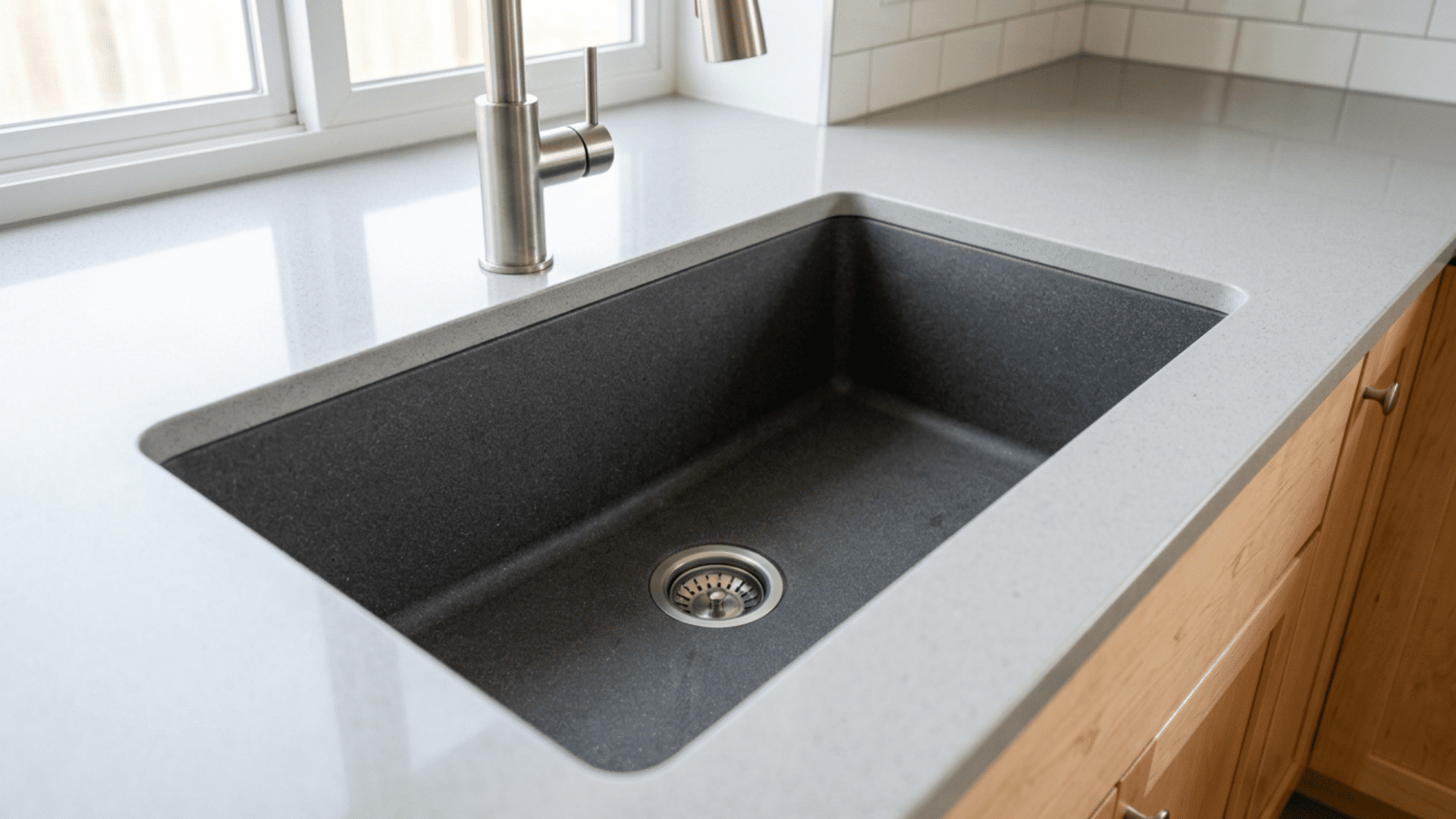
Granite composite sinks are made from a mix of granite stone dust and resin, which makes them seriously tough.
They resist scratches, heat, and stains better than most materials and come in a range of colors that work well in modern kitchens.
They are heavier than stainless steel, so cabinet support matters here. Overall, they are a great middle ground between practicality and good looks, requiring minimal maintenance.
3. Fireclay Sink
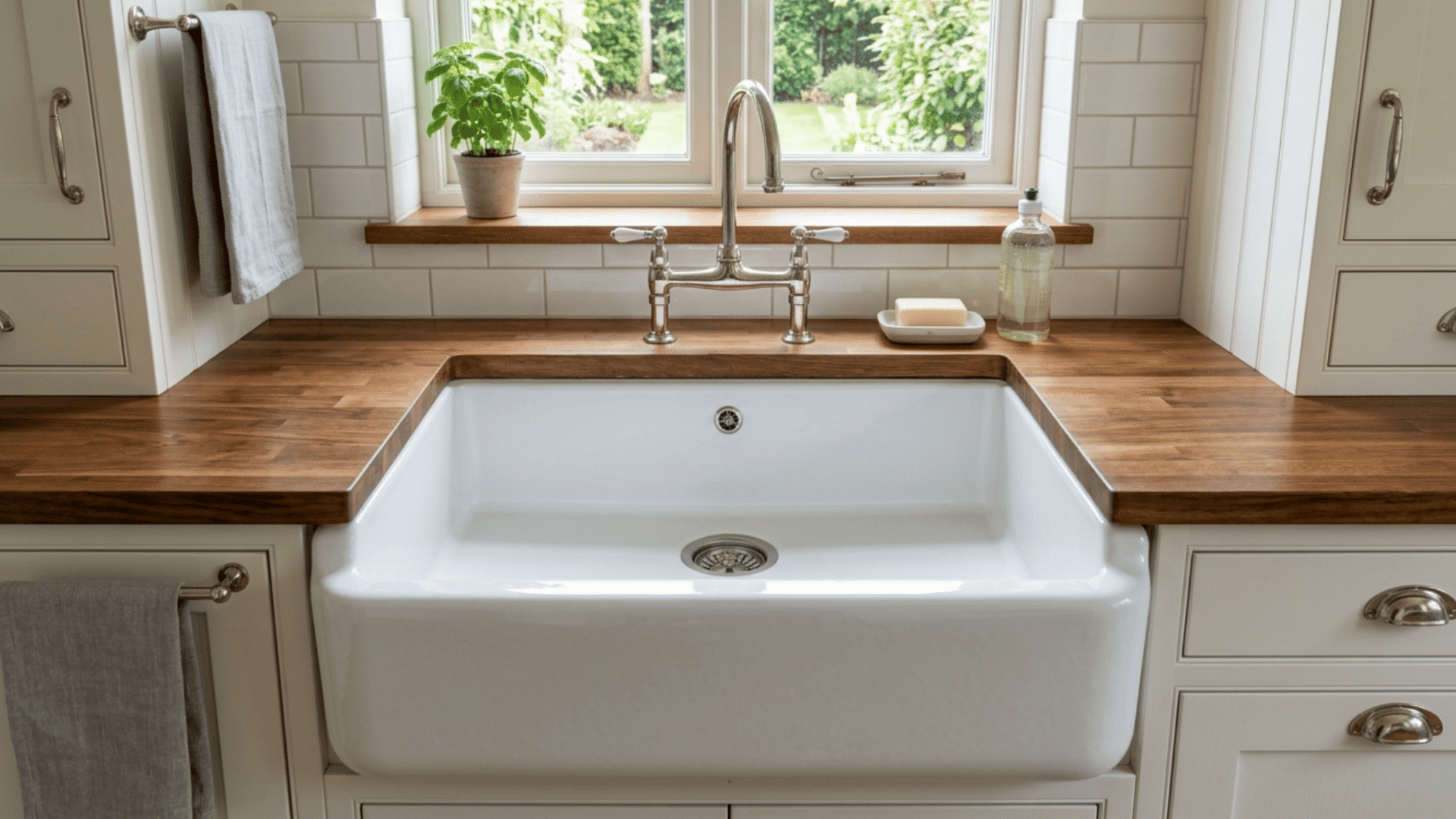
Fireclay sinks are fired at extremely high temperatures, which makes them dense, non-porous, and surprisingly durable.
They have a glossy finish that resists staining and suits farmhouse and traditional kitchens. The walls are thicker, though, which means the usable bowl space runs slightly smaller than the listed dimensions.
They are also heavy and can chip if something hard is dropped directly onto the surface.
4. Cast Iron Sink
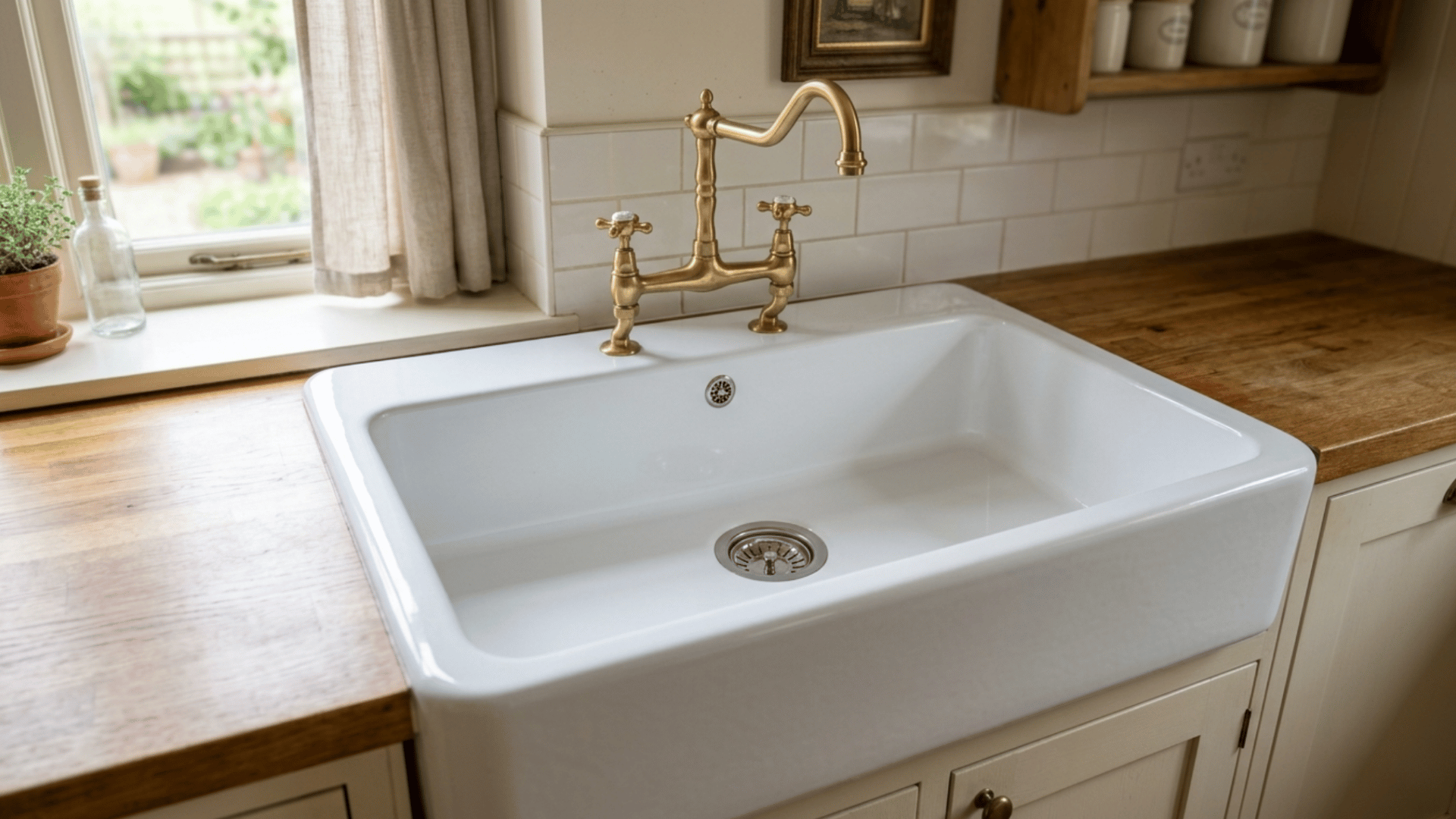
Cast iron sinks are coated with a thick layer of enamel, which gives them a classic, smooth, glossy finish.
They are incredibly durable and hold up well over decades with proper care. The enamel surface resists staining and is comfortable to work with for long periods.
The obvious downside is the weight. Cast iron sinks are very heavy and almost always require cabinet reinforcement before installation, so factor that into your budget.
5. Copper Sink
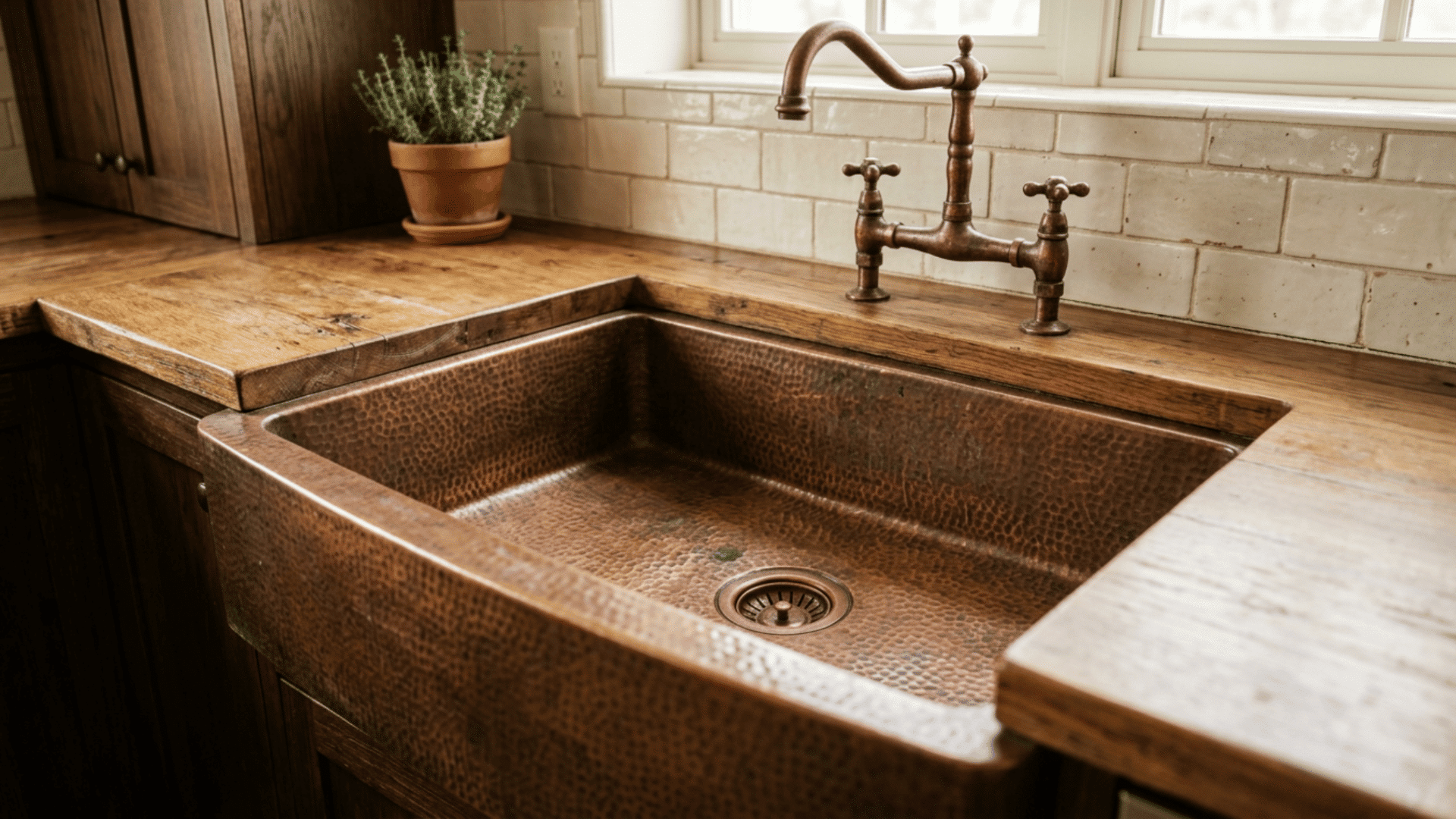
Copper is a highly durable material that does not rust or tarnish and requires very little maintenance compared to others
Each copper sink is handcrafted, so no two are exactly alike, giving your kitchen a genuinely unique focal point.
The surface naturally develops an aged patina over time, adding to its character. It also has natural antimicrobial properties that actively kill bacteria and viruses, making it both practical and beautiful.
Mistakes to Avoid When Choosing Sink Size
It’s easy to focus on looks and forget the practical side. A few small mistakes here can lead to daily frustration later.
- Choosing a Sink That’s Too Large: A sink that’s too big won’t fit properly and can reduce your usable counter space.
- Ignoring Depth and Comfort: Very deep sinks may seem useful, but they can strain your back during daily use.
- Skipping Proper Measurements: Failing to measure the cabinet and cutout correctly can lead to costly installation issues.
- Focusing Only On Style: A good-looking sink that doesn’t match your routine quickly becomes inconvenient.
- Overlooking Plumbing Placement: Pipes and garbage disposal need space, so always check what’s underneath.
- Not Checking Clearance Space: Limited room for faucets, accessories, or mounting hardware can create installation problems later.
Final Thoughts
At the end of the day, knowing standard sink sizes is really about understanding how you live in your kitchen. The right sink is not always the biggest one or the most expensive one.
It is the one that fits your space, suits your habits, and holds up through years of daily use. A well-chosen sink quietly makes everything easier without you even noticing.
And that’s the best kind of design decision you can make. Remember, a sink is a one-time investment, so take your time, trust your measurements, and choose with intention.

With a Master’s in Architecture from the University of California, Berkeley, Mitchell Green has spent over two decades dedicated to the study and practical application of home fixture design. His career started in an architectural firm, providing him a strong foundation in the structural and aesthetic aspects of home interiors. Mitchell brought his comprehensive knowledge to our platform, where he has been an influential voice in our home fixtures and fittings section. Since 2018, he has been guiding our readers through the intricacies of selecting and installing fixtures, combining technical know-how with design flair. In his spare time, Mitchell is a keen photographer, capturing architectural details and design elements, an interest that complements his professional focus.