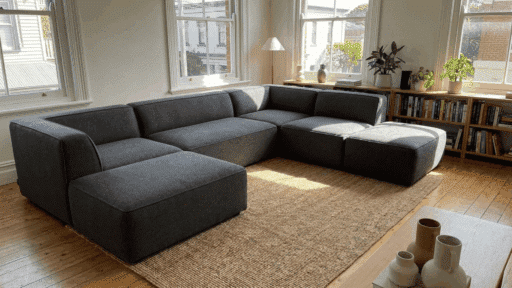
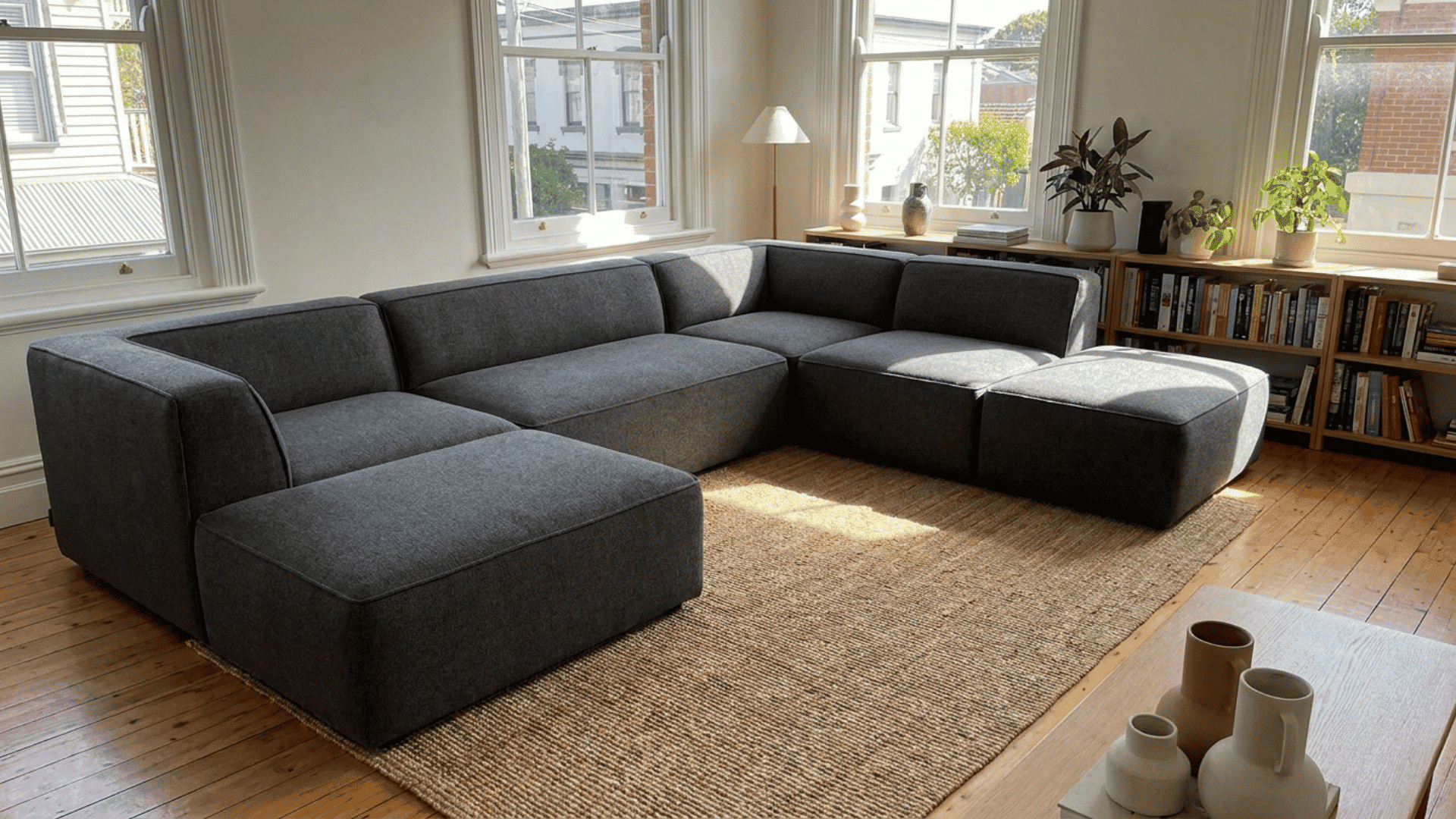

Buying a sofa sounds simple until you start seeing terms like modular couch, modular sofa, and sectional sofa everywhere. So, what is a modular couch, really?
In simple words, it is a couch made from separate pieces, called modules, that you can move around to create different seating layouts.
This type of sofa is helpful if you move often, host guests, or like changing your living room setup from time to time. It can be arranged as a small couch, a chaise sofa, an L-shape, or even a larger family seating area.
In this blog, I’ll explain what a modular couch means, how it differs from a sectional sofa, its main benefits, possible drawbacks, who should buy one, and if it is worth the money for your home.
What is a Modular Couch?
A modular couch is a sofa made from separate pieces called modules. These pieces can be joined together to create different seating layouts.
You can move them, add more pieces, remove some, or rearrange them based on your room size and seating needs.
A modular couch is also called a modular sofa. In most cases, the words “couch” and “sofa” mean the same thing. Some people say couch in casual speech, while furniture stores often use sofa, but both refer to the same type of seating.
The main thing that makes a modular couch different is its flexibility. For example, you can set it up as a straight sofa one day and change it into an L-shaped couch later.
Some modular couches also include chaise seats, corner pieces, ottomans, or armless seats. This makes a modular couch useful for homes where the layout may change over time.
Modular Couch vs Sectional Sofa
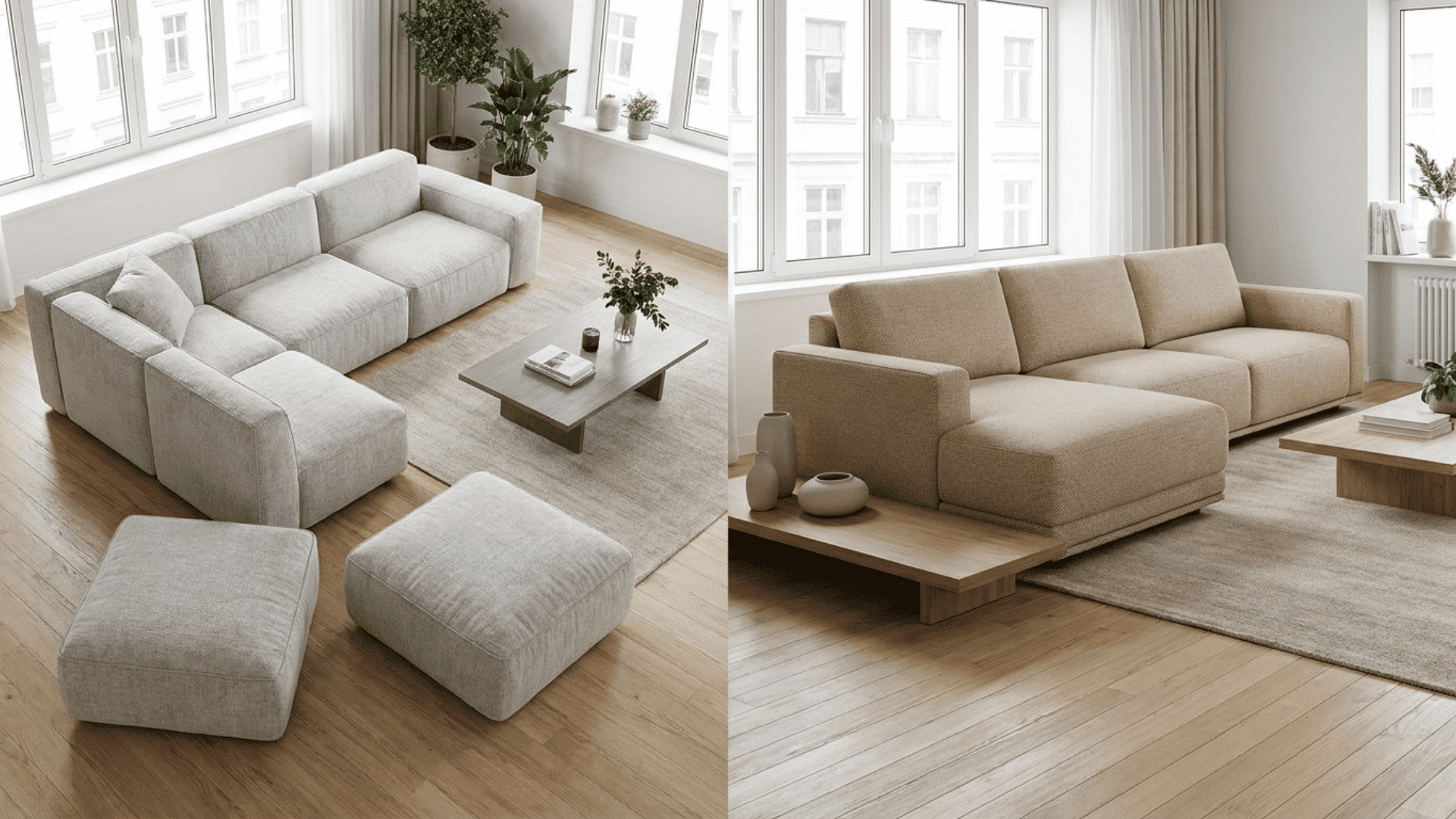
While modular couches and sectional sofas may look similar at first, they are designed differently and offer different levels of flexibility.
The table below highlights the key differences to help you decide which option better suits your space and lifestyle.
| Feature | Modular Couch | Sectional Sofa |
|---|---|---|
| Structure | Made of separate modules that connect together | Made as a fixed set of connected sections |
| Flexibility | Modules can be moved, added, removed, or rearranged | Layout usually stays the same after purchase |
| Configuration Options | Can be changed into different layouts over time | Limited to the original design |
| Moving Homes | Easier to adapt to new room sizes and layouts | May not fit every new space as easily |
| Expansion | Additional modules can often be added later | Usually cannot be expanded |
| Best For | People who want flexibility and changing layouts | People who prefer a permanent setup |
| Common Shapes | Straight, L-shaped, U-shaped, chaise, or custom layouts | Mostly L-shaped or U-shaped |
| Cost | Often higher due to customization options | Usually less expensive than comparable modular designs |
Remember: If you expect your living room layout to change in the future such as moving homes, adding seating, or rearranging furniture a modular couch can offer more flexibility.
If you already have a set floor plan and prefer a fixed arrangement, a sectional sofa may be the simpler choice.
What Pieces Make Up a Modular Couch?
Most modular collections are built from a small set of repeatable pieces. Once you recognize them, configuring a layout becomes much easier:
- Armless seats (middle modules): The basic building block, a single seat with no arms, is used to extend the length of the couch.
- Corner units: Pieces with two backrests that create a 90-degree turn, letting you form an L- or U-shape.
- Left- and right-arm units: The “end caps” that finish each end of the couch.
- Chaise sections: Extended seats for stretching out your legs.
- Ottomans: Backless pieces that work as a footrest, extra seating, or a chaise extension when pushed against a seat.
Because each piece is usually finished on all sides, you can buy as few or as many as you need and rearrange them into a long sofa today or two separate loveseats tomorrow.
Benefits and Drawbacks of a Modular Couch
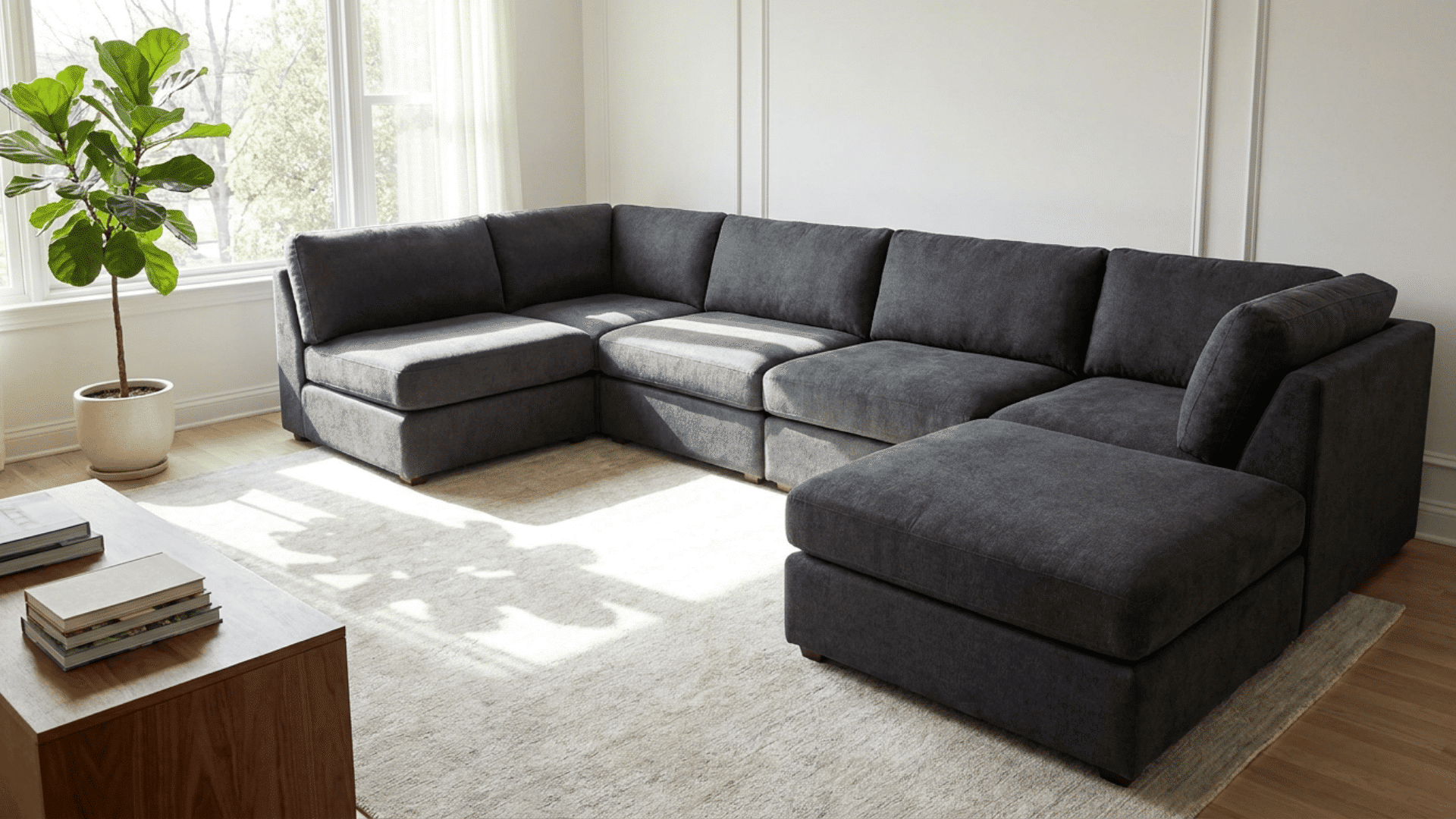
Before buying a modular couch, it helps to look at both sides. The points below explain the main benefits and drawbacks in a simple way.
Benefits of a Modular Couch
The points below show why many homeowners choose modular seating:
- Easy to rearrange: You can move the modules around to create a new layout when your room or seating needs change. This makes it useful if you like refreshing your living room setup.
- Simple to move: Since it comes in separate pieces, it is easier to carry through narrow doors, stairs, and hallways. This can make delivery and moving less stressful.
- Can grow with your space: You can add more modules later if you move to a bigger home or need extra seating. This helps your sofa adjust as your needs change.
- Good for families and guests: It gives you more seating options for movie nights, family time, or hosting friends. Everyone can sit more comfortably without needing extra chairs.
- Helps use corners better: L-shaped or corner layouts can make better use of unused room space. This is helpful in both small and open-plan living rooms.
The flexibility of a modular couch comes from the same design principle used in other types of modular furniture, allowing pieces to adapt to changing needs.
Drawbacks of a Modular Couch
While modular couches offer flexibility, there are a few drawbacks worth considering before making a purchase:
- Can cost more: Modular couches often cost more because they include separate pieces and flexible design options.
- Pieces may shift: Some modules can move apart if they do not have clips, brackets, or connectors.
- Custom orders may take longer: If you choose a made-to-order design, delivery may take several weeks.
- Too many choices can feel confusing: Picking the layout, fabric, size, and modules may feel like a lot for some buyers.
Who Should Buy a Modular Couch?
A modular couch is not the right choice for everyone. However, it can be a great fit for the people below.
| Who Benefits Most | Why a Modular Couch Works Well |
|---|---|
| Renters | If you rent your home and move from time to time, a modular couch can make life easier. The separate pieces are easier to move and can be rearranged to fit different room layouts. |
| Frequent Movers | People who move often can adjust the couch to suit each new space instead of replacing the sofa every time they move. |
| Large Families | A modular couch offers plenty of seating for parents, children, and guests. Extra modules can often be added later if more seating is needed. |
| People Who Host Often | A modular couch provides flexible seating arrangements, making gatherings with friends and family more comfortable. |
| People Who Like Changing Layouts | For homeowners who enjoy refreshing their living room, a modular couch makes it easy to create new layouts without buying new furniture. |
Is a Modular Couch Worth It?
A modular couch is worth the price if you value flexibility and plan to use it for many years.
Because the couch is made of separate modules, you can rearrange the layout, add extra seating, or adapt it to a new home without buying a completely new sofa.
This can make it a smart long-term purchase for renters, growing families, frequent movers, and people who enjoy changing their living room setup.
However, a modular couch is not always the best option. If you prefer a fixed seating arrangement and do not plan to rearrange your furniture, a regular sofa or sectional may offer better value.
Traditional sofas are often less expensive, while sectionals provide plenty of seating without the extra customization options. For homeowners who want a simple, permanent setup, these alternatives may be the more practical choice.
Final Thoughts
A modular couch offers a flexible seating solution that can adapt to different room layouts, lifestyles, and household needs.
Unlike traditional sofas, its individual modules can be rearranged, expanded, or adjusted over time, making it a practical choice for many homeowners.
While the higher cost and added customization may not suit everyone, the flexibility and long-term usefulness can make it a worthwhile investment.
If you’re shopping for a new sofa, take time to consider your space, budget, and future needs.
The right modular couch can provide comfortable seating today while giving you the freedom to adjust your setup as your home and lifestyle change.
Check different designs, compare configurations, and find a modular couch that fits the way you live.
Frequently Asked Questions
Can Modular Couches Fit in Apartments?
Yes, many modular couches work well in apartments because separate pieces are easier to move and arrange in smaller rooms.
How do You Clean a Modular Couch?
Check the care label first. Many fabric covers can be spot-cleaned, while some removable covers may be machine washable.
Can Modular Couches be Used as Guest Beds?
Some modular couches can form a wider sleeping area when pieces are pushed together, especially with chaise or ottoman modules.
Do Modular Couches Need Special Maintenance?
Not much. Regular vacuuming, cushion rotation, and checking connectors can help keep the couch comfortable and stable.

Holding a Master’s in Library and Information Science from the University of Illinois, Josh Clarke has dedicated more than 15 years to managing and disseminating information across various platforms. His professional journey includes significant experience as a research librarian, where he developed an expertise in sourcing and providing accurate and comprehensive answers to diverse questions. In 2018, Josh brought his rich experience to our platform, quickly establishing himself as a reliable source for general FAQs. He has been overseeing our information curation since then, combining his research skills with a flair for engaging content delivery. When not involved in information management, Josh enjoys exploring digital photography and participating in local quiz competitions, hobbies that complement his inquisitive nature and love for learning.