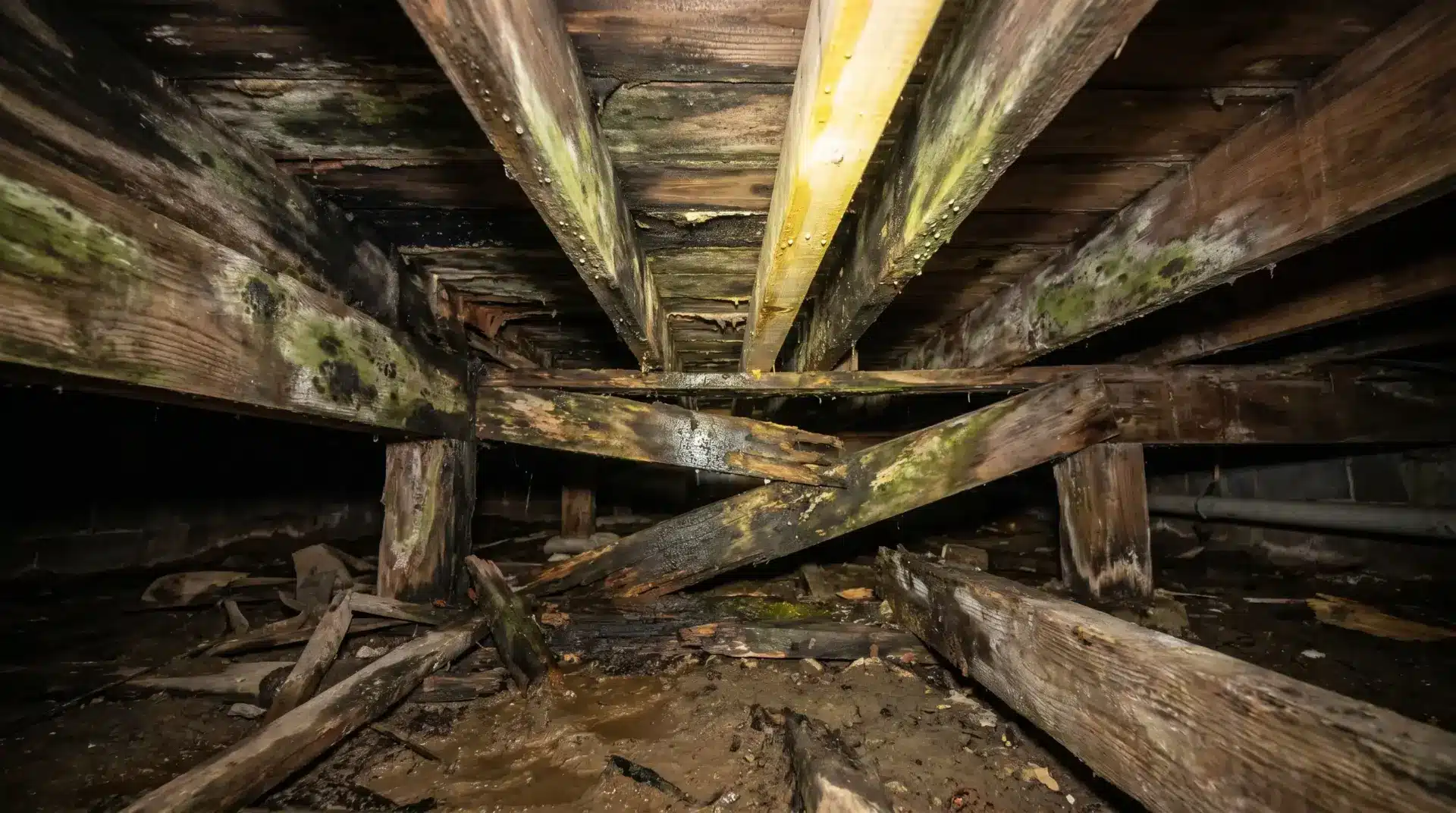

Most homeowners don’t spend much time thinking about their crawlspace—and honestly, that’s completely normal. It’s not exactly a welcoming part of the house. It’s dark, a little cramped, and easy to ignore. But here’s the uncomfortable reality: what’s happening down there can quietly affect everything above it.
Crawlspace moisture is one of those problems that doesn’t demand attention right away. It doesn’t leak through your ceiling or trip your circuit breaker. Instead, it builds slowly, almost unnoticed. And by the time you realize something’s off—maybe a soft floor, a musty smell, or a crack in the wall—the issue has usually been developing for a while. And before you know, it’s time to call for foundation repair Hampton VA experts,
That’s what makes it expensive.
Moisture Doesn’t Stay Put—It Moves Through Your Home
A lot of people assume a damp crawlspace is just… a damp crawlspace. Out of sight, out of mind. But moisture doesn’t behave that way. It doesn’t stay politely confined under your house.
It rises.
Through a process called the stack effect, air from the crawlspace naturally moves upward into your living space. And if that air is humid, damp, or carrying mold spores, that’s what’s entering your home. Over time, that constant movement of moisture-rich air starts affecting materials—wood, insulation, even the air quality inside your house.
So what seems like a small issue below the floor quietly becomes a whole-house problem.
Wood Absorbs Moisture—and Slowly Loses Strength
Your home relies heavily on wood for structural support. Floor joists, beams, subflooring—all of it is designed to be strong and stable.
But wood is also absorbent.
When crawlspace humidity stays high, that wood begins to take in moisture. Not dramatically, not all at once—but gradually. And as it does, it starts to weaken. It may swell slightly, soften over time, or become more vulnerable to rot and decay.
The frustrating part? You won’t see it happening.
From above, your floors might look perfectly fine. But underneath, those supports could be slowly losing their ability to carry weight the way they should. And eventually, that shows up as sagging floors, soft spots, or structural shifting.
Wood Rot Doesn’t Announce Itself
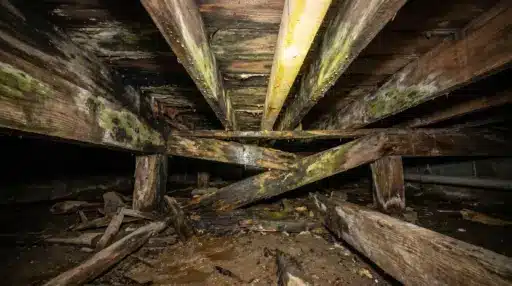
Rot is one of those problems that develops quietly and spreads steadily. Once moisture levels stay high enough for long enough, fungi begin breaking down the wood fibers. That’s when rot sets in.
At first, it’s minor. A small section here, a slightly weakened joist there.
But over time, it spreads.
And by the time you notice something like uneven floors or a slight bounce when you walk across a room, the damage underneath may already be significant. Repairing rotted structural components isn’t a quick fix—it often involves reinforcing or replacing sections of wood, which can get labor-intensive and costly.
It’s not just a crawl space foundation repair anymore. It becomes a structural correction.
Moisture Creates the Perfect Conditions for Mold
If there’s one thing mold loves, it’s a damp, enclosed environment with organic material to feed on. Crawlspaces check all those boxes.
Once mold begins to grow, it doesn’t just stay in one neat little spot. It spreads across wood, insulation, and any surface that holds moisture. And even if you clean visible areas, the root cause—humidity—remains.
So it comes back.
Beyond the structural concerns, mold also affects indoor air quality. That musty smell you notice inside the house? There’s a good chance it started below your feet. And while mold treatment can address the symptoms, eliminating the moisture source is what actually solves the problem long-term.
Soil and Supports Can Shift Without You Realizing
Here’s something that surprises a lot of homeowners: moisture doesn’t just affect materials—it affects the ground itself.
When soil beneath your home becomes saturated, it can soften and lose stability. Over time, that can cause support posts in the crawlspace to settle unevenly or shift slightly out of position.
Even a small shift matters.
When those supports move, the weight distribution of your home changes. That’s when you might start noticing sloping floors, cracks forming in drywall, or doors that suddenly don’t close the way they used to.
And again, it doesn’t happen all at once. It builds slowly, making it easy to dismiss—until it’s not.
Insulation and Other Materials Break Down Faster
Crawlspace moisture doesn’t stop at wood and soil. It affects everything down there.
Insulation absorbs moisture, becomes heavy, and eventually sags or falls apart. Once that happens, it loses its ability to regulate temperature effectively. Metal components may begin to rust. Fasteners can weaken. Even stored materials, if any, can deteriorate.
So now you’re not just dealing with structural concerns—you’re also facing energy inefficiency and repeated material replacement.
And those smaller costs? They add up over time.
The Real Cost Comes From Delay
This is where things usually go wrong.
Moisture problems don’t feel urgent. They don’t demand immediate action the way a broken pipe or electrical issue might. So they get pushed aside. Checked “later.”
But the longer moisture remains, the more layers of damage it creates.
What starts as a humidity issue can turn into:
- Structural wood repairs
- Mold remediation
- Insulation replacement
- Floor leveling or reinforcement
And suddenly, what could have been a manageable fix becomes a much larger investment.
FAQs
1. Is It Normal to Have Some Moisture in a Crawlspace?
A small amount of moisture can be expected, but persistent dampness or high humidity isn’t normal. Ongoing moisture can lead to long-term structural and air quality issues.
2. What Are the First Signs of Moisture Damage?
Common early signs include musty odors, sagging insulation, increased indoor humidity, and slight floor unevenness. These often appear before visible structural damage.
3. Can Moisture-Related Structural Damage Be Repaired?
Yes, in many cases it can be repaired or stabilized. However, the extent of repairs depends on how long the moisture issue has been present and how much damage has occurred.
4. How Can I Prevent Crawlspace Moisture Problems?
Prevention usually involves controlling humidity, improving drainage, and sealing the crawlspace environment. The right solution depends on the specific conditions of your home.
Final Thoughts
Crawlspace moisture is one of those problems that doesn’t feel urgent—until it suddenly is.
It works quietly, slowly affecting the parts of your home you don’t see every day. And by the time the signs show up upstairs, the damage underneath has often been building for longer than you’d expect.
Taking moisture seriously early on isn’t about overreacting. It’s about protecting the structure of your home before small issues turn into expensive repairs.
Because when it comes to crawlspaces, what you don’t see can absolutely cost you.

Tommy Hardy, an alumnus of the Georgia Institute of Technology with a degree in Mechanical Engineering, has been a go-to figure in residential upkeep and innovation for over 18 years. His career commenced in a leading home appliance manufacturing company, where he mastered the intricacies of household systems. Joining our platform in 2020, Tommy quickly became a reader favorite for his practical and easy-to-follow guides. He took the helm of our DIY section in 2019, consistently delivering content that empowers homeowners. Beyond his professional pursuits, Tommy is a passionate gardener and enjoys woodworking, skills enhancing his hands-on approach to home care.