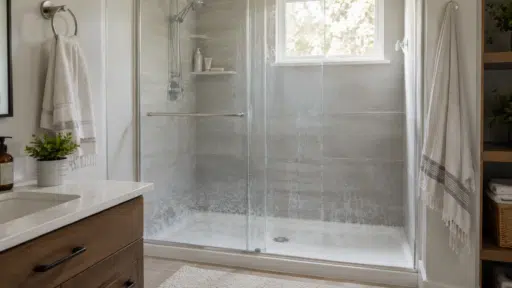
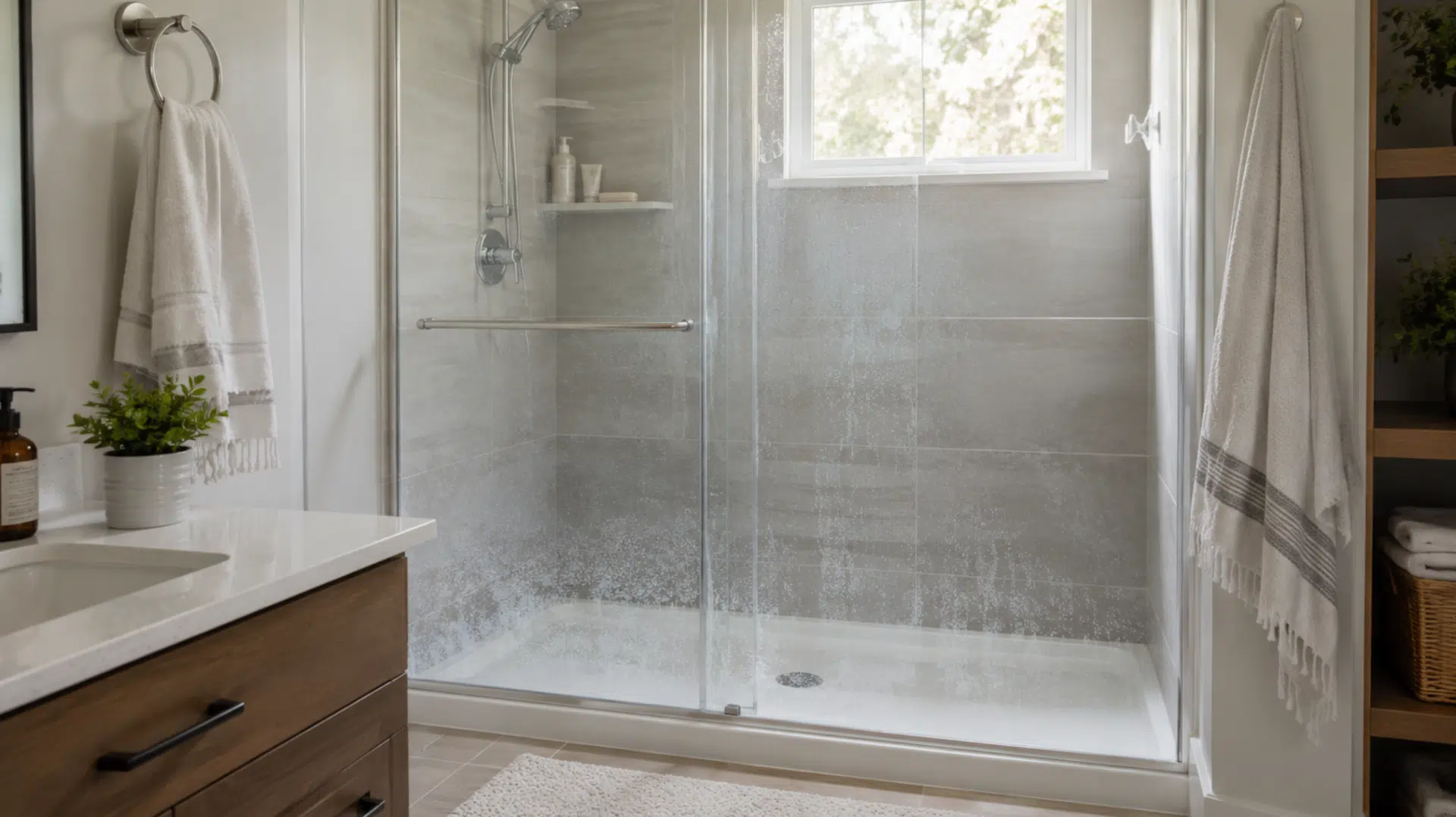

You know that annoying moment when the bathroom looks freshly cleaned, but the shower still somehow doesn’t?
The glass was spotless a few days ago. The faucet looked polished. You even wiped the track at the bottom of the door. Then, after a couple of showers, a pale white line starts showing up along the lower edge of the screen. Run your finger across it and it feels slightly gritty, almost chalky.
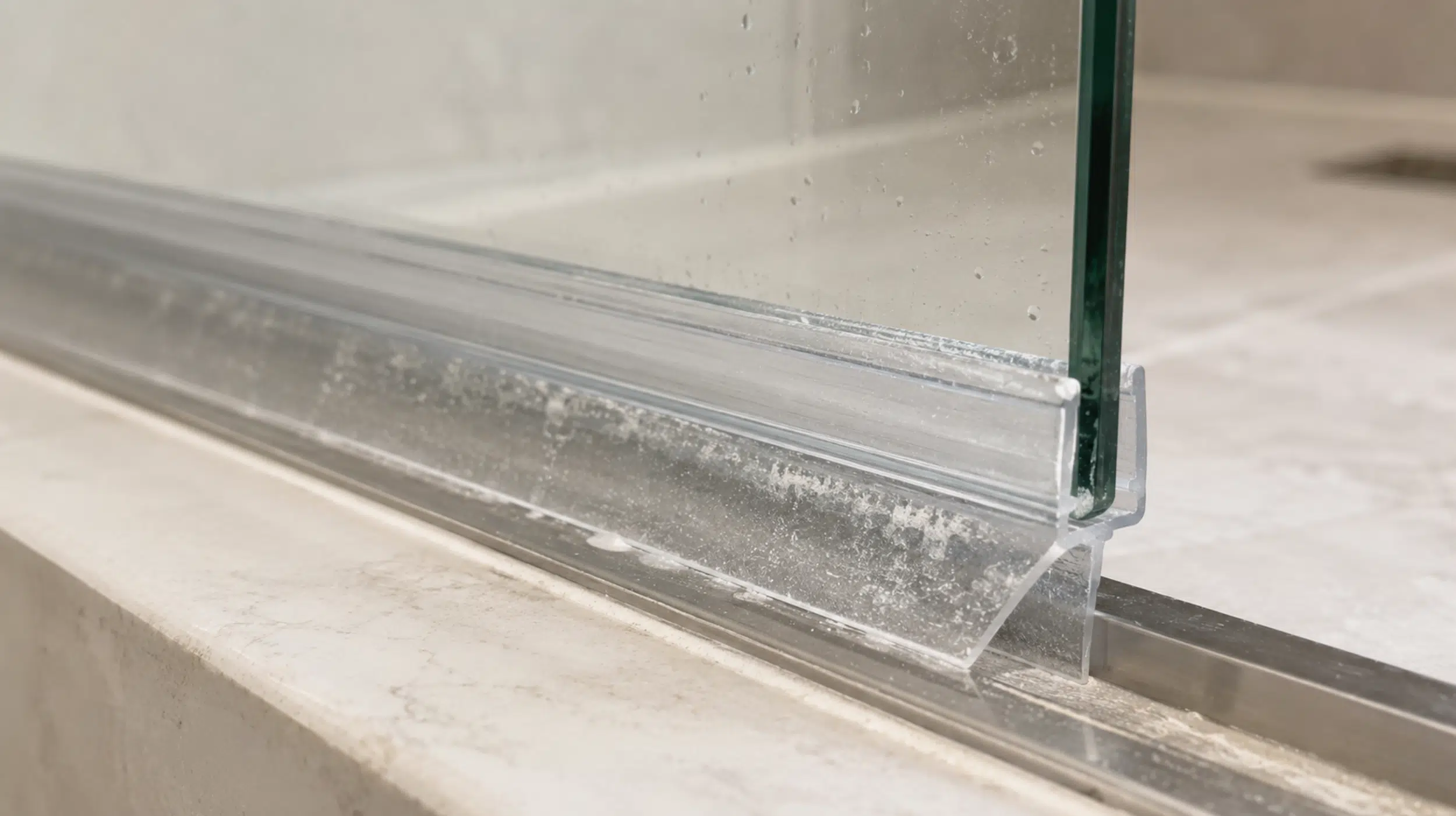
And then there’s the clear strip at the bottom of the shower door. That little piece is easy to ignore until it starts looking cloudy. At first, it just loses its shine. Later, it turns yellow around the edges. Eventually, no matter how much you wipe it, it never quite looks clean.
That is the frustrating thing about long-term hard water build-up. It rarely looks dramatic at first. It just leaves a little behind every day until the shower starts to look older than it really is.
Why Limescale Always Seems to Gather Around the Edges
Hard water contains minerals such as calcium and magnesium. When shower water dries on glass, metal, tile, or plastic, those minerals stay behind. Over time, they create the white, chalky marks we call limescale.
On the main glass panel, the marks are easy to notice. They make the glass look hazy, especially in bright light. But the most stubborn build-up usually doesn’t start in the middle of the glass. It collects around the edges.
That makes sense when you think about how water moves. It runs down the glass, gathers near the bottom, and settles around the door track, hinges, and seal. Those areas stay damp longer, and they are not as easy to wipe dry. Add soap, shampoo, body wash, and dust into the mix, and the residue becomes harder to remove.
This is where the shower screen seal becomes especially vulnerable. If water keeps sitting around an ageing or low-quality seal, limescale and soap scum can cling to it again and again. A clear seal may begin with a faint cloudy look, then gradually turn yellow, stiffen, crack, or develop mould spots.
So when the shower still looks a little tired after you have cleaned the glass, the problem may not be the big panel at all. It may be the narrow strip along the bottom that has been quietly collecting residue for months.
Why the Seal Is Harder to Clean than The Glass
Glass is fairly forgiving. It is flat, smooth, and easy to reach. Even when it has water spots, you can usually clean the surface directly.
A shower seal is different.
Most seals are made from PVC or a similar plastic material. They are shaped to grip the glass and keep water inside the shower, so they often include small channels, folded edges, and flexible fins. Those details are useful, but they also create little places where water and residue can hide.
At first, the build-up may only sit on the surface. The seal looks a little misty, but a quick wipe still helps. After months of daily showers, though, minerals and soap scum can work into the tiny surface texture of the PVC. Once that happens, the cloudy look is much harder to reverse.
The change tends to happen in stages. The seal stops looking crystal clear. Then the lower edge becomes yellowish. After that, it may feel harder than it used to. Fine cracks can appear, and those cracks hold moisture, which makes mould and grime more likely.
That is why scrubbing does not always bring an old seal back to life. Sometimes it is not just dirty anymore. The material itself has started to age.
Strong Cleaners Can Help, but They Are Not a Daily Solution
It is tempting to reach for the strongest limescale remover you can find. Spray it on, wait a few minutes, scrub hard, and the white marks may fade quickly.
For occasional deep cleaning, that can be useful. But using harsh products too often can make some parts of the shower look older faster, especially clear PVC seals, silicone edges, coated metal fittings, and plastic pieces inside the track.
Strong acids, bleach, and stiff brushes can be too aggressive for those surfaces. They may remove some residue, but they can also leave the seal cloudier or more brittle over time.
A gentler routine usually works better for everyday care. Use a mild bathroom cleaner on the glass, and treat corners with a soft cloth, sponge, or old toothbrush. The important part is what comes after cleaning: rinse well and dry the area. If water is left sitting there, fresh mineral marks will simply appear again.
A shower stays cleaner when residue has fewer chances to settle in the first place.
The One-Minute Habit that Makes the Biggest Difference
Nobody wants another bathroom chore. The good news is that this one does not need to feel like cleaning.
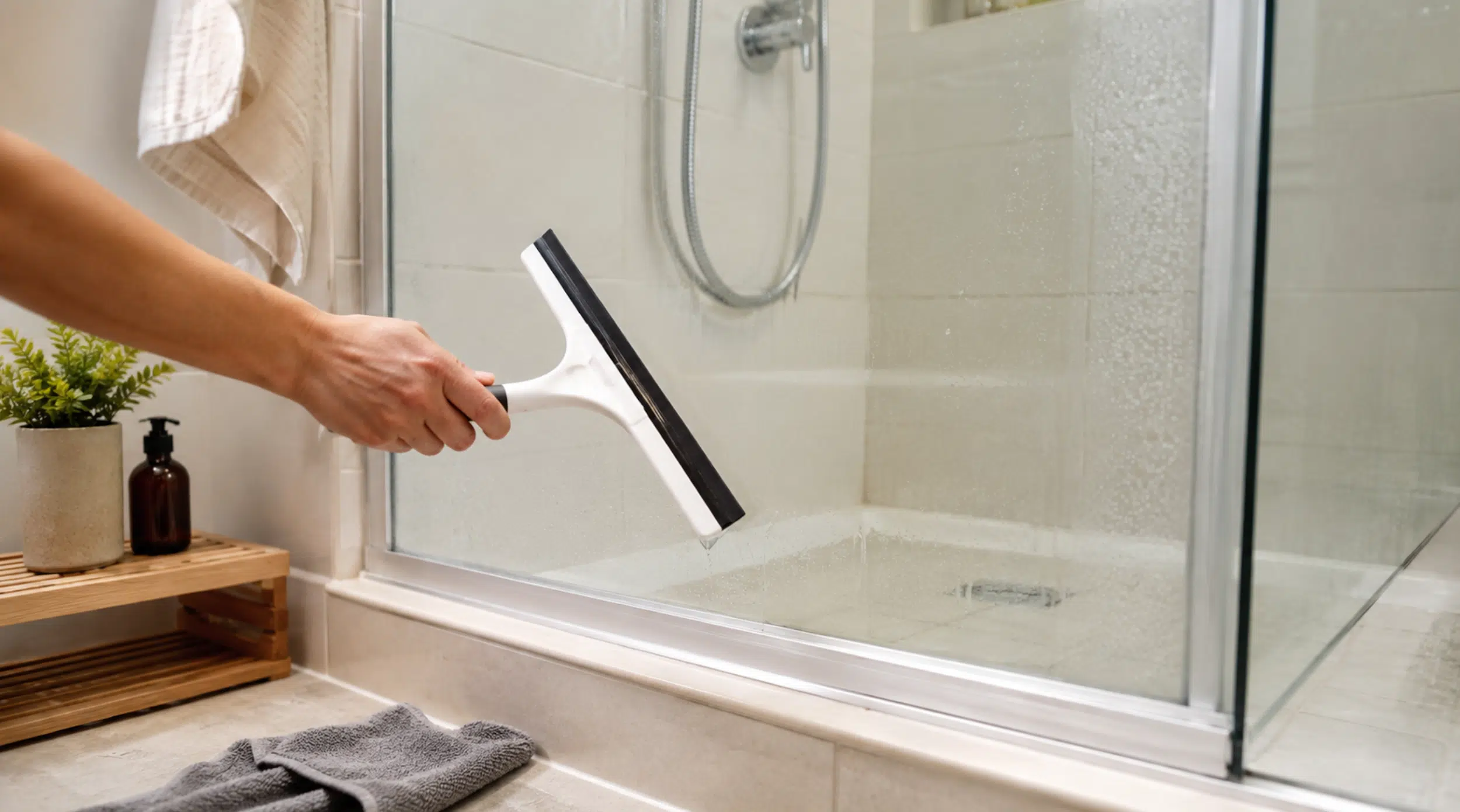
After a shower, run a squeegee over the glass, especially the lower half. Then use a dry cloth to wipe the bottom edge, the seal, and the area beneath the handle. That is usually enough to remove the water that would otherwise dry into white marks.
It takes less than a minute, but it changes how quickly the shower starts to look cloudy again.
If the lower edge of the door always seems to stay damp, cool air can help. A hair dryer on a cool setting can be used briefly along the track, seal, and lower glass edge. The goal is not to heat the area, just to move air across it so moisture disappears faster.
This small habit is especially helpful for the bottom seal. The occasional splash is not the problem. The real issue is staying wet day after day, with minerals building up in the same place each time.
A shower head limescale filter can also help if build-up returns quickly. It will not remove every mineral or replace regular cleaning, but it can reduce some of the deposits that collect on glass, fittings, and seals. For many households, it is a simpler step than installing a whole-house softener.
When a New Seal Looks Good, that Is only Half the Story
A lot of shower seals look similar when they are new. Clear, flexible, and neatly shaped. But the real test comes after weeks and months of use.
A seal has a hard job. It sits in one of the wettest parts of the bathroom and deals with warm water, soap, minerals, cleaning products, and constant movement. If the PVC is not stable enough, it may cloud, yellow, or stiffen sooner than expected.
Better-quality seals are not just about looking clear on day one. The material needs to hold up under normal bathroom conditions.
Some higher-quality PVC seals, including selected SIMBA shower door seals, use stabilised formulations designed to slow surface build-up and yellowing. That does not mean any seal can completely prevent limescale, and it certainly does not mean it will stay new forever. It simply means that, with normal cleaning and drying habits, the seal may keep its clear, flexible appearance for longer.
In a busy bathroom, that matters. You may not notice the seal every day when it looks fine, but you definitely notice when it turns yellow, collects white residue, or makes the whole shower look less fresh.
The Spots People Forget Are Often the Spots that Make the Shower Look Old
Most of us clean what we see first: the big glass panel, the mirror, the faucet. Those surfaces matter, but they are not the whole story.
A shower can still look untidy if the bottom edge has a chalky ring, the track holds soap scum, the hinges have white spots, or the seal has turned yellow. These small details pull the whole look down, even when the glass itself is sparkling.
So instead of spending all your energy polishing the largest surface, pay attention to the places where water stops moving. The lower edge of the glass, the door track, the underside of the handle, the hinge area, the shower head, and the seal all deserve a quick regular check.
Keeping those areas dry and clear makes the shower feel cleaner with much less effort.
Final Thoughts
Hard water usually does not ruin the shower glass itself. More often, it leaves the glass cloudy, dulls the fittings, and slowly changes the look and feel of PVC seals.
The best fix is not always a stronger cleaner. It is a better routine: squeegee the glass, dry the lower edge, keep air moving, use cool air on damp corners when needed, and consider a shower head limescale filter if deposits come back quickly.
The seal may be small, but it has a big effect on how clean the whole shower looks. A more stable PVC seal cannot make limescale disappear, but with regular care, it can help slow the cloudiness, yellowing, and visible build-up that make a bathroom feel older than it is.

Holding a Master’s in Architecture from the University of Texas at Austin, Emily Rodriguez has dedicated more than two decades to the art and science of building renovation. Starting her journey in historic preservation, she developed a profound respect for blending old with new in building design. Emily became a vital part of our team in 2019, renowned for her insightful and innovative renovation tips. She has been leading our DIY home improvement series since ever since, where she shares her wealth of knowledge in turning outdated spaces into modern havens. When not engaged in writing or consulting, Emily is a passionate advocate for heritage conservation and enjoys exploring vintage architecture, a hobby that complements her professional expertise.