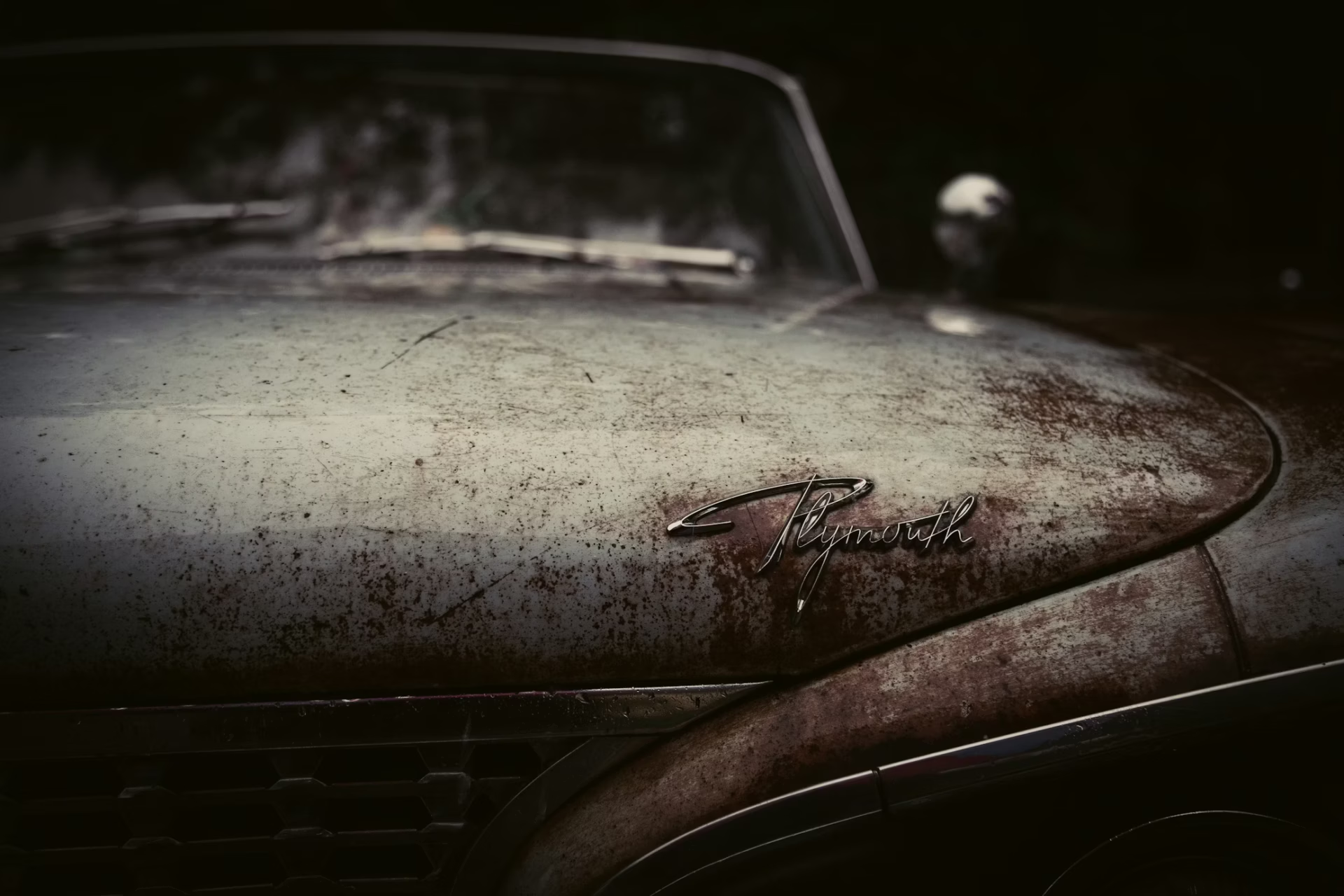
You know the car. It’s old, clunking, rusted-out, but you can’t seem to be able to let it go. Maybe it was your father’s, or your first ever car. Maybe it’s a DIY project you saw yourself tinkering with your son or friends.
Regardless of the reasons, now it’s nothing but a hunk of metal occupying space in your driveway or garage. If you’re still looking to justify your decision, here are the clear-cut signs it’s time to cut ties with a car that’s lost its utility.
1. The Last Repair Bill
According to the American Automobile Association (AAA), the average American driver spends between $800 and $1,500 annually on vehicle maintenance and routine repairs. Major repairs involving the transmission, engine, brakes, or electrical system can push ownership costs significantly higher, especially for older vehicles.
Before giving up on an older vehicle entirely, it may be worth pricing targeted fixes first; for example, Dodge Journey ECM repair at Car Computer Exchange could be more practical than replacing the entire module through a dealership.
If repair bills continue increasing while the car’s reliability keeps declining, many drivers eventually decide the vehicle is no longer worth the ongoing expense. Older cars often require repeated repairs, and maintenance costs can quickly exceed the vehicle’s remaining market value.
One reason many people delay selling an older car is the hassle involved in private sales. Listing the vehicle, coordinating with buyers, negotiating prices, and arranging test drives can become time-consuming — particularly in large cities like Los Angeles.
Fortunately, LA’s local car buying options give drivers more flexibility when it comes to selling aging, damaged, or non-running vehicles. Many direct vehicle-buying services handle towing, paperwork, and pickup scheduling, allowing owners to complete the sale quickly without dealing with lengthy negotiations or unreliable buyers.
2. The Battery is Dead
A dead battery isn’t that much of a problem for an old gas-powered vehicle. A standard lead-acid battery costs between $120 and $200, and almost anyone can switch it out with the old battery.
However, if your beater is an older hybrid, like a 2005–2015 Toyota Prius, Ford Escape, or Honda Civic Hybrid, costs get spicier. A brand-new OEM battery costs between $2,300 and $3,600, and the labor adds $500 to $1,000.
If you’re the unlucky owner of an older, first-generation fully electric vehicle, like an early Nissan Leaf, Chevrolet Bolt, or Tesla Model S, a dead battery is the clearest sign to just drop it off.
3. Parking is a Pain
Parking in big cities like LA, New York, and San Francisco is an expensive pain. Even if you’re fortunate enough to have a garage or a personal driveway, you still have to navigate your other vehicles around the one that’s barely moving.
If you do take it out for a drive, you’d better map out any possible stop points (especially if it’s a big vehicle). A big, old vehicle is not the easiest to maneuver in tight spots, so there’s a good chance you might scratch any neighbors.
In the end, parking your old muscle car or truck might end up costing more than its value in iron and parts. If you need an extra push toward selling, think about all the free space you’ll have! You’ll finally have enough room to build that garage workshop you’ve been dreaming about.
Apply Logical Thinking
The clearest sign it’s time to part ways with your old car is financial: if it costs more to repair, replace parts, and park than it’s worth on the market, you should start looking for options to sell it.
Sure, it may be tough to let go of a sentimental item, but the pictures and memories remain. Don’t let rust and wear-and-tear tarnish them. It’s time to move on.

Journalist Chloe Rivera studied at the University of Missouri and has covered mindful, stylish living since 2013. She joined us in 2025 to curate realistic routines, budget-friendly décor, and community stories that help readers craft balance without perfection pressure. When offline, Chloe volunteers at urban farms, photographs street style, and hosts weekend swap parties for preloved clothes and books in her neighborhood.