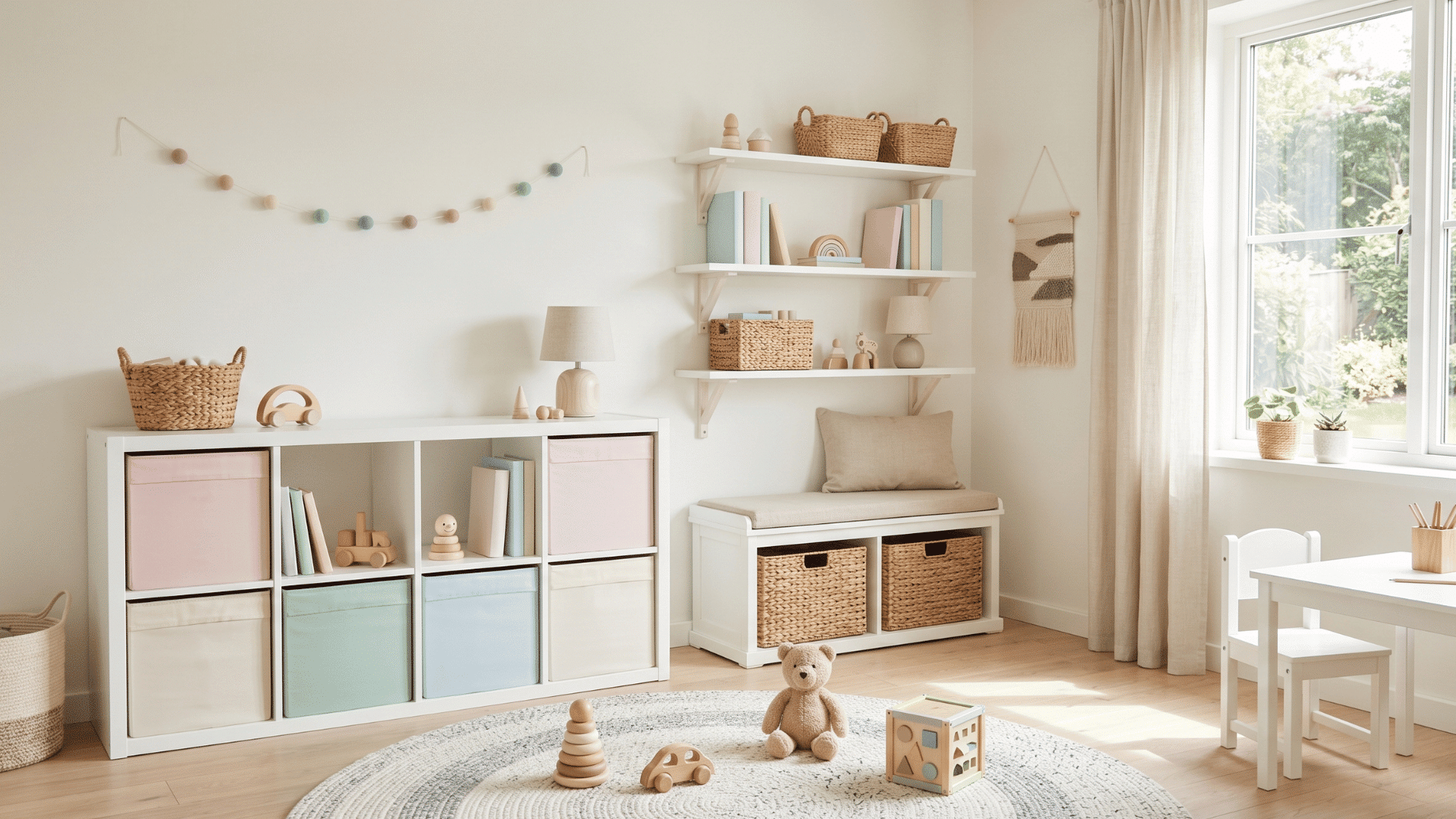

Toys, books, and craft supplies have a way of spreading across every available surface in a room much faster than most parents would ever expect.
The right playroom storage ideas do not just hide clutter from view; they make the whole room function better for everyone who uses it regularly.
This blog covers practical and creative storage solutions that suit a range of different room sizes, varying budgets, and everyday household habits and routines.
How Playroom Storage Helps Kids and Parents?
A well-functioning storage system does more than keep a room looking tidy on the surface. When toys and supplies have designated places, children learn to put things back without being reminded.
That habit builds over time and makes daily cleanup far less of a struggle for the whole household.
For parents, a room with proper playroom storage reduces the tim spent tidying and makes the space safer by keeping floors clear of scattered items.
A well-organized playroom also makes it easier for children to focus during play because they can find what they need without having to pull everything out to look for a single item.
Top Playroom Storage Ideas for Better Organization
These ideas cover a range of setups, making it easy to find a system that works for any room and any age group.
1. Cube Shelves with Fabric Bins
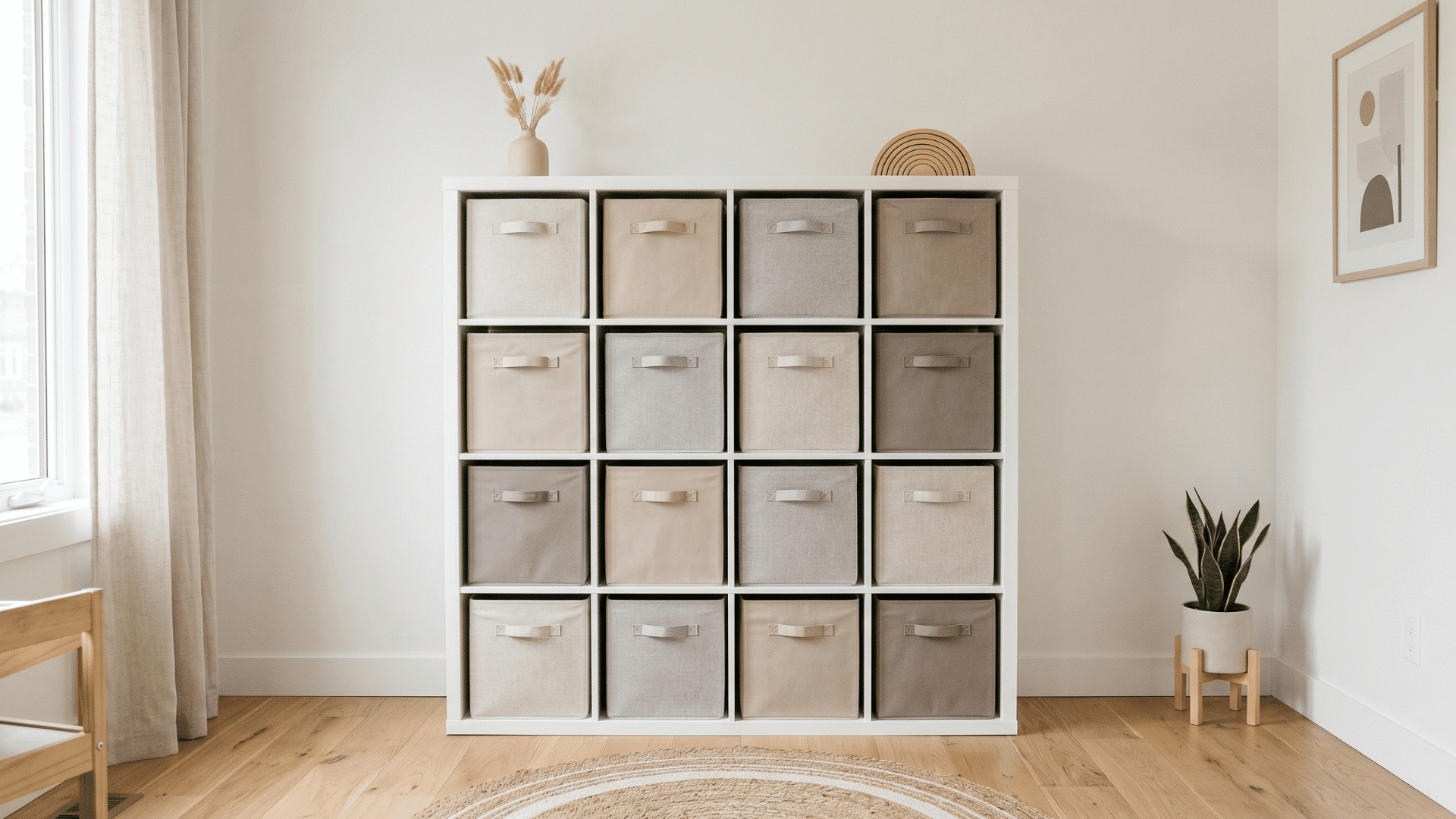
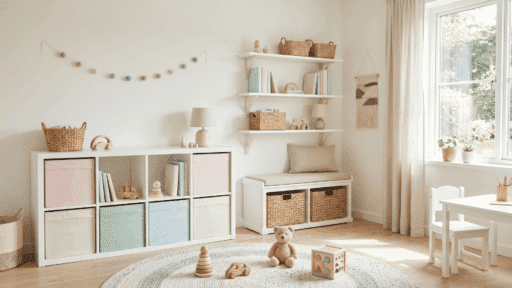
Cube shelving units filled with soft fabric bins keep toys sorted by category and give the room a clean, consistent look.
How to Set It Up:
- Choose a unit with a minimum of twelve compartments
- Use coordinating fabric bin colors throughout
- Place the unit at a child-reachable height
2. Chalkboard-Labeled Storage Wall
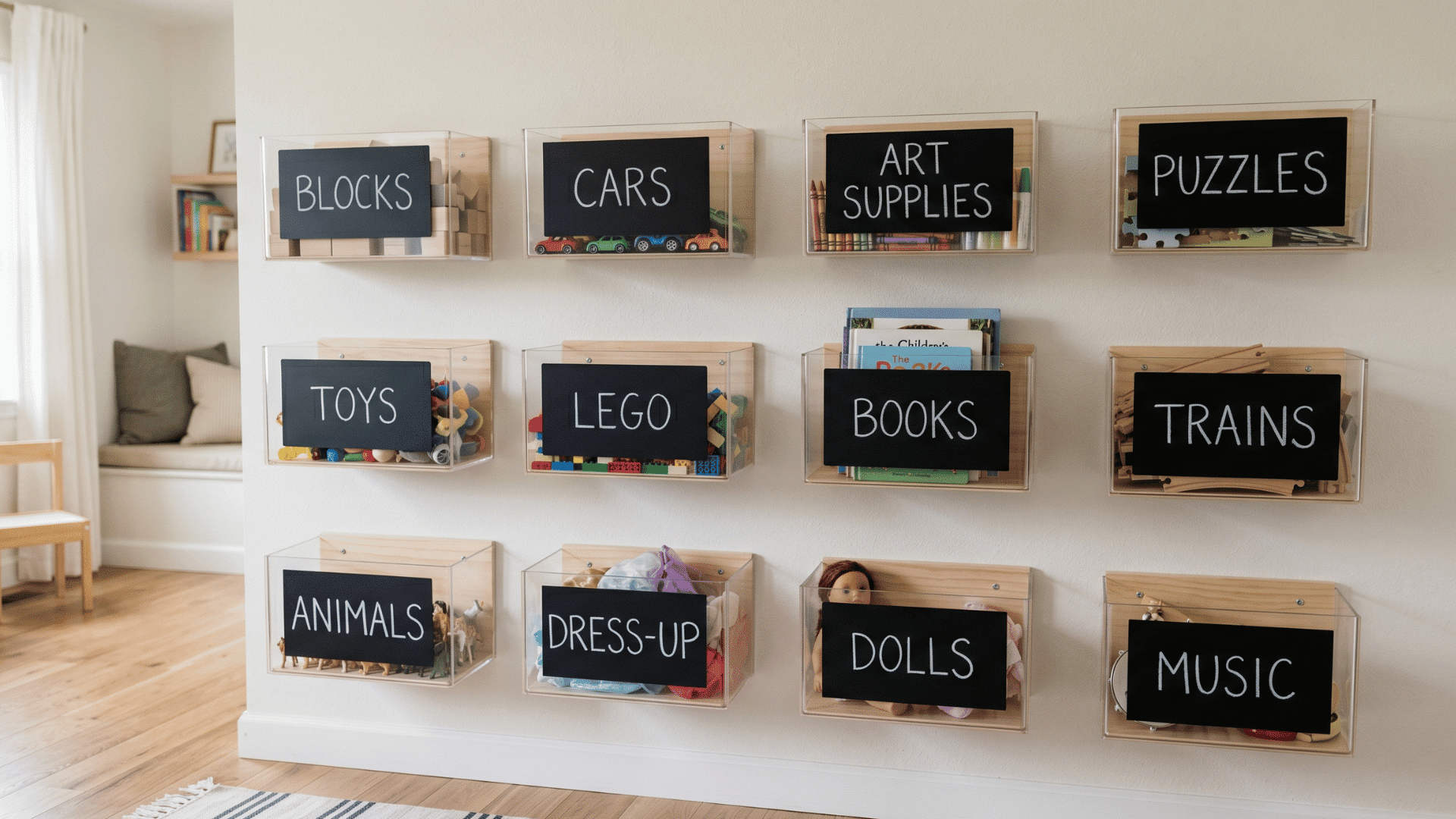
A row of wall-mounted containers, each marked with chalkboard labels, creates a flexible and easy-to-update sorting system for toys and supplies.
How to Set It Up:
- Mount containers evenly using sturdy brackets
- Apply chalkboard labels to each container front
- Use the same-size containers throughout the row
- Write category names in clear block lettering
3. Floating Shelves for Books and Toys
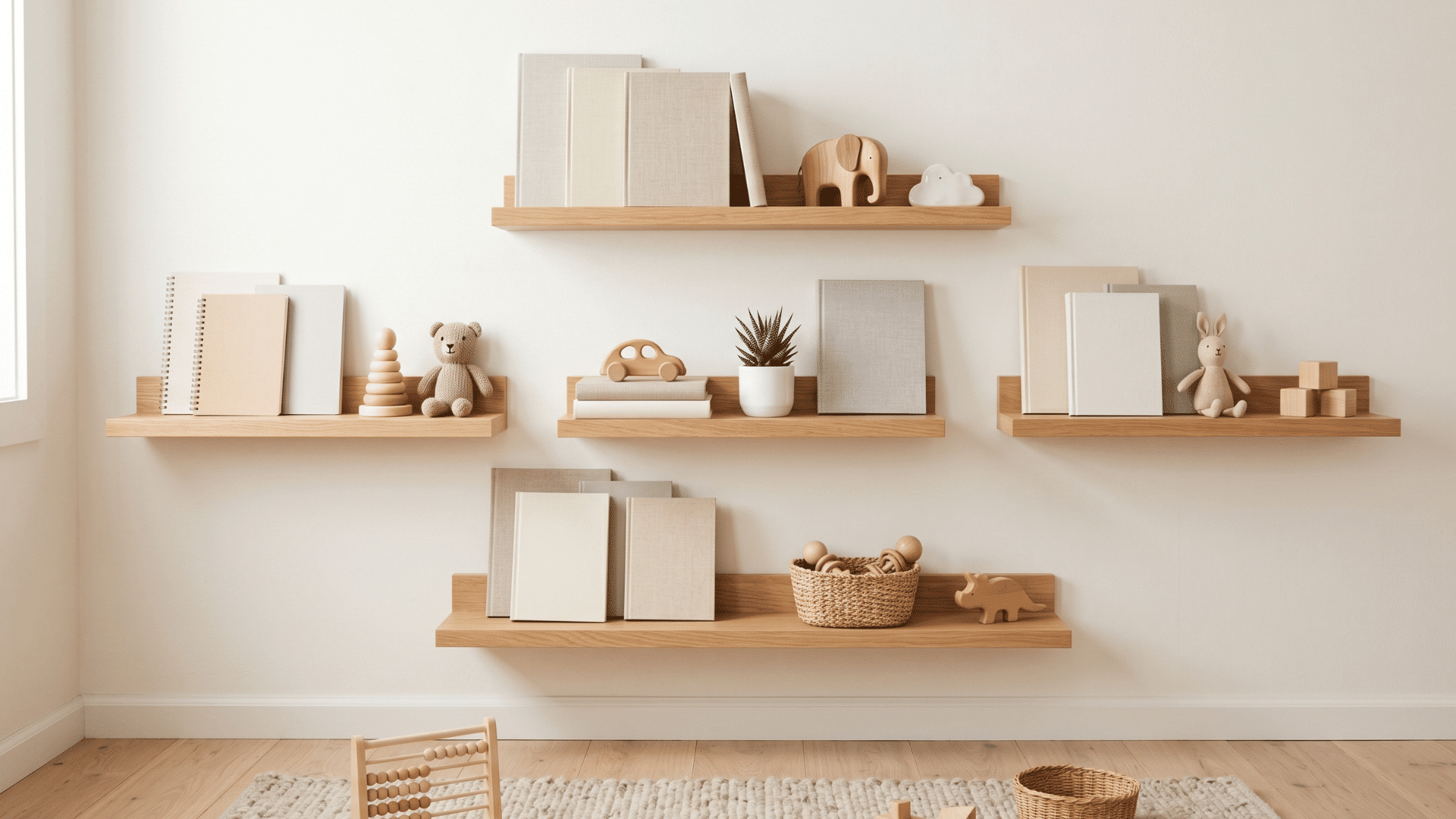
Floating shelves installed at different heights make use of vertical wall space while keeping books and toys visible and easy to reach.
How to Set It Up:
- Install the lowest shelf at child-reachable height
- Space shelves to fit books and bins
- Add lip rails to prevent items from falling
- Keep shelves lightly stocked for visibility
4. Built-In Storage Units
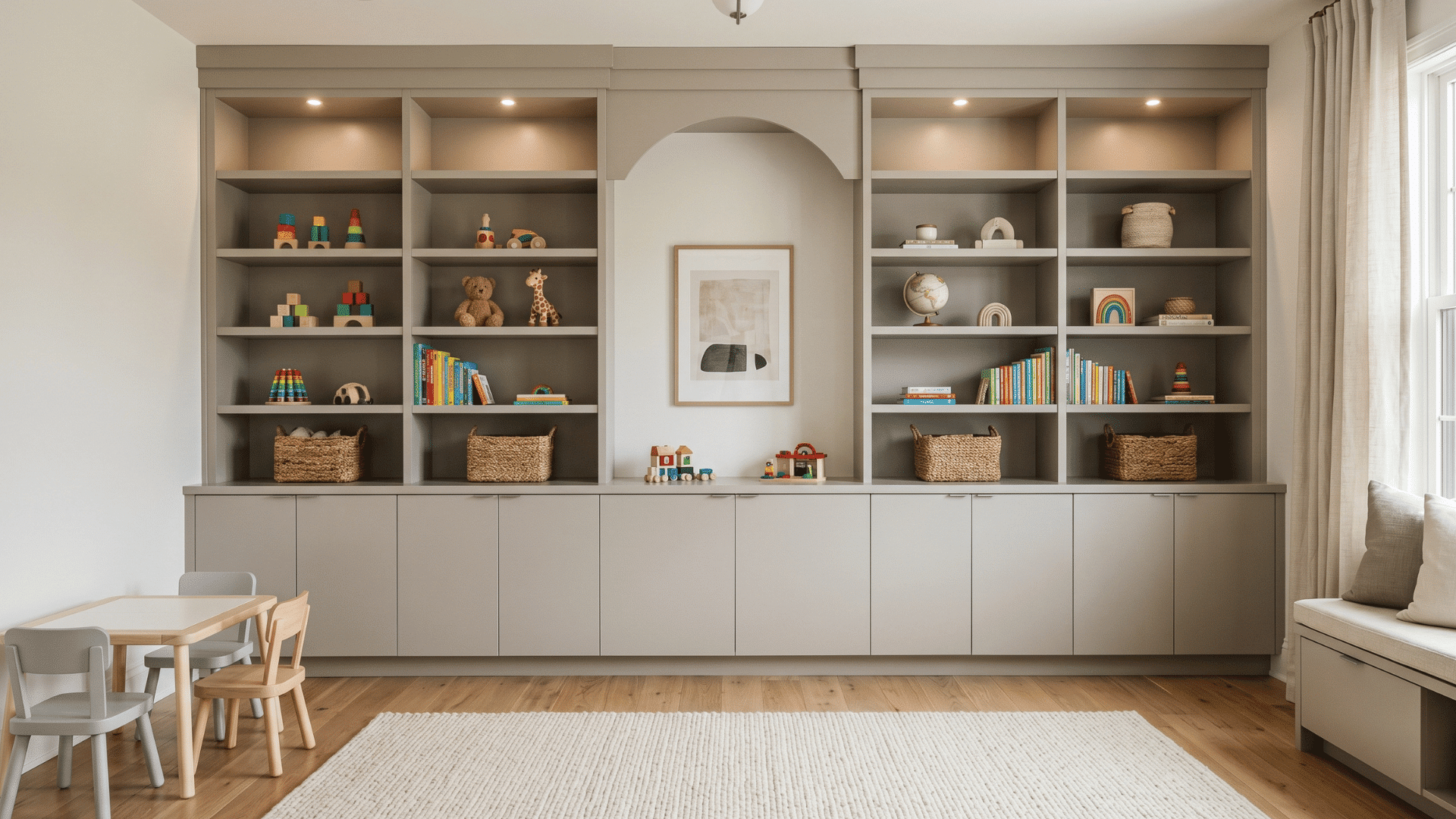
Floor-to-ceiling built-in cabinetry gives the playroom a fitted, organized appearance that freestanding furniture cannot match.
How to Set It Up:
- Mix closed doors with open shelving above
- Use lower cabinets for bulky toy storage
- Paint cabinetry to match the surrounding walls
5. Storage Benches with Hidden Compartments
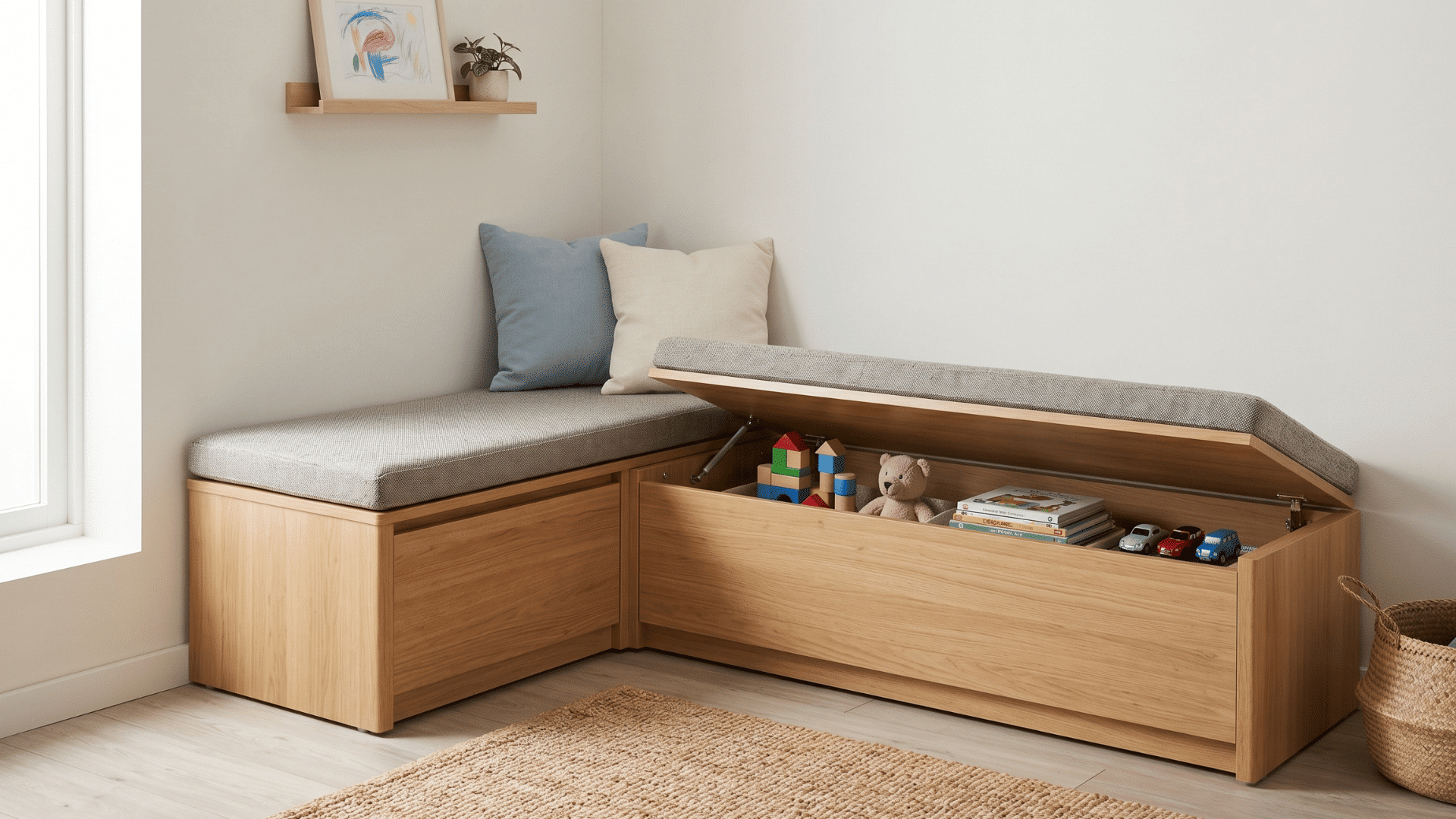
Benches placed along walls with lift-up lids provide seating and hide a generous amount of toy storage beneath the surface.
How to Set It Up:
- Choose a slow-close lid mechanism bench
- Line the interior with a fabric insert
- Add a cushion for comfortable seating
- Store bulky toys inside the compartment
6. Rolling Storage Carts
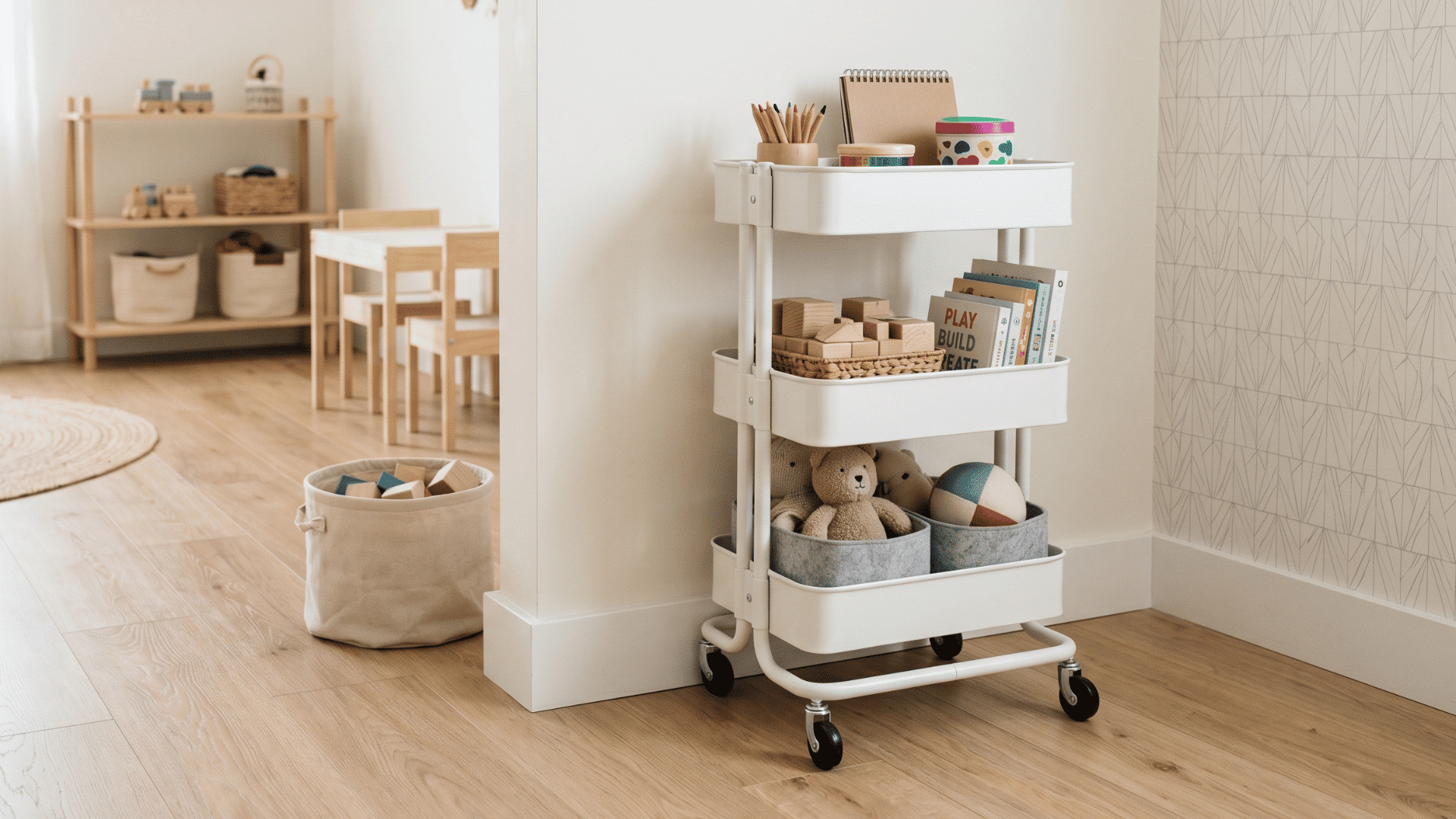
Wheeled carts organized by activity type can be moved to wherever a child is playing and rolled away when the activity is finished.
How to Set It Up:
- Assign one cart per activity type
- Use multi-tier carts for subcategories
- Choose carts with lockable wheels
- Store carts in one designated corner
7. Under-Bed Storage Drawers
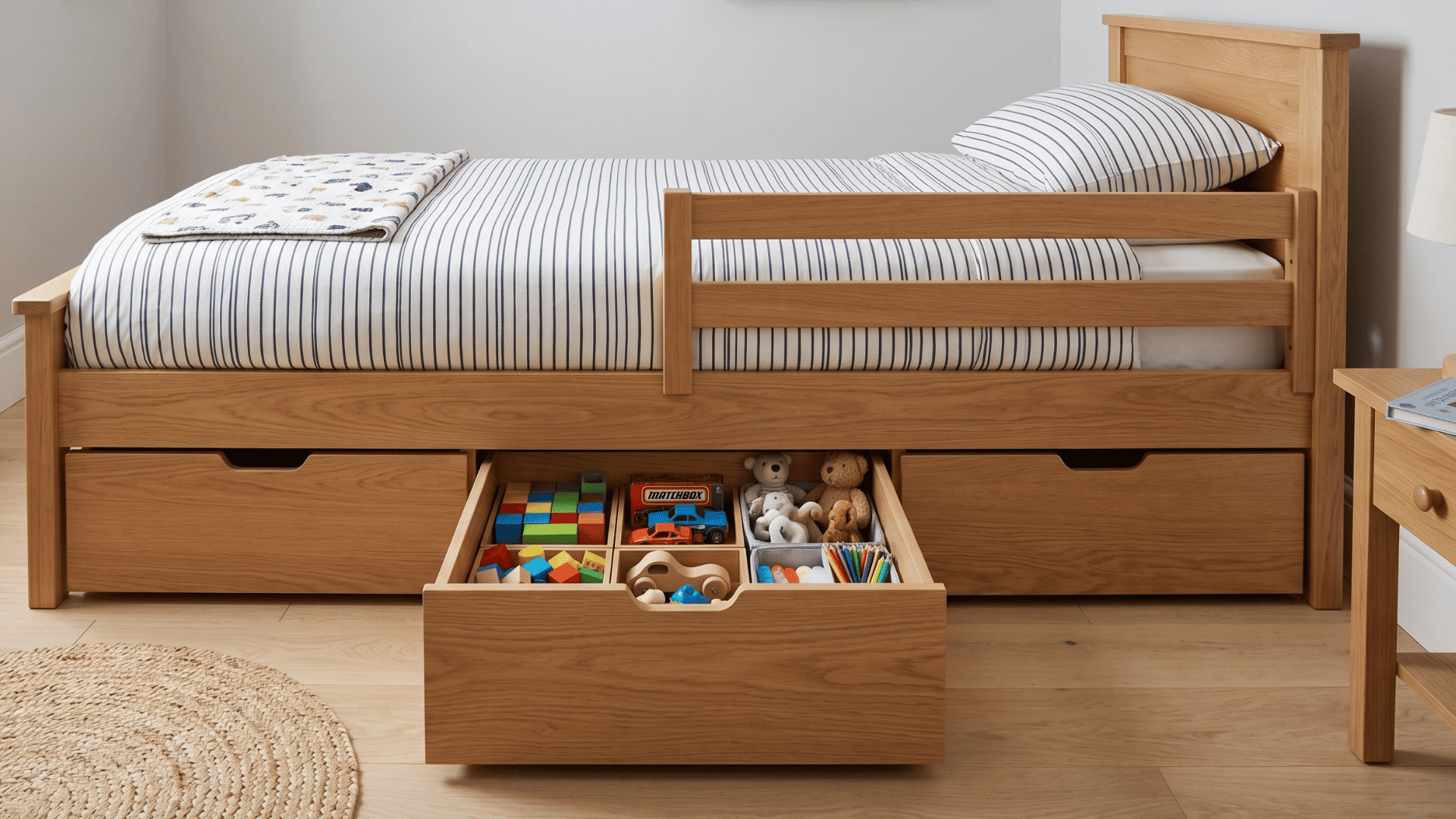
Pull-out drawers beneath the bed in a playroom help use otherwise wasted floor space to store toys, books, and games out of sight, making it a smart toy-storage idea.
How to Set It Up:
- Choose beds with integrated pull-out drawers
- Assign each drawer a specific category
- Use shallow drawers for flat items
8. Hanging Toy Hammocks
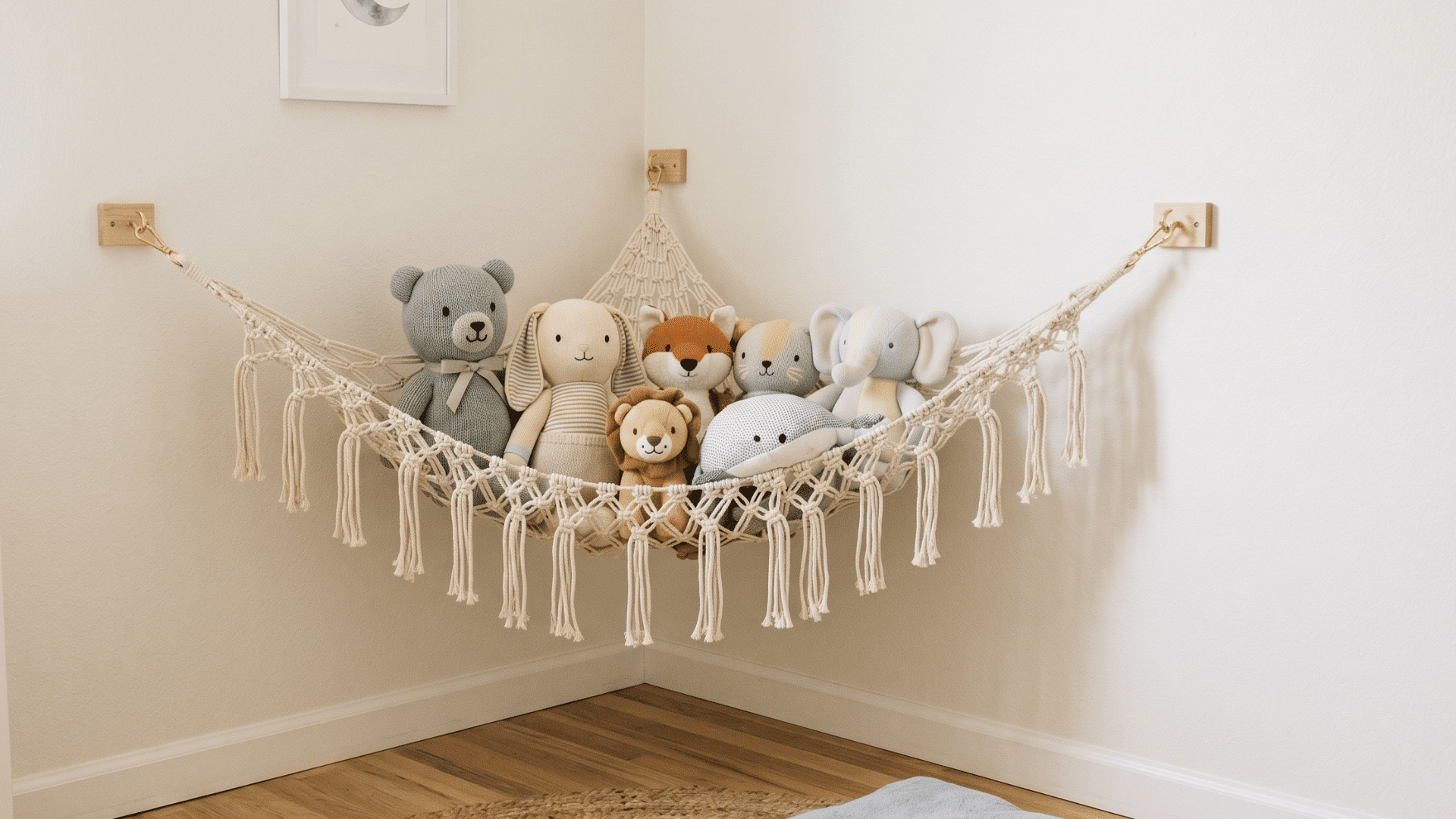
String hammocks hung in room corners hold stuffed animals and soft toys up and off the floor while adding a playful visual element.
How to Set It Up:
- Install at a child-reachable corner height
- Use sturdy wall anchors for safety
- Choose neutral rope or mesh material
- Store soft toys only inside the hammock
9. Over-The-Door Organizers
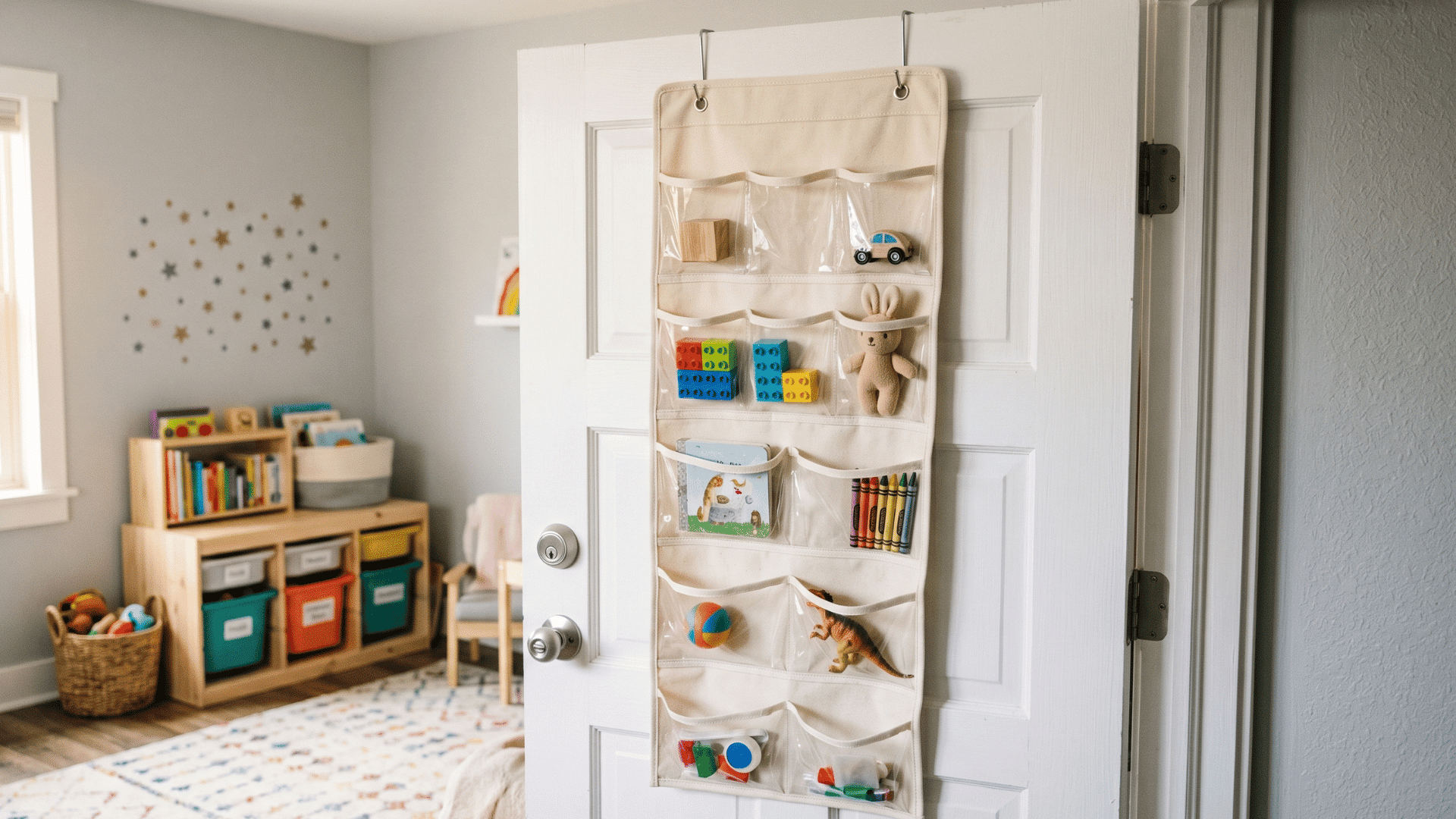
Multi-pocket organizers hung on the backs of doors store small toys and supplies, using space that would otherwise go unused.
How to Set It Up:
- Choose organizers with varied pocket sizes
- Hang on the playroom or closet door
- Assign each pocket a specific item
- Reinforce hooks with extra adhesive strips
10. Clear Plastic Containers
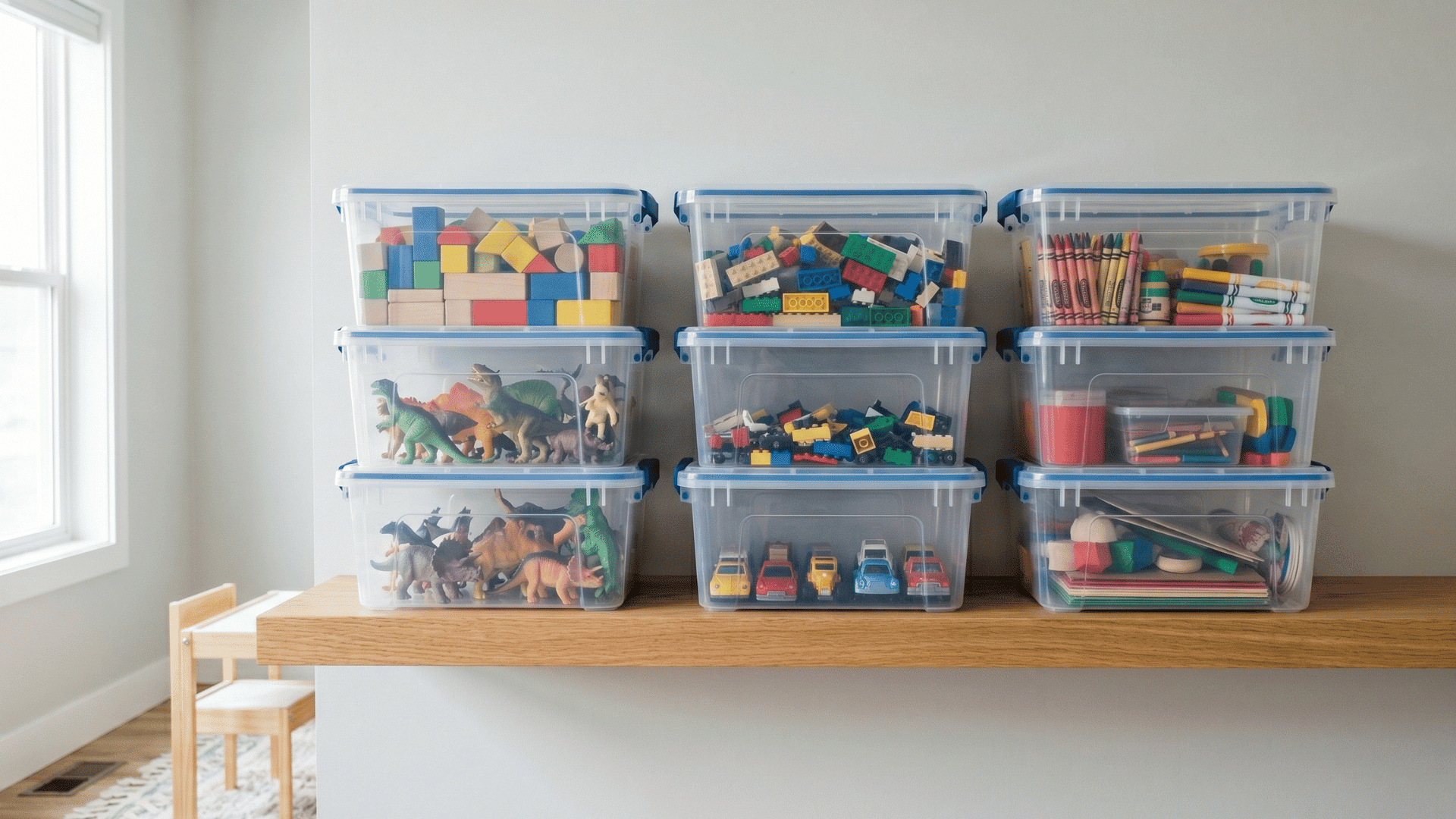
Transparent bins let children see exactly what is inside without opening, speeding up both finding and putting away toys in this playroom storage system.
How to Set It Up:
- Choose consistent container sizes throughout
- Stack on open shelving for visibility
- Use clip-on lids for small pieces
11. Numbered Bin System
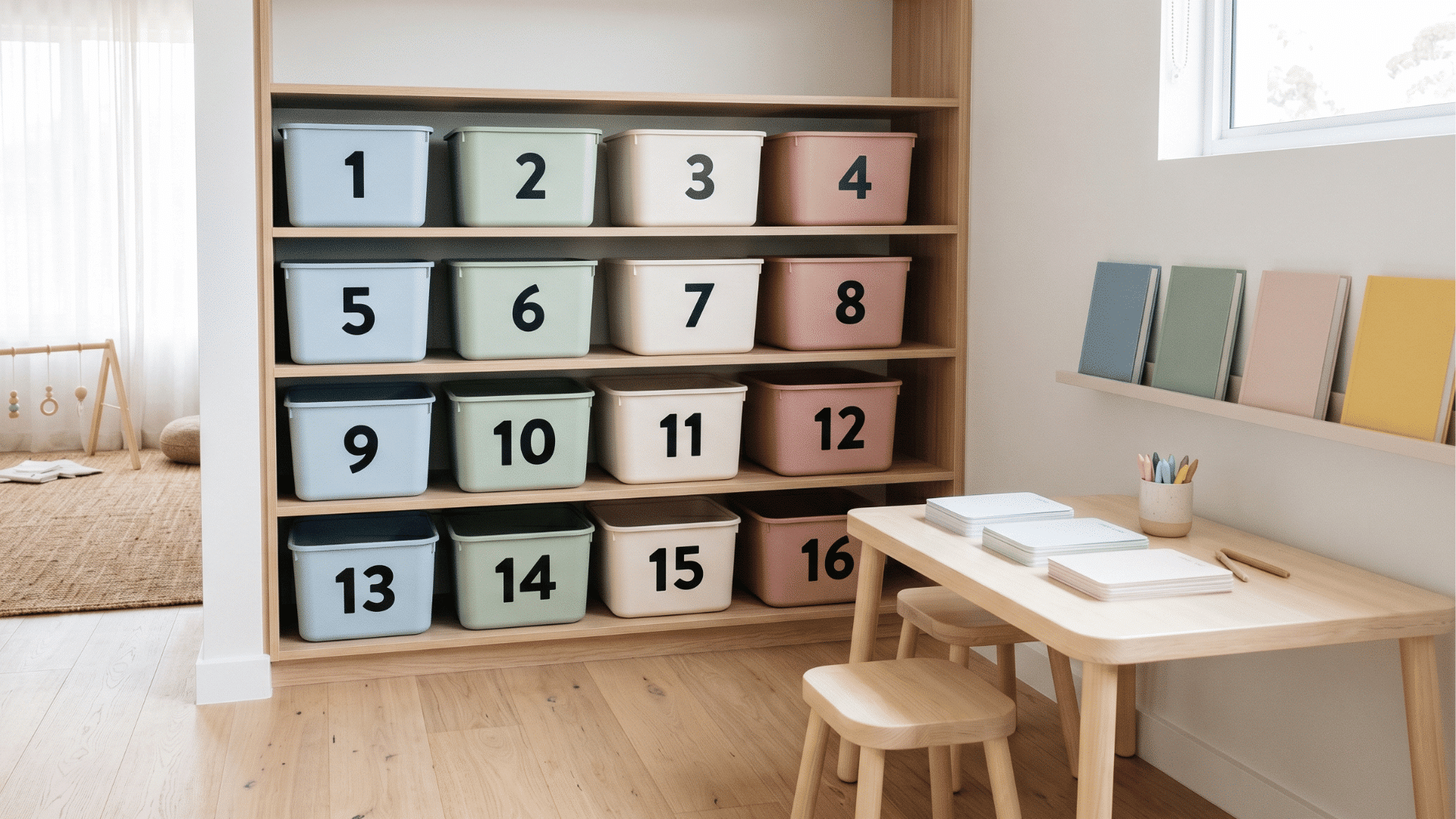
Assigning each bin a number and a matching activity card creates a guided play-and-cleanup system that makes organization feel like part of the activity.
How to Set It Up:
- Number each bin with large labels
- Create a picture activity card per bin
- Display cards near the bin area
- Keep the total bins under fifteen maximum
12. Large Floor Baskets
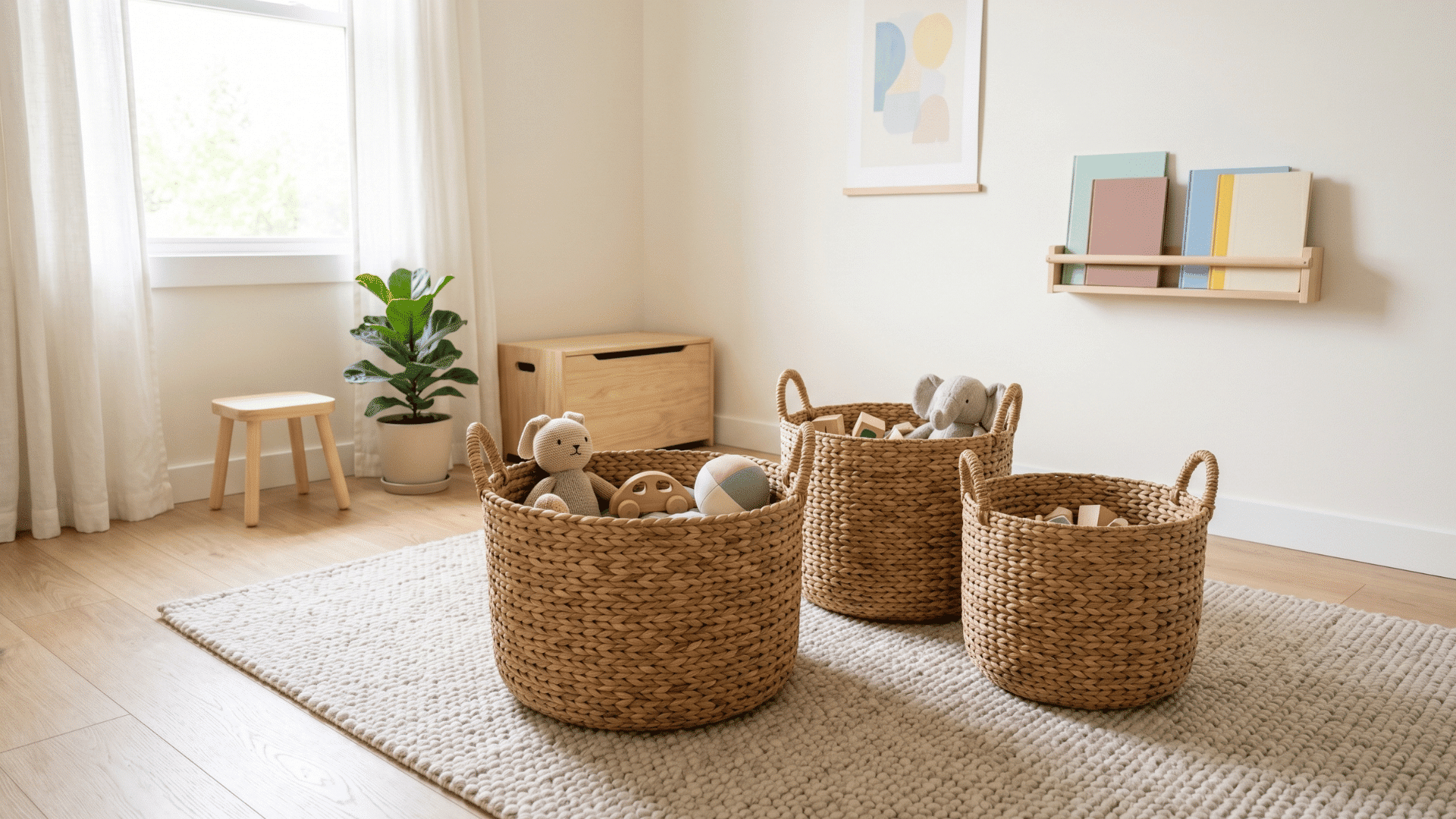
Oversized baskets placed on the floor give children a fast, easy way to drop toys at the end of play without sorting.
How to Set It Up:
- Choose wicker or seagrass basket material
- Size baskets generously for quick drop-ins
- Place one basket per main play zone
- Sort baskets back to proper storage regularly
13. Toy Rotation System
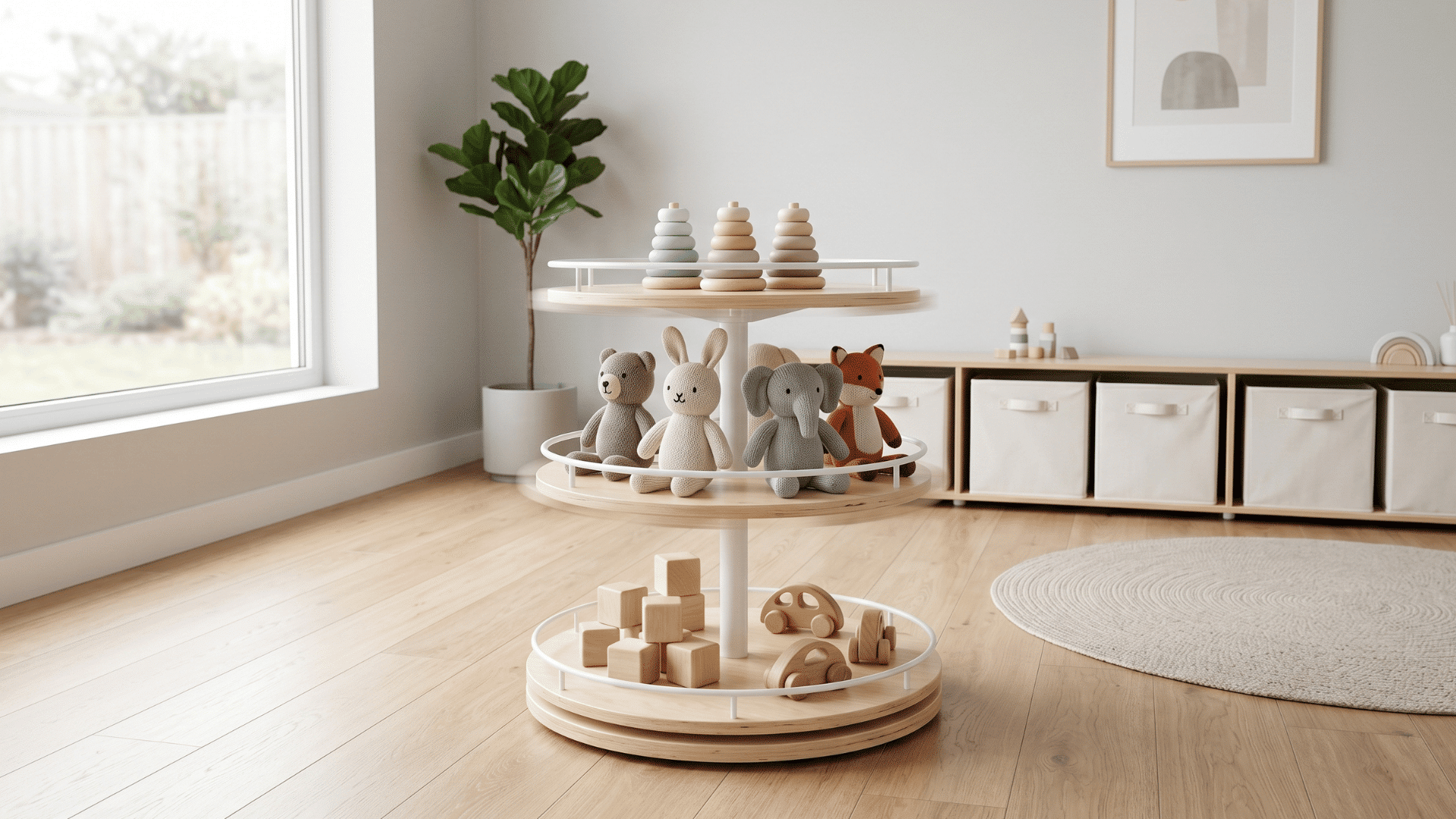
Storing a portion of toys away and rotating them weekly keeps the play area manageable and makes toy storage ideas feel fresh each time toys reappear.
How to Set It Up:
- Keep the height within children’s reach
- Divide toys into three or four groups
- Rotate one active group at a time
- Put similar types of toys together for quick access
14. Pegboards for Art Supplies
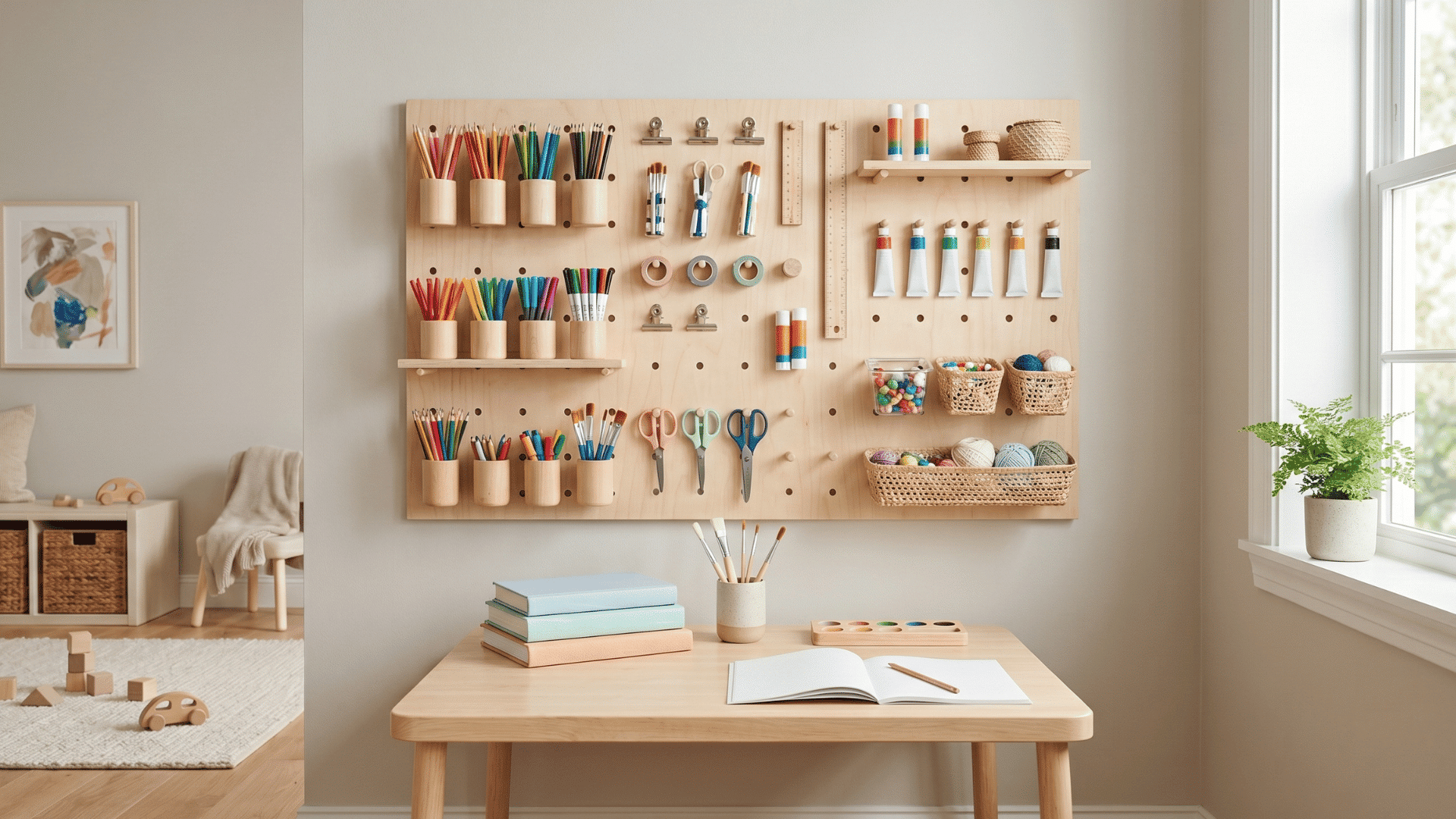
Wall-mounted pegboards fitted with hooks and small shelves hold art tools and accessories in a visible and easy-to-reach display on the wall.
How to Set It Up:
- Mount the pegboard at a child-reachable height
- Use varied hook sizes for different tools
- Paint the pegboard to complement the room color
- Outline each tool position with a silhouette
15. Closet-Based Storage Setup
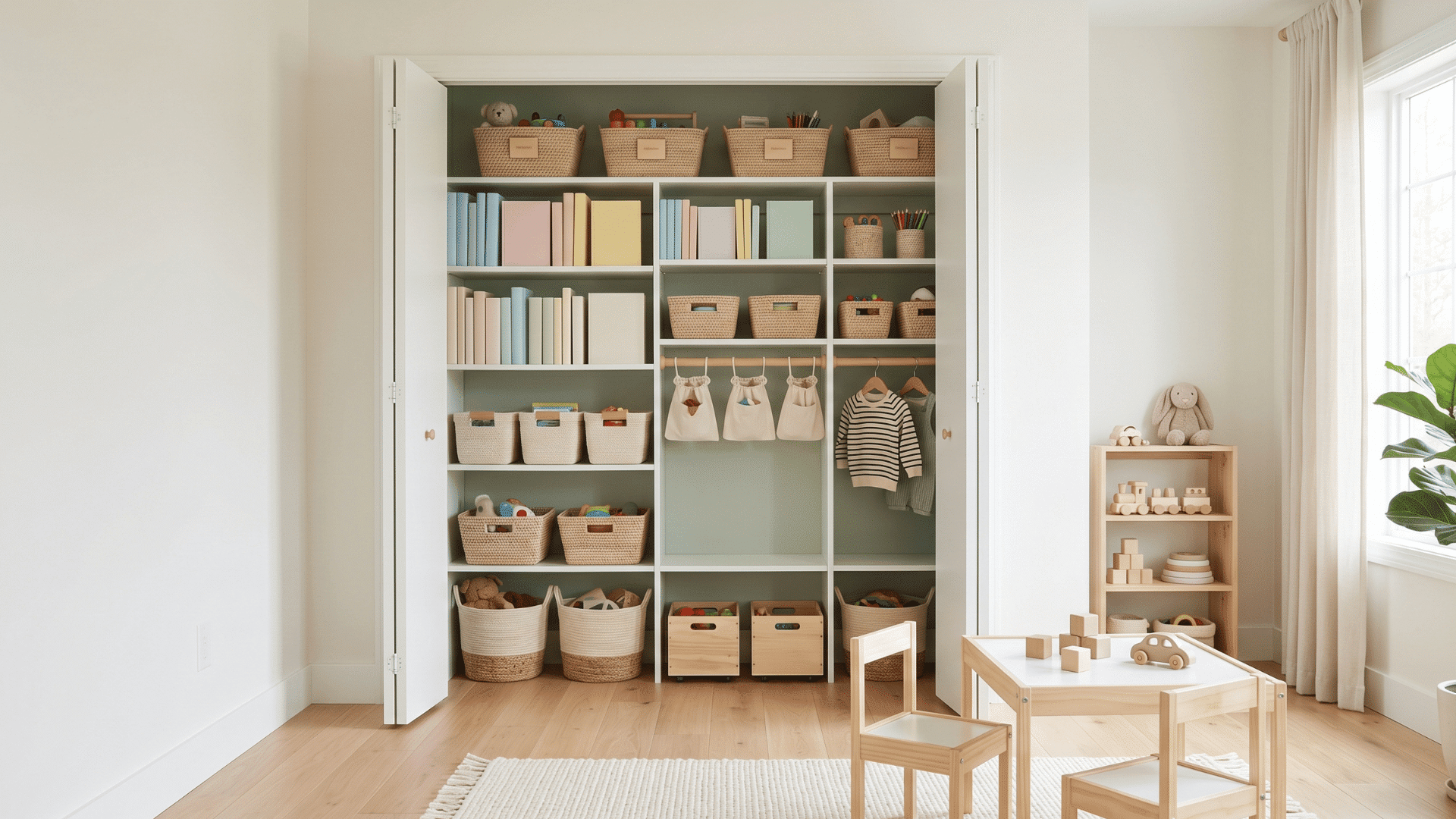
Turning a closet into a dedicated playroom storage zone with shelves, bins, and hanging space keeps the main floor clear and all storage contained in one area.
How to Set It Up:
- Install adjustable shelving at multiple heights
- Use the hanging rod for costumes and bags
- Place frequently used toys on lower shelves
16. Color-Coded Storage System
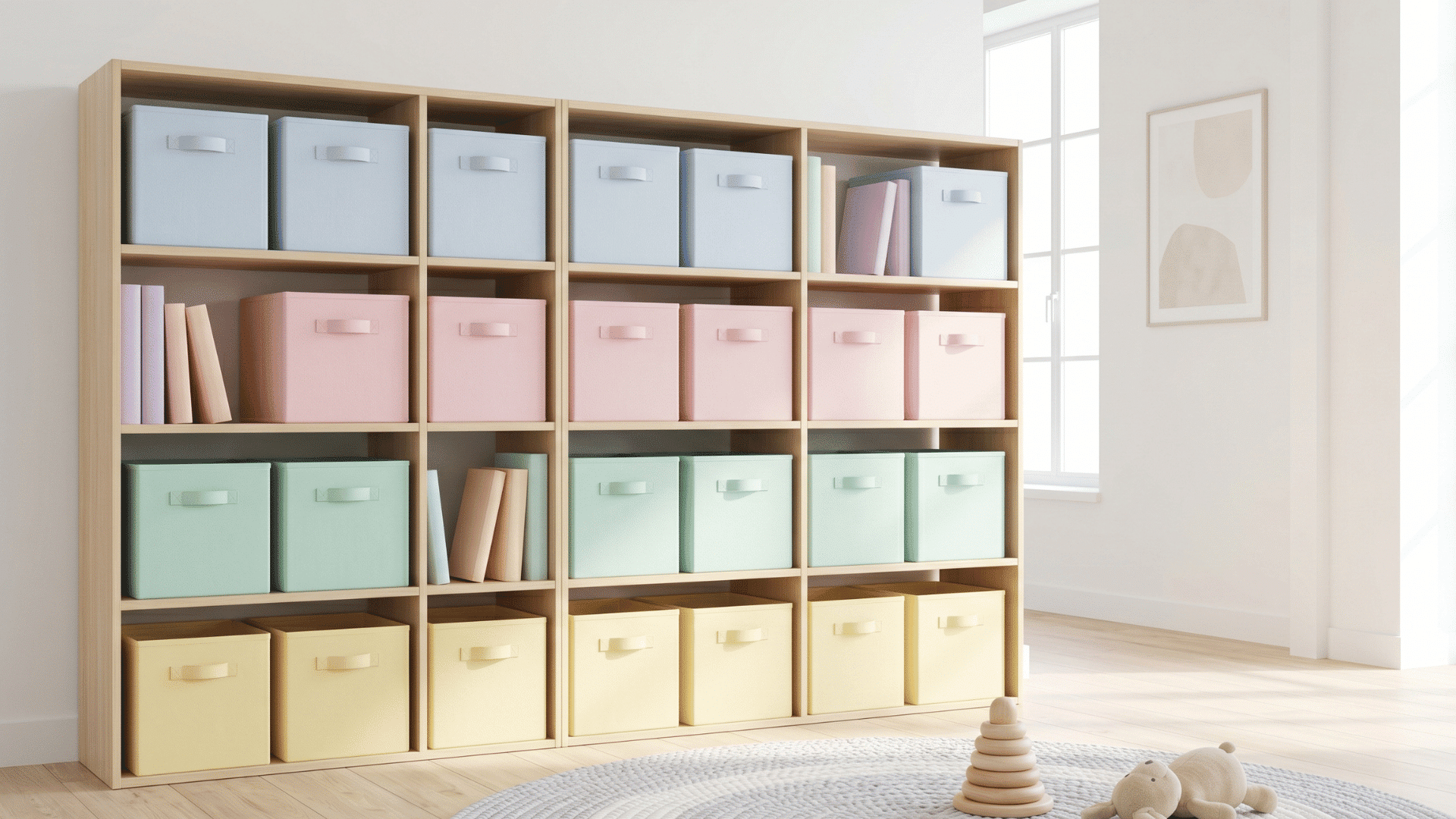
Using a different color for each toy category makes sorting and cleanup fast and intuitive for children who are still learning to read labels.
How to Set It Up:
- Assign one color per toy category
- Choose clearly distinct colors throughout
- Keep color assignments consistent always
17. Magnetic Wall Strips for Toy Cars
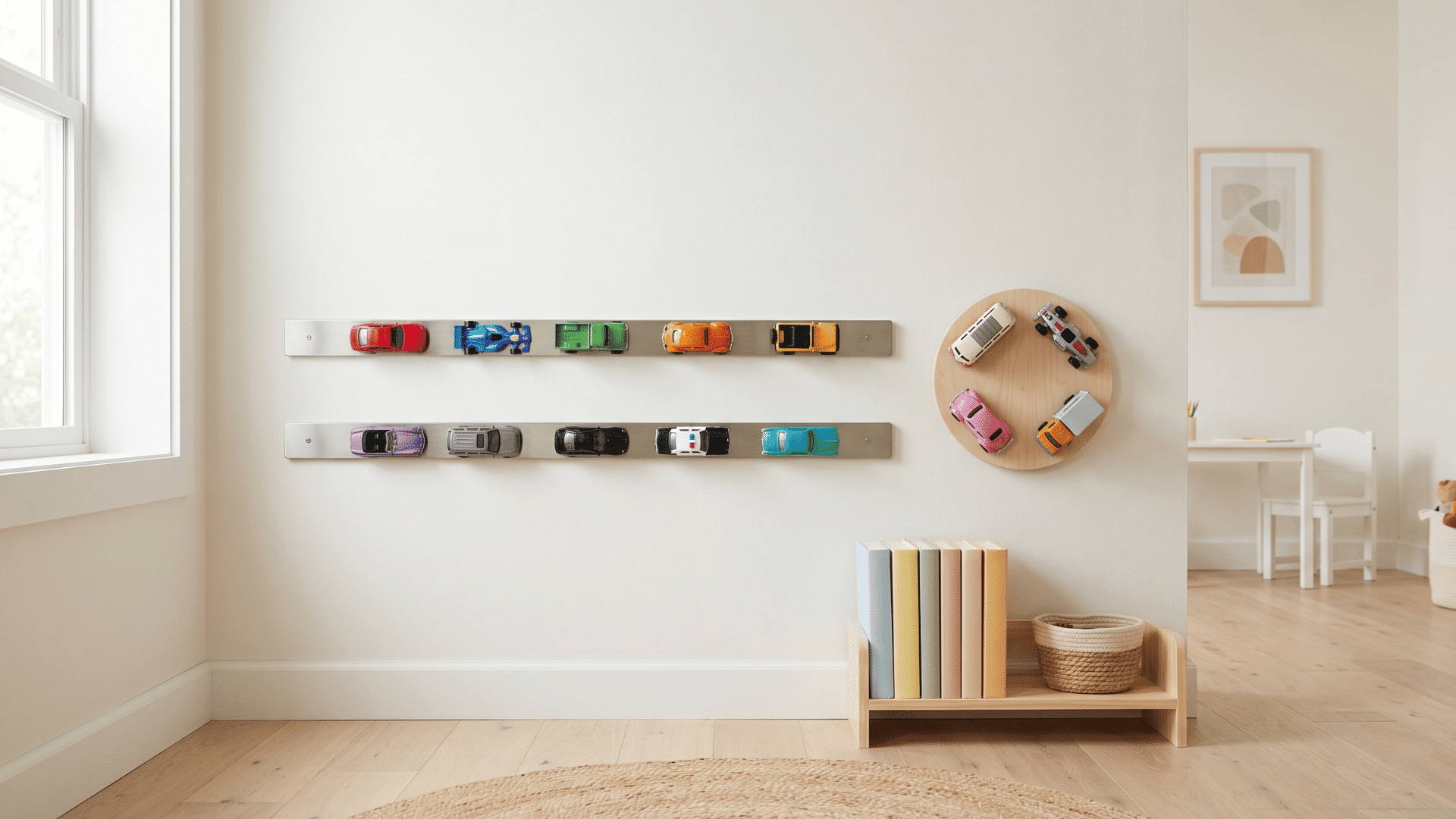
Magnetic strips mounted on the wall hold and display metal toy cars, keeping them organized, visible, and completely off the floor.
How to Set It Up:
- Install strips at child-reachable height
- Use multiple horizontal rows for capacity
- Choose strips with a strong magnetic pull
- Keep the surrounding wall area completely clear
18. Drawer Dividers for Small Toys
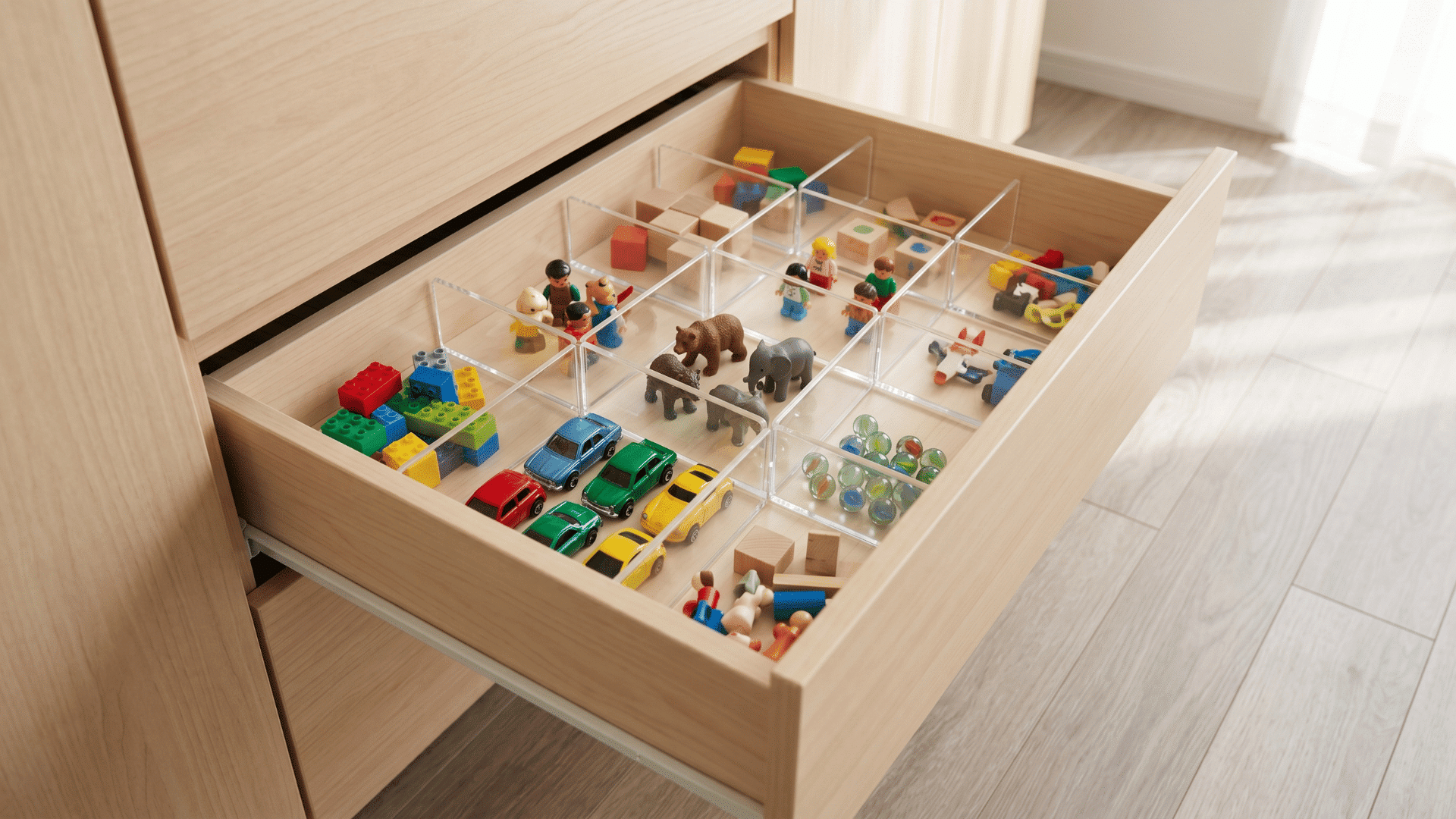
Dividers placed inside drawers separate tiny toys and accessories into neat sections, so small items are easy to find as a key toy storage idea.
How to Set It Up:
- Measure drawer dimensions before purchasing dividers
- Use adjustable dividers for flexible layouts
- Assign each section a specific item type
- Return items consistently to the correct sections
19. Window Seat with Cubbies
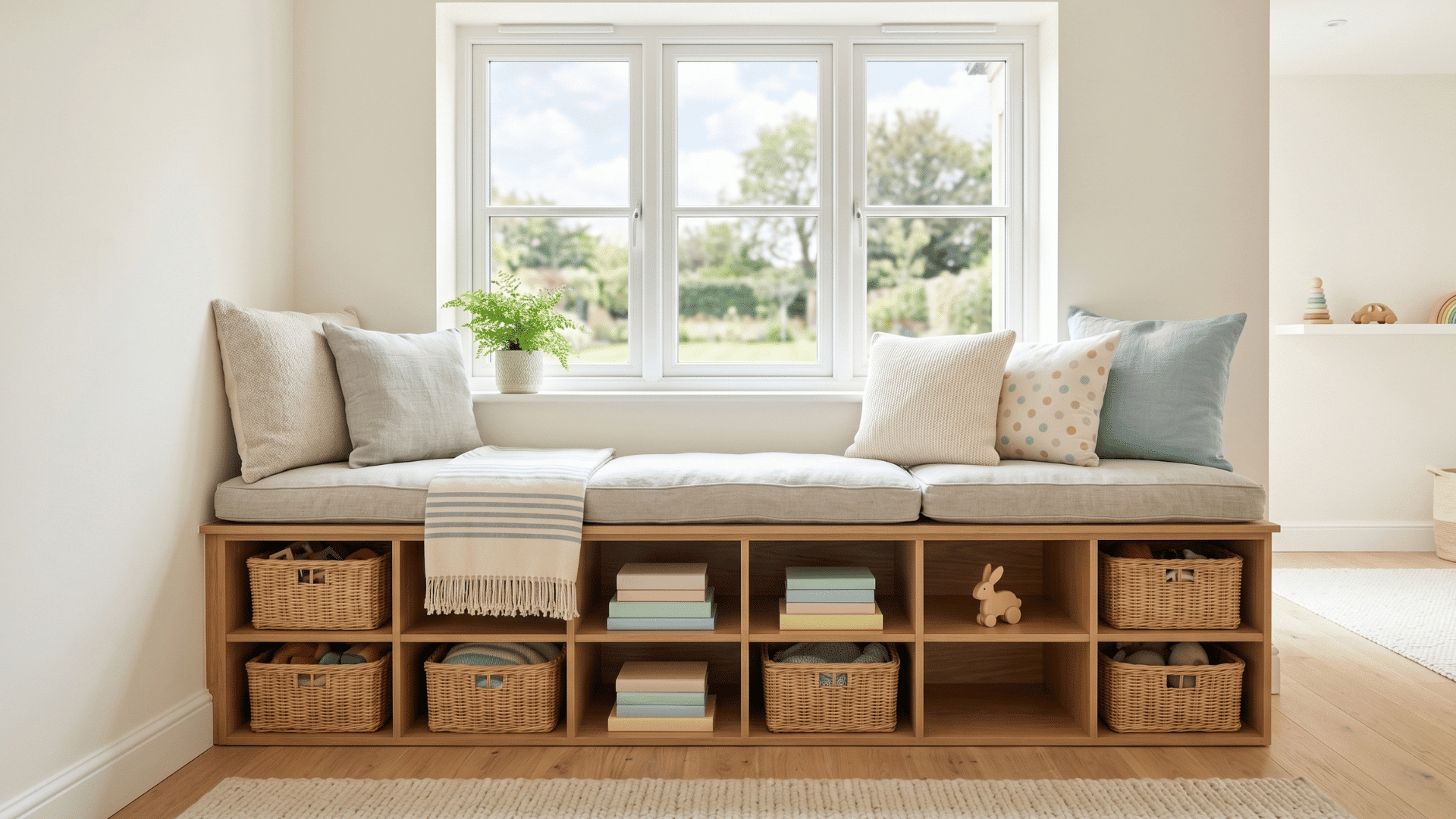
A bench fitted beneath a window, with open cubbies below, provides both comfortable seating and accessible storage for baskets and books.
How to Set It Up:
- Fit the bench to the full window alcove width
- Use cubbies for clearly labeled baskets
- Add a coordinating fabric seat cushion
- Keep the window area clear for natural light
20. Multi-Drawer Storage Units
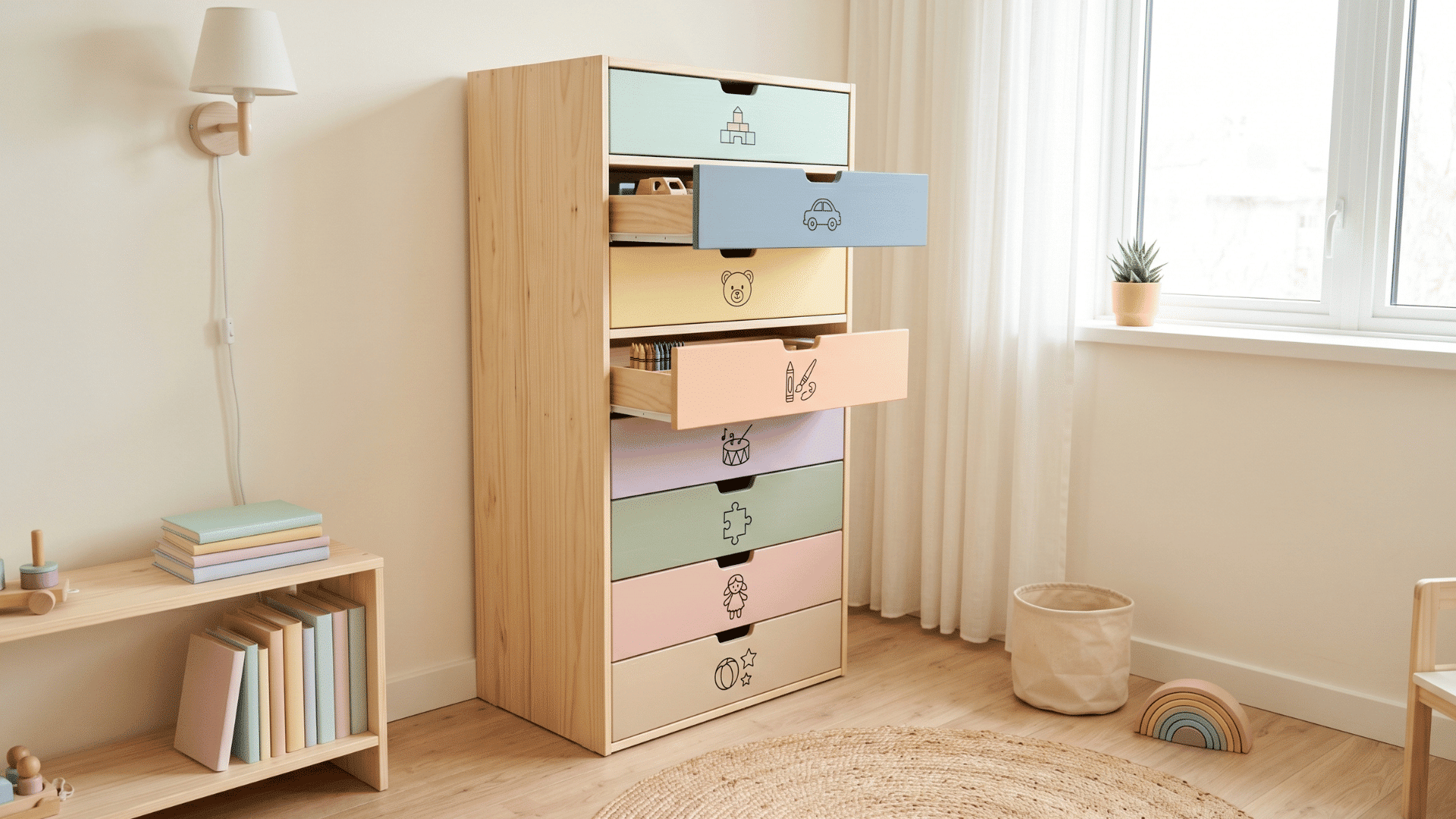
Tall drawer units allow each drawer to hold a specific toy category, so everything has a dedicated home in this organized playroom storage ideas setup.
How to Set It Up:
- Choose a unit with a minimum of ten drawers
- Label each drawer with a picture
- Place the unit centrally in the room
- Reorganize drawers every few weeks consistently
21. Corner Shelving Units
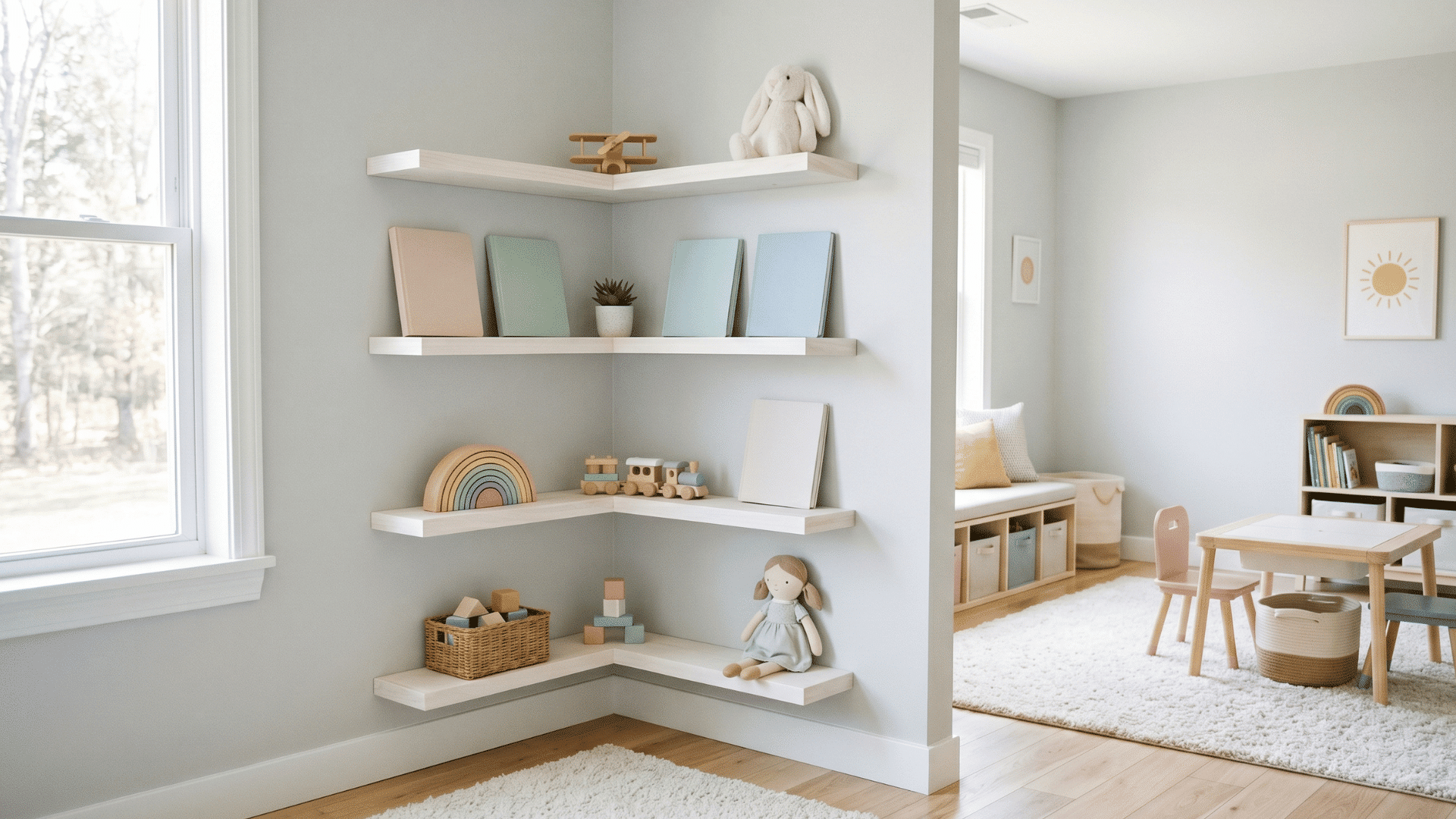
Shelving units installed in room corners make use of space that is often left empty, turning it into functional, accessible toy storage.
How to Set It Up:
- Choose units designed for 90-degree corners
- Mix heights for accessibility and storage
- Keep shelving lightly stocked throughout
- Finish unit to match the surrounding wall color
22. Fold-Out Activity Table
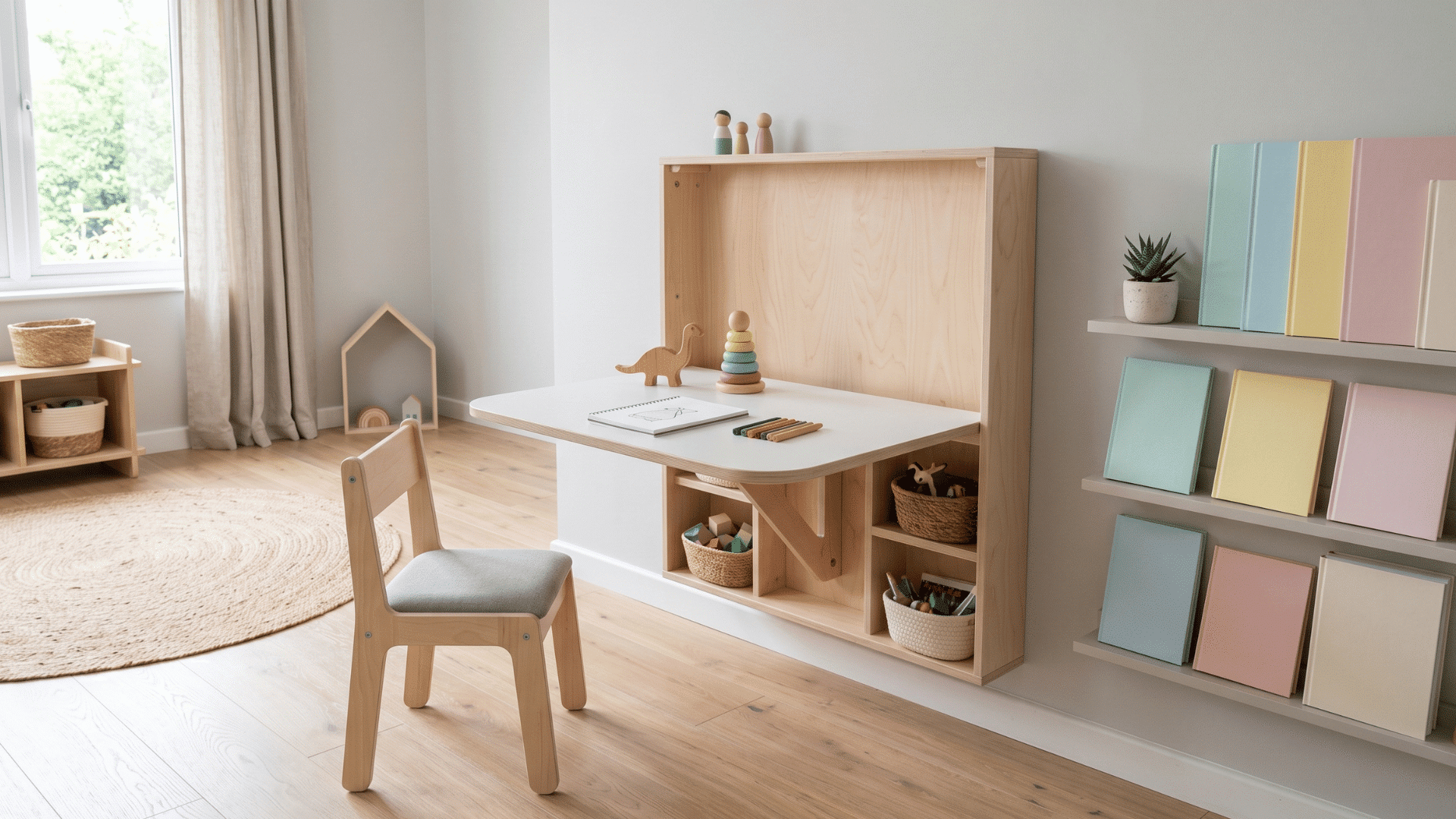
A wall-mounted table that folds out for use and back against the wall when finished saves floor space while keeping activity supplies stored inside.
How to Set It Up:
- Mount the table at the correct child working height
- Choose a table with interior storage compartments
- Use a magnetic closure when the table is folded
- Store only table-specific supplies inside
23. Toy Chests for Bulk Storage
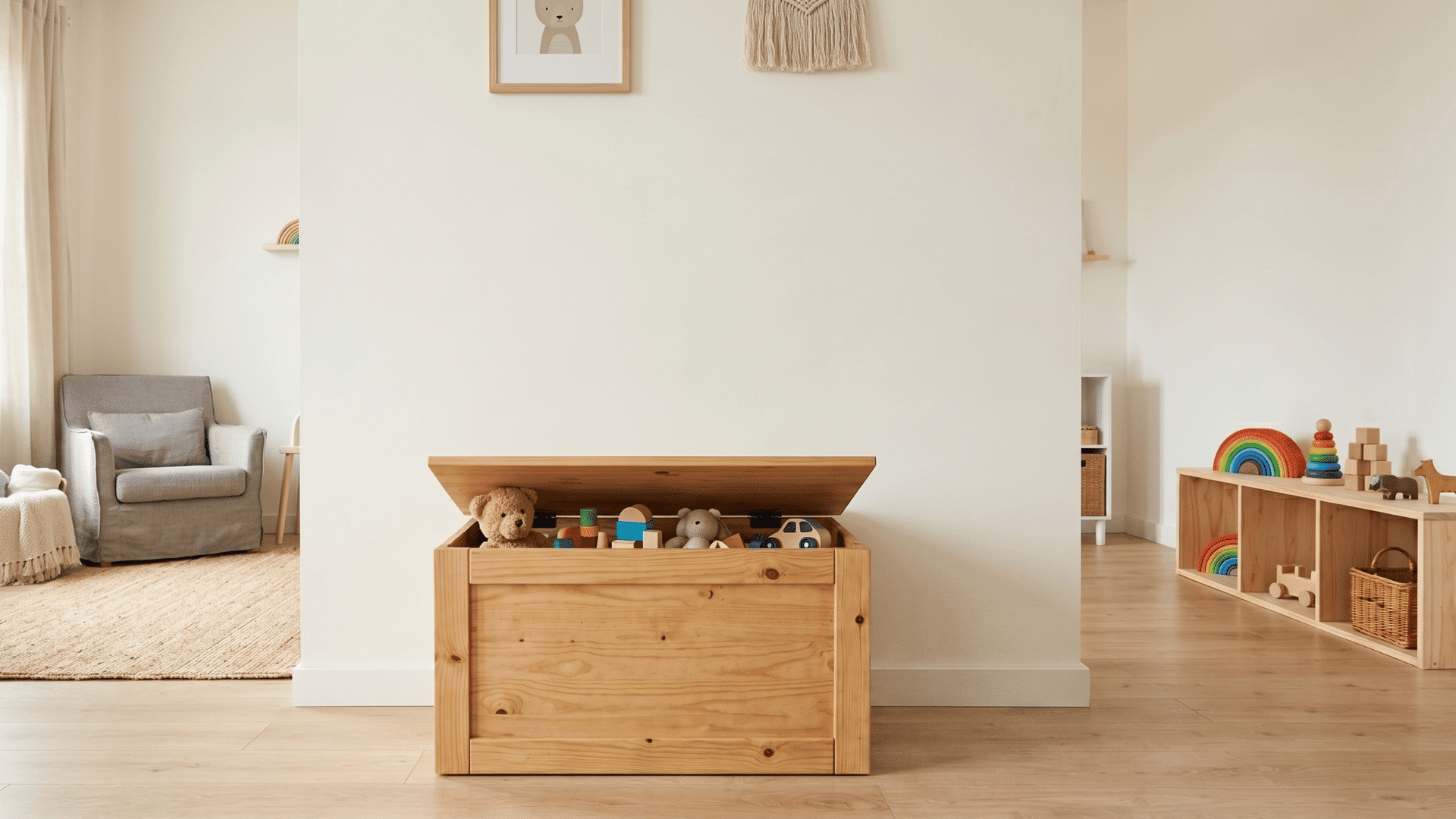
A large toy chest provides a generous single storage space for big toy collections, making it easy to clear the floor quickly as a playroom storage solution.
How to Set It Up:
- Choose a chest with slow-close hinges
- Use for bulky oversized toy items
- Pair with other organized storage systems
24. Bunk Bed Storage Wall
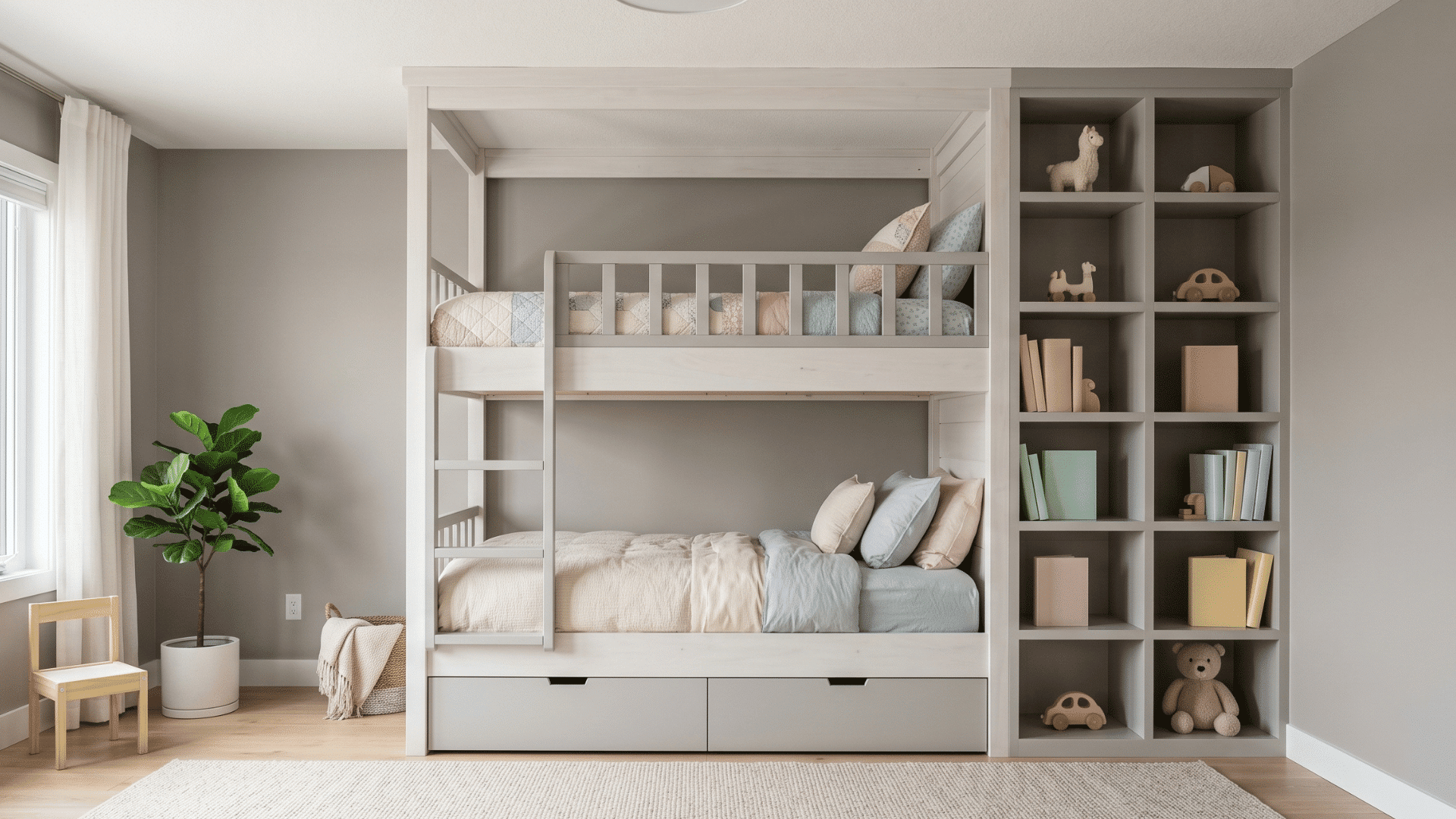
Adding shelves and hooks along the sides of bunk beds creates vertical storage space for books and small toys directly within the sleeping and play area.
How to Set It Up:
- Install narrow shelves along each bunk level
- Use shelves for bedtime essentials and toys
- Keep each bunk level specific to one child
25. Repurposed Furniture Storage
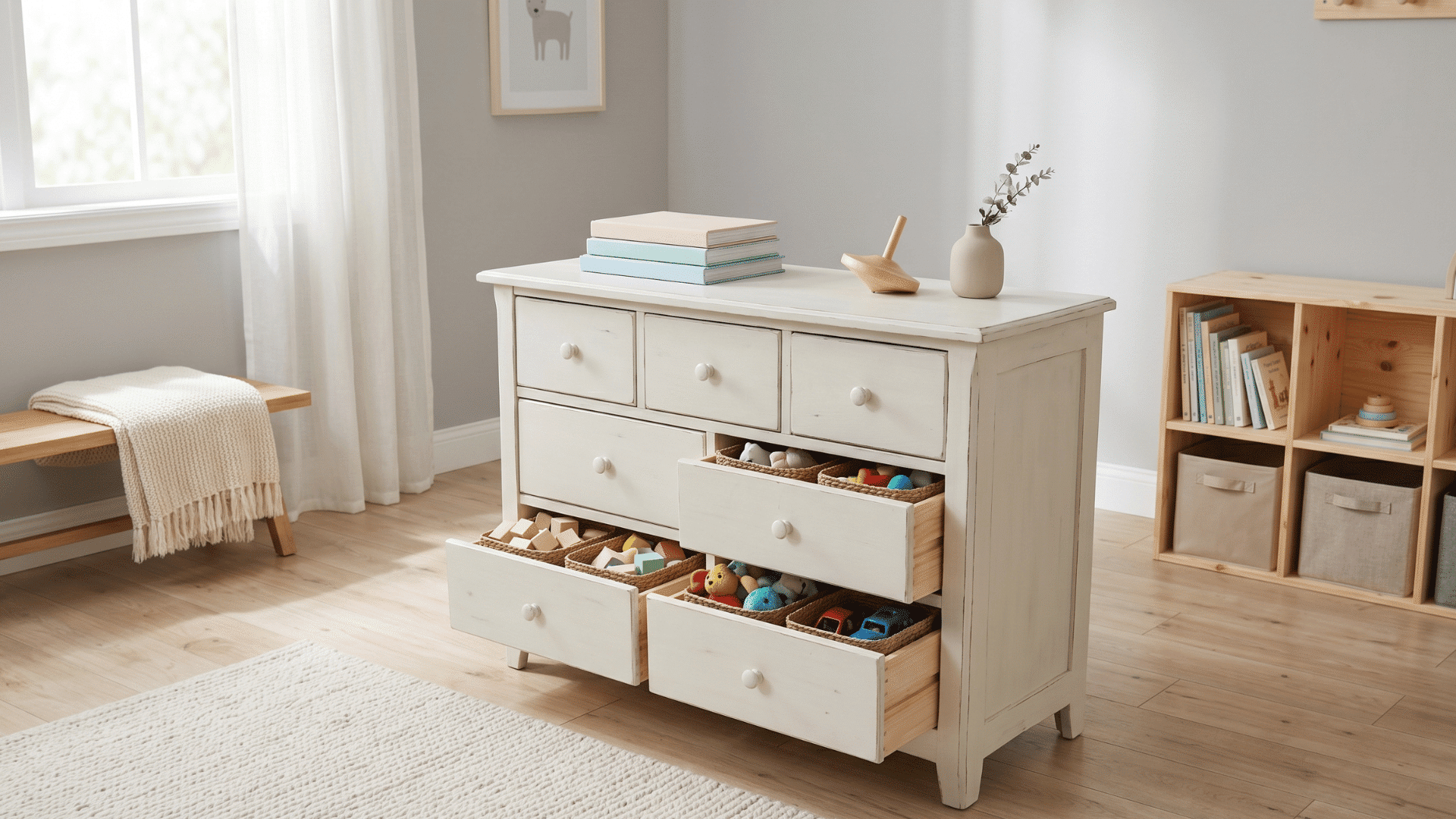
Using old dressers, wooden crates, or vintage trunks as storage units adds character to the playroom while giving existing furniture a second purpose.
How to Set It Up:
- Sand and repaint old dressers appropriately
- Stack wooden crates as wall cubbies
- Line vintage trunks with fabric inside
26. Modular Storage Units
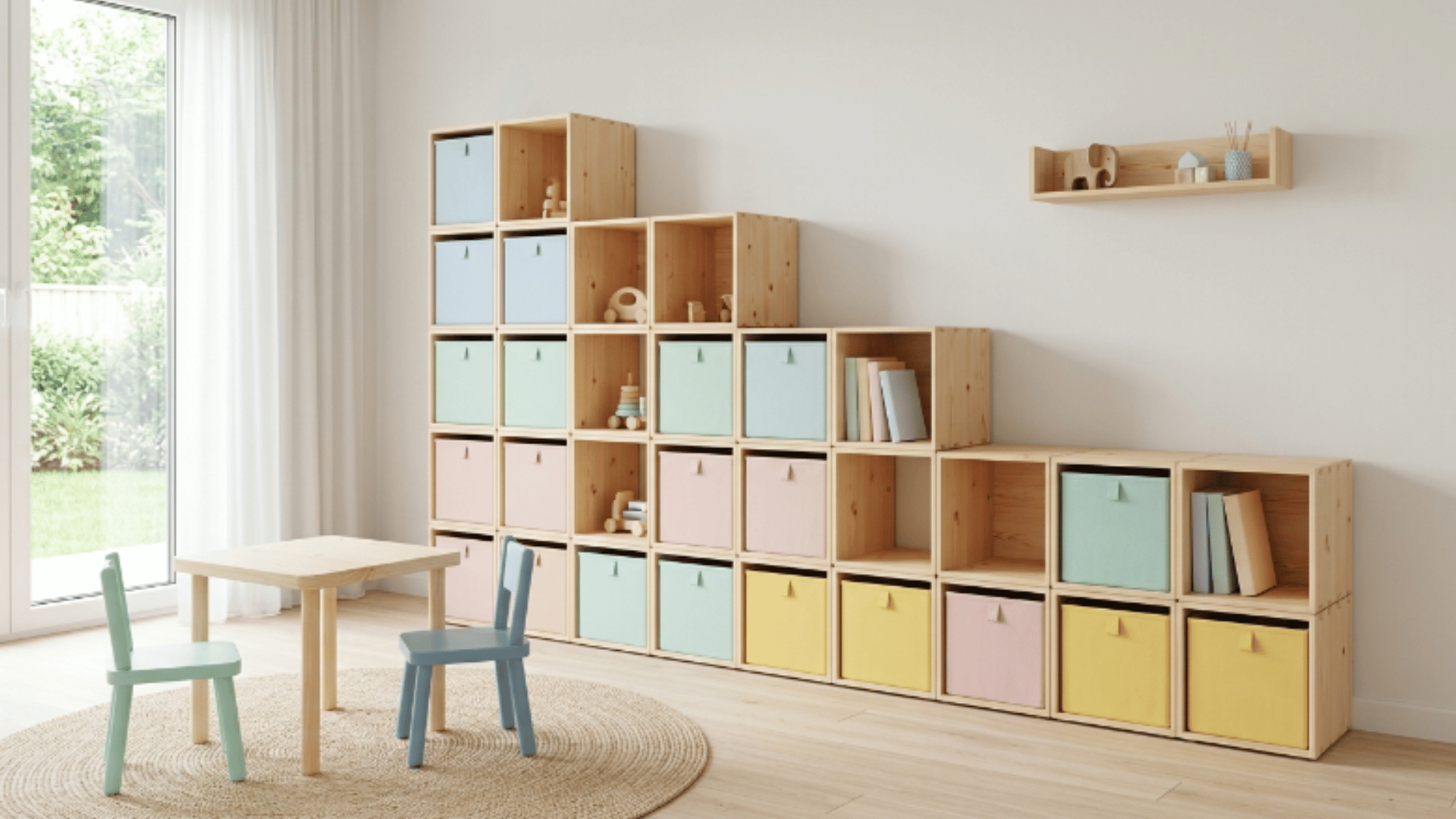
Flexible modular storage systems that can be rearranged over time, adapt to a child’s changing needs without requiring a full replacement of the playroom storage setup.
How to Set It Up:
- Start with a basic age-appropriate configuration
- Choose stackable and rearrangeable individual units
- Select neutral finishes for consistent matching
- Reconfigure layout at least once yearly
27. Dress-Up Station with Hooks
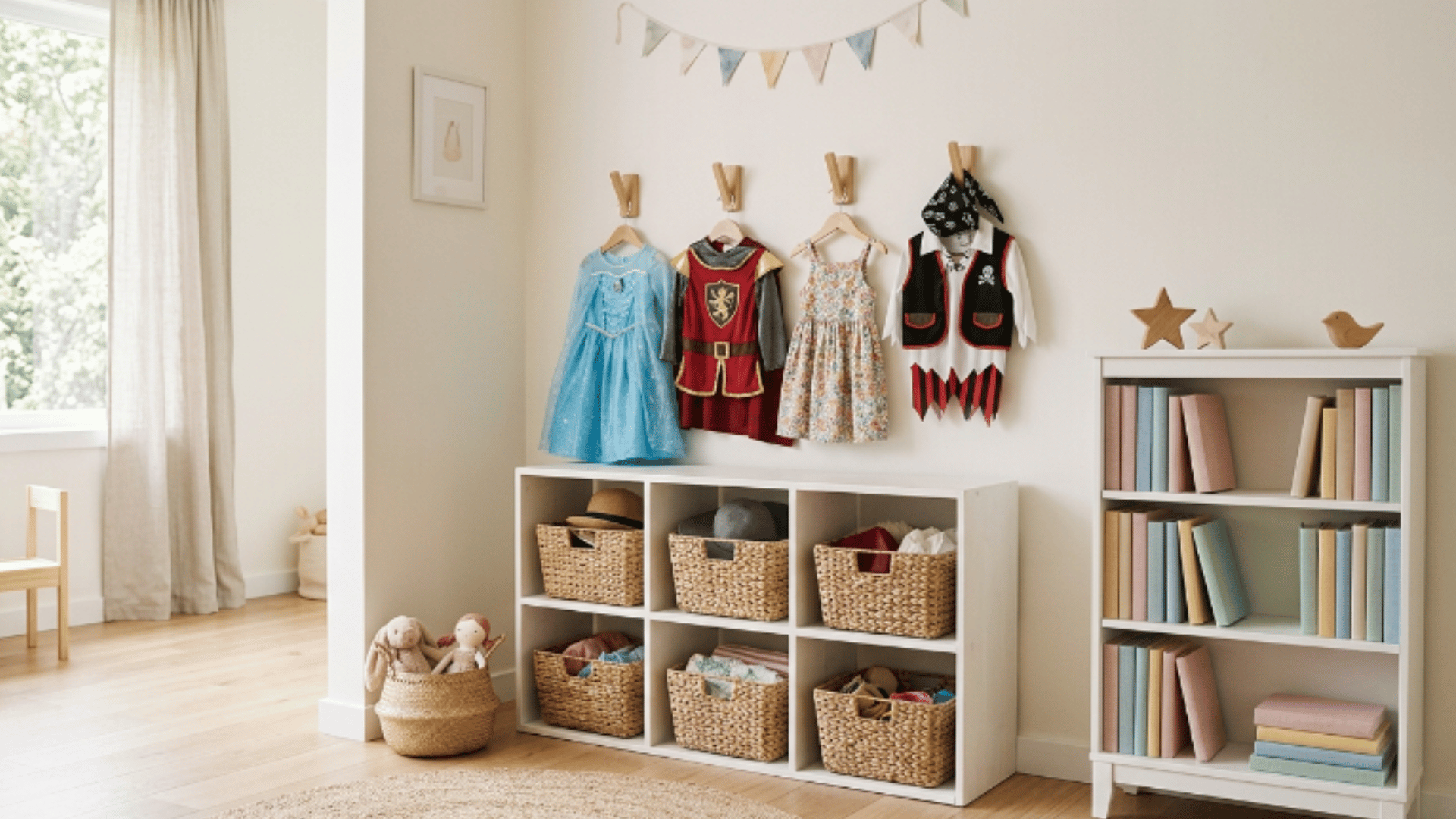
A dedicated section of the playroom with hooks for hanging costumes and cubbies for accessories makes dress-up play easy to access and easy to put away.
How to Set It Up:
- Install hooks at child-reachable wall height
- Add open cubbies below for accessories
- Rotate costume selection periodically for freshness
28. Sensory Bin Table with Storage
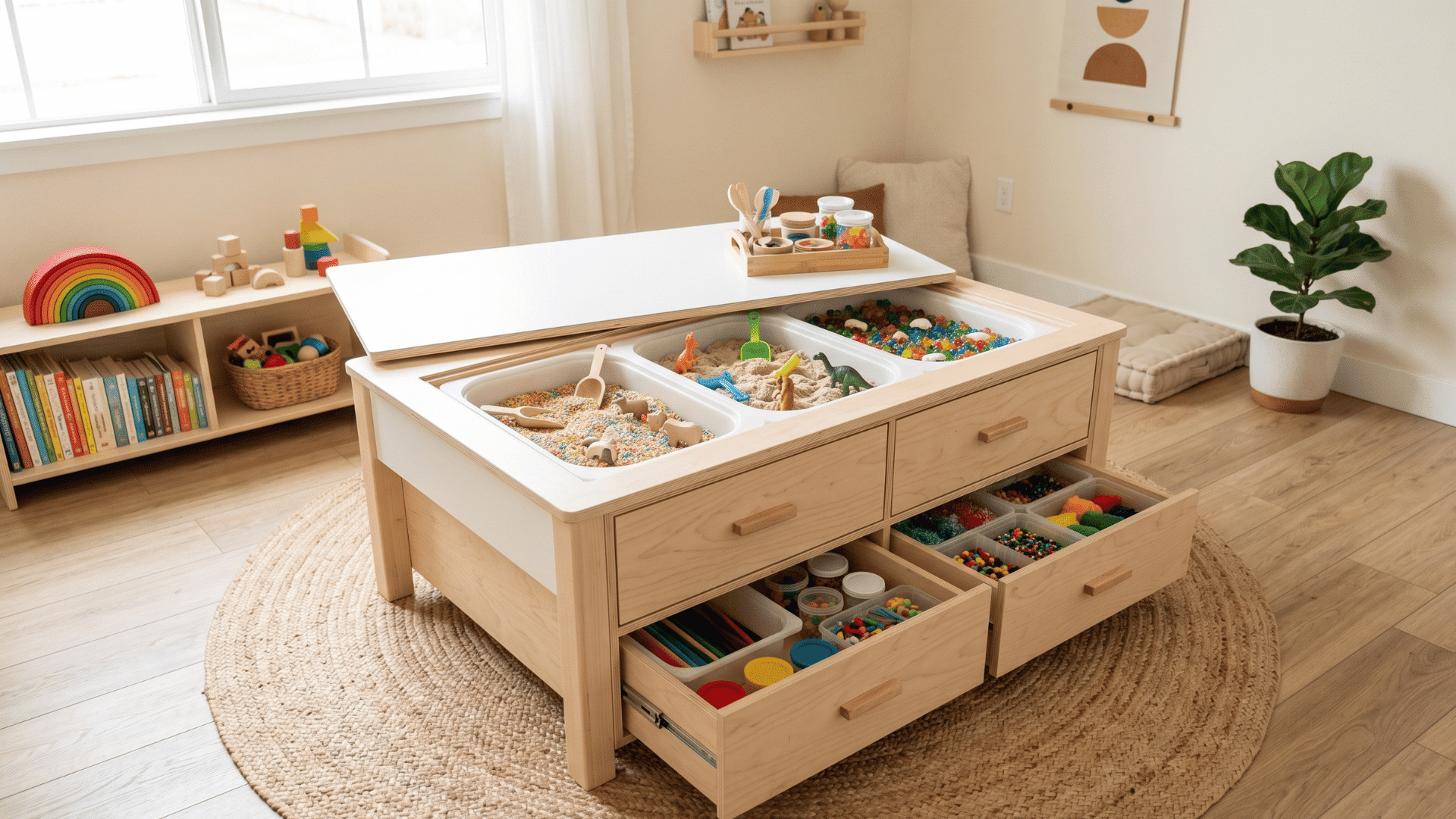
A play table with drawers or shelves underneath stores sensory supplies directly below the surface where they are used, keeping everything contained in one area.
How to Set It Up:
- Choose a table with a removable top
- Store sensory fillers in lower drawers
- Keep a dustpan in one lower drawer
- You can also place a floor mat beneath the table
29. Low-Level Kid-Friendly Storage
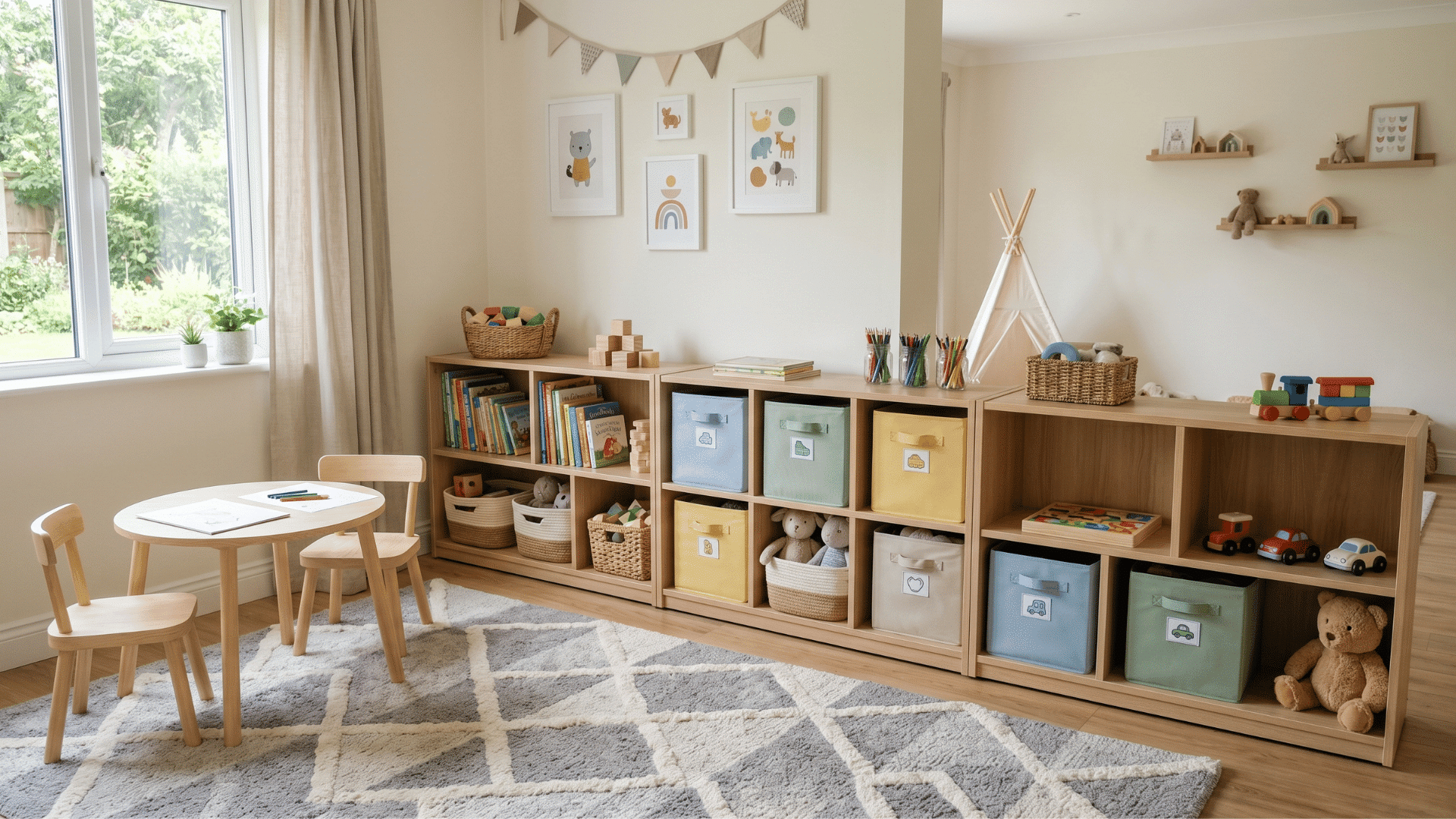
Keeping all storage at child height ensures children can reach, access, and return items independently without needing adult help in this toy storage ideas approach.
How to Set It Up:
- Select units within the child-reachable height range
- Place the most-used toys at the lowest level
- Use low open shelving throughout the room
- Anchor all units securely to the wall
30. Under-Stair Hidden Storage
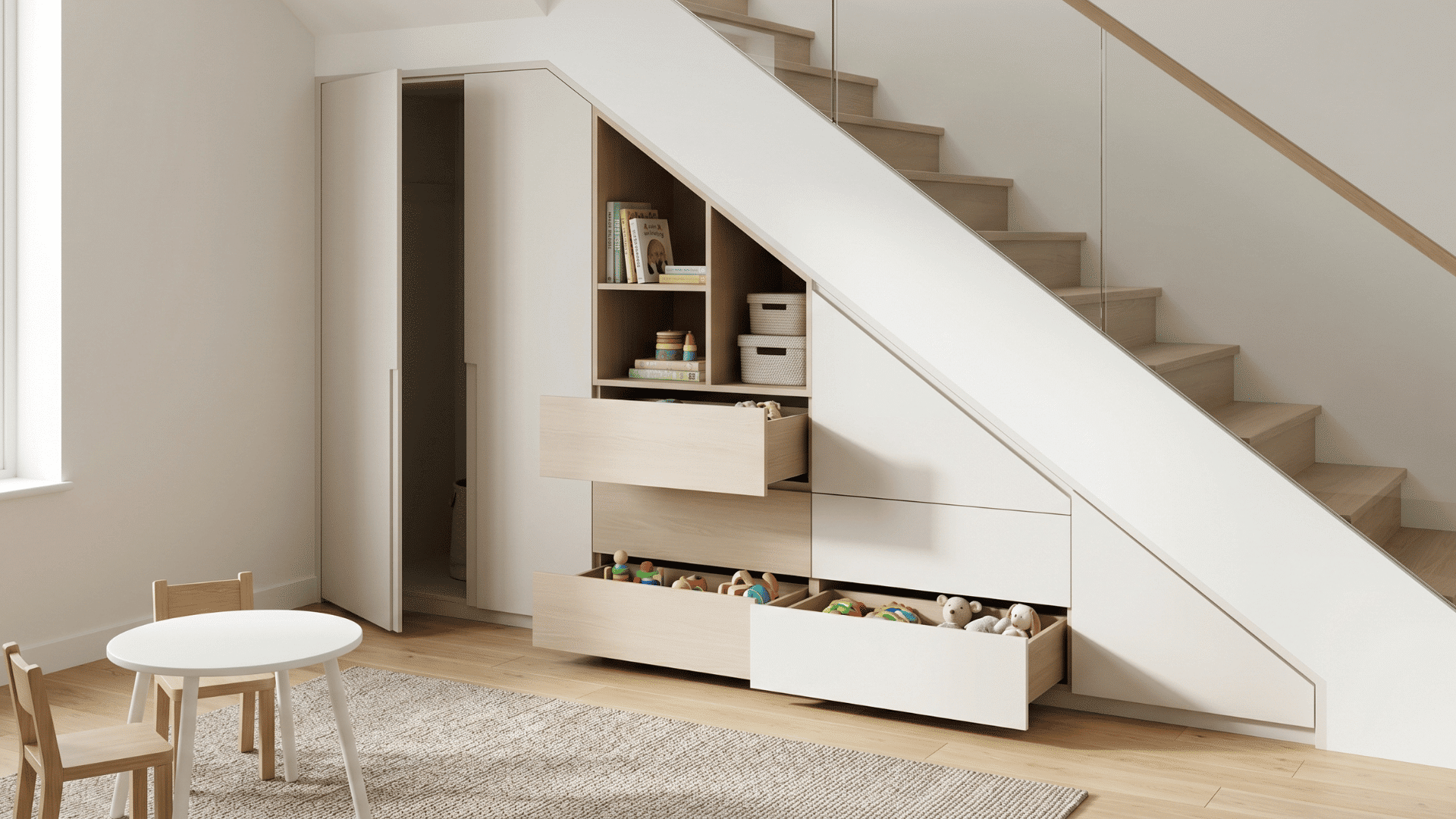
The space beneath a staircase, fitted with drawers, shelves, or pull-out bins, creates a hidden, generous storage idea for a playroom that is easy to overlook.
How to Set It Up:
- Measure the full under-stair dimensions first
- Use the tallest sections for upright shelving
- Install a door for concealment
- Place baskets and books clearly inside
31. Vintage Locker-Style Units
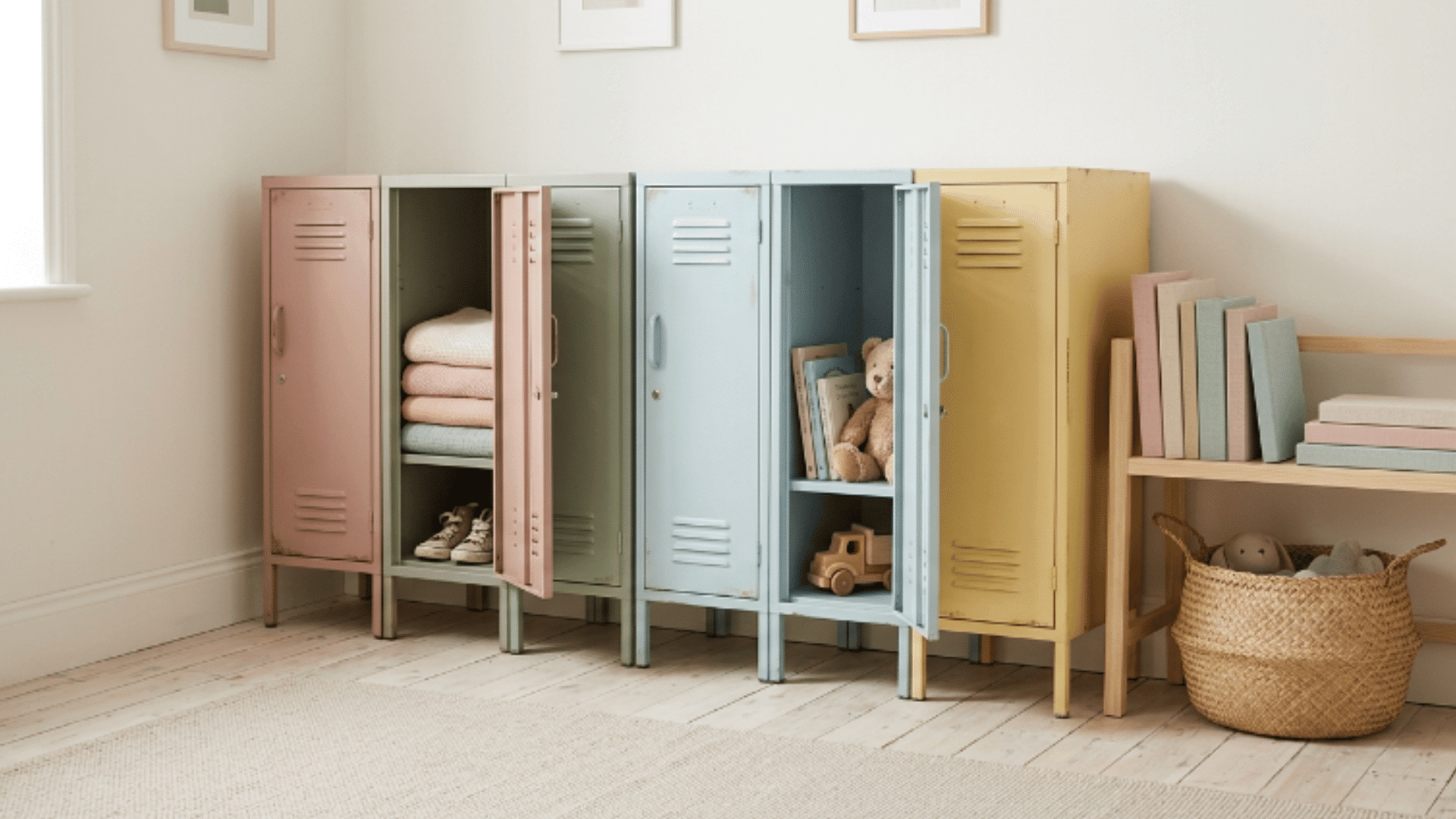
Assigning each child their own locker-style unit provides them with a personal, clearly defined storage space that encourages ownership and responsibility.
How to Set It Up:
- Choose lockers with hanging and shelf sections
- Personalize each locker
- Use the shelf for a personal toy bin
- Position lockers in a uniform wall row
Practical Tips for Long-Term Organization
Keeping a playroom storage system working well over time comes down to a few simple habits done consistently.
- Mix storage: Open shelving gives quick access to daily toys while closed cabinets keep less-used items out of sight and the room looking tidy.
- Stay accessible: Place everyday toy storage at the lowest, most reachable level so children can get what they need without having to pull everything out.
- Label clearly: Clear labels on every bin, drawer, and basket remove any guesswork and make putting items back as easy as taking them out.
- Declutter regularly: Set aside time every few months to remove broken, outgrown, or unused toys to prevent the playroom storage system from becoming overcrowded.
- Involve kids: Teaching children to participate in tidying from an early age makes the storage system part of their routine rather than something only adults manage.
Wrapping It Up
A well-organized playroom does not stay that way on its own; it stays tidy because the right system is in place from the start.
What matters most is choosing a system that children can use independently, without needing adult help every time. Even small changes like adding labeled bins or a floor basket can shift how the whole room feels and functions daily.
Goodplayroom storage ideas grow with the child and keep working long after the initial setup is done. Start with an idea from this blog and share it with a parent who could use a better storage system at home.

Ava Taylor, holding a Bachelor’s degree in Interior Design from the Pratt Institute, has made her mark in creating engaging and functional living spaces for over 14 years. She began her career with a New York-based design studio, where she gained a reputation for her innovative and user-centric designs. Ava joined our team in 2019, bringing a blend of artistic flair and practicality to our home improvement section. Since the she has been the lead contributor to our room transformation series, inspiring readers with her unique approach to maximizing space utility and aesthetic appeal. Beyond her professional work, Ava is a passionate collector of vintage furniture, a hobby that enriches her design perspective.