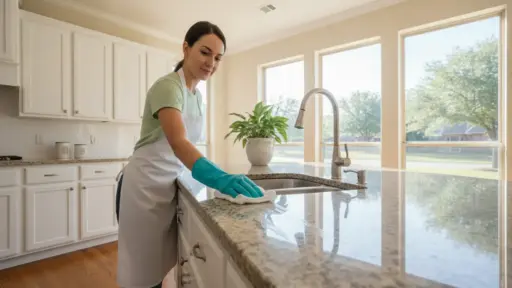
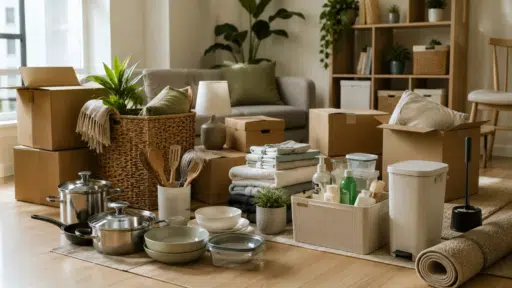
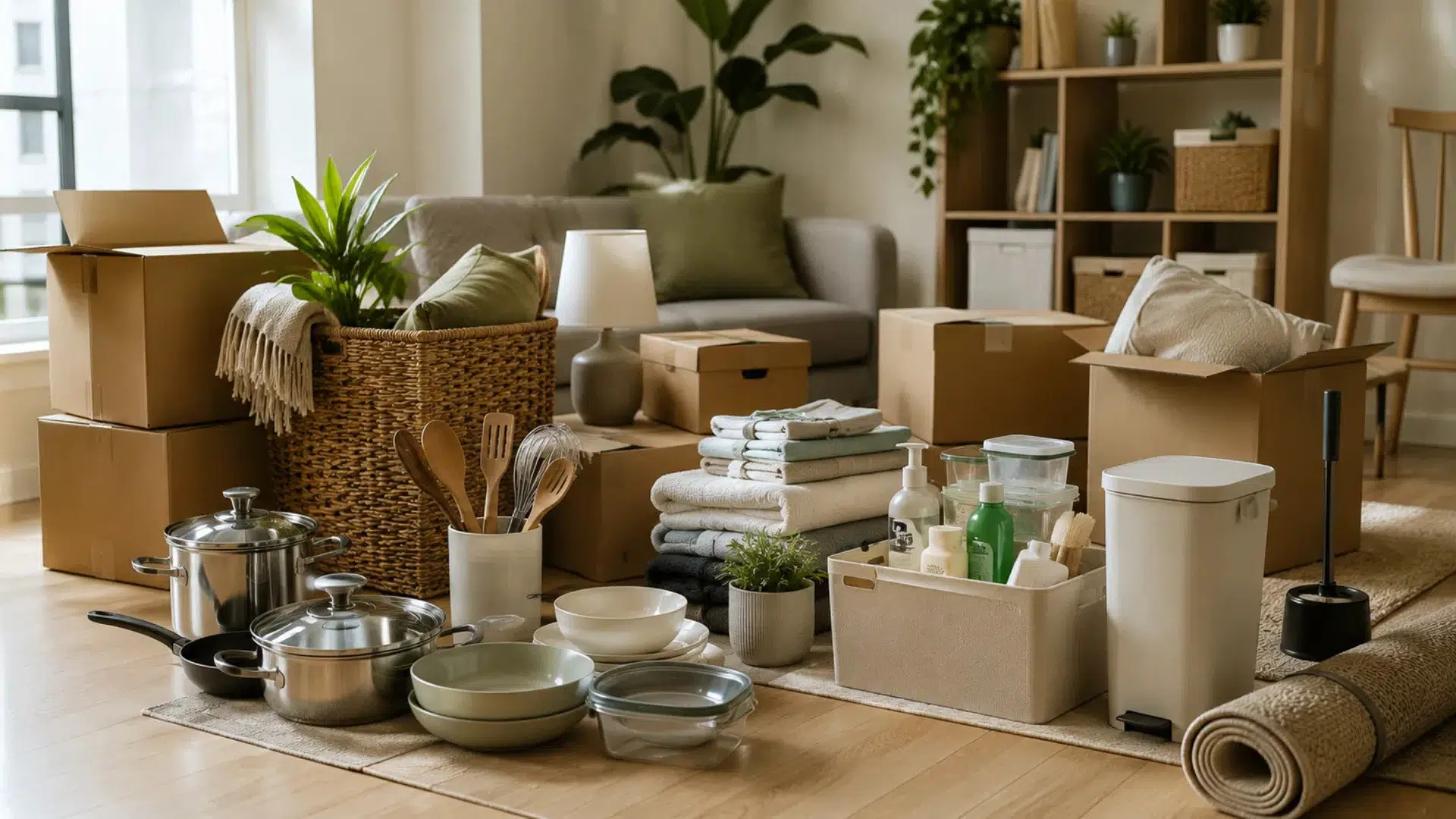

The keys are in your hand, the lease is signed, and your first apartment finally feels real. Then you open the door and realize one thing: an empty apartment needs a lot more than just furniture.
Suddenly you’re making dozens of decisions, wondering what you actually need, what can wait until next month, and how much all of it will cost.
It is easy to overspend on the wrong things or forget the essentials. This guide helps you avoid both.
You’ll get a practical first apartment checklist, learn which purchases should come first, see a realistic budget range, and find the best places to shop for each category.
That way, you can move in with confidence instead of guesswork.
What You Actually Need on Day One
The goal for your first day is simple: make your apartment livable, not fully furnished.
You only need enough to sleep comfortably, use the bathroom, take a shower, and handle a few basic tasks until you have time to shop again.
Many people buy too much before moving in, only to realize half of it could have waited.
Start with the essentials that let you get through your first night without stress, then build your apartment room by room over the next few weeks.
Keep these non-negotiables ready before you unlock the door:
- Bedding: a mattress or air mattress, a pillow, sheets, and a blanket.
- Toiletries: Toothbrush, toothpaste, soap, shampoo, deodorant, and any daily medications.
- Bathroom Basics: Toilet paper, bath towel, hand towel, and a shower curtain if your bathroom doesn’t already have one.
- Basic Cleaning Items: Trash bags, paper towels or a cleaning cloth, and an all-purpose cleaner for quick spills.
- Phone Charger and Power Strip: So you can stay connected even if outlets are limited.
Apartment Essentials by Room
Once you’ve covered the basics for your first night, it’s time to fill each room with the items you’ll use most often.
Instead of shopping randomly, focus on what makes each space functional first. You can always add decorative pieces and extras after you’ve settled in.
1. Kitchen Essentials
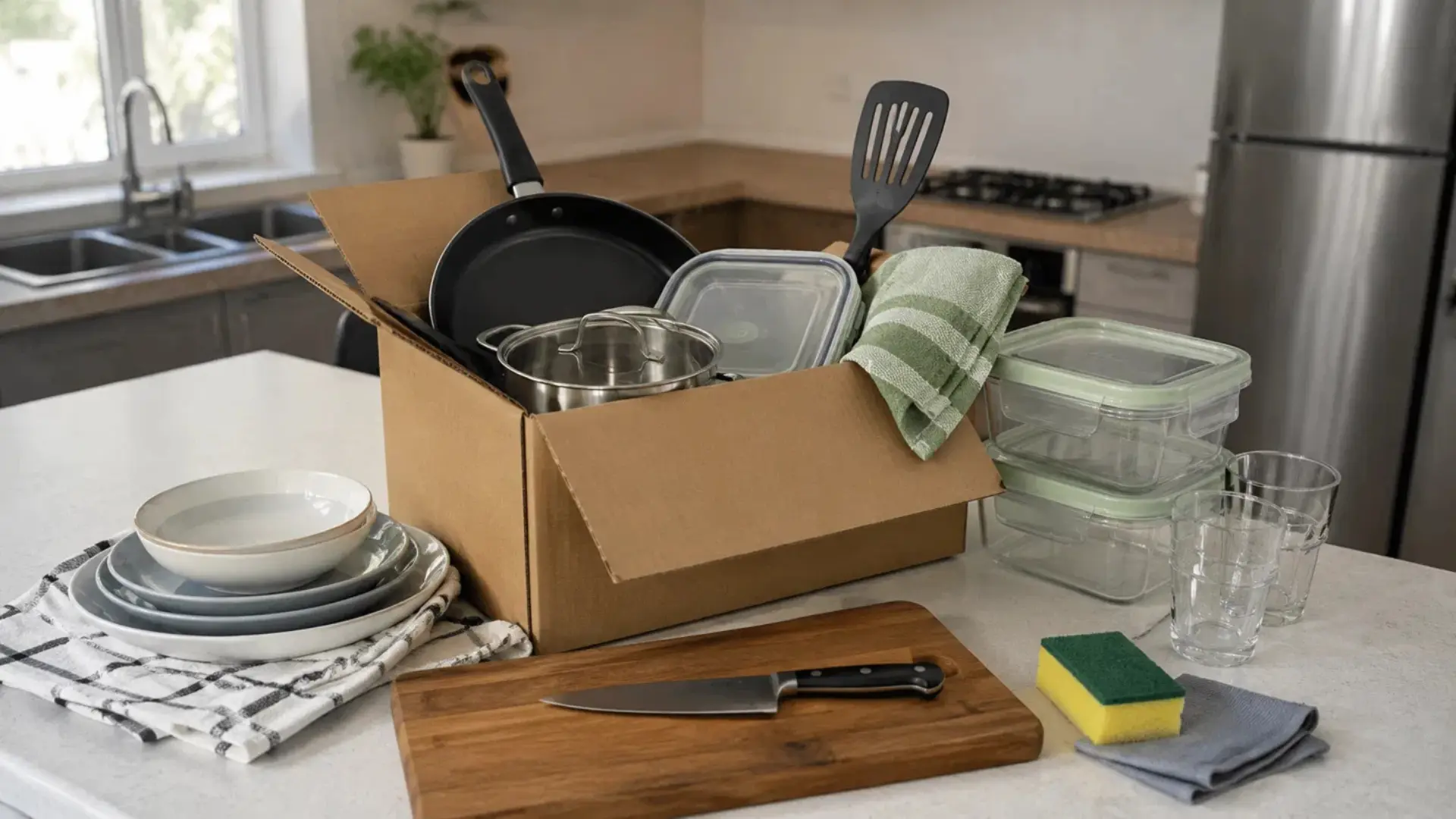
A basic kitchen lets you prepare simple meals, store leftovers, and clean up without needing a cabinet full of gadgets. Start with versatile items that cover most everyday cooking.
- Frying Pan and Saucepan: Handle most everyday cooking tasks.
- Chef’s Knife, Cutting Board, Spatula, and Wooden Spoon: Make food preparation easier and safer.
- Plates, Bowls, Mugs, Glasses, and Cutlery: Cover everyday meals and drinks.
- Food Containers, Dish Soap, Sponge, and Dish Towel: Store leftovers and keep the kitchen clean.
Top Picks for Your Bedroom:
| Store & Brand | Reviews | Price Range |
|---|---|---|
| Walmart Cookware Sets | 4.8/5 | $39–$199 |
| Amazon Kitchen Starter Sets | 4.5/5 | $20–$250 |
| Target Dinnerware & Chefman Appliances | 4.4-4.9/5 | $17.99–$329.99 |
Helpful Tip: A few quality cooking tools usually last longer than large starter sets packed with items you may never use.
2. Bedroom Essentials
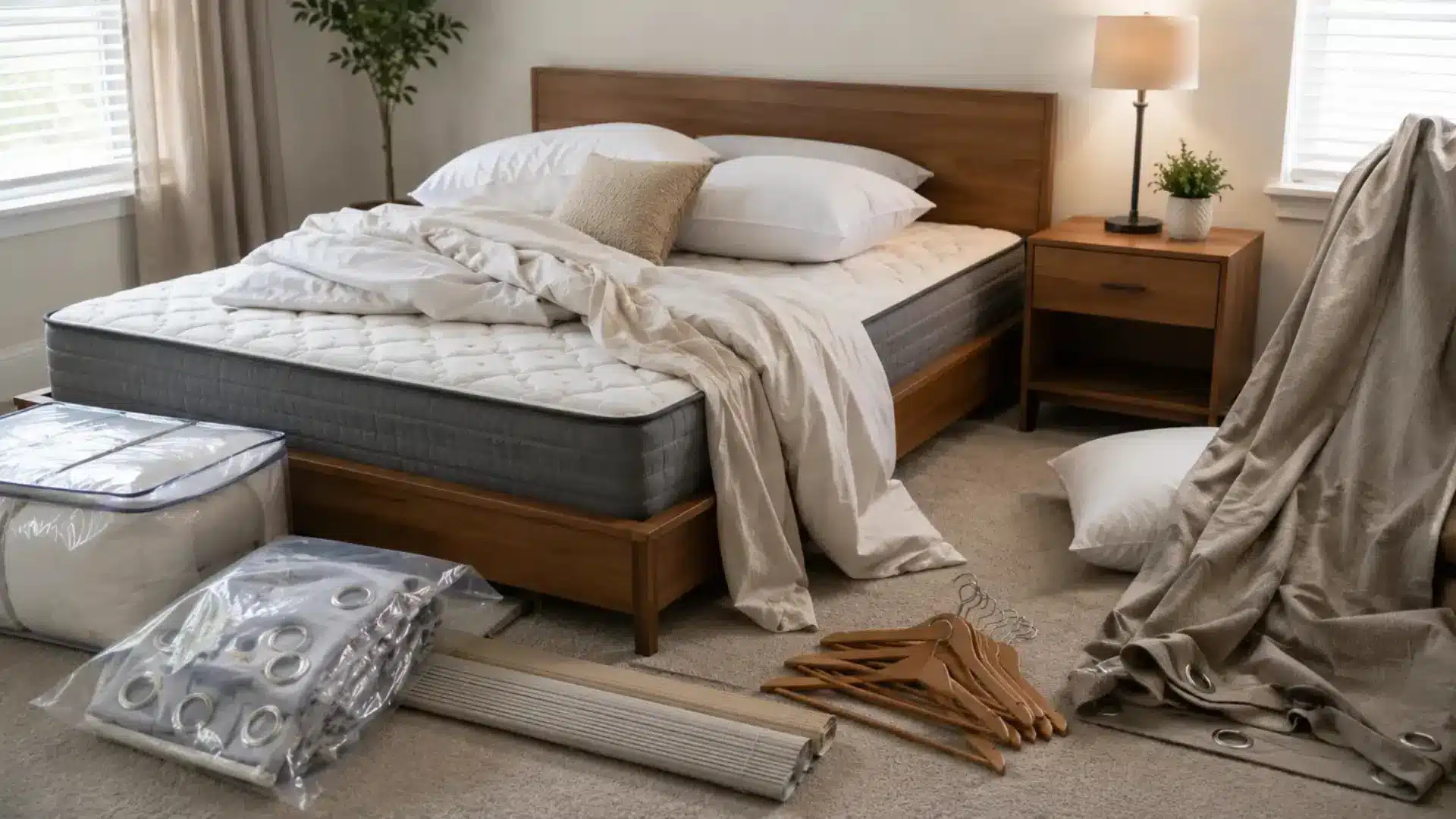
Your bedroom should help you sleep well before it looks complete. Focus on comfort and storage first, then add decorative pieces over time.
- Mattress, Bed Frame, Pillows, and Bedding: Create a comfortable place to sleep.
- Nightstand and Lamp: Keep everyday essentials within easy reach.
- Hangers, a Dresser, or Storage Bins: Organize clothes and reduce clutter.
- Curtains or Blinds: Add privacy and block unwanted light.
Top Picks for Your Bedroom
| Store & Brand | Reviews | Price Range |
|---|---|---|
| Walmart Mattresses | 4.8/5 | $11–$664 |
| IKEA Bed Frames | 4.4/5 | $69–$799 |
| Amazon Blackout Curtains | 4.1/5 | $18–$39.98 |
Helpful Tip: If your budget only allows one major purchase, make it the mattress. You’ll use it every single night.
3. Bathroom Essentials
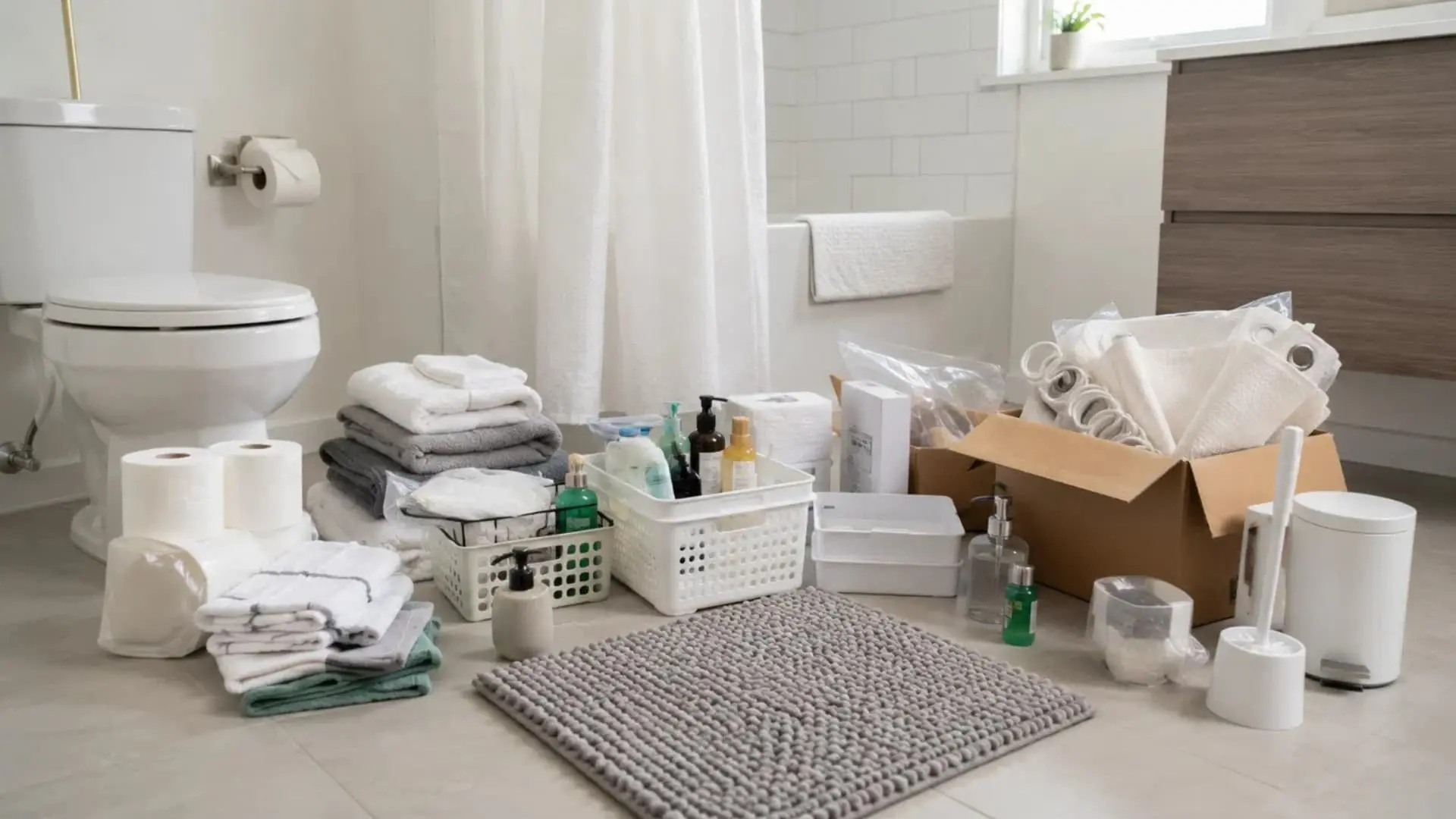
The bathroom doesn’t need many items to work well. A few basics are enough to keep daily routines simple and the space easy to maintain.
- Shower Curtain, Bath Mat, and Towels: Keep the bathroom dry and comfortable.
- Toilet Paper, Hand Soap, and Toiletries: Cover your daily hygiene routine.
- Toilet Brush, Plunger, and Trash Bin: Handle cleaning and common bathroom needs.
- Toothbrush Holder or Small Organizer: Keep the countertop neat.
Top Picks for Your Bathroom
| Store & Brand | Reviews | Price Range |
|---|---|---|
| Amazon Towel Sets | 4.5/5 | $14.68–$82 |
| Amazon Shower Curtain Sets | 4.5/5 | $11.83–$33 |
| Target Bathroom Accessories | 4.1–4.8/5 | $12–$86 |
Helpful Tip: Before shopping, check what your apartment already includes. Many rentals come with towel bars, mirrors, or shower rods.
4. Living Room Essentials
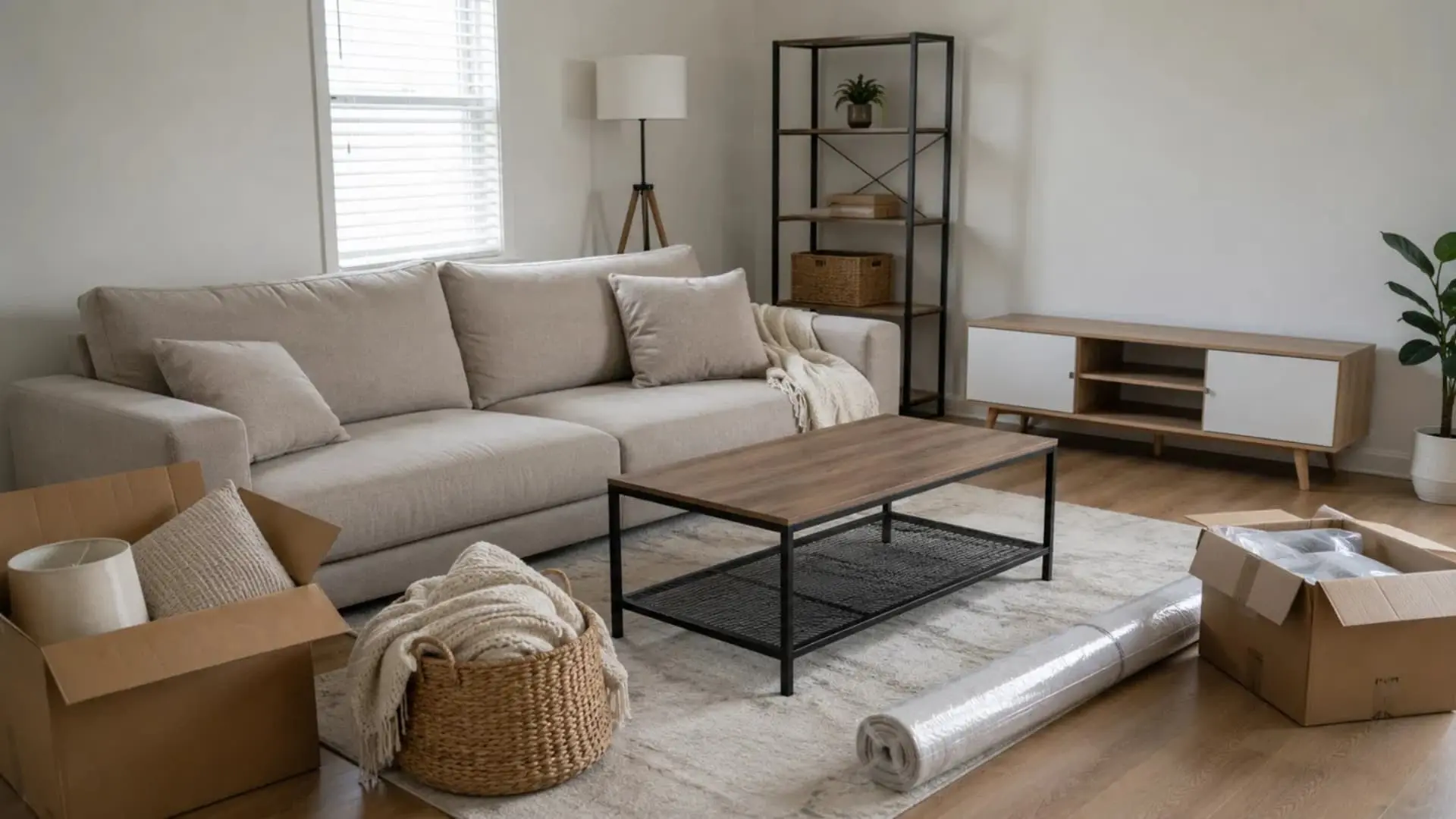
Your living room only needs a few practical pieces at first. You can always add extra seating, décor, and entertainment later as your budget allows.
- Sofa or Loveseat: Comfortable seating for relaxing or hosting guests.
- Coffee Table or Side Table: Hold drinks, remotes, and everyday items.
- Floor Lamp: Add extra lighting where needed.
- Tv Stand or Storage Shelf: Keep electronics and household items organized.
Top Picks for Your Living Room
| Store & Brand | Reviews | Price Range |
|---|---|---|
| IKEA KLIPPAN Loveseat | 4.0/5 | $80- $999 |
| IKEA ÄLVDALEN Sleeper Sofa | 4.3/5 | $199-$1,249 |
| Walmart Coffee Tables & TV Stands | 4.3/5 | $34–$445 |
Helpful Tip: Measure both your room and your apartment doorway before ordering furniture to avoid expensive returns.
5. Cleaning Supplies Checklist
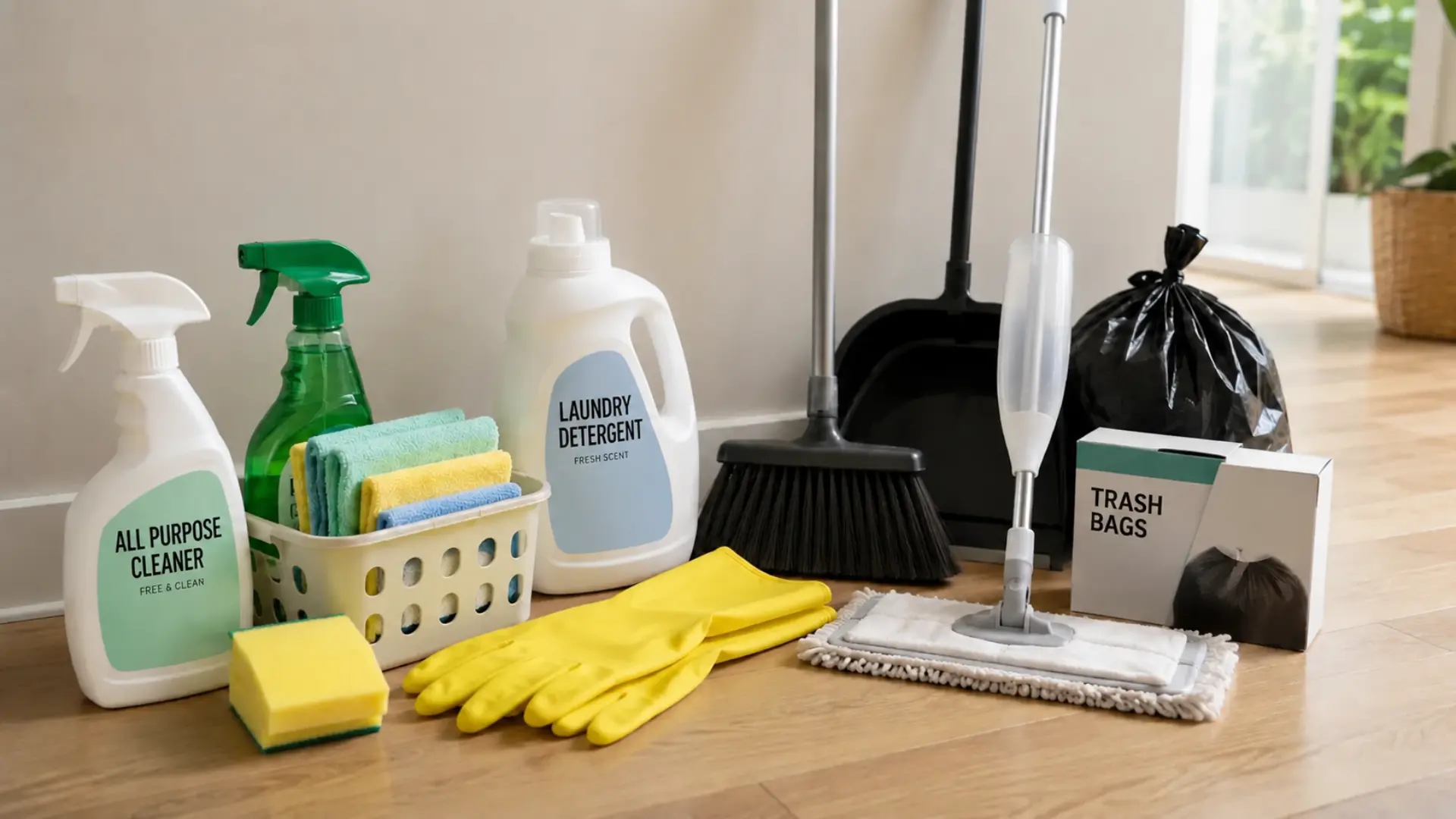
A small collection of cleaning supplies is enough to handle everyday messes and keep your apartment fresh without filling an entire cabinet.
- All-Purpose Cleaner, Microfiber Cloths, and Sponge: Clean most household surfaces.
- Broom and Dustpan or Vacuum: Remove dust, crumbs, and dirt.
- Mop with a Bucket or a Spray Mop: To keep hard floors clean.
- Trash Bags, Laundry Detergent, and Rubber Gloves: Handle everyday household chores.
Top Picks for Cleaning Supplies
| Store & Brand | Reviews | Price Range |
|---|---|---|
| Target Cleaning Supplies | 4.5–4.8/5 | $0.99–$300 |
| Amazon Vacuums Under $100 | 4.5/5 | $56.99–$99.99 |
| Target Cleaning Caddies | 4.5/5 | $8–$196 |
Helpful Tip: Store your cleaning supplies in a portable caddy so everything is easy to carry from room to room.
Note: Product prices, customer ratings, and stock availability are subject to change. Check the retailer’s website for the latest information.
Day 1 vs. Week 1 vs. Month 1: What to Prioritize
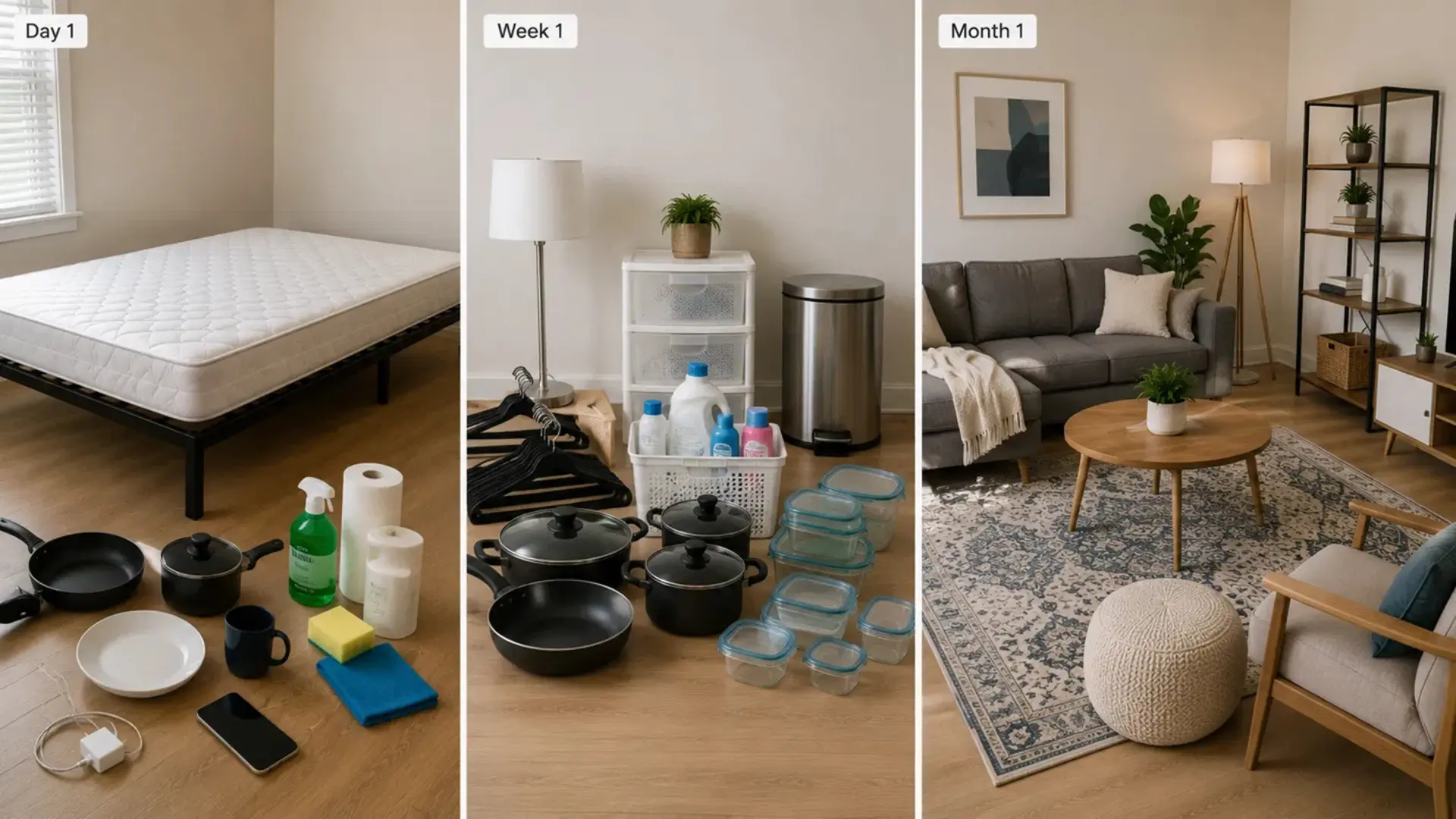
Buying everything at once is one of the fastest ways to go over budget. Instead, spread your purchases over the first month.
You’ll have time to understand how you use your space, avoid impulse buys, and spend money on items that actually improve your daily routine.
Day 1: Focus on Living Comfortably
Your first day is all about making the apartment functional.
Prioritize a place to sleep, bathroom essentials, basic kitchen items, chargers, and a few cleaning supplies.
These are the things that let you eat, shower, rest, and settle in without making another late-night trip to the store. If you have these covered, your first night will feel much less stressful, even if the apartment still looks empty.
Week 1: Add Everyday Convenience
After spending a few days in your apartment, you’ll notice what’s missing.
This is the right time to buy practical items like extra cookware, food storage containers, laundry supplies, hangers, a trash can, lamps, and simple storage solutions.
These purchases make daily life easier without feeling rushed. By waiting a few days, you’ll avoid buying things that seemed necessary before moving but aren’t actually useful.
Month 1: Finish the Space Thoughtfully
Once you’ve settled into a routine, you’ll have a better sense of what your apartment still needs.
Add larger furniture, decorative pieces, extra seating, rugs, artwork, plants, or small appliances that fit your lifestyle.
This is also a good time to replace temporary solutions with better-quality items if your budget allows.
Building your apartment gradually usually leads to smarter purchases and a home that feels more like you, rather than one filled with impulse buys.
Bonus Tip: Save all your receipts for the first month. If something doesn’t fit your space or routine, returning it is much easier.
How Much does it Cost to Furnish a First Apartment?
The total cost depends on your apartment size, shopping style, and if you buy new, secondhand, or a mix of both.
Planning a rough budget before you start shopping helps you spread out expenses and avoid running short on the items you’ll use every day.
| Category | Budget Range | Mid-Range |
|---|---|---|
| Bedroom (mattress, bed, bedding) | $400–$1,000 | ~$700 |
| Kitchen (cookware, dishes, utensils, appliances) | $200–$700 | ~$450 |
| Bathroom (towels, shower curtain, toiletries, accessories) | $75–$250 | ~$160 |
| Living Room (sofa, table, lighting, storage) | $500–$1,800 | ~$1,100 |
| Cleaning & Laundry Supplies | $75–$200 | ~$140 |
| Estimated Total | $1,250–$3,950 | ~$2,550 |
Budget Tip: Set aside an extra 10–15% of your budget for overlooked costs such as extension cords, light bulbs, hangers, batteries, command hooks, basic tools, delivery fees, and replacement parts.
What to Buy New vs. What to Thrift
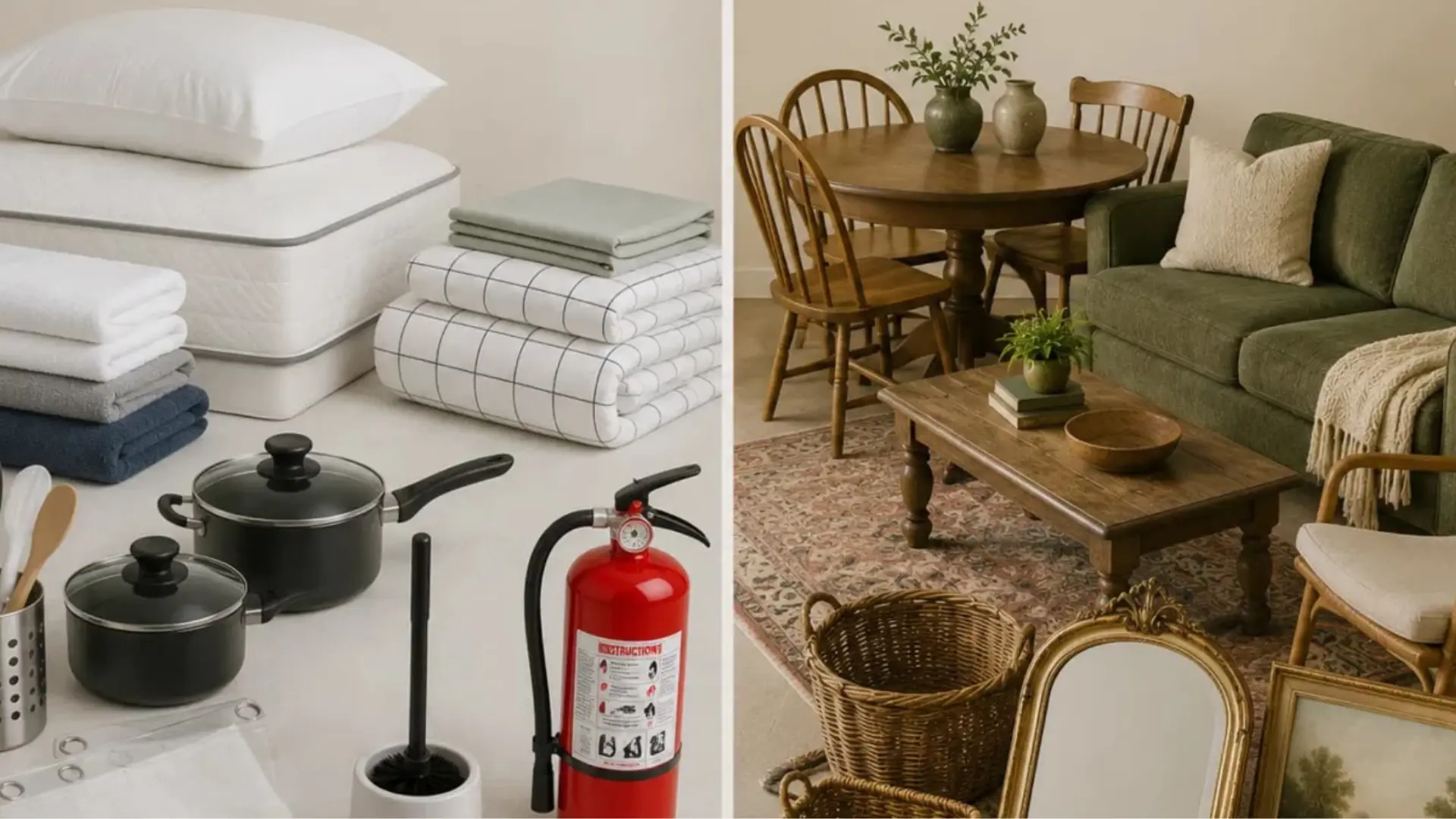
Choosing between new and secondhand items can make a big difference to your budget.
A good rule is to buy anything related to hygiene or safety new, while looking for used furniture and décor that can save you money without sacrificing quality.
Buy New
Choose these items new for better hygiene, safety, comfort, and long-term reliability.
- Mattress and Pillows: Better for hygiene, comfort, and warranty coverage.
- Towels and Bedding: Fresh linens are cleaner and usually last longer.
- Cookware with Non-Stick Coating: Older pans may have damaged surfaces that affect cooking performance.
- Small Kitchen Tools: Items like cutting boards, sponges, and can openers are inexpensive and more hygienic when bought new.
- Toilet Brush, Plunger, and Shower Curtain Liner: Personal-use items are best purchased new.
- Smoke Detector and Fire Extinguisher (If Needed): Safety equipment should be new and in working condition.
Great Items to Thrift
These items often cost much less secondhand without sacrificing everyday usefulness.
- Dining Tables, Coffee Tables, and Desks: Solid wood furniture often lasts for years and costs much less secondhand.
- Bookshelves, Dressers, and Nightstands: Easy to clean and often available in excellent condition.
- Sofas and Chairs: Consider only if they’re clean, odor-free, and free of stains or pests.
- Lamps and Decorative Items: One of the easiest ways to furnish your apartment on a budget.
- Storage Baskets, Organizers, and Mirrors: Common thrift-store finds that offer great value.
Helpful Tip: Always inspect secondhand furniture for loose joints, water damage, odors, or signs of pests before bringing it home.
Furniture Choices for Different Living Situations
Not every home needs the same furniture plan. Your layout, household size, storage needs, and daily habits should shape what you buy first.
- For Small Homes
Choose space-saving furniture, such as storage beds, nesting tables, slim bookshelves, and folding dining tables. - For Families With Children
Focus on washable fabrics, rounded edges, sturdy tables, and storage pieces that keep toys and daily items organized. - For Pet Owners
Pick stain-resistant upholstery, scratch-resistant surfaces, closed storage, and furniture with removable covers where possible. - For Remote Workers
Invest in a supportive chair, practical desk, task lighting, and storage that keeps work items separate from living areas. - For Frequent Hosts
Consider extendable dining tables, extra seating, nesting stools, and flexible layouts that make entertaining easier.
Common First Apartment Shopping Mistakes
These mistakes are easy to make when you’re trying to furnish an empty apartment quickly. Avoiding them can save money, prevent returns, and make your move-in much smoother.
| Mistake | Better Approach |
|---|---|
| Buying furniture before measuring | Measure rooms, doorways, and elevators first. |
| Shopping before checking what’s included | Confirm which appliances and fixtures come with the apartment. |
| Forgetting everyday basics | Buy essentials like hangers, light bulbs, trash cans, and extension cords early. |
| Spending too much on décor first | Cover functional needs before decorative items. |
| Ignoring delivery and assembly fees | Include these costs in your overall budget. |
| Furnishing every room at once | Buy in stages as you settle into the space. |
Quick Tip: A comfortable, functional apartment is always a better first goal than a perfectly decorated one.
Wrapping Up!
Furnishing your first apartment is less about buying everything at once and more about making thoughtful choices.
Start with the essentials that help you sleep, cook, clean, and settle into your new space.
As your routine takes shape, you’ll have a better idea of what deserves your money and what can wait.
A well-planned shopping list, a realistic budget, and a little patience can save you from expensive mistakes and make the process far less stressful.
Before you head out shopping, keep this checklist handy as you build your home one room at a time.
What’s one apartment essential you couldn’t live without, or what’s the first thing you bought after moving into your own place?
Share your experience in the comments; you might help someone else starting from scratch.
Frequently Asked Questions
How Long does it Take to Furnish an Apartment?
Most people furnish the essentials within a few weeks. Completing every room usually takes one to three months, depending on budget and shopping priorities.
Should I Buy Furniture Before Moving in?
It’s better to wait until you’ve measured each room. This helps you avoid buying furniture that doesn’t fit your layout or doorway.
What Kitchen Items do Most People Forget?
Commonly missed items include a can opener, measuring cups, oven mitts, food storage bags, aluminum foil, and a drying rack.
How Can I Make my First Apartment Feel like Home?
Start with comfortable lighting, a few personal photos, houseplants, and soft furnishings like cushions or rugs, rather than buying expensive décor immediately.

Tommy Hardy, an alumnus of the Georgia Institute of Technology with a degree in Mechanical Engineering, has been a go-to figure in residential upkeep and innovation for over 18 years. His career commenced in a leading home appliance manufacturing company, where he mastered the intricacies of household systems. Joining our platform in 2020, Tommy quickly became a reader favorite for his practical and easy-to-follow guides. He took the helm of our DIY section in 2019, consistently delivering content that empowers homeowners. Beyond his professional pursuits, Tommy is a passionate gardener and enjoys woodworking, skills enhancing his hands-on approach to home care.