
If you have spent any time on interior design forums, Reddit threads, or design accounts lately, you have probably noticed the debate heating up.
Designers on one side are declaring the accent wall officially over. People, on the other hand, are still pinning limewash feature walls and fluted panel bedrooms with no signs of stopping.
So, what is actually going on? Are accent walls out of style, or has the conversation just moved on from the version most people are picturing?
This blog breaks it all down honestly so you can make a decision that actually makes sense for your space.
What is an Accent Wall?
An accent wall, also called a feature wall, is a single wall in a room that is treated differently from the other three walls.
The treatment can be almost anything: a different paint color, a wallpaper, a textured finish, a material like wood or stone, or an architectural detail like paneling or plasterwork.
The purpose is always the same: to draw the eye to one specific point in the room and create a sense of visual hierarchy.
Without a focal point, a room can feel flat and directionless.
Are Accent Walls Out of Style?
The honest answer depends entirely on which version you are picturing. The single wall painted a contrasting color in an otherwise neutral room has lost its impact.
This is not because the concept was bad, but because it was executed so widely and so thoughtlessly that it stopped feeling like a design decision and became a default.
That is a problem with execution, not with the idea itself.
Creating a focal point in a room is a foundational design principle, and what designers are actually saying right now is not that accent walls are over; it is that the bar has moved.
Limewash finishes, fluted panels, dramatic wallpaper, and plaster relief walls are all accent walls. They require more thought than a roller and a contrasting paint color.
How Accent Walls Gained Popularity ?
?
 ?
?Accent walls rose to mainstream prominence in the late 1990s and early 2000s, driven by home improvement TV shows seeking impressive, low-cost ideas that could be completed quickly. a weekend.
- Painting one wall a bold color ticked every box, and from there, shelter magazines, home improvement retailers, and eventually
- Pinterest carried the idea into virtually every home at every price point.
- The appeal was genuinely democratic, for the cost of a single tin of paint and a Saturday afternoon, an ordinary room could look like it had been thought about.
- That kind of accessibility drove mass adoption, and mass adoption is what eventually made the accent wall feel more like a default.
Where the Accent Wall Went Wrong?
The concept was never the problem; the execution was. Here is where things went sideways.
- The Single Contrasting Paint Color Got Overused: Applied without thought to millions of rooms for over a decade, it stopped feeling intentional and started reading as a shortcut
- The Wrong Wall Kept Getting Chosen: Painting a side wall with no furniture anchor or architectural logic creates a visual imbalance rather than a focal point
- Color Choices Aged Badly: Era-defining colors like early 2000s terracotta, deep burgundy, and teal became timestamps rather than style choices
- Painted Geometric Patterns Peaked Too Hard: Chevron and diamond DIY patterns feel firmly locked in the early 2010s and are difficult to separate from that era
- Shiplap Got Everywhere: Mass adoption without contextual logic turned a legitimate material choice into visual shorthand for a television-driven aesthetic
- Both Extremes Failed: Accent walls that tried too hard looked chaotic, and ones that were too subtle served no visual purpose at all
Accent Wall Ideas that Still Work
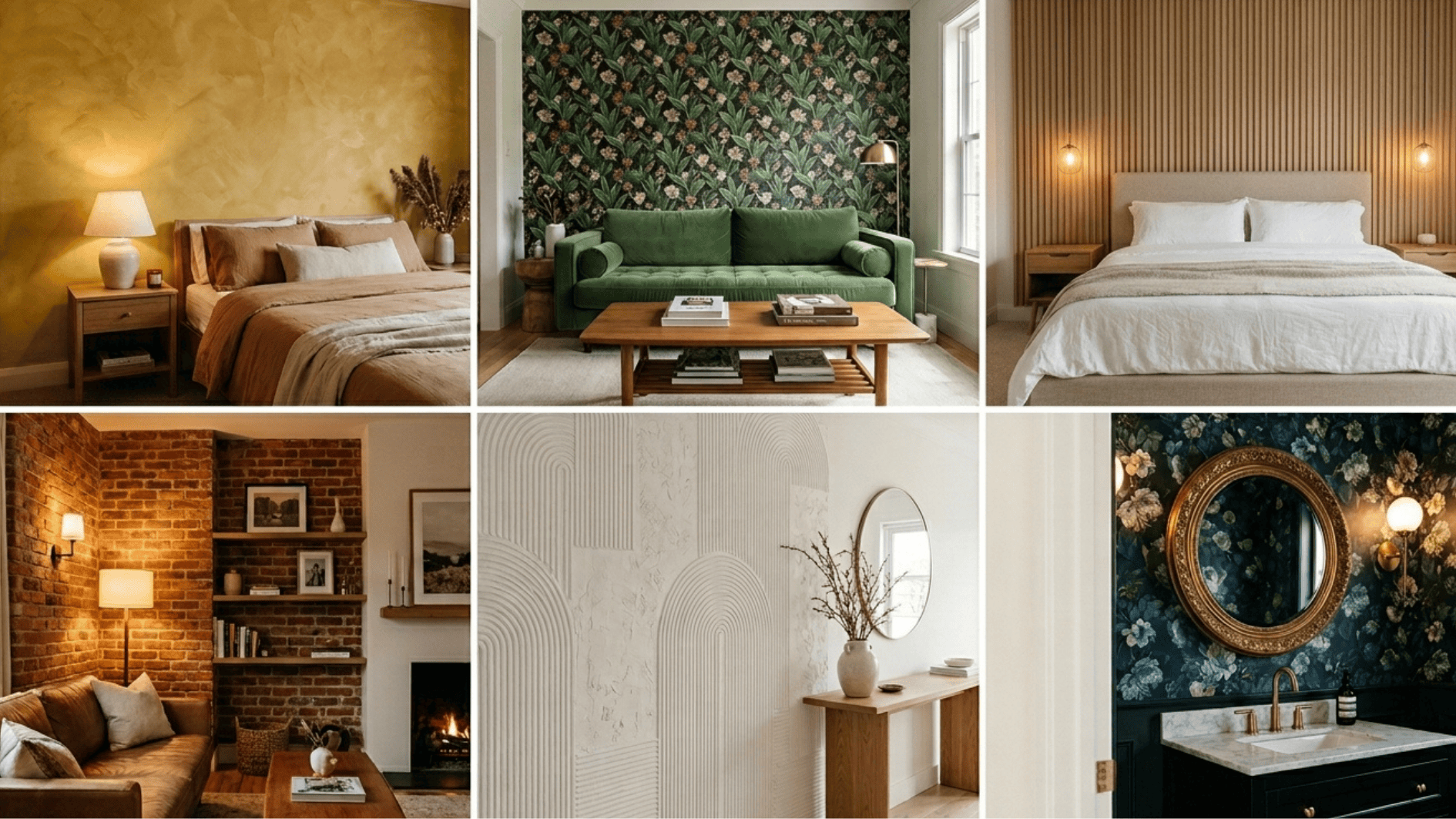
The accent wall is not dead; it has just upgraded. These are the treatments that feel current, considered, and genuinely worth doing.
1. Limewash and Textured Paint Finishes
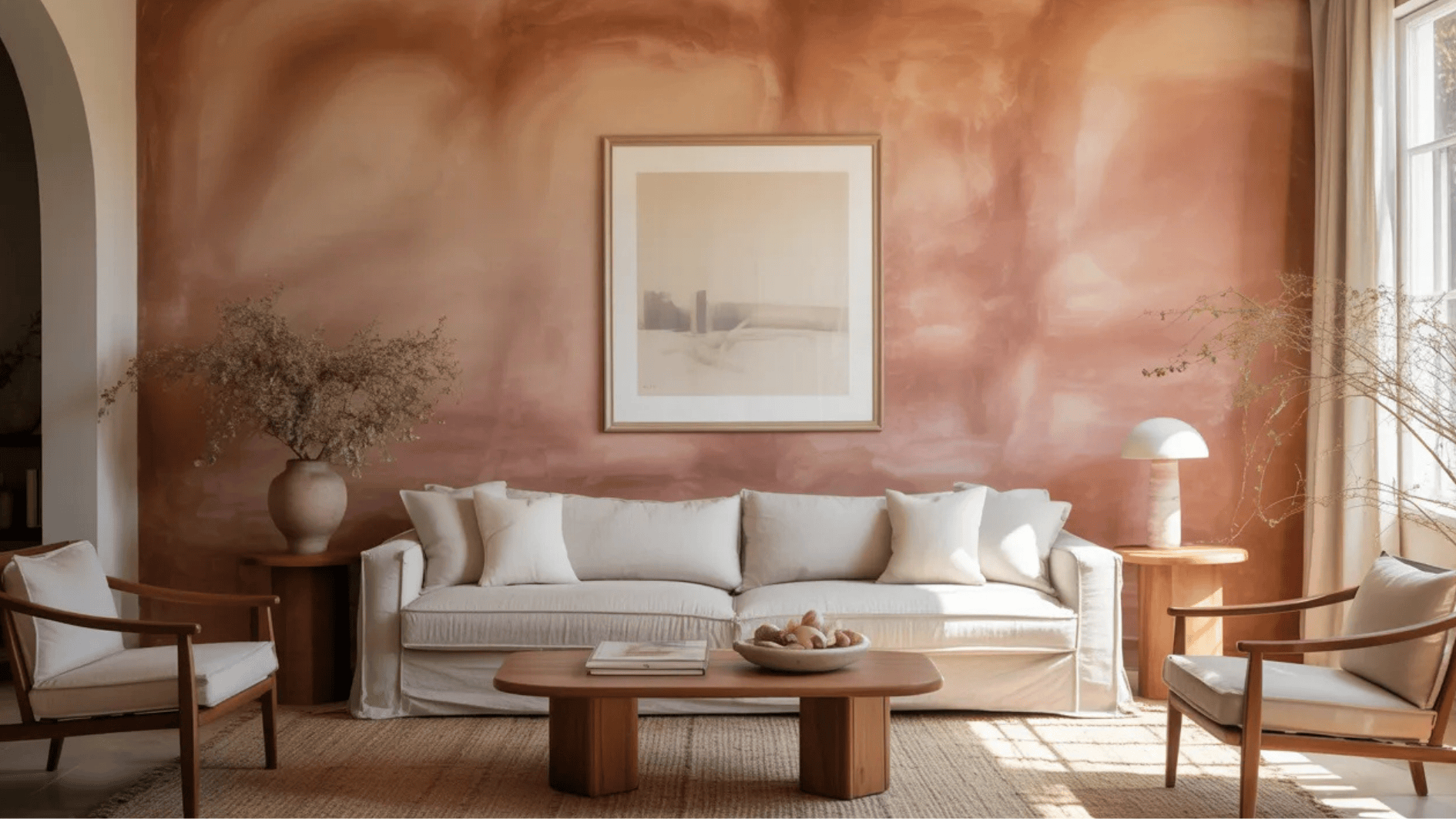
Limewash paint has become one of the most sought-after accent wall treatments because its organic, layered finish looks nothing like a flat painted wall.
Texture is the key differentiator between a dated accent wall and a current one; it adds depth that color alone simply cannot.
The beauty of limewash is also its imperfection; no two walls look exactly the same, which gives it a handcrafted quality that feels genuinely considered rather than applied.
2. Wallpaper Feature Walls
Wallpaper has completely shed its dated reputation and is back as one of the most design-forward wall choices.
A single wall of bold botanical print, abstract pattern, or maximalist design anchors a room in a way that paint rarely achieves with the same level of sophistication.
3. Fluted and Slat Wood Panels
Fluted timber paneling adds architectural depth and tactile texture to a wall without relying on color. It works particularly well behind a bed or sofa, creating a structured, considered backdrop that uplifts the entire room.
It also photographs exceptionally well, which has contributed significantly to its rise across design-forward interiors on social media.
4. Brick and Stone Cladding
Exposed brick, stone cladding, and concrete finishes have never really gone out of style because they are rooted in material rather than trend.
A natural material wall brings warmth, texture, and permanence that no paint color can replicate.
These treatments also tend to age beautifully; they look better with time rather than more dated, which makes them one of the safest long-term investments on this list.
5. Arched and Geometric Plaster Details
Plaster relief walls, arched panels, geometric patterns, and Moroccan-inspired detailing are among the most current and design-forward wall treatments available today.
They create a focal point through form and craftsmanship rather than color or surface treatment.
6. Bold Wallpaper in Unexpected Rooms
Hallways, powder rooms, and bathroom walls are often overlooked but make ideal candidates for a bold wallpaper accent wall.
The smaller the space, the greater the impact a single-statement wall delivers, without overwhelming a larger room.
A powder room with dramatic wallpaper often becomes the most talked-about space in a home despite being the smallest.
Alternatives to the Accent Wall
If an accent wall does not feel right for your space, these approaches achieve the same visual goal, a clear focal point, through different and often more considered means.
1. Full Room Color Drenching
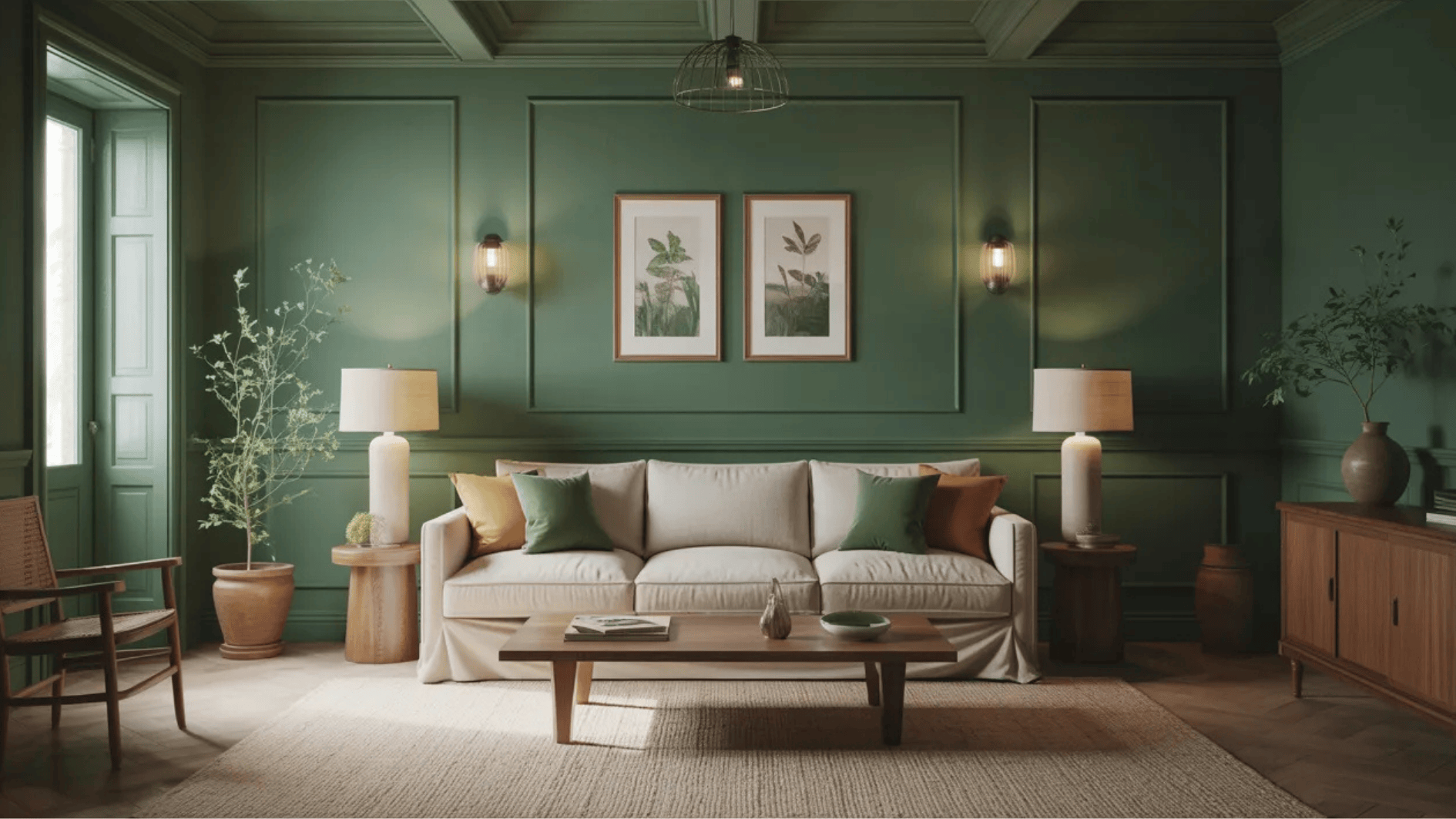
Color drenching, painting all four walls, the ceiling, and the trim in the same or tonal shades, has largely replaced the single accent wall in design-forward interiors.
The result is immersive, cohesive, and far more sophisticated than one contrasting wall ever managed to be.
2. Statement Ceiling
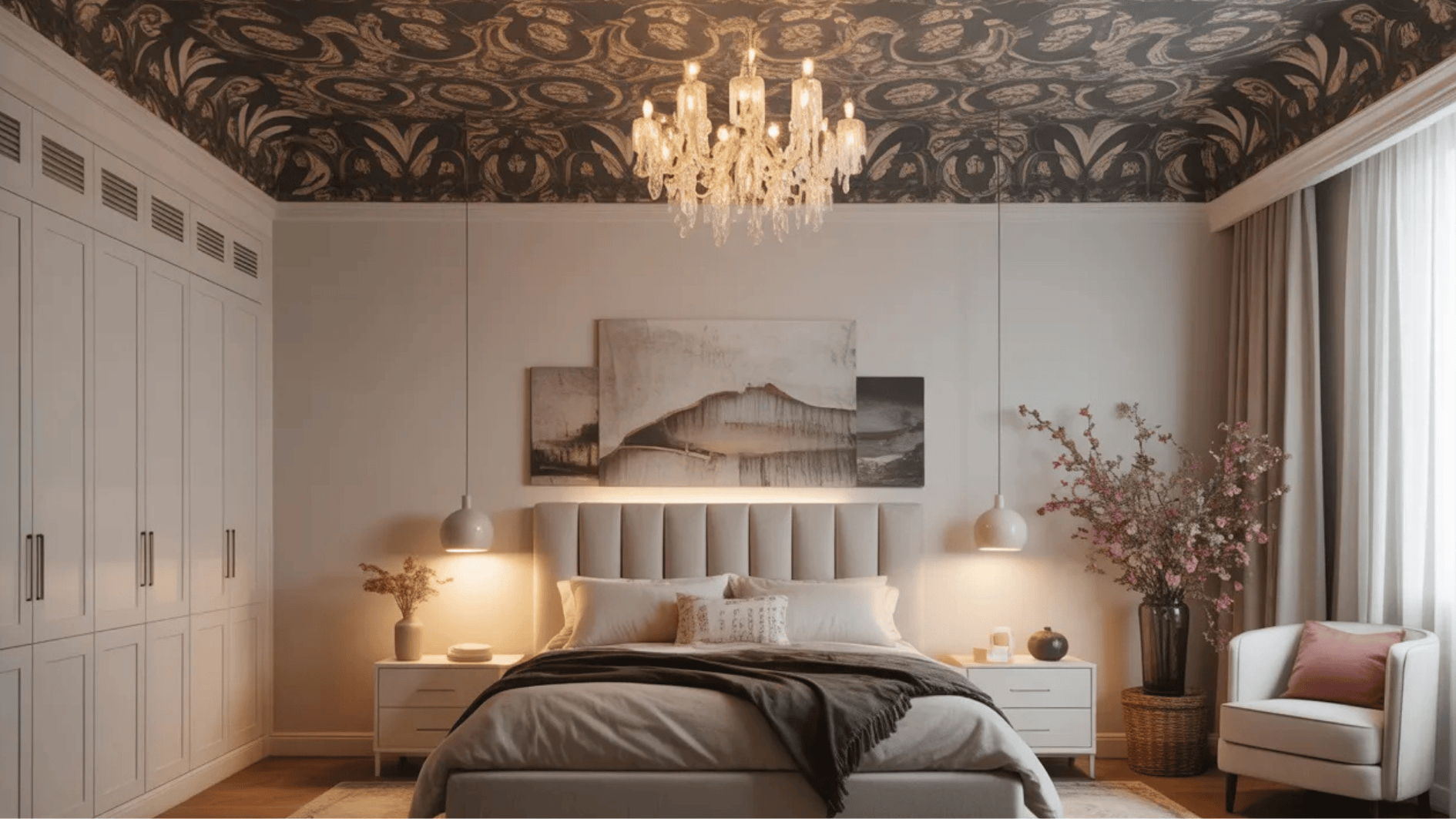
The ceiling is the most underused surface in most rooms, and treating it with paint, wallpaper, or paneling creates a focal point that feels far more unexpected than a feature wall.
It draws the eye upward and adds a layer of design that most rooms completely ignore. In rooms with lower ceilings, a lighter treatment like subtle wallpaper or a tonal paint can create interest without making the space feel compressed.
3. Built-In Shelving and Architectural Detail
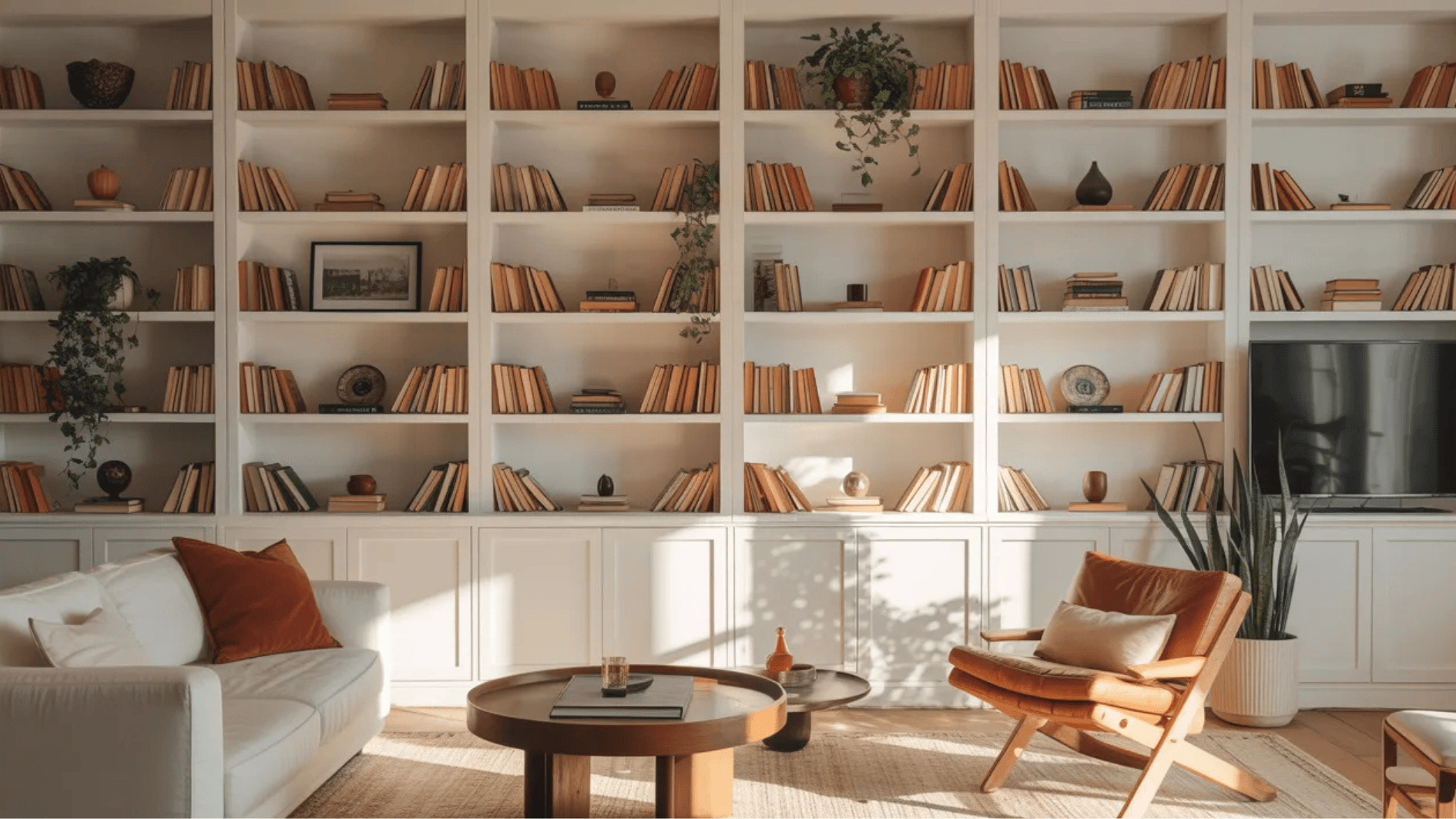
Adding built-in shelving, cabinetry, or architectural molding creates a focal point through form rather than surface treatment.
It is a more permanent option that also adds genuine value to a home in a way that paint or wallpaper simply cannot.
4. Large-Scale Art or Gallery Wall
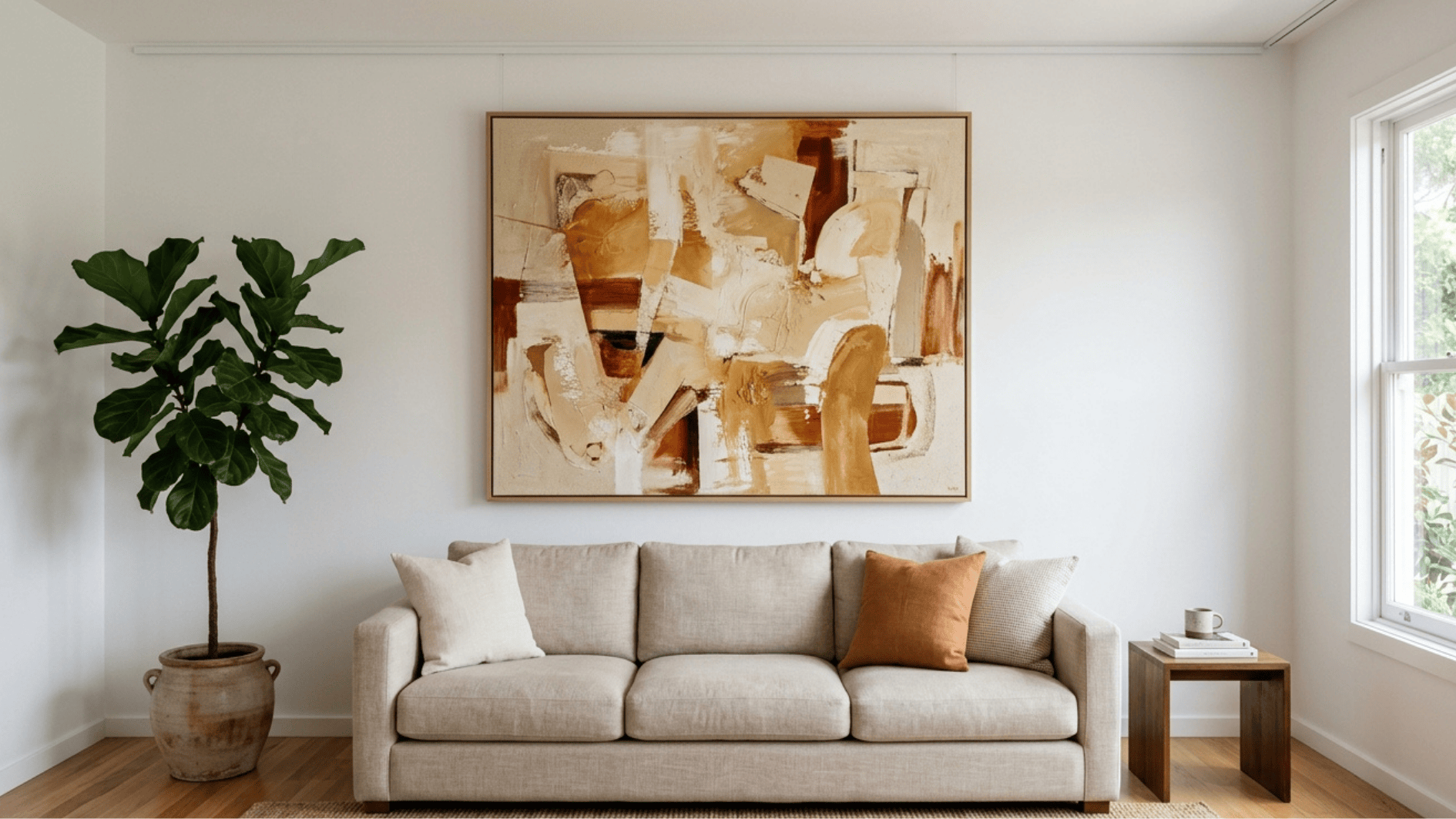
A single oversized artwork or a carefully arranged gallery wall achieves everything an accent wall sets out to do, without touching the paint.
It creates a focal point, adds personality, and can be changed whenever you want something different.
This makes it one of the most practical options for renters or anyone who wants design flexibility without commitment to a permanent treatment.
How to Decide if an Accent Wall Is Right for Your Space?
Before committing to any treatment, run your space through these four questions.
| Question | Green Light | Pause Here |
|---|---|---|
| Is there a natural focal point? | Fireplace wall, headboard wall, entry wall with furniture below | A random side wall with no furniture anchor or architectural logic |
| What is the room’s size and light situation? | Large room with good natural light, go bold with color or material | Small dark room, choose a texture or a subtle finish over a strong contrasting color |
| What treatment suits the room’s purpose? | Treatment chosen specifically for that room’s function and mood | The same treatment is applied to every room in the home, regardless of purpose |
| How long do you want to live with it? | Confident and staying, invest in a material or architectural treatment | Unsure or likely to move, stick to paint or removable wallpaper |
Conclusion
Accent walls are not out of style; the lazy version of them is. The single contrasting paint wall that defined a decade of interiors has had its moment, but the idea of creating a deliberate focal point in a room is as relevant as ever.
What has changed is the standard. Texture, material, and intention now do the work that a roller and a bold color once attempted to do on its own.
Get that part right, and it will look considered for years. Get it wrong, and it will look dated before the paint is dry.
Trust the concept, raise your expectations of the execution, and make a decision based on your space rather than a trend cycle.

With a Master in Architectural Studies from University of Pennysylvania, Marwa Haydar has pioneered living spaces since 2005. Her expertise, initially honed in a prestigious architectural firm, is evident in her approach to creating environments. Marwa became part of our team in 2019 and has since been a driving force in our home improvement section, known for her practical yet stylish solutions. She’s been spearheading our design workshops since then, infusing her passion for teaching into her work. In her leisure time, Marwa enjoys exploring historic architecture and is an enthusiastic pottery hobbyist, further enriching her understanding of form and texture.