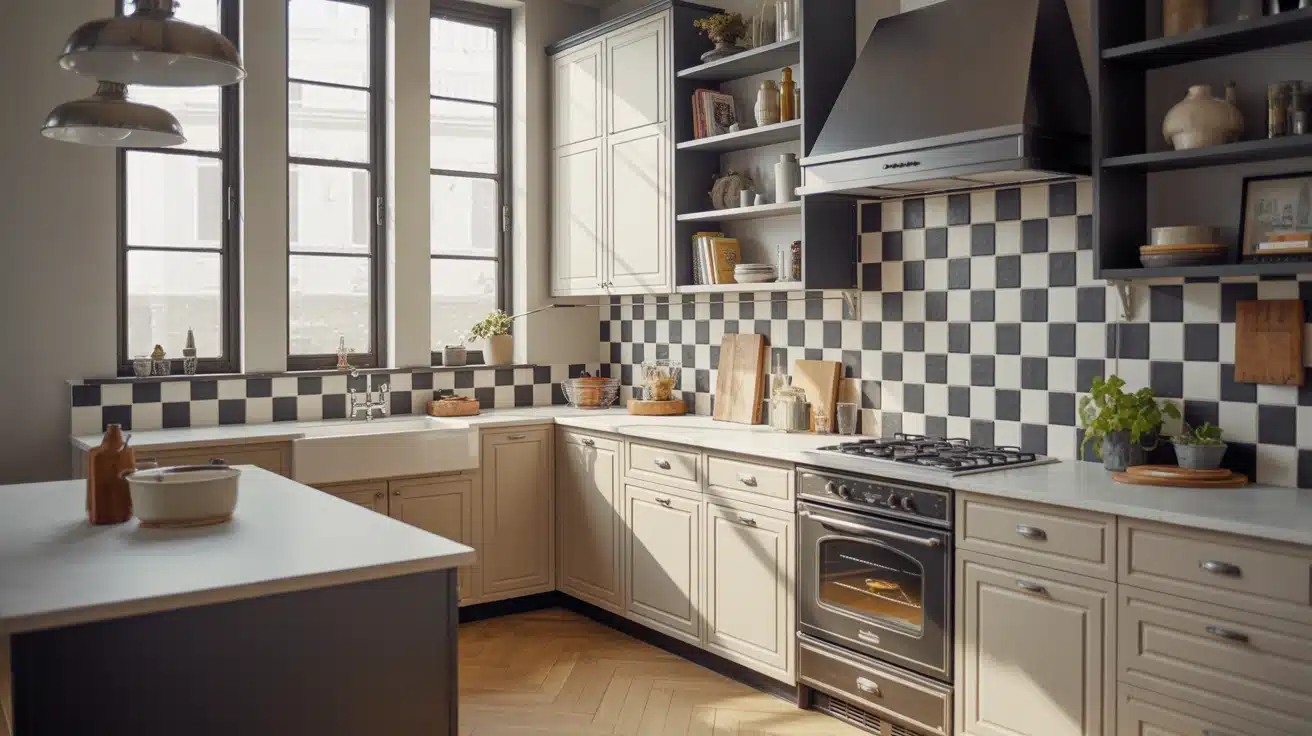
Some kitchen colors age well. Most don’t. The grey everyone loved a few years ago looks flat now.
A black and white kitchen doesn’t have that problem. It looked sharp in the 1960s. It will look sharp in ten years.
The contrast works in small kitchens, large kitchens, cheap kitchens, and expensive ones. New cabinets or old ones, it doesn’t matter. The palette carries the room regardless.
These ideas show every way to make it work, from a full renovation down to a single weekend change.
What Makes a Black and White Kitchen Stand Out
A kitchen that looks designed versus decorated hinges on a few key choices.
One finish should always dominate. Mixing matte-black cabinets, gloss tiles, and satin hardware creates visual noise rather than contrast. Pick a single black finish and stay consistent.
- Repeating the black tone on hood, hardware, and window frames creates cohesion, not coincidence.
- Grout color is doing more visual work than most people realize.
- A soft white ceiling reflects light, making dark cabinetry look intentional instead of heavy.
- Negative space matters; an empty countertop allows contrast to breathe rather than compete with clutter.
- A single unexpected texture-raw concrete, handmade ceramic, or unlacquered wood-prevents the kitchen from feeling like a showroom.
The kitchens that genuinely stop people mid-conversation aren’t the ones with the biggest budgets.
They’re the decisions where every detail, like grout width and bulb temperature, was deliberately chosen.
Black and White Kitchen Ideas to Make the Space Feel Finished
From bold and dramatic to soft and subtle, these ideas prove that black and white truly do it all.
1. Black Lower Cabinets & White Uppers
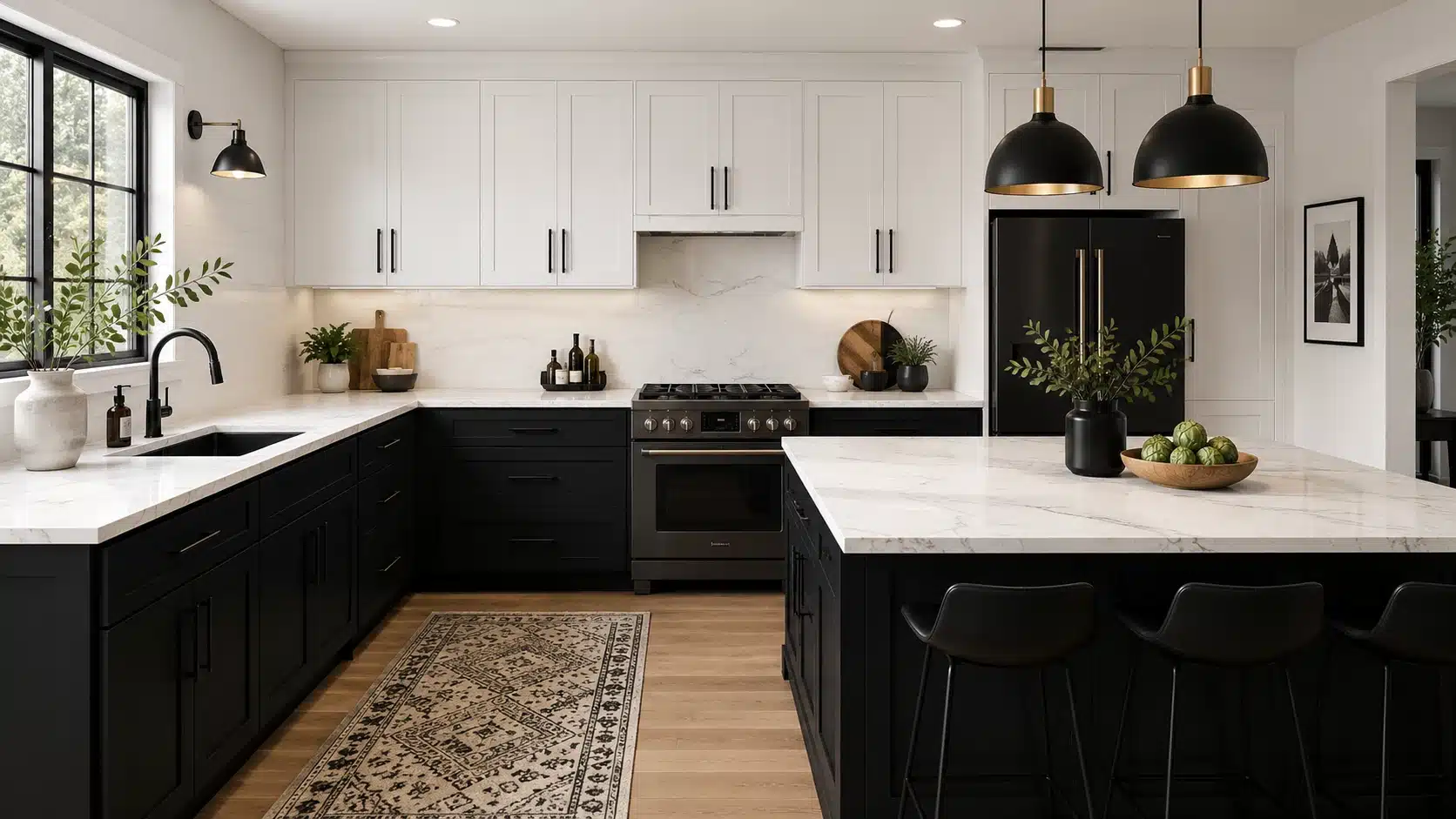
One of the most practical kitchen design splits.
Black lowers hide scuffs, kicks, and splashes far better than white, so the kitchen stays looking newer with less effort. White uppers keep the space feeling open and bright.
Finish with matte black hardware and a white marble countertop to pull the contrast together cleanly.
Worth knowing: Soft-close hinges on lower cabinets; daily heavy use reveals quality fast.
2. Classic Black & White Checkerboard Blacksplash
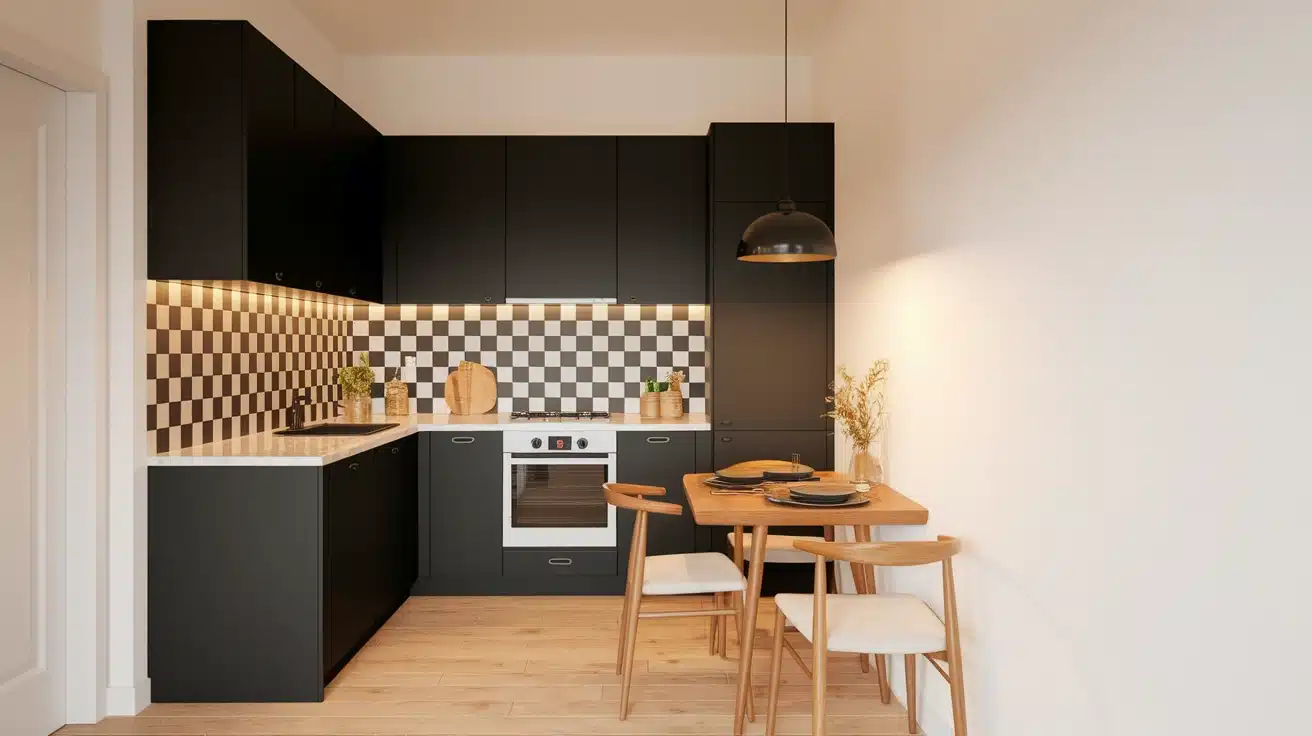
A checkerboard backsplash works across every design era without ever feeling forced.
It pairs equally well with shaker cabinets and handle-free doors, creates an instant focal point, and ceramic tiles keep it genuinely budget-friendly. The pattern does all the decorative work here.
Surrounding elements can stay simple and understated without the kitchen feeling bare or unfinished.
Before you tile: Mid-grey grout reads white from a distance but stains far less than white.
3. White Shaker Cabinet with Black Countertops
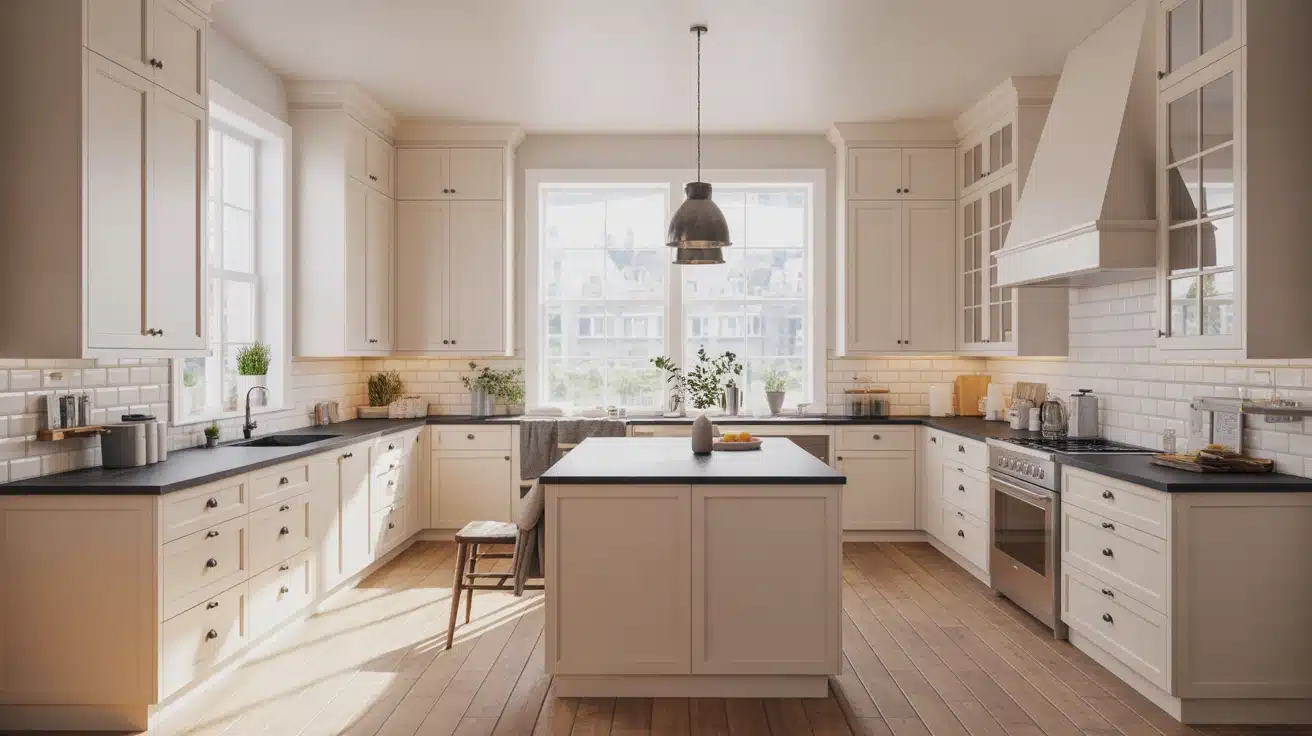
White shaker cabinets bring texture through their frame detailing, while black countertops add weight and grounding that flat slab doors simply can’t. The combination is clean without being cold.
It works in farmhouse kitchens, modern spaces, and everything in between.
Few pairings age as gracefully or photograph as well across different lighting conditions and seasons.
At the showroom: Honed black granite hides fingerprints and light scratches better than polished.
4. Statement With a Checkered Black & White Floor
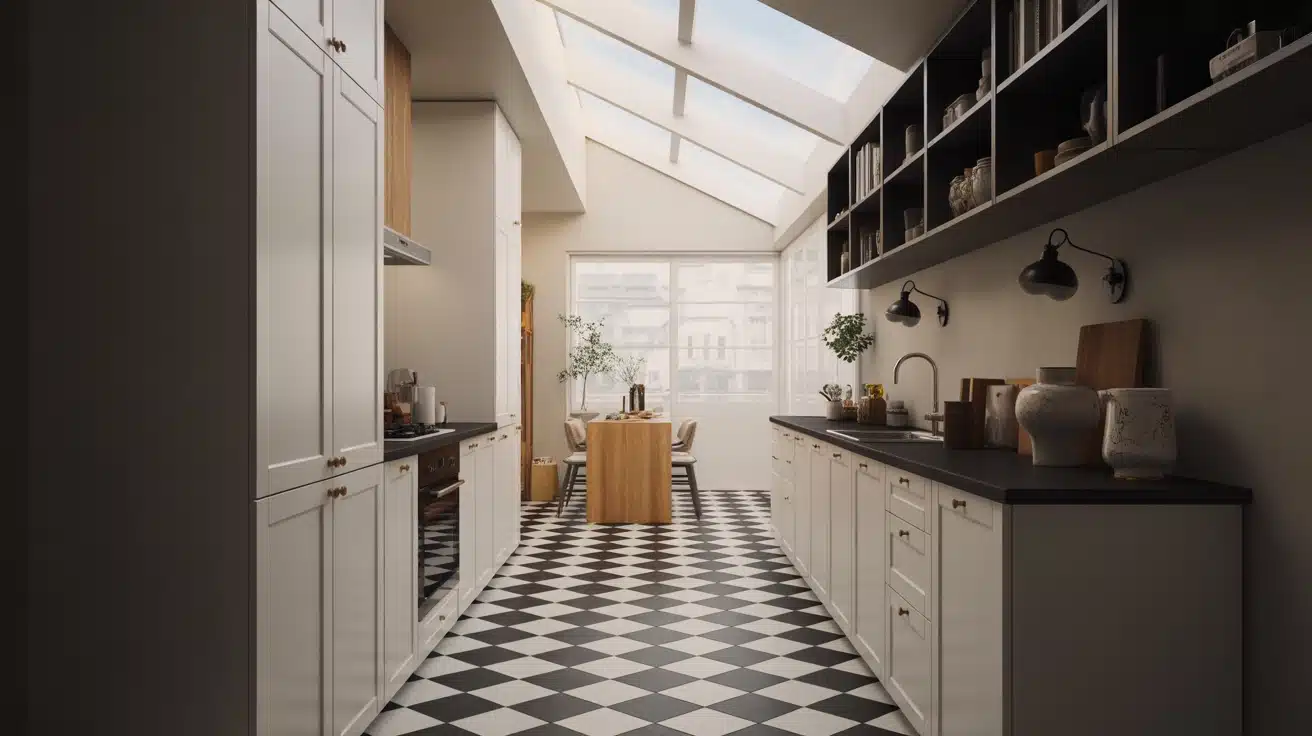
A checkered floor transforms the entire character of a kitchen without touching a single cabinet.
The retro-inspired pattern works well in both modern and traditional spaces, adding personality and rhythm.
Pair with white cabinetry to let the floor breathe and prevent surface competition.
Get the scale right: Use 20×20cm or smaller tiles in compact kitchens; larger ones make the space feel busier.
5. Use a Full Slab Black Marble Backsplash
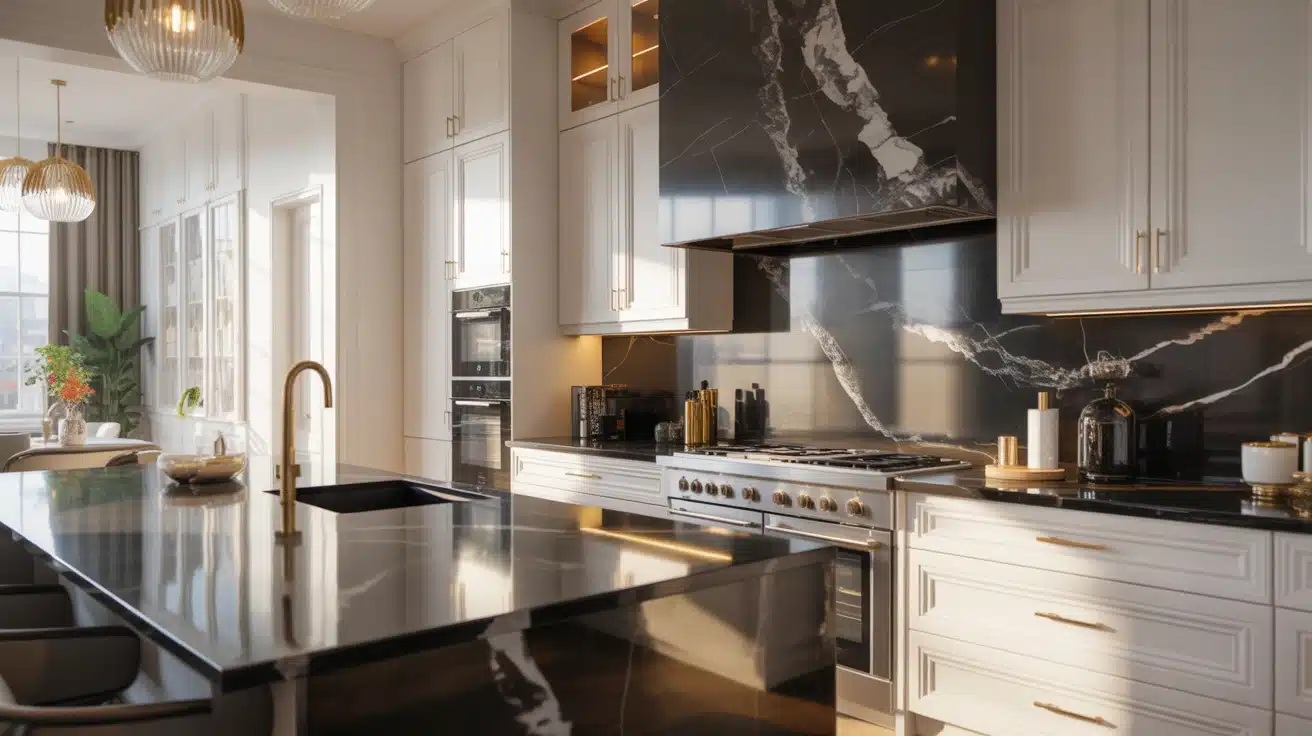
A full slab backsplash immediately signals quality.
The natural veining in black marble adds organic movement that tiled surfaces rarely replicate convincingly.
There are no grout lines to clean, no pattern interruptions, just one continuous dramatic surface.
Pair it with white cabinets and brushed-gold hardware for a look that genuinely belongs in a design magazine.
Maintenance: Seal black marble yearly to prevent oil absorption, as its porous surface absorbs oils and splashes without protection.
6. Matte Black Hardware on White Cabinets
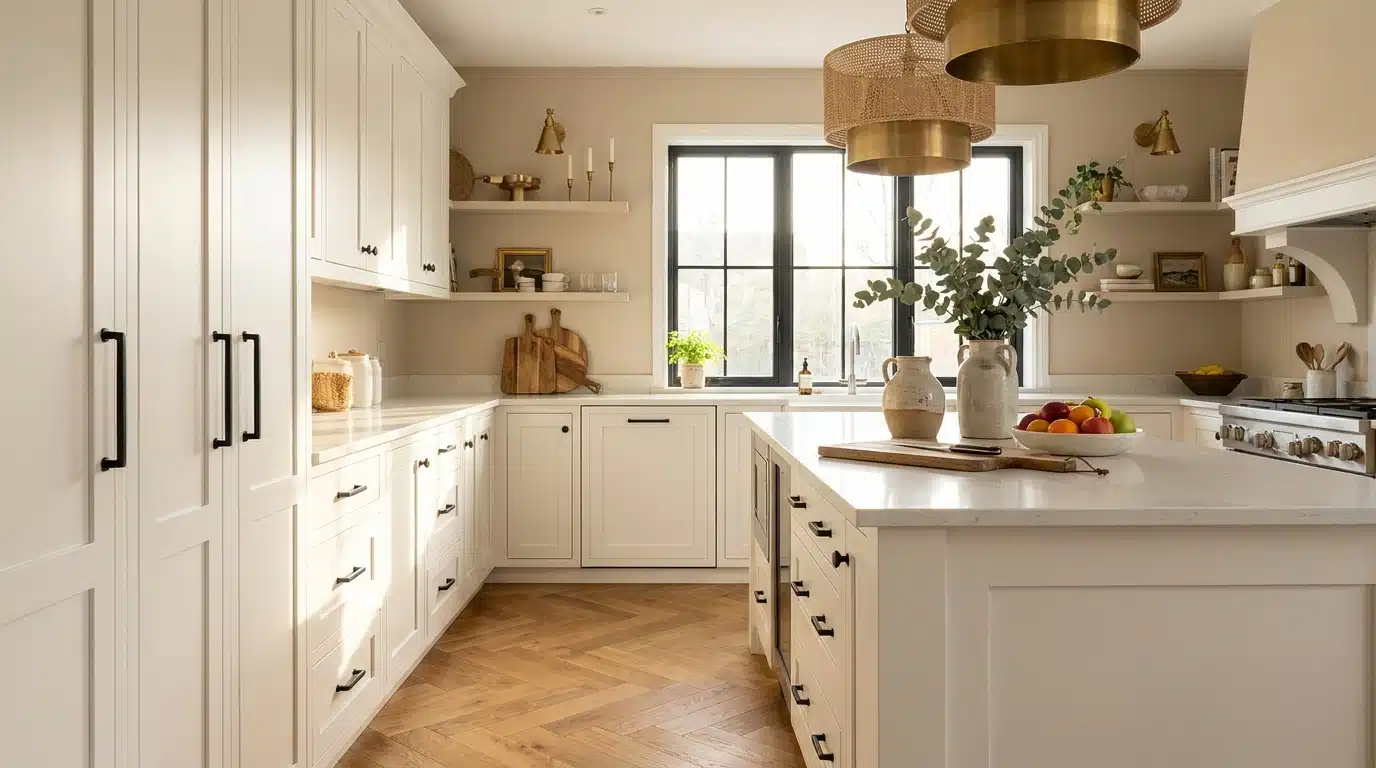
Hardware is the quickest, most affordable upgrade in any kitchen. Replacing old chrome or nickel pulls with matte black instantly makes white cabinets look intentional rather than generic.
The contrast is sharp without being aggressive.
It works on shaker doors, flat-front cabinets, and even older styles, making it one of the most universal single-day improvements available to any budget.
Ask your supplier: Request powder-coated or PVD-finished hardware, specifically painted finishes that chip within months on frequently used cabinet doors.
7. Handle-Free Black & White Cabinets
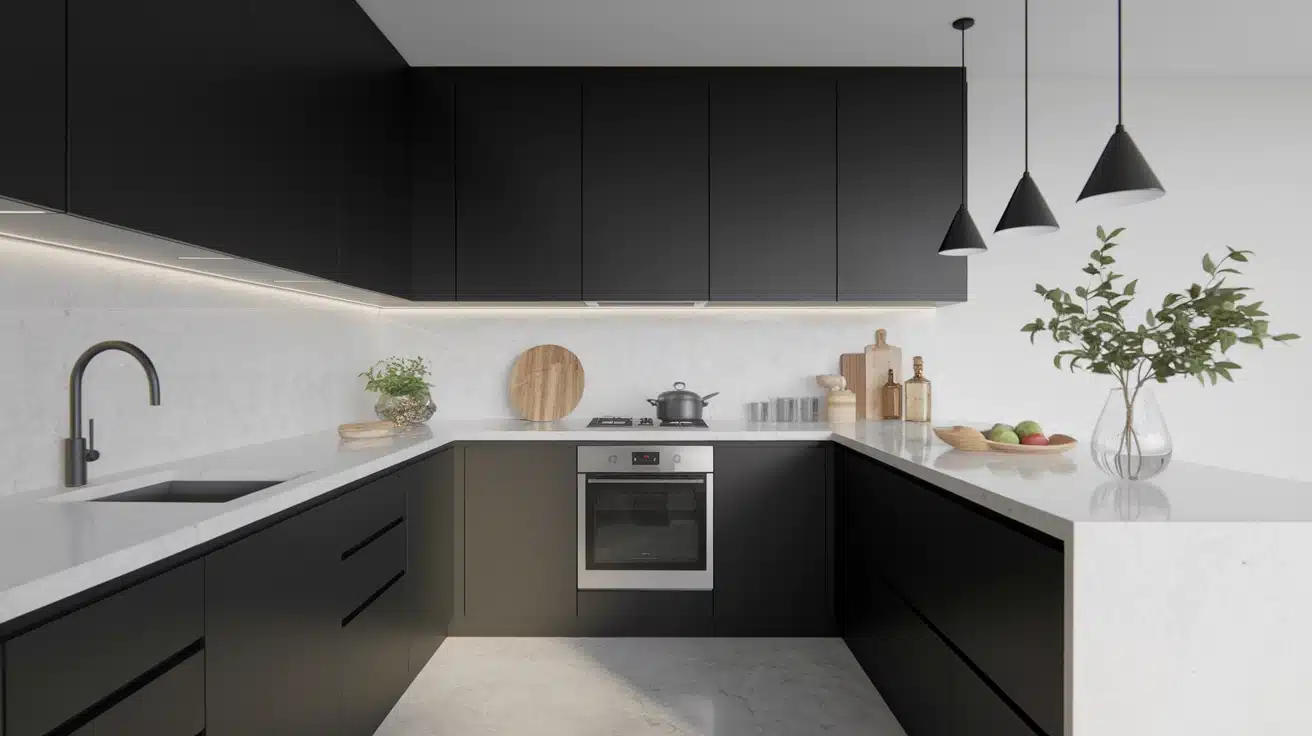
Handle-free cabinetry lets the color contrast do all the visual work without anything interrupting the clean lines.
The result feels expensive and considered. Push-to-open mechanisms keep surfaces completely uninterrupted, which suits minimalist and modern kitchens particularly well.
The look photographs beautifully and ages well because there are no hardware trends to date it in five or ten years.
Test before you commit: Try Blum Tip-On systems instead of generic spring-loaded mechanisms; the feel and longevity difference is immediately noticeable on wider doors.
8. Warmth with a Wood & Black Island Kitchen
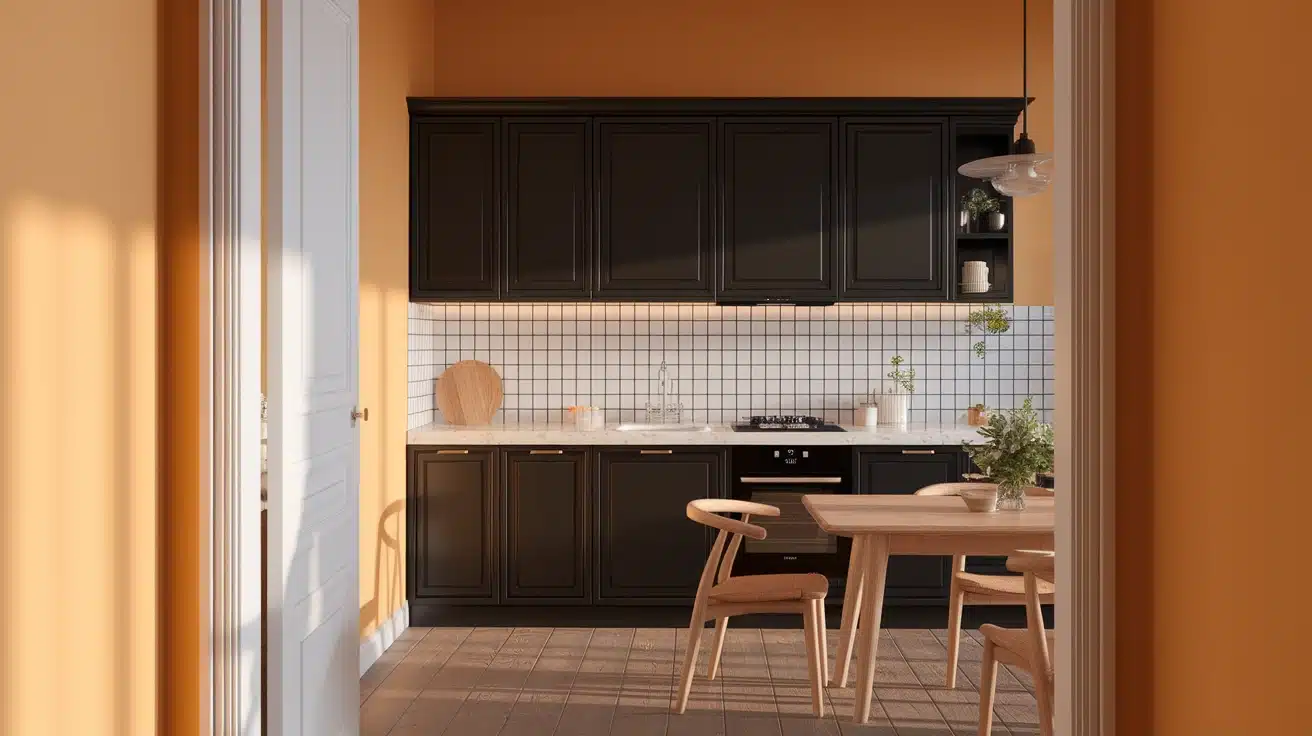
A black-and-white kitchen can feel sharp to the point of coldness if nothing softens the contrast.
A wooden island solves this without compromising the monochrome palette.
The natural grain adds texture and warmth that paint simply cannot replicate. It anchors the space visually and gives the eye a comfortable place to rest amid all the high-contrast elements surrounding it.
Protect the wood: Use a hardwax oil finish like Osmo instead of lacquer for easier spot repairs and better long-term humidity resistance in kitchens.
9. White Subway Tile for a Clean, Classic Backsplash
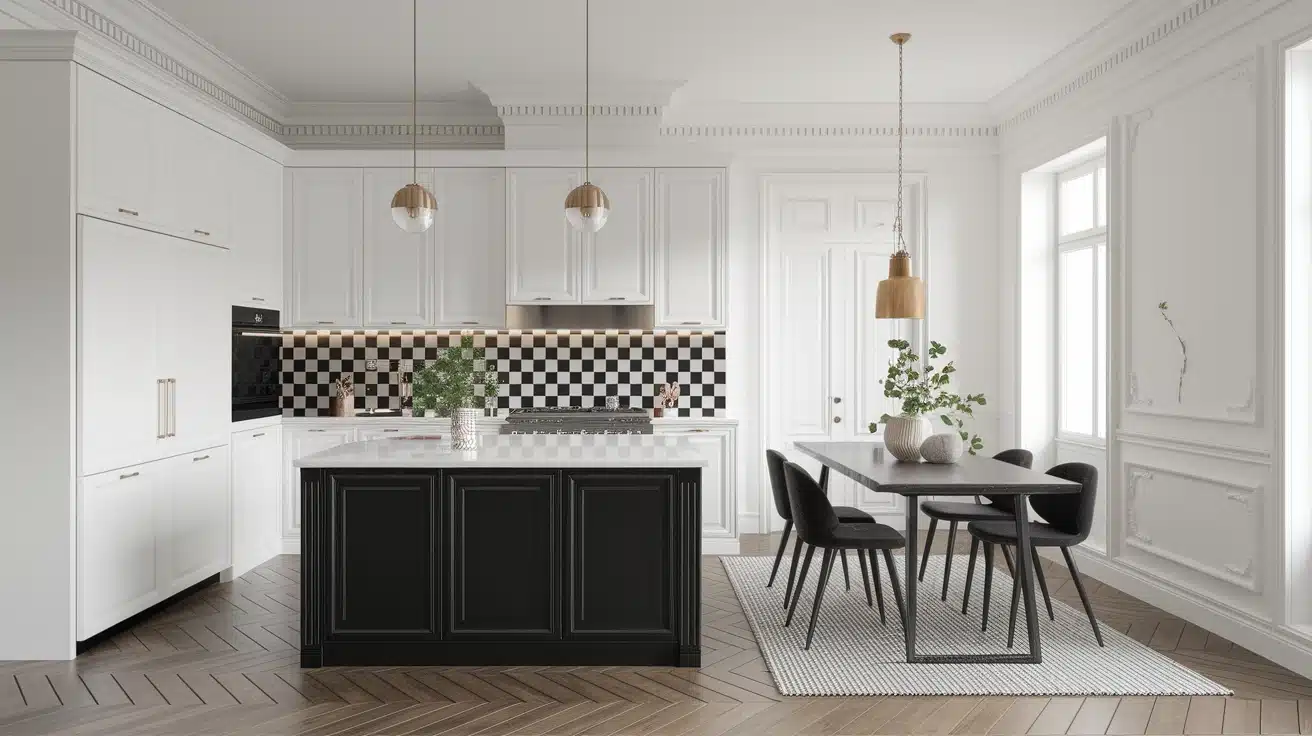
White subway tile is one of those rare choices that genuinely never goes wrong.
It suits farmhouse kitchens, modern spaces, and everything in between without ever feeling like a compromise.
The format is clean, the installation is clear, and the grout color does all the heavy lifting when it comes to personality: one small decision can yield quite different outcomes depending on your choice.
Instant upgrade: Use black instead of white grout; the same tile looks different and adds graphic character to the wall.
10. Two-Tone Black & White Kitchen Island
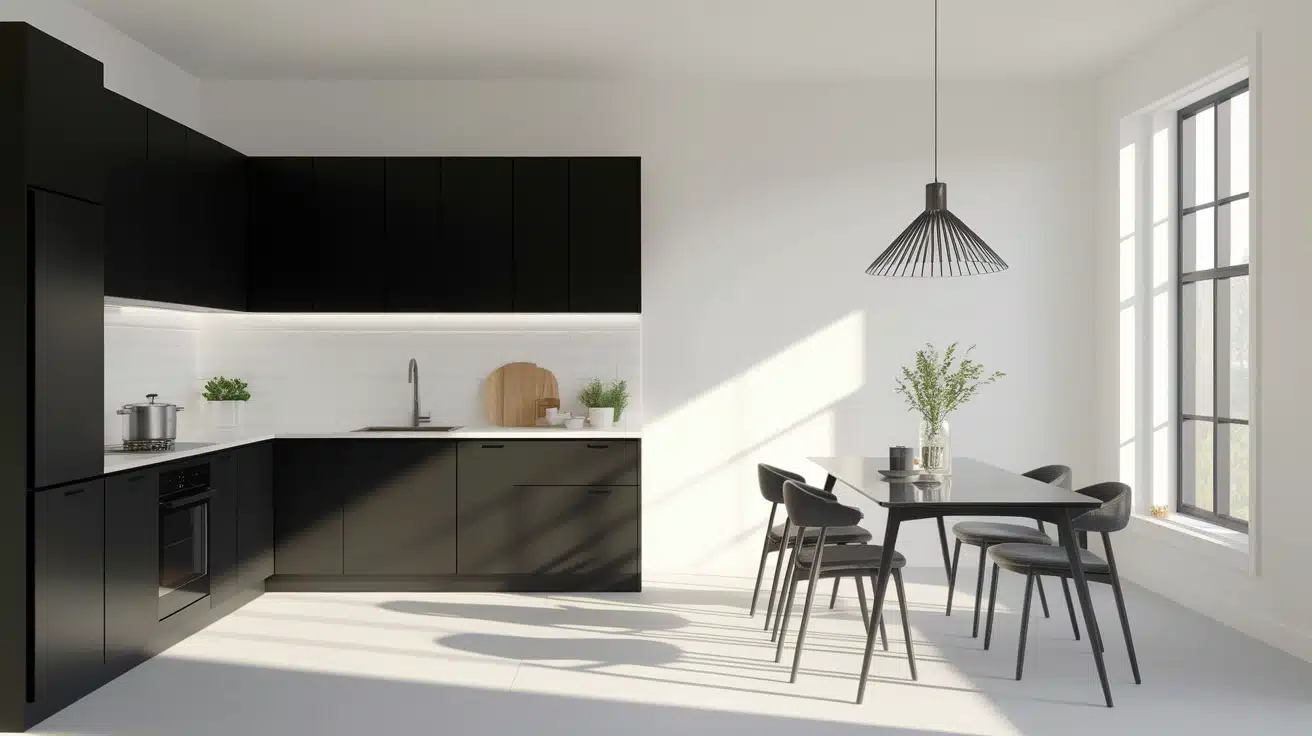
A two-tone island creates a natural focal point without requiring expensive structural changes.
White perimeter cabinets with a bold black island are classic, but reversing it also works well.
The contrast adds depth, making a simple kitchen layout feel intentionally designed.
It’s one decision that carries significant visual weight.
Proportion matters: Keep the island color darker and the ceilings higher to ground the space, preventing a top-heavy or unbalanced feel.
11. Floating Shelves on White Walls
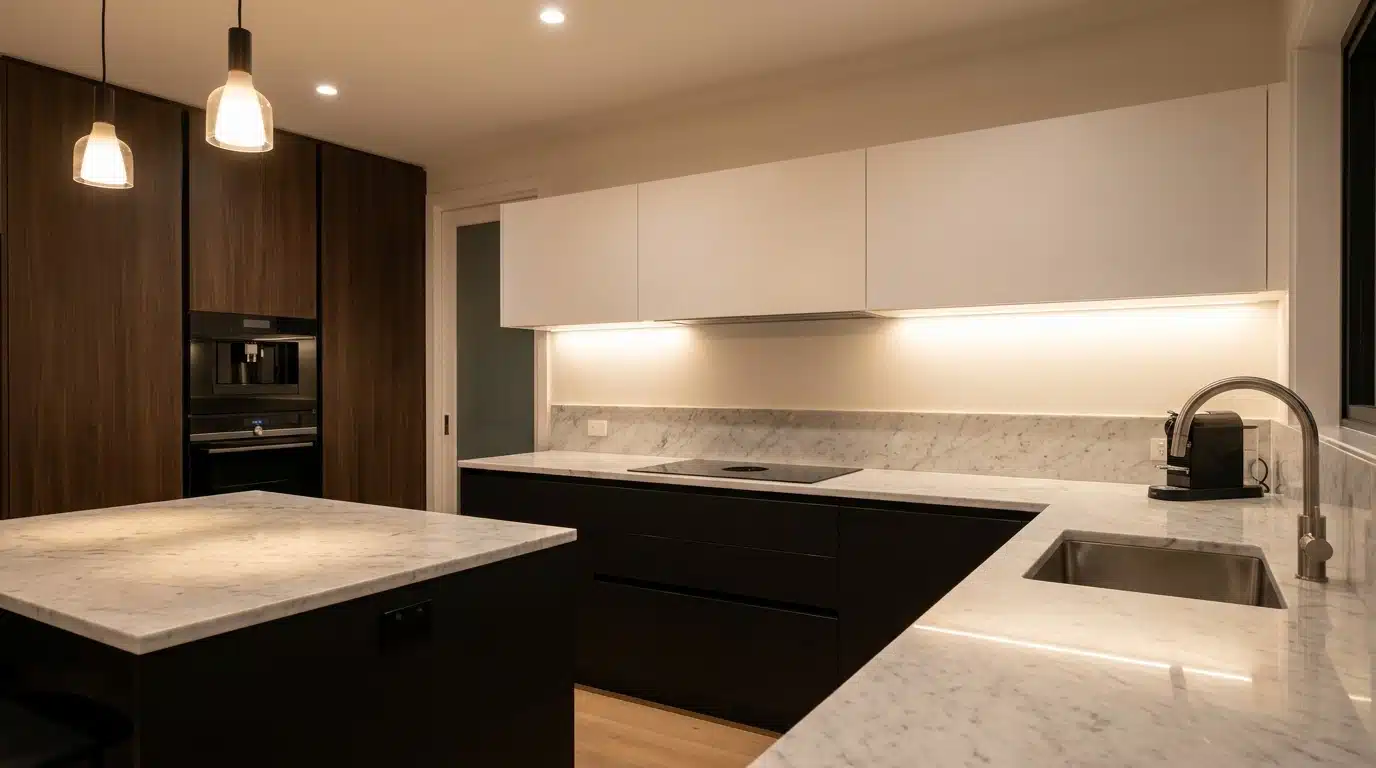
Black floating shelves against white walls deliver maximum visual impact with minimal commitment.
No installation trauma, no cabinetry costs, just clean contrast that works immediately. Style them thoughtfully: white dishes, trailing plants, and a few black ceramic accents create a curated result rather than organized clutter.
The key is restraint: fewer, better objects always outperform a crowded shelf in any kitchen.
Fixing advice: Use solid timber shelves instead of MDF for heavy loads; they flex less and last longer in kitchen humidity.
12. Use Black Pendant Lights to Anchor the Kitchen
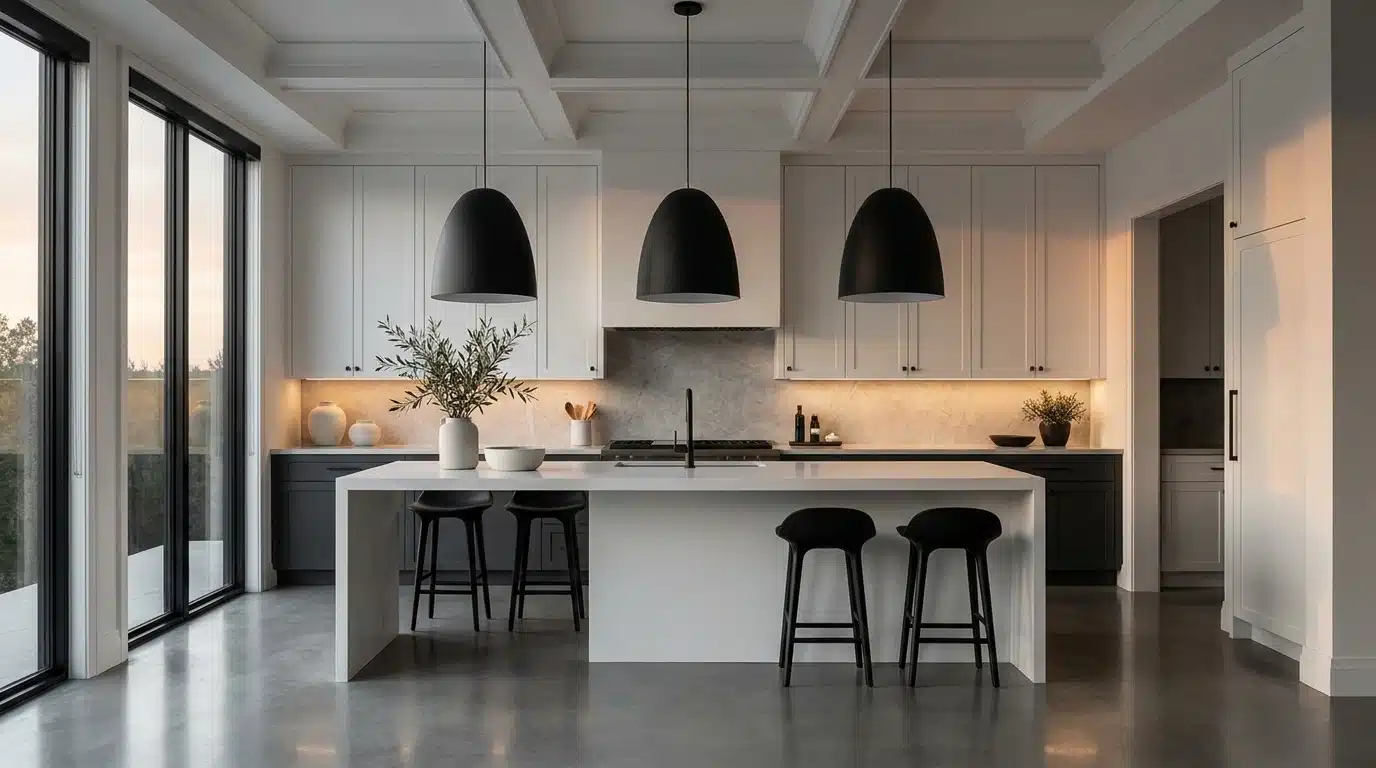
Lighting influences a kitchen more than other elements, and black pendants over an island excel at this.
They draw attention downward, foster intimacy around cooking and dining areas, and add architectural strength.
The black finish complements the cabinetry and hardware seamlessly, without requiring a coordinated design in the room.
Get the height right: Hang pendants 75–80cm above the island, drop to 65–70cm if ceiling is below 2.3m.
13. White Marble Countertops & Black Cabinetry
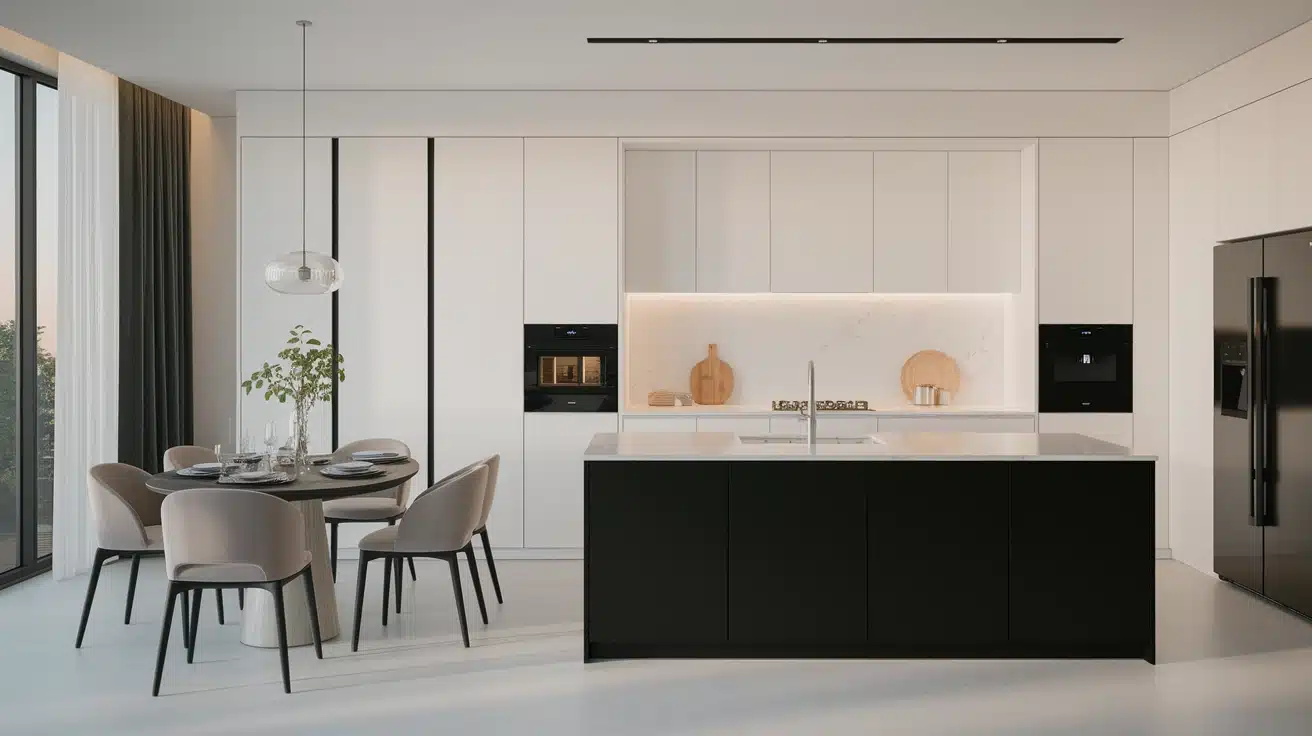
Rich black cabinetry paired with white marble countertops is one of the most refined combinations in kitchen design. The marble’s natural veining adds softness and movement, balancing the heavy dark cabinets below.
The result feels genuinely luxurious without relying on color.
It’s a pairing that photographs exceptionally well and holds its appeal across decades rather than seasons.
Honest trade-off: Cooking heavily, Calacatta-look quartz offers 90% of marble’s aesthetic with much less maintenance.
14. All-White Kitchen with Black Grout Lines
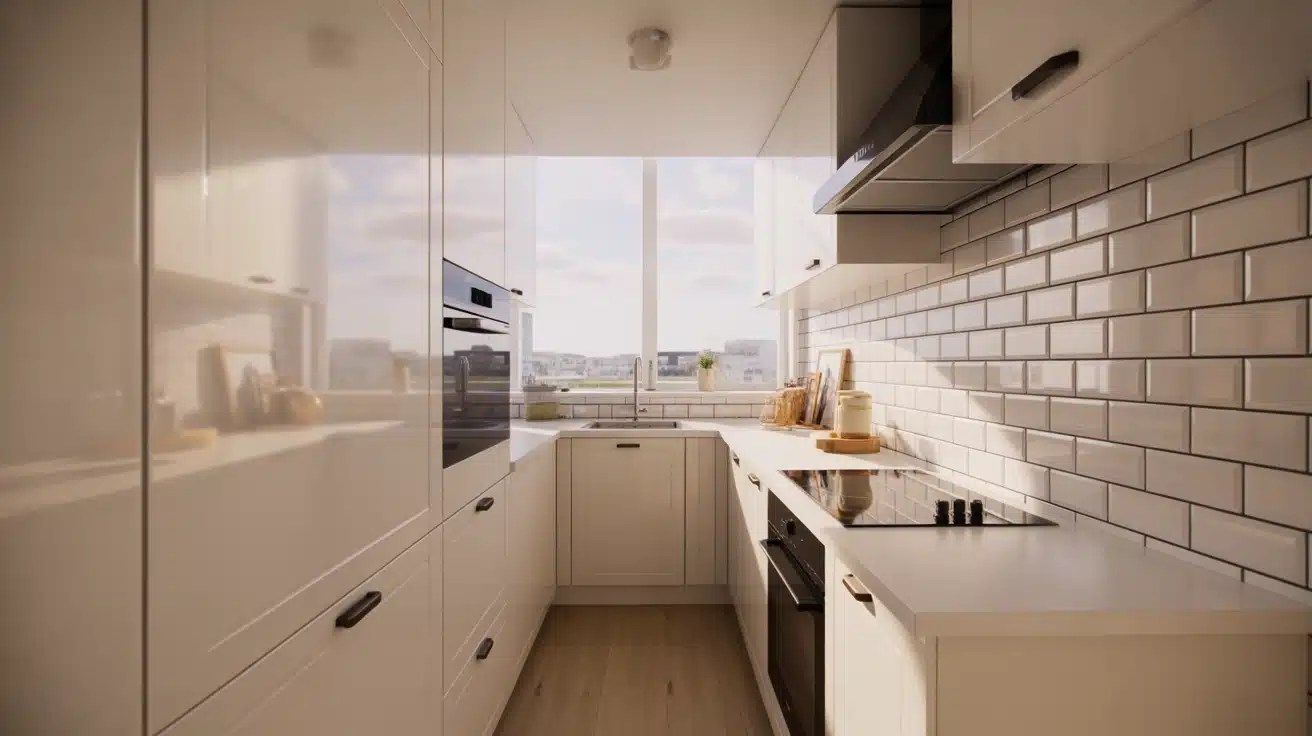
Black grout on white tiles is one of the most underrated moves in kitchen design.
The tiles themselves stay simple and affordable, but the grout lines create graphic punch and visual texture that make the whole backsplash feel intentional and considered.
It works on subway tiles, square formats, and even large-format tiles.
The effect shifts dramatically depending on grout line width, so test before committing fully.
Small detail, big impact: Wider grout lines appear bolder and more graphic, while narrower lines seem more refined and modern.
15. Black Steel-Frame Windows & White Walls
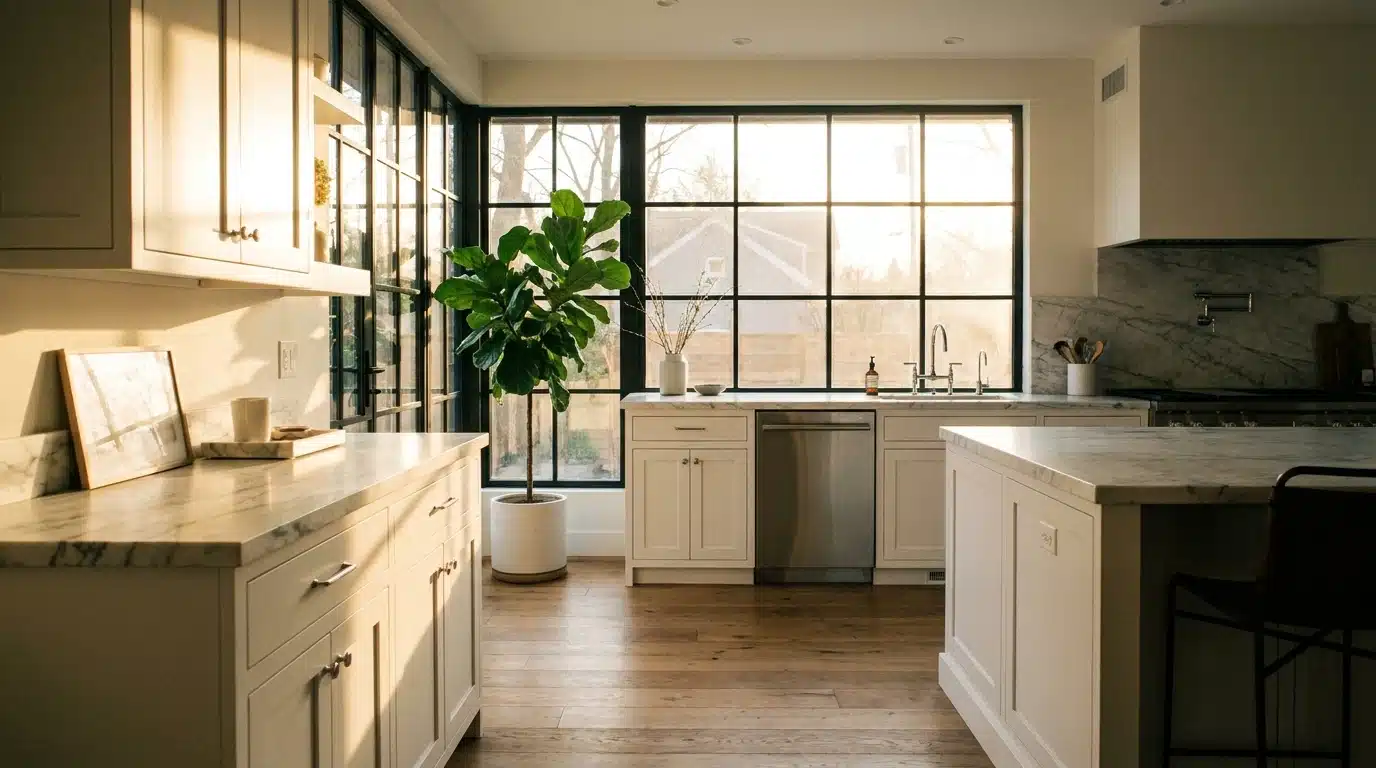
Black steel-frame windows bring an architectural edge that few other details can match at the same cost.
Against crisp white walls, they frame natural light beautifully while adding industrial structure.
It makes a kitchen feel purposefully designed rather than simply decorated.
The effect works across styles, from warehouse kitchens to newer builds seeking character without heavy renovations or structural changes.
Cost check: Powder-coating existing frames black is usually cheaper than full window replacement.
16. Add a Touch of Gold Hardware for a Luxe Twist
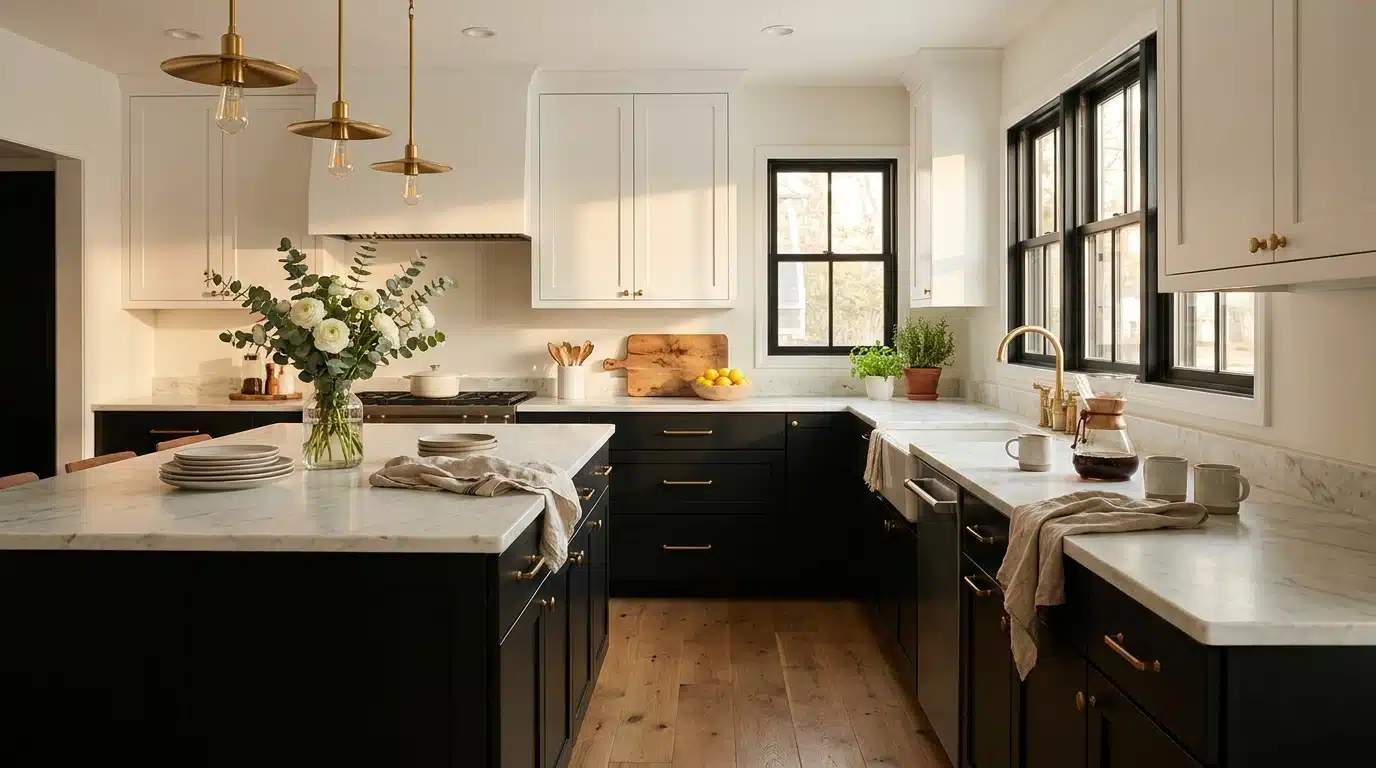
Black, white, and brushed gold complement each other as the warm metal prevents the palette from feeling flat or clinical. It’s not a trendy addition; brass and gold tones have appeared in kitchens for decades.
They genuinely complement high-contrast monochrome spaces.
A little goes a long way; hardware, a tap, and a few light fittings can change the atmosphere.
Finish: Brushed gold ages better than polished, with fewer watermarks and fingerprints in daily kitchen use.
17. Geometric Black & White Tiles as a Backsplash
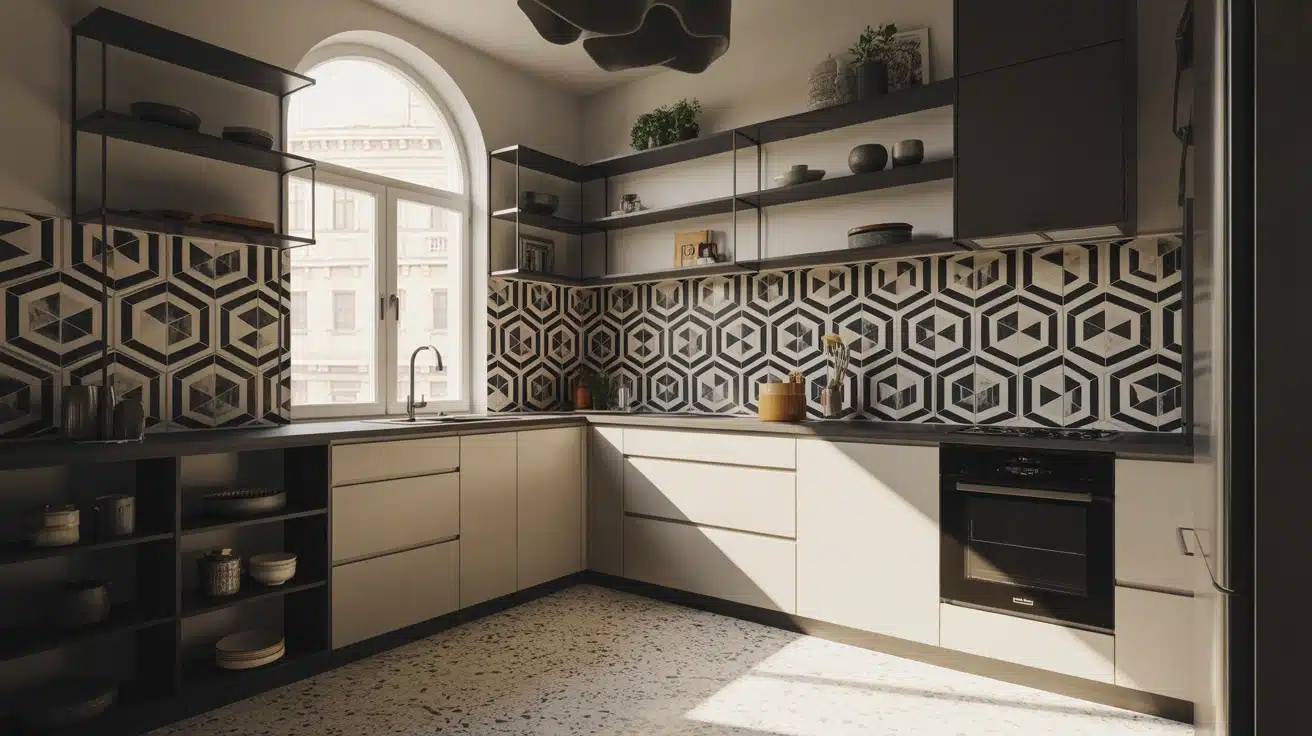
Hexagons, diamonds, and bold tile patterns add personality to kitchens, unlike solid colors. In black and white, geometric tiles create a striking but controlled focal point, being interesting without overwhelming.
Run them behind open shelving for a framed effect, or extend to floor-to-ceiling for a captivating look.
Layout: Dry-lay geometric tiles before grouting to catch alignment errors, which become obvious once fixed.
18. Cozy Nook with Black Banquette & White Walls
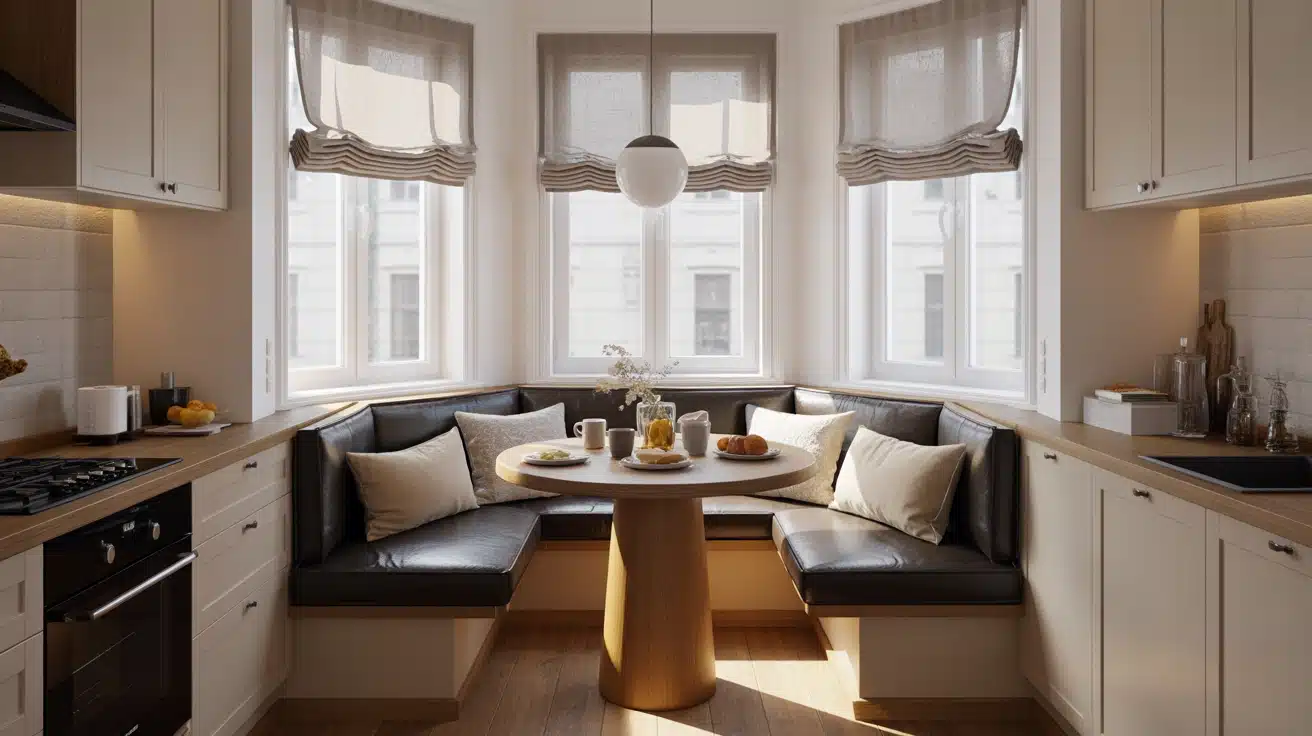
A built-in black banquette transforms an underused corner into the most lived-in spot in the kitchen.
Against white walls, the contrast is clean and intentional. It adds seating without pulling separate chairs into the space, which keeps the kitchen feeling less cluttered and more considered.
The right fabric makes the difference between a nook that gets used daily and one that exists for photographs.
Fabric choice: Performance-grade upholstery only, standard fabric won’t survive a kitchen environment.
19. A Scandi Look with White Cabinets & Black Accent
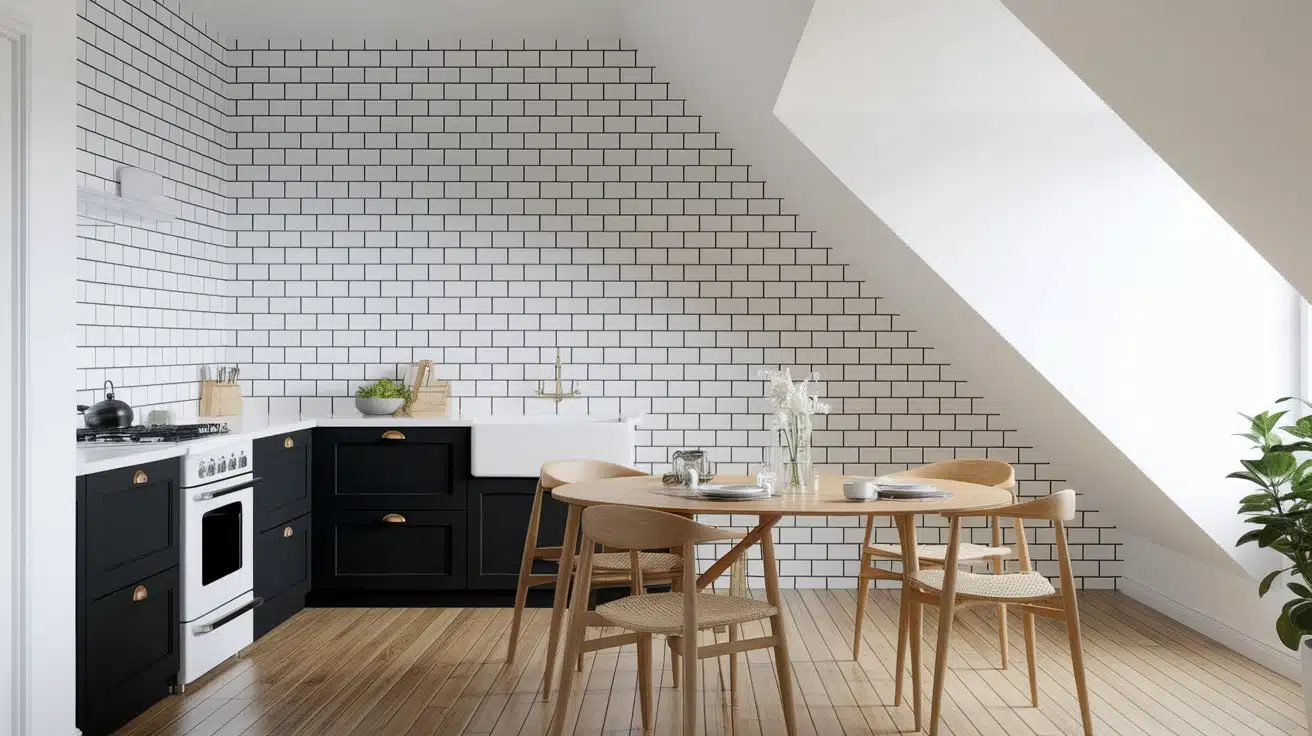
Restraint is the whole principle here. White cabinets, black accents, natural wood, nothing unnecessary.
Gets better with editing; each removed object makes the remaining ones look more deliberate.
Styling rule: A maximum of 5 visible countertop objects. Scandi kitchens earn their look through discipline.
20. Add Texture with a Black & White Zellige Tile Backsplash
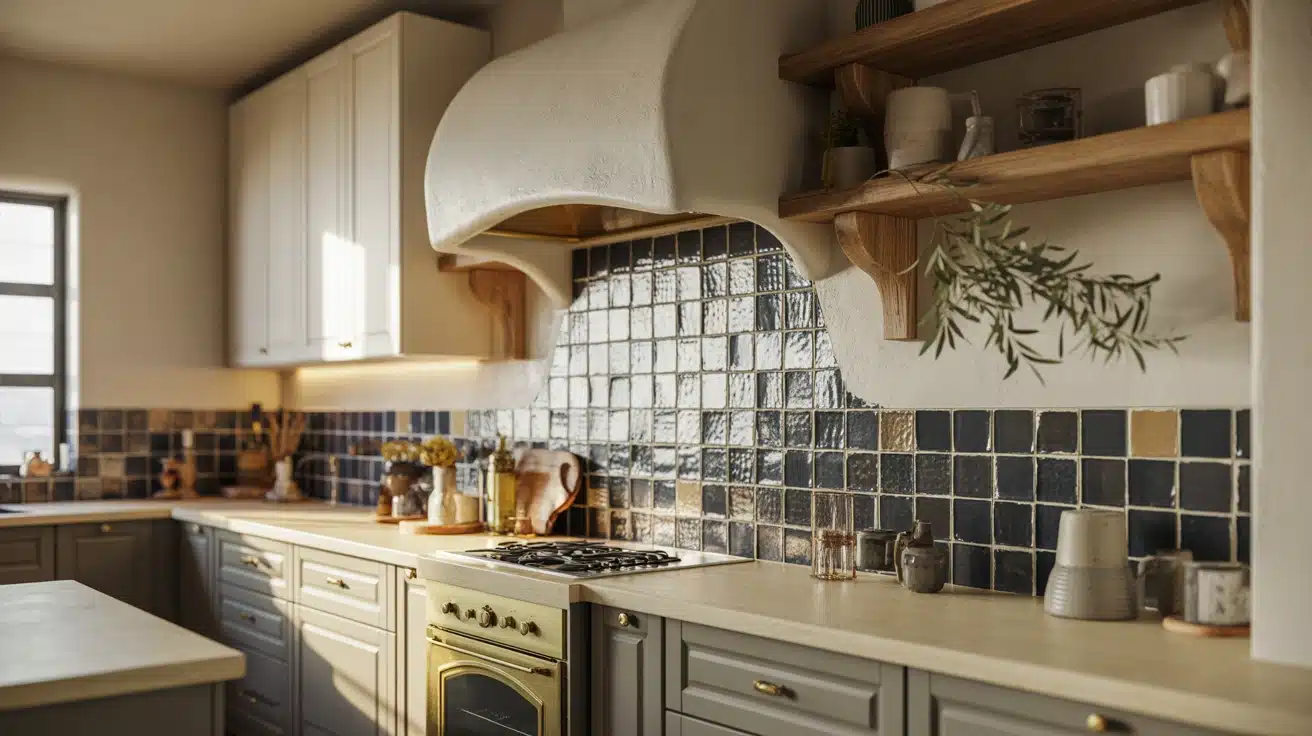
Every handcrafted zellige tile catches light differently.
No two tiles identical. Creates a shimmer and organic texture that mass-produced ceramic simply cannot replicate. Reads expensive even when everything else stays simple.
Installation note: Zellige requires an experienced tiler irregular thickness makes it unforgiving for standard installers.
21. Black & White Open Shelving Trendy Look
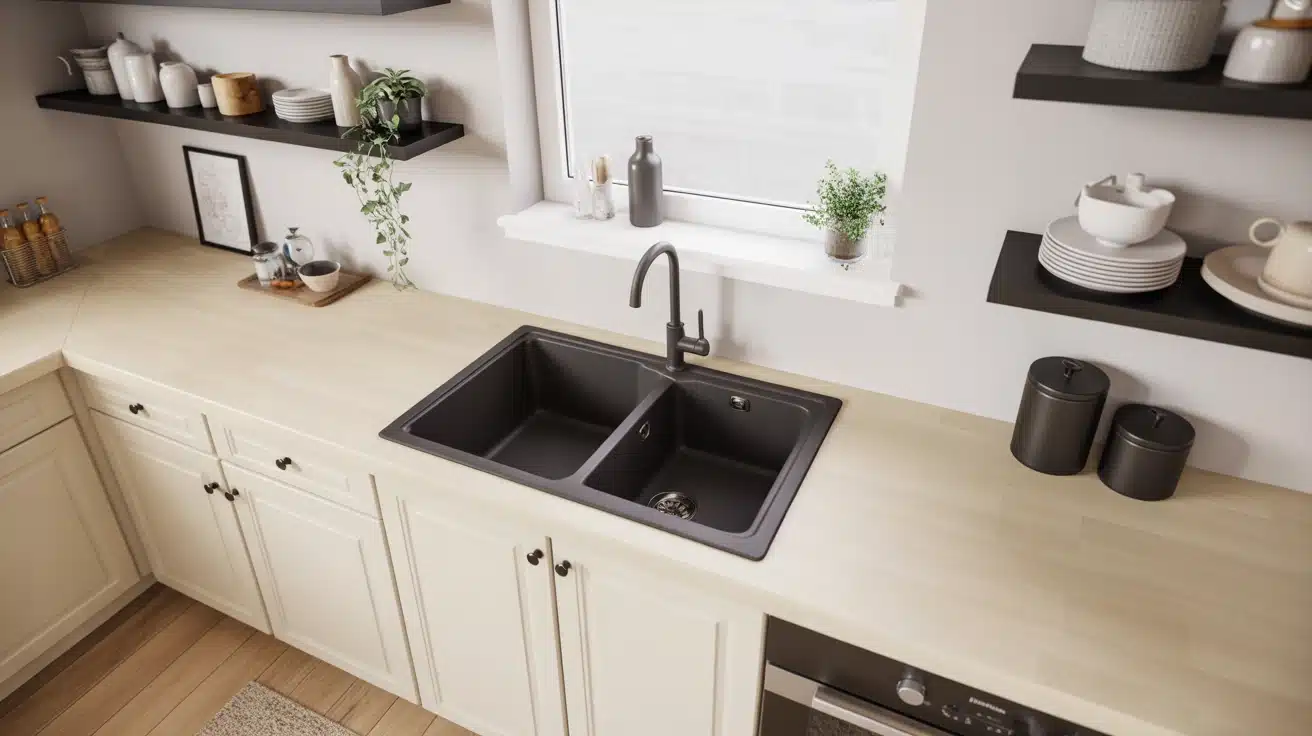
Removes upper cabinets entirely. Makes the kitchen feel bigger, more personal, and easier to live in.
Style with intention: white dishes, plants, black canisters, so it reads curated rather than just doorless storage.
Realistic heads-up: Open shelving collects grease and dust fast; weekly wiping is non-negotiable.
22. Floor-to-Ceiling Black Cabinetery
A serious commitment that delivers serious results.
Creates a rich, cocoon-like atmosphere that feels deliberate rather than dark. Needs white countertops and layered lighting to prevent the space from feeling enclosed.
Light planning: Fit under-cabinet lighting before installation; retrofitting afterward is expensive and disruptive.
23. Black Kitchen Hood as the Focal Point
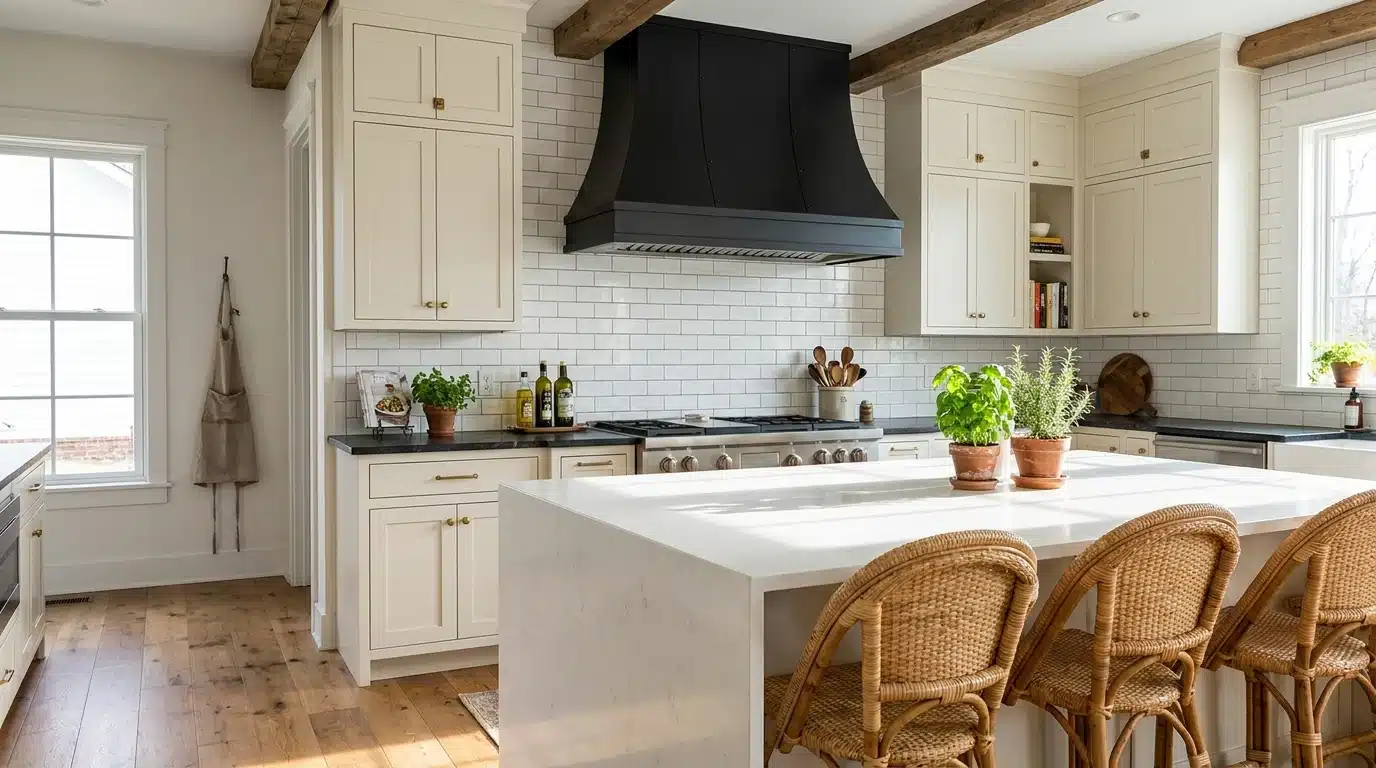
Draws the eye upward and gives the kitchen a strong vertical anchor.
Commands attention without competing with anything else. Adds architectural backbone that makes the space feel designed, not assembled.
Size guide: Hood must extend at least 7–8cm beyond each side of the hob. Undersized hoods underperform and look wrong.
24. Brighten a Black & White Kitchen with Layered Lighting
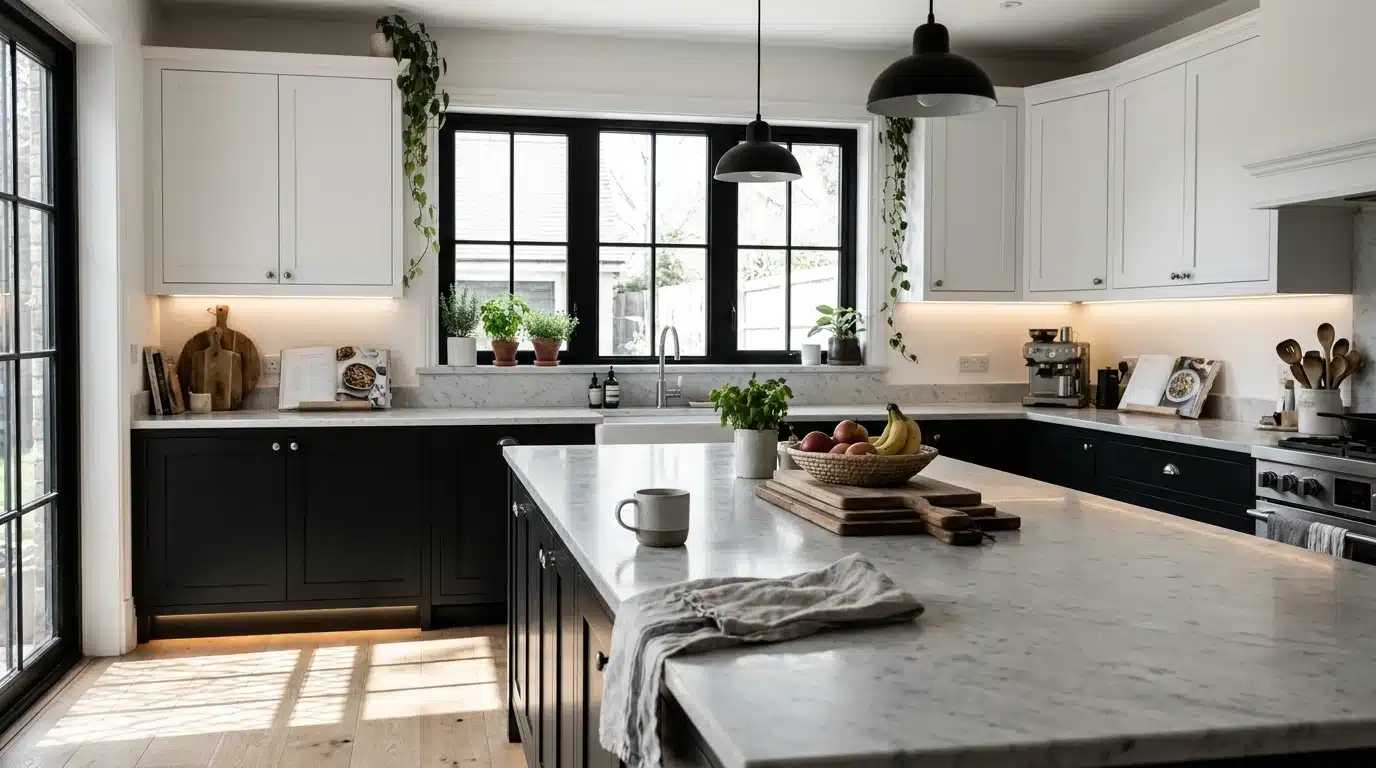
Dark finishes absorb light; this kitchen needs more deliberate lighting than a pale one.
Layering pendants, under-cabinet strips, and wall sconces keeps the space warm rather than stark.
One of the hardest things to fix once cabinets are in.
Color temperature: 3000K bulbs throughout warm enough to feel inviting, crisp enough to hold the contrast.
25. Use a White Farmhouse Sink with Black Fixtures
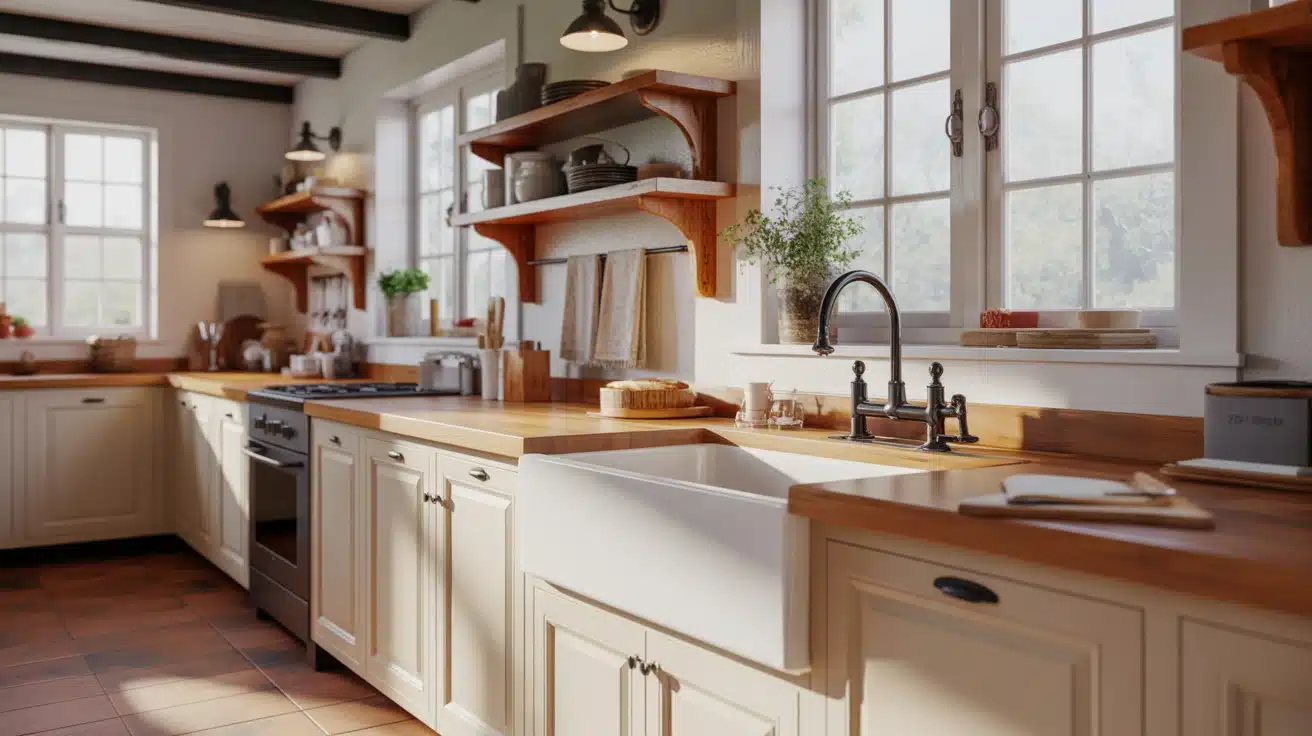
Apron front adds warmth and nostalgia. Matte black taps keep it current.
Works in traditional kitchens naturally and in modern spaces that need one softer element to avoid feeling clinical.
Buyer’s Check: Confirm the base cabinet is reinforced first. Farmhouse sinks are significantly heavier than standard undermounts.
26. Patterns with a Black & White Wallpaper Accent Wall
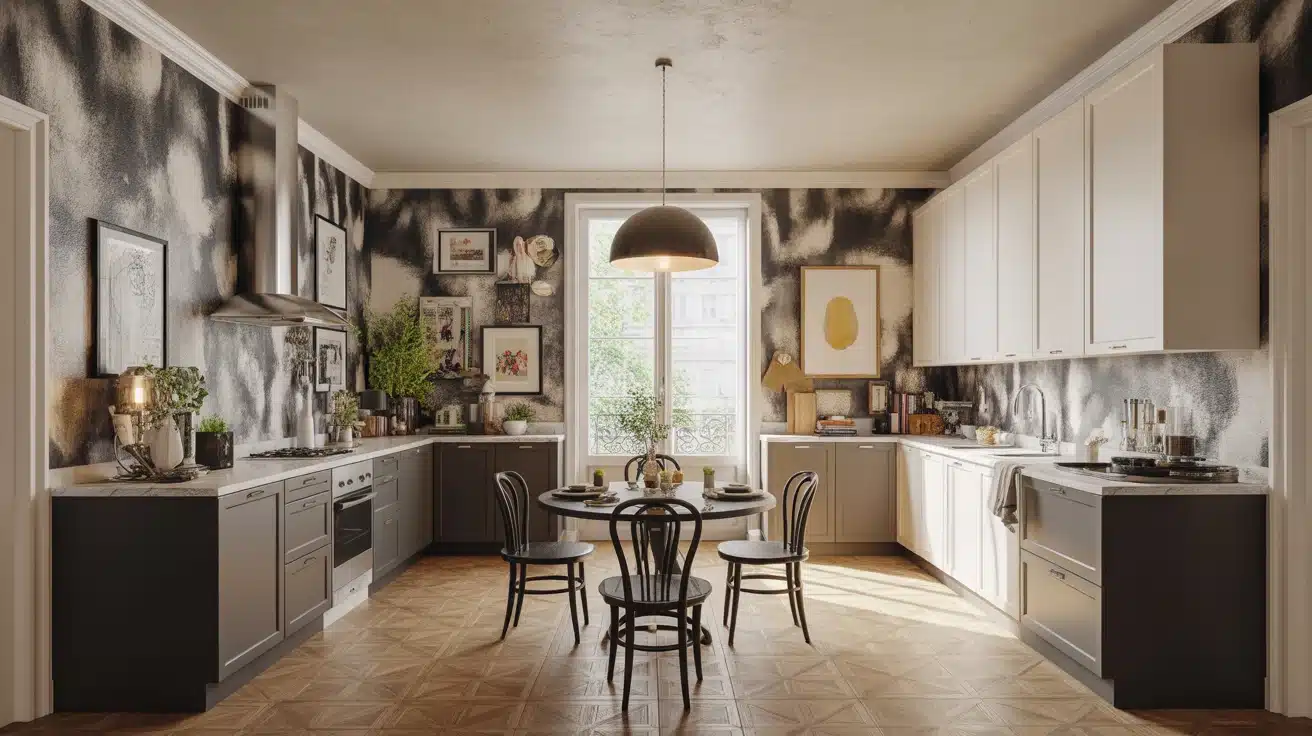
One wall of bold patterned wallpaper adds depth and personality without overwhelming the space.
Florals, geometrics, and abstracts- the print shifts the style dramatically while the palette stays disciplined.
One of the most reversible decisions in kitchen design.
Note: Vinyl-coated or washable only; standard paper can’t withstand steam and grease near cooking areas.
27. White Cabinets & Black Window Frames
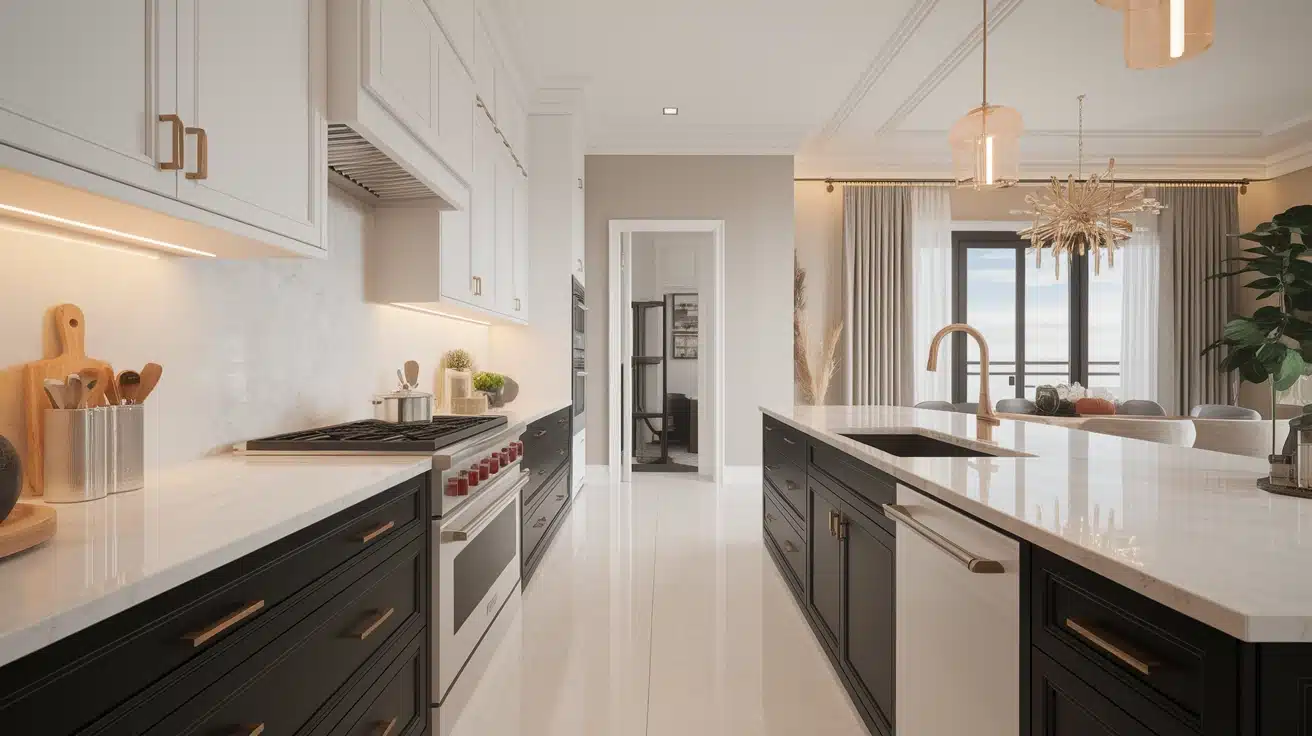
Fresh, architectural, and achievable without touching a single cabinet or worktop. White cabinetry stays airy.
Black frames add definition and make natural light feel like a deliberate design feature.
Tip: Powder-coating existing frames black costs less, than replacing them and looks identical when finished.
Best Materials and Finishes for Black and White Kitchens
Not every material suits this palette. Some clash, some chip, some simply don’t hold up in a working kitchen.
Here’s what actually performs well:
| Material/Finish | Best Used For | Why it Works |
|---|---|---|
| Honed Granite | Black countertops | Hides scratches and fingerprints better than polished |
| Calacatta Quartz | White countertops | Marble look without the porosity or annual sealing |
| Zellige Ceramic | Backsplash tiles | Handcrafted texture catches light uniquely on every tile |
| Powder-Coated Steel | Cabinet hardware | Resists chipping far longer than painted or lacquered finishes |
| Vinyl-Coated Wallpaper | Accent walls | Withstands steam and grease where standard paper fails |
| PVD-Finished Brass | Gold hardware accents | Resists watermarks and daily wear better than polished brass |
| Porcelain | Checkered flooring | Harder and less porous than ceramic, it handles heavy foot traffic |
| Tempered Glass | Cabinet inserts | Adds lightness to dark cabinetry without losing a sleek finish |
| Matte Paint | Cabinet finish | Conceals surface imperfections better than satin or gloss |
How to Add Heat to a Black and White Kitchen
Pure contrast can feel cold fast. These additions fix that without breaking the palette:
- Linen or boucle bar stools at the island instantly soften the hardness of black-and-white surfaces.
- Warm-toned pendant bulbs at 2700K take the clinical edge off dark cabinetry.
- A butcher block section within a black countertop introduces organic heat without a full material change.
- Woven or jute placemats on a white countertop break the starkness at eye level.
- Recessed downlights aimed at white walls naturally reflect warmth back into the room.
- Painted tongue-and-groove paneling in off-white softens contrast without losing palette.
- A linen Roman blind, instead of hard shutters, on the kitchen windows instantly makes the space feel less stark.
Wrap Up!
Most kitchen redesigns come with an expiry date. Black and white kitchens don’t.
What makes this palette worth committing to isn’t just the way it looks on day one; it’s how easily it adapts as your taste shifts, your home evolves, and design trends cycle through their usual rise and fall.
Swap hardware, change grout, add warmth with wood, the foundation endures all changes.
A well-executed black-and-white kitchen isn’t just a style choice.
It’s the last kitchen decision you’ll feel completely confident about making.
Frequently Asked Questions (FAQ’s)
1. Is a Black And White Kitchen Timeless or Just a Trend?
Black-and-white kitchens are considered timeless because they work with both classic and modern design styles.
2. Does Black Make a Small Kitchen Look Smaller?
Too much black can make a small kitchen feel tighter, but balanced lighting and white surfaces keep it open.
3. What Accent Colors Work Best With a Black And White Kitchen?
Wood tones, brass, green, beige, and warm metallic accents pair beautifully with black-and-white kitchens.
4. Are Black Cabinets Hard to Keep Clean?
Black cabinets can show dust and fingerprints more easily, especially in glossy finishes.
5. What Hardware Finish Works Best in a Black And White Kitchen?
Matte black, brass, chrome, and brushed gold hardware all work well, depending on the kitchen style.

NKBA-certified designer Harper Williams holds a degree in Interior Architecture from Auburn University and has specialized in high-function kitchens and spa-inspired baths since 2011. She joined us in 2024 to simplify layout planning, fixture selection, and budget tricks for remodelers. Away from CAD files, Harper restores vintage cookstoves and crafts small-batch soaps.