
A squeaky door has a way of making itself impossible to ignore. It starts small and gets louder every single day.
Learning how to fix a squeaky door is easier than you would expect.
You don’t need special skills or a full toolkit to get it done. The right fix depends on what is actually causing the noise in the first place.
Once you know that, the rest falls into place quickly. You can sort it out using things you already have at home.
No experience needed and no money wasted. A quiet door is well within reach and closer than you think.
Why Does Your Door Squeak in the First Place?
Before jumping into the fixes, it helps to understand what is causing the noise. The most common reason is dry or unlubricated hinges, where metal rubs against metal with every movement.
Hinges can also collect rust over time, especially in humid rooms like bathrooms and kitchens. Loose hinge screws are another frequent cause.
When screws lose their grip, the hinge shifts slightly and squeaks.
Wood swelling due to moisture changes can also cause the door edge to rub against the frame. Identifying your specific problem will help you pick the most effective fix.
Quick Household Fixes (No Tools Needed)

Before spending money on products, check what you already have at home.
These everyday household items work surprisingly well on squeaky hinges and take less than five minutes to apply.
1. Rub the Hinge with Bar Soap or Candle Wax
Bar soap and candle wax are two of the easiest fixes you can try right now. Both work by coating the metal and reducing the friction that causes the squeak. Follow these steps to get it done:
- Step 1: Open the door fully and locate the squeaky hinge
- Step 2: Take a dry bar soap or candle stub and rub it directly onto the hinge pin and knuckle
- Step 3: Open and close the door a few times to work the wax into the metal
- Step 4: Repeat the application if the squeak persists
- Step 5: Wipe off any visible residue with a dry cloth
2. Apply Petroleum Jelly (Vaseline) to the Hinges
Petroleum jelly is thick enough to stay on the hinge and keep it lubricated for a good while. It’s gentle on metal and won’t damage the door or frame. Here is exactly what you need to do:
- Step 1: Identify which hinge is causing the squeak by opening the door slowly
- Step 2: Dip a cotton swab or your finger into petroleum jelly
- Step 3: Apply it generously along the hinge pin and the inner barrel of the hinge
- Step 4: Move the door back and forth several times to spread the jelly evenly
- Step 5: Clean off any excess with a dry cloth or tissue
3. Use Olive Oil or Cooking Oil as a Lubricant
Olive oil or any basic cooking oil can silence a squeaky hinge in just a few minutes. It’s a good short-term fix when you don’t have anything else on hand. Take it one step at a time:
- Step 1: Find the squeaky hinge and keep the door open at a comfortable angle
- Step 2: Pour a small amount of olive oil onto a cotton ball or soft cloth
- Step 3: Dab the oil directly onto the hinge pin and the surrounding metal joints
- Step 4: Open and close the door repeatedly to let the oil penetrate the hinge
- Step 5: Reapply every few weeks, as cooking oils can dry out faster than commercial lubricants
4. Rub Beeswax or Lip Balm on the Hinge Pins
Beeswax and lip balm both contain wax that coats the hinge pin, reducing metal-on-metal friction. They are easy to apply and work well on most standard door hinges. Work through each step carefully:
- Step 1: Open the door wide and identify the problematic hinge
- Step 2: Take a lip balm stick or beeswax block and rub it firmly onto the hinge pin
- Step 3: Apply it to the top, sides, and base of the pin for full coverage
- Step 4: Open and close the door several times to distribute the wax evenly
- Step 5: Buff away any excess wax with a clean cloth
5. Use Hair Conditioner or Hand Lotion
Hair conditioner and hand lotion can work as a quick emergency fix when nothing else is available. Keep in mind that this is a short-term solution and will need to be reapplied. The process is straightforward:
- Step 1: Squeeze a small amount of hair conditioner or hand lotion onto your fingertip
- Step 2: Apply it directly to the hinge pin and inside the hinge barrel
- Step 3: Work the conditioner into the joint by moving the door back and forth
- Step 4: Wipe away any drips immediately to avoid staining the door or floor
- Step 5: Reapply as needed, since this is a short-term fix best for emergencies
6. Apply Talcum Powder or Baby Powder
Talcum powder works by getting into the small gaps of the hinge and reducing friction between the metal parts. It’s a dry fix, which makes it a good option near painted surfaces. Here is the right way to apply it:
- Step 1: Open the door and hold it steady at a wide angle
- Step 2: Sprinkle a small amount of talcum powder directly onto the hinge joints
- Step 3: Use a dry brush or old toothbrush to push the powder into the hinge gap
- Step 4: Open and close the door multiple times to let the powder settle in
- Step 5: Dust off any excess powder from the door frame and floor
7. Rub a Pencil Graphite on the Hinge
Graphite from a soft pencil is a surprisingly effective dry lubricant for squeaky hinges. It penetrates the metal joints easily and leaves no greasy residue behind. Start with step one and move through each stage:
- Step 1: Take a soft lead pencil and hold the door open at a steady angle
- Step 2: Rub the pencil tip firmly along the hinge pin and the inner barrel of the hinge
- Step 3: Apply several layers by going over the same areas multiple times
- Step 4: Open and close the door a few times to work the graphite into the metal
- Step 5: Repeat the process if the squeak is not fully gone after the first application
Fixes Using Basic Tools or Lubricants
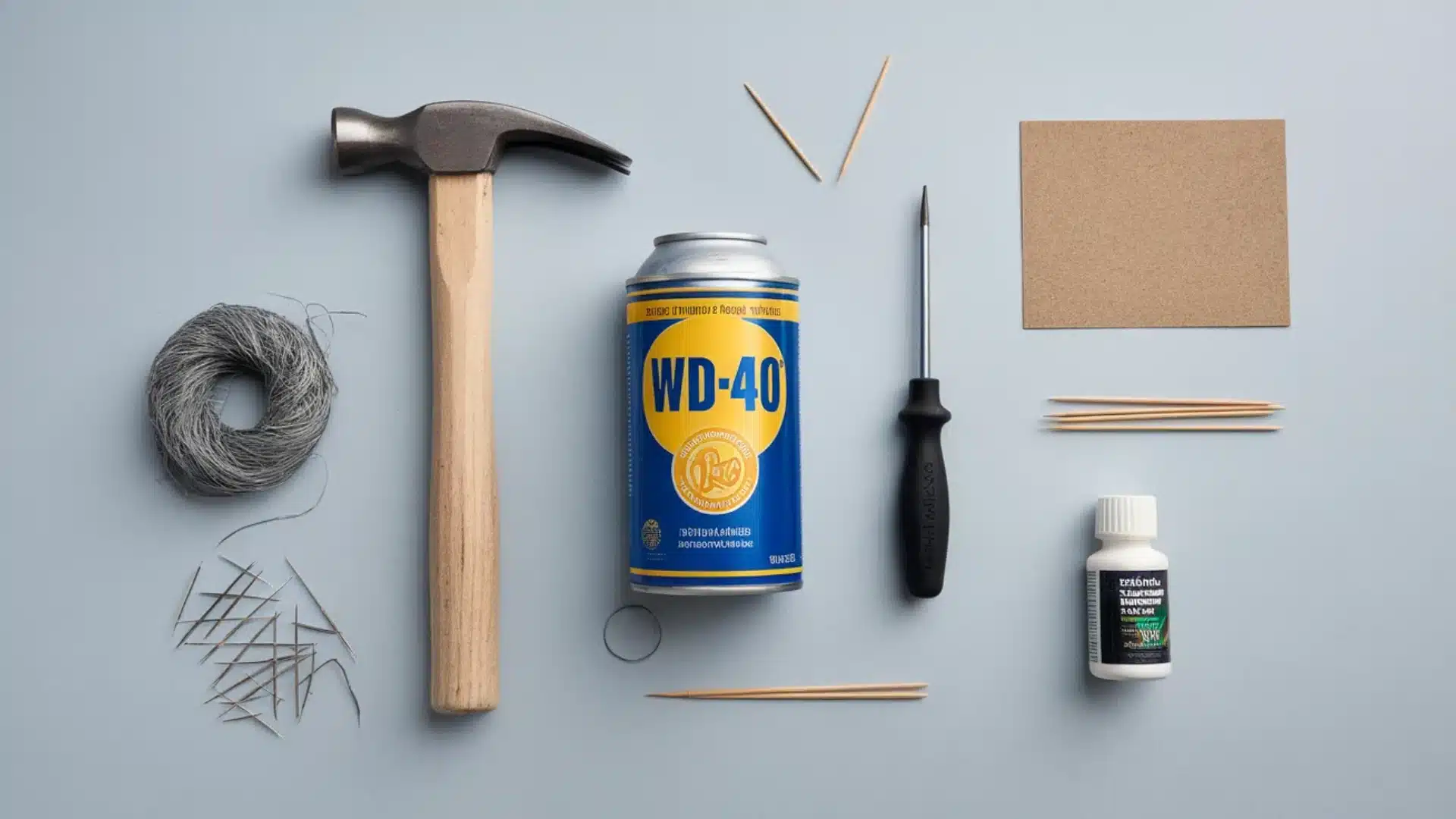
If the household fixes did not fully solve the problem, these four solutions will.
You do not need to be a handyman or own a toolbox full of equipment. A basic screwdriver, some sandpaper or a can of WD-40 is all it takes to permanently silence a stubborn squeaky door.
8. Spray WD-40 or Silicone-Based Lubricant
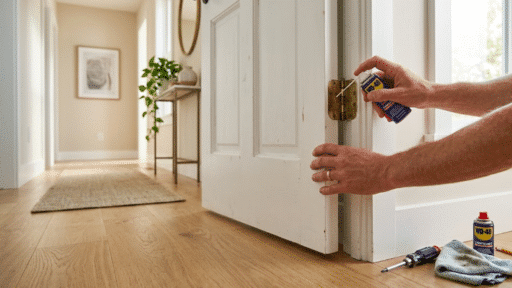
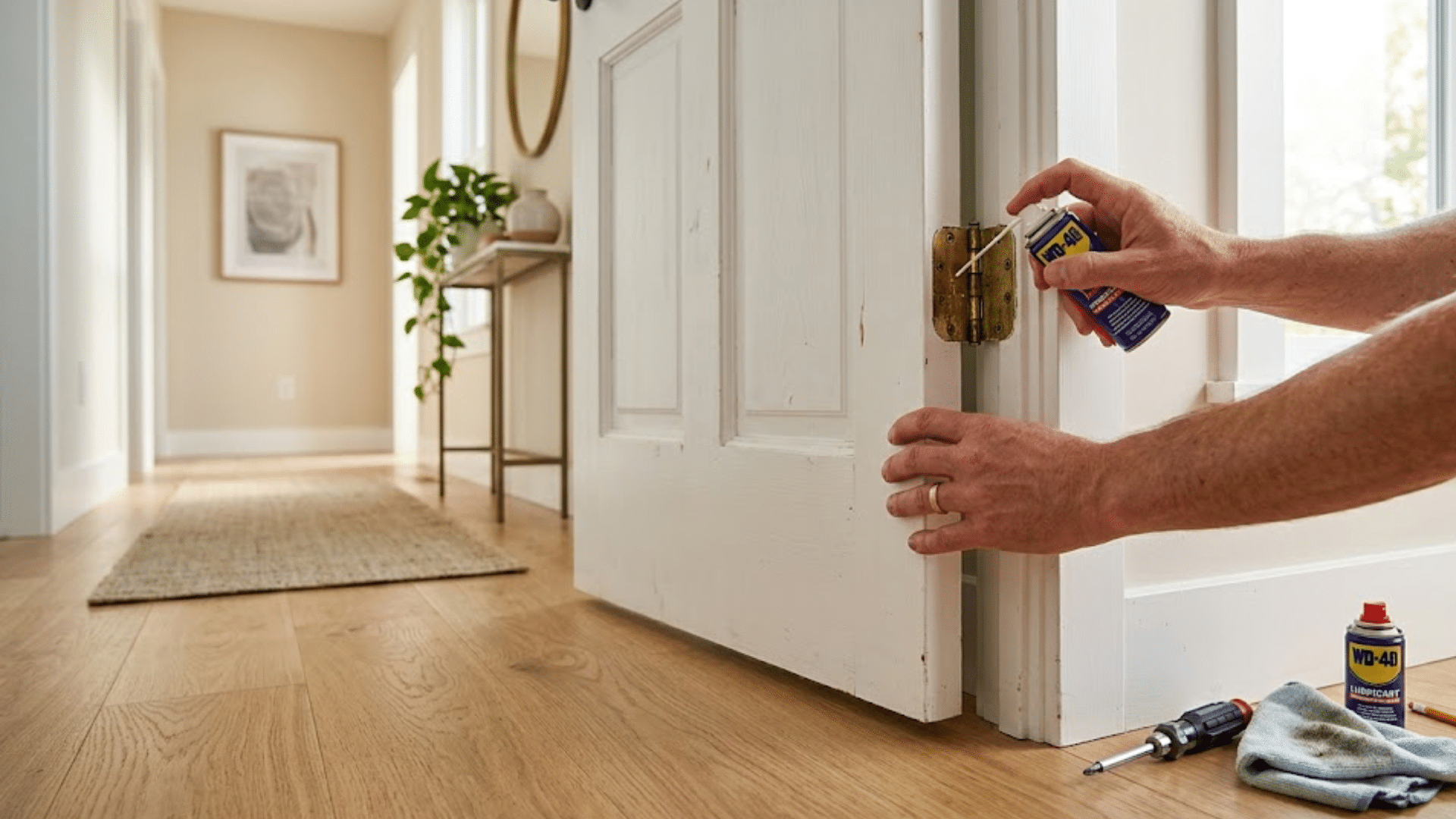
WD-40 and silicone sprays are designed to get deep into metal joints and provide a longer-lasting fix. They work faster than household remedies and are easy to find at any hardware store. Here is how to get the best result:
- Step 1: Open the door and place an old cloth or newspaper under the hinge to catch drips
- Step 2: Shake the WD-40 or silicone spray can well before use
- Step 3: Insert the straw nozzle directly into the hinge gap and spray a short burst
- Step 4: Open and close the door several times to work the lubricant into the joint
- Step 5: Wipe away any excess spray with a dry cloth to prevent floor stains
9. Remove and Clean the Hinge Pins
Sometimes the squeak is caused by rust or built-up grime on the hinge pin itself. Properly removing and cleaning the pin can solve the problem for good. Go through each step in order:
- Step 1: Open the door fully and tap the bottom of the hinge pin upward using a screwdriver and hammer
- Step 2: Pull the pin out completely and inspect it for rust, dirt or visible damage
- Step 3: Scrub the pin with steel wool or fine sandpaper until the surface is clean and smooth
- Step 4: Apply a thin coat of petroleum jelly or oil to the cleaned pin before reinserting
- Step 5: Tap the pin back into place and open and close the door to test
10. Tighten Loose Hinge Screws
A loose hinge screw can cause the door to shift slightly every time it moves, which leads to squeaking. Tightening or replacing the screws is one of the most permanent fixes you can do. Here is what to check and fix:
- Step 1: Open the door and check each hinge screw by pressing it with your fingertip to feel for looseness
- Step 2: Use a manual screwdriver to tighten any loose screws in a clockwise direction
- Step 3: If a screw spins without gripping, remove it and fill the hole with a toothpick dipped in wood glue
- Step 4: Let the glue dry completely for at least one hour before reinserting the screw
- Step 5: Retighten the screw firmly and test the door for any remaining squeak
11. Sand Down a Swollen or Warped Door Edge
A swollen or warped door edge rubs against the frame every time the door moves, which creates both noise and resistance. Sanding the affected area removes the point of friction and stops the squeak at the source. Here is how to tackle it step by step:
- Step 1: Close the door slowly and listen carefully to identify exactly where the wood is rubbing against the frame
- Step 2: Mark the friction area with a pencil so you know where to sand
- Step 3: Open the door and use medium-grit sandpaper to sand the marked area in smooth back-and-forth strokes
- Step 4: Check the fit regularly by closing the door after every few strokes to avoid over-sanding
- Step 5: Once the squeak is gone, apply a thin coat of paint or wood sealant to the sanded area to protect it from moisture
Common Mistakes to Avoid When Fixing
Small mistakes can make a squeaky door problem worse instead of better. Knowing what to avoid saves you time and protects your door in the long run. Here is a quick breakdown of the most common ones:
| Mistake | Why It’s a Problem | What to Do Instead |
|---|---|---|
| Using too much lubricant | Attracts dirt and causes buildup | Apply a small amount only |
| Skipping hinge pin cleaning | Rust and grime worsen the squeak | Remove and scrub the pin first |
| Ignoring loose screws | The shifting hinge creates more noise | Tighten every screw before lubricating |
| Not reapplying cooking oil | Dries out faster than commercial options | Reapply regularly or switch products |
| Over-sanding the door edge | Affects the door fit permanently | Sand gradually and test after each stroke |
| Skipping sealant after sanding | Exposed wood absorbs moisture and swells | Apply paint or wood sealant once done |
Avoiding these mistakes makes the whole process quicker and more effective. Get these basics right, and your fix is far more likely to last.
How to Prevent Doors from Squeaking Again
Prevention is always simpler than repair. A few small habits done regularly can keep your doors completely silent for a long time. Here is what you should be doing:
- Regular Hinge Maintenance: Check your hinges every few months and tighten any screws that feel loose before they cause problems.
- Cleaning Hinges Periodically: Wipe down hinges with a dry cloth to remove dust and built-up grime that causes friction over time.
- Lubricating Hinges Every Few Months: Apply petroleum jelly, silicone spray, or household oil before friction builds up.
- Keeping Moisture Away From Hinges: Use proper ventilation to control indoor humidity and slow down rust formation on metal hinges.
None of these steps takes more than five minutes to do. Stay on top of them, and your doors are unlikely to squeak again anytime soon.
Let’s Sum Up
Fixing a squeaky door is one of those jobs that feels great once it’s done. The noise stops, the door moves smoothly, and the whole thing takes less time than you’d expect.
Knowing how to fix a squeaky door puts you in control of a problem most people just live with. You now have the fixes, the steps, and the knowledge to get it right.
Pick the option that fits your situation and get started today. You don’t need to call anyone in or spend a lot of money.
A quiet door is a small win that makes a real difference. Drop your go-to fix in the comments below!

James McLaren, with a rich background in architecture from the University of Manchester, has been contributing his expertise to the world of creative construction and home innovation for over 20 years. His journey began as a project manager for a leading construction firm, where he honed his skills in bringing complex designs to life. James joined our platform as a freelancer in 2019, quickly becoming a favorite for his insightful and practical advice. He has been a pivotal force to our wing ever since, bringing our readers a blend of technical know-how and creative flair. Beyond his professional life, James is an avid woodworker and enjoys restoring vintage furniture, a hobby that complements his professional insights beautifully.