
Oil stains on concrete are one of those problems that seem small until you actually try to clean them. You spill a little oil, wipe it up, and think you’re done.
Then a dark patch shows up days later because concrete is full of tiny pores that soak up oil like a sponge.
In this guide, I’ll walk you through the exact steps to lift oil stains out of your driveway, garage, or patio, whether the spill happened this morning or years ago.
You’ll learn a quick trick for fresh spills, a stronger method for stains that have set in deep, and a few simple habits that keep new stains from forming in the first place.
By the end, you’ll know exactly which method fits your situation and how to get your concrete looking clean again.
Quick Guide: 3 Ways to Get Oil Stains Out of Concrete
Not every oil stain needs the same fix. The right method depends on two things: how long the oil has been sitting there and how deep it has soaked in.
Here is a quick breakdown so you can jump straight to the method that fits your situation.
1. Fresh Spill? Absorb It First
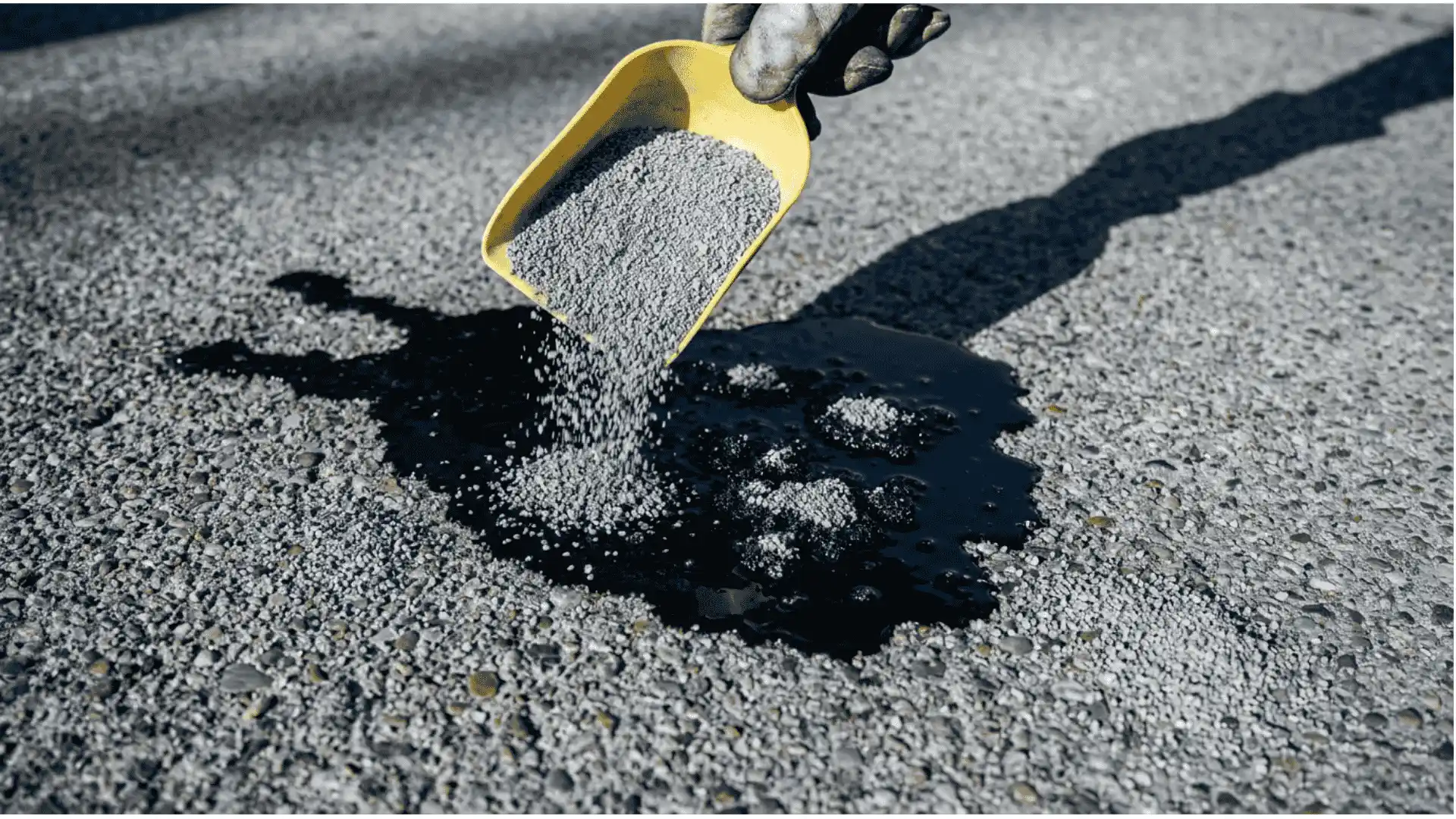
Catch the spill within a few hours and pour non-clumping cat litter, cornstarch, or baking soda right over it. Let it sit for several hours, then sweep it up.
The powder pulls the oil out before it sinks in deep. I keep a bag of cat litter in my garage just for this.
Quick tip: Never rub the spill with a cloth first. That pushes the oil further into the concrete.
2. Light Stain? Soap and Scrub It
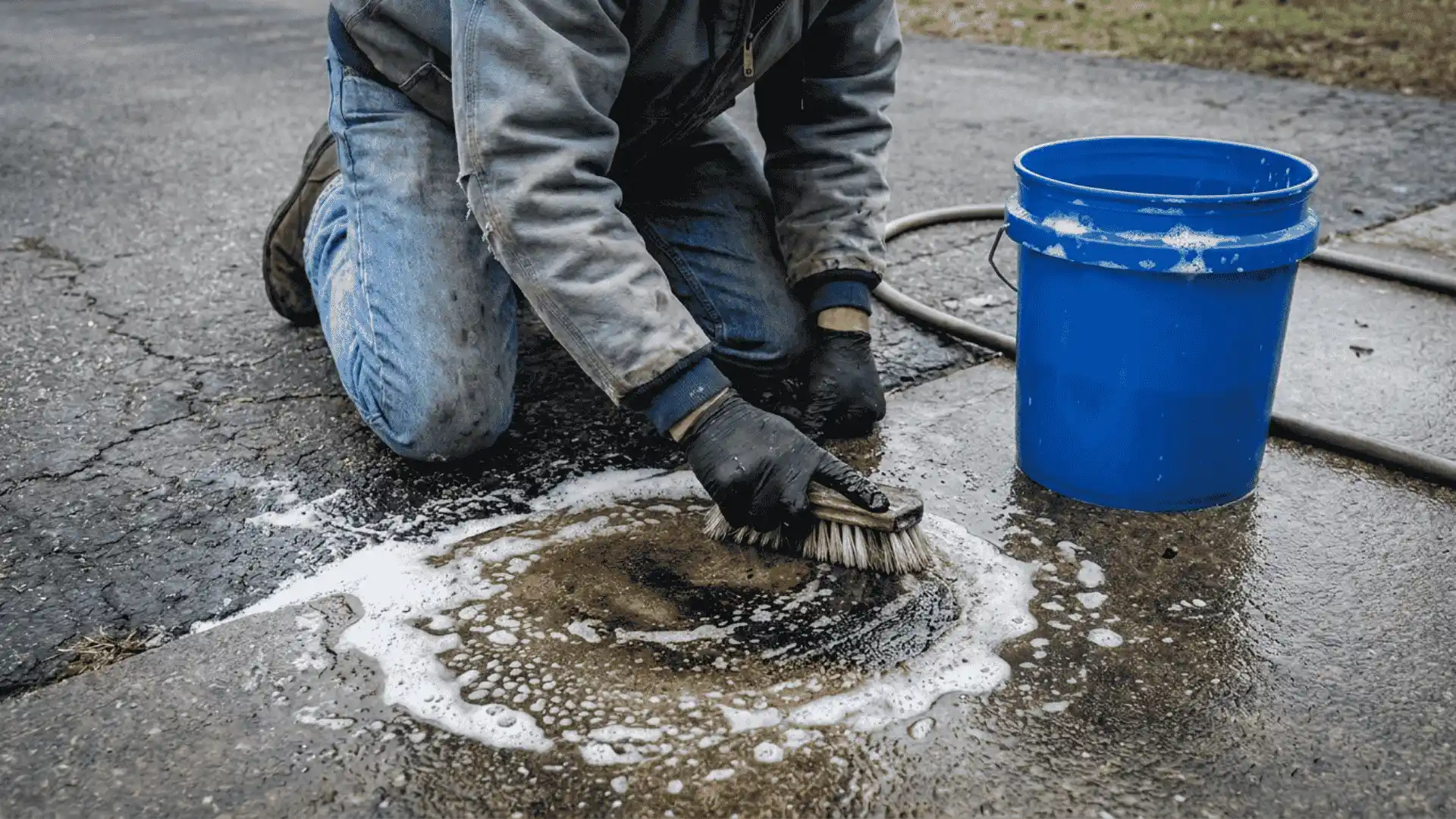
For stains a day or two old that have not fully set, warm water and dish soap work well. Pour soap over the stain, add hot water, and scrub with a stiff brush in small circles.
Rinse with a hose and check the spot. You may need to repeat this a few times on older, more porous concrete.
Quick tip: Let the soap sit for ten minutes before scrubbing so it can break down the oil.
3. Old, Set-In Stain? You Need a Poultice
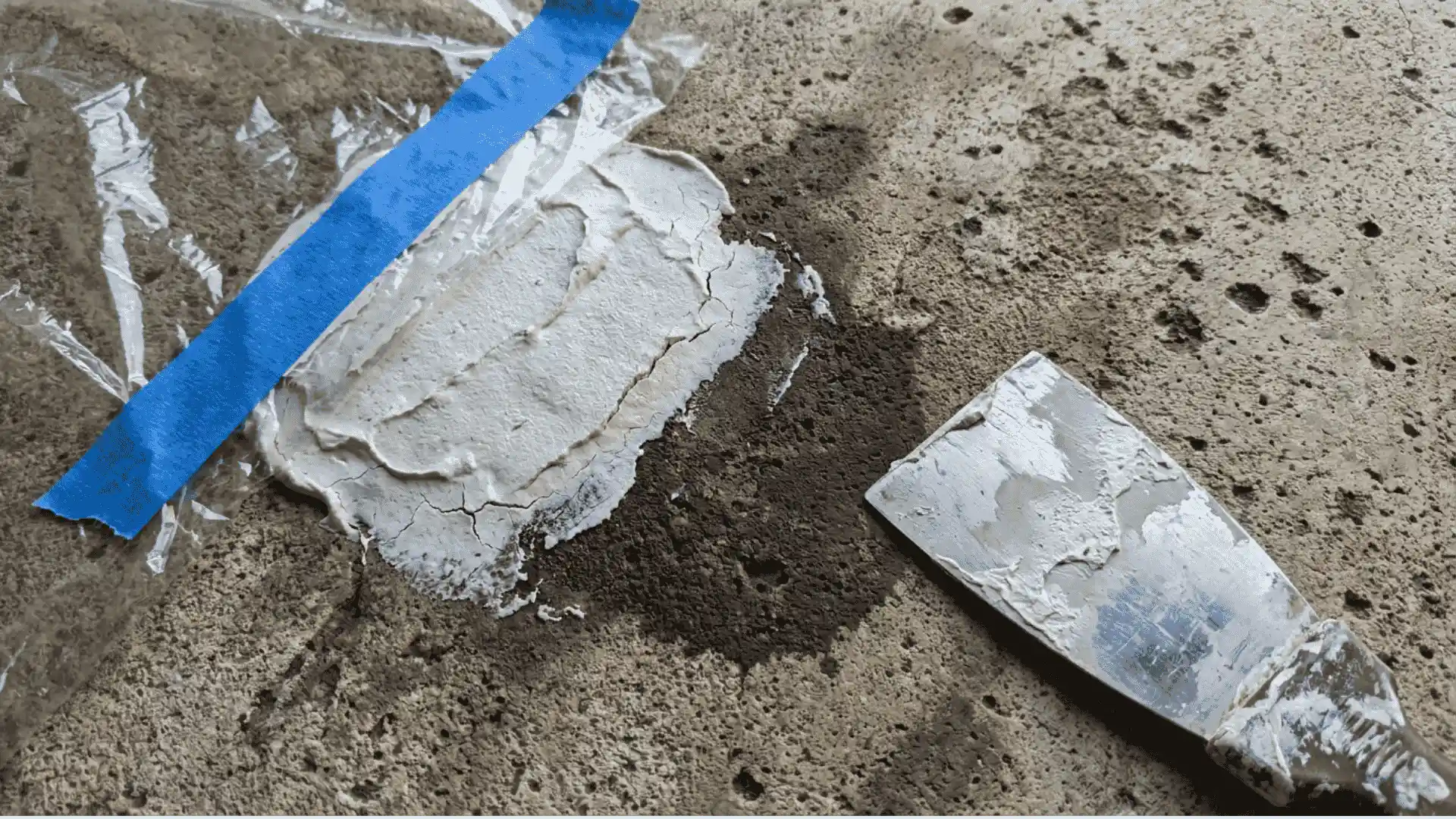
Stains that are weeks or months old need more than soap.
Oil that old sits deep in the concrete, so you need a poultice, a paste made from absorbent powder and a solvent, to draw it back out. It takes more patience than the other methods, but it works best on stains that refuse to budge.
Quick tip: Cover the poultice with plastic wrap so it dries slowly rather than hardening too quickly.
Once you know which method matches your stain, the next step is gathering what you need before you start.
What You’ll Need Before You Start
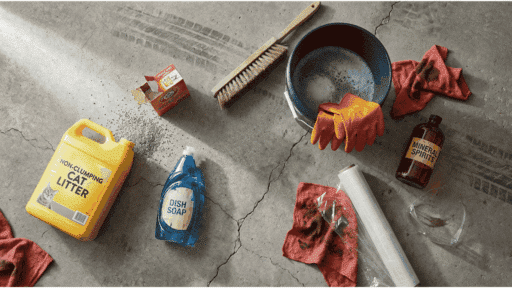
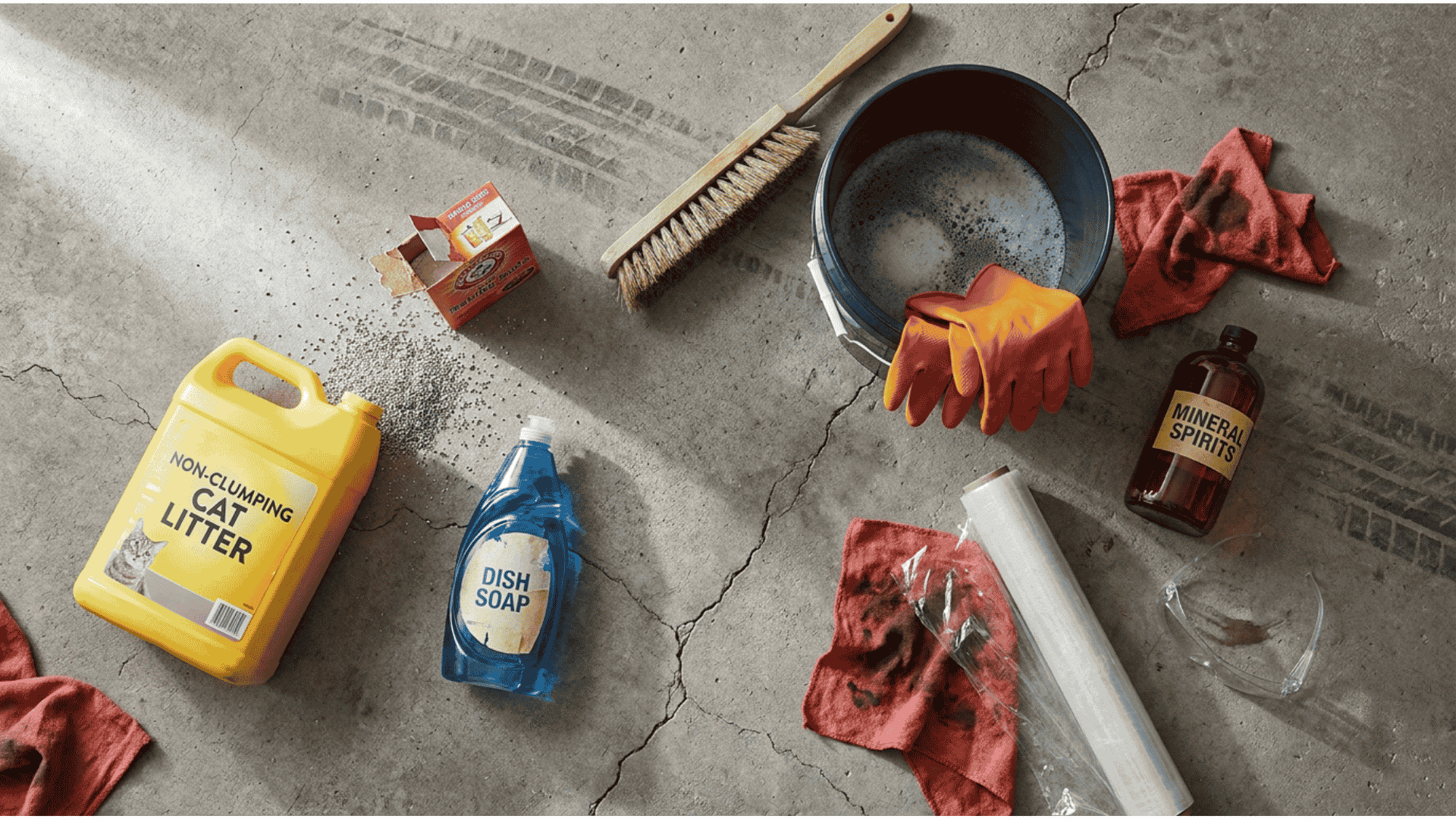
Before you dive in, it helps to gather everything in one spot so you are not running back and forth during stain removal.
Most of these items are things you probably already have at home, and the rest are cheap and easy to find at any hardware store.
| Item | Category | What It’s Used For |
|---|---|---|
| Non-clumping cat litter | Household | Absorbing fresh oil spills |
| Cornstarch or baking soda | Alternative absorbent for fresh stains | |
| Pressure Washer | Deep cleaning the stain | |
| Poultice | Draw deep-seated stains out of porous stone surfaces | |
| Dish soap | Cleaning light, recent stains | |
| Stiff bristle brush | Scrubbing soap or degreaser into the stain | |
| Bucket and warm water | Mixing soap solution and rinsing | |
| Old rags or towels | Wiping up excess liquid | |
| Plastic wrap | Covering a poultice while it dries | |
| Degreaser or brake cleaner | Chemical | Boosting cleaning power on tougher stains |
| Mineral spirits or acetone | Mixing with absorbent powder to make a poultice | |
| Gloves | Safety | Protecting skin from cleaners and solvents |
| Safety glasses | Protecting eyes from splashes or fumes |
With your supplies ready, let’s get into the actual steps for lifting fresh oil stains off your concrete.
Step-by-Step: How to Remove Oil Stains From Concrete
Follow these steps in order to get your driveway looking clean again.
1. Identify the Stain
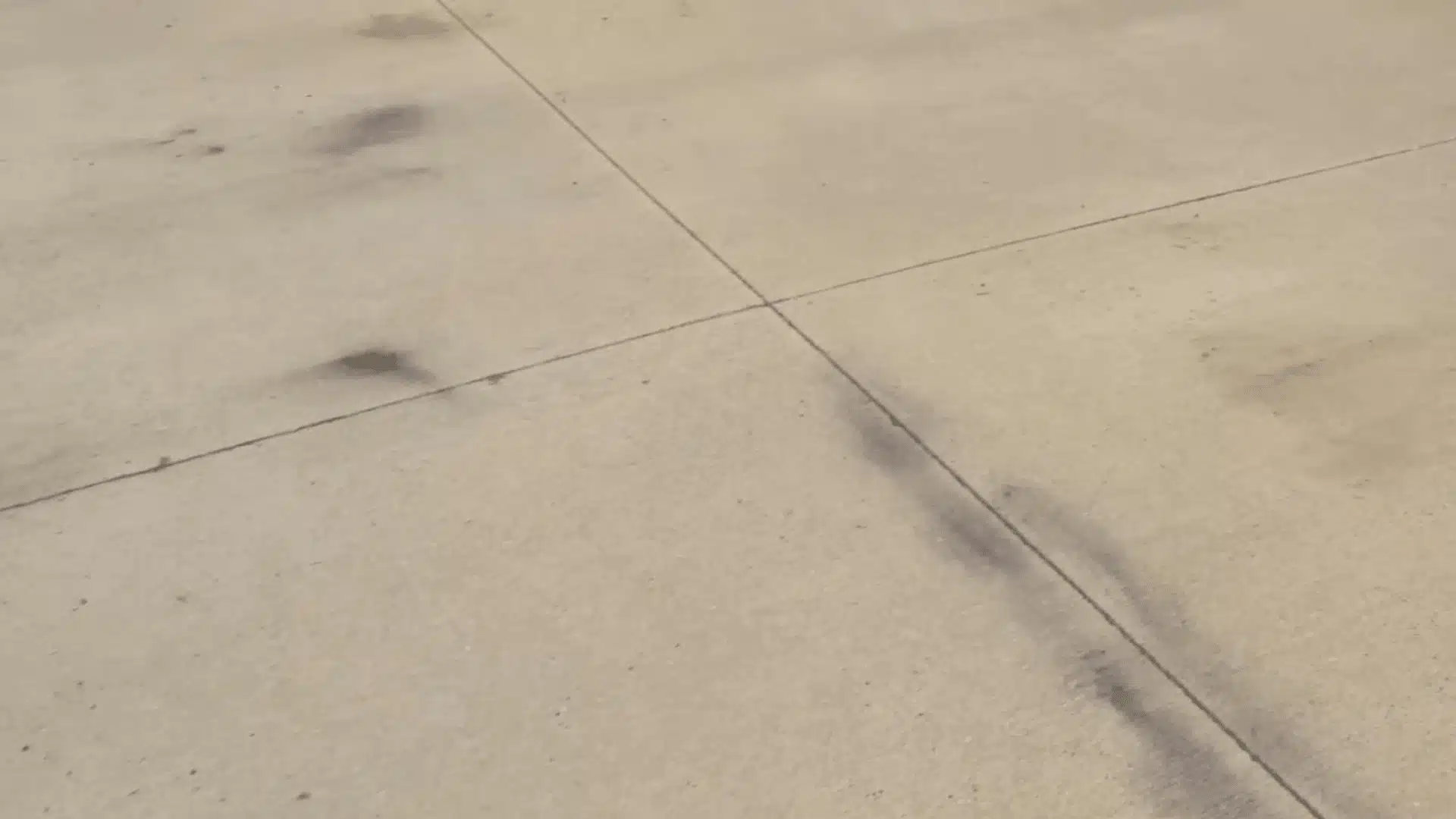
Before you grab any tools, figure out what kind of stain you are dealing with. Oil and grease need a degreaser.
Paint comes off with a paint stripper or solvent. Rust and other light marks respond well to a concrete cleaner paired with a pressure washer.
Picking the right solution first saves you time, effort, and product, and keeps you from scrubbing away with the wrong approach for hours.
2. Gear Up for Safety
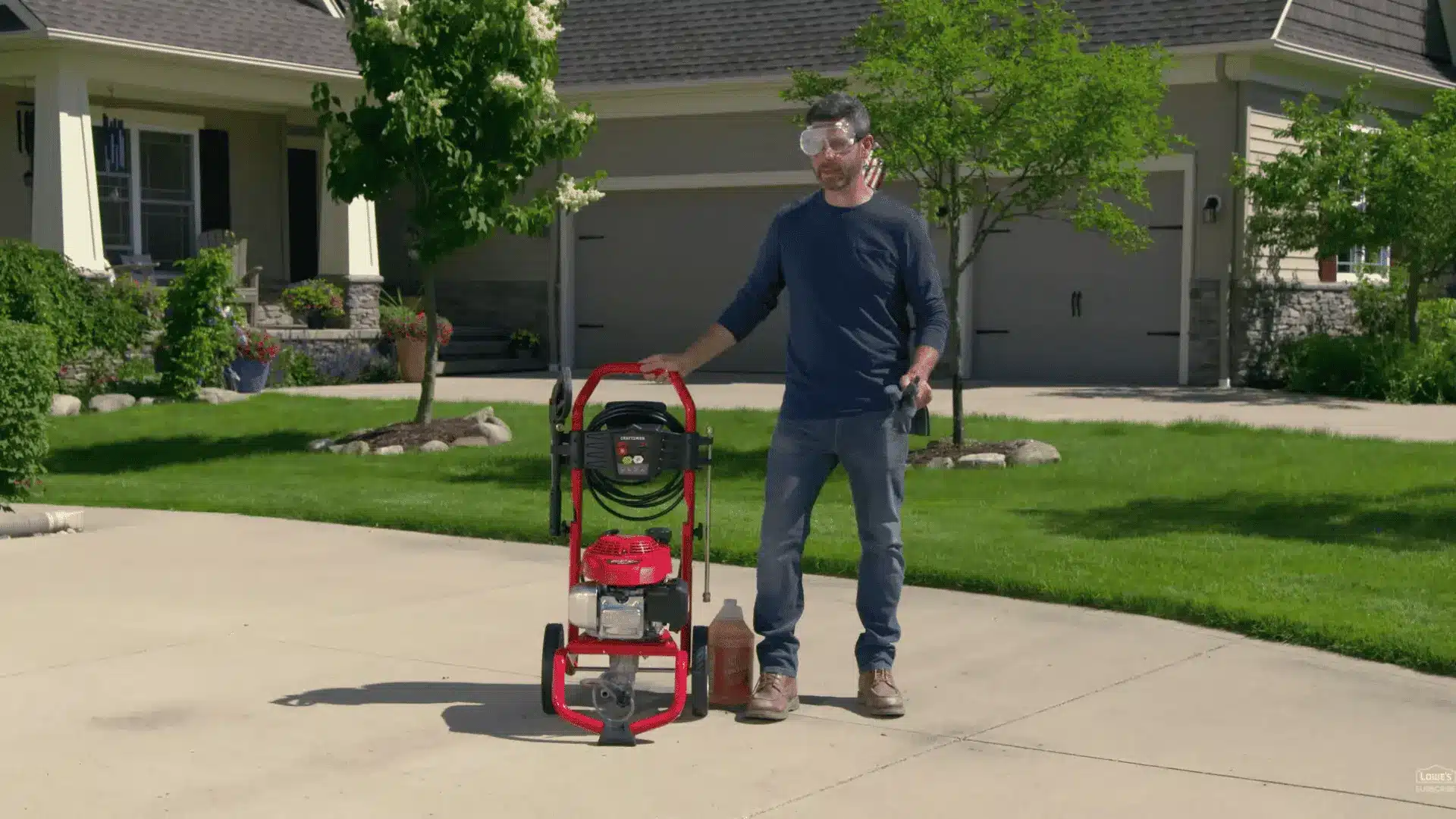
Pressure washers are powerful, so safety comes first, every single time. Wear goggles, pants instead of shorts, a long-sleeved shirt, and closed-toe shoes before you turn anything on.
Never aim the sprayer at yourself or anyone standing nearby.
Once you are dressed for the job, prep the driveway by spraying it down with a regular garden hose to clear away loose dirt and debris.
3. Set Up Your Pressure Washer
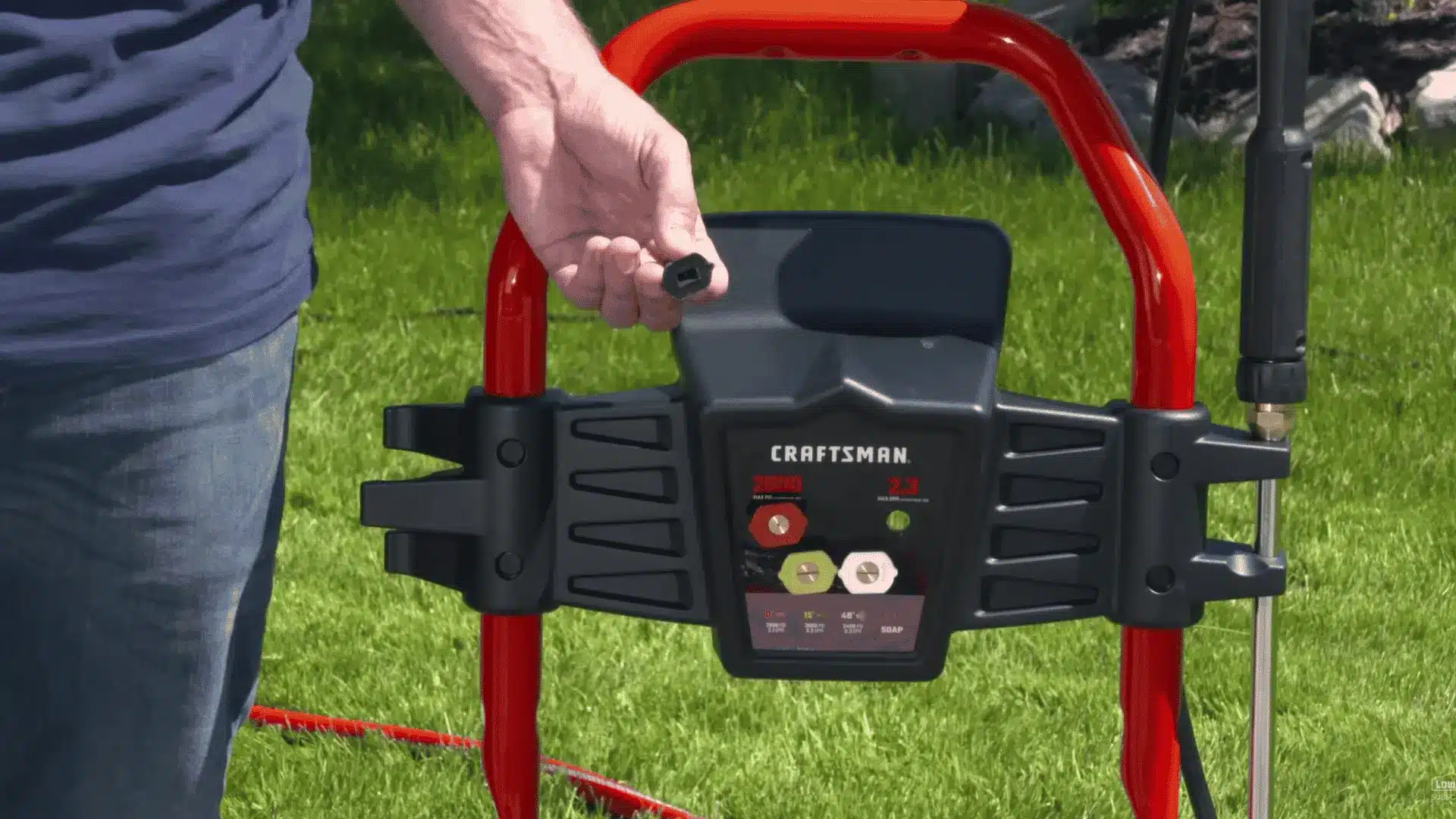
Choose the right tip for the job ahead of time.
Narrow-tip handles handle tough stains well but can damage concrete if you are not careful, so wide-tip handles usually work better for general cleaning tasks.
Install the soap tip by pulling back the collar, then hook your water hose to the pressure washer and place the siphon hose directly into the soap container.
4. Apply the Cleaner
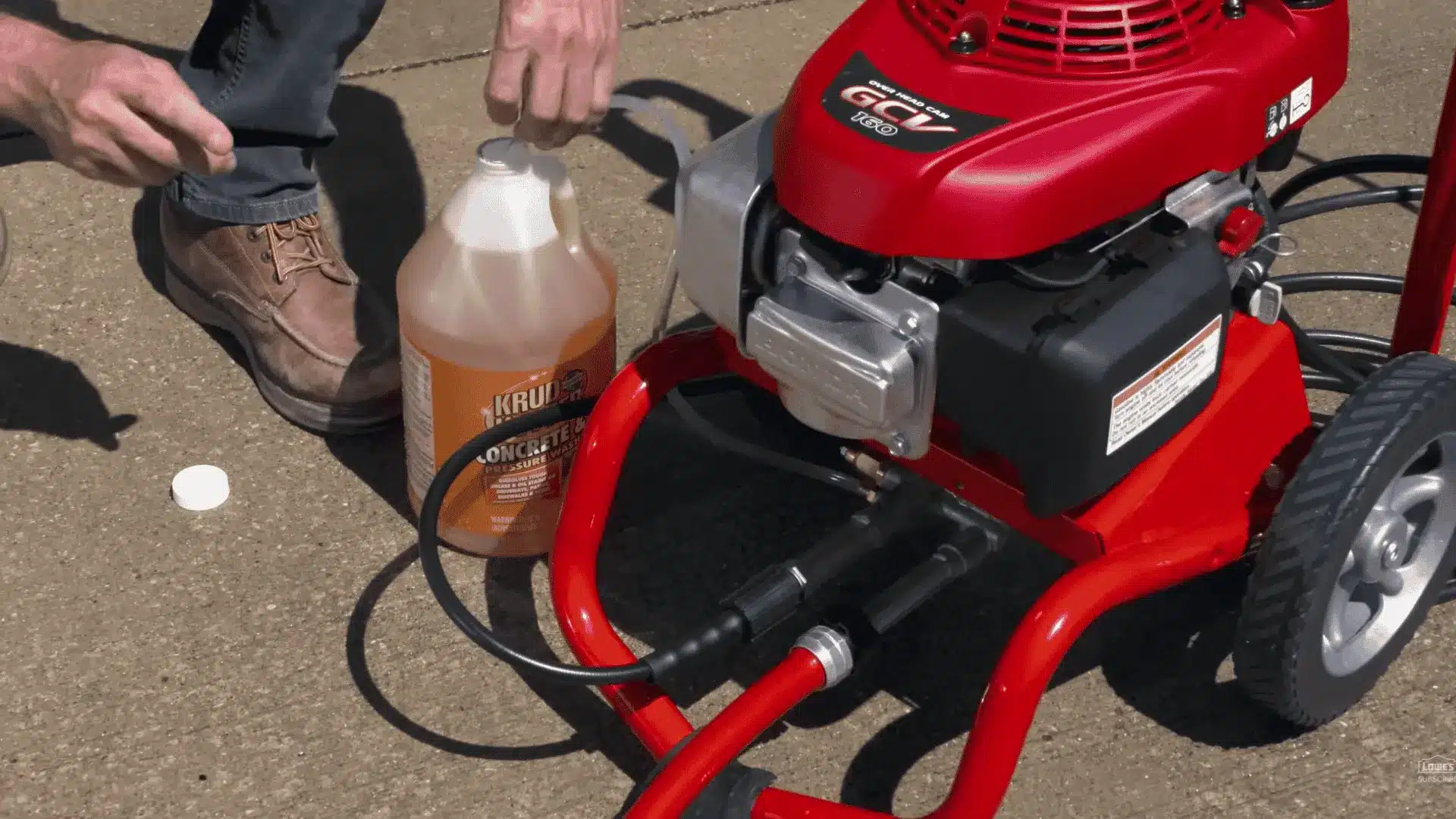
Start the pressure washer by pulling the starter cord firmly.
Work the spray wand back and forth in overlapping passes across the surface, keeping the tip eight to twenty-four inches away.
Let the cleaner soak into the stain for a few minutes, but do not let it dry out completely, as that can leave noticeable streaks on the concrete.
5. Rinse the Driveway
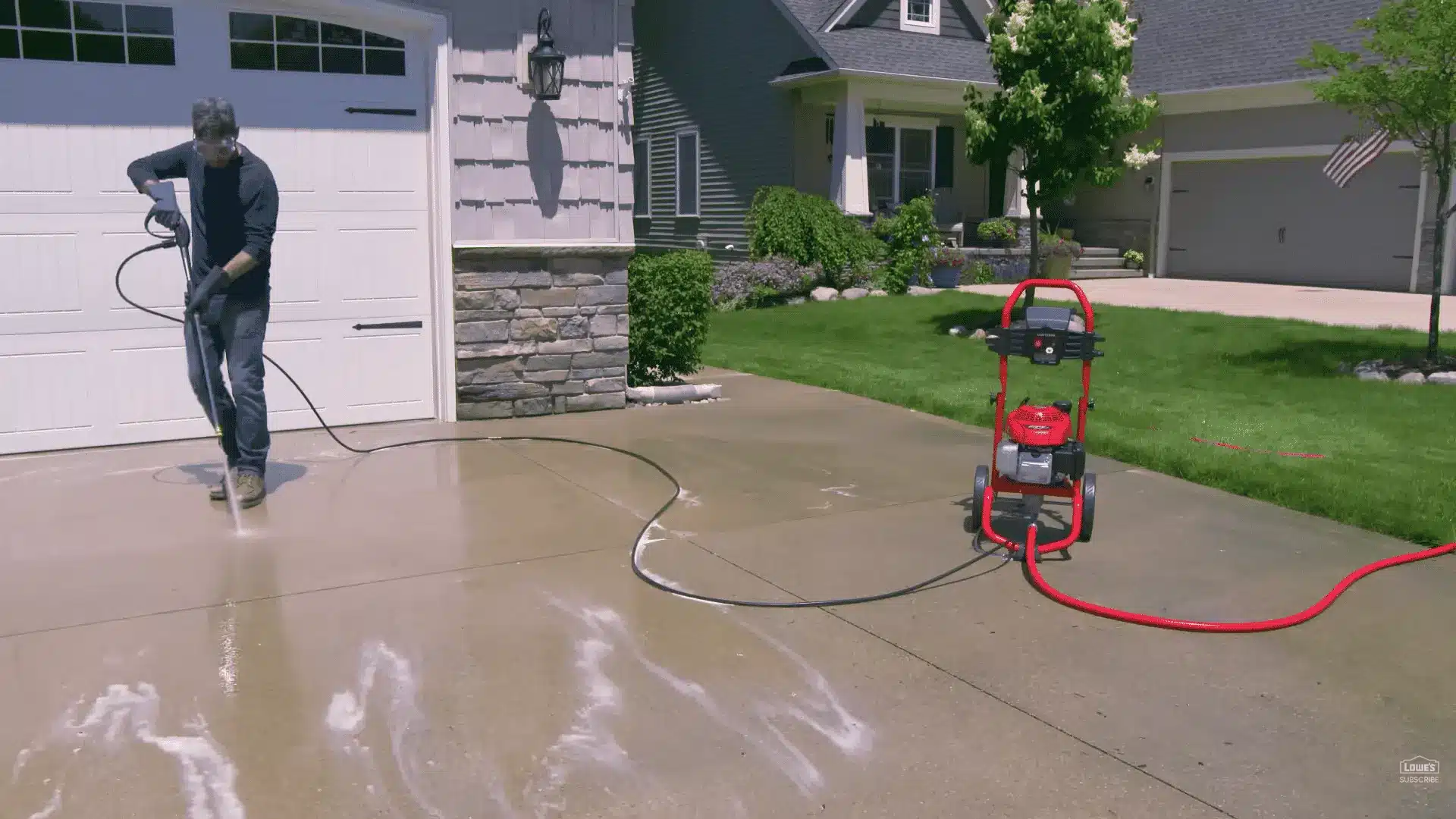
Switch to a low- or medium-pressure tip and begin rinsing the treated area. Test a small spot first to check your technique before rinsing the rest of the driveway.
Work in small sections at a time and be careful near plants or mulch beds.
It takes some practice to avoid leaving lines, but uneven spots usually blend in as you keep going.
6. Treat Stubborn Stains
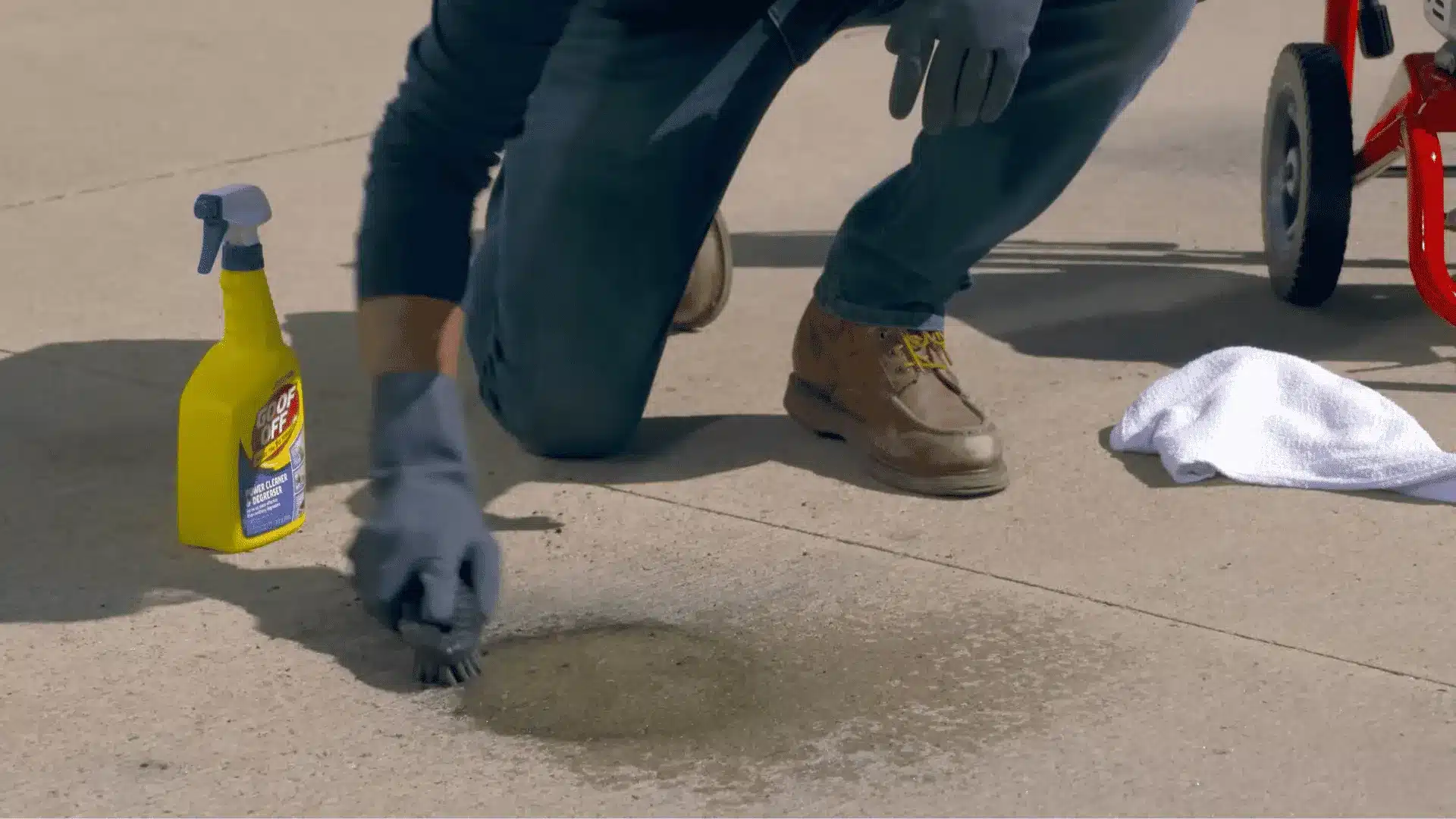
If a stain is still visible after your first rinse, go over that spot again with the pressure washer alone.
For tougher areas, apply detergent directly onto the stain, scrub it in firmly with a brush, then rinse once more before checking your progress.
Repeating this process on stubborn spots usually clears up what a single pass could not fully remove the first time around.
7. Let It Dry and Seal
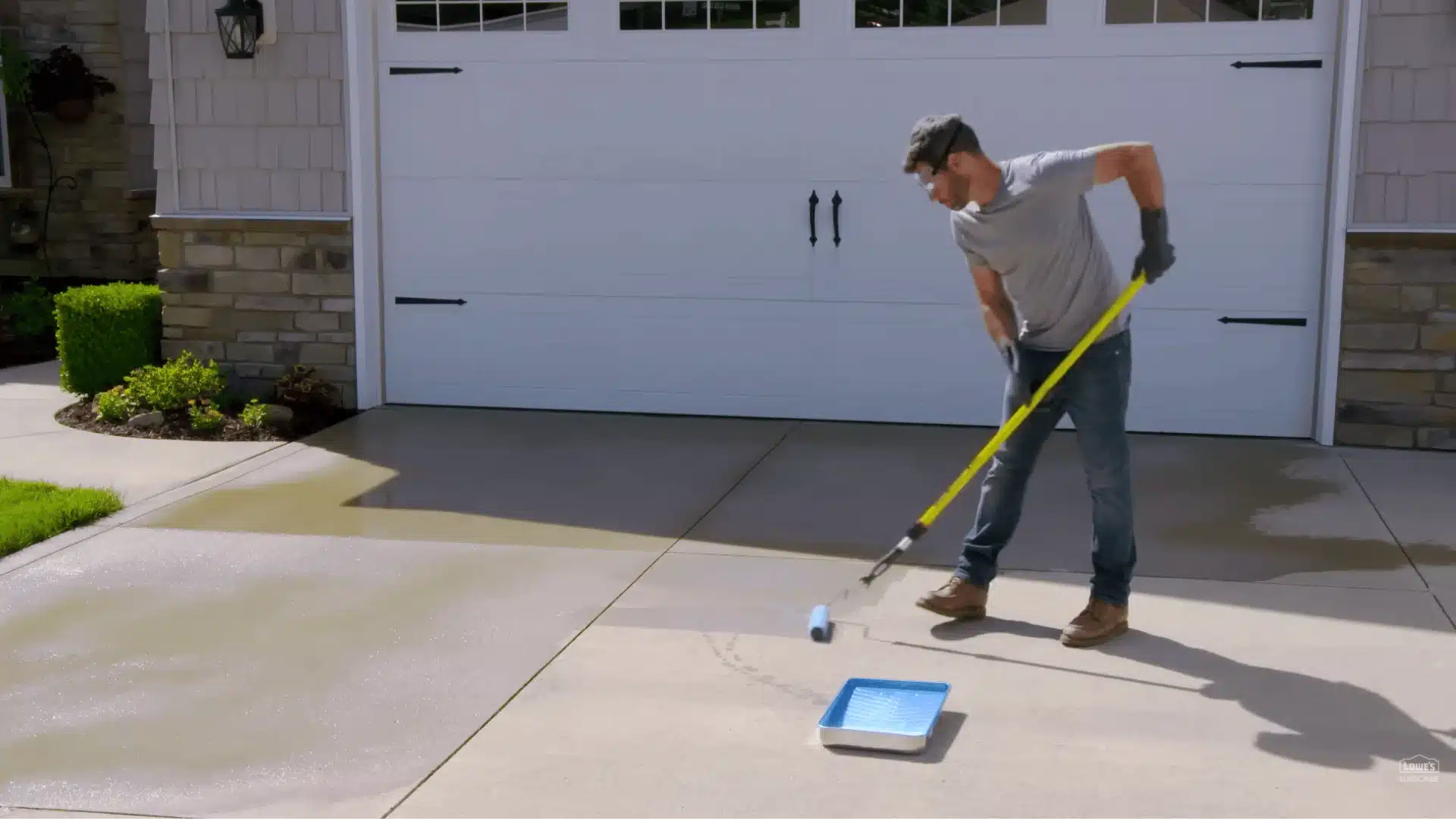
Once the entire surface looks clean, let the concrete dry completely for at least twenty-four hours before doing anything else to it.
At this point, consider applying a water repellent sealer to protect the driveway going forward.
A good sealer helps guard against future oil, dirt, and stains, keeping your concrete looking fresh, clean, and low-maintenance for much longer.
For a full visual walkthrough of the cleaning process, refer to this video from Lowe’s Home Improvement.
Store-Bought vs. DIY Solutions
A poultice handles almost any oil stain, but you might be wondering if all these steps are really necessary or if a store-bought product could get the job done just as well.
Here’s how the options stack up.
| Option | Best For | Cost | What to Know |
|---|---|---|---|
| Dish soap or kitty litter | Fresh spills and light stains | Low, items you likely already own | Give it two or three tries before assuming it won’t work |
| Commercial degreaser or poultice product | Stains that have set for months or keep coming back | Moderate | Check the label for a concrete-safe formula before buying |
| Professional concrete cleaner | Large stains, repeat failures, or sealed and decorative concrete | Highest | Ask for photos of past work before hiring |
Store-bought or DIY, the right product only gets you so far if you’re using it on the wrong type of surface.
Removing Oil Stains from Different Concrete Surfaces
Store-bought or DIY, the right product only gets you so far if you’re using it on the wrong type of surface. Here’s how to adjust your approach depending on where the stain actually is.
- Driveways and Garage Floors: Driveways and garage floors are usually bare, unsealed concrete, so they can withstand the strongest methods without worry. Degreasers, brake cleaner, and poultices all work well here since there’s no finish to protect. These surfaces see the most stains overall, since cars and equipment sit here for long stretches.
- Polished or Sealed Concrete Floors: Polished or sealed concrete floors require a gentler touch, as harsh solvents and scrubbing can strip the finish or leave dull patches. Stick to dish soap and warm water first, and test any degreaser on a hidden spot before using it on the stain. Skip mineral spirits and acetone for poultices here, since they can eat through sealants.
How to Prevent Future Oil Stains
Now that your stain is gone, let’s make sure it doesn’t come back. A few simple habits go a long way toward keeping your concrete stain-free for good.
Seal the Concrete
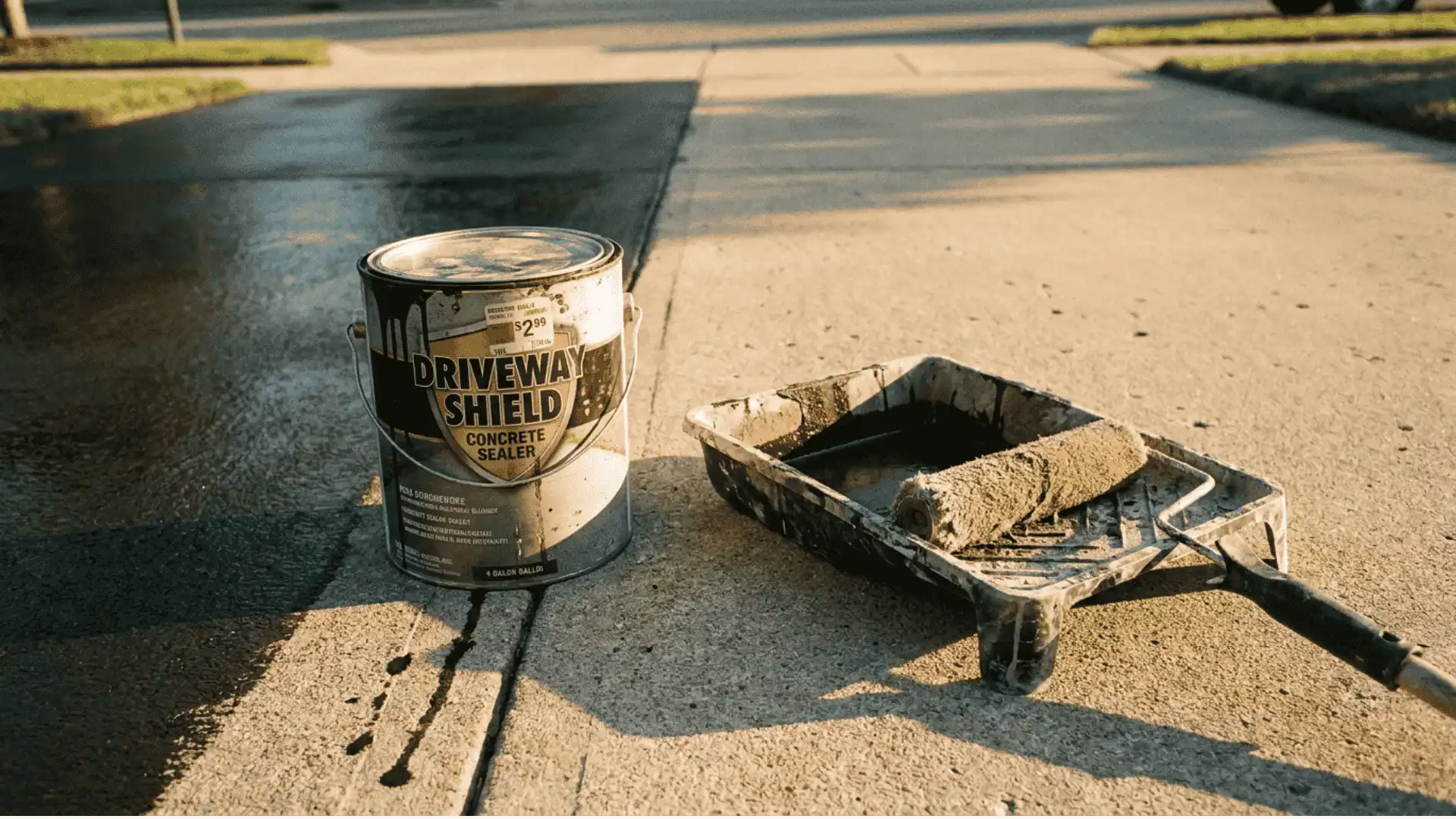
A concrete sealer fills the tiny pores that let oil soak deep, giving spills less chance to set into a stain.
Most sealers last two to three years before you need to reapply. It’s one of the best long-term steps you can take, especially for driveways and garage floors that see regular traffic.
Reapply sealer every few years to keep the protection strong.
Clean Spills Right Away
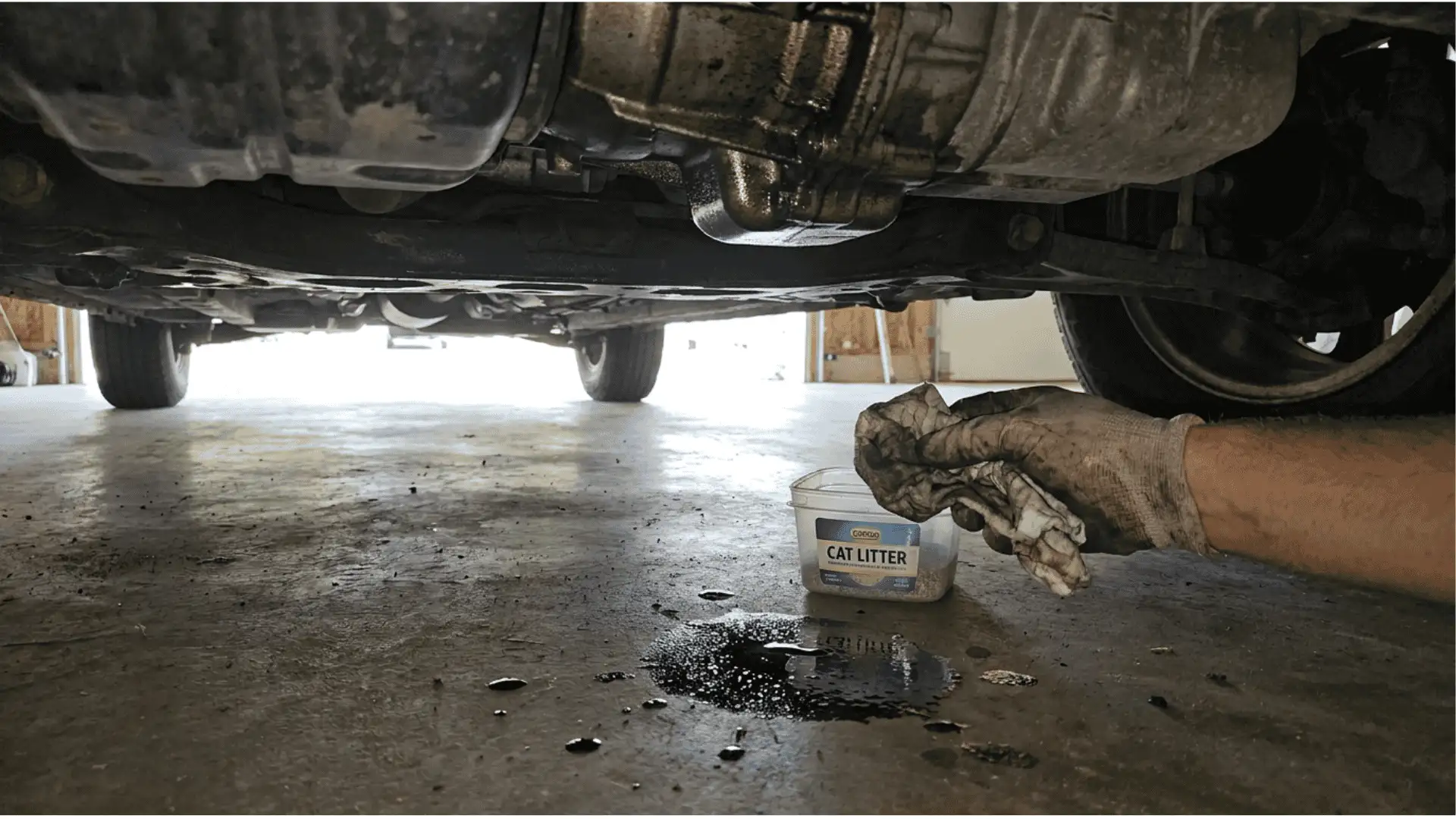
The faster you clean up a spill, the less chance it has of soaking in and leaving a mark. Keep cat litter or cornstarch nearby so you can cover a fresh spot the moment you notice it.
Waiting even a day can turn an easy fix into a stain that needs a poultice. Check under your car every so often for slow leaks you might miss.
Final Thoughts
Getting oil stains off concrete really comes down to timing. Catch a spill fast, and a little cat litter or dish soap usually clears it right up.
Let it sit for months, though, and you’ll need a poultice to pull it back out. Either way, you don’t need special tools or a big budget to get your concrete looking clean again.
The real trick is matching your method to your surface. Bare driveways can handle strong scrubbing and solvents, but sealed or polished floors need a gentler touch.
And once your concrete is clean, a sealer and a drip tray under your car can save you from having to do this all over again.
Give one of these methods a try on your own driveway or garage floor this weekend. Then let me know in the comments how it worked out for you.
Frequently Asked Questions
Does WD-40 Remove Oil Stains from Concrete?
WD-40 loosens fresh, light stains but leaves an oily residue behind. It works better as a first step before scrubbing with soap, not as a full fix.
Can Coca-Cola Remove Oil Stains from Concrete?
Coca-Cola’s acid can lighten small, fresh stains if left to sit for a few hours, but it rarely fully removes an old, set-in stain.
Can I Just Paint Over an Oil Stain Instead?
Paint often peels or bubbles over an oil stain since oil blocks proper adhesion. Clean and seal the concrete first, then paint for a lasting result.
How Long do Oil Stains Take to Fade on their Own?
Left untreated, oil stains can take months or years to fade, and many never fully disappear. Treating the stain quickly gives you a much faster result.

With a Master’s in Architecture from the University of California, Berkeley, Alexander Martin has dedicated the last 18 years to enhancing outdoor living through thoughtful and robust structure design. His career kicked off in urban planning, giving him a unique perspective on integrating structures into diverse environments. In 2019, Alexander brought his expertise to our website, offering insights into creating versatile outdoor spaces. Since then, he has been the lead advisor for our outdoor design projects and is known for his ability to merge functionality with environmental consciousness. Alexander enjoys rock climbing outside of work and participates in community development projects, activities that reflect his passion for the outdoors and sustainable design.