
When most people walk into a room, they notice the walls, the furniture, the floors, but rarely do they look up. That’s exactly why I always tell my clients: don’t forget the fifth wall.
The ceiling is one of the most underused surfaces in home design, and when you treat it with intention, everything changes.
A thoughtfully designed ceiling can make a small room feel expansive, a dark room feel warm, and a plain room feel architecturally rich.
It shapes how light moves through a space, influences the mood you experience, and frames the entire visual story of a room.
If you’re renovating a living room or simply refreshing a bedroom, your room ceiling design deserves serious attention.
In this guide, I’ll walk you through the best modern ceiling styles from clean minimalist looks to coffered panels so you can find the design that works for your space, budget, and lifestyle.
Choosing the Right Ceiling for Your Room
Your ceiling shapes the mood, warmth, and personality of every room in your home. Getting it right starts with knowing your space.
- Consider measurements: High ceilings can handle bold coffered or tray designs, while smaller rooms benefit from clean, matte finishes that keep things feeling open and airy.
- Match the design: Match the designs to the room’s purpose. Warm wooden ceilings create coziness in bedrooms, polished POP detailing elevates living areas, and simple matte finishes keep home offices feeling focused and clear.
- Budget:Real wood is beautiful but needs regular sealing and care, while gypsum and composite options are durable, low-maintenance, and budget-friendly over the long run.
- Balance bold with subtle: Go dramatic in dining rooms and living spaces where you want to impress: keep things calm and understated in bedrooms and bathrooms where comfort comes first.
The right ceiling doesn’t just cover a room, it completes it.
Modern Room Ceiling Designs
Here are several distinct ceiling‑design ideas that can beautifully improve and upgrade the overall look of your rooms:
1. POP Ceiling with Curves
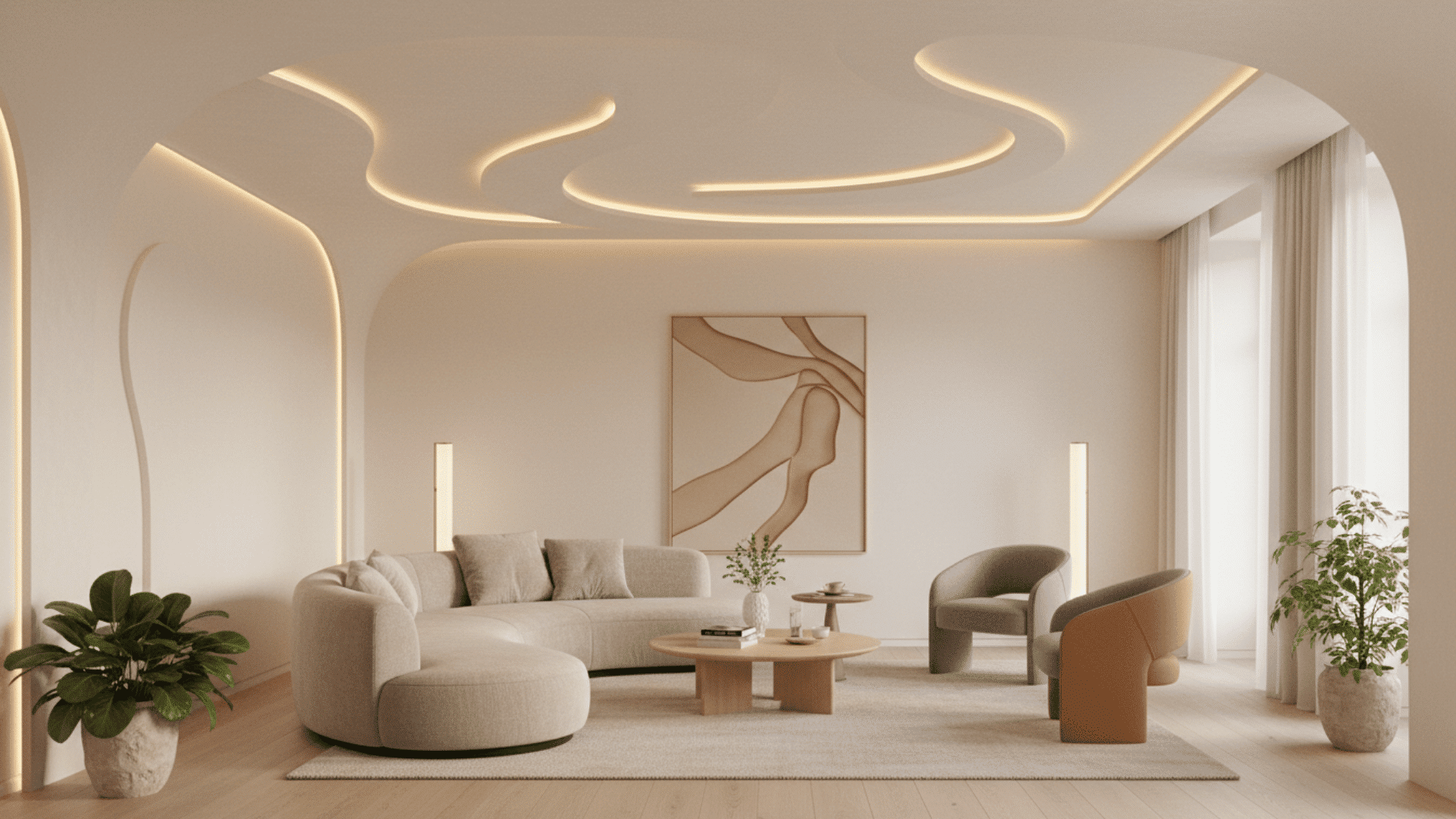
Plaster of Paris is one of the most workable ceiling materials available, and curved POP designs take full advantage of that flexibility.
Rather than the hard lines of rectangular panels, a curved POP ceiling introduces soft arches and flowing edges, making a room feel more organic and welcoming.
This style works beautifully in living rooms and master bedrooms where visual softness complements the overall mood.
The material can be painted in any finish, allowing you to seamlessly match the curves to your existing color palette.
2. Multi-Step Layered False Ceiling
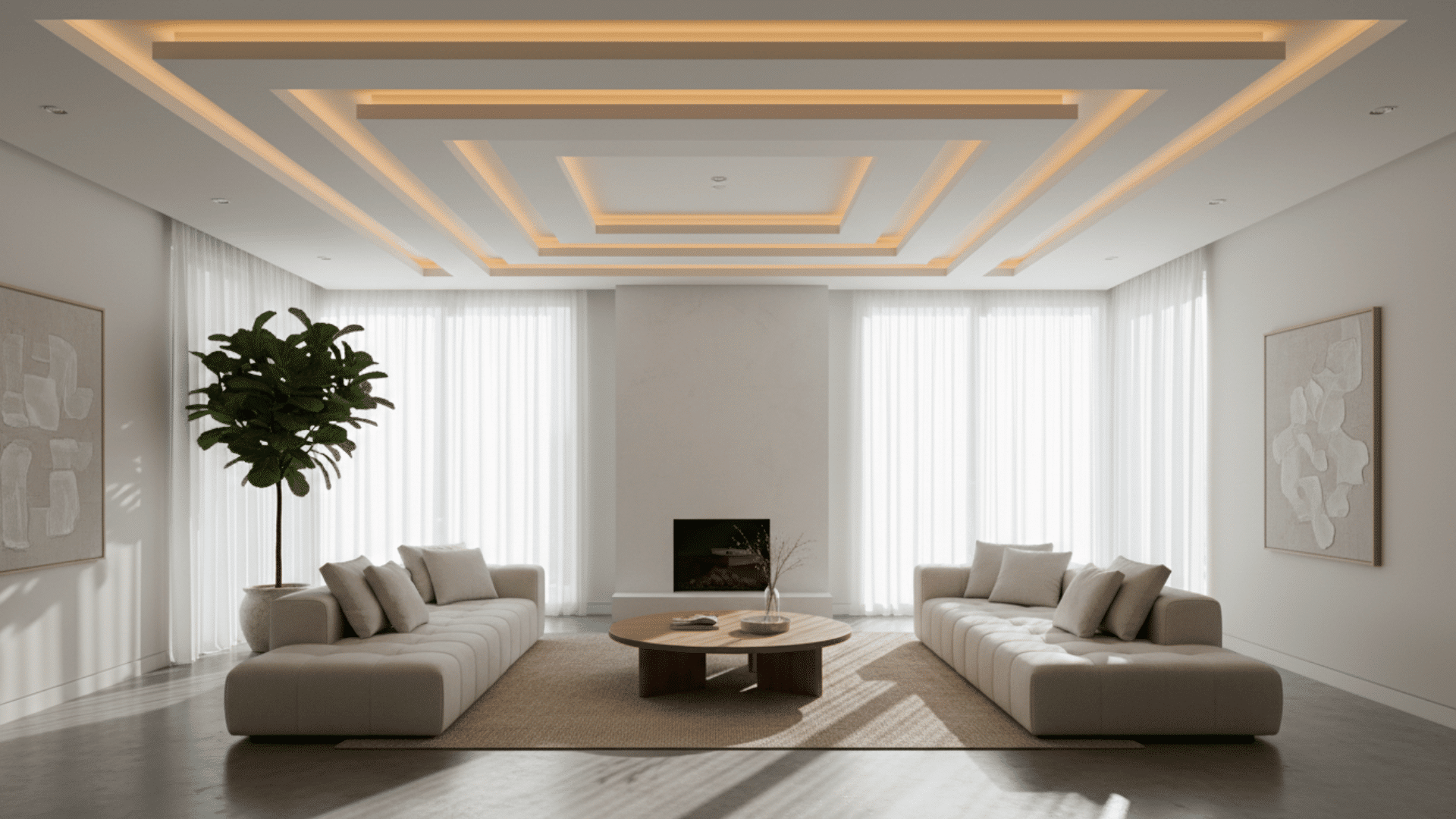
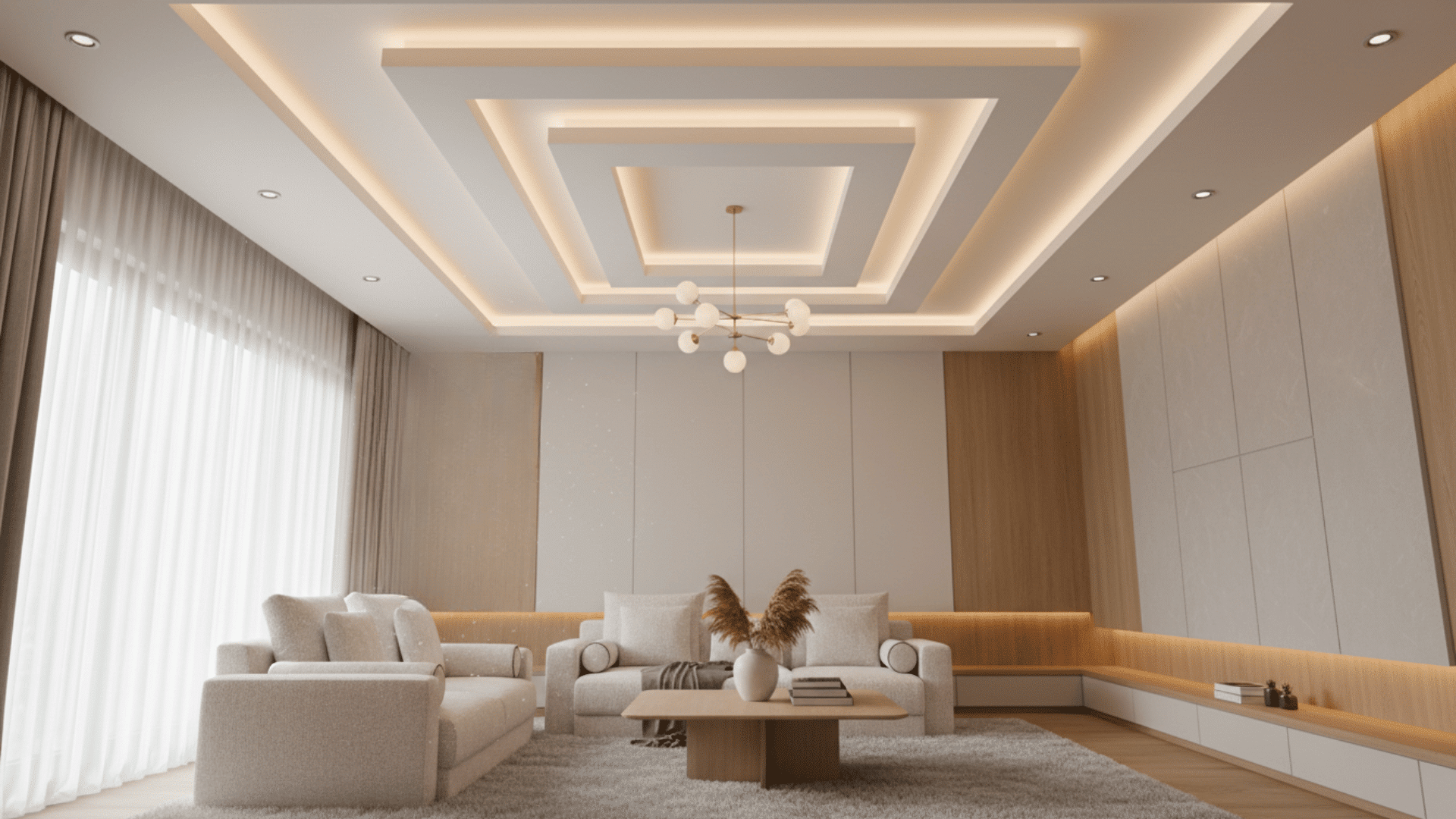
A layered false ceiling uses two or more recessed levels to create architectural depth that a single flat surface cannot achieve.
Each step down draws the eye inward toward the center of the room and naturally creates channels for different types of lighting, cove strips on the outer level, and recessed spots on the inner.
The result is a ceiling that feels designed rather than finished. This concept is best reserved for rooms with ceilings 10 feet or higher, where the layering will add drama rather than compression.
3. Gypsum Board False Ceiling
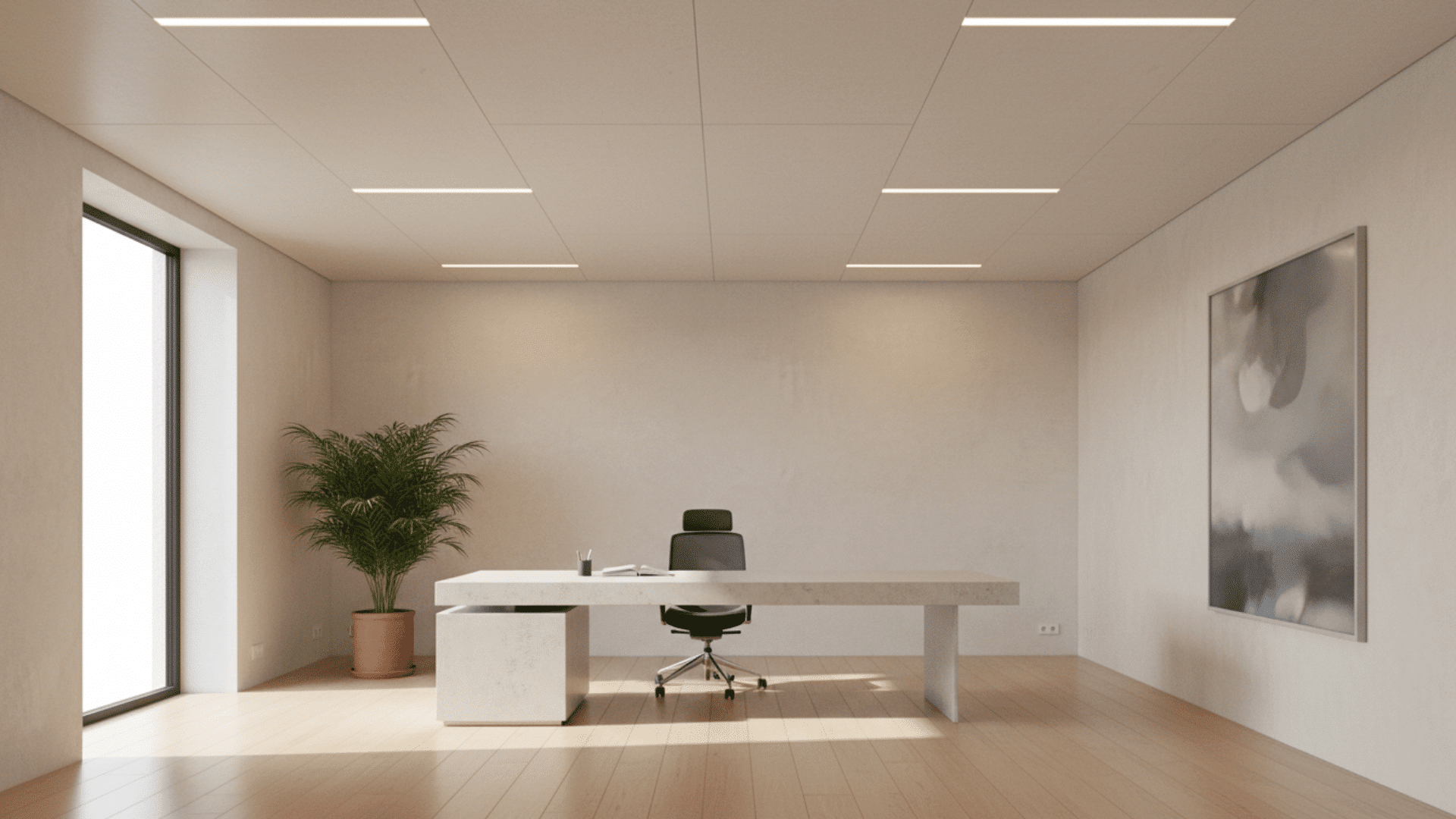
Gypsum board is the workhorse of modern false ceiling designs, fast to install, smooth to finish, and versatile enough to support almost any lighting configuration.
Unlike POP, which requires more skilled craftsmanship, gypsum board panels come in standardized sizes that speed up the installation process without sacrificing the clean, painted result.
It is the ideal choice for large rooms, home offices, and any space where a consistent, low-maintenance surface is the priority.
4. False Ceiling with Cove Lighting Border
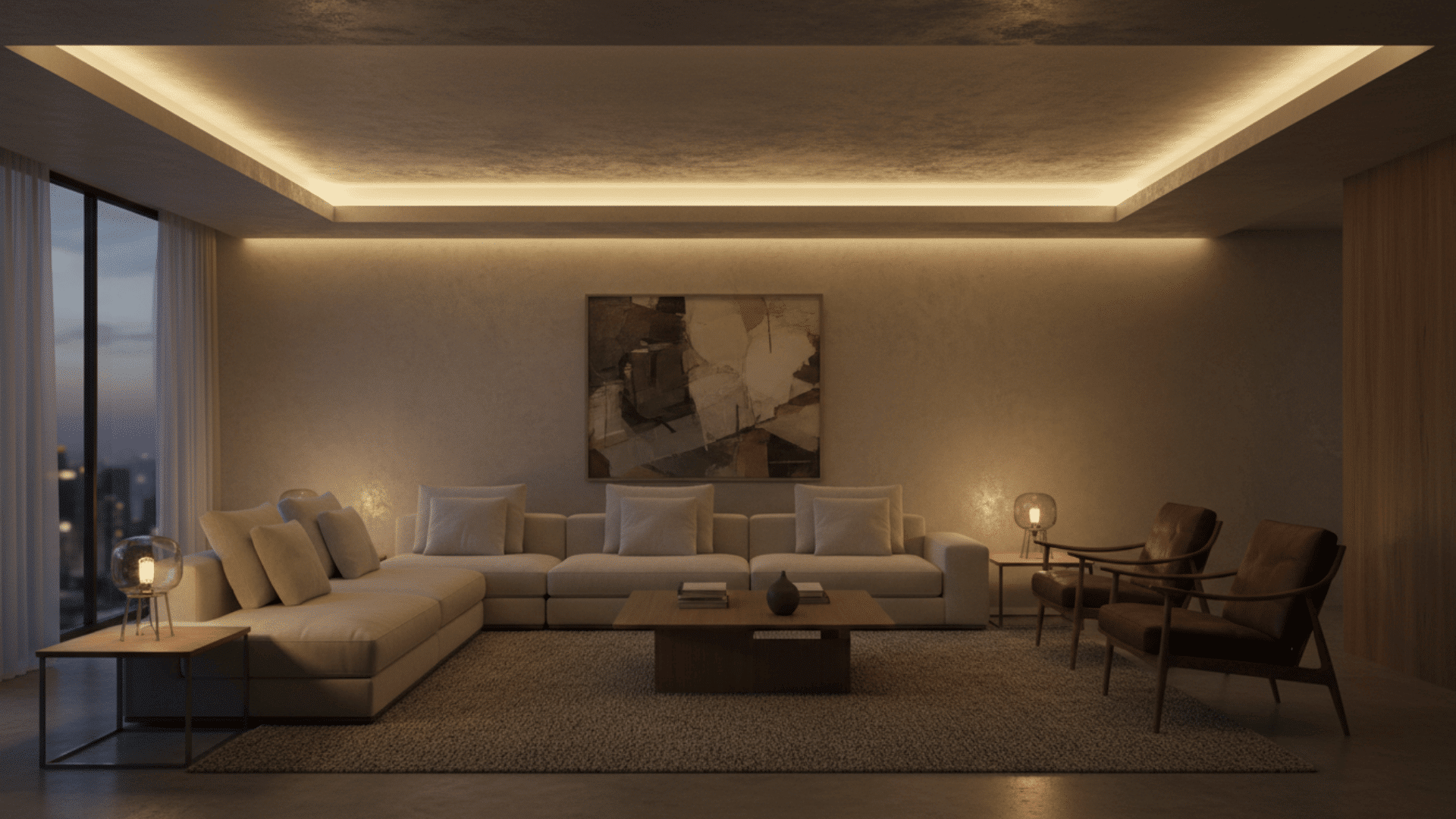
This is one of the most requested false ceiling designs in contemporary residential projects.
A single-level false ceiling is installed with an inward-facing recess running along its perimeter, inside which LED strip lights are tucked completely out of view.
The light washes upward onto the ceiling without any visible source, creating a soft, luminous border that feels warm and atmospheric rather than functional.
In the evening, this design transforms an ordinary room into something genuinely mood-driven.
5. Geometric False Ceiling Design
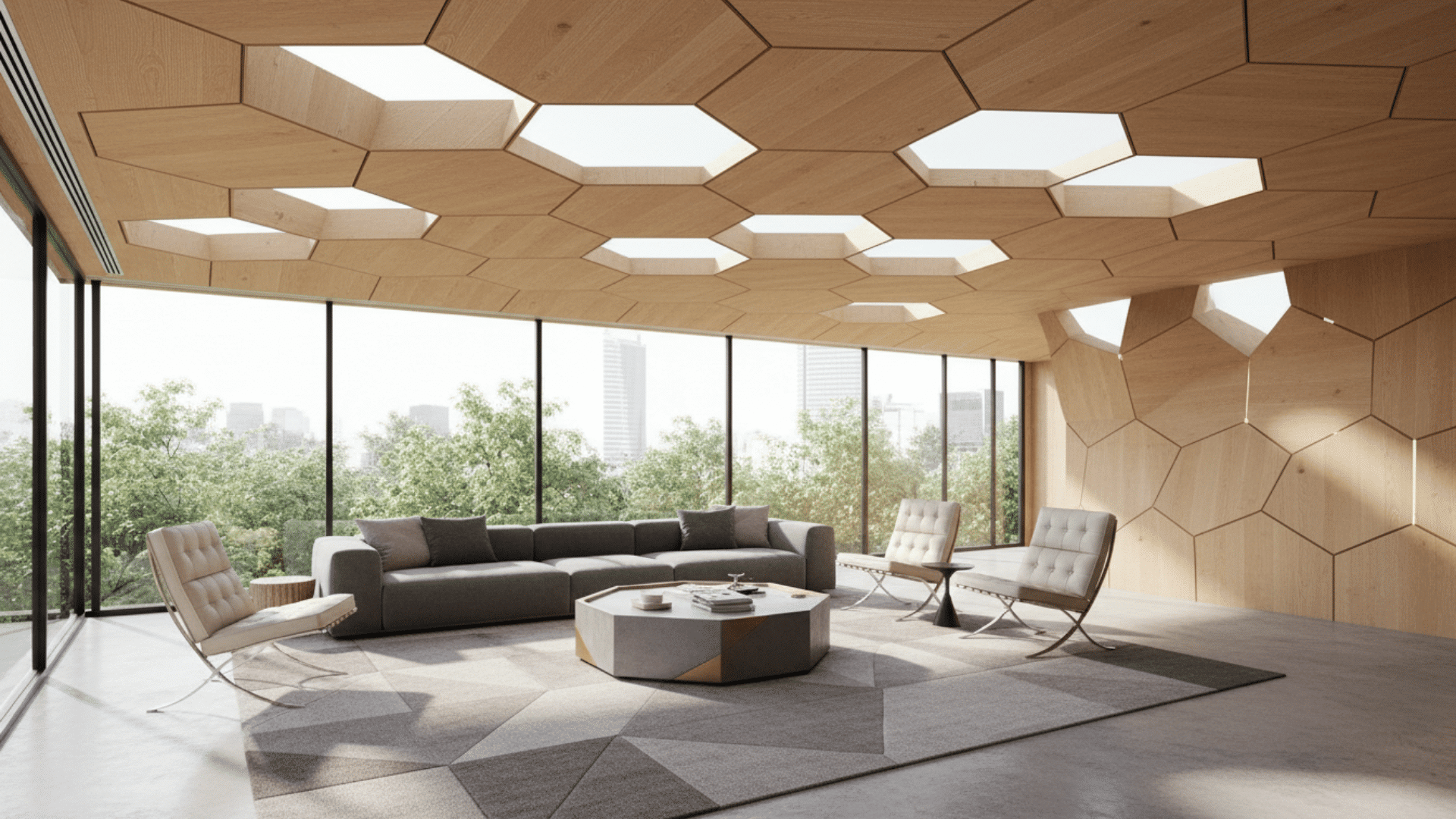
For rooms where personality and boldness are the goal, a geometric false ceiling uses angular panels, hexagonal cutouts, or triangular forms arranged across the ceiling plane.
This style bridges interior design and architectural art. Materials like POP combined with metal framing allow for crisp edges and precise angles.
Keep the wall treatments and furniture relatively calm when using a geometric ceiling. The ceiling itself carries the visual weight and needs room to breathe.
6. PVC Panel False Ceiling
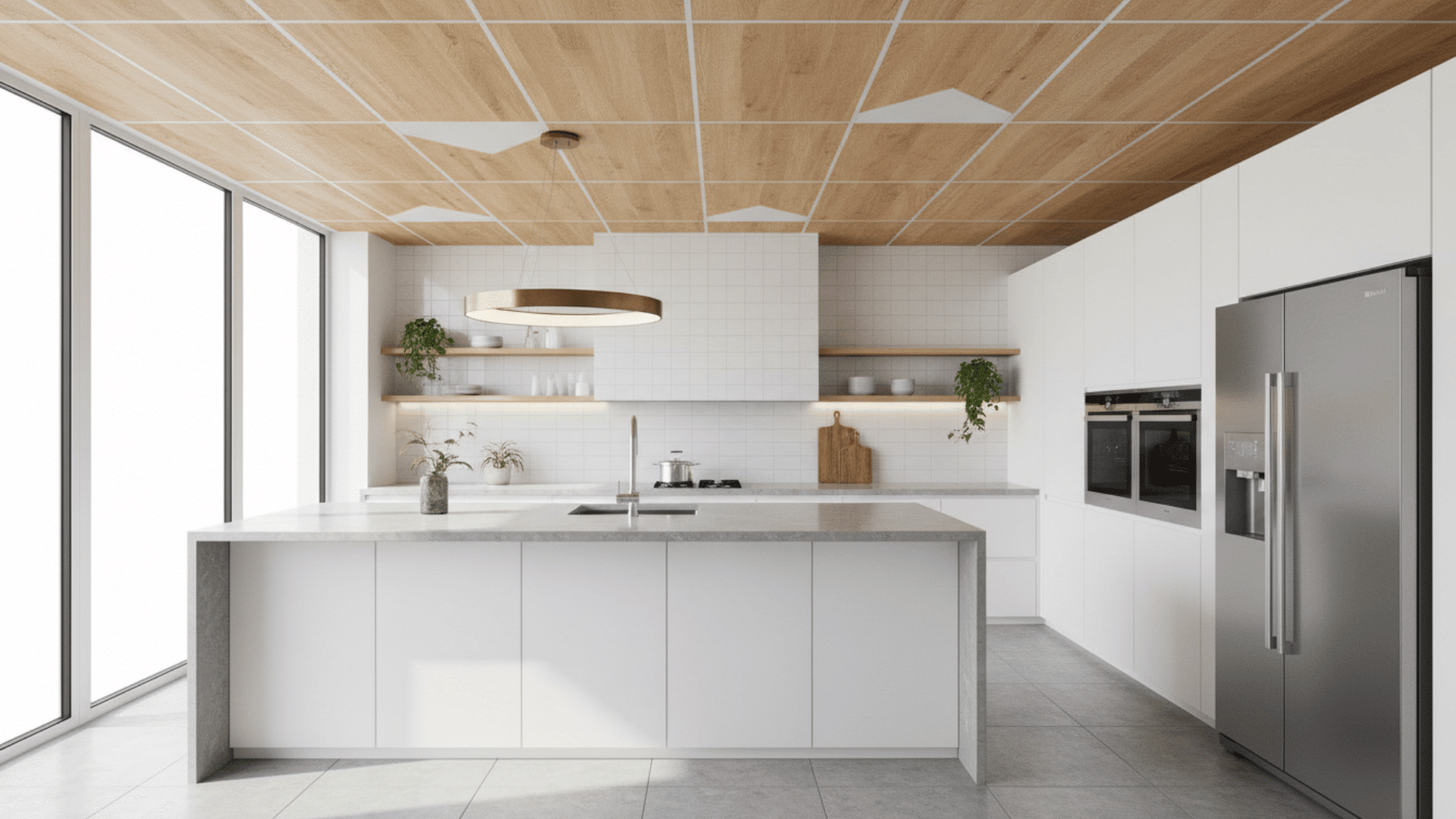
PVC ceiling panels have changed far beyond the plain white tiles of earlier decades.
Modern PVC panels are available in woodgrain textures, matte solids, metallic finishes, and subtle geometric patterns, all in a material that is completely water-resistant, termite-proof, and wipe-clean.
This makes PVC false ceilings the smart, practical choice for kitchens, bathrooms, laundry rooms, and any space where moisture, heat, or humidity is a concern.
The panels click or slot into a lightweight grid frame, making installation straightforward.
7. Wooden Slat Ceiling
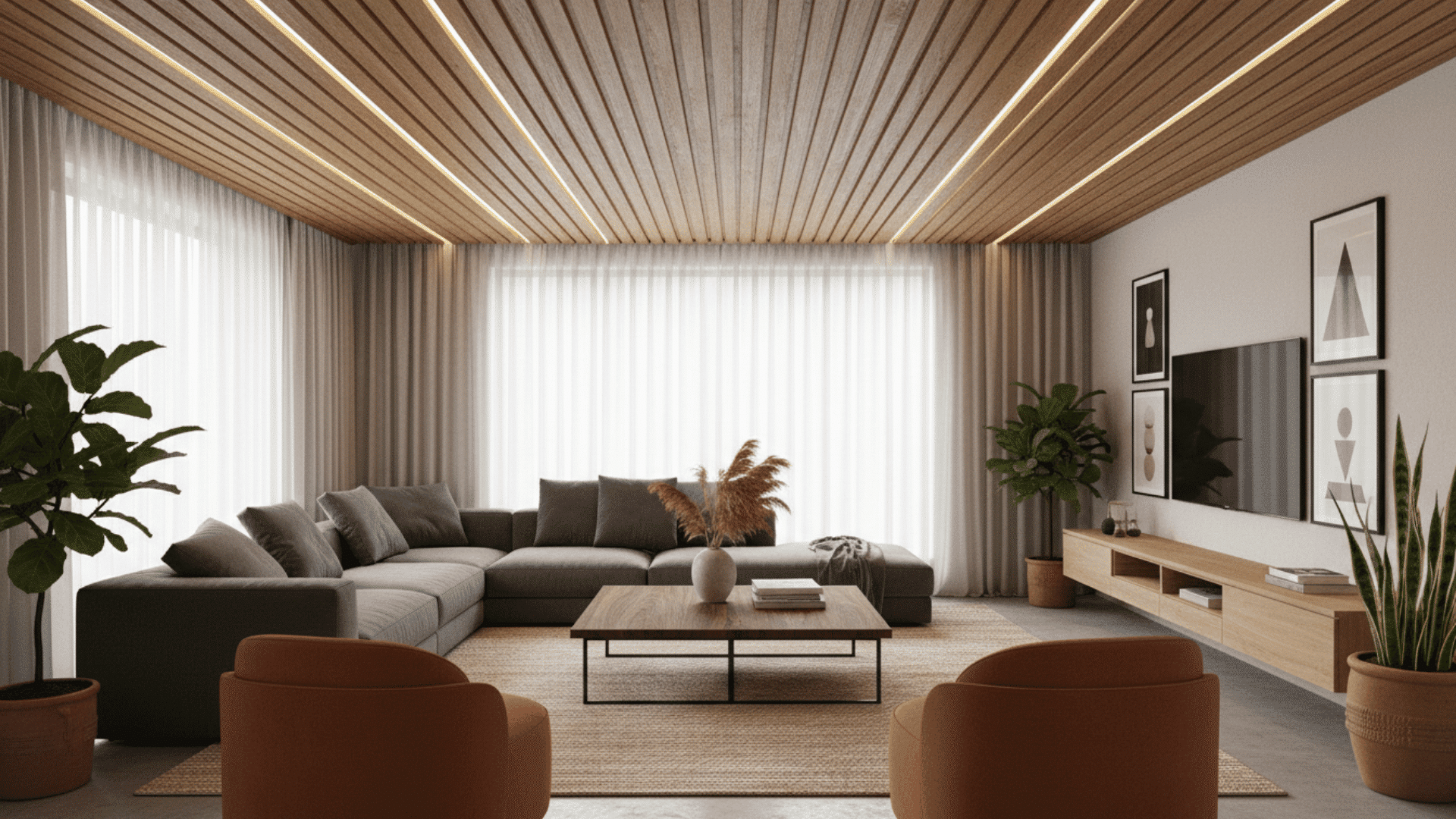
A wooden slat ceiling uses narrow planks installed in parallel rows with deliberate gaps between them.
The spacing allows glimpses of the surface behind, often painted black or dark grey, to enhance the contrast, while creating a rhythmic visual pattern that is both contemporary and textural.
When LED strips are run behind the slats, the effect becomes layered and atmospheric. This style works equally well in living rooms, home offices, and hotel-style bedrooms.
8. Exposed Wooden Beam Ceiling
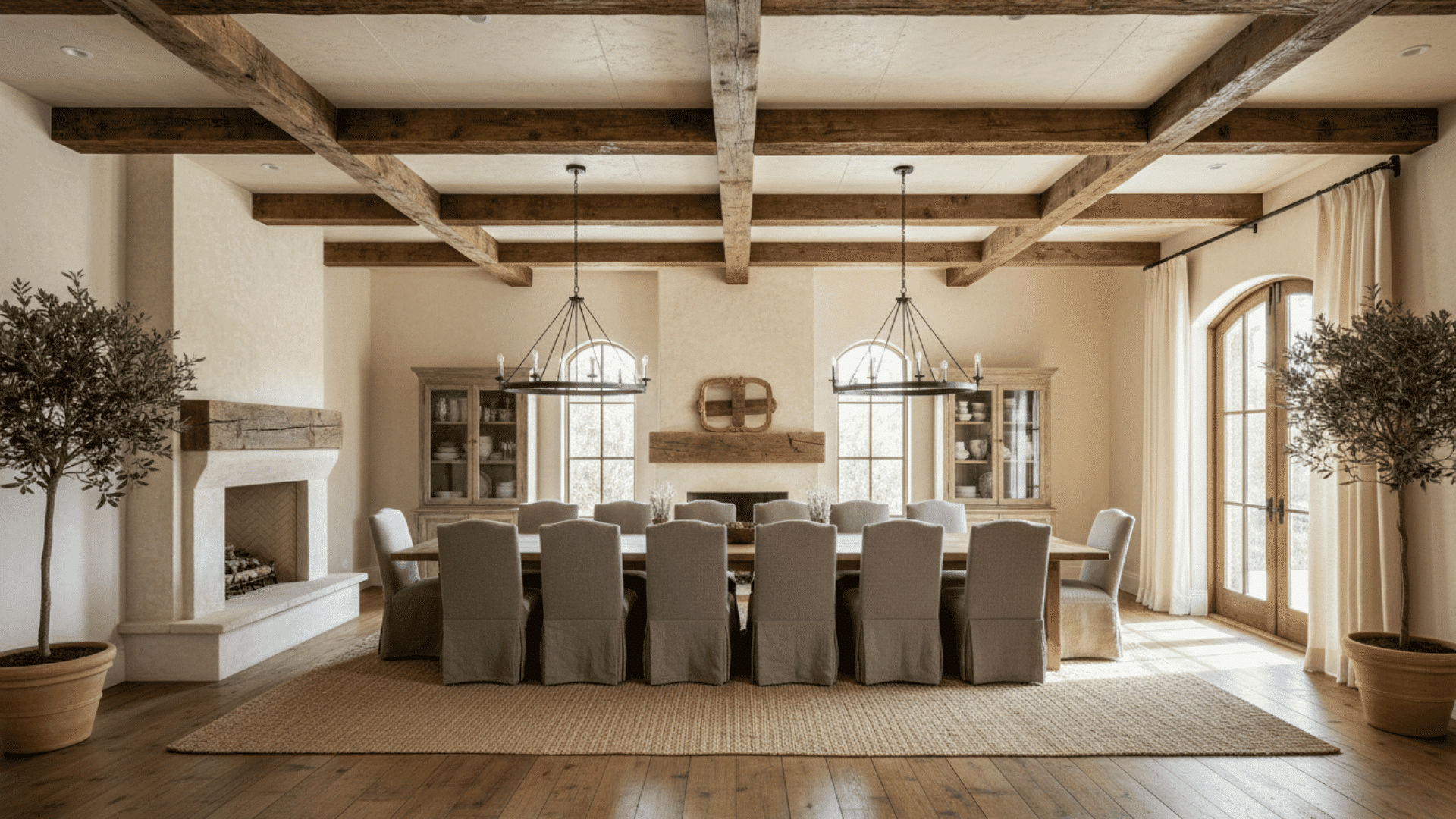
Exposed wooden beams are one of the most classic ceiling treatments in residential design.
Even if the beams are original structural elements or purely decorative additions, they inject an immediate sense of history and craft into a room.
Light-toned beams against a white ceiling feel clean and Scandinavian. Dark-stained beams against warm grey plaster feel grounded and substantial.
The key is to keep the beam profile consistent: random sizing feels accidental, while a disciplined rhythm feels architectural.
9. Full Wood Plank Ceiling
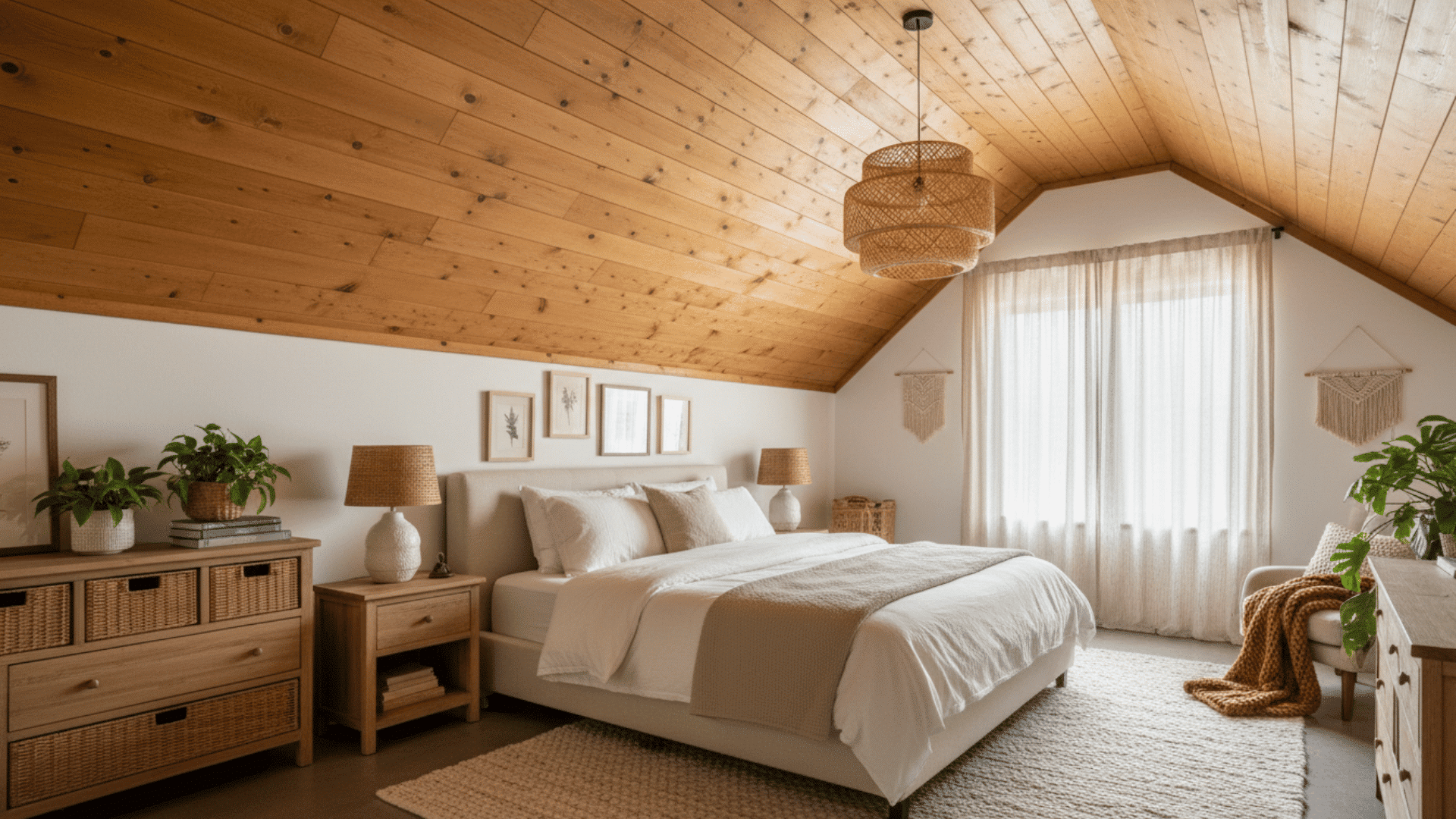
Covering the entire ceiling surface with tongue-and-groove or shiplap wooden planks creates one of the most immersive and cozy ceiling experiences available.
The visual effect wraps the room in warmth from above and works particularly well in bedrooms, reading rooms, and cabins. Choose lighter woods, such as pine, birch, or whitewashed oak, for an airy, contemporary finish.
Darker woods like walnut or mahogany are better suited to rooms with generous natural light, where the depth of tone will not feel heavy.
10. Fluted Wood Panel Ceiling
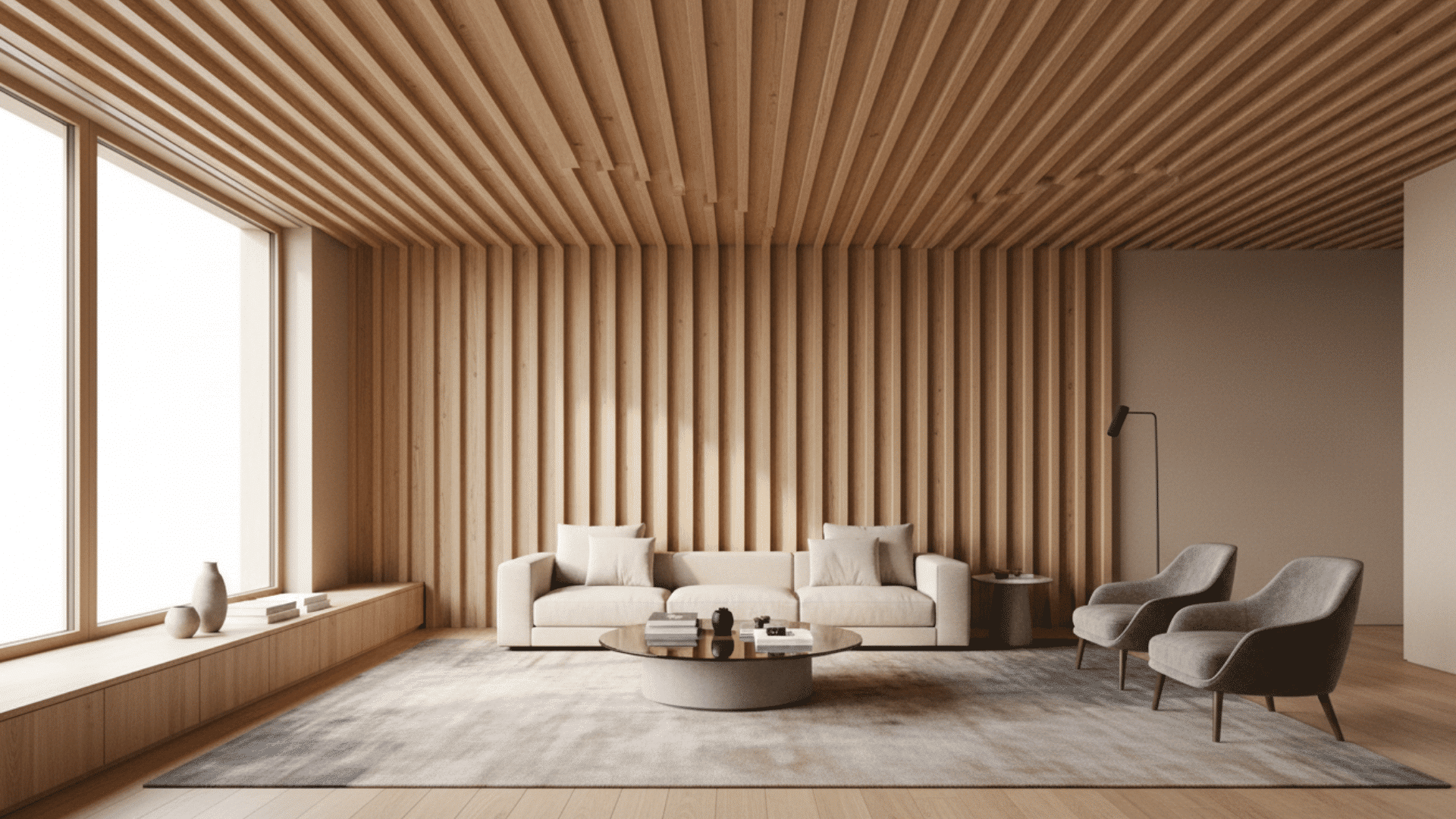
Fluted panels planks with parallel grooves running lengthwise along the face add a layer of texture and visual rhythm that flat planks cannot provide.
Each groove catches light differently depending on the time of day and the angle of the source, giving the ceiling a dynamic, living quality.
This is a refined, current take on wooden ceiling design, increasingly popular in high-end residential and boutique hospitality projects. Pair it with matte walls and minimal furniture for the strongest effect.
11. Wood and White Combination Ceiling
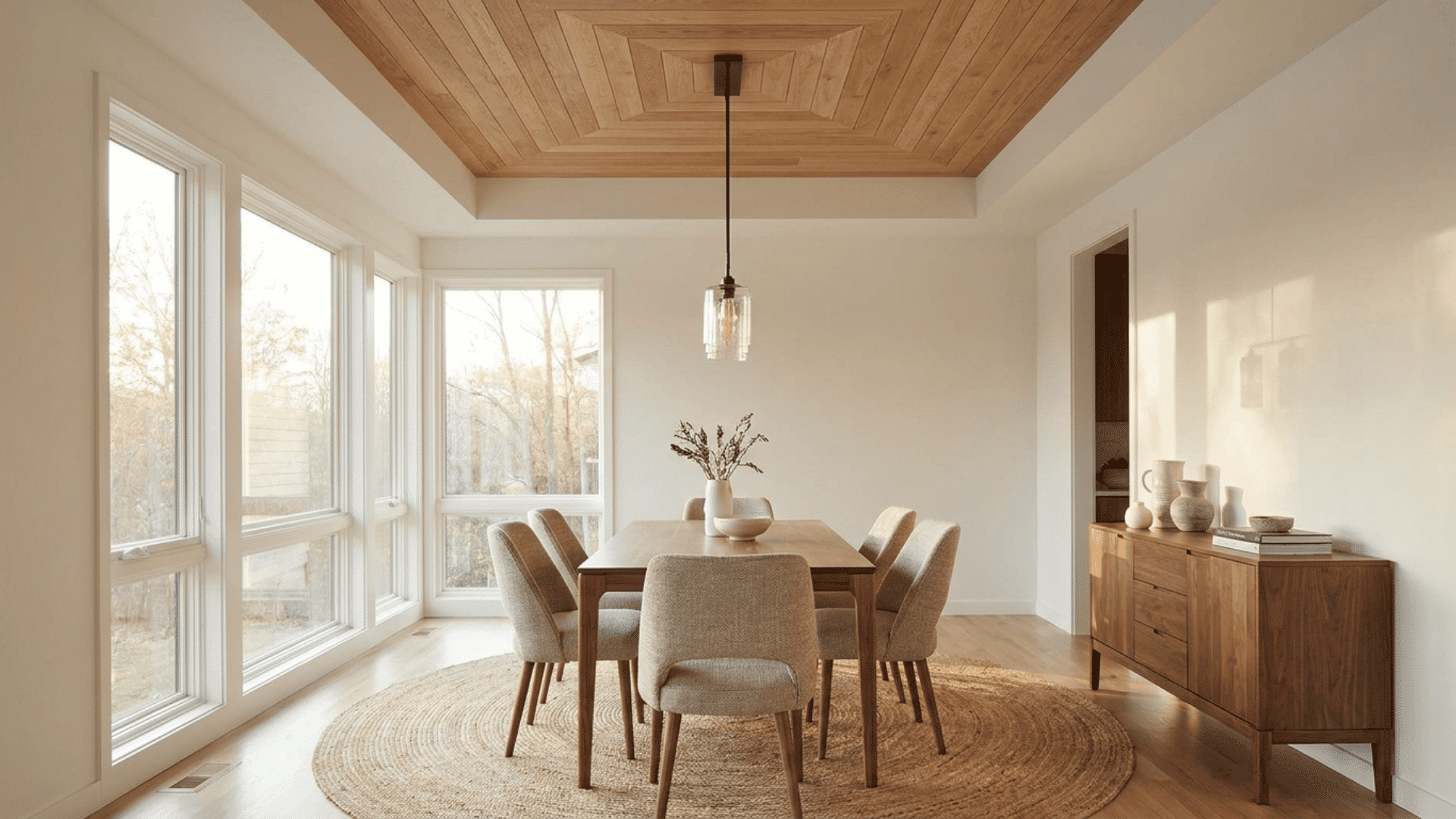
Rather than committing the entire ceiling surface to wood, a combination ceiling uses white-painted sections as a neutral base while introducing wooden elements, a border of planks as deliberate accents.
This approach achieves the warmth and texture of wood without the visual weight of a fully clad ceiling.
It is particularly effective in rooms where the ceiling height is 9 feet or less, where a fully wooden ceiling might feel heavy.
The contrast between white and natural wood is clean, contemporary, and endlessly adaptable.
12. Classic Coffered Ceiling
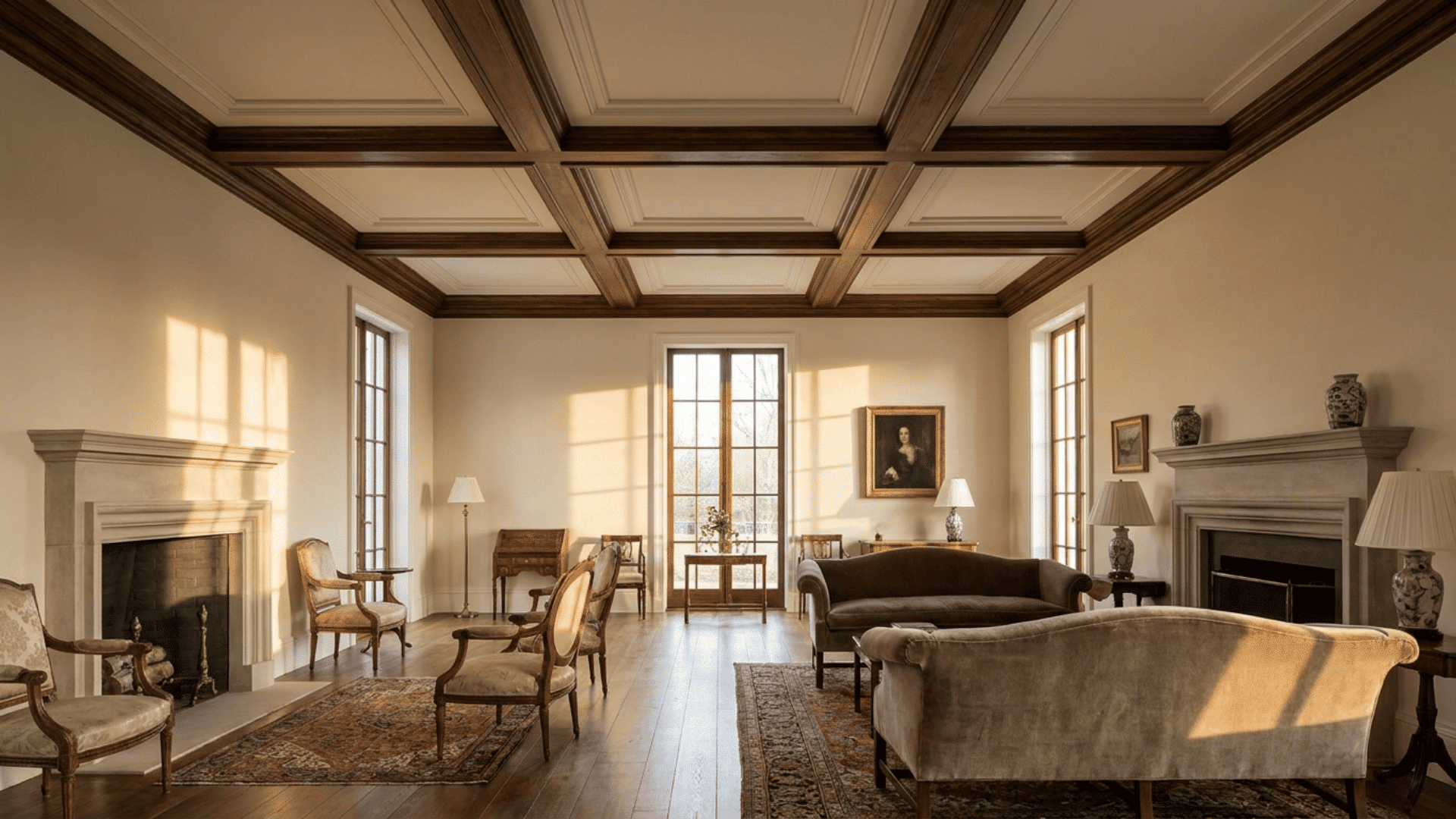
A coffered ceiling consists of a grid of recessed square or rectangular panels, each bordered by raised beams or moldings.
The effect is unmistakably rich, three-dimensional, precise, and full of shadow and depth that changes as natural light moves through the room.
Originating in Renaissance and classical architecture, the coffered ceiling has earned its place as the gold standard of traditional ceiling look.
In modern interpretations, the coffering is simplified: cleaner edges, less ornate molding, and deeper recesses that feel architectural rather than decorative.
13. Tray Ceiling with Chandelier
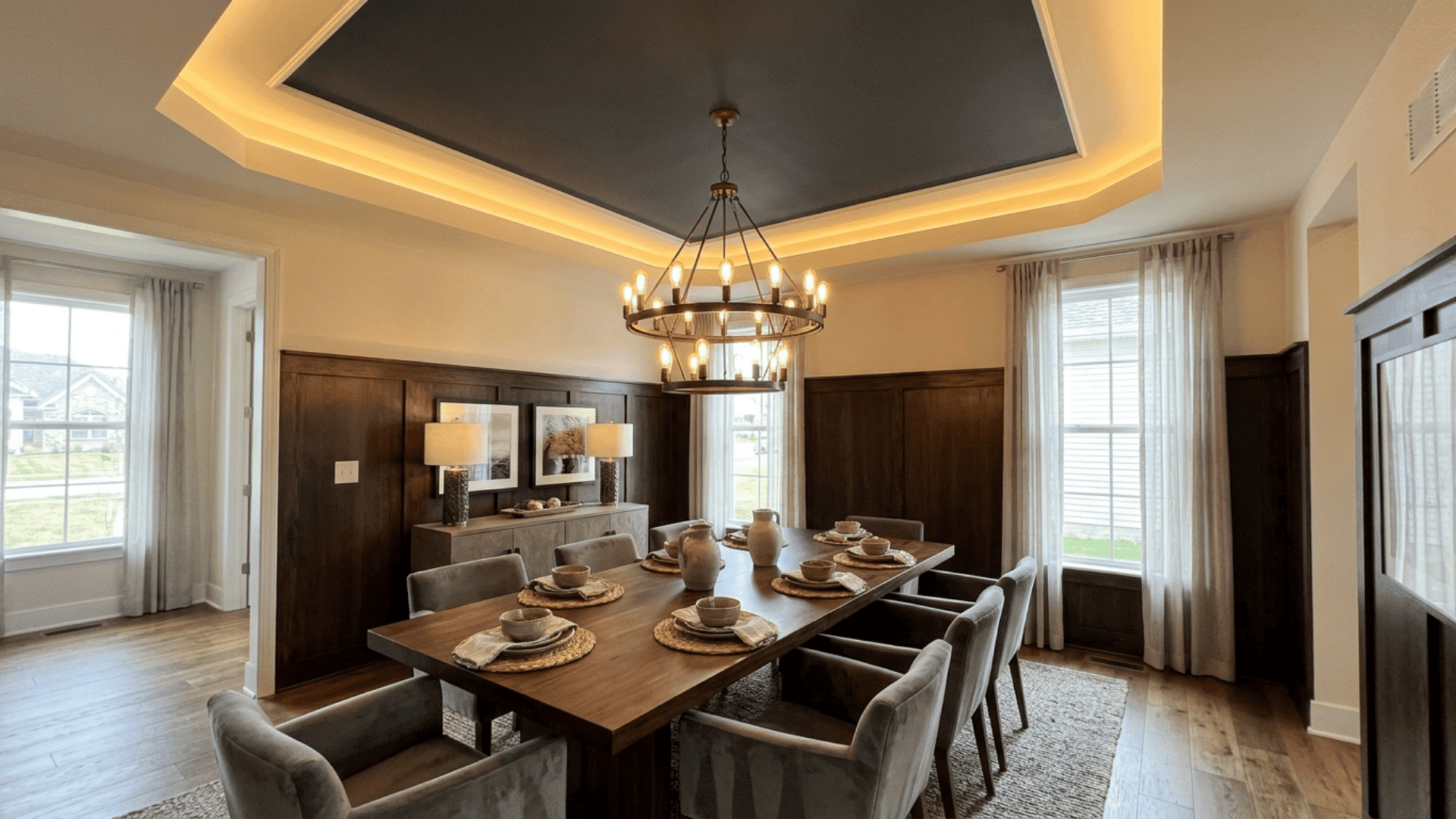
The tray ceiling, a central section that rises above the surrounding border, is one of the most versatile ceiling designs for bedrooms and dining rooms.
When a chandelier is centered within the tray, the combination creates a natural focal point that draws the eye upward and adds formality to the space.
For the strongest visual impact, paint the interior of the tray a contrasting color, two to three shades deeper than the outer border, and hang the chandelier so its lowest point is at least 7 feet above the finished floor.
14. Double Tray Ceiling
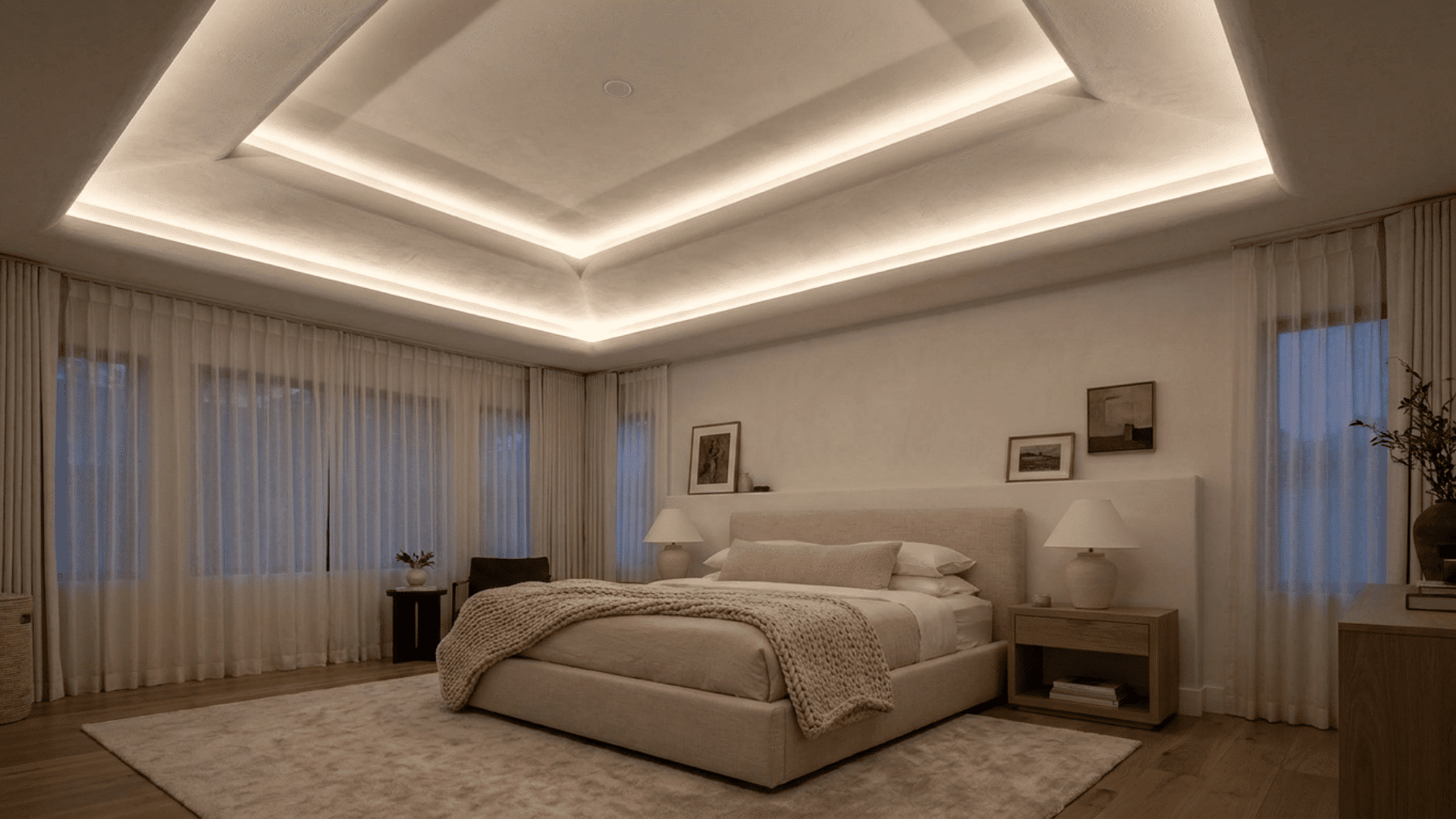
Where a single tray creates a single level of depth, a double tray adds a second recessed step inside the first, creating more architectural layers in the ceiling plane.
This design works particularly well in master bedrooms and formal living rooms where the ceiling is both a design feature and a way of defining the primary zone of the room.
Cove lighting installed along the inner edge of each tray level provides layered ambient illumination, which can be dimmed independently to create different moods.
15. Shallow Coffered Ceiling for Modern Homes
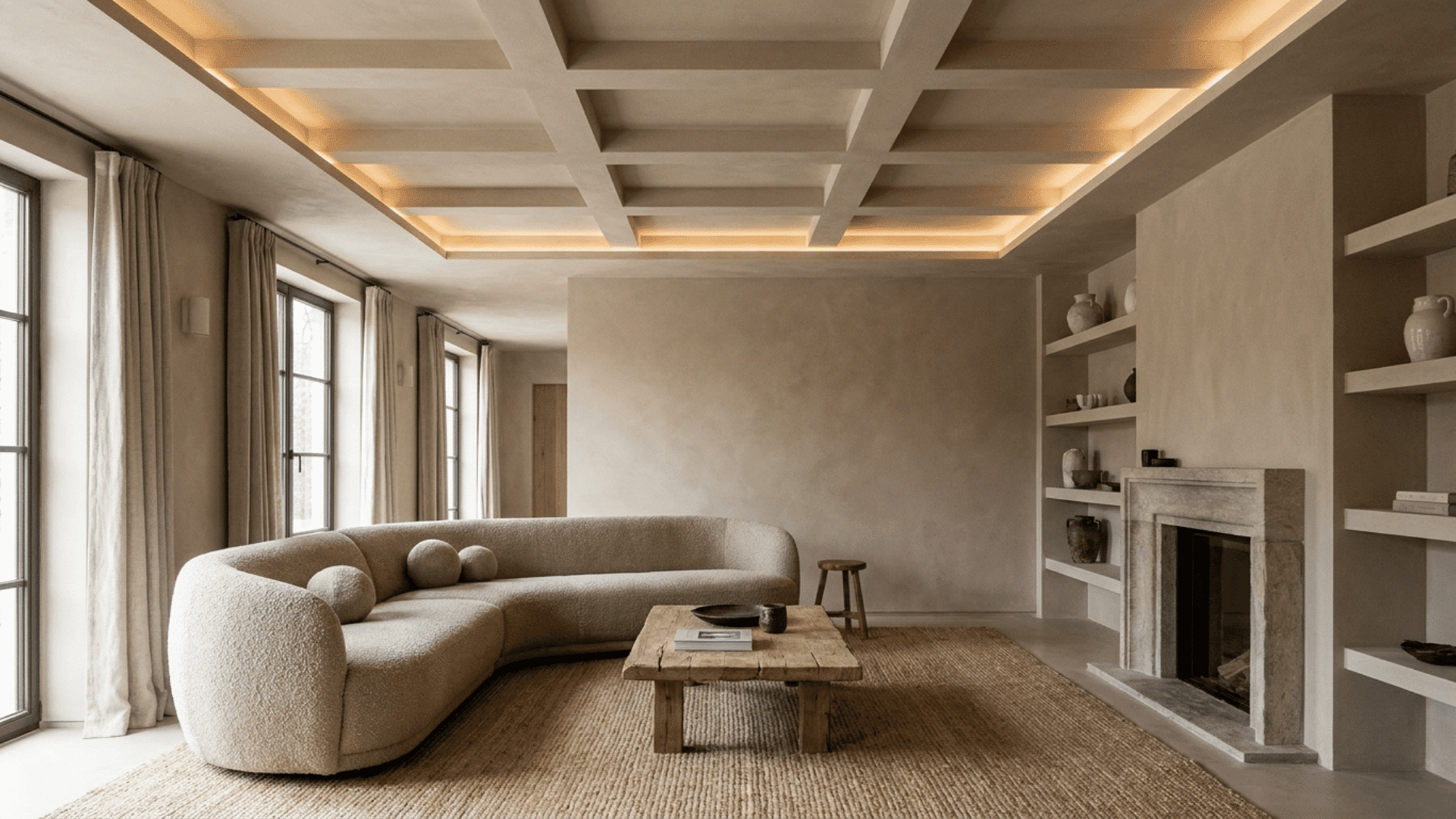
Shallow coffers with panels recessed by two to three inches, instead of deep six or eight-inch classical coffers, offer a lighter visual footprint while maintaining the grid rhythm.
This modern interpretation is increasingly popular in open-plan homes where the architecture is clean-lined, and the goal is subtle interest rather than dramatic statement.
Paint the entire surface in a single color to further soften the effect.
16. Tray Ceiling with Cove Lighting
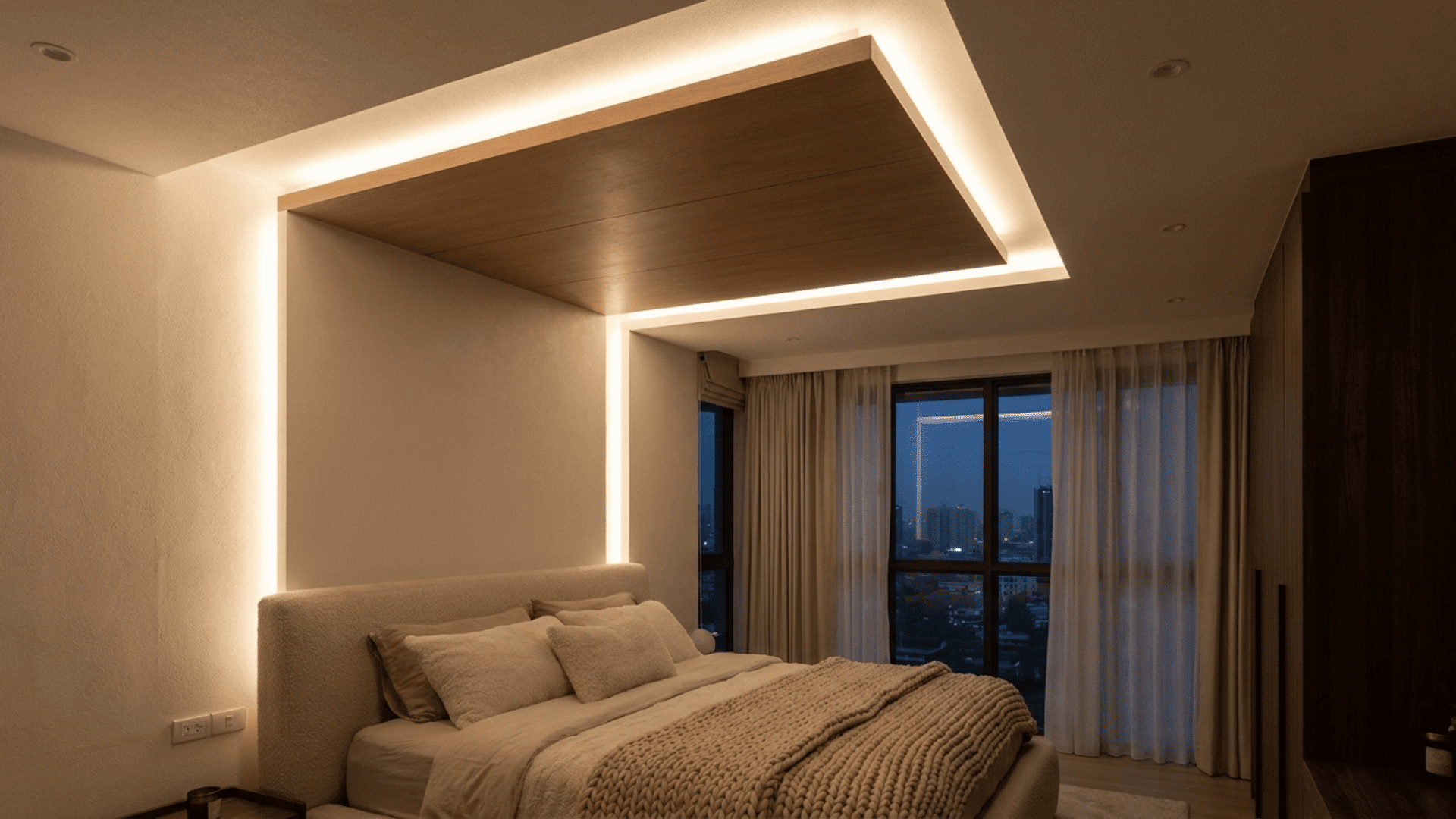
Combining the tray ceiling’s architectural step with cove LED lighting produces one of the most sought-after ceiling effects in modern residential design.
The LED strips sit invisibly inside the inner edge of the tray, washing warm light upward onto the raised center panel. During the day, the tray provides shape and definition.
At night, the cove becomes a glowing feature. This combination appears throughout high-end residential projects precisely because it delivers maximum visual impact for relatively modest construction cost.
17. 3D Ceiling Tiles
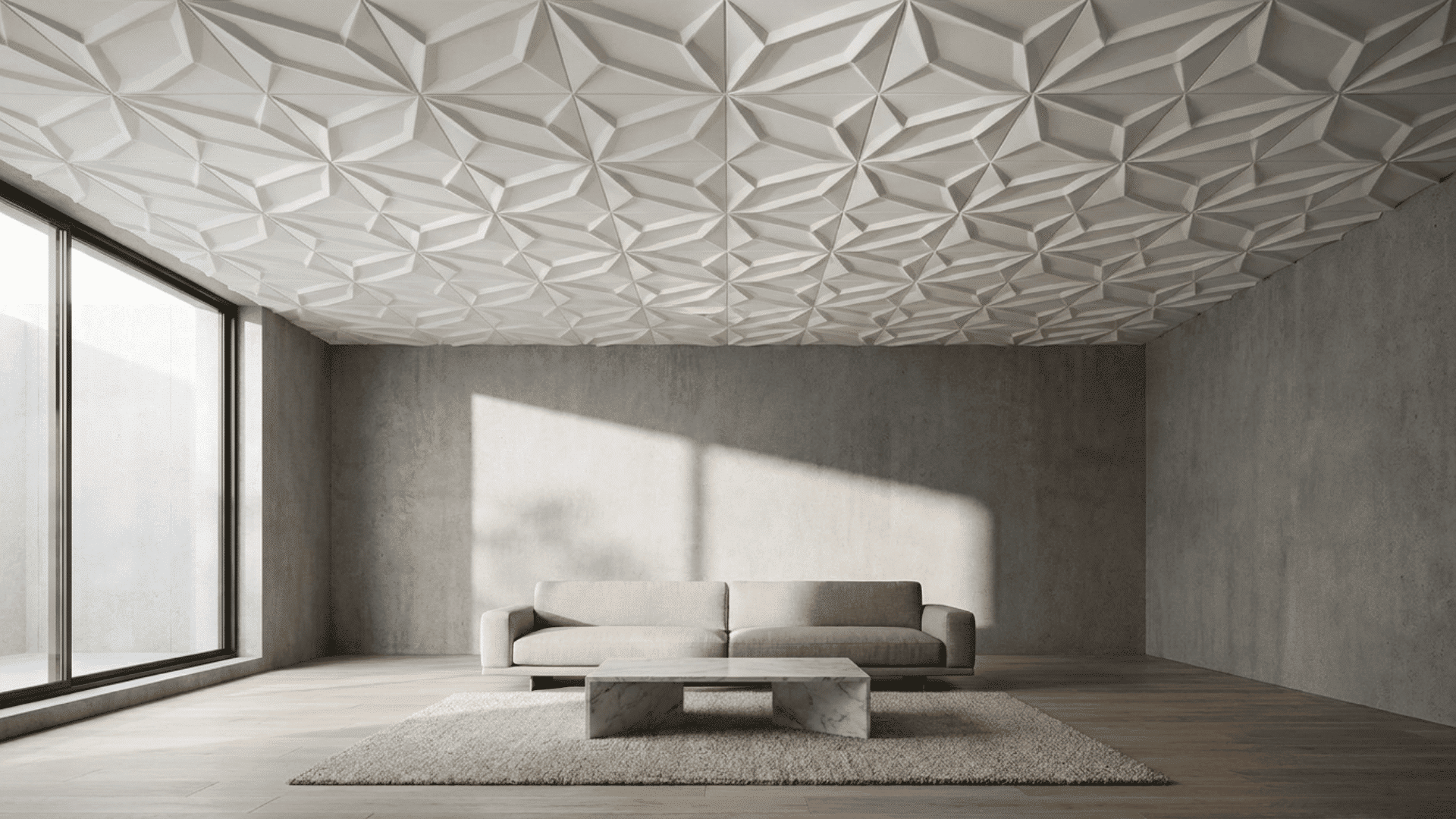
Three-dimensional ceiling tiles are pressed or molded panels available in gypsum, polyurethane, or metal that create a repeated surface relief across the ceiling plane.
The patterns range from geometric lattices and interlocking diamonds to botanical reliefs and Art Deco-inspired motifs.
When painted in a single matte color, the shadow play across the three-dimensional surface creates a subtly animated ceiling that changes character as natural light moves through the room.
White on white is the most popular treatment, but a single deep accent color on 3D tiles produces a bolder, more contemporary result.
18. Stenciled Ceiling Pattern
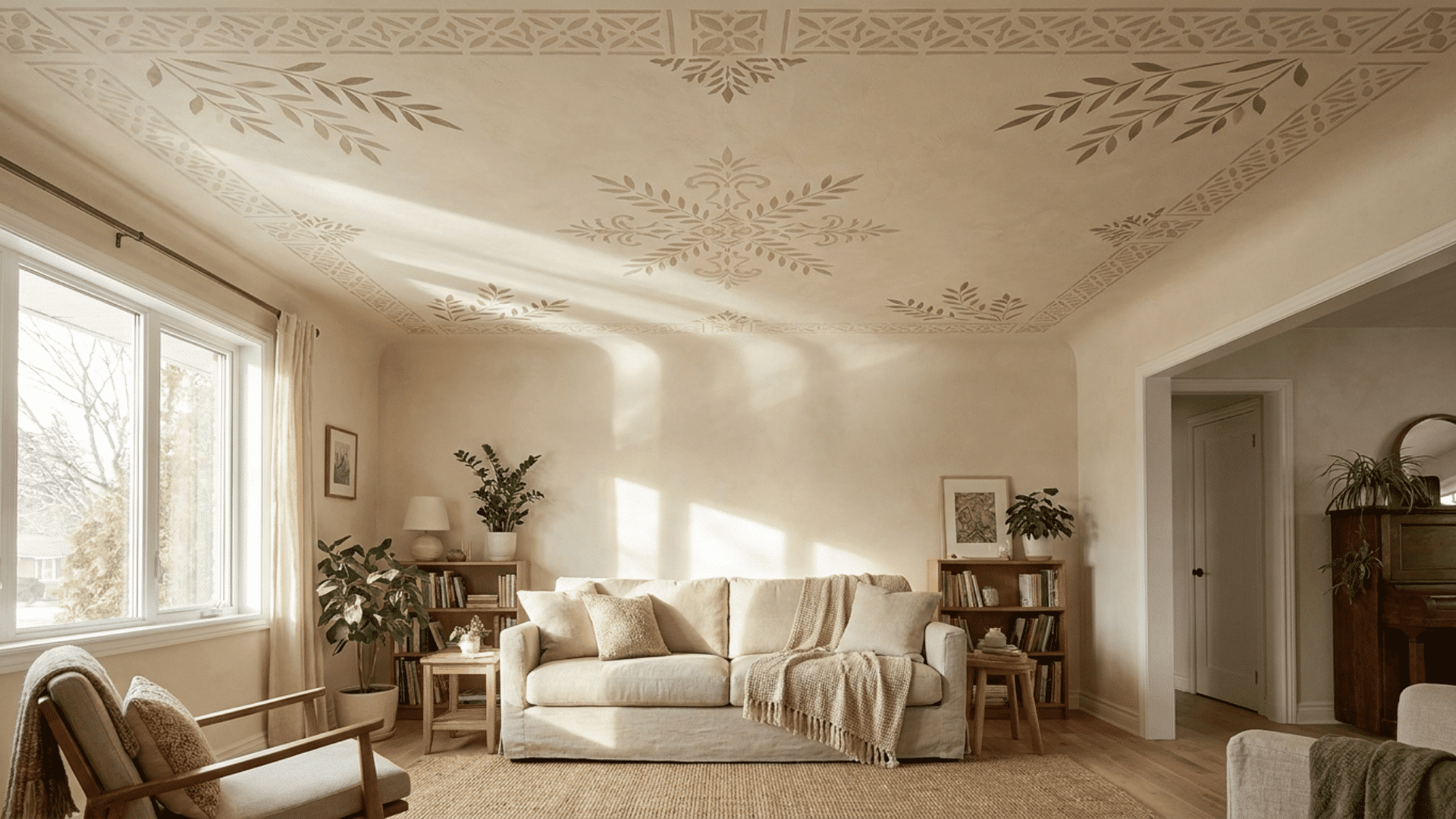
A stenciled ceiling is one of the most cost-effective ways to introduce pattern and personality overhead.
Geometric repeats, botanical motifs, or abstract tessellations can be applied over any smooth painted surface using standard stenciling tools.
The result, when done carefully, rivals the effect of specialty wallpaper at a fraction of the cost.
For a cohesive look, choose a stencil color that echoes a tone already present in the room’s soft furnishings, and the ceiling pattern then feels like a deliberate extension of the design scheme rather than an afterthought.
19. Textured Plaster Ceiling
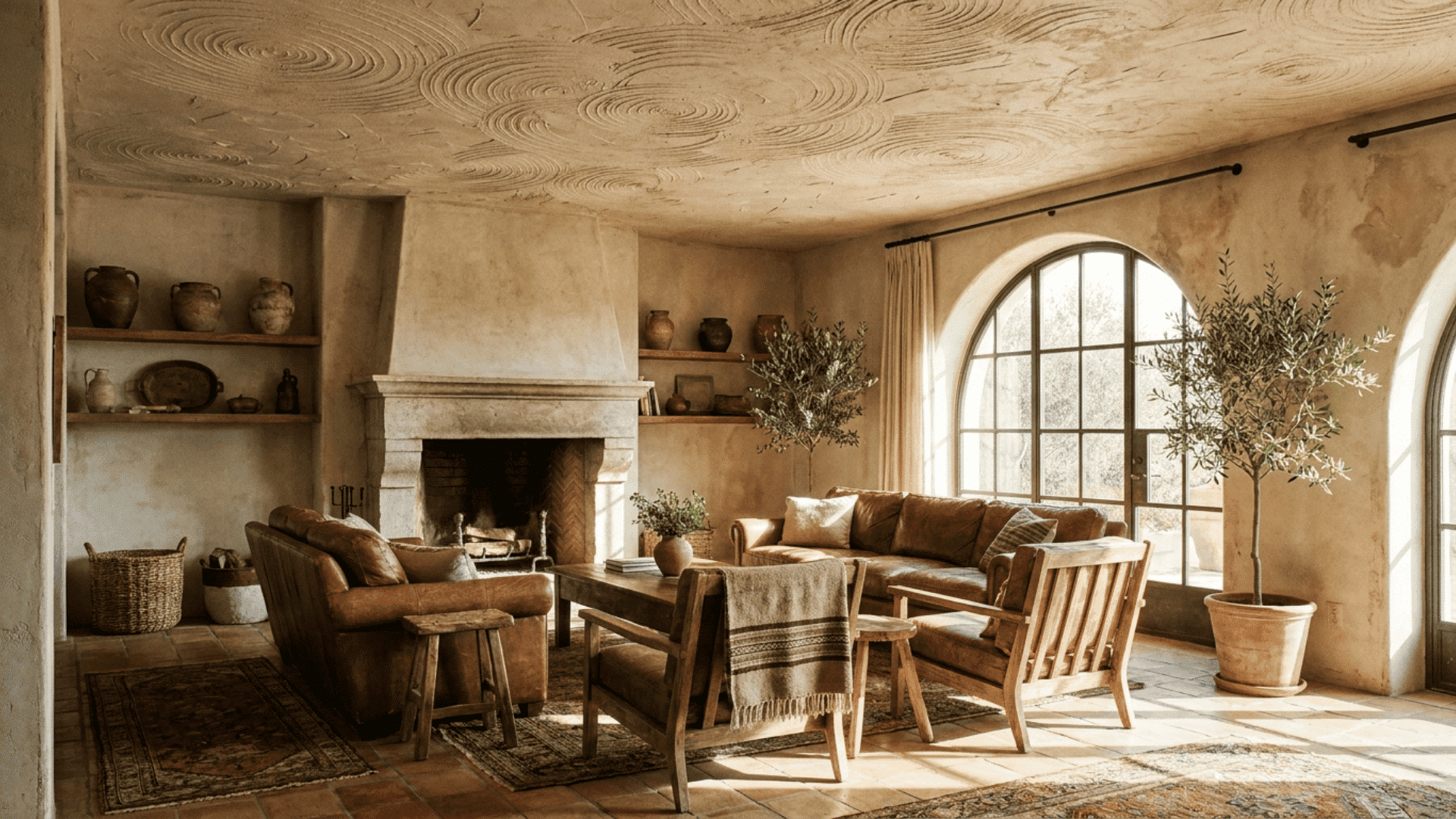
A textured plaster ceiling applied by hand in a skip-trowel, swirl, or knockdown pattern adds organic depth and irregularity to an otherwise flat surface.
Unlike smooth plaster, a textured finish catches and diffuses light, making a room feel warmer and more artisan.
This style is particularly well-suited to Mediterranean, bohemian, and earthy contemporary interiors.
The texture also has a practical advantage: it disguises minor imperfections and hairline cracks far more effectively than a smooth painted surface.
20. Wallpaper Ceiling
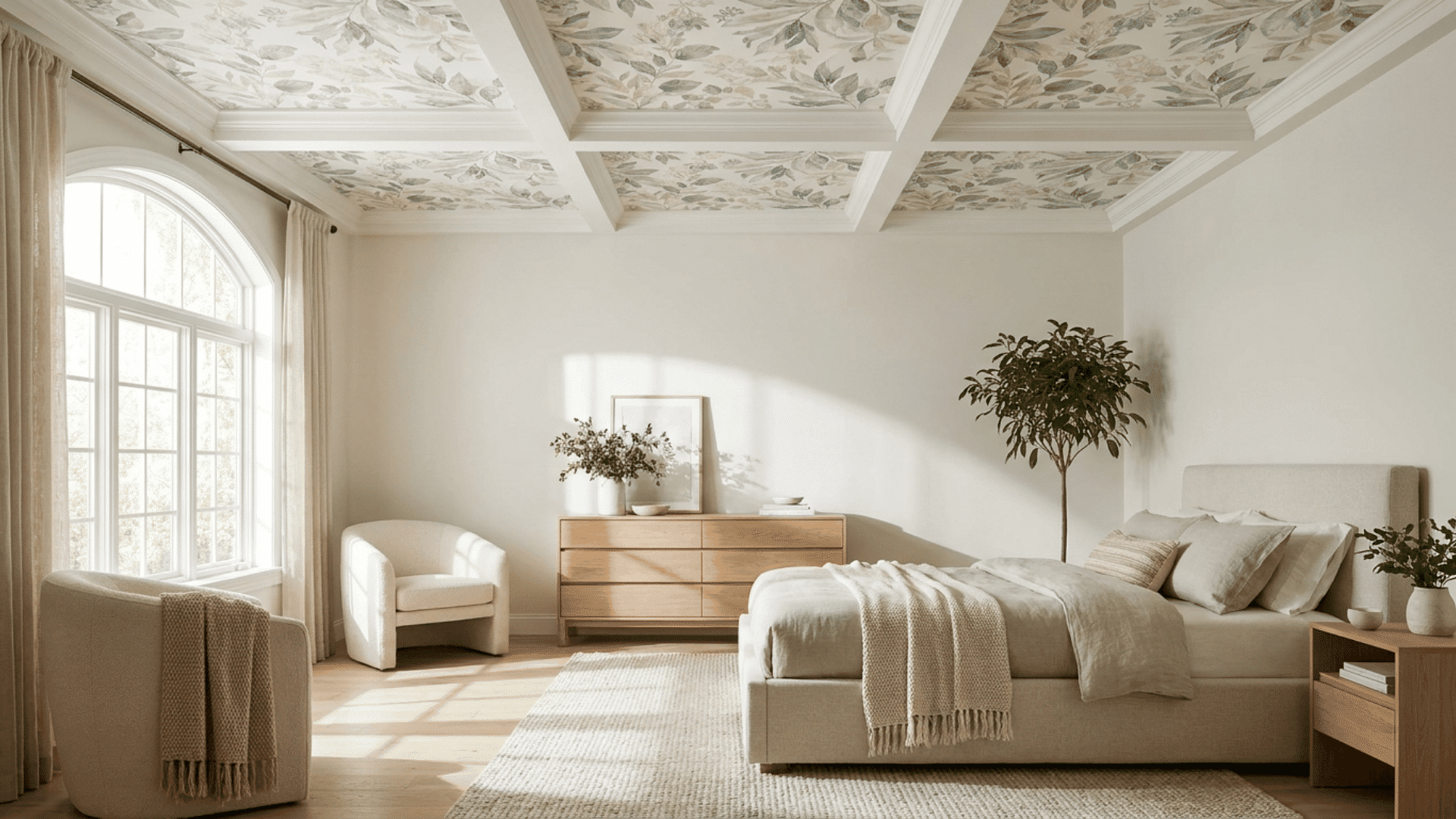
Applying wallpaper to the ceiling is a bold, deeply personal design choice gaining significant traction in contemporary interiors.
Botanical prints, abstract watercolor washes, metallic geometric patterns, and large-scale florals all translate beautifully onto ceilings.
Since the eye naturally falls to the ceiling when a person is lying in bed, the bedroom is the ideal room to experiment with patterned wallpaper on the ceiling.
Choose a paper that ties directly to a color or motif already present in the room to prevent the ceiling from feeling disconnected from the space below.
21. Metallic Accent Ceiling Panel
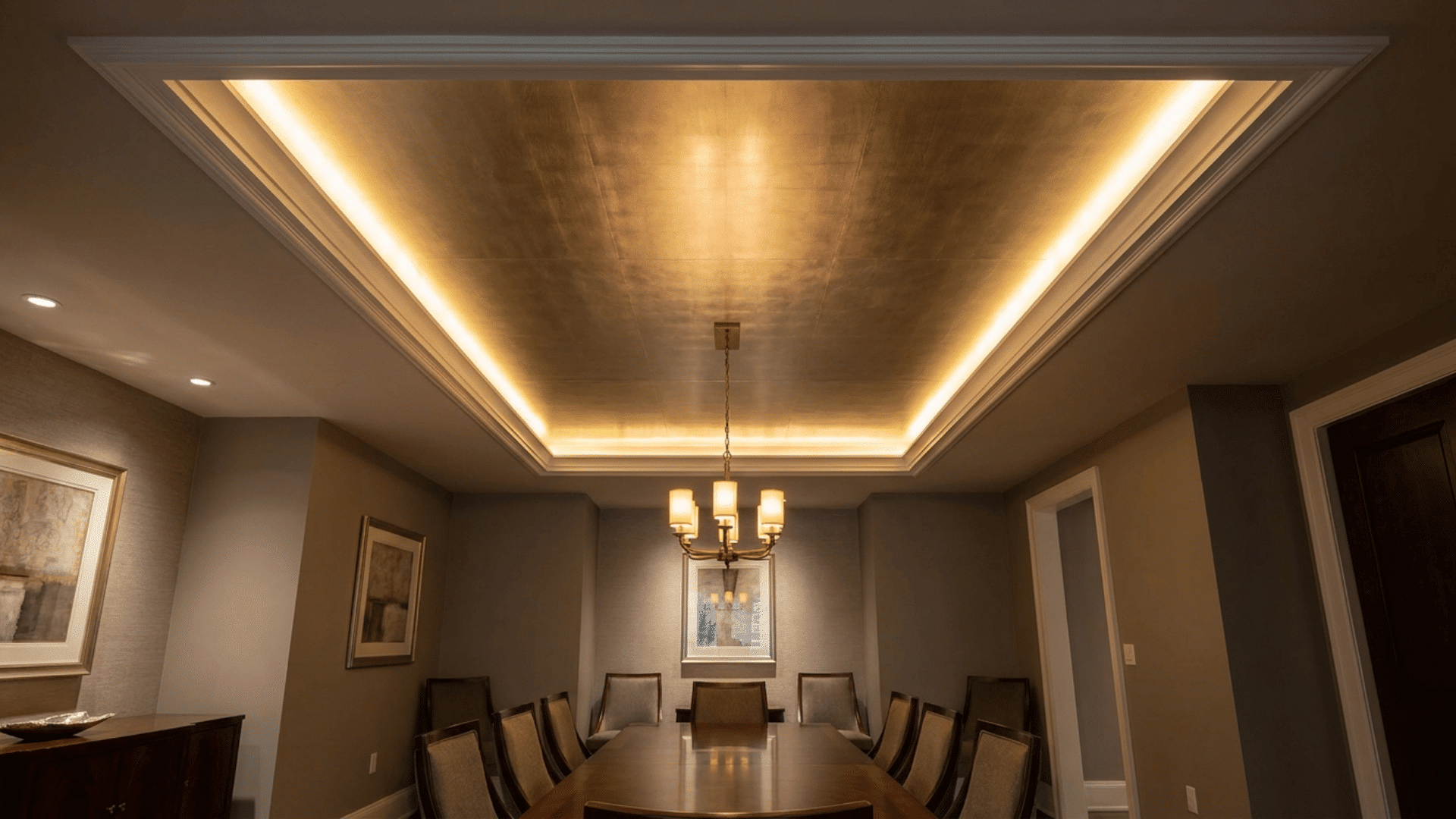
A central metallic panel, gold leaf, brushed bronze, or polished silver installed within a plain or coffered ceiling frame introduces immediate glamour without redesigning the entire surface.
The metallic reflectivity bounces light across the room in ways that paint cannot, and the visual contrast between the metallic center and the matte surrounding ceiling creates a natural focal point.
This treatment works particularly well above dining tables, where candle and pendant light will play across the metallic surface throughout the evening.
22. Flat Matte White Ceiling
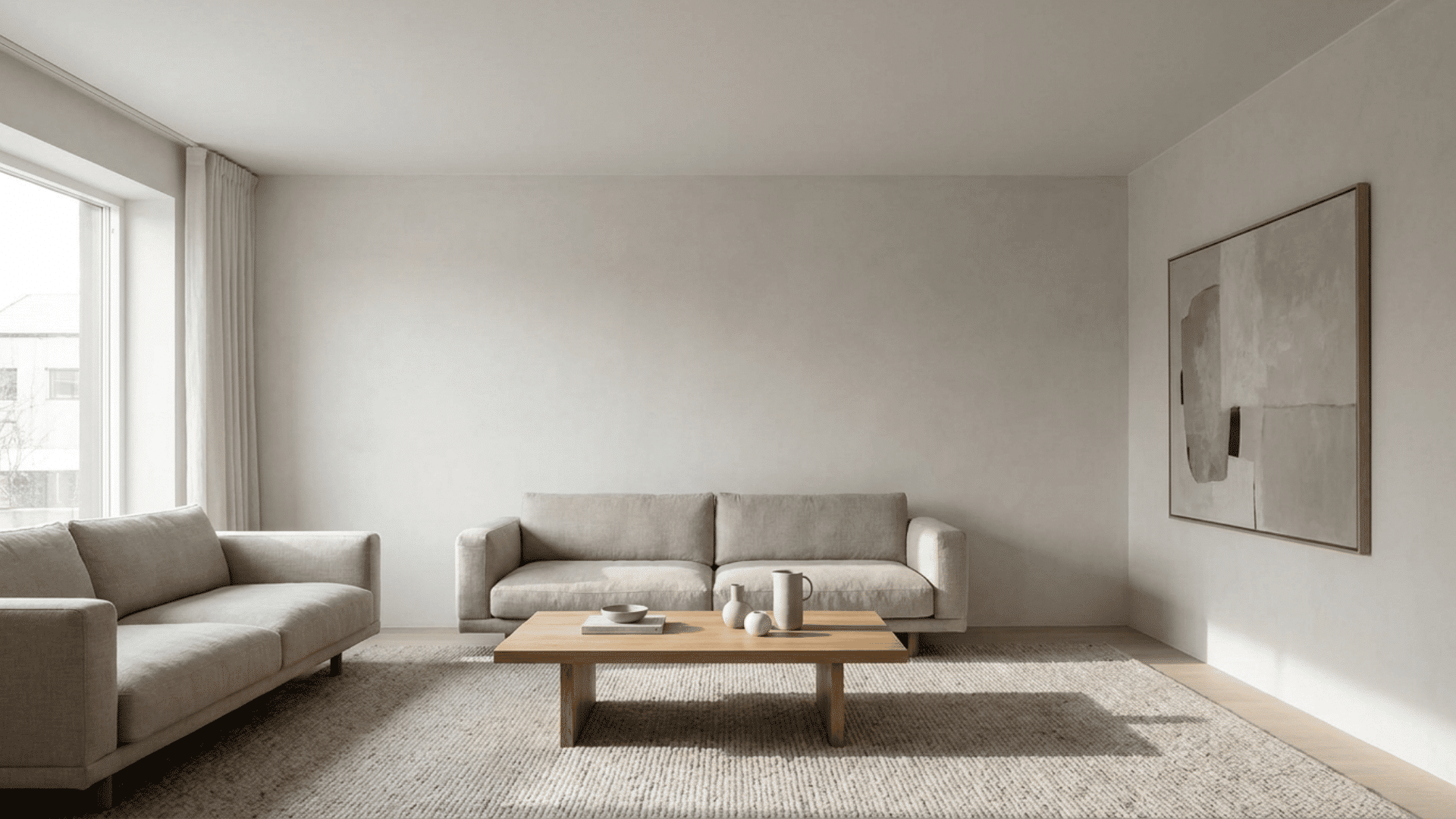
The flat matte white ceiling is the most universally appropriate ceiling finish in residential design.
A matte finish, unlike eggshell or semi-gloss, does not reflect light in a way that draws attention to surface imperfections.
It reads as clean, quiet, and neutral, the perfect visual rest above a room filled with texture, color, and material.
The key distinction between a deliberately minimalist ceiling and simply an unfinished one lies in the quality of the skim coat beneath the paint: a truly flat, shadow-free surface requires skilled plastering before any paint is applied.
23. Single Recessed Panel Ceiling
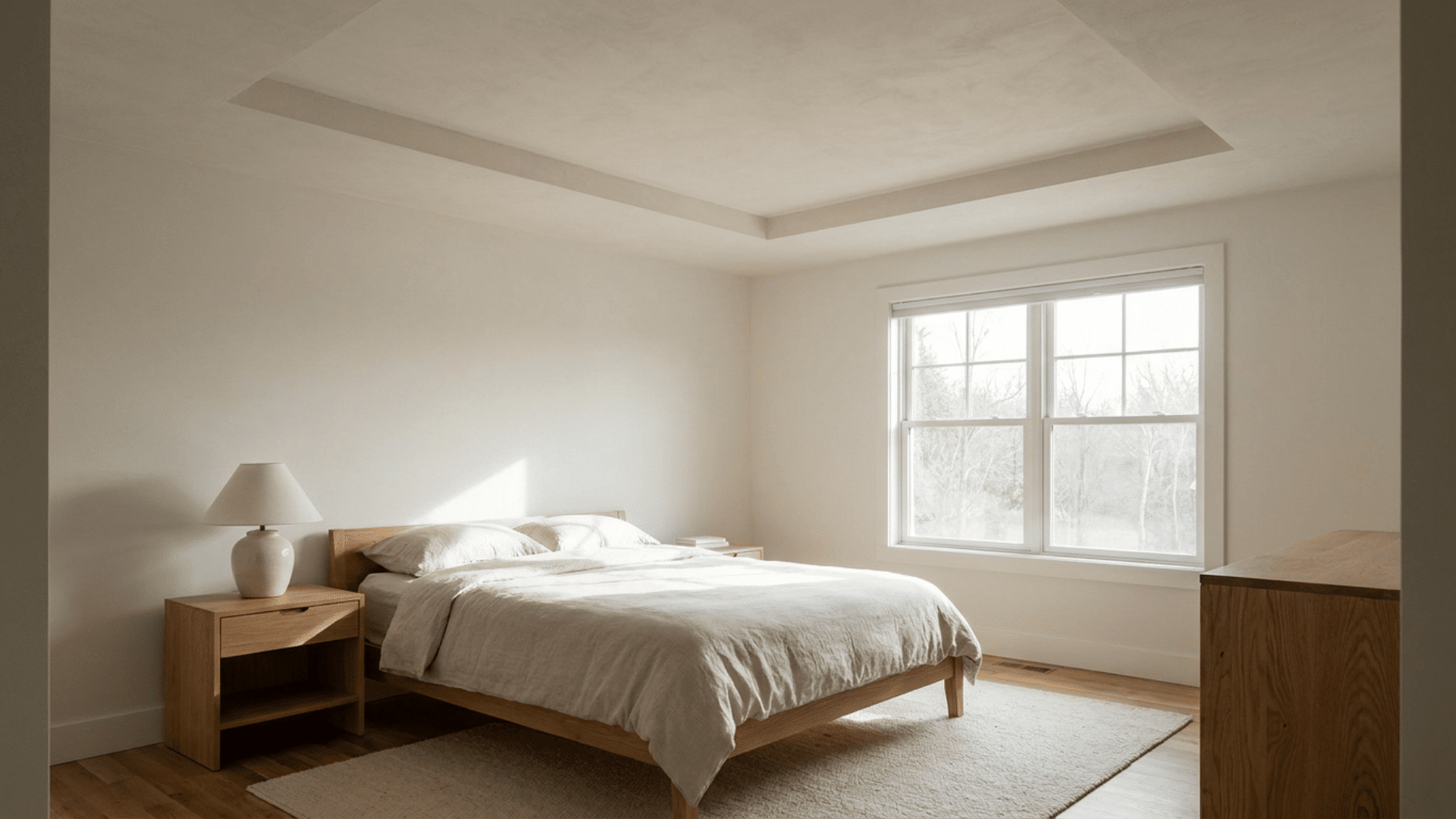
A single recessed panel, a rectangular or square section of the ceiling that sits two to four inches higher than the surrounding surface, creates architectural definition without the complexity of a full tray or coffered design.
The panel can align with the seating area in a living room, the bed in a bedroom, or the table in a dining room, gently framing the primary activity zone from above.
This is one of the most classic and understated ways to add ceiling design to a room without any visible ornamentation.
24. Ceiling with Integrated Linear Slots
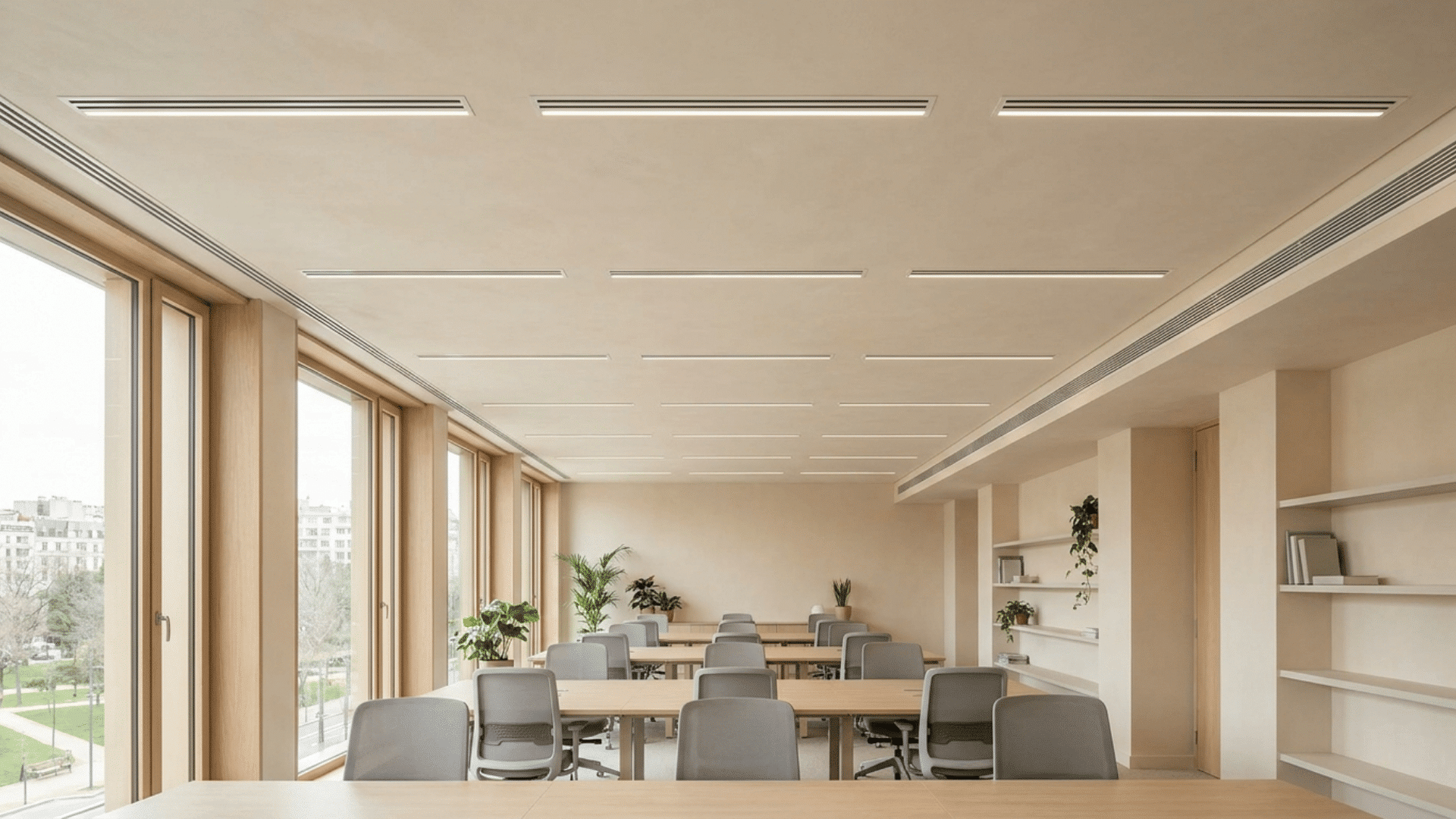
Linear slot diffusers with thin, continuous recesses running across the ceiling in parallel lines are a hallmark of high-end minimalist architecture.
These slots serve a dual purpose: they distribute conditioned air from the HVAC system and create a rhythmic, linear pattern across the ceiling plane that feels precise and architectural.
When combined with a fully painted flat surface in a warm off-white, the result is a ceiling that feels both technically sophisticated and visually calm.
25. Exposed Concrete Ceiling
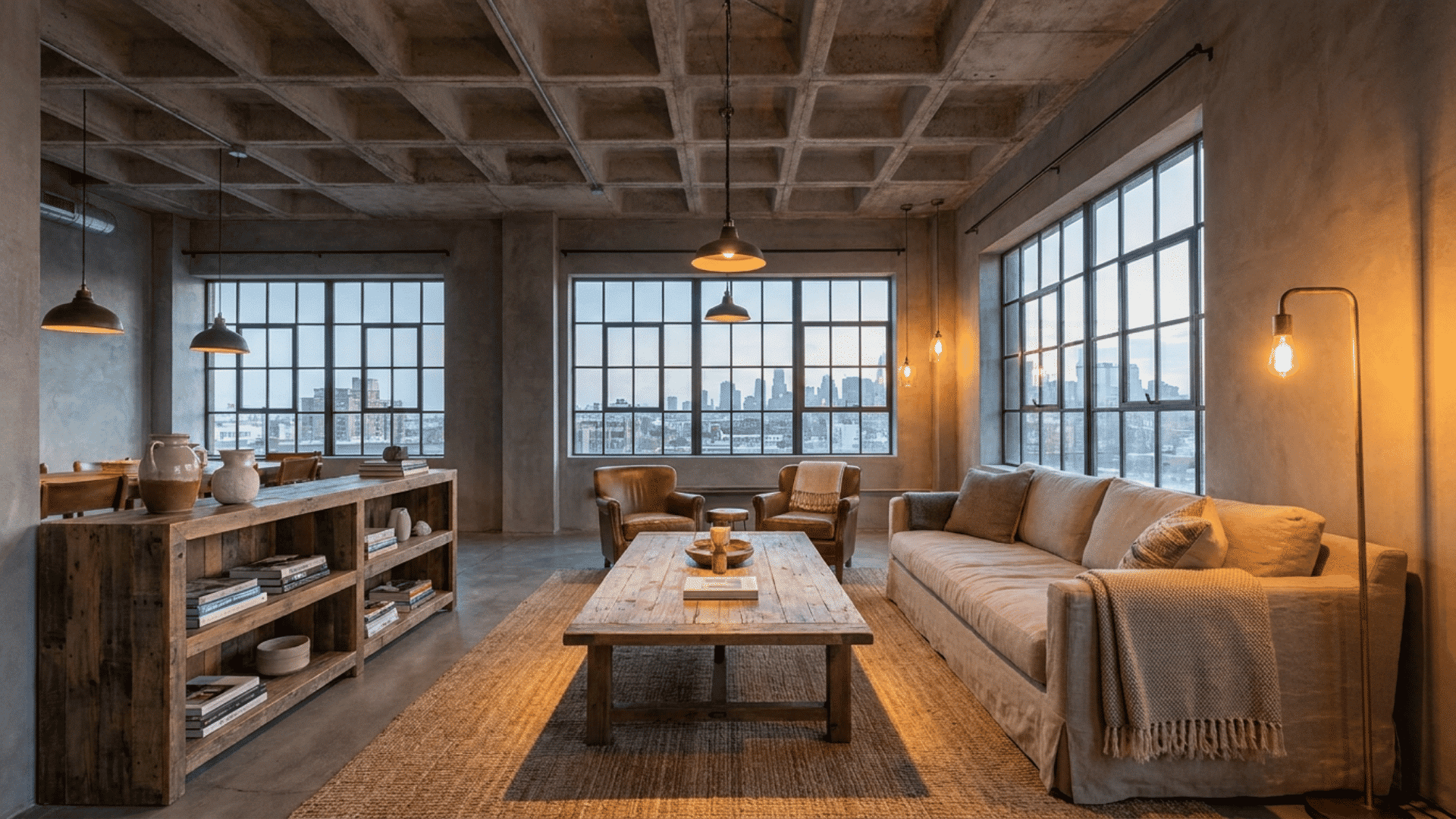
In loft apartments, industrial conversions, and contemporary new builds, an exposed concrete ceiling makes a powerful architectural statement by doing nothing at all, simply revealing the structural reality of the building.
The raw texture of concrete, its natural grey tones, and the honest expression of its material character all contribute to a look that is simultaneously bold and understated.
To prevent an exposed concrete ceiling from feeling cold, warm it with timber furniture, natural textiles, and lighting in a 2700K–3000K color temperature.
26. White Stretched Ceiling
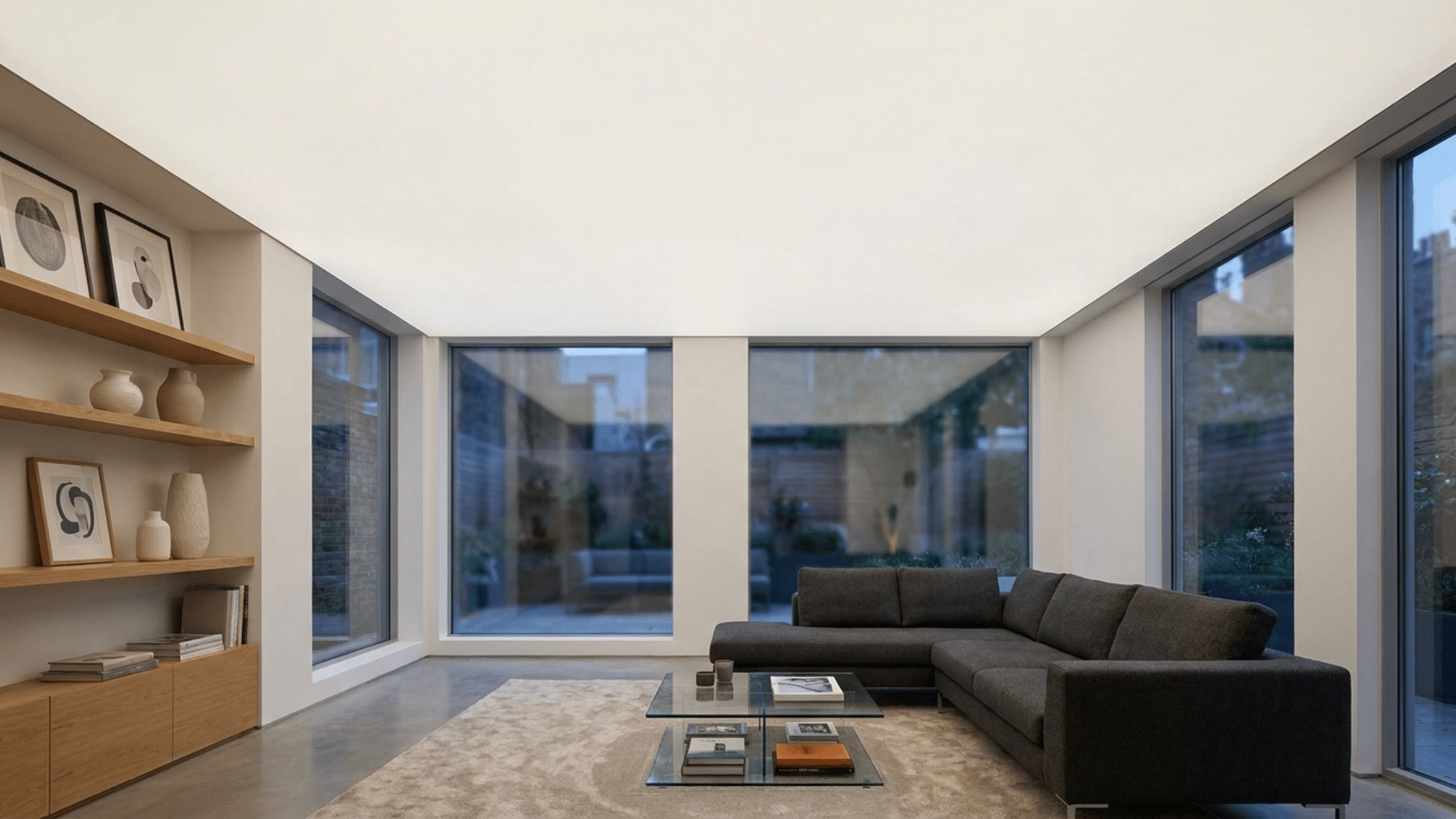
A stretched ceiling system uses a thin, high-tension PVC or fabric membrane stretched across a lightweight perimeter frame to create a surface so smooth and uniform that it appears almost digital in its perfection.
The material can be finished in matte, satin, gloss, or translucent versions, the last of which allows backlighting through the entire ceiling surface for a soft, even glow.
Stretched ceilings are completely moisture-resistant, wipe-clean, and require no painting. They represent the cutting edge of minimalist ceiling technology in contemporary residential and commercial design.
27. LED Strip Cove Ceiling
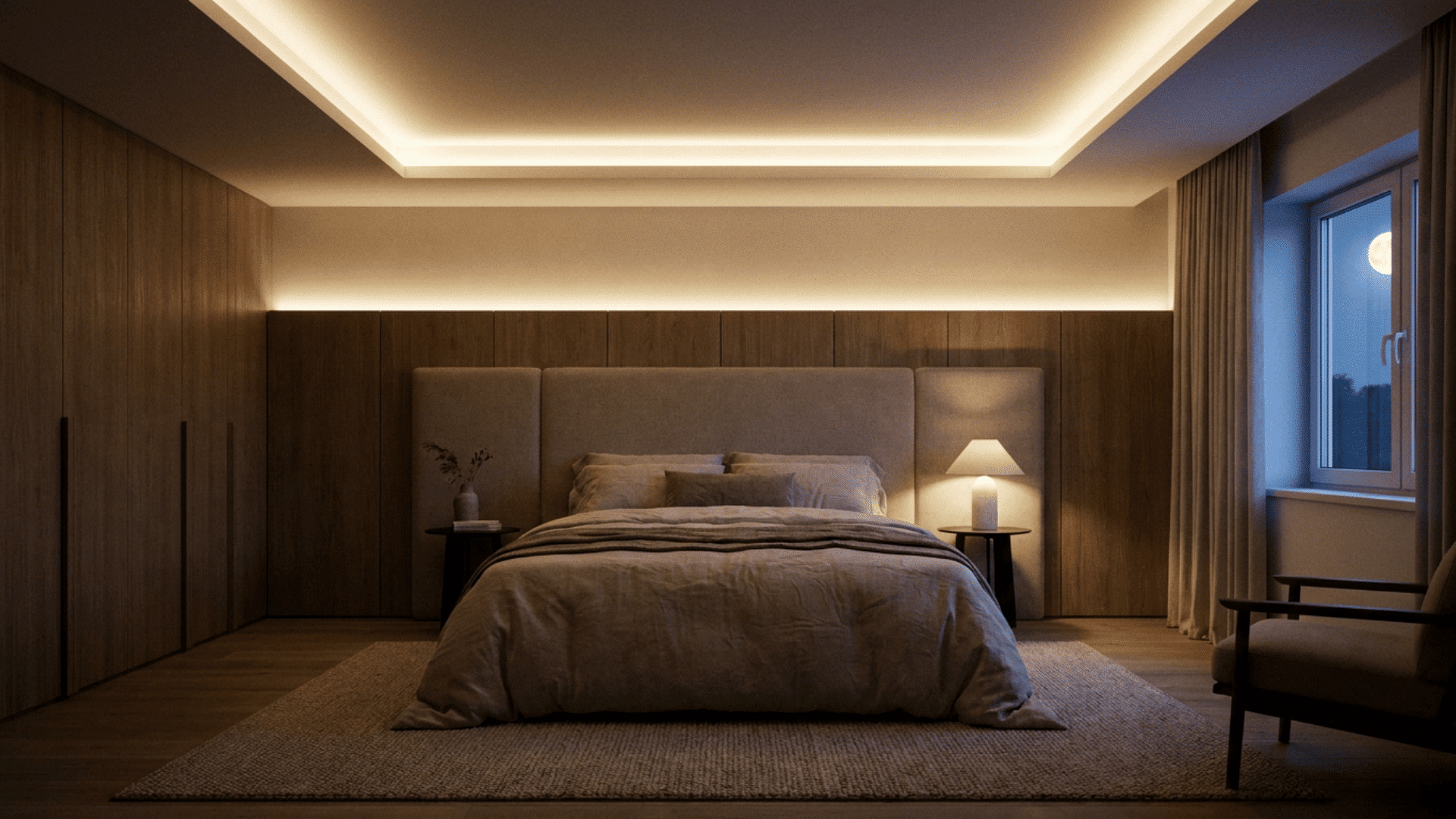
The LED strip cove ceiling houses flexible LED tape lights in a recessed channel built into the perimeter of the false ceiling, so the light source is completely invisible.
At the same time, the glow washes softly upward onto the ceiling surface.
The result is a luminous, sourceless light that feels ambient and atmospheric rather than functional. Warm white LEDs in the 2700K–3000K range work best for living areas and bedrooms.
In contemporary kitchens and home offices, a cooler 4000K temperature provides better task clarity while still delivering the visual of the hidden-source effect.
28. Backlit Ceiling Panel
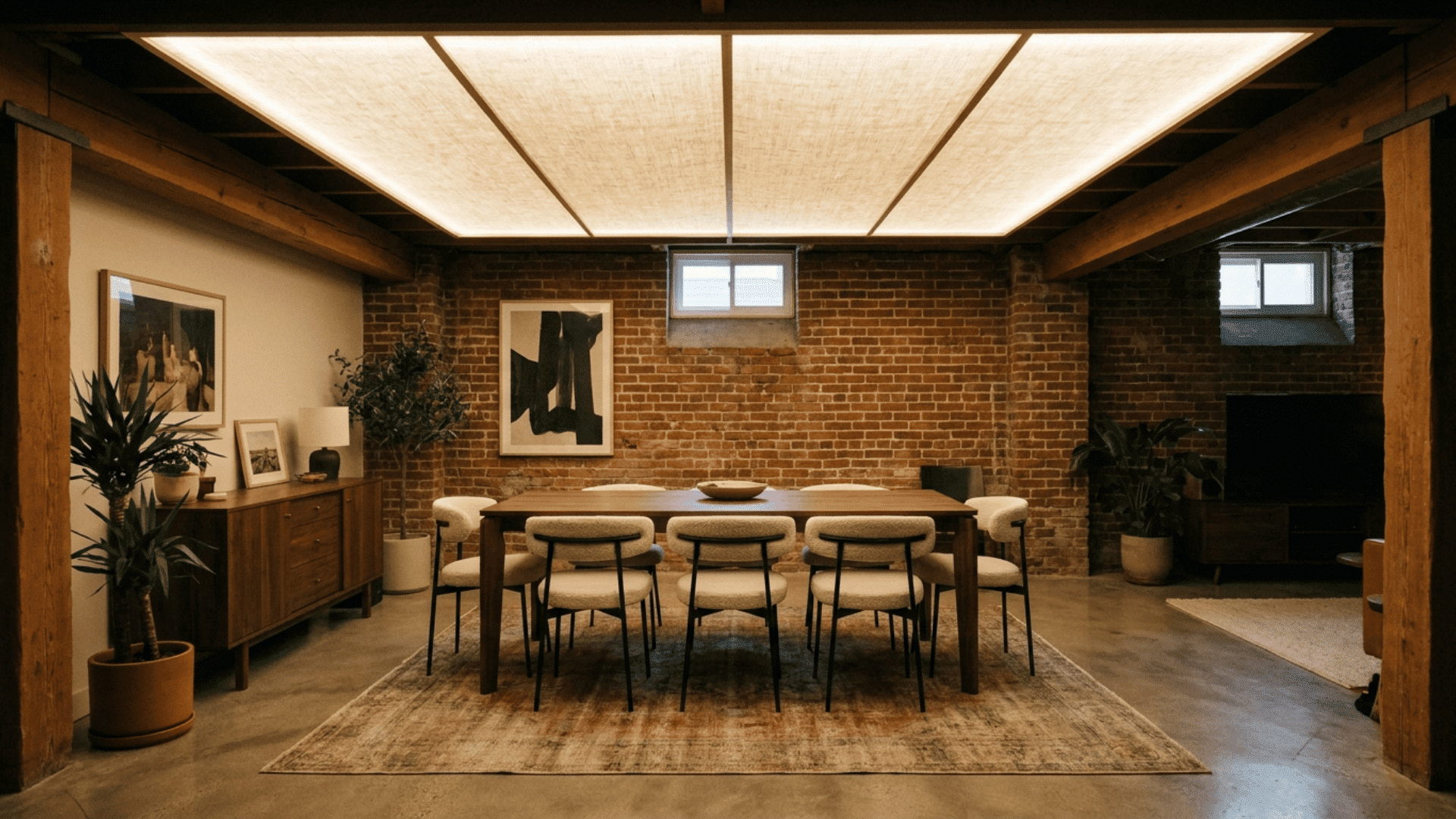
A backlit ceiling panel uses a translucent material, such as frosted glass, stretched fabric, or acrylic, suspended below a concealed LED light source so that the entire panel glows evenly from behind.
The effect mimics soft natural skylight and is used extensively in rooms without windows or in basements where actual daylighting is unavailable.
Backlit panels can be fitted into a grid system to create a fully illuminated ceiling, or used as a single central feature panel above a dining table or bed.
The color temperature of the LEDs behind the panel entirely controls the mood of the space.
29. Pendant Cluster Ceiling
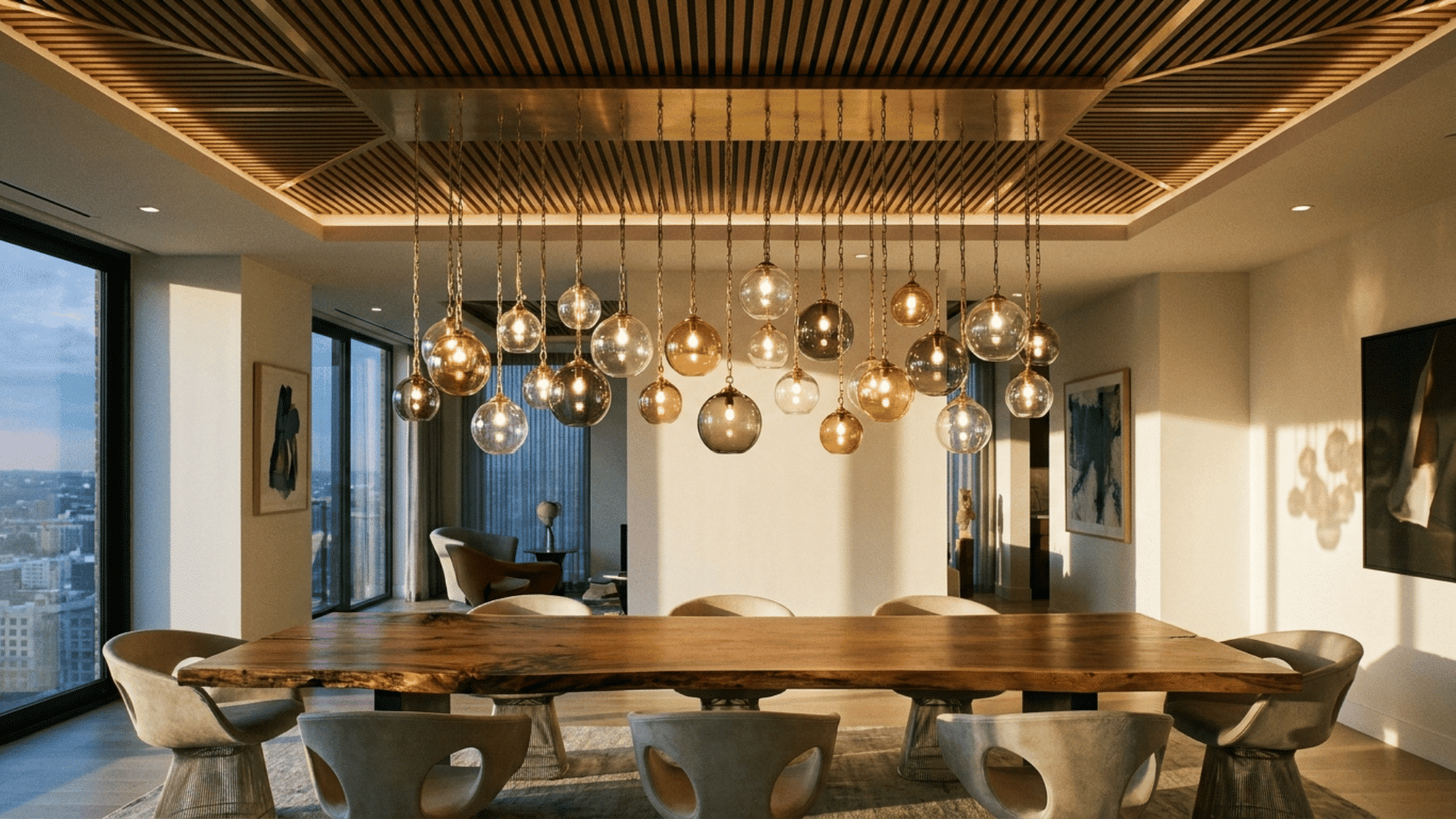
A cluster of pendant lights, varying in height and similar in style, creates a sculptural ceiling installation that serves as both ambient lighting and visual art.
The arrangement can be organic and asymmetric for a bohemian feel, or rigidly geometric for a more architectural sensibility.
Material choices range from hand-blown glass globes to woven rattan, brushed brass cylinders to concrete cones.
A pendant cluster works best above a dining table, kitchen island, or reading corner, where the light source and the activity zone are directly aligned.
30. Starlight Ceiling
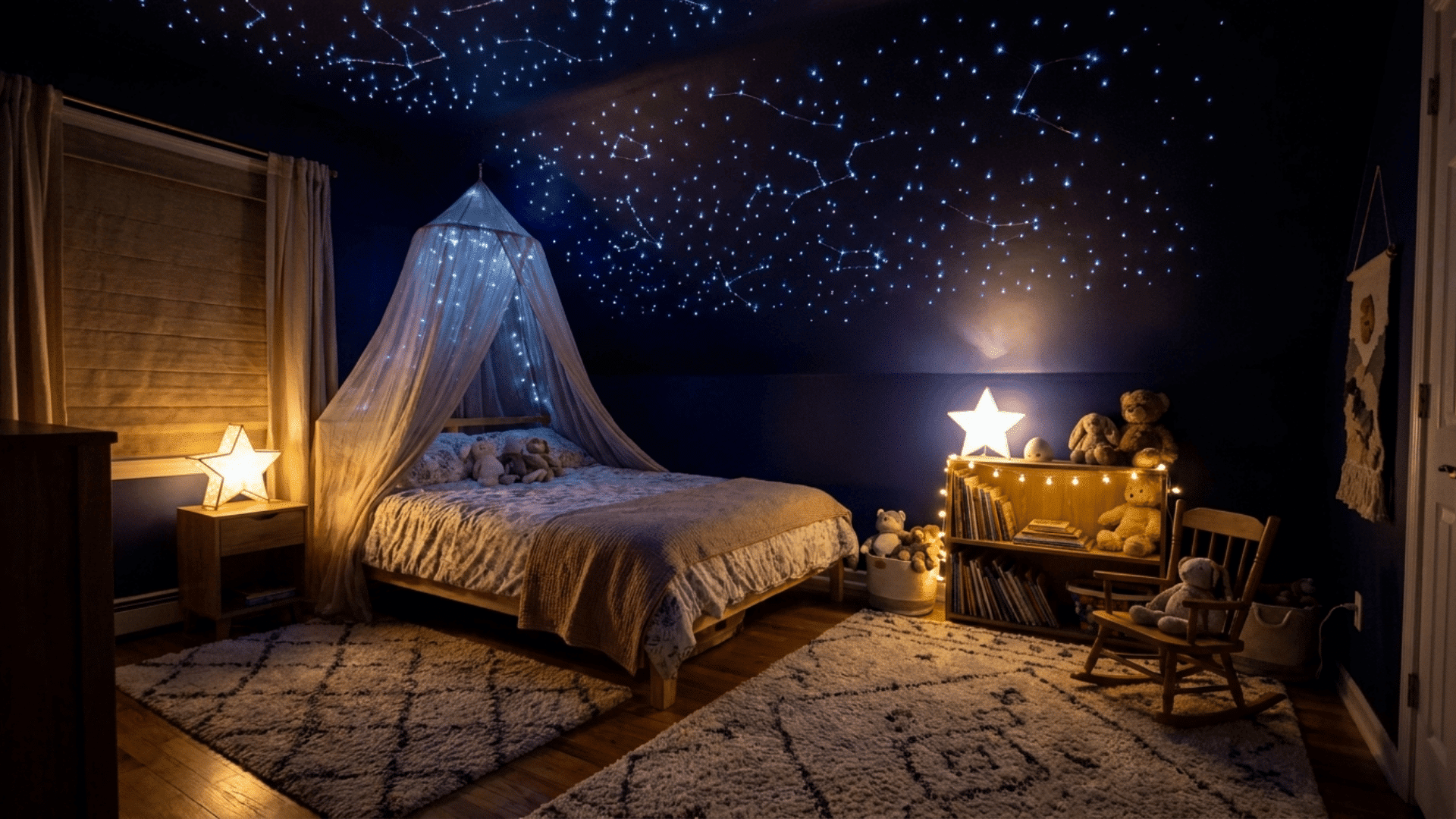
A starlight ceiling uses fiber-optic strands embedded in a dark-painted or black-finished ceiling surface to recreate the appearance of a night sky overhead.
Each strand is pinpoint-thin and transmits light from a central LED projector that can be programmed to twinkle, shift color, or adjust brightness.
In children’s bedrooms and home theaters, starlight ceilings produce an immersive overhead experience that no other ceiling treatment can match.
In master bedrooms, a more restrained and scattered star pattern creates quiet magic without overpowering the room.
31. Track Lighting Ceiling System
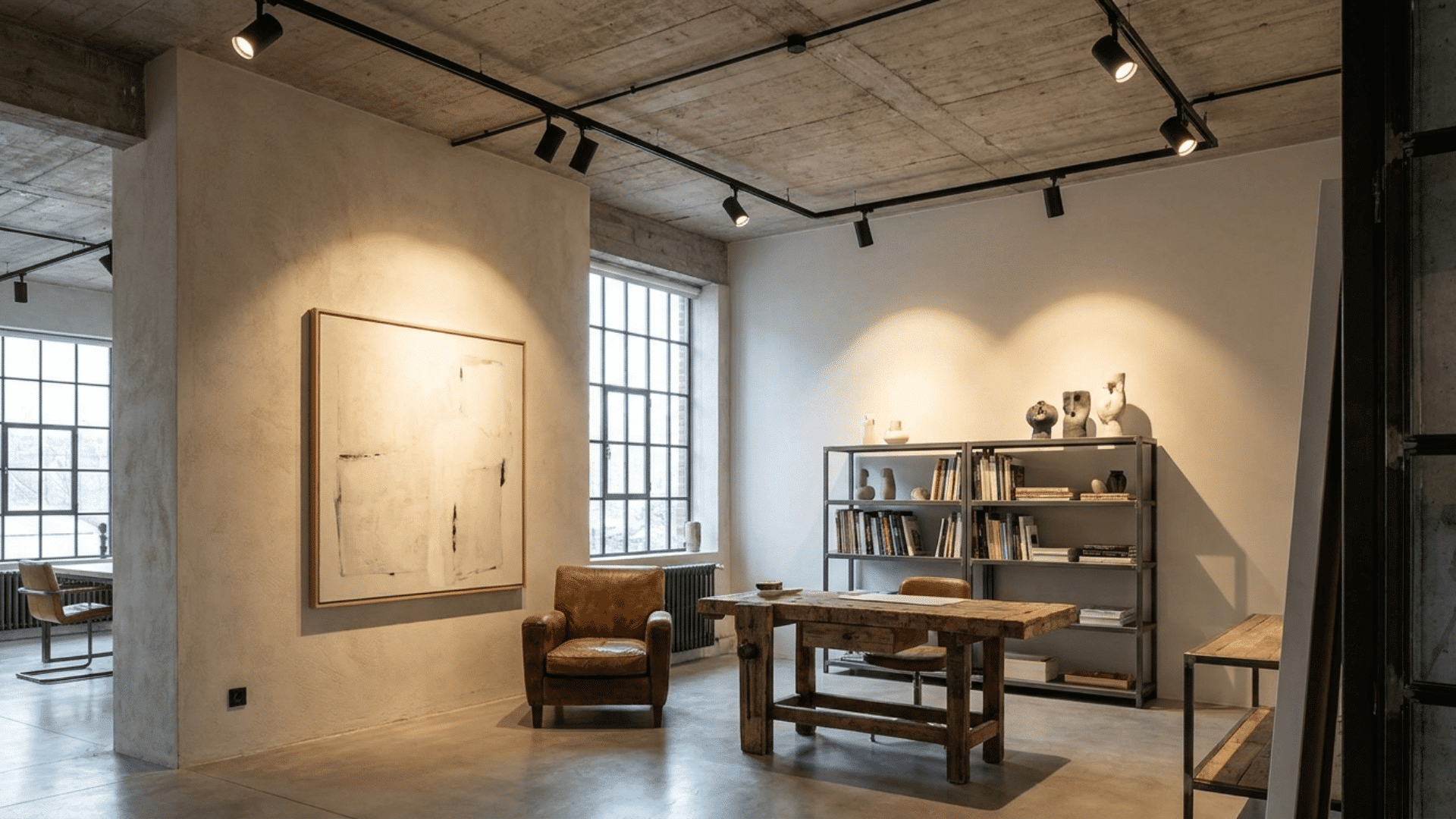
A track lighting system uses a continuous electrified rail mounted to or recessed into the ceiling, from which individual adjustable spotlights can be positioned and angled at will.
Unlike fixed recessed downlights that commit to a single lighting pattern, track lights can be redirected as furniture arrangements change, artwork moves, or priorities shift.
In home offices, studios, and gallery-style rooms, this adaptability is invaluable. Modern low-profile track systems in brushed black or gunmetal finish seamlessly integrate into both minimalist and industrial ceiling designs.
32. Chandelier Ceiling with Floating Frame
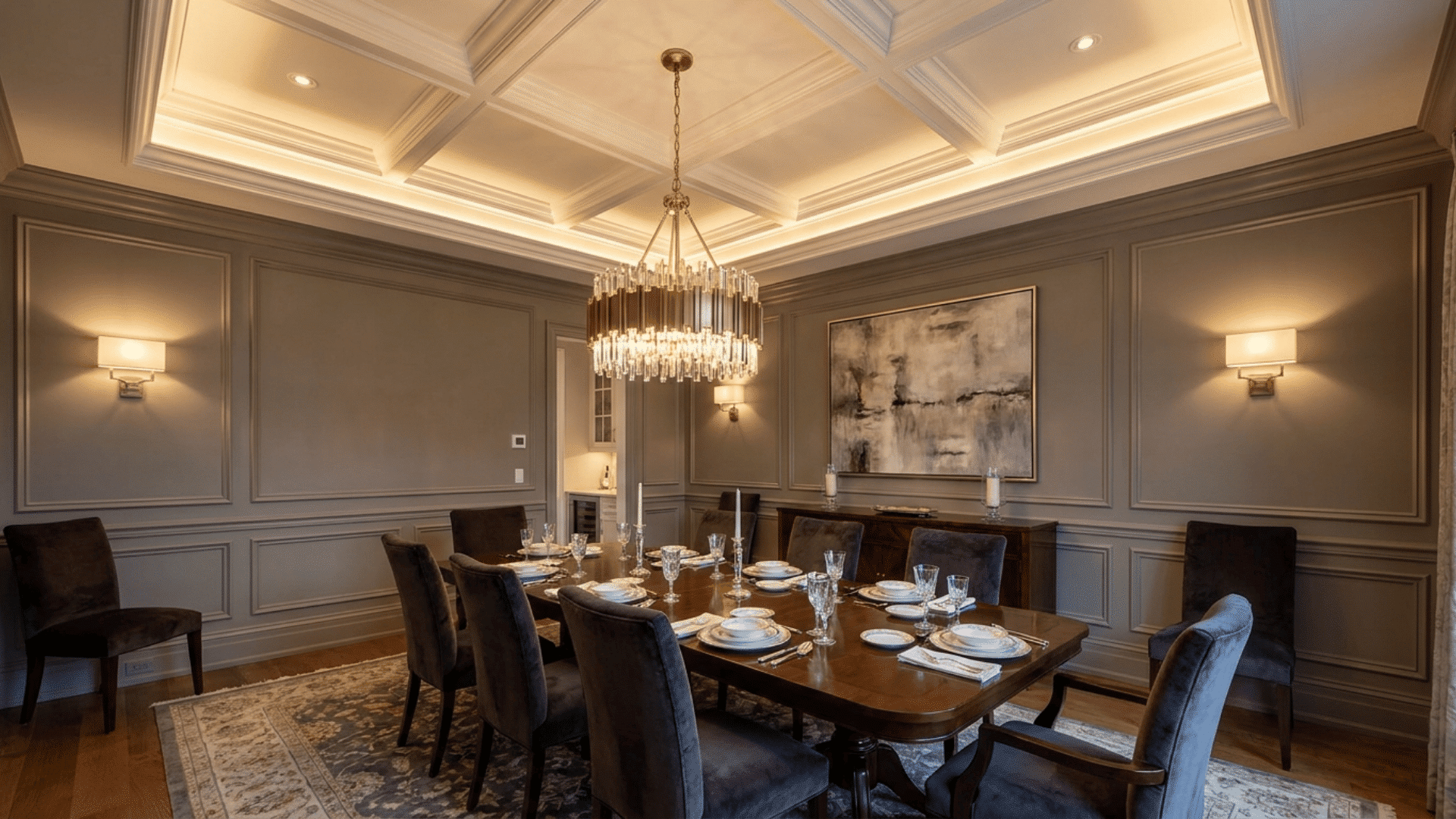
A floating-frame ceiling takes the chandelier concept one step further by building a shallow rectangular or circular frame directly into the ceiling, creating a defined architectural zone from which the chandelier hangs.
The frame can be painted, gilded, coffered, or lined with a contrasting material, giving the chandelier a deliberate visual context rather than simply hanging it from a bare surface.
In dining rooms and entry halls, this combination of an architectural frame and a suspended fixture creates a sense of ceremony and intention that elevates the entire space.
33. Mirror Ceiling Panel
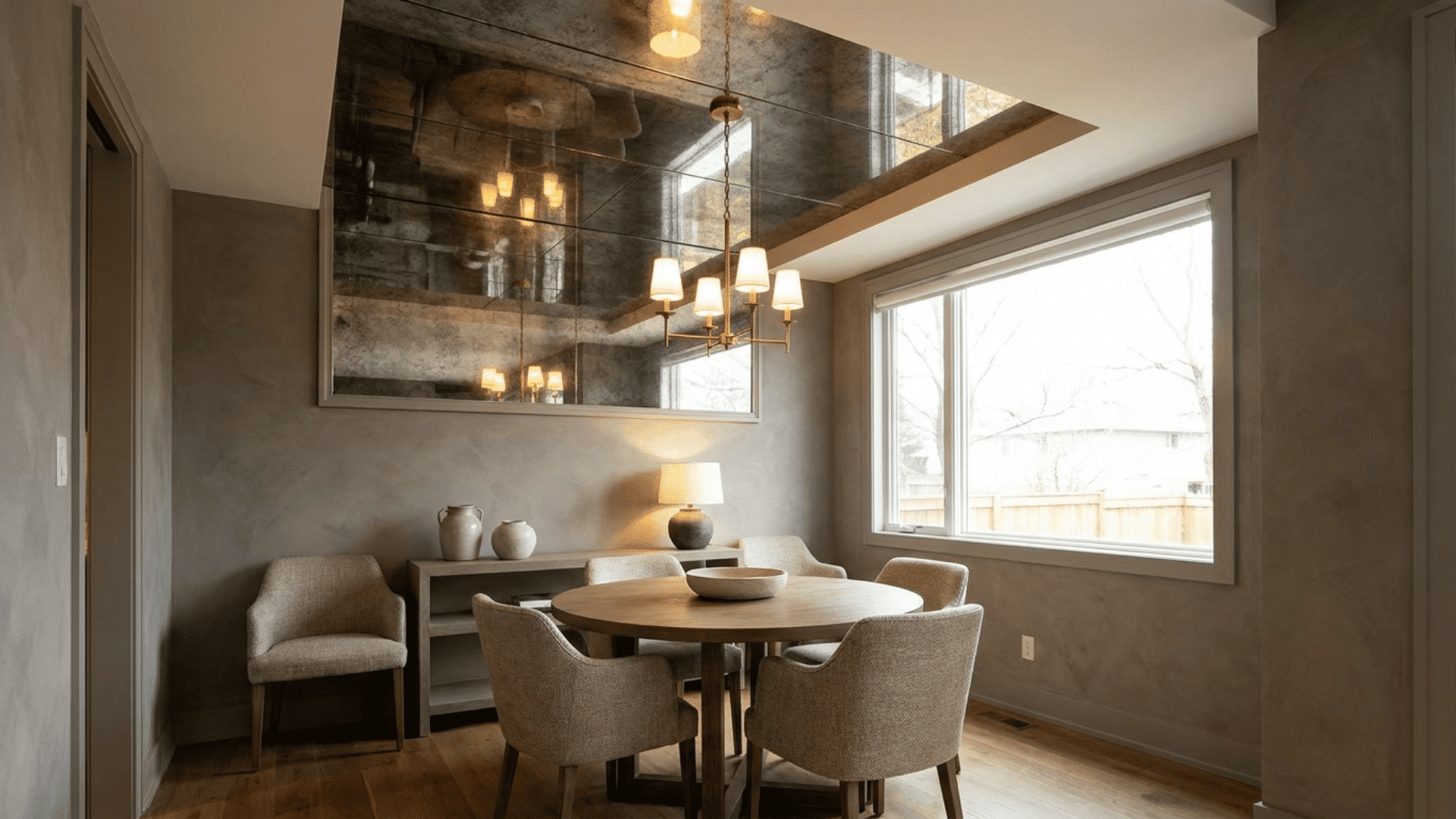
A mirrored ceiling panel, whether a full central section or a series of framed panels arranged in a grid, adds reflective depth that no other material can replicate.
Mirrors overhead bounce both natural and artificial light back into the room, making spaces feel taller and more luminous.
In compact dining rooms and dark hallways, even a single mirrored ceiling panel can dramatically change the spatial experience.
For a more refined approach, use smoked or antique mirror glass rather than standard clear mirror. The slight tint softens the reflection and gives the ceiling a sense of age and warmth rather than clinical brightness.
34. Sail Cloth and Fabric Ceiling
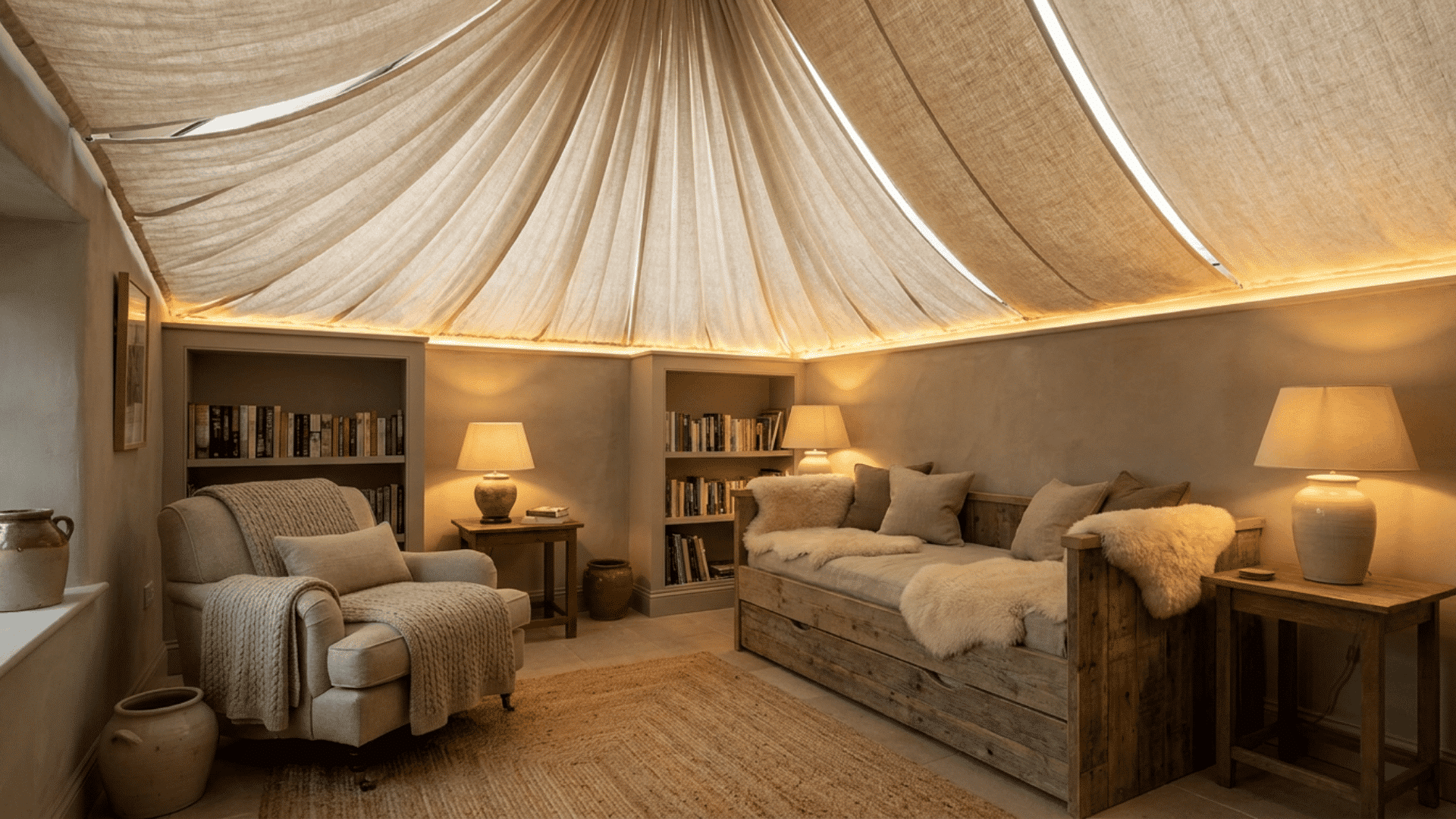
A fabric ceiling uses stretched canvas, linen, or decorative sailcloth suspended from the ceiling frame to create a soft, textured overhead surface with extraordinary acoustic benefits.
The fabric absorbs sound rather than reflecting it, making this approach particularly valuable in rooms with hard floors, bare walls, and minimal soft furnishings, where echo and noise buildup are common problems.
Visually, a fabric ceiling introduces warmth and a handcrafted character unlike any painted or plastered finish. Natural linen in off-white or warm stone tones works beautifully in bedrooms, reading rooms, and meditation spaces.
35. Diagonal Plank Ceiling
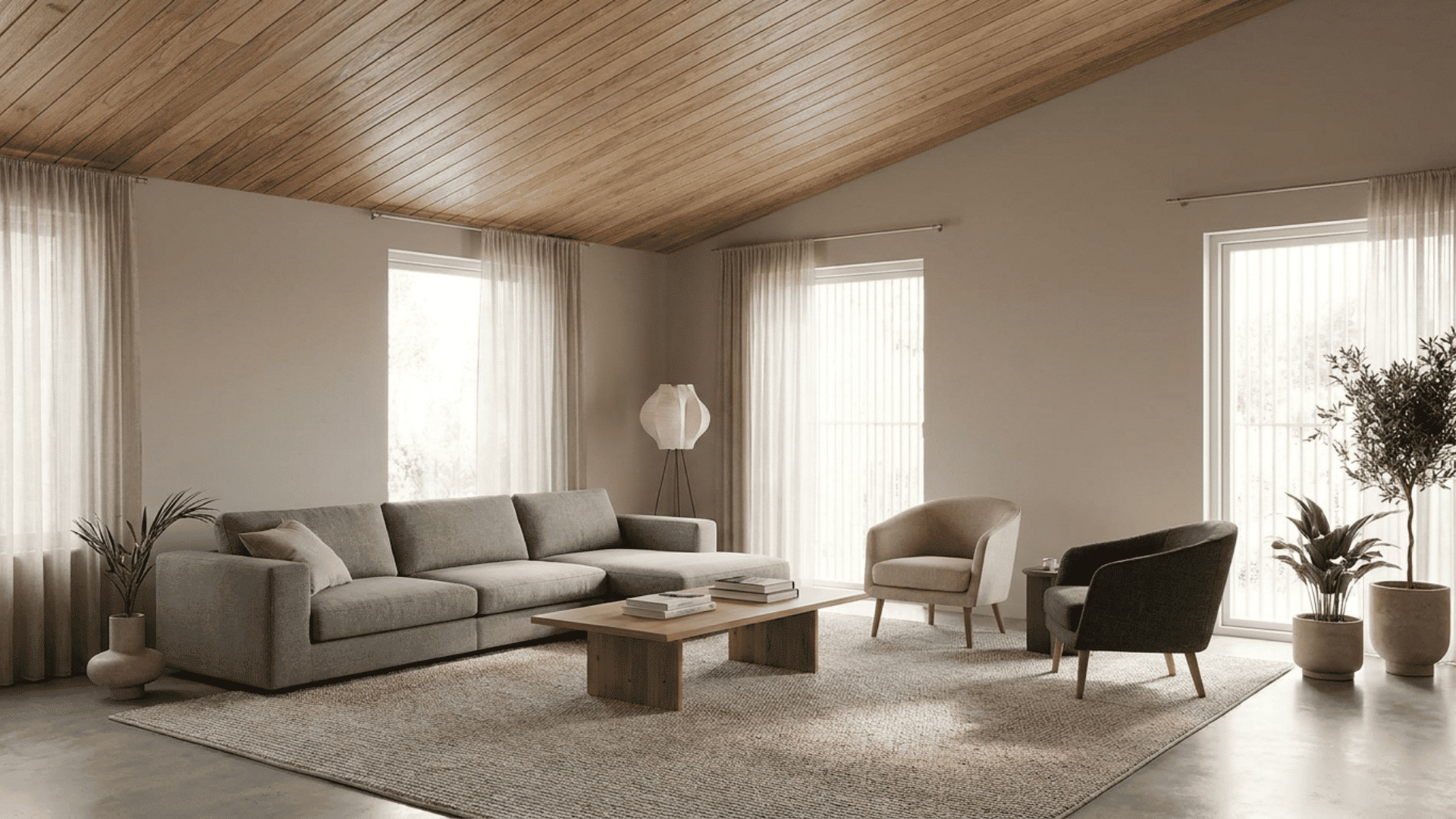
Most wooden ceiling installations run planks in a single direction parallel to the longest wall or following the ridge of a pitched roof.
Running the planks diagonally instead, at a 45-degree angle to the room’s walls, breaks the expected grid and introduces immediate visual energy.
The diagonal orientation draws the eye across the ceiling in a way that feels dynamic without being chaotic.
This treatment works particularly well in hallways and corridors, where the angular lines emphasize the sense of movement and direction. Use a consistent plank width and a single, clear, sealed finish for the strongest result.
36. Living Room Ceiling with Layered Design
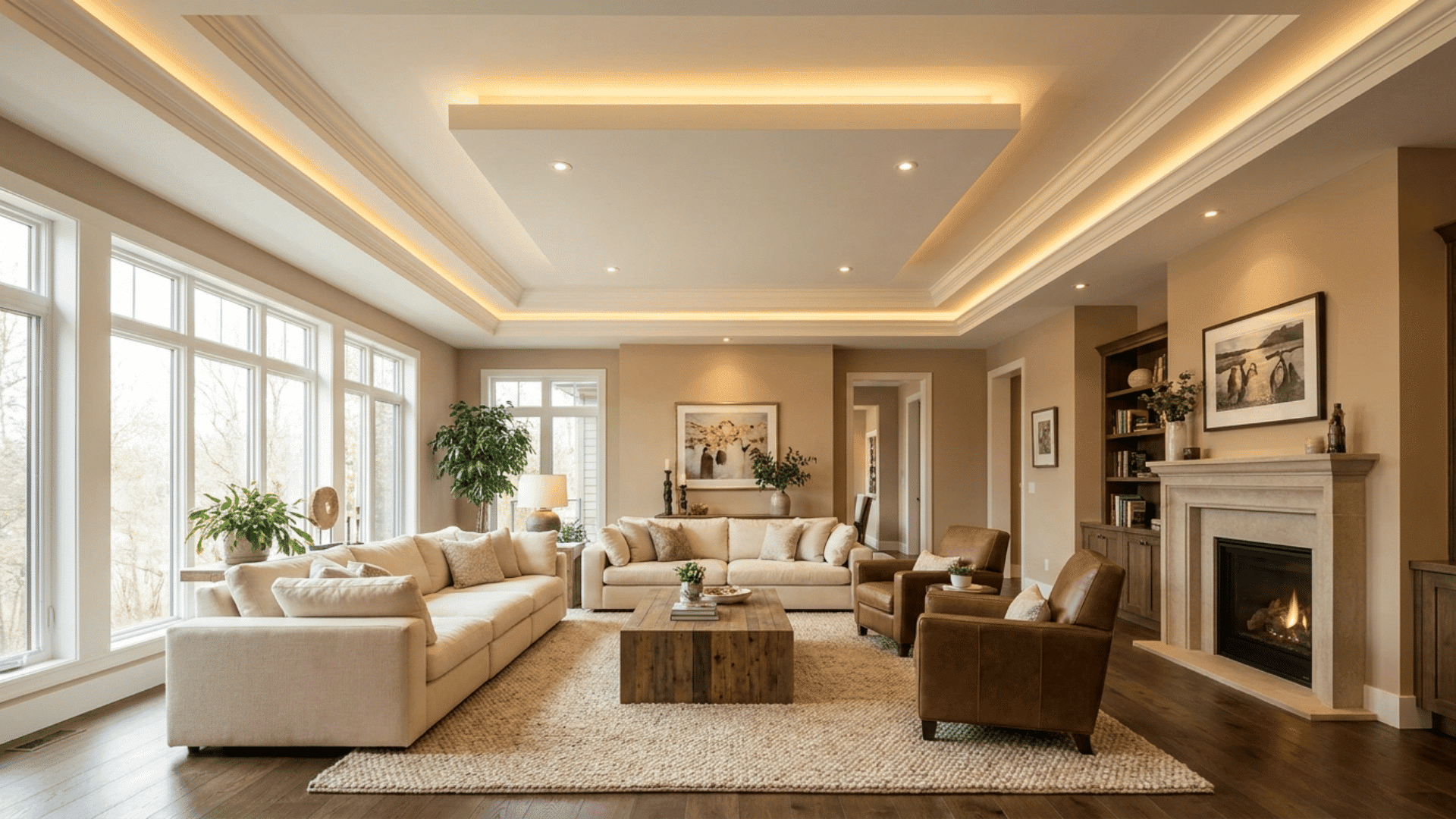
The living room is typically the largest and most socially visible room in a home, which makes it the ideal candidate for a more complex ceiling treatment.
A two-level false ceiling with an outer cove-lit border and a central recessed panel accommodates multiple lighting moods: bright and social during gatherings, soft and atmospheric in the evenings.
The layered structure also helps acoustically, reducing the echo that flat ceilings in large rooms can produce. Choose materials in a consistent color family to keep the layers looking cohesive rather than busy.
37. Bedroom Cozy False Ceiling
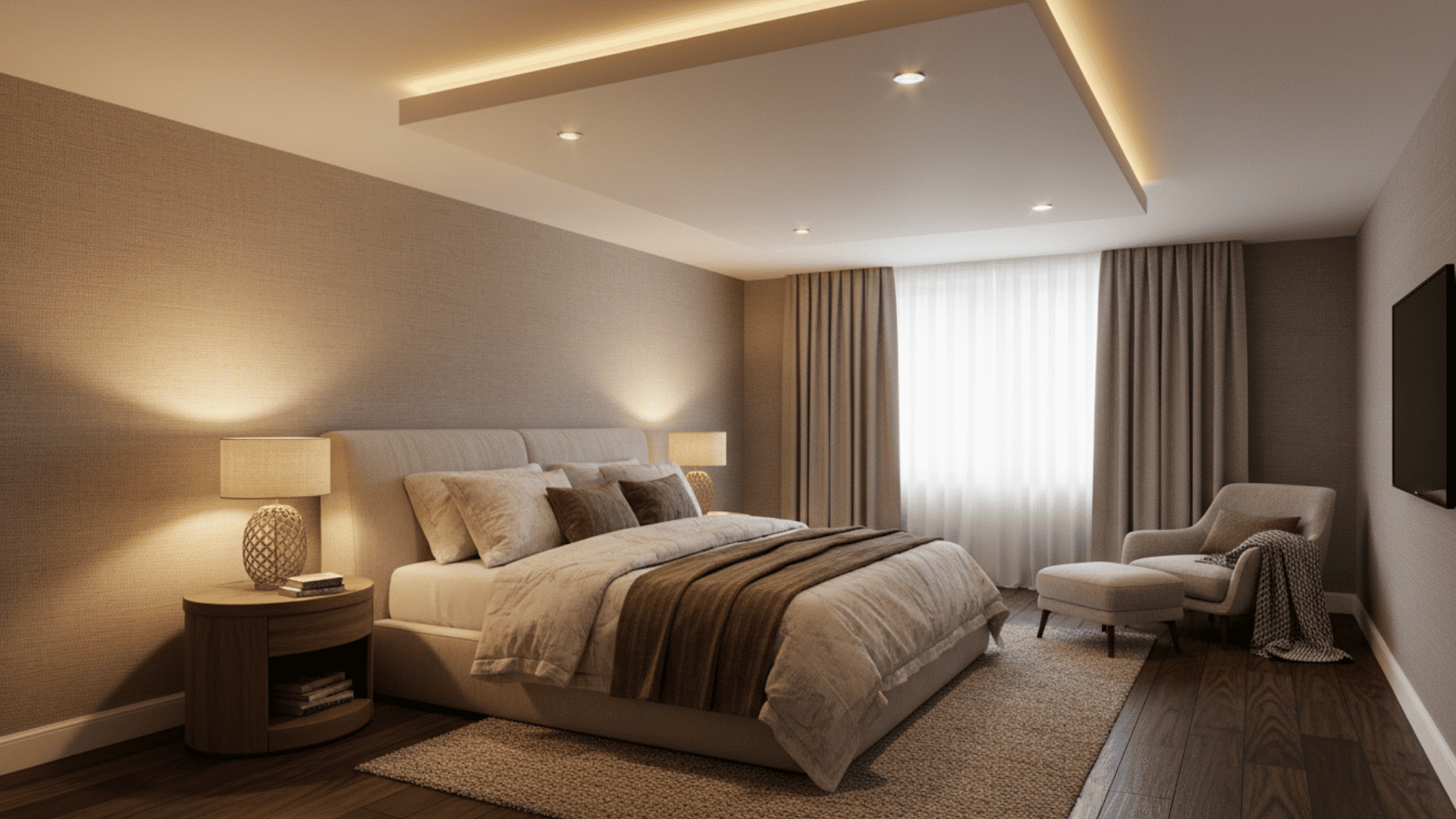
The bedroom calls for a ceiling that supports rest and quiet rather than visual stimulation.
A single-level false ceiling in a warm off-white, fitted with a soft cove lighting border and one or two dimmable recessed spots, delivers both practicality and comfort without overwhelming the space.
For a more intimate feel, install the false ceiling slightly lower, dropping it 12 to 15 inches below the structural ceiling to create a physical sense of enclosure that makes the room feel like a genuine retreat rather than just a room with a bed.
38. Kitchen Ceiling with Recessed Grid Lighting
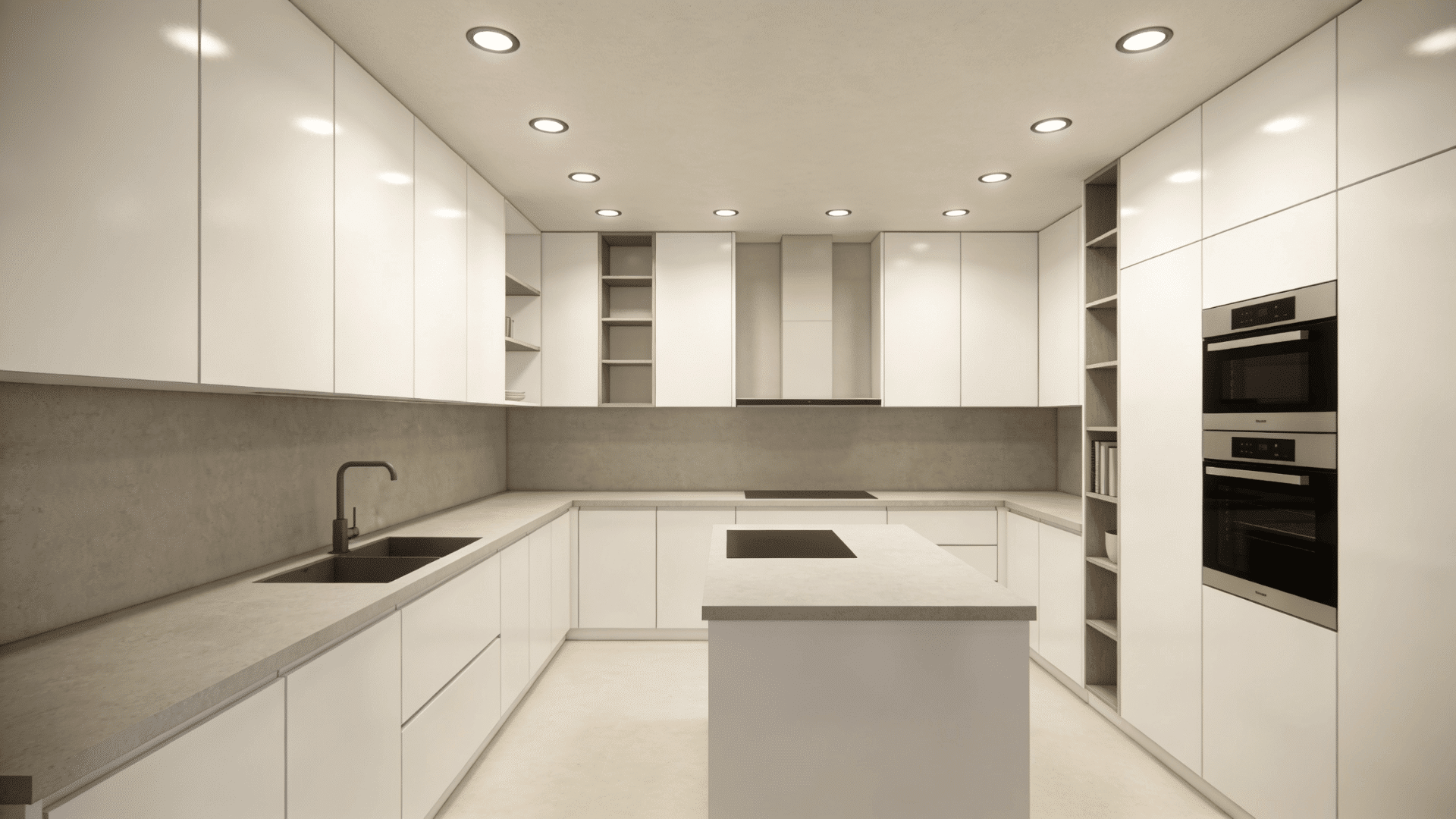
Kitchens require even, shadow-free illumination across all work surfaces, and a recessed lighting grid with evenly spaced downlights installed in a flat gypsum or PVC false ceiling delivers exactly that.
The ceiling itself should be kept clean and simple, in a light color that reflects as much light as possible into the space. Avoid decorative ceiling treatments in kitchens where steam, grease, and heat are regular factors.
If a design element is desired, a single narrow cove border provides enough visual interest without creating maintenance challenges.
39. Home Office Ceiling with Task-Optimized Lighting
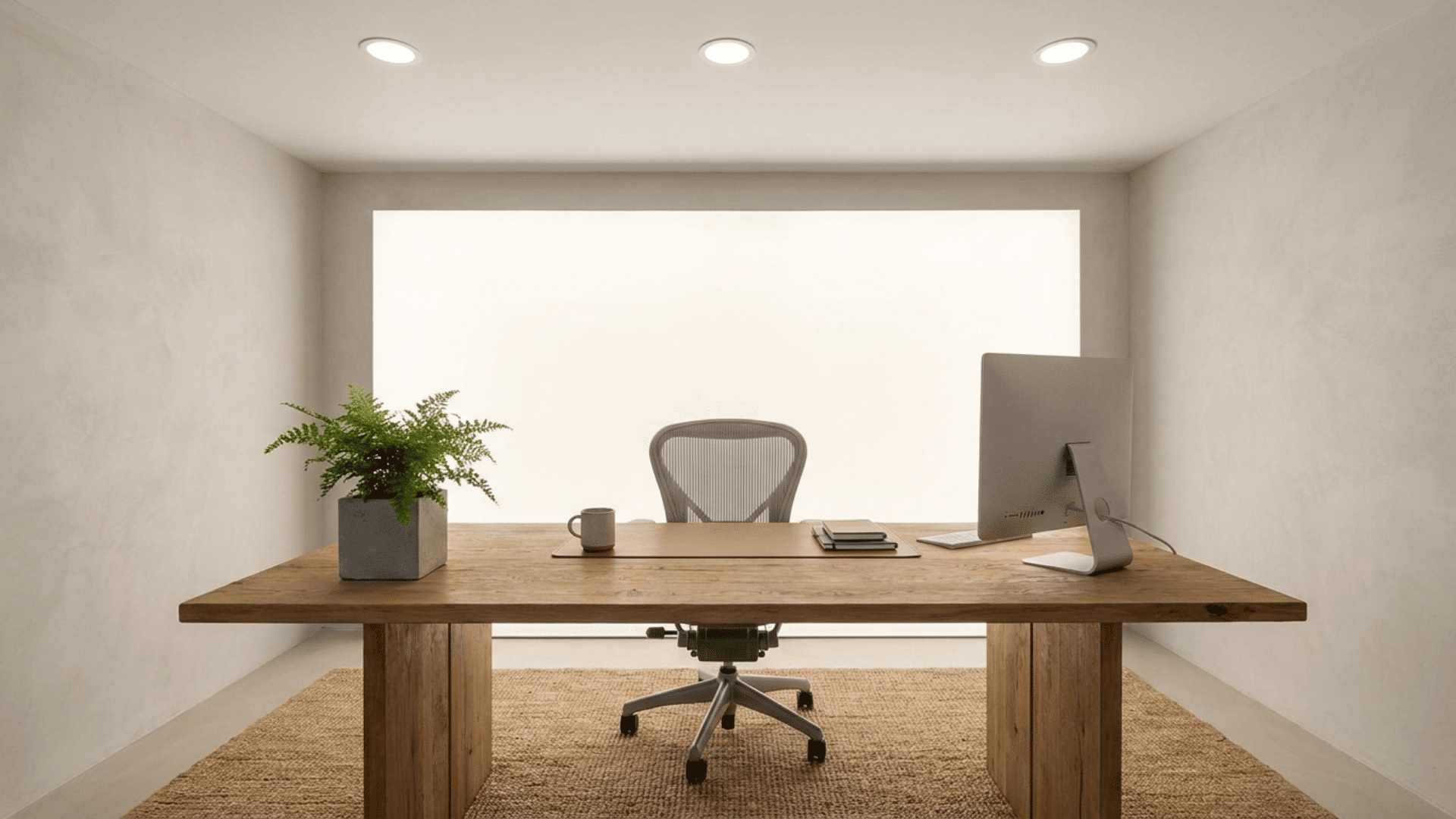
A home office ceiling should be designed entirely around the quality of light it delivers to the work surface.
Glare, harsh shadows, and uneven illumination all contribute to eye strain and reduced focus over long working sessions.
A flat ceiling with recessed downlights, positioned to light the desk from slightly above and to the side rather than directly overhead, eliminates the worst shadows and hotspots.
If the room includes a video-call setup, a diffused backlit panel or cove-lit ceiling provides the most flattering, even light for on-screen appearance.
Common Mistakes to Avoid
Even the best ceiling ideas can backfire if basic planning errors are overlooked, so it helps to know which pitfalls to steer clear of:
- Avoid complex designs for low ceilings, as multi‑level or heavy false‑ceiling elements make small rooms feel shorter and oppressive; use a simple, single‑level flat ceiling with recessed lighting instead.
- Do not install too many light fixtures, as an over‑filled ceiling of evenly spaced downlights flattens the room and removes shadows and depth; use a layered plan with a main ambient source plus a few targeted spots, and add dimmers for flexibility.
- Avoid mixing too many materials (wood, PVC, POP, metal, fabric) without a clear concept, as this creates visual clutter; pick one main ceiling material to define the look and, at most, one accent material to keep the design cohesive and calm.
Final Thoughts
The right room ceiling design is never just about looks. It is about how a space feels to live in, how light moves through it, and how every element from floor to ceiling tells a coherent, intentional story.
A modern ceiling does not require enormous budgets or theatrical gestures. Often, a single well-placed cove of warm LED light, or a row of carefully spaced wooden slats, is all it takes to transform a room from ordinary to genuinely memorable.
The formula I return to in every project is simple: match the ceiling’s complexity to the room’s scale, plan your lighting before you commit to any surface design, and choose materials you can live with beautifully and practically for years to come.
Combine style with functionality, trust the principles, and never underestimate what a thoughtfully designed ceiling can do for a home.
What ceiling style do you prefer for your home? Share your top choice in the comments.
Frequently Asked Questions
What Type of Ceiling is Popular Now?
Smooth, minimalist flat ceilings with subtle textures, wood‑slat, or coffered designs are most popular in modern homes.
What Ceiling Type Adds the Most Value?
Vaulted, cathedral, or well‑designed coffered and wood‑beam ceilings tend to add the most perceived value by making rooms feel larger and more premium.
Is it Hard to Sell a House with a Popcorn Ceiling?
Popcorn ceilings don’t usually kill a deal, but they can make a home feel dated and often require removal or updating to attract top‑tier buyers.

With a Master in Architectural Studies from University of Pennysylvania, Marwa Haydar has pioneered living spaces since 2005. Her expertise, initially honed in a prestigious architectural firm, is evident in her approach to creating environments. Marwa became part of our team in 2019 and has since been a driving force in our home improvement section, known for her practical yet stylish solutions. She’s been spearheading our design workshops since then, infusing her passion for teaching into her work. In her leisure time, Marwa enjoys exploring historic architecture and is an enthusiastic pottery hobbyist, further enriching her understanding of form and texture.