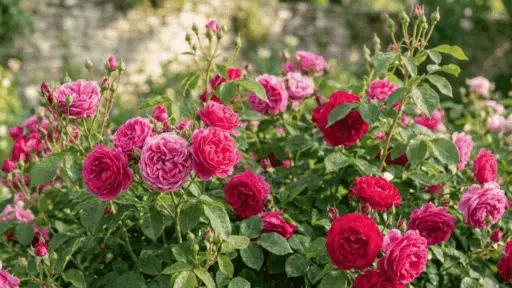
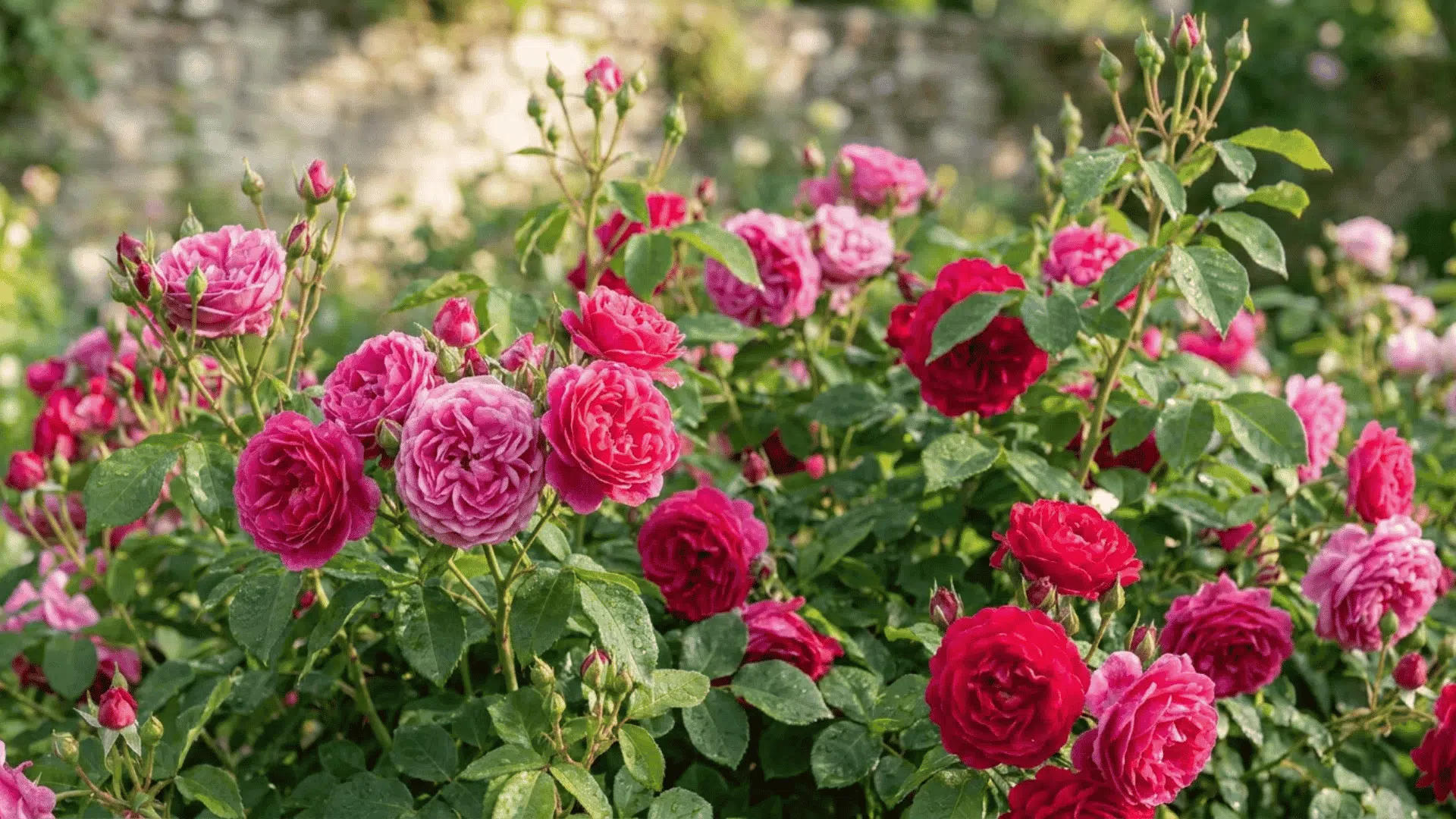

Roses get a bad reputation for being high maintenance. Talk to someone who has lost a rose bush, and they’ll probably say something like “I drowned it” or “I didn’t realize it needed so much sunlight.”
But the thing is, taking care of a rose bush isn’t that hard once you figure out what it really needs. It’s just a matter of understanding the basics and giving your rose the right conditions to grow.
With a little know-how, you can keep your rose bush healthy and enjoy its beautiful blooms for months.
It doesn’t matter if you have a small rose bed in your backyard or an entire garden filled with roses: the basic care rules stay the same.
If you follow these simple practices, your roses will grow strong, stay healthy, and continue blooming year after year.
Start with Healthy Roots

If the roots are weak or damaged, the plant will have a hard time growing, no matter how well you take care of it later. You need to make sure the roots are healthy and strong, or the plant won’t do well.
When you’re buying roses with no soil on the roots, make sure the roots are firm and light in color. If the roots are dark and soft, that’s a bad sign: it means they’re rotting.
If you’re buying a rose in a pot, gently turn it upside down and take it out of the container. Then, check the roots to see if they’re white or tan.
You don’t want the roots to be all tangled up in circles at the bottom of the pot.
If your bare-root roses show up dry or a bit shriveled, here’s what you can do:
- Soak them in a bucket of water for 12 to 24 hours before planting to rehydrate the roots.
- When it comes to getting the best roots for your plants, many gardeners online swear by buying from local nurseries, as the quality of the roots is much better.
- The reason is that local growers usually take better care of their plants, and they have varieties that are perfect for your area.
This way, you can get plants with strong and healthy roots that will do well in your garden.
When it comes to sourcing healthy plants, I consistently recommend local nurseries over big-box garden centers.
In my experience visiting gardens across different growing zones, plants sourced locally arrive less stressed, with root systems that haven’t been sitting in transit for days.
Local growers also tend to stock varieties well-suited to your specific region.
Choose the Right Rose Variety
Not every rose works in every garden. Picking a variety that suits your climate, soil, and available time is one of the best decisions you can make upfront.
Types of Roses to Know
| Rose Type | Description | Care Level | Best For |
| Hybrid Tea Roses | Classic long-stemmed blooms that are commonly used for cut flowers. | Moderate to High | Gardeners who want large, traditional rose blooms for bouquets. |
| Shrub Roses | Hardy roses that are usually disease-resistant and reliable year after year. | Low to Moderate | Low-maintenance gardens and beginners. |
| Climbing Roses | Roses that grow along fences, trellises, and arbors with proper support. | Moderate | Vertical garden spaces and decorative structures. |
| Miniature Roses | Small, compact roses that grow well in containers and tight spaces. | Low to Moderate | Patios, balconies, and small gardens. |
| Knock Out Roses | A popular shrub rose variety known for steady blooms and simple care once established. | Low | Beginner gardeners looking for easy-care roses. |
If you live in a cold climate (USDA zones 3–5), look for varieties rated for your zone. In warmer regions (zones 8–10), heat-tolerant varieties like Belinda’s Dream or Caldwell Pink perform well.
Pick the Perfect Planting Location
Roses are sun-loving plants. This is not negotiable. They need at least six hours of direct sunlight daily: eight hours is even better.
Without adequate sun, you will get weak growth, fewer blooms, and significantly more disease. What roses need from their planting location:
1. Plenty of sunlight
Roses grow best in full sun, especially when they receive direct morning sunlight. Morning light helps dry moisture from the leaves early in the day, which can reduce fungal problems like black spot and powdery mildew.
Most rose varieties need at least six hours of sunlight daily for healthy growth and steady blooming.
A south-facing or west-facing spot in your yard typically offers the most consistent sun exposure throughout the day. If your garden has limited full-sun areas, prioritize that space for roses over any other plant.
2. Good airflow
Proper air circulation is important for keeping rose bushes healthy. Avoid planting roses in cramped spaces between walls, fences, or thick shrubs where air cannot move freely.
Good airflow helps leaves dry faster after rain or watering and lowers the chance of disease spreading through the plant.
As a general rule, leave at least two to three feet of space between rose bushes. This spacing allows air to move freely around each plant, making routine maintenance, such as pruning and spraying, much easier.
3. Well-draining soil
Roses prefer well-draining soil that dries quickly after watering. Soil that holds too much water can damage the roots and lead to root rot.
If your garden soil is heavy clay, adding compost or organic matter can improve drainage and create better growing conditions.
A simple drainage test: dig a small hole about 12 inches deep, fill it with water, and see how long it takes to drain. If water is still sitting after an hour, your soil needs improved drainage before planting.
4. Space away from large trees
Large trees compete heavily for moisture and nutrients in the soil. Their roots can spread far beyond the trunk, making it difficult for nearby roses to get what they need.
Giving your rose bushes enough space from large trees helps support stronger roots and healthier blooms.
If removing nearby trees is not an option, raised beds are a practical solution. They give roses their own contained soil environment, free from competing root systems and with full control over drainage and nutrition.
A common mistake shared frequently on gardening forums is planting roses right up against a fence or wall for “protection.” While this feels logical, it cuts off air movement and creates the humid conditions that black spot and powdery mildew love. Give your roses space to breathe.
The Best Time to Plant a Rose Bush
When you plant your roses, they play a significant role in how well they establish themselves. Timing affects how quickly roots develop, how well the plant handles its first season, and how much extra care you will need to keep it alive during stress periods.
1. Bare-root roses
They should go in the ground during late winter or early spring, while the plant is still dormant. In most parts of the U.S., that means January through March, depending on your zone.
Planting during dormancy gives the roots time to settle into the soil before the plant has to spend energy pushing out new leaves and stems. This head start makes a real difference in first-year vigor.
2. Container-grown roses
They offer more flexibility. You can plant them from spring through early fall, though planting in the heat of summer can stress the plant and require extra watering to get established.
If you do plant in summer, choose an overcast day or a cooler stretch in the forecast rather than dropping a plant into hot, dry ground during a heat wave.
Shade cloth for the first week or two can also help reduce transplant shock.
3. Spring planting
During spring, roses also recover more quickly from transplant stress because growing conditions are generally mild and stable. Many gardeners notice stronger early growth and healthier blooms when roses are planted during this season.
In cold climates, avoid planting in the fall if you can. Roses planted too close to the first frost do not have enough time to root in before the ground freezes. A plant that has not fully established is far more vulnerable to winter kill, heaving, and dieback.
If fall is your only option, aim to get the rose in the ground at least six weeks before your average first frost date, and mulch heavily around the base to extend the soil’s warmth as long as possible.
One thing worth noting: planting at the right time does not mean much if the soil is waterlogged or still frozen a few inches down. Always check that the ground is workable and draining properly before you put a rose in the ground, regardless of what the calendar says.
How to Plant Roses Properly as a Beginner
Good planting technique sets the tone for years of growth. Rushing through this step is one of the most common beginner mistakes.
1. Make a big hole
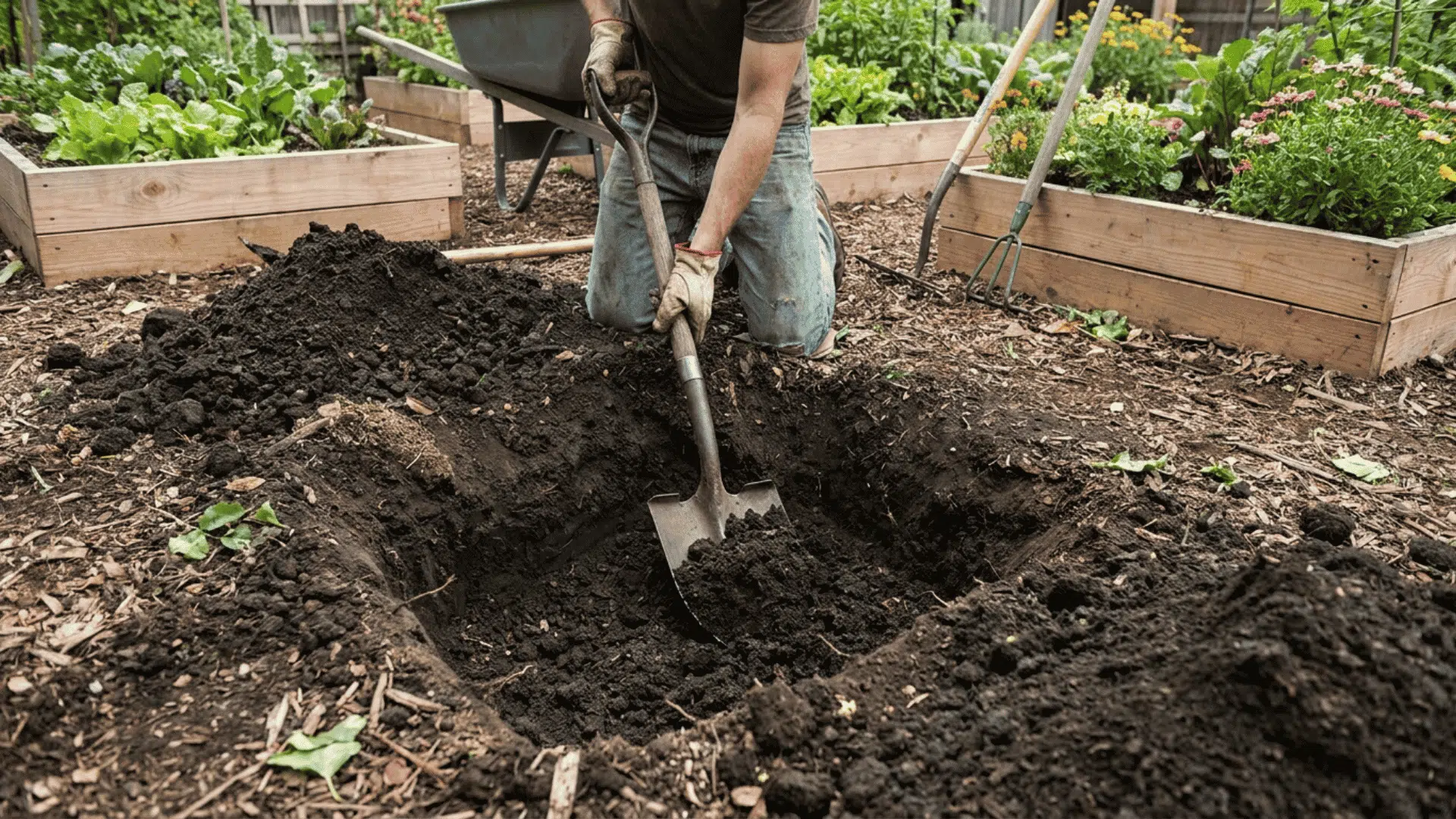
It should be about two times wider than the ball of roots and around 15 to 18 inches deep, so the roots have enough room to grow and settle in properly.
A wider hole helps roots spread more easily into the surrounding soil, rather than staying cramped. Avoid digging too deep, as roses need a stable base for strong anchoring.
2. Improve your soil
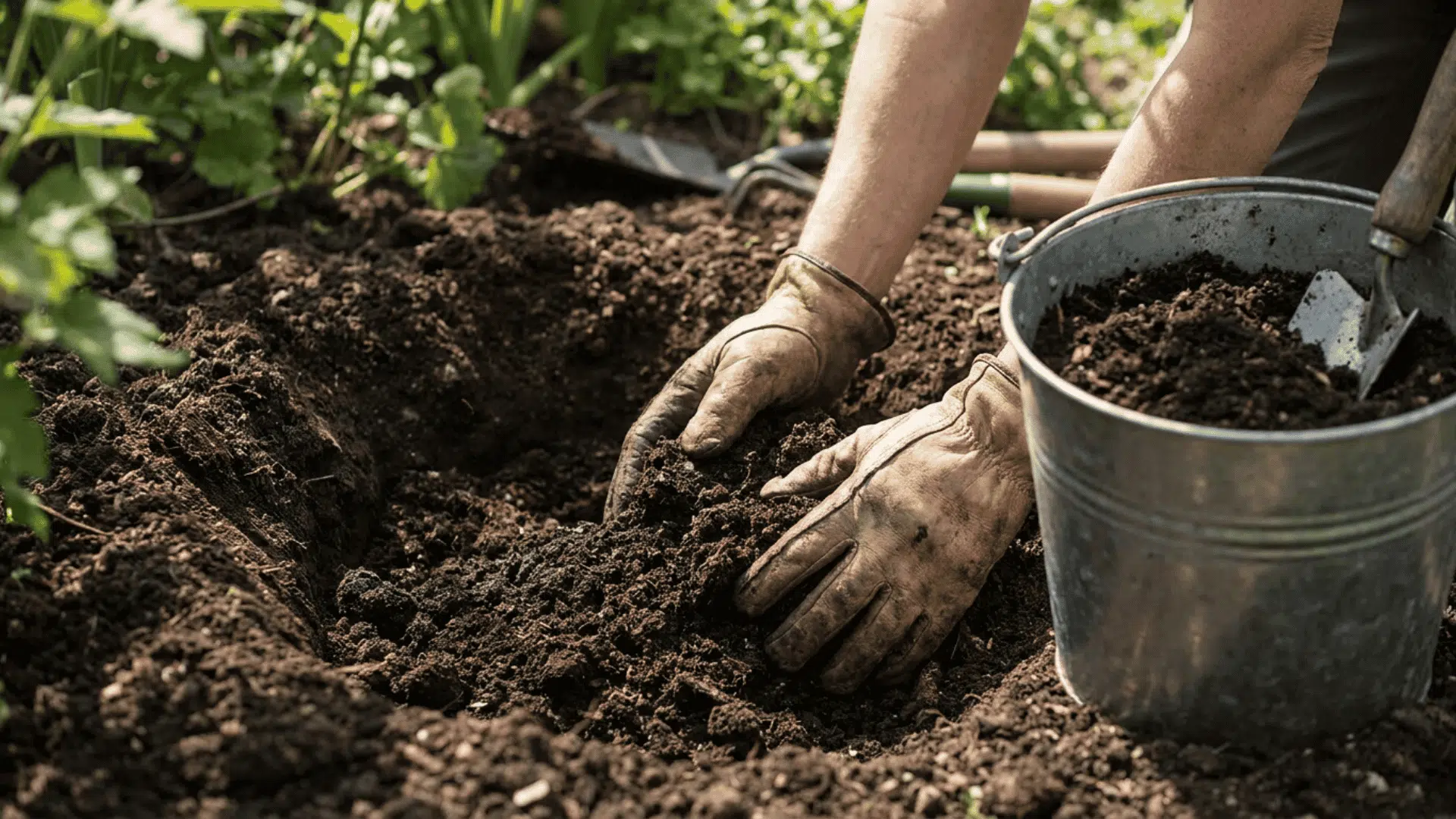
Add some compost or old manure to help it drain better and give your plants the nutrients they need.
Mix the soil well so that the nutrients are spread out evenly.
This helps make the soil a better place for plants to grow, and it supports the roots as they start to develop after the plant is put in the ground.
3. Build a small mound at the bottom of the hole (for bare-root roses)
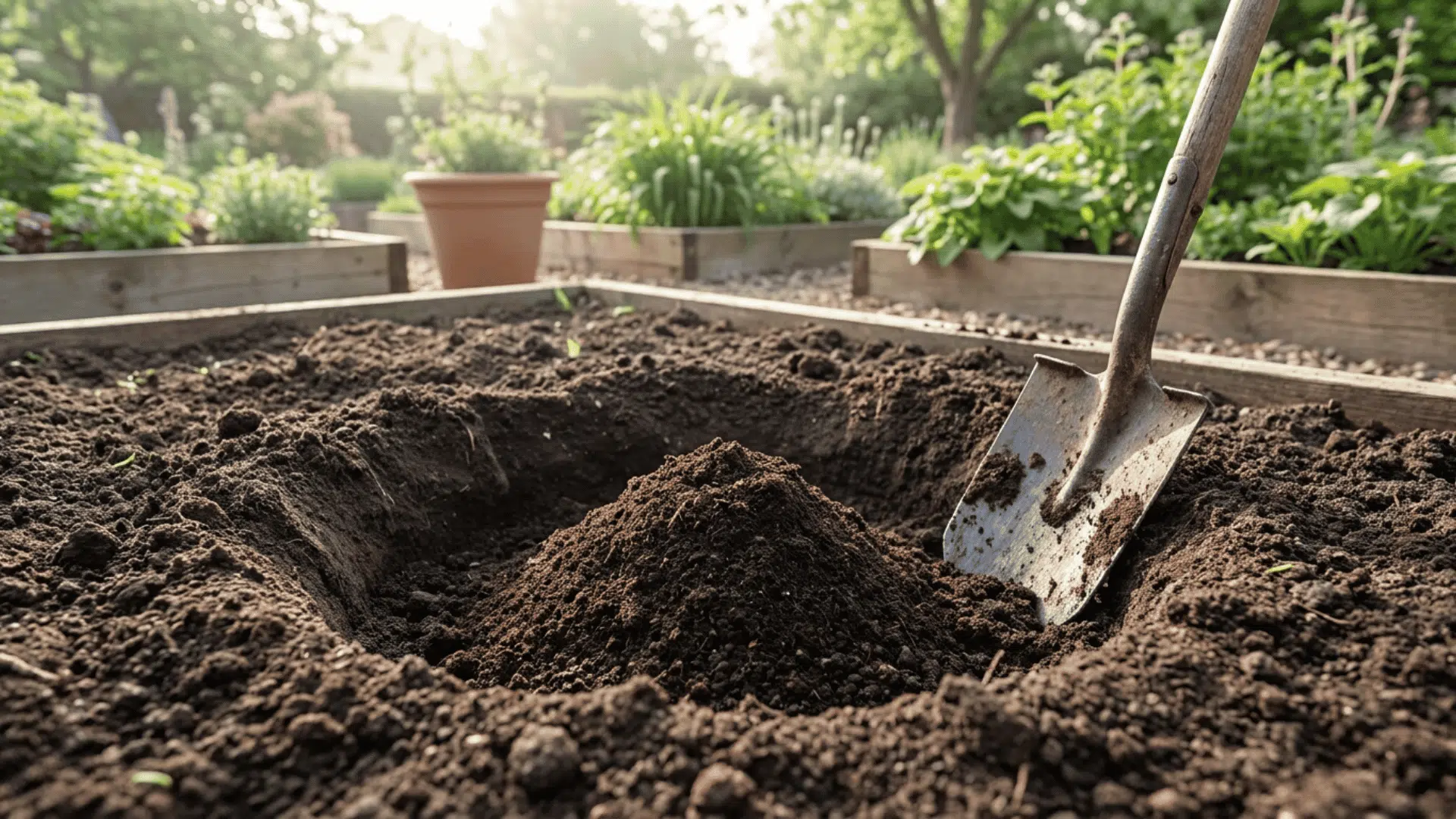
Build a small mound of soil at the bottom of the planting hole when planting bare-root roses. Gently spread the roots over the mound so they fan outward and downward in a natural way.
This helps the roots establish better and grow stronger over time. Avoid bending, twisting, or crowding the roots, as cramped roots can limit healthy growth and make it harder for the rose plant to settle properly.
4. Check bud union placement
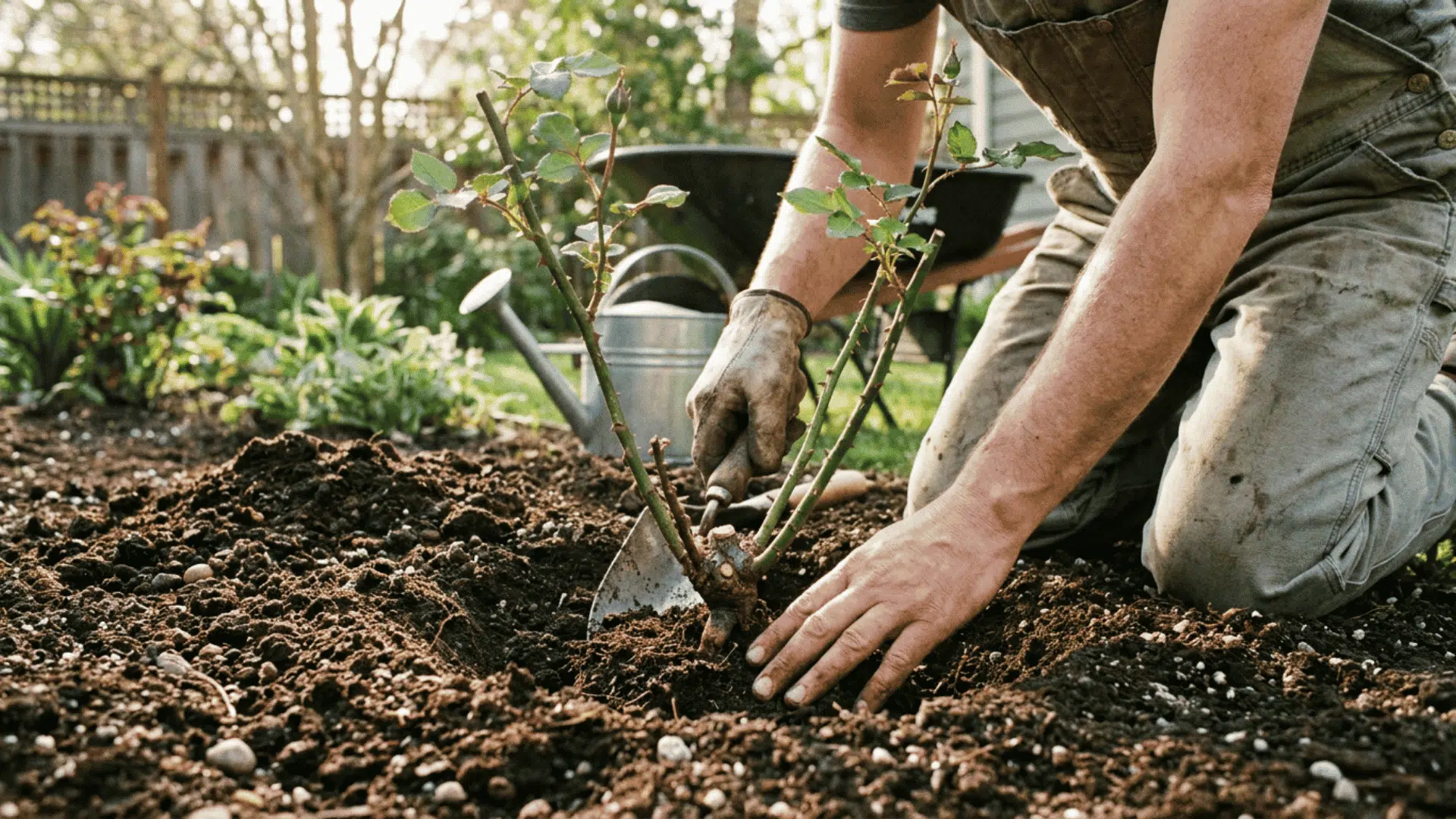
When planting, make sure to check where the bud union is, which is the knobby part where the roots meet the canes. In areas that get really cold, it’s best to put this union about 2 inches below the soil level.
But if you’re in a warmer place, keep it at or just a little above the soil surface. This helps the plant grow well and stay healthy.
Placing the plant in the right spot helps keep it from getting too hot or too cold, which helps the cane grow strong and healthy over time.
5. Backfill gradually
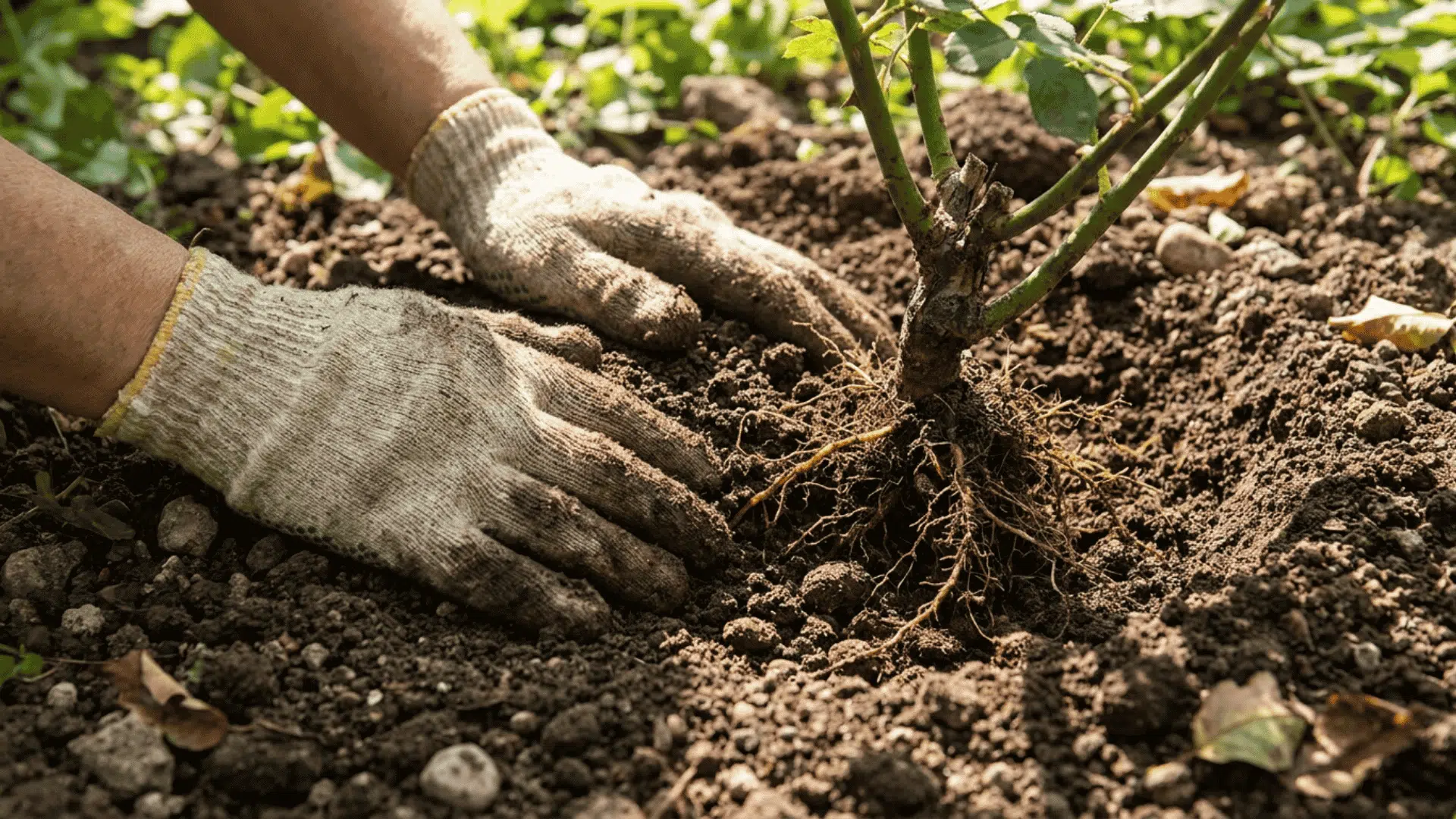
Fill in the soil around the roots slowly, then press it down gently to remove any air pockets. Add soil in layers instead of all at once.
Gently press the soil as you go to ensure roots stay in full contact with the soil and no air gaps remain.
6 . Water deeply
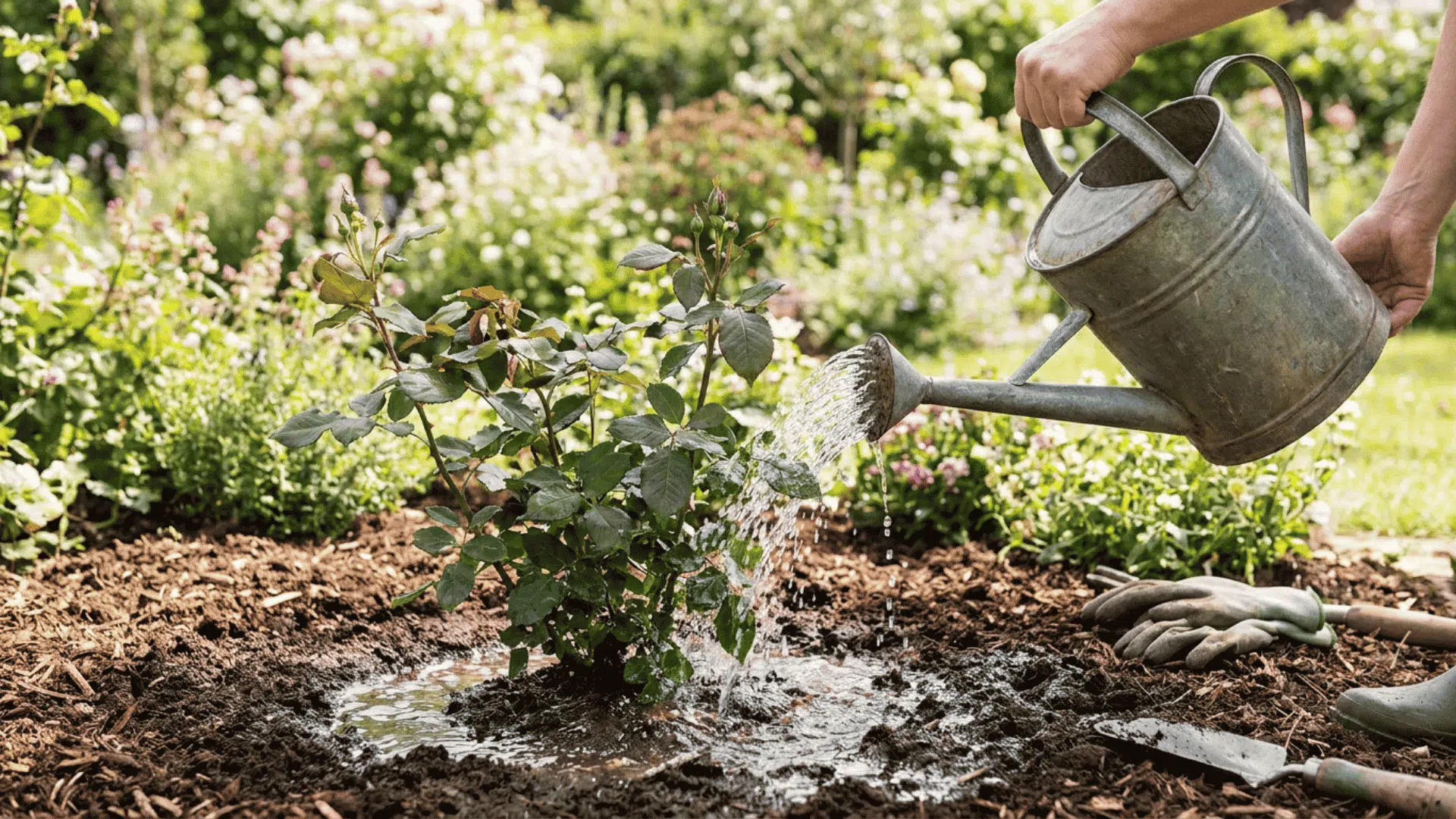
Give your plants a good soaking when you first put them in the ground. Don’t just sprinkle a little water on the surface: make sure the soil is really moist.
Watering deeply is crucial because it helps the soil get comfortable around the roots. This way, the roots get all the moisture they need, which reduces the stress of being moved to a new home.
7. Mound up soil or mulch
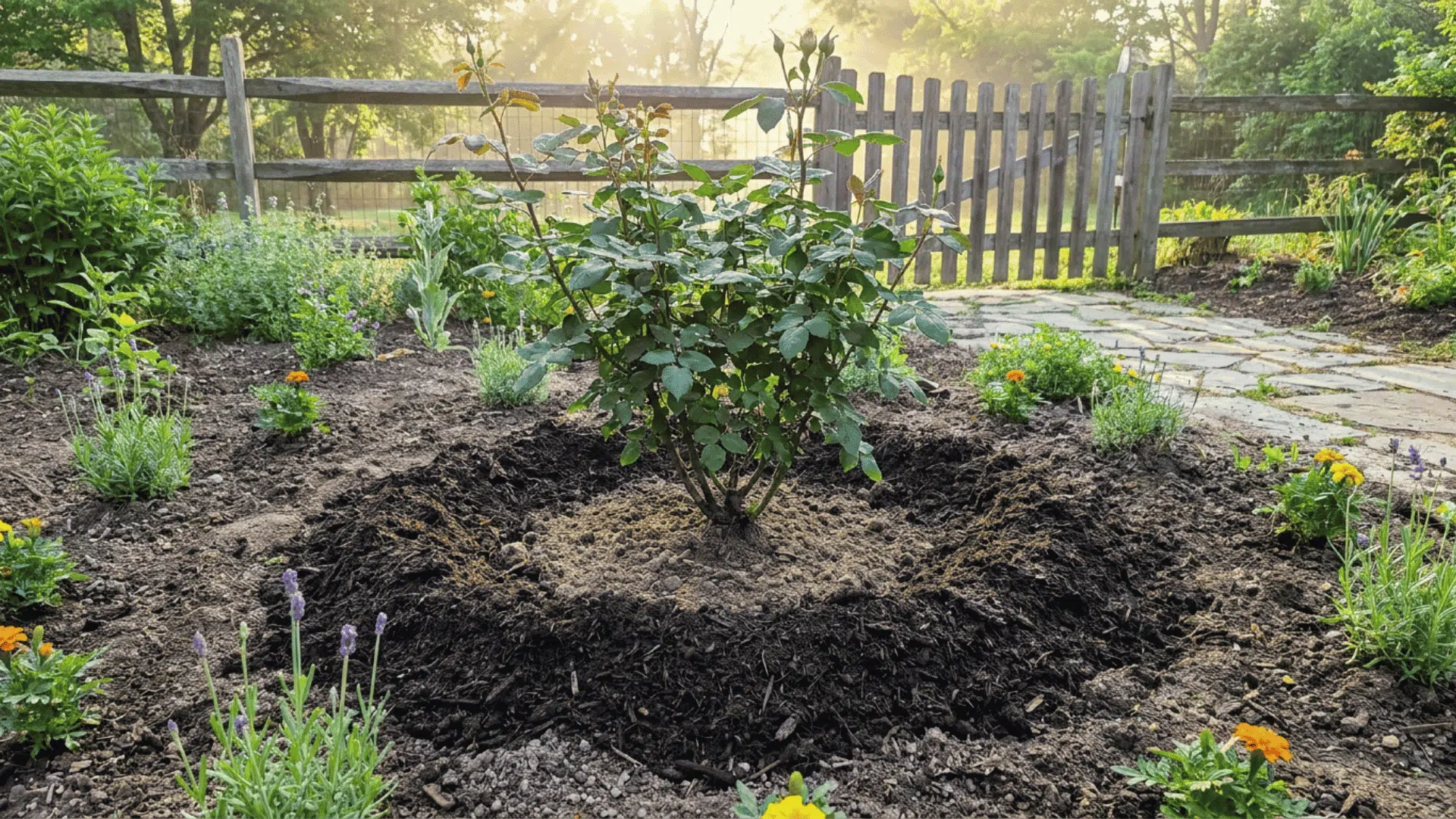
This extra layer keeps roots safe from sudden temperature drops. Once the plant is strong and the weather is steady, you can remove this layer or spread it out so it’s not too thick.
After planting, a 2 to 3 inch layer of organic mulch around the base (but not touching the canes) helps retain moisture and moderate soil temperature.
Common Rose Diseases
Here are some common rose diseases that can affect the healthy growth of your plant:
| Disease | Symptoms | Conditions / Spread | Prevention | Treatment |
| Black spot | Circular black spots on leaves, followed by yellowing and leaf drop | Spreads through water splash; thrives in humid conditions | Plant in full sun, water at the base, ensure good spacing for airflow, and remove fallen leaves regularly | Remove infected leaves and improve airflow: fungicidal sprays may help in severe cases |
| Powdery mildew | White, powdery coating on young leaves and buds | Warm days with cool nights; poor air circulation | Improve air circulation, avoid overhead watering | Remove affected growth: fungicides or sulfur sprays can help if severe |
| Rose rosette disease | Distorted growth, excessive thorniness, unusual red coloration | Caused by a virus spread by tiny mites | No prevention once mites are present; control mites and inspect regularly | No cure, remove and destroy infected plants immediately (do not compost) |
| Rust | Orange pustules on leaf undersides | Cool, moist conditions are more common in western regions | Improve air circulation, avoid wet leaves, and plant in sunny areas | Remove infected leaves; fungicidal treatments may reduce the spread |
Choosing disease-resistant varieties is the single most effective way to reduce problems.
Modern shrub roses like Carefree Wonder, Flower Carpet, and many David Austin varieties have been bred specifically for disease resistance.
Monitor Pests Before They Spread
A small pest problem can turn into a big one fast. Checking plants regularly, at least once a week during the growing season, lets you catch issues early, when they are easiest to manage.
Pests to Watch For
- Aphids cluster on new growth, buds, and the undersides of leaves. They suck plant sap and leave behind sticky residue. A strong blast of water usually dislodges them. Ladybugs are natural predators and a welcome sight in any rose garden.
- Japanese beetles cause significant damage from midsummer onward. They skeletonize leaves and chew through blooms. Hand-picking in the early morning (when they are sluggish) into soapy water is an effective and chemical-free method.
- Spider mites are tiny and hard to see, but their damage, bronze or yellow stippling on leaves and fine webbing, is distinctive. They thrive in hot, dry conditions. Keeping plants well-watered and occasionally misting the foliage can help deter them.
- Thrips damage rose petals, leaving streaks and distortion. They are most active during warm, dry weather. Insecticidal soap or neem oil is effective if applied early.
The general advice from experienced gardeners holds here: avoid broad-spectrum pesticides whenever possible. They kill beneficial insects along with the pests and create bigger problems down the line.
Advanced Rose Care Tips
Once your roses are established, a few simple long-term care habits can help keep plants healthier, blooming better, and looking beautiful through every season.
1. Keep a Clean and Tidy Rose Garden
Remove fallen leaves from around your plants as soon as they drop. Black spot spores overwinter in leaf litter and reinfect plants the following spring, so clearing debris consistently breaks that cycle before it starts.
Clean your pruning tools between plants using rubbing alcohol or a diluted bleach solution to prevent the spread of disease from one rose to another without you realizing it.
Refresh your mulch layer each spring to bury any overwintered fungal spores and keep the soil cool and moist through the warmer months.
Before winter sets in, clear out dead canes and any remaining debris from the garden bed. These small actions take very little time but pay off significantly in reduced disease pressure year after year.
2. How to Preserve Rose Blooms
Cut roses in the early morning or evening, never in the heat of the day when plants are under temperature stress. Use sharp shears and cut stems at a 45-degree angle, choosing blooms that are just beginning to open rather than ones already fully open.
Place stems immediately into a bucket of cool water, and strip leaves from the lower portion of each stem before putting them in a vase. Keep arrangements out of direct sunlight and away from ripening fruit.
For drying roses, hang small bunches upside down in a warm, dark, well-ventilated space. Silica gel is another option and does a better job of preserving the original color compared to air drying alone.
3. Common Rose Growing Mistakes Beginners Make
- Planting in too much shade – Roses need real, sustained sunlight. Partial shade leads to weak growth and minimal blooming. Sprinklers wet the foliage and create ideal conditions for fungal disease, so watering at the base is always the better approach.
- Pruning at the wrong time – Heavy pruning in fall removes protective canes and stresses the plant before winter arrives. Save any major cutting for late winter or early spring when the plant is ready for it.
- Ignoring soil pH – It causes similar silent damage. Roses prefer slightly acidic soil with a pH of 6.0 to 6.5, and soil that is too alkaline locks out nutrients even when fertilizer is applied regularly.
- Over-fertilizing – More fertilizer does not mean more blooms. Excessive nitrogen pushes leafy growth at the expense of flowers and makes plants more vulnerable to aphids.
- Planting roses too close together – Since crowded plants compete for resources and create the airless, humid conditions where disease spreads fast.
Finally, giving up too soon is worth mentioning. Newly planted roses often look rough through their first season as they establish, and that is completely normal. Patience pays off.
Expert and Community-Proven Rose Care Tips

Beyond the basics, experienced growers and active Reddit gardening communities share a handful of tips that may help you grow rose bushes.
Many users swear by “burying banana peels near the base of rose bushes”.
Epsom salt is another widely used approach: dissolve 1 tablespoon per gallon of water and apply monthly to boost magnesium levels, particularly in sandy or depleted soils, supporting stronger chlorophyll production and better leaf color.
Some users suggest using coffee grounds, lightly worked into the soil, along with organic matter and a small amount of nitrogen. They bring soil pH down slightly over time, which roses prefer. The key is using a light hand: a thin layer works better than piling them on thickly.
Seasonal Rose Care Calendar
Following a seasonal rhythm keeps your roses on track without having to figure out what to do next. Each season has a clear set of priorities.
| Season | Rose Care Tasks |
| Spring | Remove winter protection, prune canes, fertilize, refresh mulch, and watch for aphids as new growth appears. |
| Summer | Water deeply during hot weather, deadhead spent blooms, feed after flowering, and monitor for pests and diseases. |
| Fall | Stop fertilizing before frost, keep watering until the ground freezes, clean fallen leaves, and add mulch around the base. |
| Winter | Protect roses with soil or mulch in cold areas, wrap tender plants if needed, and prepare tools and new rose orders for spring. |
Final Thoughts
Rose bush care does not require special talent or years of experience. It requires attention, consistency, and a willingness to learn from what the plant tells you.
Stay on top of pruning and cleanup, and they will deliver reliable, healthy growth year after year. I have spent nine years watching gardens transform when growers stop overthinking and start paying attention to what their plants actually need. That shift is where real progress begins.
Every gardener comes to roses from a different starting point: a neglected bush, a fresh start, or a second attempt after losing a plant.
Understand your soil, respect your climate, and trust the process. Roses are absolutely worth the effort.
Frequently Asked Questions
How do You Take Care of a Potted Rose Bush?
Use a large container with drainage, water frequently, feed every 2 to 3 weeks, and place in at least 6 hours of direct sunlight daily.
What Kills Roses Fast in a Vase?
Bacteria buildup in the water clogs the stems and cuts off water uptake, accelerated by warm water, dirty vases, submerged leaves, and ethylene gas from nearby fruit.
Does Adding Sugar to Water Make Roses Last Longer?
Yes, but only in small amounts, too much feeds bacteria, so pair it with a drop of bleach or white vinegar for best results.

Jordan Mathews, who has a degree in horticulture from Texas A&M University, has been a guiding force in plant health and sustainable gardening for over 16 years. His career began with a role at a renowned botanical garden, where he deepened his understanding of plant physiology and eco-friendly cultivation methods. Jordan joined our website as a freelancer in 2020, becoming a go-to expert for readers seeking advice on nurturing diverse plant species apart from offering insights grounded in scientific knowledge and practical experience. Beyond his professional achievements, Jordan is a keen nature photographer, capturing the beauty of flora in its immensely diversified forms.