
Lawn growth regulators can slow vertical grass growth, reduce clipping volume, and help a lawn maintain a more consistent appearance between cuts. They work, but their success depends on the grass species, product, application rate, timing, and overall lawn health.
For homeowners tired of mowing every few days during peak growing season, those benefits sound almost too convenient. Growth regulators are not magic, though, and using them incorrectly can leave turf discolored, stressed, or uneven.
Lawn Growth Regulators Explained
Lawn growth regulators are products that change how quickly grass grows without killing it. Often called plant growth regulators or PGRs, they are commonly used on golf courses, sports fields, commercial landscapes, and increasingly, residential lawns.
Most modern turf PGRs interfere with gibberellin production. Gibberellin is a natural plant hormone involved in cell elongation, so limiting it causes grass blades and stems to remain shorter.
Type I regulators generally limit cell division and may also suppress seedheads. Type II regulators primarily reduce cell elongation, making them a popular choice when the goal is to slow upward growth while maintaining active turf.
Products can also differ in how grass absorbs them. Some active ingredients enter through the foliage, while others are mainly absorbed through the roots.
The range of plant growth regulators here reflects those differences in formulations, active ingredients, and intended turf uses.
PGRs do not stop grass from growing altogether. Instead, they temporarily redirect or limit certain growth processes, which means mowing, watering, fertilizing, and other routine care are still necessary.
Reduced Mowing
Reducing mowing is one of the main reasons lawn managers use growth regulators. When a suitable product is applied correctly, grass produces less vertical growth and fewer clippings between cuts.
Several practical benefits can follow:
- Longer gaps between mowing sessions
- Less time spent collecting clippings
- More consistent grass height across the lawn
Results vary by product, rate, grass type, weather, and application schedule. A fast-growing bermudagrass lawn may react differently from tall fescue or Kentucky bluegrass, so label directions matter more than a one-size-fits-all schedule.
Also, growth reduction is temporary. Applications usually need to be repeated during active growth, and waiting too long can sometimes lead to a rebound period when the grass grows faster than expected.
Timing applications by growing-degree days can produce more consistent suppression than relying only on calendar dates. Golfdom’s overview of USGA-supported research found that timing influenced turf quality, seedhead suppression, and recovery from maintenance work.
Lawn Appearance
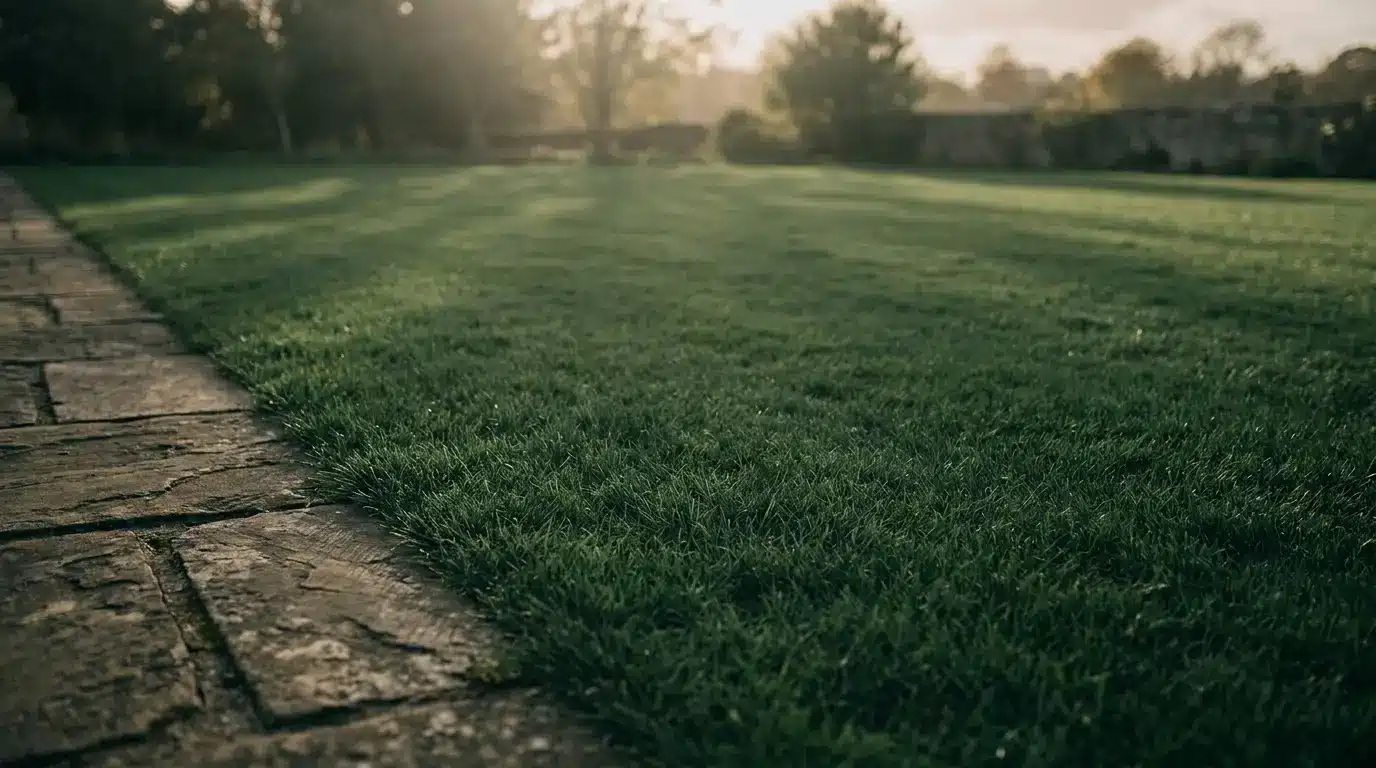
Growth regulators can help lawns look denser, smoother, and more evenly maintained. Slower vertical growth may encourage some grasses to direct more energy toward lateral growth, producing a fuller appearance rather than a tall, uneven canopy.
Grass blades may also become wider or develop a deeper green color after treatment. Those changes are not guaranteed, and they depend on the active ingredient, turf species, nutrition, moisture, and application frequency.
Fewer sudden growth surges can make it easier to maintain a preferred mowing height. Homeowners may also encounter fewer visible clippings and less scalping, especially when rapid spring or summer growth normally overwhelms the mower.
Some regulators offer benefits beyond appearance. According to research published by Cambridge University Press, certain active ingredients reduced smooth crabgrass aboveground biomass by 67% to 69% in controlled studies.
For the reader, those figures show why product selection matters. A regulator that effectively suppresses one unwanted grass may provide limited control of another. And no PGR should automatically be treated as a replacement for a labeled herbicide.
Optimal Conditions
Lawn growth regulators are most dependable on healthy, actively-growing turf. Drought, excessive heat, disease, nutrient deficiencies, poor soil, or incorrect mowing can make the lawn more vulnerable to discoloration and injury.
Seasonal timing deserves close attention. Growth suppression may improve everyday maintenance and appearance, but applications made during stressful conditions can create unwanted effects.
Also, PGRs cannot repair bare soil, cure disease, correct compaction, or replace proper irrigation. Applying more product will not compensate for an unhealthy lawn and may make existing stress more noticeable.
Careful measurement is essential because small rate differences can change the outcome. Applicators should confirm the grass species, measure the treatment area, calibrate equipment, and follow the product label rather than estimating.
The Value of Lawn Growth Regulators
Lawn growth regulators work when the right product is matched with the right turf and applied under suitable conditions. They can reduce vertical growth, limit clipping volume, extend mowing intervals, and support a more uniform lawn.
Strong results still depend on realistic expectations. PGRs are temporary maintenance tools rather than permanent shortcuts, and healthy grass must remain the foundation of the lawn-care plan.
Homeowners who want fewer growth surges and more predictable mowing may find them worthwhile.
Has this article been informative? If so, be sure to check out some of our other insightful posts!

With a Master’s in Landscape Architecture from the University of Virginia, Sophia Stephenson has dedicated the last 20 years to creating and maintaining vibrant outdoor spaces. Her professional journey started in landscape design, where she gained a reputation for innovative and sustainable approaches. Sophia became a part of our editorial team as a freelancer in 2019, offering a fresh perspective on outdoor living. Since 2020, she has been the chief for our outdoor design content, blending aesthetic appeal with environmental stewardship. In her leisure time, Sophia is a keen photographer, capturing the beauty of natural landscapes, a hobby that complements her professional expertise.