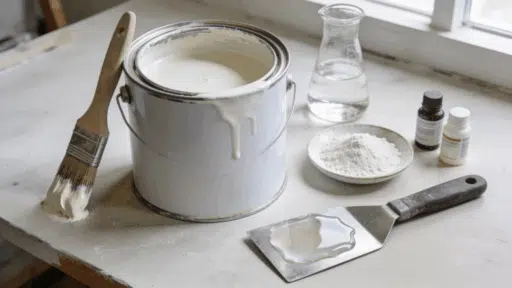
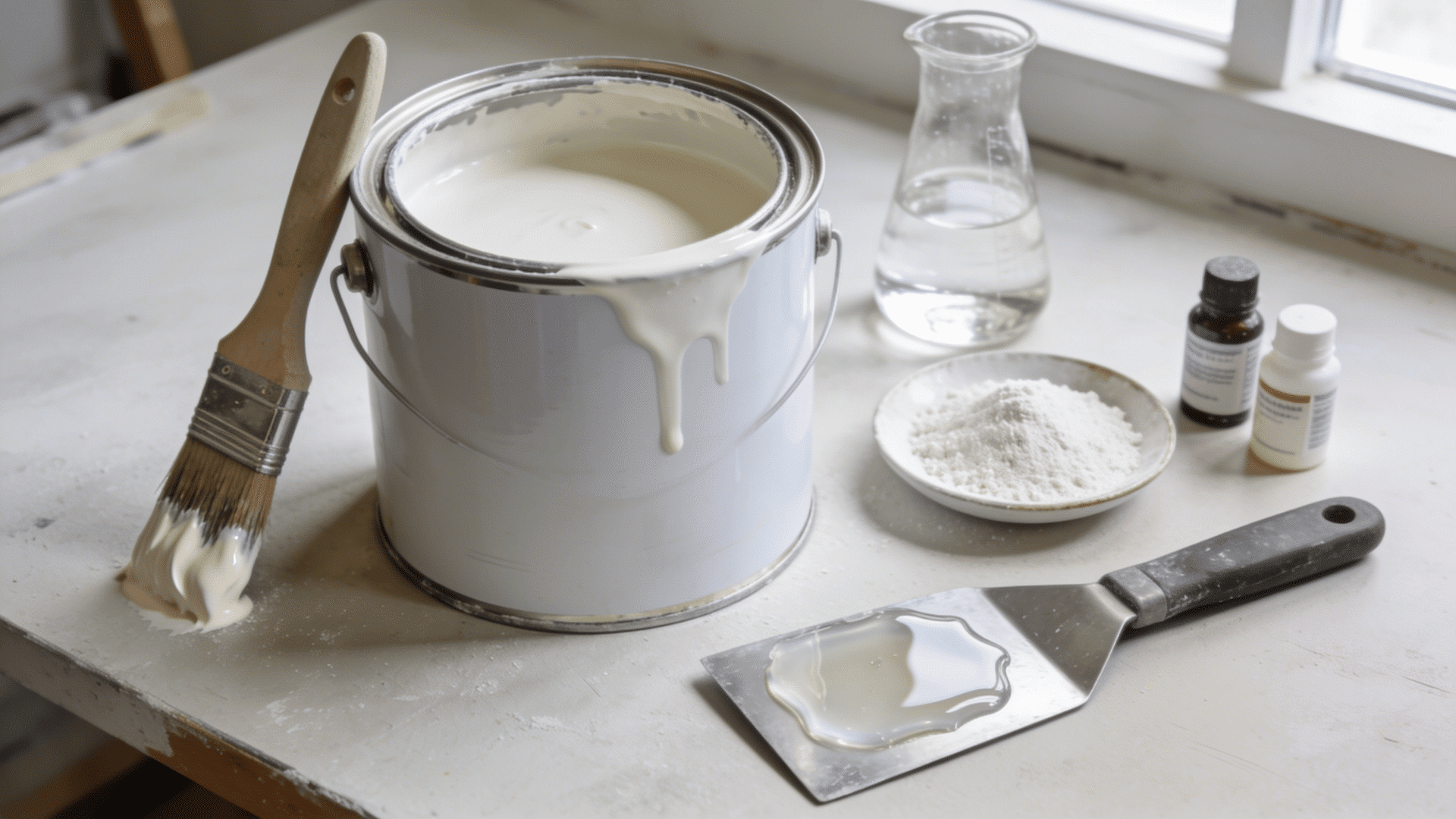

What is paint made of? Pigment gives paint color, binder helps it stick, solvent keeps it spreadable, and additives improve drying time, odor, mildew resistance, and durability.
The recipe changes depending on where the paint will be used. Wall paint, trim paint, cabinet paint, metal paint, art paint, masonry paint, and exterior paint all need different performance qualities.
After years of working with paint on walls, trim, cabinets, and exterior surfaces, I’ve learned that the ingredient list explains most paint problems before the first coat goes on.
Ahead, we’ll break down what each ingredient does, how paint is made, how types differ, and what to check on the label.
What is Paint Made Of?
Paint is usually made from four main ingredients: pigments, binders or resins, solvents or thinners, and additives.
Paint is not just a colored liquid.
It is a coating system designed to:
- Spread smoothly
- Hide the surface
- Adhere after drying
- Protect the underlying material.
Most paint has four basic parts: pigment, binder or resin, solvent or thinner, and additives.
Each of those four parts pulls its own weight, and Benjamin Moore describes the mix the same way: pigments, a binder, and a thinner, with water or a petroleum solvent doing the thinning.
If paint looks thin, smells strong, dries slowly, peels, fades, or covers poorly, one part is usually the reason. White wall paint shows the system: white pigment hides, liquid spreads, and binder grips.
1. Pigment Gives Paint Color and Coverage
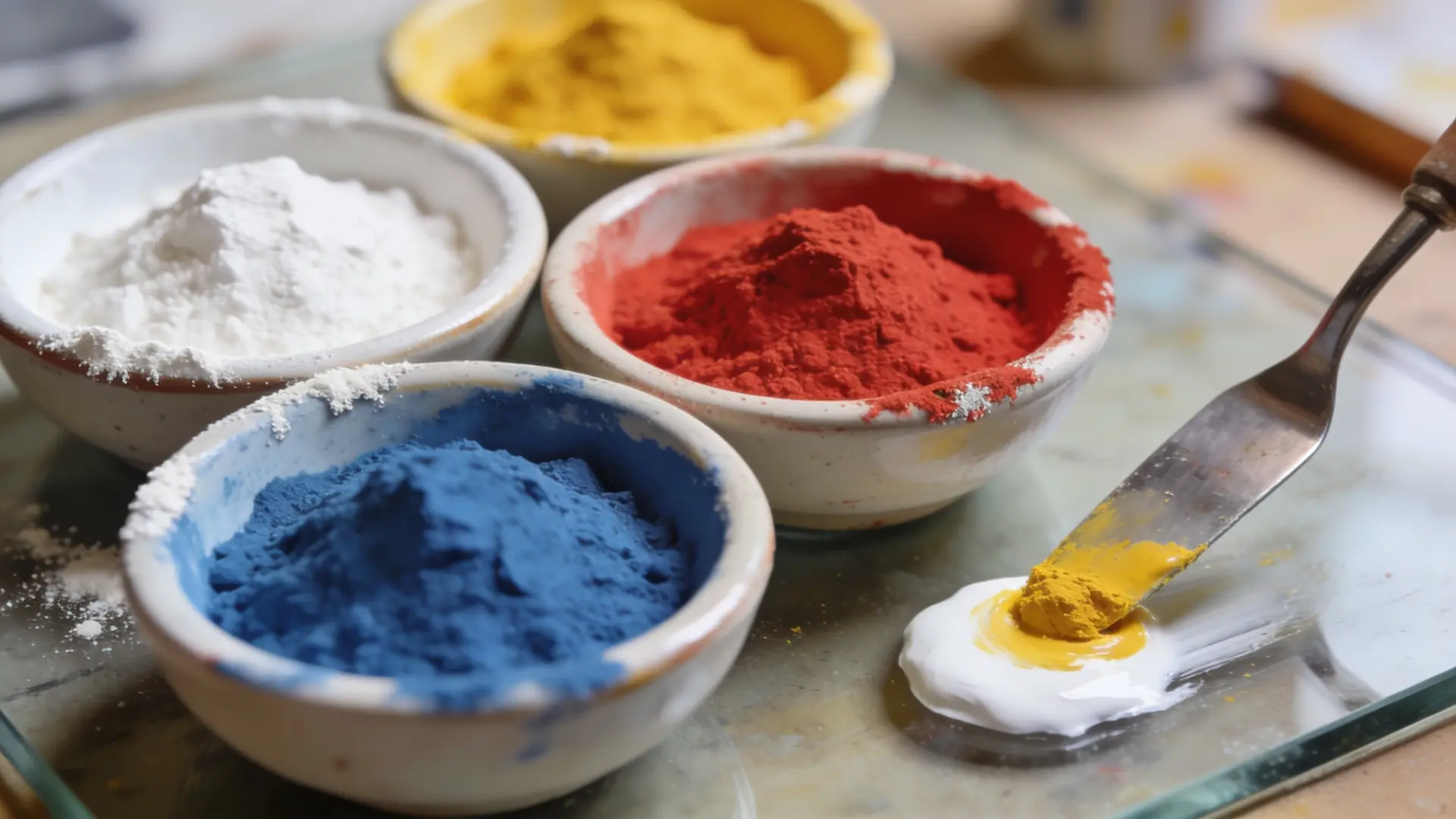
Pigments are fine solid particles that give paint its color and opacity. They also affect hiding power, which is why some colors cover in fewer coats than others.
Benjamin Moore notes that pigments provide texture, color, and hiding properties.
White pigment often helps block the old surface, while colorants create the final shade. A deep red or bright yellow may require more coats than a soft off-white because pigment strength and base type affect hiding power.
This is one of the most common questions I get asked at the counter: why does a rich red or navy need three coats when a pale gray covers in one?
The answer sits in pigment load. Deep, saturated colors carry less hiding power per coat.
Titanium dioxide (used in whites) and extender pigments such as calcium carbonate, talc, and zinc oxide are added specifically to boost opacity and control costs without significantly changing the finish.
2. Binder Helps Paint Stick and Form a Film
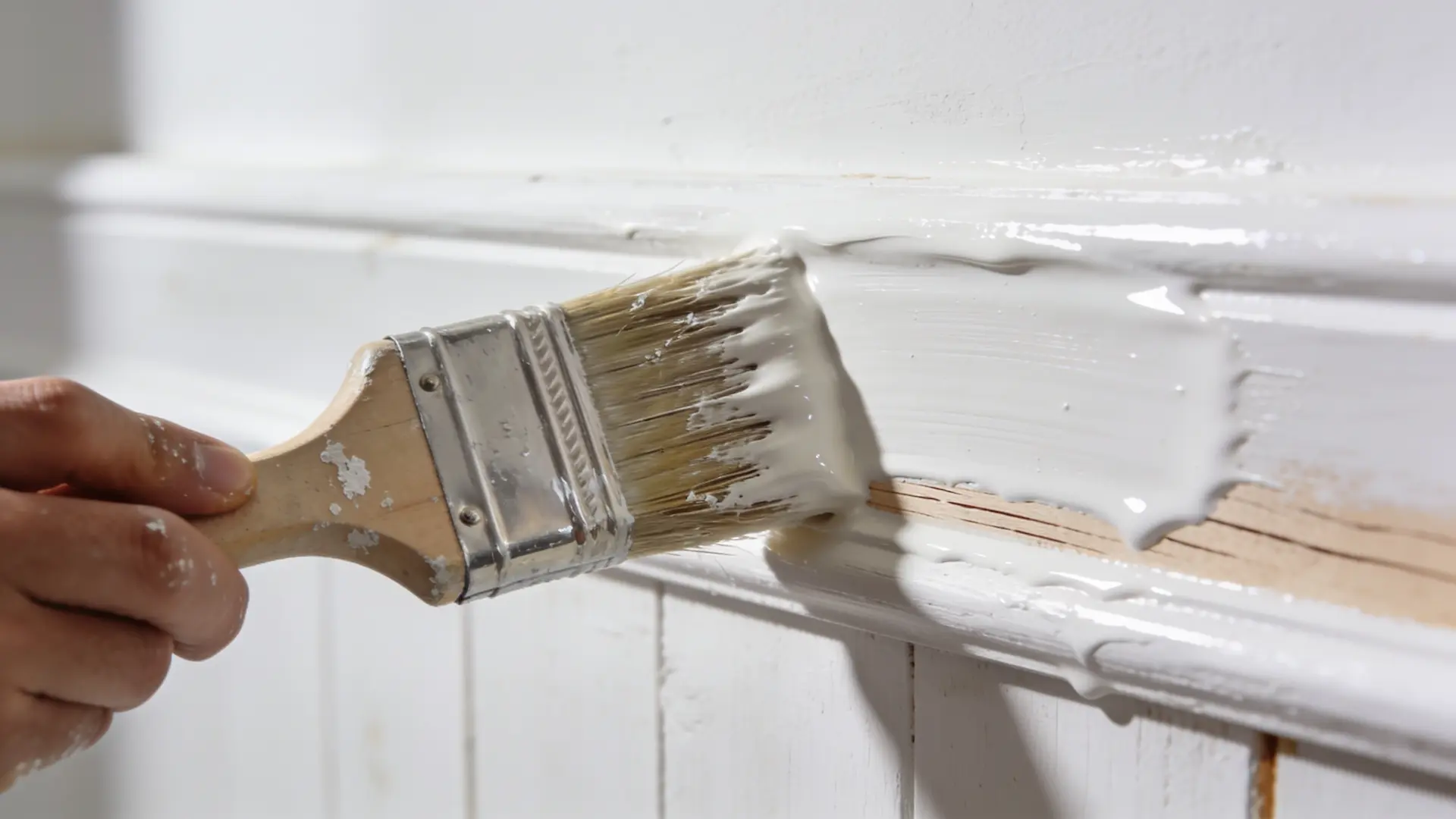
Binder is the glue of paint.
It holds pigment together, helps the coating grip the surface, and forms the dry film after application. In-house paint binders may be acrylic, latex, alkyd, or oil-based.
In art paint, the National Gallery notes that binders can include drying oil, egg yolk, or animal glue.
Trim paint needs a stronger binder than basic ceiling paint because it gets touched, cleaned, and bumped more often.
3. Solvent Keeps Paint Spreadable
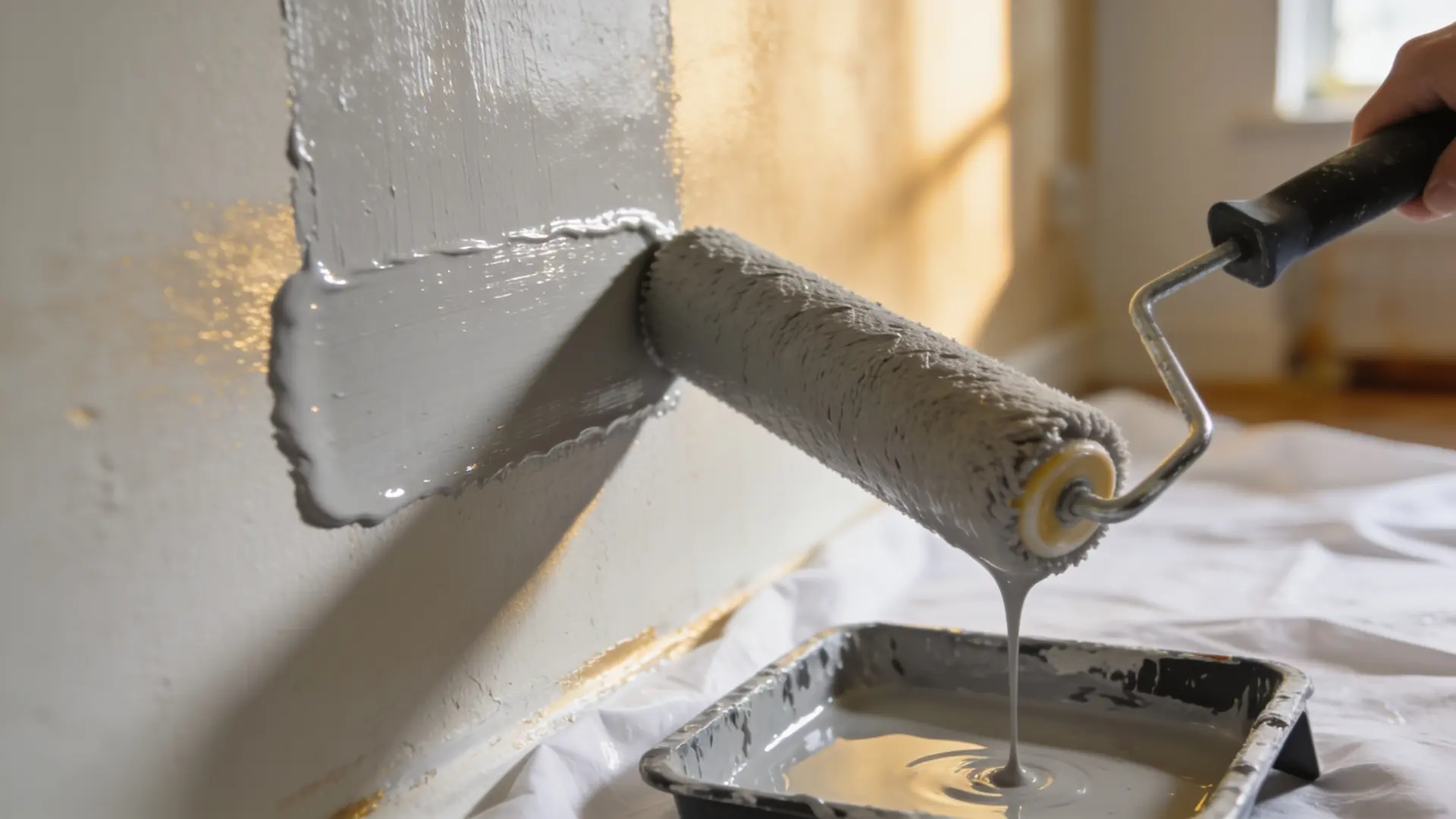
Solvent is the liquid part that keeps paint spreadable while you brush, roll, or spray it.
In latex or water-based paint, the main liquid is water. In oil- or solvent-based paint, the solvent may be petroleum-based.
Benjamin Moore explains this same difference between latex and solvent paint.
One number worth checking before you buy: solids by volume. This is the percentage of pigment and binder that stays on the wall once the liquid evaporates.
Premium lines often land in the 35–40% range, and fewer solids usually means more coats to get the same coverage. It is a better indicator of formula quality than price or the label’s marketing copy.
As paint dries, the solvent leaves the coating. Paint often dries more slowly in humid or cold conditions because the liquid leaves more slowly.
4. Additives Control: The Small Details
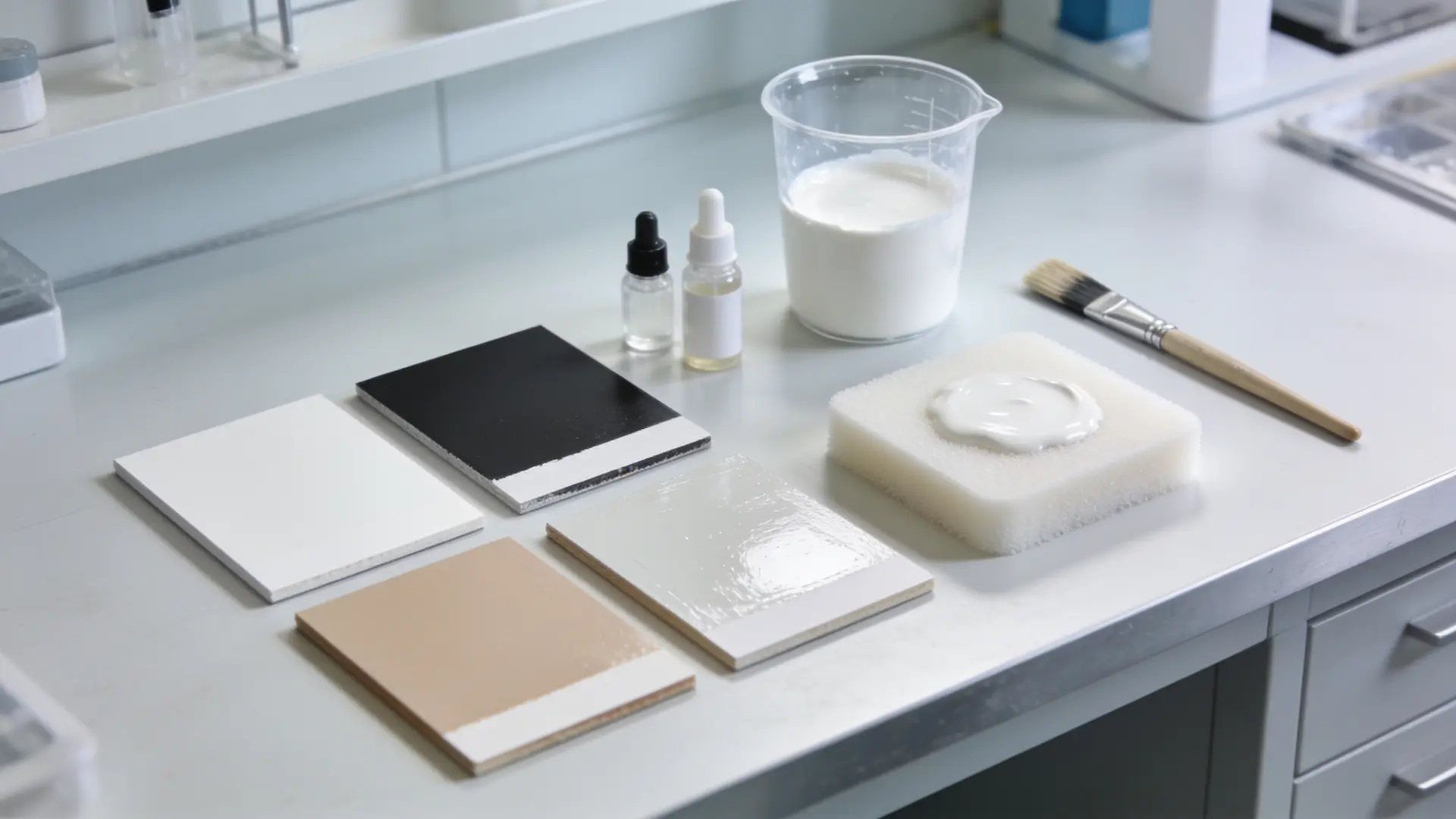
Additives handle the small details that make paint easier to use and more durable.
They can help control brush marks, foam, mildew resistance, sagging, drying, leveling, and shelf life.
The American Coatings Association says coating additives can improve pigment wetting, reduce foaming, improve flow and leveling, reduce surface defects, and support adhesion.
At the counter, mildew-resistant additive complaints and “orange peel” texture returns are two of the most common calls I take, and both usually trace back to using the wrong paint category rather than a bad batch.
Bathroom paint may use mildew-resistant additives, while cabinet paint may use leveling agents for a smoother finish.
Here is the simple way to connect paint ingredients with the results you see on a wall, cabinet, fence, or piece of furniture.
| Paint Ingredient | Main Job | What It Affects | Simple Example |
|---|---|---|---|
| Pigment | Adds color and hiding power | Color, coverage, opacity | Titanium dioxide in white paint |
| Binder/Resin | Holds the film together | Adhesion, durability, washability | Acrylic binder in wall paint |
| Solvent/Thinner | Keeps paint liquid | Flow, drying time, odor | Water in latex paint |
| Additives | Fine-tune performance | Leveling, mildew resistance, foam control | Mildew additive in bathroom paint |
| Fillers/Extenders | Add body and texture | Sheen, thickness, cost | Calcium carbonate in some paints |
On real projects, this is why I do not judge paint by color alone. A paint can match perfectly but still fail if the binder, solvent, or additives are wrong for the surface.
How is Paint Made?
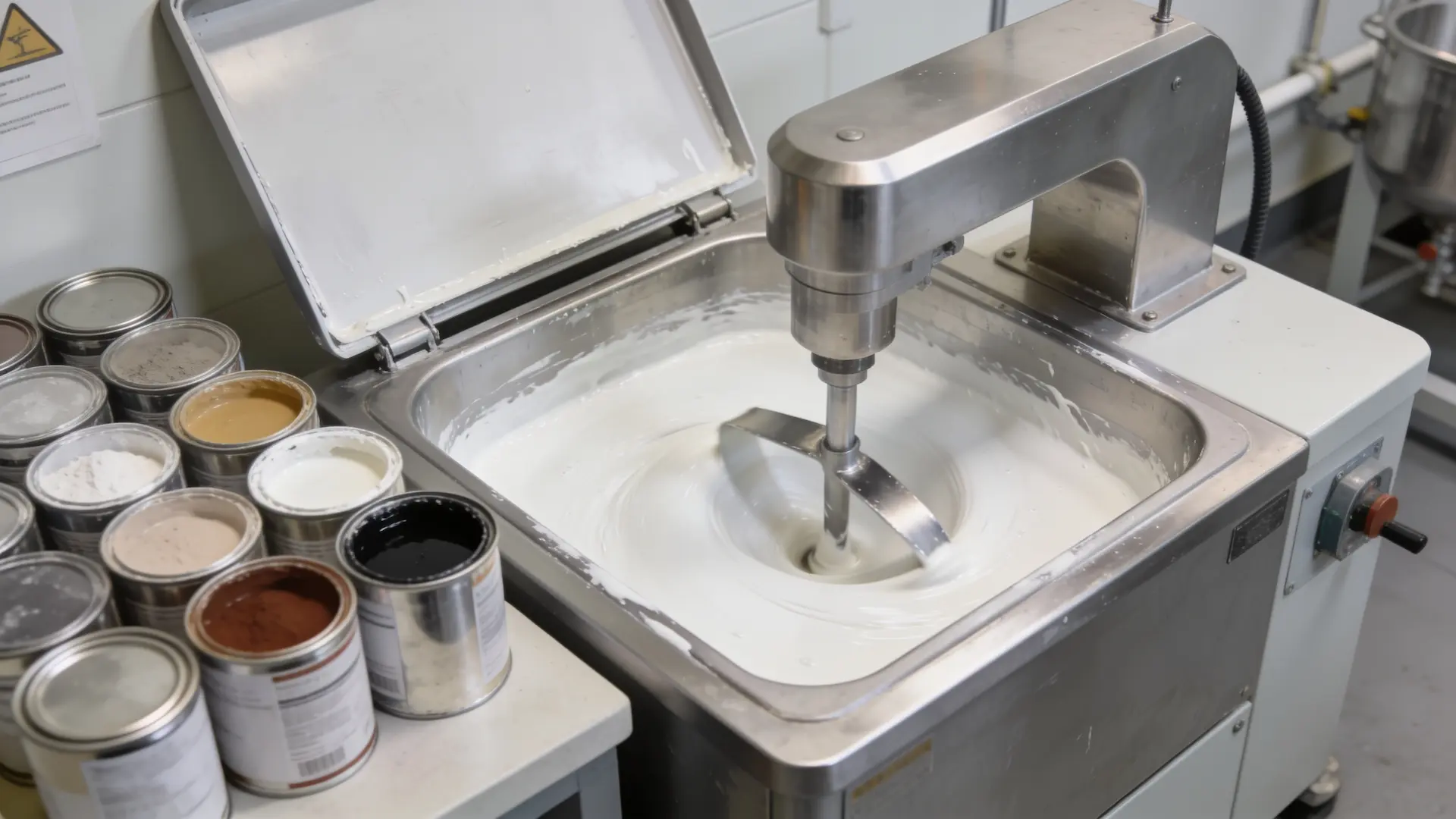
Paint is made by turning measured raw materials into a stable coating that spreads evenly and dries into a protective film.
The process usually includes: Measuring ingredients, grinding and dispersing pigment, mixing binder and liquid, adding performance ingredients, testing the batch, tinting if needed, filtering, and filling cans.
Explain That Stuff describes paint as a system in which a solvent keeps it liquid, pigment provides color, and a binder holds pigment particles together as the coating dries.
A factory does not just stir blue color into liquid. It must spread pigment evenly so the color remains consistent throughout the can.
Step 1: Raw Materials are Measured
Paint starts with a formula, not a guess.
- Pigments are measured for color and hiding power.
- Resin or binder is measured for adhesion and durability.
- Solvent or thinner is measured for flow and drying.
- Additives are measured for finish, mildew resistance, leveling, or foam control.
Flat ceiling paint may focus on hiding and low reflectivity, while exterior paint needs stronger weather resistance.
Step 2: Pigments are Ground and Dispersed
Pigment has to be broken down and evenly dispersed throughout the mix.
- Grinding helps break pigment into fine particles.
- Mixing spreads those particles through the liquid.
- Even pigment distribution helps the paint look consistent.
- Poor dispersion can cause streaky color, weak hiding, or patchy coverage.
This is one reason cheaper paint can sometimes need more coats or look uneven after drying.
Step 3: Binder, Solvent, and Additives are Mixed In
Once the pigment is dispersed, the rest of the formula builds the final paint body.
- Binder helps the coating stick and form a dry film.
- Solvent keeps the paint brushable, rollable, or sprayable.
- Additives adjust flow, foam, drying, texture, mildew resistance, and leveling.
- The balance changes depending on the surface and finish.
On cabinets, I especially notice this step, as proper leveling can reduce visible brush marks.
Step 4: The Paint is Tested, Tinted, and Canned
Before paint reaches the shelf, the batch is checked for consistency.
- Color is checked against the formula.
- Thickness is checked so the paint spreads correctly.
- Hiding power is checked for coverage.
- Drying behavior and sheen are checked.
- Stability is checked so the paint does not separate too quickly.
For large projects, box the same-color cans together so one wall does not show a slight shift.
What are Different Types of Paint Made?
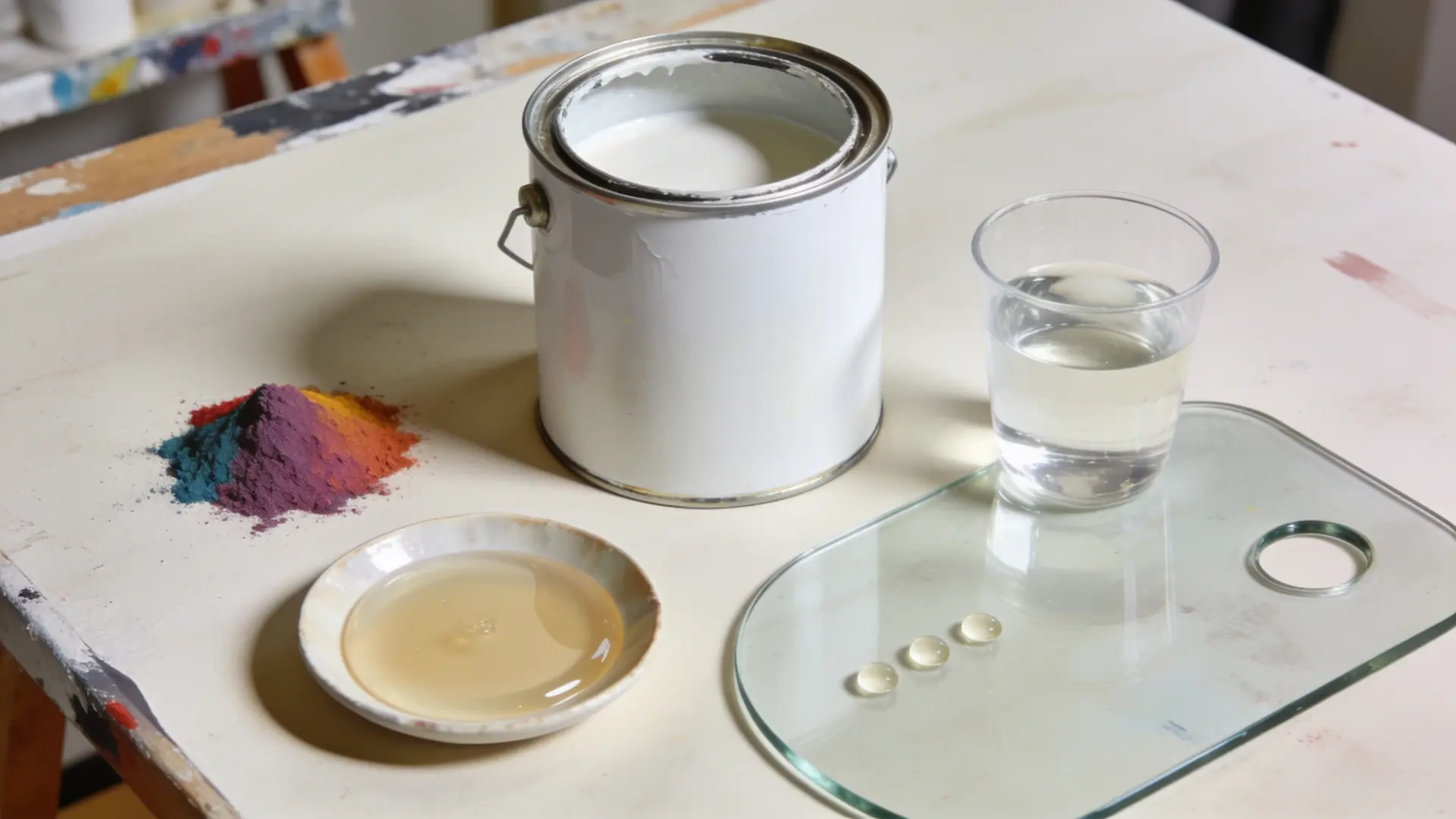
Different paints use different binders, liquids, pigments, and additives. That is why wall paint, oil paint, acrylic paint, chalk paint, spray paint, and primer do not behave the same.
Water-based paints usually have lower odor and easier cleanup, while solvent-based paints often form a harder film but smell stronger during use.
Use this table to compare the basic makeup of common paint types before choosing one for a project.
| Paint Type | Common Base | Main Binder | Best Used For | Key Note |
|---|---|---|---|---|
| Latex Paint | Water-based | Acrylic or vinyl-acrylic resin | Interior walls, ceilings | Low odor and easy cleanup |
| Acrylic Paint | Water-based | Acrylic resin | Walls, crafts, exterior surfaces | Flexible and durable |
| Oil-Based Paint | Solvent-based | Alkyd or oil resin | Trim, doors, metal | Strong film but higher odor |
| Chalk Paint | Water-based | Varies by brand | Furniture | Matte, soft finish |
| Spray Paint | Solvent or water-based | Varies | Metal, plastic, small items | Fast application |
| Primer | Water or solvent-based | Adhesion-focused resin | Bare or problem surfaces | Helps paint bond |
On real projects, primer is the one people skip too often. It is not just “extra paint”; it helps the topcoat bond, cover evenly, and last longer on difficult surfaces.
What Should You Check on a Paint Label?
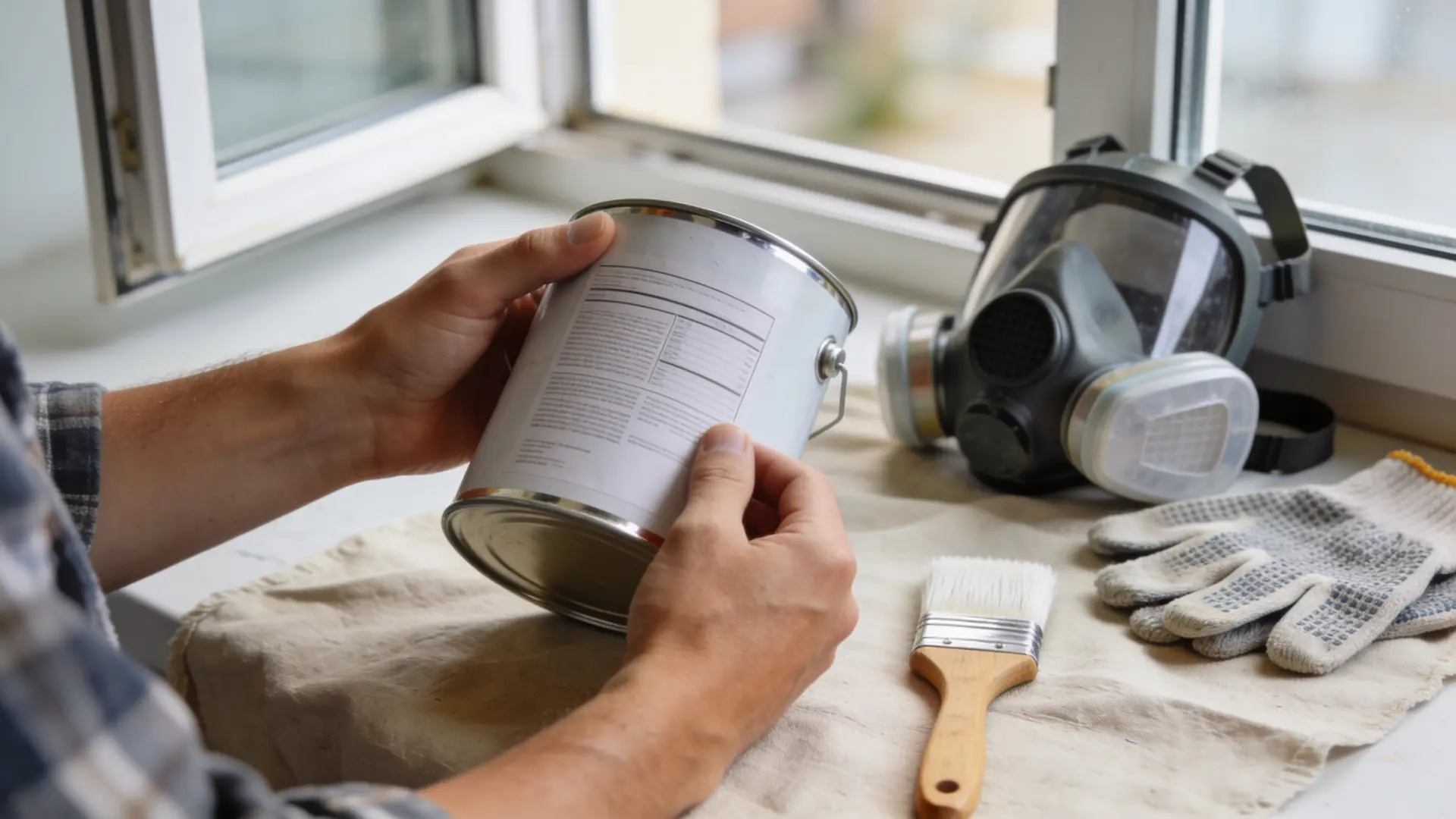
Before buying paint, read the label and safety checklist, not just a color tag.
Check interior or exterior use, water-based or oil-based formula, VOC level, finish, surface compatibility, coverage, dry and recoat time, cleanup, mildew resistance, and whether primer is required.
Modern paint is generally safer than many older formulas, but ventilation still matters because VOCs can evaporate as paint dries. EPA maintains national VOC standards for architectural coatings.
In older homes, the bigger renovation risk is lead. The CDC says homes built before 1978 may contain lead-based paint, and lead-contaminated dust is a major source of exposure for children.
What Are VOCs In Paint?
VOCs are volatile organic compounds, which are chemicals that can evaporate into the air as paint dries. Low-VOC and zero-VOC labels can help, but they do not mean you should skip airflow.
Always read the label, open windows when possible, and follow drying and recoat times. Low-odor paint may still require ventilation in bedrooms, nurseries, bathrooms, and small rooms.
My clients often assumed “no smell” means “no chemicals,” but odor and VOC content are not the same measurement. I always tell people to check the number on the label rather than trust their nose.
Why Old Paint May Contain Lead
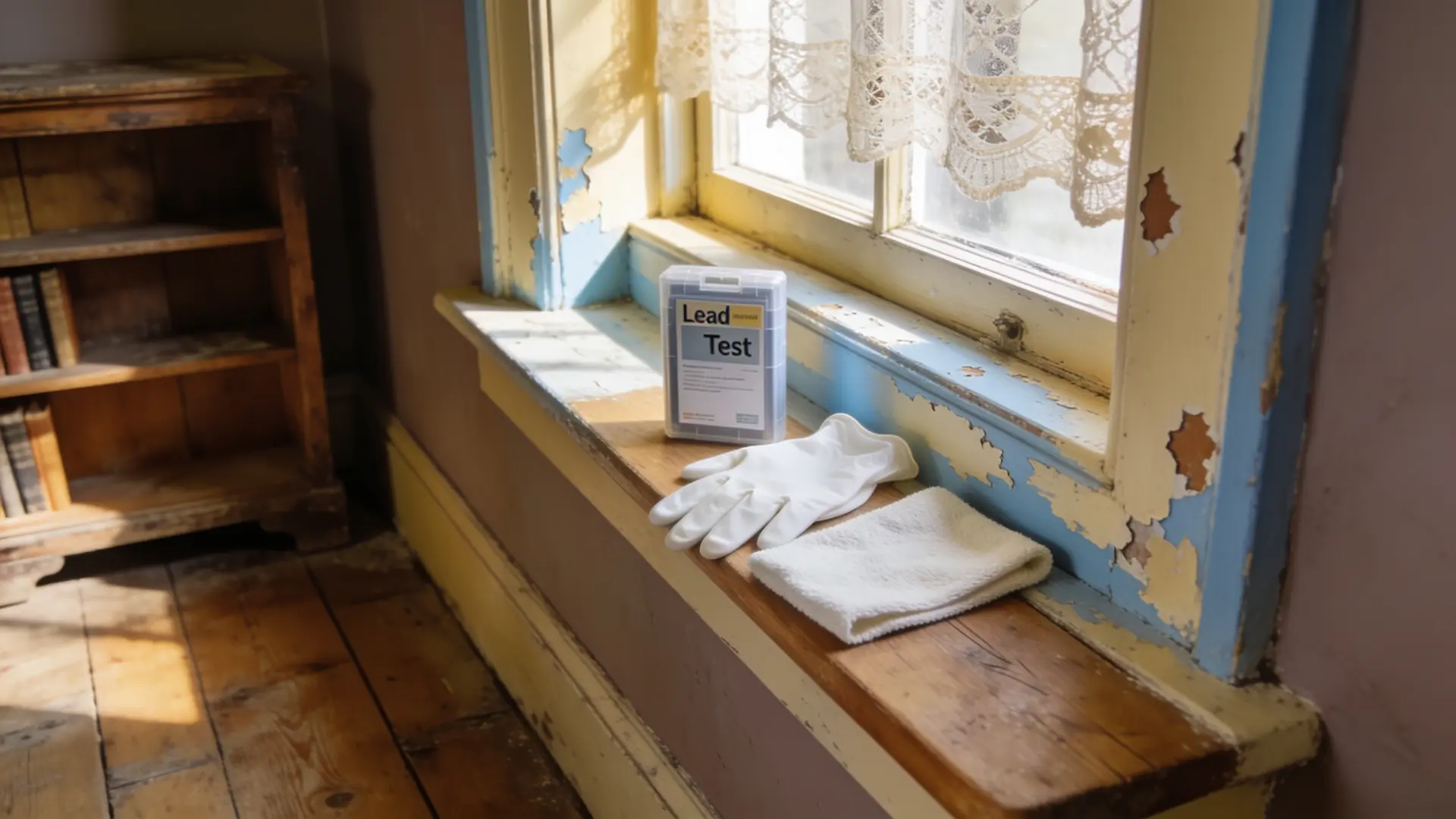
Older homes may have lead-based paint under newer coats. The risk rises when old paint chips, peels, turns to dust, or gets sanded during renovation.
Before buying paint, use the label to connect the formula with the surface, room, and finish you need.
| Label Term | What It Means | Why It Matters |
|---|---|---|
| Water-Based | Uses water as the main liquid | Easier cleanup and lower odor |
| Oil-Based | Uses a solvent-based system | Harder film but stronger odor |
| Low-VOC | Lower volatile compound content | Better for indoor comfort |
| Zero-VOC | Very low VOC content by label standard | Still needs ventilation and label checking |
| Scrubbable | Can handle cleaning | Good for kitchens, halls, and kids’ rooms |
| Mildew Resistant | Helps resist mildew growth | Useful for bathrooms and damp rooms |
| Self-Priming | May bond without a separate primer | Still depends on the surface condition |
| Recoat Time | Time before the next coat | Helps avoid tacky or uneven paint |
| Cleanup | Water, mineral spirits, or another cleaner | Tells you how to clean tools safely |
On real projects, I treat the label as the first warning sign. If the surface, room, finish, and cleanup instructions do not match the job, the paint is probably the wrong choice.
Where did Paint Come From?
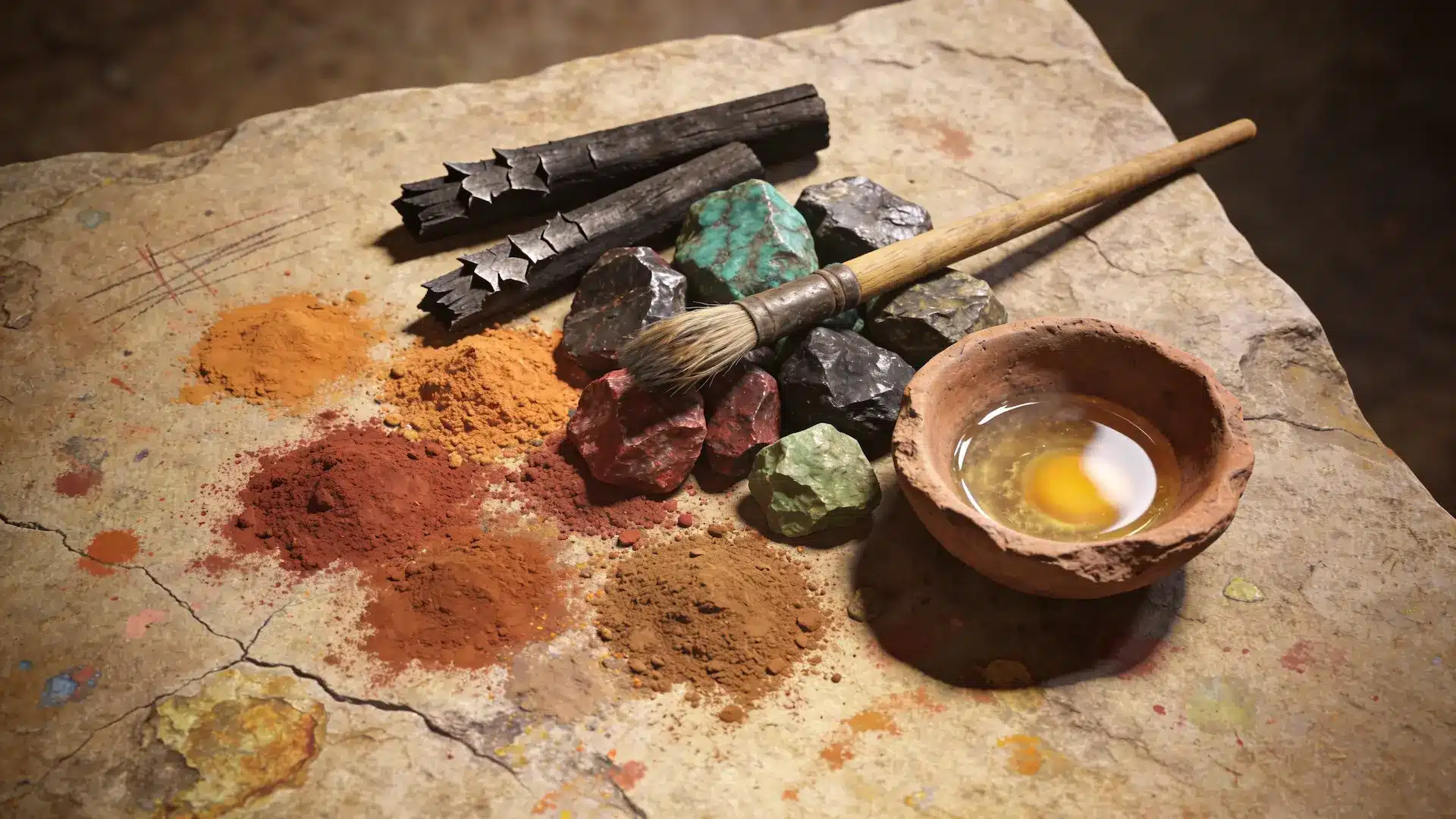
Paint started with simple natural materials.
- Early people made color from ground earth, colored rocks, minerals, charcoal, and even bone.
- Those powders were then mixed with sticky binders such as egg, animal fat, sap, or other animal byproducts so the color could hold to stone, wood, or another surface.
- Google Arts & Culture notes that early painters used colored rocks, earth, bone, and minerals ground into powders and mixed with egg or animal byproducts to bind the paint.
Modern paint follows the same basic idea: pigment plus binder plus liquid. The difference is that today’s formulas are engineered for smoother coverage, stronger durability, better color stability, and safer indoor use.
Simple Examples of Paint Formulas in Real Projects
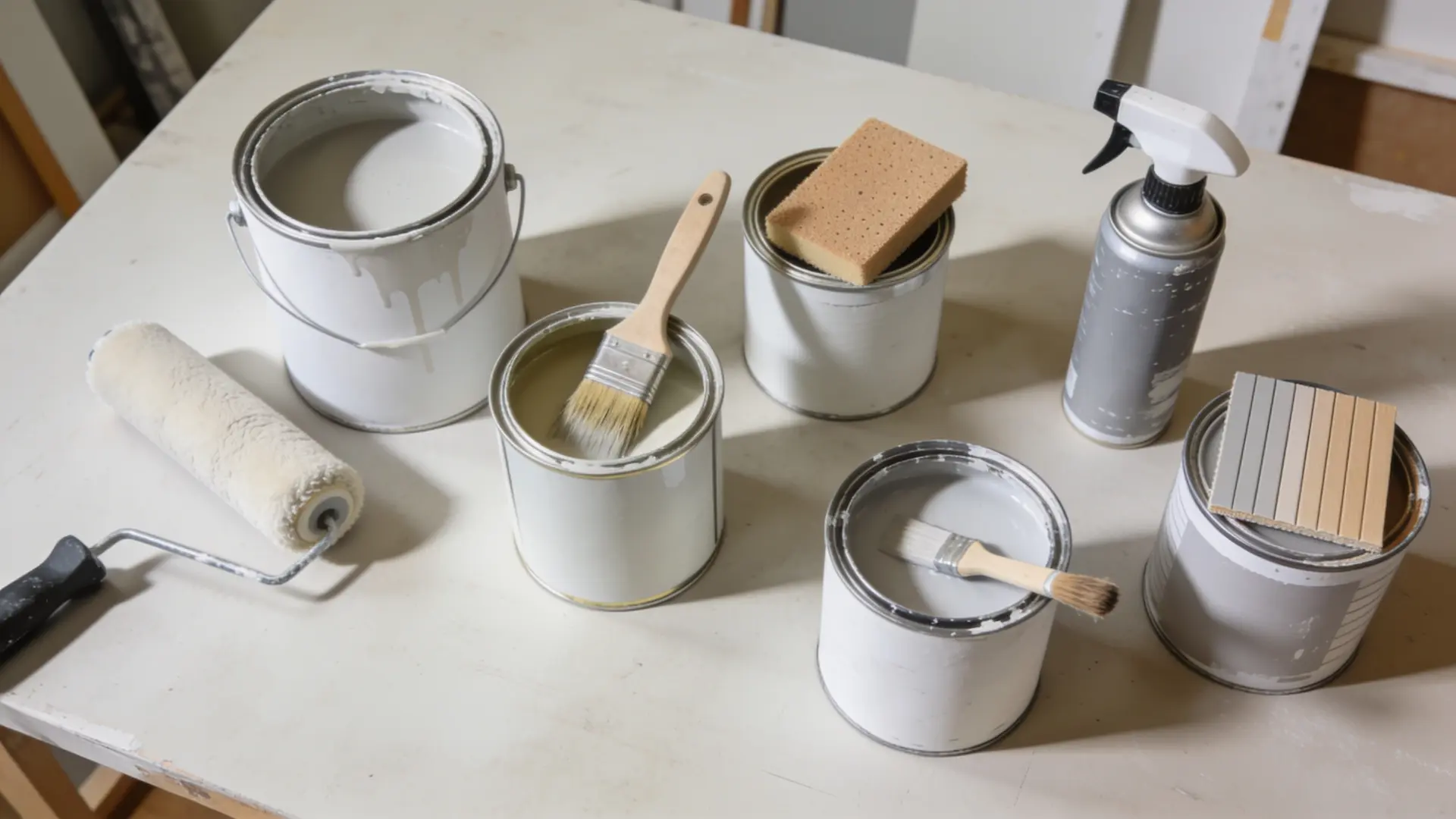
Paint formulas make more sense when you connect them to real surfaces.
- Bedroom walls usually need water-based latex paint with low odor and a washable finish.
- Bathroom walls need water-based paint with mildew-resistant additives because moisture is the main problem.
- Kitchen cabinets need a harder enamel-style paint with strong adhesion and leveling properties, so brush marks settle in better.
- A metal railing needs a rust-inhibiting primer plus a durable topcoat.
- Exterior siding needs acrylic exterior paint with stronger weather and UV resistance.
Paint ingredients are simple, but a few common misunderstandings can lead to poor product choices.
| Myth | Fact |
|---|---|
| Paint is just color and water | Paint also needs a binder and additives |
| Thicker paint is always better | Formula balance matters more than thickness |
| All latex paint contains rubber latex | Most house paint uses synthetic resin systems |
| Zero-VOC means no smell at all | It can still have an odor from other ingredients |
| Primer and paint are the same | Primer is built mainly for bonding and sealing |
| More expensive paint is always needed | Match paint quality to the surface and wear level |
On real projects, I choose paint by surface first, formula second, and color third.
Final Takeaway
By the time you pick up a paint can, the question is less “what is inside it?” and more “will this formula survive the job?”
A bedroom wall needs easy cleanup and low odor. A bathroom needs moisture help. Cabinets and trim need a stronger grip and a smoother, harder film. Exterior surfaces need weather and UV resistance.
That is where the ingredient list matters. The wrong balance can cause thin coverage, peeling edges, slow drying, a strong smell, or a finish that scuffs too soon.
Before your next paint project, check one label closely. Look at the base, finish, VOC note, recoat time, coverage, and primer instructions.
Which ingredient or label term makes the biggest difference for your surface?
Frequently Asked Questions
Does Paint Freeze in Cold Weather?
Yes. Water-based paint can freeze, which may damage the texture and performance. If it stays grainy after thawing and stirring, replace it.
Why does Paint Look Different After Drying?
Paint can dry darker, lighter, or shinier depending on lighting, sheen, surface texture, primer, and the number of coats applied.
Should Paint be Stirred Before Every Use?
Yes. Even fresh paint should be stirred before use because pigment, binder, and additives can settle during storage or transport.

Holding a Master’s in Library and Information Science from the University of Illinois, Josh Clarke has dedicated more than 15 years to managing and disseminating information across various platforms. His professional journey includes significant experience as a research librarian, where he developed an expertise in sourcing and providing accurate and comprehensive answers to diverse questions. In 2018, Josh brought his rich experience to our platform, quickly establishing himself as a reliable source for general FAQs. He has been overseeing our information curation since then, combining his research skills with a flair for engaging content delivery. When not involved in information management, Josh enjoys exploring digital photography and participating in local quiz competitions, hobbies that complement his inquisitive nature and love for learning.