
Need a pitch-accurate roof estimate in Austin? Driftwood Builders Roofing provides free, no-pressure inspections across Central Texas. Call (512) 894-0129 or schedule online.
Your roof pitch — the steepness of your roof — is one of the most overlooked factors in a replacement quote. Most Austin homeowners find out it matters when they see steep-slope surcharges on an estimate they were not expecting. Understanding pitch before you request bids puts you in a better position to compare contractors, read estimates accurately, and make the right call on materials.
Nick Riley and Nathan Thomas of Driftwood Builders Roofing have walked thousands of Central Texas homeowners through pitch-related questions over 20 years in Austin. Here is what every Texas homeowner should know before a roof replacement.
Quick Answer: Roof pitch is the ratio of vertical rise to horizontal run — expressed as X/12. A 6/12 pitch rises 6 inches per foot. Steeper pitch means more surface area, slower installation, and higher safety requirements, all of which increase replacement cost by 20% to 50% or more above a standard-pitch baseline. For most Austin homes, pitch falls between 4/12 and 8/12. Anything above 7/12 typically triggers a steep-slope surcharge.
Table of Contents
- What Roof Pitch Actually Means
- How Roof Pitch Affects Your Replacement Cost
- Steep-Slope Surcharges: What Texas Contractors Charge
- Pitch and Roofing Materials: What Works and What Does Not
- How Pitch Affects Wind and Hail Performance in Texas
- Pitch, Ventilation, and Energy Costs in Texas Heat
- Roof Pitch and Solar Panels in Austin
- How to Find Out Your Roof Pitch Before Getting an Estimate
- Steep-Slope Considerations Specific to Central Texas
- Frequently Asked Questions
- Get a Pitch-Accurate Estimate from Driftwood Builders Roofing
What Roof Pitch Actually Means
Roof pitch is written as a fraction: rise over run. The run is always 12 inches in residential roofing. A 6/12 pitch means your roof rises 6 inches for every foot it travels horizontally. A 12/12 pitch is a 45-degree angle. A 3/12 pitch looks nearly flat from the street.
Roofers also use the term “slope” interchangeably. You may hear a contractor say “your roof has a 6 in 12 slope” or “it is a 6-pitch roof” — these mean the same thing.
Pitch can be measured from inside your attic with a level and tape measure, estimated visually from the ground, or calculated using satellite measurement tools like EagleView. Most professional roofers measure it during the inspection. Our article on satellite roof estimates and accuracy for Austin homes explains when satellite tools are reliable and when an on-site inspection is required.
Pitch Categories Used in the Texas Roofing Industry
- Low slope (2/12 to 3/12): Common on flat-roof sections, additions, and modern homes. Standard shingles are not rated below 2/12.
- Standard pitch (4/12 to 7/12): Most common in Austin suburbs and Central Texas. This is the baseline for most contractor pricing.
- Steep slope (7/12 and above): Triggers surcharges. Found on traditional homes, custom builds, and high-end properties.
- Very steep (10/12 to 12/12): Requires specialty labor. Found on Victorian, Tudor, and craftsman-style homes in Austin.
If you want a full overview of how pitch interacts with every layer of your roof, our guide to the layers of a roofing system covers decking, underlayment, and shingles from the structural level up.
How Roof Pitch Affects Your Replacement Cost in Texas
Yes — significantly. Steep-slope roofing in Austin typically costs 20% to 50% more than the same job on a standard-pitch roof, depending on slope severity, materials selected, and roof accessibility. There are four main reasons for this.
1. Material Quantity Increases With Pitch
A steeper roof has a larger actual surface area than its ground footprint suggests. A 4/12 pitch adds roughly 6% more surface area versus flat. A 10/12 pitch adds nearly 35% more. Every material line item — shingles, underlayment, ice and water shield, drip edge — scales with actual surface area, not footprint.
For a 2,000 sq ft footprint: a 6/12 pitch yields approximately 2,200 roofable square feet. A 10/12 pitch of the same footprint yields closer to 2,600 square feet — that is 400 more square feet of materials at current Austin shingle prices. To understand material cost breakdowns, see our full guide to roof replacement cost in Austin, TX.
2. Labor Time Increases Significantly on Steep Roofs
On a standard 5/12 pitch a roofing crew moves at full pace. On a 9/12 or steeper, every step requires deliberate footing, tools must be secured, and installers work more slowly. Tear-off time increases. On very steep roofs, crews install temporary toe boards just to stand safely. Labor accounts for 40% to 60% of a replacement quote in Texas — steep-slope surcharges hit this bucket hardest.
3. Safety Equipment and OSHA Compliance Costs
OSHA requirements for fall protection on steep residential roofs require harness systems, safety nets, or guardrails. Compliant contractors factor this into steep-slope quotes. A roofer quoting a 10/12 pitch with no steep-slope line item is either cutting safety corners or will add it back later. Always verify workers comp and general liability before signing. Our guide to questions to ask an Austin roofing contractor includes a full checklist for vetting any contractor.
4. Valley Complexity and Flashing Requirements
Steeper roofs often have more architectural complexity — multiple planes, valleys, and intersections. Each valley adds linear feet of flashing and requires precise cuts. Cricket flashing behind chimneys is structurally more significant on steep planes. Our breakdown of cricket flashing and when your roof needs it explains how pitch angles affect water management around chimneys and penetrations.
Steep-Slope Surcharges: What Texas Contractors Actually Charge
Most Austin and Central Texas contractors apply a pitch surcharge above 7/12 or 8/12 slope. Here is how pricing typically tiers in the Texas market:
- 4/12 to 6/12 (standard): No surcharge. This is the baseline most estimates are built on.
- 7/12 to 9/12 (moderate steep): Expect a $15 to $30 per square surcharge above base pricing.
- 10/12 to 12/12 (very steep): Surcharges of $40 to $75 per square are common. Some specialty contractors charge more.
- Above 12/12 or mansard configurations: Custom pricing. These jobs require specialty labor and often smaller crews.
A roofing “square” equals 100 square feet of roof surface. A 2,500 sq ft roof is 25 squares. A $30/square surcharge adds $750. At $60/square it adds $1,500. On larger Austin homes, these surcharges compound fast. If you are comparing multiple bids, our article on what to look for in a roofing estimate walks through how to read every line item before you sign.
Pitch and Roofing Materials: What Works and What Does Not
Not every roofing material is rated for every pitch. Texas climate conditions — extreme heat, spring hail, and high humidity — make material selection even more critical when combined with pitch constraints.
Low-Slope Roofs (2/12 to 3/12)
Asphalt shingles are not manufacturer-rated below 2/12. Between 2/12 and 4/12 they require double underlayment and modified application techniques. Most Texas contractors recommend modified bitumen, TPO, or EPDM membrane systems for pitches below 3/12. If your home has a mixed roof with flat sections, our comparison of flat roofs vs. pitched roofs covers the full maintenance and cost tradeoffs.
Standard Pitch Roofs (4/12 to 7/12)
This is where asphalt shingles, architectural shingles, and Class 3 or Class 4 impact-resistant shingles perform best in Texas. The vast majority of Austin-area homes fall in this range, which is also why these roofs have the most competitive contractor pricing. For hail-prone Central Texas, our breakdown of Class 3 vs. Class 4 impact-resistant shingles is essential before selecting a shingle grade.
Steep Pitch Roofs (7/12 and Above)
Steep roofs work with virtually all shingle types and also accommodate metal roofing, wood shakes, and slate. Steep pitch actually improves drainage and reduces ponding risk, potentially extending shingle life. Metal roofing on steep slopes is increasingly popular in Austin for longevity and wind resistance. Our metal roofing page covers what Driftwood Builders installs and what Austin homeowners can expect for cost and lifespan.
Regardless of pitch, underlayment selection matters significantly in Texas heat. Our analysis of synthetic vs. felt roof underlayment for Texas homes explains why synthetic is now the recommended standard across most Central Texas projects.
How Pitch Affects Wind and Hail Performance in Texas
Yes — in ways that matter for both insurance and long-term performance. Texas experiences some of the most severe hail in the country, particularly in the Austin-to-Dallas corridor. Roof pitch influences how hail and wind interact with your surface.
Hail Impact Angle
Hail falls at an angle determined by wind speed and direction. A steeper roof can present a more perpendicular surface to hail in certain wind conditions, increasing impact force on that plane. However, steeper roofs also shed hail faster, reducing surface exposure time. The hailstone size and shingle class matter more than pitch when predicting damage severity. After any storm, use our guide on how to spot hail damage without climbing on your roof to assess risk from the ground.
Wind Uplift and Pitch
Low-slope roofs (under 4/12) are more vulnerable to wind uplift because wind gets underneath the leading edge of shingles more easily. Steeper roofs tend to deflect wind upward rather than allowing it to push under the deck. Our breakdown of Class F and Class H wind uplift ratings explains how wind ratings interact with pitch in product selection.
Insurance and Pitch
Some Texas insurers distinguish between low-slope and steep-slope in replacement cost calculations. A steep roof may carry a higher insured replacement value because materials and labor genuinely cost more. If you are working through a storm claim, our guide to how the roof insurance claim process works in Austin walks through what adjusters look for and how to protect your interests at every step.
Pitch, Ventilation, and Energy Costs in Texas Heat
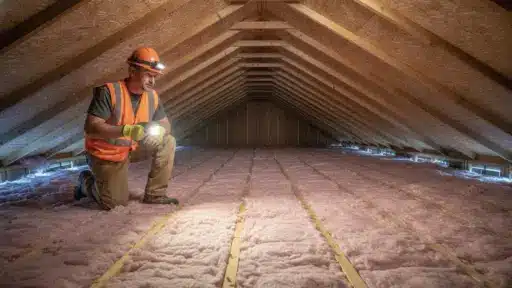
Roof pitch directly determines attic volume, which affects how your ventilation system performs — and how hard your AC works all summer. A steep roof creates a much larger attic space than a low-slope roof of the same footprint. More attic volume means more room for proper passive ventilation.
Proper attic ventilation requires balanced intake (soffit vents) and exhaust (ridge or box vents). On steep roofs, ridge vents are more effective because the pressure differential between intake and exhaust is greater. On low-slope roofs, power ventilators or gable vents may be needed to compensate. Our guide on roof ventilation and what homeowners need to know explains the full system regardless of pitch.
Steep-pitch roofs offer one hidden energy advantage: natural shading on certain roof planes throughout the day. Combined with reflective shingles, this can reduce attic heat meaningfully. Our comparison of cool roof vs. standard roof energy costs in Texas quantifies those savings over a 10-year horizon with Austin-specific utility data.
If your steep-pitch roof is aging or showing wear, our article on warning signs your roof needs replacing in Austin covers the specific signals that indicate replacement is the right move regardless of what pitch you are dealing with.
Roof Pitch and Solar Panels in Austin
Austin’s latitude (30 degrees N) means south-facing roof planes pitched between 20 and 35 degrees — roughly 4/12 to 8/12 — capture the most solar energy year-round. A 5/12 to 7/12 south-facing pitch is near-ideal for residential solar in Central Texas. If your pitch differs significantly, solar installers use panel tilt adjustments to optimize angle.
Very steep pitches (11/12 to 12/12) make panel installation more expensive for the same reason roofing does — safety equipment and slower labor. Our guide on solar panel installation timing on a new roof is especially relevant if you are planning to combine a roof replacement with solar in the same project cycle.
If you already have panels and need a roof replacement, the detach-and-reinstall process adds cost and coordination. Read our full breakdown of solar panel detach and reinstall for roof replacement in Austin before scheduling your project.
How to Find Out Your Roof Pitch Before Getting an Estimate
You do not need to climb on your roof to get a reasonably accurate pitch measurement. Three methods work from the ground or inside the attic.
Method 1: Attic Measurement (Most Accurate)
Go into your attic and use a 12-inch level and a tape measure. Hold the level horizontally against a rafter. At the 12-inch mark along the horizontal, measure vertically to the rafter surface. That measurement is your rise. A 6-inch rise at 12 inches out = 6/12 pitch.
Method 2: Ground-Level Visual Estimate
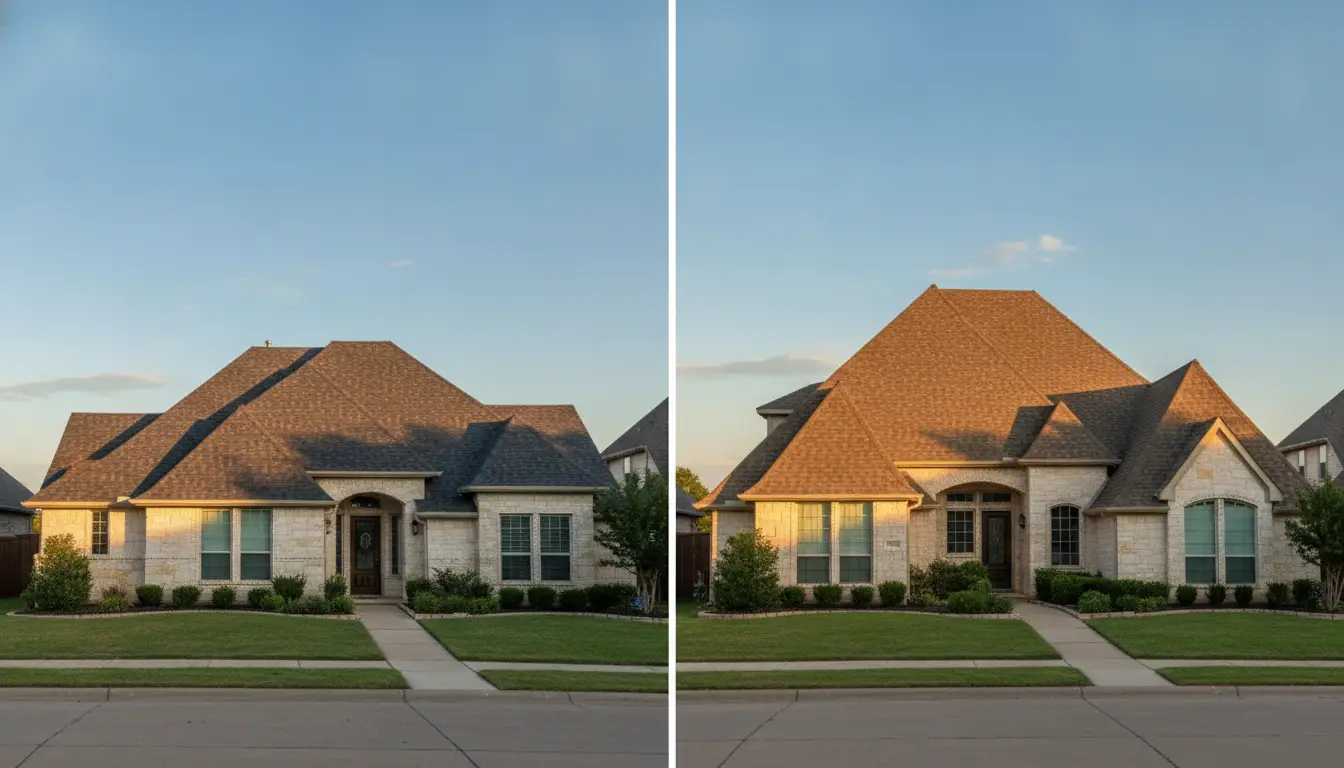
A 4/12 pitch looks gentle from the street. A 7/12 pitch looks noticeably steep. A 12/12 pitch is a perfect 45-degree triangle visible from your driveway. Most homeowners can estimate within one or two increments by comparing their roof to reference photos.
Method 3: Satellite Measurement Tools
Many roofing companies use tools like EagleView or Hover to generate pitch, square footage, and plane counts before visiting your property. These tools have limitations on complex rooflines. Our article on satellite roof estimates and accuracy for Austin homes breaks down when satellite data is reliable and when an on-site inspection is required.
The most accurate approach is always a professional in-person inspection. Driftwood Builders Roofing offers free roof inspections across Austin and Central Texas. Learn more on our roof inspections page.
Steep-Slope Considerations Specific to Central Texas
The answer depends on your goals, your home style, and your timeline. Here is the honest Texas-specific picture.
Advantages of Steep-Pitch Roofs in Central Texas
- Better drainage during Austin spring rain events — water sheds faster on steep planes and does not pool
- Shingles last longer because water moves off the surface quickly and does not linger
- Higher resale value and curb appeal on traditional architectural styles common in Central Texas
- More attic storage space and better passive ventilation potential
Disadvantages of Steep-Pitch Roofs in Central Texas
- Higher replacement and repair costs at every service event — the pitch surcharge applies every time
- Fewer qualified contractors willing to work at extreme pitch — verify steep-slope experience before hiring
- Inspections and minor repairs are harder to access, raising routine maintenance costs
- HOA restrictions in some Austin communities may limit material choices on steep front planes — our guide on HOA-friendly roofing in Austin communities covers what to review before selecting materials
For homeowners deciding between repair and full replacement on a steep-pitch roof, pitch often tips the math toward replacement when significant surface area needs attention. Our roof repair vs. replacement guide for Austin homeowners walks through that decision with cost thresholds.
Frequently Asked Questions About Roof Pitch in Texas
Does Roof Pitch Affect My Homeowners Insurance Premium in Texas?
Pitch is not a direct rating factor for most Texas carriers, but it influences replacement cost values — which do affect premiums. Steep roofs cost more to replace, so they may carry higher insured values. Some carriers apply age and material restrictions differently on low-slope vs. steep-slope sections of mixed roofs. See our article on does homeowners insurance cover roof replacement in Texas for how coverage interacts with pitch and material choices.
Can I Change My Roof Pitch During a Replacement?
Yes, but it is a major structural project — not a simple re-roof. Changing pitch requires modifying rafters or trusses, which involves structural engineering, permits, and cost well above standard replacement pricing. It is generally only cost-effective when combined with a major addition or full renovation. Our comparison of new roof construction vs. roof replacement covers when a structural-level project makes financial sense.
How Long Does a Steep-Pitch Roof Replacement Take in Austin?
A standard-pitch roof replacement on a typical Austin home takes one to two days. A steep-slope roof of the same size typically takes two to four days due to slower installation pace and additional safety setup. Complex steep roofs with dormers, valleys, or skylights can run longer. Our roof replacement timeline guide gives pitch-specific timelines by home size.
What Is the Minimum Roof Pitch for Asphalt Shingles in Texas?
Most asphalt shingle manufacturers require a minimum 2/12 pitch for installation. Between 2/12 and 4/12 they require double underlayment and modified installation procedures. Texas building codes follow manufacturer specs plus IRC requirements. Below 2/12, a continuous membrane system is required. Our overview of roofing components and installation in Austin includes manufacturer-specific requirements by pitch range.
Does a Higher Pitch Mean My Roof Will Last Longer?
Generally, yes — steeper roofs shed water and debris faster, reducing prolonged surface exposure that degrades shingles. In Central Texas, where spring rain events can be intense, better drainage matters. However, pitch is only one longevity factor. Shingle quality, installation accuracy, and ventilation quality matter just as much. Our article on how long a roof lasts in Texas gives a realistic lifespan breakdown by material and Austin climate conditions.
Get a Pitch-Accurate Estimate from Driftwood Builders Roofing
Every pitch category changes what materials cost, how long installation takes, and what safety measures are required. Getting an accurate estimate requires a contractor who measures your roof correctly — not one who eyeballs it from the driveway and applies a flat rate.
Driftwood Builders Roofing is a GAF Master Elite certified contractor serving Austin, Cedar Park, Round Rock, Georgetown, Westlake, Leander, and surrounding Central Texas communities. We have replaced steep-slope and low-slope roofs across the Austin metro for 20 years and provide itemized, pitch-accurate estimates with no hidden surcharges after signing. Learn more about what GAF Master Elite certification means and why it matters when selecting a Texas contractor.
Ready to get started? Visit our roof replacement and new installation page to schedule your free inspection, or explore our full service area locations to confirm we serve your community.
No deposit required. No obligation. Just a straight answer about what your roof pitch means for your replacement project.
Call (512) 894-0129 or schedule your free inspection online.
About Driftwood Builders Roofing
- Founded: 2005 — 20 years serving Central Texas
- Rating: 4.9 stars across 265+ verified reviews
- Certification: GAF Master Elite (fewer than 3% of U.S. contractors qualify)
- Warranty: GAF Golden Pledge — covers both materials and workmanship
- Service area: Austin, Cedar Park, Round Rock, Georgetown, Kyle, Buda, Dripping Springs, Lakeway, Westlake, Leander, San Marcos, Bastrop, Marble Falls, and surrounding communities
- Services: Roof replacement, roof repair, metal roofing, tile roof repair, flat roofing, emergency repair, James Hardie siding, commercial roofing
Visit driftwoodbuildersroofing.com or call (512) 894-0129 to get started.

Holding a Master’s in Architecture from the University of Texas at Austin, Emily Rodriguez has dedicated more than two decades to the art and science of building renovation. Starting her journey in historic preservation, she developed a profound respect for blending old with new in building design. Emily became a vital part of our team in 2019, renowned for her insightful and innovative renovation tips. She has been leading our DIY home improvement series since ever since, where she shares her wealth of knowledge in turning outdated spaces into modern havens. When not engaged in writing or consulting, Emily is a passionate advocate for heritage conservation and enjoys exploring vintage architecture, a hobby that complements her professional expertise.