

Opening your closet and quickly finding what you need can make getting dressed much easier. A well-organized space not only looks neat but also helps you save time each day.
I have found that arranging clothes by color is one of the simplest ways to keep a closet tidy and easy to manage.
In this guide, you will learn how to create a color-coordinated closet using practical steps that anyone can follow.
In years of styling homes and refreshing closets for clients, I’ve found that arranging clothes by color is one of the simplest ways to keep a closet tidy and easy to manage.
The short version: declutter first, group clothes by category, then arrange each category in one consistent color order. Most people use light-to-dark or the ROYGBIV rainbow sequence. Most closets take two to three hours from start to finish.
You will also find helpful tips, common mistakes to avoid, and ways to make your closet more functional and visually appealing.
What is a Color-Coordinated Closet?
A color-coordinated closet is one where clothes are organized by color rather than placed randomly. This makes it easier for you to find what you need and put together outfits.
Many people first group clothing by type, such as shirts, pants, and dresses. Then, they arrange each category in a color order, usually from light shades to dark ones.
This system helps you see your wardrobe more clearly and keeps your closet organized.
It can also save time when getting dressed and make it easier to spot items you no longer wear.
A color-coordinated closet can work in both small and large spaces. You can adjust the system to fit your clothing collection and personal preferences.
Benefits of Organizing Your Closet by Color
A simple color system can make your daily routine smoother and help you get more value from the clothes you already own.
Over the years, I’ve found that color-based organization is one of the easiest ways to create a closet that stays functional and easy to maintain.
- Find Clothes Faster: When similar colors are grouped together, you can quickly locate the item you need without searching through multiple sections.
- Plan Outfits More Easily: Seeing all your colors in one place makes it easier to pair clothing and create balanced outfits.
- Keep Your Closet Organized Longer: A clear system gives every item a designated spot, making it easier to maintain order over time.
- See Your Wardrobe More Clearly: When colors are arranged in a consistent order, you can quickly identify what you own and what you wear most often.
- Reduce Duplicate Purchases: I often recommend reviewing clothing by color because it helps you spot similar items before buying something new.
- Make Better Use of Space: Organized sections can make even a small closet feel more manageable and less cluttered.
- Simplify Seasonal Updates: As colors and clothing change throughout the year, a color-based system makes it easier to rotate pieces and keep everything accessible.
- Identify Unused Items: When clothing is clearly visible, you can spot pieces you rarely wear and decide if to keep, donate, or repurpose them.
A well-organized closet should be easy to use, not just nice to look at. A color-coordinated system helps you achieve both.
Supplies You Need Before You Start
Getting everything ready before you begin can make the process quicker and less stressful. Most of these items are things you may already have at home.
- Clothing Hangers
- Laundry Basket or Storage Bin
- Shelf Dividers or diy closet shelves
- Baskets
- Cleaning Cloth or Duster
- Full-Length Mirror
- Optional Labels
One thing I always do before touching a single hanger: clear the floor and the bed nearby. You are about to pull everything out, and you need a flat surface to sort on. A closet project stalls fastest when there is nowhere to put the piles.
How to Create a Color Coordinated Closet
Taking a structured approach makes the process easier and helps you create a system that lasts. Follow these steps to organize your closet in a way that is both practical and easy to maintain.
1. Empty and Sort Your Closet

Start by taking everything out of your closet. This gives you a fresh starting point and helps you see exactly what you own.
As you go through each item, decide whether to keep, donate, or discard it. You may find clothes you forgot about or pieces you no longer wear.
Tip: Creating separate piles for each decision will help you stay organized and make the rest of the process much easier.
2. Group Clothing by Category
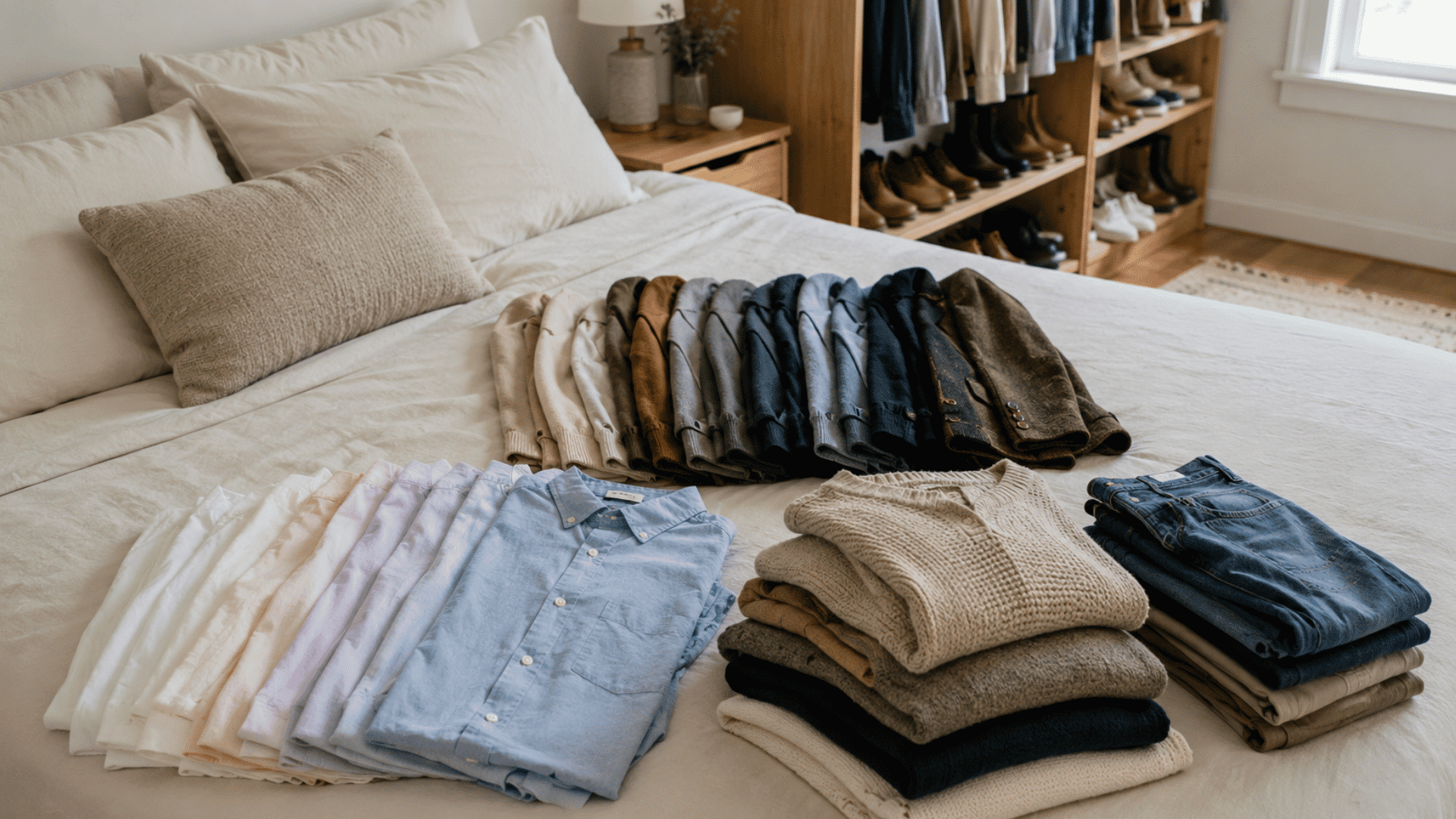
Once you have sorted your clothing, begin placing similar items together. Create separate groups for shirts, pants, dresses, jackets, activewear, and any other categories that fit your wardrobe.
This step helps you understand how much clothing you have in each section. I often notice that people have more duplicates than they realize.
Organizing by category first creates a clear structure before you start arranging items by color. Here are some categories you can group your clothing into:
- Tops: T-shirts, blouses, tank tops, and casual shirts
- Bottoms: Jeans, pants, trousers, shorts, and skirts
- Dresses and Formalwear: Dresses, suits, blazers, and special occasion clothing
- Outerwear: Jackets, coats, cardigans, sweaters, and hoodies
- Activewear and Loungewear: Gym clothes, sleepwear, loungewear, and athleisure pieces
3. Arrange Clothes by Color

Now it’s time to organize each clothing category by color. Start with one section at a time and place similar shades together.
This makes it easier to compare items and choose outfits. You can immediately see which colors appear most often in your wardrobe. I find that this step has the biggest visual impact.
Keeping colors grouped consistently helps your closet look organized while making everyday outfit selection quicker.
4. Choose the Best Color Order

A consistent color order helps your closet stay organized over time.
Many people arrange clothing from light to dark shades, starting with white and ending with black.
Others prefer organizing by the colors of the rainbow. There is no single correct method.
The key is choosing an order that feels natural to you. Using the same color sequence throughout your closet makes finding and returning items much easier.
Here are some color orders you can pick from:
- Light to Dark: White> Cream/Beige> Gray> Brown> Navy> Black
- Rainbow Order (ROYGBIV): Red> Orange> Yellow> Green> Blue> Purple
- Neutral to Bold: White> Beige> Gray> Brown> Blue> Green> Red> Black
- Warm to Cool Tones: Red> Orange> Yellow> Green> Blue> Purple
- Classic Closet Order: White> Beige> Pink> Red> Purple> Blue> Green> Brown> Gray> Black
Tip: Choose one color order and use it throughout your closet to make finding and returning clothes easier.
5. Organize Shoes, Accessories, and Bags

The final step is organizing the items that support your wardrobe. Arrange shoes, bags, belts, scarves, and other accessories in a way that makes sense for your daily routine.
You can group them by color, style, or frequency of use. I usually recommend keeping everyday essentials within easy reach.
A well-organized accessory section helps maintain the overall system and keeps your closet functional from top to bottom.
What if Your Wardrobe Is Mostly Neutrals?
Most guides assume a colorful, rainbow-ready wardrobe, but in my styling work, the average closet I open is at least two-thirds black, white, gray, navy, and beige.
A ROYGBIV system falls apart when there’s barely any R, O, or Y to arrange and all you have are neutral colors.
If that sounds like your closet, switch the logic: organize by tone and depth instead of hue.
Run the rail from white through cream, beige, light gray, brown, navy, and black, and treat your few colorful pieces as a single “accent” section placed wherever your eye lands first.
You get the same scan-at-a-glance benefit without forcing a rainbow that isn’t there.
A second option for neutral-heavy wardrobes is sorting by texture within each shade: smooth cottons before chunky knits, which keeps a sea of black from looking like one indistinguishable block.
How to Handle Multi-Colored or Patterned Clothing Items
Not every item in your closet will fit neatly into a single color category. A simple system can help you stay consistent while keeping these pieces easy to find.
- Sort by the Dominant Color: I usually recommend placing patterned items with the color that covers most of the garment. This keeps your closet organized and makes the item easier to locate later.
- Use the Most Noticeable Color: If one color stands out more than the others, place the item in that color section.This approach works well for bold prints and statement pieces.
- Keep Similar Patterns Together: For heavily patterned clothing, you can create a small section for florals, stripes, plaids, or graphic prints if that feels more practical for your wardrobe.
- Be Consistent With Your System: The exact method matters less than using it consistently. Once you choose a rule, follow it throughout your closet to avoid confusion.
- Place Multi-Colored Accessories Nearby: Scarves, bags, and other colorful accessories can be stored near the section that matches their main color or where you use them most often.
- Focus on What Feels Natural: Through years of working with color-focused organizations, I’ve found that the easiest systems are the ones people can maintain. If a placement choice makes sense to you, it is probably the right one.
Common Mistakes to Avoid When Color Coding Your Closet
A few small mistakes can make your system harder to maintain over time. Avoiding these common issues will help you keep your closet organized and easy to use.
| Mistake | How to Avoid It |
| Sorting by color before decluttering | Remove items you no longer wear before organizing. This prevents unnecessary clutter from taking up space. |
| Ignoring clothing categories | Group clothes by type first, then organize each category by color. |
| Using an inconsistent color order | Choose one color sequence and use it throughout your closet. |
| Overthinking patterned items | Place multi-colored pieces with their dominant color and stick to the same rule every time. |
| Forgetting about shoes and accessories | Include bags, shoes, scarves, and belts in your organization system for a more complete setup. |
| Creating a system that is too complicated | Keep your method simple enough to maintain every day. The easier it is to follow, the more likely you are to stick with it. |
| Not returning clothes to their proper place | Put items back in their designated color section after wearing or washing them. |
| Skipping regular closet reviews | Check your closet every few months and remove items you no longer use. |
| Organizing for looks instead of function | Your closet should be easy to use, not just visually organized. Focus on a system that works for your daily routine. |
| Trying to finish everything too quickly | Work through the process step by step to avoid mistakes and stay organized. |
Expert Tips for Maintaining a Color-Coordinated Closet
Small habits can help keep your closet easy to use after the initial setup. The goal is to build a system that fits your daily routine, not one that feels hard to keep up with.
- Return Items to the Same Spot: After washing or wearing clothes, place them back in their color section. I find this one habit makes the biggest difference over time.
- Use One Color Order: Choose a color sequence and keep using it across shirts, pants, dresses, and outerwear. Consistency keeps the system simple.
- Review Your Closet Seasonally: Check your closet when the weather changes. Move off-season items aside and keep current pieces easy to reach.
- Keep Everyday Items Accessible: Place the clothes you wear most often at eye level or within easy reach. This makes your closet more practical for daily use.
- Limit Overcrowding: Leave a little space between hangers when possible. You should be able to see each item without pulling everything apart.
- Handle New Clothes Right Away: When you buy something new, place it in the right color and category section before it becomes clutter.
- Adjust the System When Needed: Your wardrobe may change over time. I always recommend updating your setup when it no longer fits how you dress.
- Focus on Function First: A closet can look neat and still be hard to use. The best system is one you can maintain without extra stress.
How Often Should You Reorganize Your Closet?
You do not need to completely reorganize your closet every month. For most people, a full review every three to six months works well.
This gives you a chance to remove items you no longer wear, adjust for seasonal clothing, and keep your color system in order.
Between major cleanouts, take a few minutes each week to return clothes to their proper place.
Regular maintenance is usually more effective than frequent full reorganizations. A simple check-in every season can help keep your closet organized and easy to use.
Best Closet Storage Solutions for Color Organization
A few simple organizers can make your setup easier to maintain. Choose storage solutions that fit your space and support your daily routine.
- Matching Hangers: Use the same type of hanger throughout your closet. This creates a cleaner appearance and makes color sections easier to see.
- Shelf Dividers: Separate folded clothing into organized sections. They help prevent stacks from shifting and mixing together.
- Storage Bins and Baskets: Store accessories, seasonal items, or smaller clothing pieces while keeping everything contained and easy to access.
- Clear Storage Containers: Use transparent containers so you can quickly identify items without opening multiple boxes.
- Shoe Racks: Keep shoes visible and organized by color, style, or how often you wear them.
- Drawer Organizers: Divide socks, undergarments, belts, and other small items into neat sections.
- Hanging Closet Organizers: Add extra storage for sweaters, handbags, and folded clothing without taking up additional shelf space.
- Labeled Storage Sections: Labels make it easier to maintain your system and help items return to the right place.
The best storage solutions are the ones that help you stay organized with the least amount of effort.
At The End
A color-coordinated closet should make your daily routine easier, not harder. The best system is the one that fits your clothes, your space, and the way you get dressed each day.
Keep your color order simple, group similar items together, and make sure your most-used pieces are easy to reach. You do not need a perfect closet to stay organized.
Small habits, like putting clothes back in the right spot and reviewing your wardrobe every few months, can make a big difference.
Ready to refresh your closet? Start with one section today, sort it by color, and build the rest step by step.
Frequently Asked Questions
Does a Color-Coordinated Closet Save Time?
Yes. A color-coordinated closet makes it easier to find clothing quickly, plan outfits faster, and reduce time spent searching through crowded sections.
What is the Best Color Order for a Closet?
There is no single best order. Most people organize clothes from light to dark, such as white, beige, colors, gray, and black.
Is a Color-Coordinated Closet Worth It?
Yes, especially if you want a more organized wardrobe. It helps you see what you own, maintain order, and simplify daily outfit choices.

Alex Guerrero, a graduate with a Fine Arts degree from the Rhode Island School of Design, has been a visionary in the world of color and design for over 15 years. His professional journey began in the heart of the fashion industry in Milan, where he developed an acute sense for color harmonies and trends. Alex joined our team in 2018, offering fresh and innovative perspectives on color utilization in various spaces. Renowned for his ability to blend contemporary trends with timeless elegance. Outside of work, Alex is an accomplished painter and a volunteer art therapist, his artistic talents further enriching his professional insights.