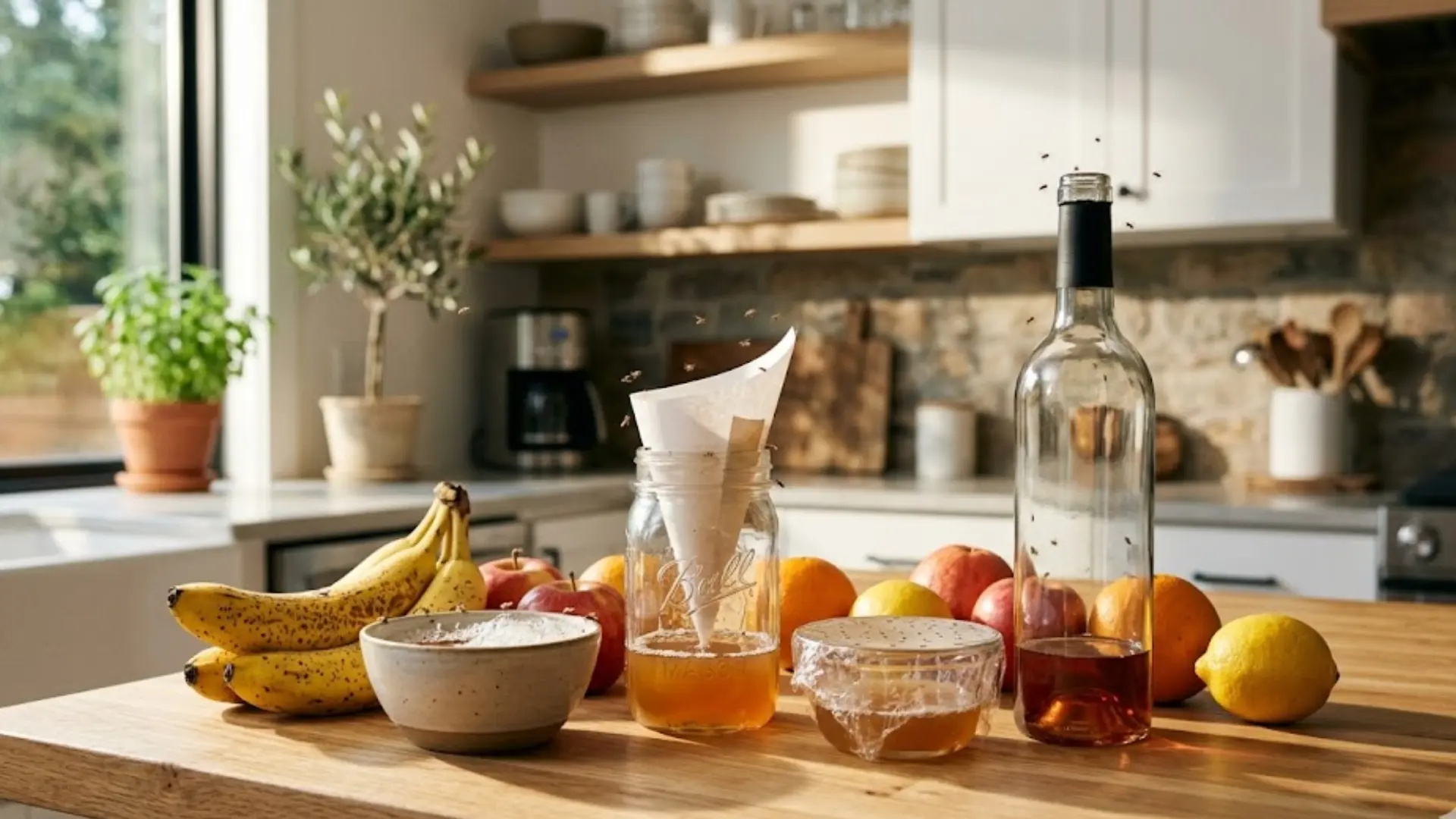

Fruit flies show up out of nowhere and take over your kitchen faster than you expect. One minute, the counter looks clear, and the next, it is crawling with tiny flies.
A DIY fruit fly trap is one of the easiest fixes you can make at home. You do not need special tools or expensive products to get it done.
Everything you need is already sitting somewhere in your kitchen right now. Here you will find simple trap methods, smart bait choices, and placement tips.
There is a fix here, no matter how bad your fruit fly problem has gotten. Your fly-free kitchen is closer than you think.
Why Fruit Flies Are So Hard to Get Rid Of
Fruit flies can multiply fast once they find a reliable source of food and moisture inside your home. They lay eggs on rotting fruit, in dirty drains, on damp sponges, in trash cans, and near sticky spills.
By the time you notice them flying around, there are likely eggs hidden in places you cannot easily see. This is exactly why traps alone will not fully solve a fruit fly problem once it gets going.
A trap catches the adult flies buzzing around, but it does nothing about the eggs or breeding spots. The best approach is to set a trap and clean up every breeding source at the same time.
Keep reading to find the best traps and steps to tackle the problem the right way.
Method 1: DIY Fruit Fly Trap with Apple Cider Vinegar
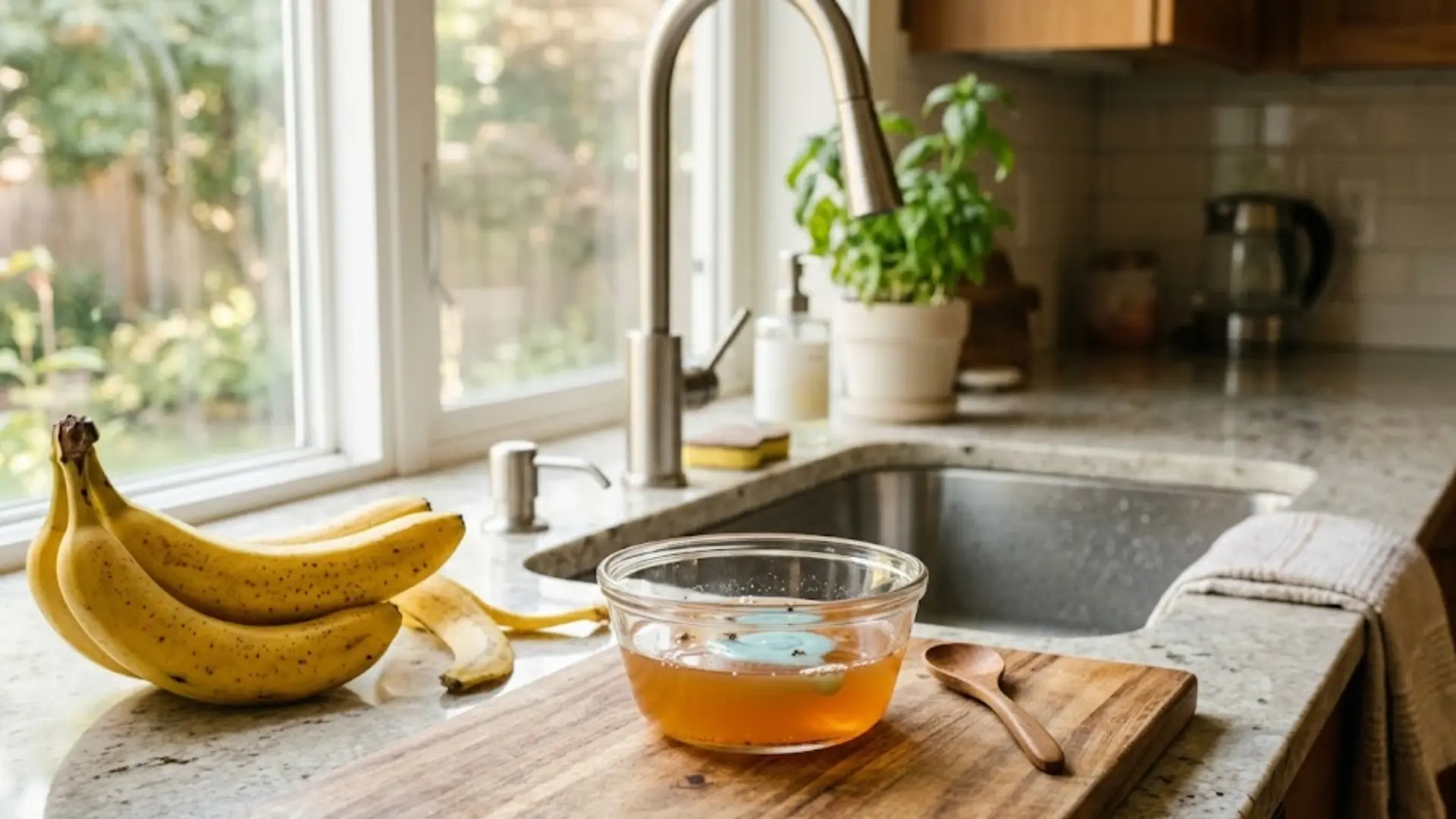
This method only takes a few basic items you likely already have at home. First, you will gather your materials, then follow a few simple steps to set it up:
Materials Needed
You do not need to buy anything special for this trap. Here is everything you need and how much to use:
| Item | Amount |
|---|---|
| Apple cider vinegar | 3–4 tablespoons |
| Dish soap | 2–3 drops |
| Small bowl or glass | 1 |
| Sugar (optional) | 1 teaspoon |
| Ripe fruit (optional) | 1 small piece |
Most of these items are already sitting in your kitchen right now. Grab them, and you are ready to go.
Step-by-Step Instructions
This trap comes together in just a few minutes with no special skills needed. Follow these steps to set it up correctly:
- Step 1: Pour three to four tablespoons of apple cider vinegar into a small bowl or glass you don’t mind using.
- Step 2: Add two to three drops of dish soap and stir gently so the soap breaks the surface of the liquid.
- Step 3: Drop in a small piece of ripe fruit or a teaspoon of sugar if you want to make it even more attractive to flies.
- Step 4: Place the trap close to where you see the most flies, like near the fruit bowl, trash can, or sink.
- Step 5: Leave the trap overnight and check it in the morning to see how many flies it has caught.
- Step 6: Refresh the trap every one to two days by pouring it out and making a fresh batch to keep it working well.
That is really all there is to it. Check the trap daily, and you should start seeing results pretty quickly.
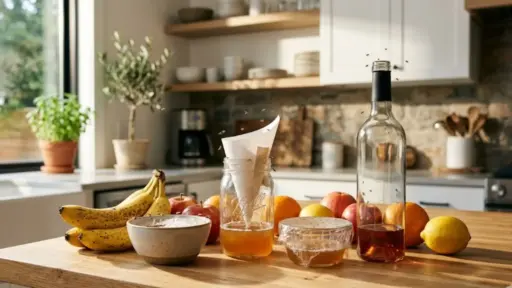
Method 2: Fruit Flies Trap with a Paper Cone Jar Trap
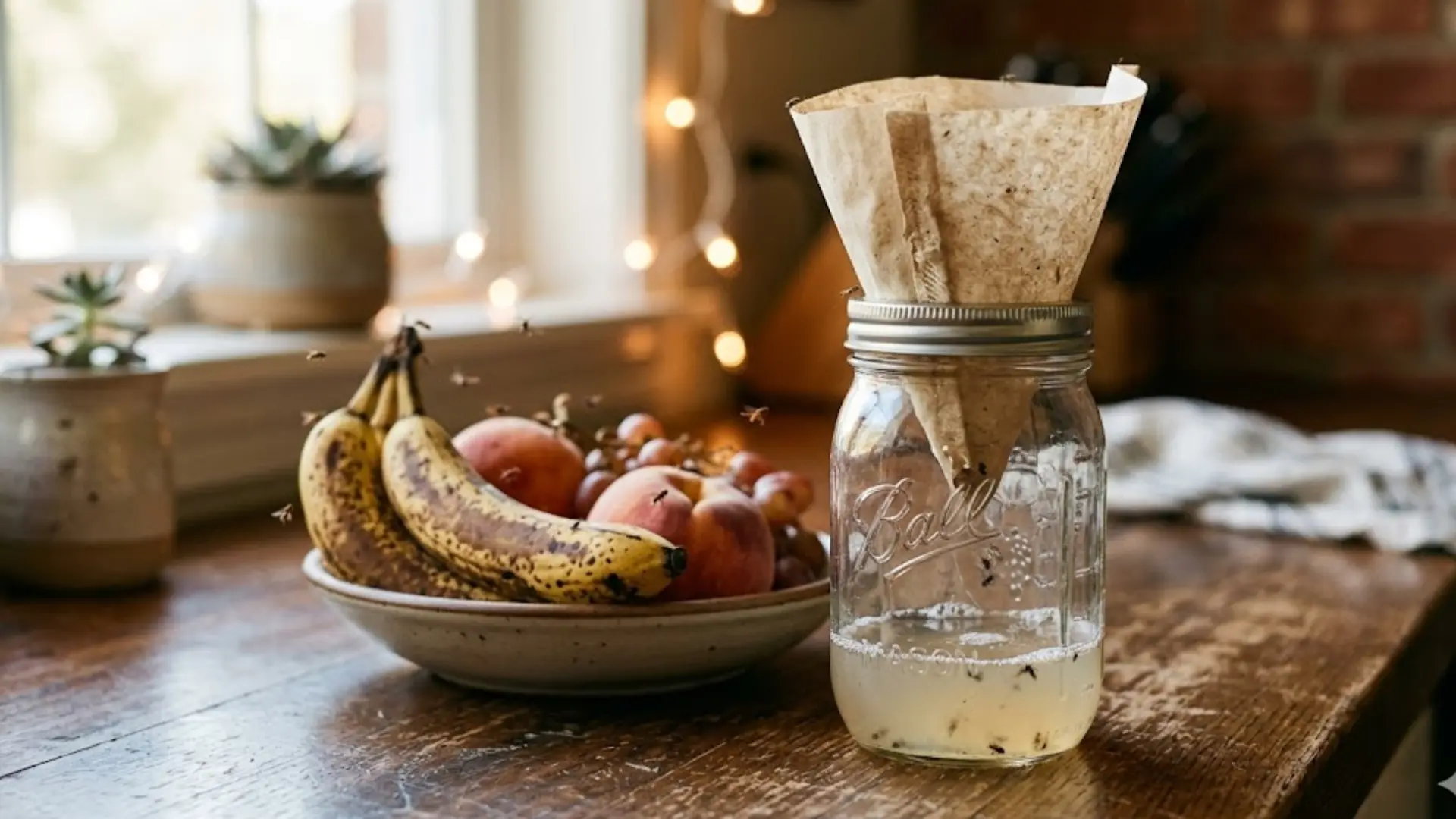
This method uses a paper cone and a jar to trap fruit flies without any special equipment. You will need a few basic materials and then follow a short set of steps:
Materials Needed
You probably have everything you need for this trap already at home. Here is what to grab and how much to use:
| Item | Amount |
|---|---|
| Jar or glass | 1 |
| Paper | 1 sheet |
| Tape | A few small pieces |
| Apple cider vinegar, ripe fruit, or wine | 3–4 tablespoons or 1 small piece |
All of these are simple, everyday items that cost you nothing extra. Once you have them ready, setting the trap takes just a few minutes.
Step-by-Step Instructions
Knowing how to trap fruit flies with this method is easier than it sounds. Follow these steps to put it together:
- Step 1: Pour your bait into the bottom of the jar, using apple cider vinegar, a piece of ripe fruit, or a splash of wine.
- Step 2: Take one sheet of paper and roll it into a cone shape that fits snugly into the opening of your jar.
- Step 3: Make sure the tip of the cone has a small opening so flies can enter but struggle to find their way back out.
- Step 4: Place the cone into the jar carefully so it sits in the opening without touching the bait at the bottom.
- Step 5: Use a few small pieces of tape around the edges to hold the cone firmly in place so no gaps are left open.
Check the trap every day to see how many flies it has caught. Replace the bait every couple of days to keep it working well.
Method 3: Fruit Fly Trap with Plastic Wrap
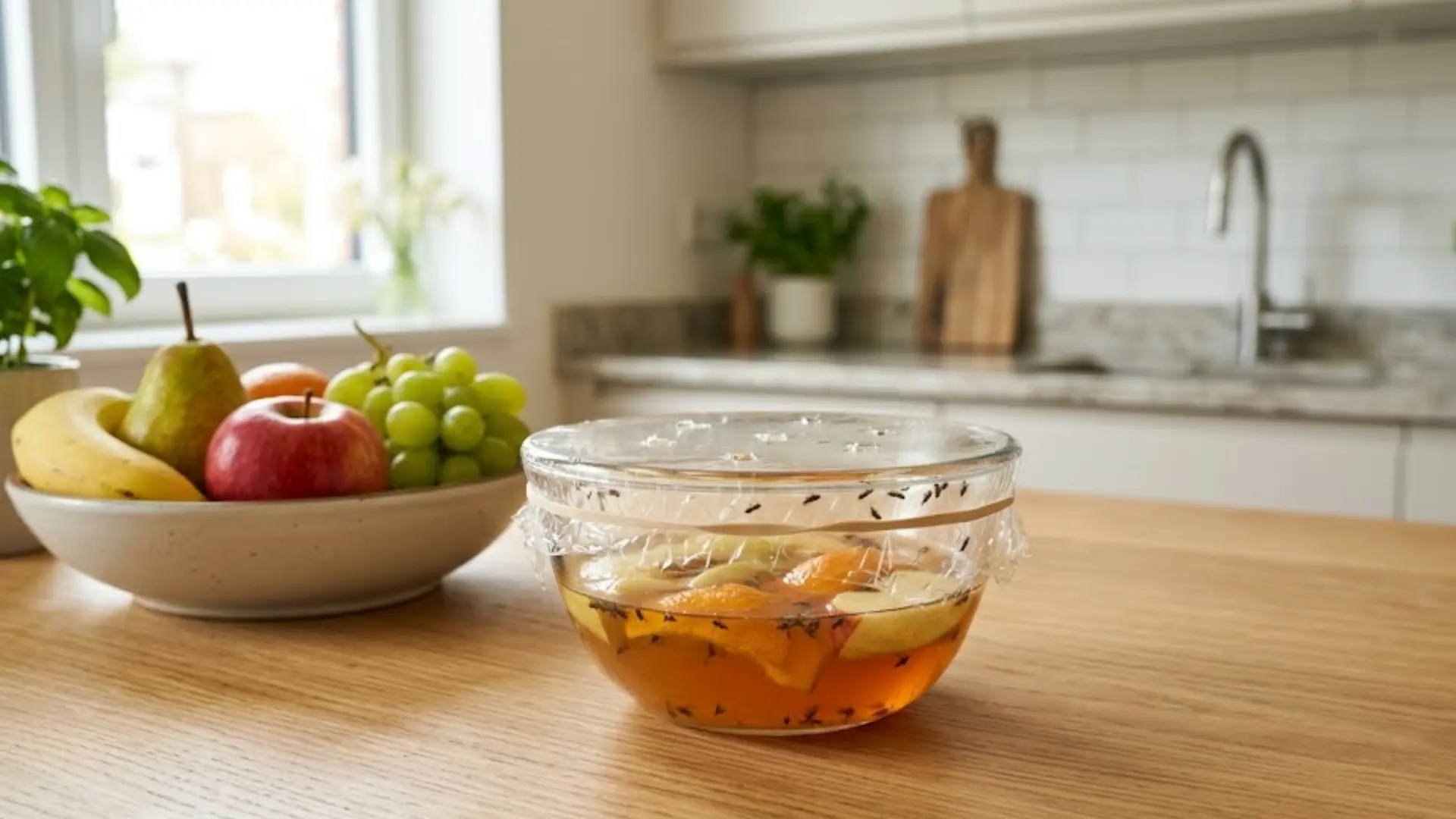
This at-home fruit fly trap is one of the simplest methods you can put together in minutes. You will need a few basic materials and then follow a short set of steps:
Materials Needed
You do not need to buy anything new to make this trap work. Here is everything you need and how much to use:
| Item | Amount |
|---|---|
| Bowl, cup, or jar | 1 |
| Plastic wrap | Enough to cover the top |
| Toothpick or fork | 1 |
| Rubber band (optional) | 1 |
| Apple cider vinegar or ripe fruit | 3–4 tablespoons or 1 small piece |
Chances are, you already have all of these sitting somewhere in your kitchen. Once you have them together, you are ready to build the trap.
Step-by-Step Instructions
This trap works by luring flies in through small holes they cannot easily escape from. Follow these steps to set it up the right way:
- Step 1: Place your bait at the bottom of the bowl, cup, or jar using apple cider vinegar or a small piece of ripe fruit.
- Step 2: Stretch a sheet of plastic wrap tightly over the top of the container so it covers the entire opening with no gaps.
- Step 3: Press a rubber band around the edge of the container to hold the plastic wrap firmly in place if it keeps slipping.
- Step 4: Use a toothpick or fork to poke several small holes across the surface of the plastic wrap so flies can get in.
Check the trap regularly to monitor its performance. A quick refresh every day or two will keep it working at its best.
Method 4: Fruit Flies Trap with a Dish Soap and Vinegar Trap
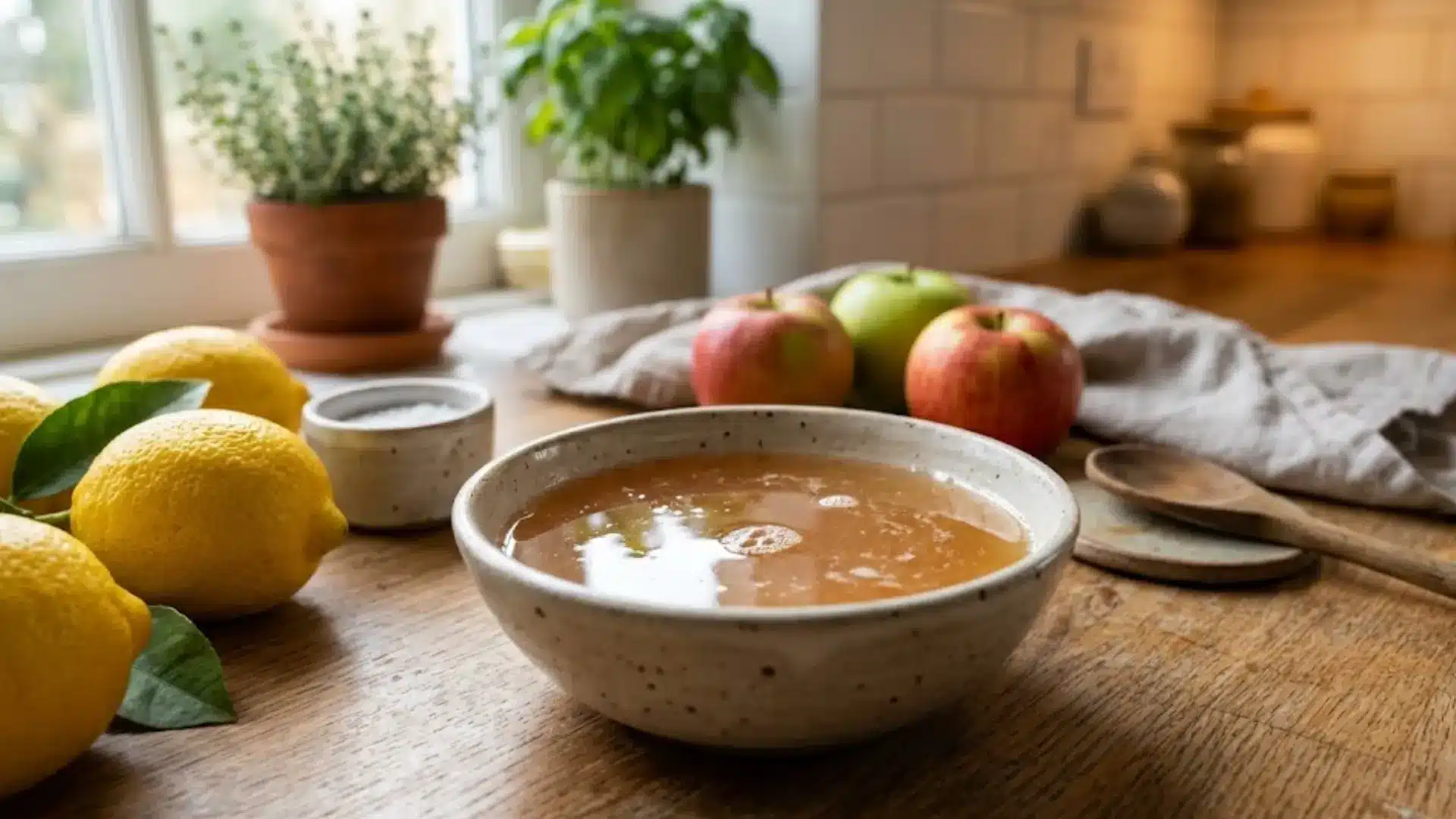
This trap works by using vinegar to attract flies and dish soap to stop them from escaping once they land. You will need just a handful of basic materials and then follow a few simple steps:
Materials Needed
Everything you need for this trap is probably already in your kitchen right now. Here is what to grab and how much to use:
| Item | Amount |
|---|---|
| Small bowl or glass | 1 |
| Apple cider vinegar | 3–4 tablespoons |
| Dish soap | 2–3 drops |
| Sugar (optional) | 1 teaspoon |
| Fruit juice (optional) | 1 tablespoon |
None of these items will cost you anything extra if you already cook at home. Once you have them ready, the trap takes under two minutes to set up.
Step-by-Step Instructions
This is one of the quickest and easiest traps you can put together at home. Follow these steps to set it up the right way:
- Step 1: Pour three to four tablespoons of apple cider vinegar into a small bowl or glass that you do not mind leaving out.
- Step 2: Add two to three drops of dish soap directly into the vinegar so the soap sits right on top of the liquid.
- Step 3: Stir the mixture gently so the soap blends in without creating too many bubbles that could affect how the trap works.
- Step 4: Add a teaspoon of sugar or a splash of fruit juice if you want to make the trap even more attractive to flies.
Empty the trap every day and see how many flies it has caught. Making a fresh batch every day or two will keep it working well.
Method 5: Fruit Flies Trap with a Leftover Wine or Beer Bottle

This trap is as simple as it gets because the bottle does most of the work for you. You will need just a couple of basic materials and then follow a few easy steps:
Materials Needed
You do not need to buy anything at all to make this trap work. Here is what to have on hand before you get started:
| Item | Amount |
|---|---|
| Almost-empty wine or beer bottle | 1 |
| Dish soap (optional) | 1 drop |
| Paper towel (optional) | 1 sheet |
Just leave a little liquid in the bottle, and you are already halfway there. Once you have what you need, setting this trap takes less than a minute.
Step-by-Step Instructions
This is one of the easiest traps to set up because you are reusing something you already have. Follow these steps to put it to work:
- Step 1: Leave a small amount of wine or beer sitting at the bottom of the bottle so the scent can attract the flies nearby.
- Step 2: Add one drop of dish soap into the bottle if you want to make the trap stronger and stop flies from escaping easily.
- Step 3: Place the open bottle near wherever you are seeing the most fruit fly activity, like the counter or trash can area.
- Step 4: Let the narrow neck of the bottle do the work by guiding flies in and making it hard for them to find the way out.
- Step 5: Leave the bottle out overnight and check it in the morning to see how many flies it has caught inside.
- Step 6: Once the trap fills up, dispose of the liquid carefully and give the bottle a quick rinse before throwing it away.
Give the bottle a wipe down with a paper towel if any liquid spills during cleanup. Replacing it with a fresh bottle every day or two will keep results coming in.
Best Bait for a Homemade Fruit Fly Trap
The bait you choose determines how well your trap attracts fruit flies. Picking the right one depends on what you already have at home:
| Bait | Best For | How Long Does It Last | Effectiveness | Easy to Find |
|---|---|---|---|---|
| Apple cider vinegar | Any situation | 1–2 days | High | Yes |
| Overripe fruit | When flies are near your fruit bowl | 1 day | Medium–High | Yes |
| Wine or beer | When you have leftovers | 1–2 days | Medium–High | Yes |
| Juice | When vinegar is not available | 1 day | Medium | Yes |
Any of these options will get the job done when used correctly. Pick whichever one you already have at home and set your trap today.
Note: Avoid plain water, fresh unripe fruit, harsh chemicals, and strong cleaning products as bait. These will not attract fruit flies and may actually keep them away from your trap.
Where to Place a DIY Fruit Fly Trap for Best Results
Placement makes a big difference in how well your trap works. Put it near the fruit bowl, kitchen sink, trash can, recycling bin, or compost container.
These are the spots where fruit flies breed and feed the most. If you see flies gathering on a specific counter, place the trap right there.
The closer it is to the source, the faster it works. You can set up more than one trap if flies are showing up in multiple spots around your kitchen.
Check each trap daily and move it if you notice it is not catching many flies after a day or two.
Note: Avoid placing the trap near open windows, strong fans, or anywhere pets and kids can easily knock it over.
How Long Does a DIY Fruit Fly Trap Take to Work?
Most traps start catching flies within 2 to 4 hours of being set out. If you have a larger infestation, it may take 3 to 5 days to see a real difference.
Do not get discouraged if results are slow at first. Cleaning up food scraps, spills, and breeding spots will speed things up a lot.
The trap works best when it is refreshed regularly. Also, swap out the bait if it dries up, starts smelling bad, or has already caught a lot of flies. Fresh bait always works better than old bait.
Why Your DIY Fruit Fly Trap Is Not Working?
A fruit fly trap will only work well if a few basic conditions are right. Here are the most common reasons your trap may not be performing as expected:
- There is still exposed food nearby. Ripe fruit, dirty dishes, and food scraps left out will compete with your trap and keep drawing flies in.
- The bait is not strong enough. Switch to apple cider vinegar, wine, or a piece of overripe fruit to make the trap more attractive.
- The holes in your trap are too large. Flies can escape easily if the openings in your plastic wrap or cone are too wide, so make them smaller.
- You may not be dealing with fruit flies at all. Drain flies and fungus gnats look similar but gather in different spots, so check where the insects are most active.
A few small adjustments can often make a big difference in how well your trap works. Try fixing one thing at a time and see which change gets you the best results.
Fruit Flies vs. Drain Flies vs. Fungus Gnats
Not every tiny flying insect in your home is a fruit fly. Knowing which pest you are dealing with helps you pick the right fix from the start:
| Pest | Common Location | Appearance | Best First Step |
|---|---|---|---|
| Fruit flies | Fruit, trash, counters | Small tan or brown flies | Remove food sources and set a vinegar trap |
| Drain flies | Sinks, drains, bathrooms | Fuzzy, moth-like flies | Clean out your drains thoroughly |
| Fungus gnats | Houseplants | Tiny dark flies | Let the soil dry out and treat the plant |
Take a close look at where the insects are gathering and what they look like. That will point you toward the right solution a lot faster than guessing.
How to Prevent Fruit Flies from Coming Back
Getting rid of fruit flies is one thing, but keeping them away for good takes a little extra effort. Here are the most effective habits to stop them from coming back:
- Store fruit properly. Refrigerate anything that is ripe, keep cut fruit covered, and use sealed containers to stop flies from being drawn in.
- Keep kitchen surfaces clean. Wipe down counters regularly, clean up sticky spills quickly, and wash cutting boards after every use.
- Manage your trash and recycling. Take the trash out often, rinse bottles and cans before tossing them, and clean your bins regularly to remove built-up residue.
- Flush your drains often. Run hot water down the drain regularly, scrub around the sink opening, and make sure no food bits are collecting inside.
- Check hidden breeding spots. Compost bins, damp mops, dish sponges, under appliances, and produce bags are easy spots to overlook but common places for flies to breed.
Staying on top of these habits makes it much harder for fruit flies to settle back in. A clean kitchen is the best long-term trap you have.
Frequently Asked Questions
Can I Make an At-Home Fruit Fly Trap without Vinegar?
Yes. Ripe fruit, wine, beer, juice, or sugar water mixed with a little yeast all work well as vinegar substitutes.
Why Are Fruit Flies Still Around After Using a Trap?
They are likely still breeding in fruit, drains, trash, recycling bins, or damp areas that have not been cleaned out yet.
How Many Fruit Fly Traps Should I Use?
One trap works fine for a small problem. For a larger infestation, placing several traps around the kitchen gives much better results.
Do Fruit Fly Traps Kill Eggs?
No. Traps only catch adult flies. Removing eggs and breeding spots requires cleaning the areas where fruit flies are actually laying them.
Can I Use White Vinegar Instead of Apple Cider Vinegar?
Apple cider vinegar works better because it smells fruitier. White vinegar can still work if you add a little sugar or fruit juice.
Final Words
Getting rid of fruit flies does not have to be stressful or expensive at all. A simple diy fruit fly trap made from everyday items can make a real difference.
The key is to act fast and stay consistent with whatever method you choose. Pick the trap that suits you best and set it up today.
Small, steady habits are what keep fruit flies from coming back for good. You already have everything you need to take back your kitchen right now.
The sooner you start, the sooner your kitchen feels clean and fly-free again. Drop a comment below and share which trap worked best for you.

James McLaren, with a rich background in architecture from the University of Manchester, has been contributing his expertise to the world of creative construction and home innovation for over 20 years. His journey began as a project manager for a leading construction firm, where he honed his skills in bringing complex designs to life. James joined our platform as a freelancer in 2019, quickly becoming a favorite for his insightful and practical advice. He has been a pivotal force to our wing ever since, bringing our readers a blend of technical know-how and creative flair. Beyond his professional life, James is an avid woodworker and enjoys restoring vintage furniture, a hobby that complements his professional insights beautifully.