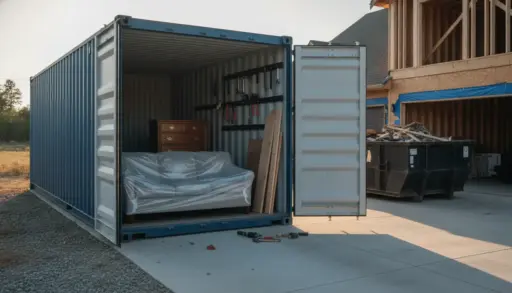
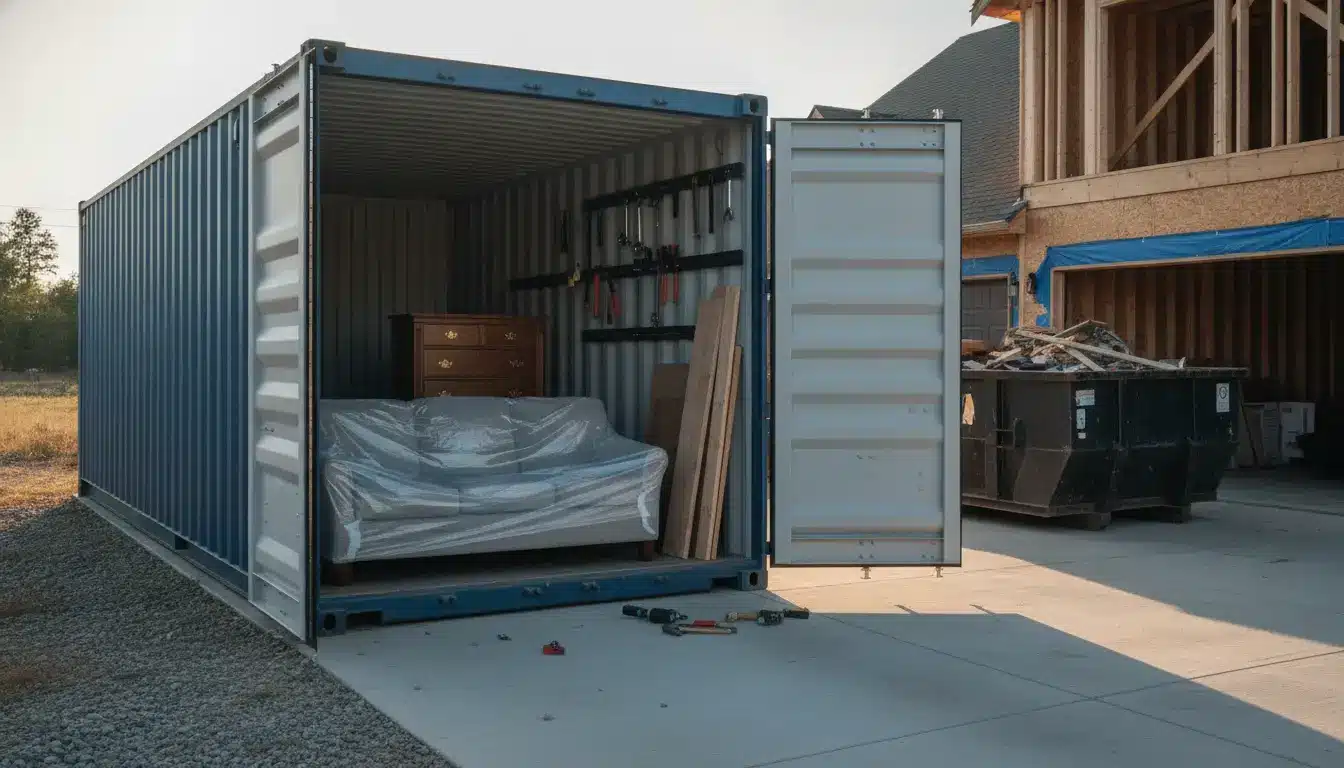

Anyone who has lived through a renovation knows the moment it gets real: the dumpster shows up, the crew starts pulling cabinets off the wall, and suddenly every piece of furniture in the room needs somewhere else to go. Couches end up wedged into the garage. Tools and lumber pile up on the back patio. Boxes of dishes sit under a tarp and hope for the best.
It works for about a week. Then it rains, or the contractor needs the garage for materials too, and the whole system falls apart.
The real issue is that most homes simply weren’t built with a spare room for renovation overflow. Furniture needs to stay dry and free of dust. Tools and power equipment need to stay safe and secure. Materials like lumber, tile, and cabinetry need a flat, weatherproof space where they won’t warp or get damaged before installation. A growing number of homeowners are solving all three problems the same way: by renting or buying a shipping container and parking it in the driveway or yard for the length of the project.
How Renovations Create a Storage Problem
A typical kitchen or bathroom remodel doesn’t just displace a few boxes. It displaces an entire room’s worth of furniture, appliances, and personal belongings. Add that to everything the crew brings in to do the work. Multiply that when you’re talking about whole-house renovation.
Garages fill up first, but they’re rarely climate-controlled and almost never secure once the door is propped open for deliveries. Off-site storage units could work, but they mean loading a truck, driving across town, and losing same-day access to anything you stored. Tarps and temporary covers in the yard protect against nothing but light drizzle.
A shipping container solves the access problem and the weather problem at the same time. It sits right on the property, so furniture, tools, and materials are a few steps away instead of a drive across town, and it’s built from solid steel with a sealed door system designed to keep cargo dry on ocean crossings.
Renting vs. Buying for a Renovation Timeline
Most renovations run anywhere from a few weeks to several months, which makes renting the more practical option for most homeowners. Monthly rental prices are usually a fraction of what a comparable self-storage unit costs once you factor in the time spent loading, hauling, and unloading a truck every time you need something.
Home renovations are one of the most common reasons people rent: when you’re building a new home or fixing up an old one and need somewhere to keep your valuables and materials safe, a 40-foot standard container gives enough room to handle the job. For a smaller remodel — a single kitchen or bathroom — a 20-foot container is usually plenty, since it’s designed for compact projects and personal items without the footprint of a full 40-footer.
Buying makes more sense if you want to reuse the container once renovation wraps up, whether as a permanent shed, workshop, or long-term storage for seasonal items.
What Actually Fits Inside
It helps to know what you’re working with before the container shows up. A 20-foot standard container is enough for the contents of a few rooms — while a 40-foot standard container doubles that capacity for a full-home renovation job. For projects with bulkier materials or appliances that need extra headroom, a 40-foot high cube container adds about a foot of additional vertical space over the standard model.
In practice, that translates to room for sofas, mattresses, dressers, and dining sets on one side, with tools, lumber, and boxed materials organized on the other. The interior height of a high cube means there’s more vertical space to use — which matters more than most people expect once the loading starts.
Keeping It Organized Once It’s Loaded
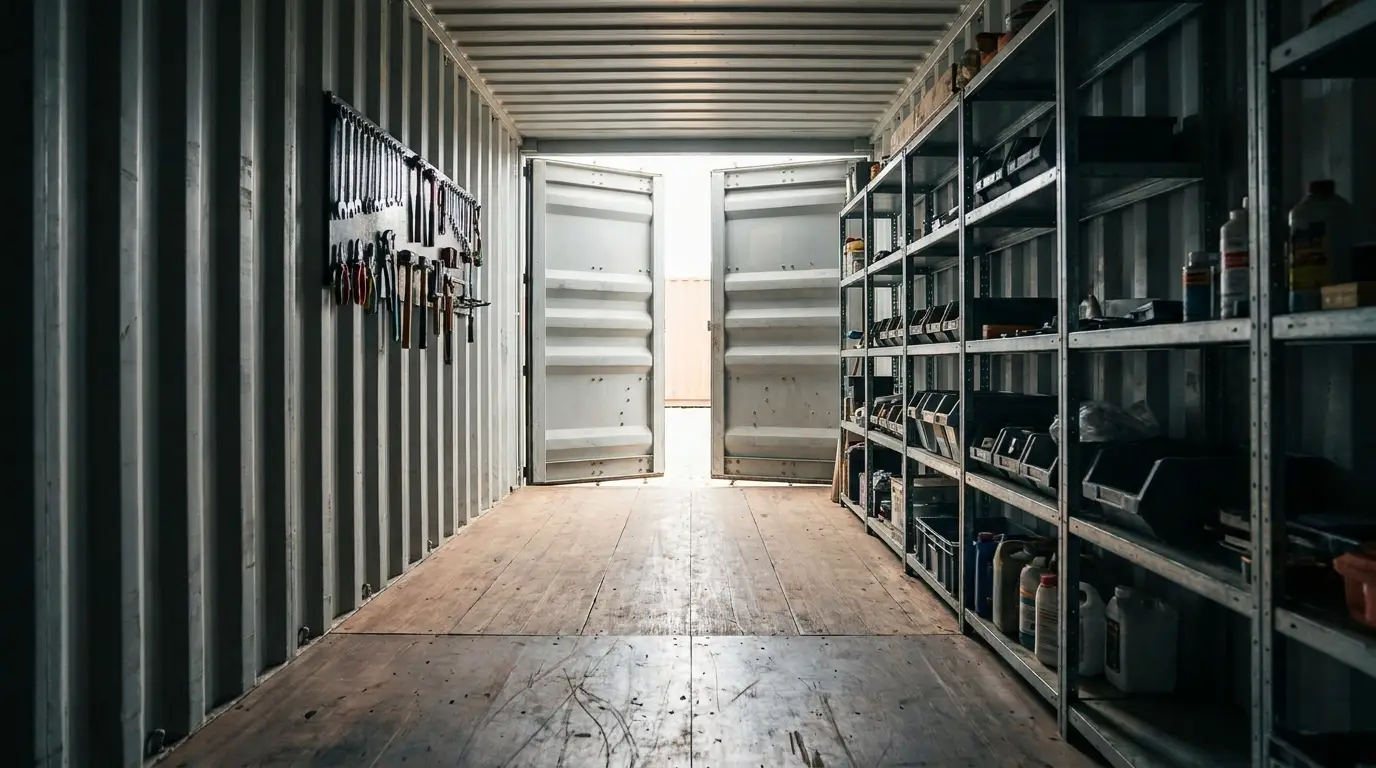
An empty container is just a steel box, and stacking everything straight onto the floor wastes most of what makes it useful. Good shelving multiplies usable capacity, keeps items reachable instead of buried, and lifts goods off the floor where moisture tends to collect.
The most popular option for a temporary renovation setup is D-ring bracket shelving, which hangs from the lashing rings welded into the container’s ceiling and rests against the wall. It requires no drilling, so there’s no risk of damaging a rented unit, and it comes apart just as easily when the project ends. Magnetic hooks that attach straight to the steel walls keep hammers, levels, and cords up and visible instead of buried in a pile on the floor.
Protection Against Pests and Precipitation
Shipping containers are one of the more pest-resistant storage options available. A well-maintained container’s solid steel construction, tight door seals, and elevated design create a strong barrier against rodents looking for a way into stored boxes, fabric, or wiring. The keys are closing the doors fully, keeping the area around the container clear of tall grass or debris, and not storing food waste inside, since none of those structural advantages matter much if the door gets left propped open during a long day of moving boxes.
On the weather side, the same sealing that keeps ocean water out during shipping does the same job for rain and humidity in a driveway. That’s a real upgrade over a garage with a gap under the door or a tarp that shifts in the wind, both of which can let moisture in and damage upholstered furniture, particleboard cabinetry, or anything made of wood.
Choosing a Spot on the Property
When your container arrives, it will need a level surface to sit on with plenty of overhead clearance, and enough room for the delivery truck to back in and drop the unit without needing to maneuver around tight corners. A driveway is usually the easiest option, but a flat section of yard works too, as long as the ground won’t turn soft after a heavy rain.
It’s also worth checking whether a homeowners association or local zoning code has any rules about temporary structures on a residential lot. Most areas are fine with a container parked for the length of an active renovation, but a quick call to confirm saves a headache later.
No Stress, No Mess
A renovation already comes with enough stress. A rented shipping container solves the two biggest storage headaches at once: it keeps everything dry and secure, and it keeps everything on-site, so nothing requires a trip across town when the crew needs a tool or a homeowner wants to check on a couch. Renovation projects are unpredictable enough; storage doesn’t have to be.

Holding a Master’s in Architecture from the University of Texas at Austin, Emily Rodriguez has dedicated more than two decades to the art and science of building renovation. Starting her journey in historic preservation, she developed a profound respect for blending old with new in building design. Emily became a vital part of our team in 2019, renowned for her insightful and innovative renovation tips. She has been leading our DIY home improvement series since ever since, where she shares her wealth of knowledge in turning outdated spaces into modern havens. When not engaged in writing or consulting, Emily is a passionate advocate for heritage conservation and enjoys exploring vintage architecture, a hobby that complements her professional expertise.