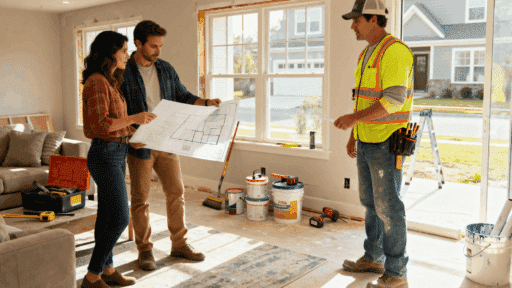

A whole-home remodel usually takes six to twelve months. Most families cannot move out for that long, so they stay in the house while construction happens around them. The difference between a rough experience and a livable one comes down to a handful of smart decisions you make before demo day.
Here is what actually works, based on what homeowners, builders, and the EPA recommend.
Quick Answer: 7 Things That Actually Help
- Plan for the timeline to run longer than your builder quotes. Budget for six to twelve months even if the estimate is shorter.
- Pick one room as a construction-free safe zone before demo starts.
- Set up a temporary kitchen with a microwave, coffee maker, small fridge, and Instant Pot.
- Lock down a shower plan if the bathroom is part of the scope.
- Use zip-wall barriers, seal HVAC vents, and run HEPA purifiers to control dust.
- Phase the work so you always have a livable zone. This is the biggest decision a builder makes for you.
- Pad the budget for hidden costs like take-out, dog daycare, and storage.
How Long Does a Whole-Home Remodel Actually Take?
A whole-home remodel typically takes six to twelve months from start to finish. Small homes can finish closer to six months. Larger or more complex projects can run twelve months or longer.
The real number is often longer than the quote. Permit delays, backordered materials, and hidden damage behind walls stretch almost every project. The National Association of Home Builders has reported for years that change orders add weeks to most builds.
What to do:
Plan your life around double the timeline your builder gives you. If the quote says six months, plan for twelve. If the work finishes faster, you get to be pleasantly surprised. If it runs long, you are not caught off guard.
Where Should You Live in the House During Construction?
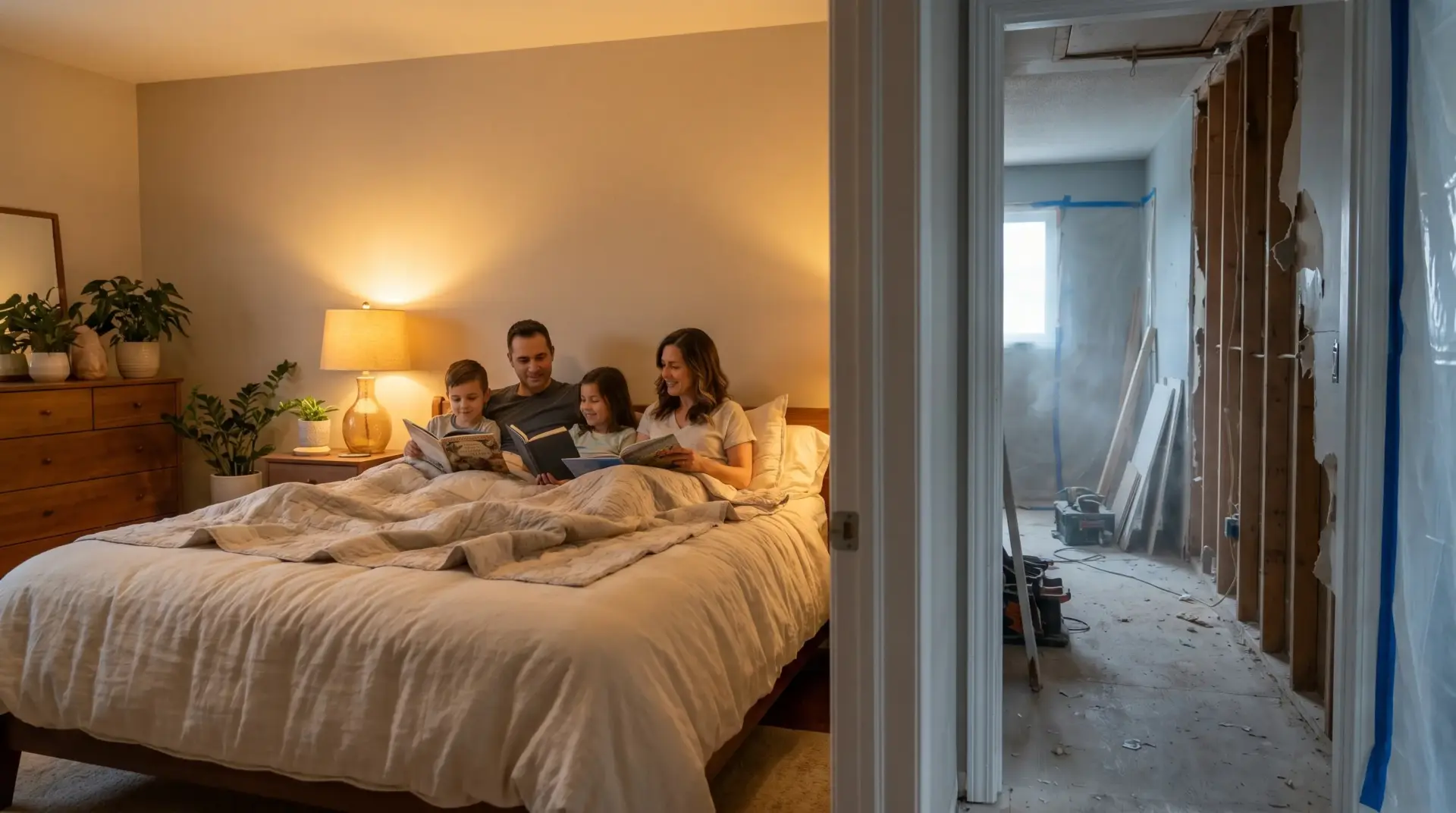
Pick one room as your safe zone before demo day. This is the single most repeated tip from homeowners who have lived through a major remodel.
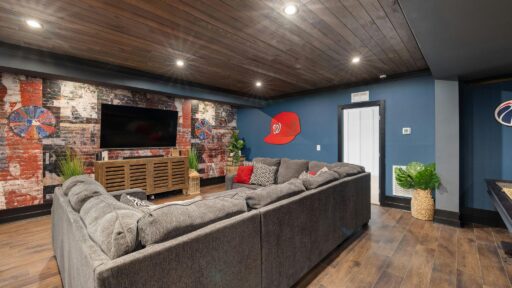
The best candidates are the master bedroom or a finished basement. You need a room with a door that closes, located outside the work zone, that can hold a bed, a small desk, and a chair.
Set it up like a hotel room:
- Blackout curtains for daytime rest
- An air purifier running all day
- A power strip with your phone, laptop, and a small lamp
- Nothing related to the remodel allowed inside
When you shut the door at night, the chaos stays outside. Without one protected room, the project will wear you down faster than you expect.
How Do You Handle the Kitchen During a Remodel?
Set up a temporary kitchen before the old one comes out. Losing the kitchen is the single biggest daily disruption, and planning it after demo starts is always too late.
Pick a room with a counter or a folding table, an outlet, and some storage. The dining room works best. A laundry room or garage works if the weather is mild.
What to include in a temporary kitchen:
- Microwave
- Coffee maker and electric kettle
- Small fridge
- Instant Pot or slow cooker
- Toaster oven if you have an available outlet
- Folding table for prep
- Plastic tub for dishes if there is no utility sink nearby
What to eat:
Shift your shopping toward meals that do not need a stove. Rotisserie chickens, pre-washed salads, sandwiches, frozen meals, oatmeal, cereal. Paper plates and plastic utensils for the duration.
Plan on take-out two or three nights a week, not five. A family of four eating out five nights a week for several months will blow through more money than most budgets allow. Three nights keeps you on track.
If the project runs through spring or summer, lean on the grill. Outdoor cooking is one of the easiest wins during construction.
What Do You Do About the Bathroom?
If you only have one bathroom and it is part of the scope, you need a shower plan before work starts.
Options to line up in advance:
- A gym membership for showers. This is the cheapest backup and one of the most common solutions.
- A close friend or family member nearby who has offered their bathroom.
- A short hotel stay for the few days when the bathroom is completely offline.
If you have two bathrooms, use the secondary one as your protected zone. Tell the crew it is off limits and put a sign on the door. Keep it clean and do not let tools or buckets creep in.
Keep a go-bag in your car during the worst weeks. Toothbrush, deodorant, a clean towel, a change of clothes. There will be a morning when the water is off unexpectedly.
How Do You Control Dust During a Remodel?
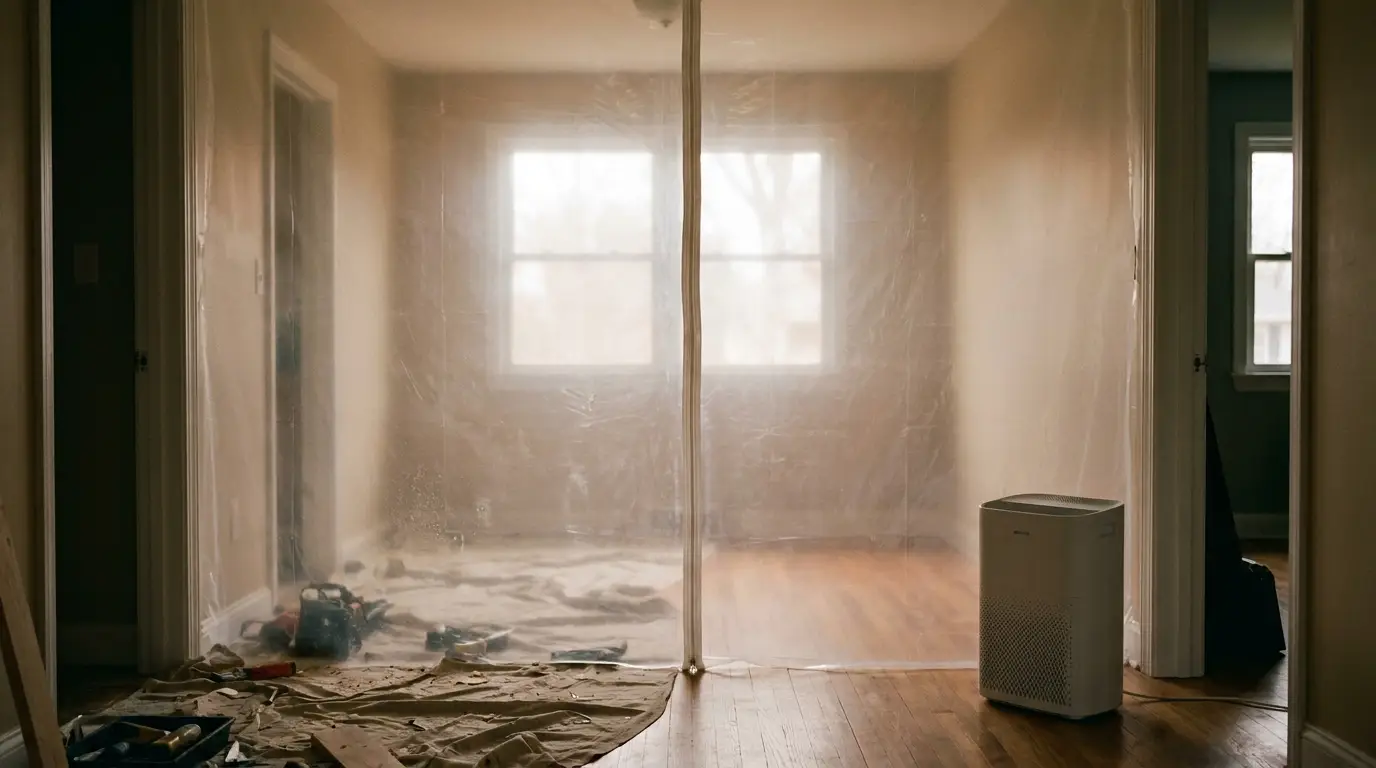
The EPA recommends running exhaust ventilation during construction and for at least 72 hours after installation is complete. This creates a pressure barrier that stops dust and fumes from spreading to other rooms.
Dust travels through HVAC ducts, slips under doors, and rides into clean rooms on workers’ clothes. You will fight it every day of the project.
What actually works:
- Ask your builder to use zip-wall plastic barriers with real zippers, not just sheets of plastic hanging from the ceiling.
- Seal HVAC vents in every work area with tape and 6-mil plastic sheeting. The EPA specifically recommends this to keep ducts from contaminating the rest of the house.
- Run HEPA air purifiers in your safe room, the kids’ bedrooms, and anywhere people sleep.
- Write daily end-of-day cleanup into the contract. Not a final cleanup. A daily one.
- Wet-mop living areas every night. Dry sweeping throws fine dust back into the air.
If anyone in the house has asthma or a respiratory condition, consider sending them somewhere else for heavy demo days. The same goes for pets with breathing issues.
How Do You Keep Kids and Pets Safe and Sane?
Kids and pets feel the disruption hardest because they cannot rationalize it. Naps get interrupted, bedtimes slip, and dogs stop eating.
Negotiate the Start Time
Most crews default to seven in the morning. If you have young kids, ask for an eight o’clock start before the project begins. An hour of quiet morning makes the whole day easier.
Schedule Loud Work Around the Family
Demo, flooring refinishing, and anything involving a concrete saw should happen when the kids are at school or at a grandparent’s house. Plan a weekend trip during the noisiest phases.
Protect the Pets
Do not leave the dog home alone during demo. Doggy daycare typically costs thirty to fifty dollars per day in most US markets, which is cheaper than a vet bill for a stressed animal. Cats usually do better hiding in a safe room with their food, litter, and a familiar-smelling piece of your clothing.
Keep the Rituals
Same dinner time, same story time, same Friday movie night. Kids feel the chaos less when the rhythms hold. Adults do too.
Should You Phase the Work?
Yes. Phasing is the single most underused strategy for a live-in remodel. Done right, you always have one part of the house that works while another part is torn up.
Common phasing patterns:
- Main floor first, second floor second (or the reverse). Sleep on the finished level while the other one is rebuilt. Then switch.
- Kitchen and primary bathroom last. Everything else gets done first so you keep both functions for most of the timeline.
- Outside-in. Foundation, roof, and siding first when weather allows, then move inside.
Phasing only works if the builder plans for it from day one. You cannot bolt a phased schedule onto a project that started without one.
The conversation needs to happen in the first design meeting. If you are in mid-Missouri, a whole home remodeling company in Columbia MO or any experienced local builder who regularly handles live-in projects should walk you through a phased timeline during the first meeting. Ask them to show you how they sequenced a past whole-home remodel for a family who stayed in the house. That conversation tells you more about the next eight months than any portfolio ever will.
What Are the Hidden Costs of Staying in the House?
Most planning guides recommend a contingency fund of ten to twenty percent of your total budget. The hidden cost of staying in the house during construction is one of the things that fund should cover.
Realistic add-ons for a whole-home remodel:
- Extra take-out: $300 to $600 per month for a family of four
- Air purifiers and replacement filters: $150 to $400 upfront
- Storage unit for furniture: $100 to $250 per month
- A few hotel nights during the worst weeks
- Doggy daycare during demo days: $30 to $50 per day
- Laundromat trips if the washer and dryer are inaccessible
Plan for two thousand to five thousand dollars in extra living costs over the life of a typical whole-home remodel. Build it into the contingency from day one, not as a surprise in month four.
FAQ
Is It Worth Staying in the House During a Whole-Home Remodel?
For many families, yes. Moving out adds rent or hotel costs on top of the remodel budget, which can add thousands per month. Staying also lets you monitor the contractor’s progress daily. The trade-off is living with dust, noise, and disrupted routines for the length of the project.
When Should You Move Out Instead of Staying?
Move out if you have a newborn or infant in the home, if someone has severe asthma or respiratory issues, if the entire main level is being renovated at once, or if the only bathroom will be offline for more than a week. A short-term rental or family stay for six to eight weeks during the worst phase is often cheaper than a full relocation.
How Do You Keep Kids Safe During a Home Renovation?
Physical barriers between work areas and living spaces, clear rules about off-limits zones, air purifiers in sleeping areas, and sending children out of the house during demo days. Homes built before 1978 may have lead-based paint, so always confirm your contractor is EPA lead-safe certified if renovating an older home.
What Is the Biggest Mistake People Make During a Live-In Remodel?
Not phasing the work. Homeowners who let the entire house get torn up at once end up camping in the living room for months. A phased schedule, agreed with the builder before demo, keeps one livable zone intact at all times.
How Much Extra Should You Budget for Living in the House During a Remodel?
Plan for two thousand to five thousand dollars over the life of a whole-home remodel. This covers extra take-out, air purifiers, storage, occasional hotel nights, and doggy daycare. It is typically cheaper than moving out, but not free.
The Bottom Line
Living through a whole-home remodel is one of the hardest temporary things a family goes through. The families who come out the other side almost always say the same thing: it was worth it.
The difference between a rough experience and a livable one almost always comes down to two things. A builder who plans your daily life into the schedule, and a homeowner who handles the boring logistics (kitchen, bathroom, dust barriers, kids’ routine) before demo day instead of after.
Do the boring planning now. Future you will be glad you did.

Holding a Master’s in Architecture from the University of Texas at Austin, Emily Rodriguez has dedicated more than two decades to the art and science of building renovation. Starting her journey in historic preservation, she developed a profound respect for blending old with new in building design. Emily became a vital part of our team in 2019, renowned for her insightful and innovative renovation tips. She has been leading our DIY home improvement series since ever since, where she shares her wealth of knowledge in turning outdated spaces into modern havens. When not engaged in writing or consulting, Emily is a passionate advocate for heritage conservation and enjoys exploring vintage architecture, a hobby that complements her professional expertise.