


A lawn doesn’t stay thick on its own. Wear, weather, and patchy soil can leave it looking thin and uneven over time. That’s where reseeding comes in.
Learning how to reseed a lawn the right way can make the difference between a lawn that recovers and one that keeps declining.
It doesn’t require a complete overhaul. With proper preparation, the correct seed, and consistent aftercare, grass can fill back in and grow more evenly.
This blog covers every step, from getting the surface ready to caring for new growth once seeds are in the ground.
What is Lawn Reseeding and Why is It Done?
Lawn reseeding is the process of adding new grass seed directly to an existing lawn. It improves thickness, fills in bare patches, and supports stronger, more uniform growth without tearing up the entire yard. This is not the same as starting fresh.
Knowing how to reseed a lawn properly becomes necessary when grass turns thin, uneven, or stops responding to regular watering and feeding.
This can happen due to heavy foot traffic, drought, disease, or soil that has compacted over time. The goal is simple: give the lawn what it needs to grow back stronger.
Reseeding targets problem areas while working with what is already there, making it a practical and cost-effective option for lawns that have lost density but still have enough existing growth to work with.
Tools and Materials Needed
Having the right tools on hand makes the reseeding process more efficient and increases the chances of even, healthy growth.
| Tool/Material | Purpose |
|---|---|
| Lawn Mower | Cuts grass shorter than usual before seeding begins |
| Rake | Clears debris, dead grass, and loosens the top layer of soil |
| Aerator (optional) | Breaks up compacted soil to improve seed-to-soil contact |
| Grass Seed | Select a variety that matches the existing lawn type and climate |
| Starter Fertilizer | Provides essential nutrients to support early root development |
| Spreader | Distributes seed evenly across the entire lawn surface |
| Topsoil or Compost | Applied as a light cover layer to protect seeds and retain moisture |
| Hose or Sprinkler | Keeps soil consistently moist throughout the germination period |
Simple Steps to Reseed a Lawn
Following a clear sequence is key to reseed a lawn effectively, helping seeds establish evenly and reducing the chances of patchy or uneven results.
1. Prepare the Lawn Surface

Start by mowing the grass shorter than usual. This allows new seed to reach the soil more easily and reduces competition from existing growth.
Once mowing is complete, thoroughly clear the surface. Remove any debris, dead grass, or buildup using a rake.
A clean surface gives seeds direct access to the soil, which is essential for proper contact and early establishment.
2. Improve Soil Contact
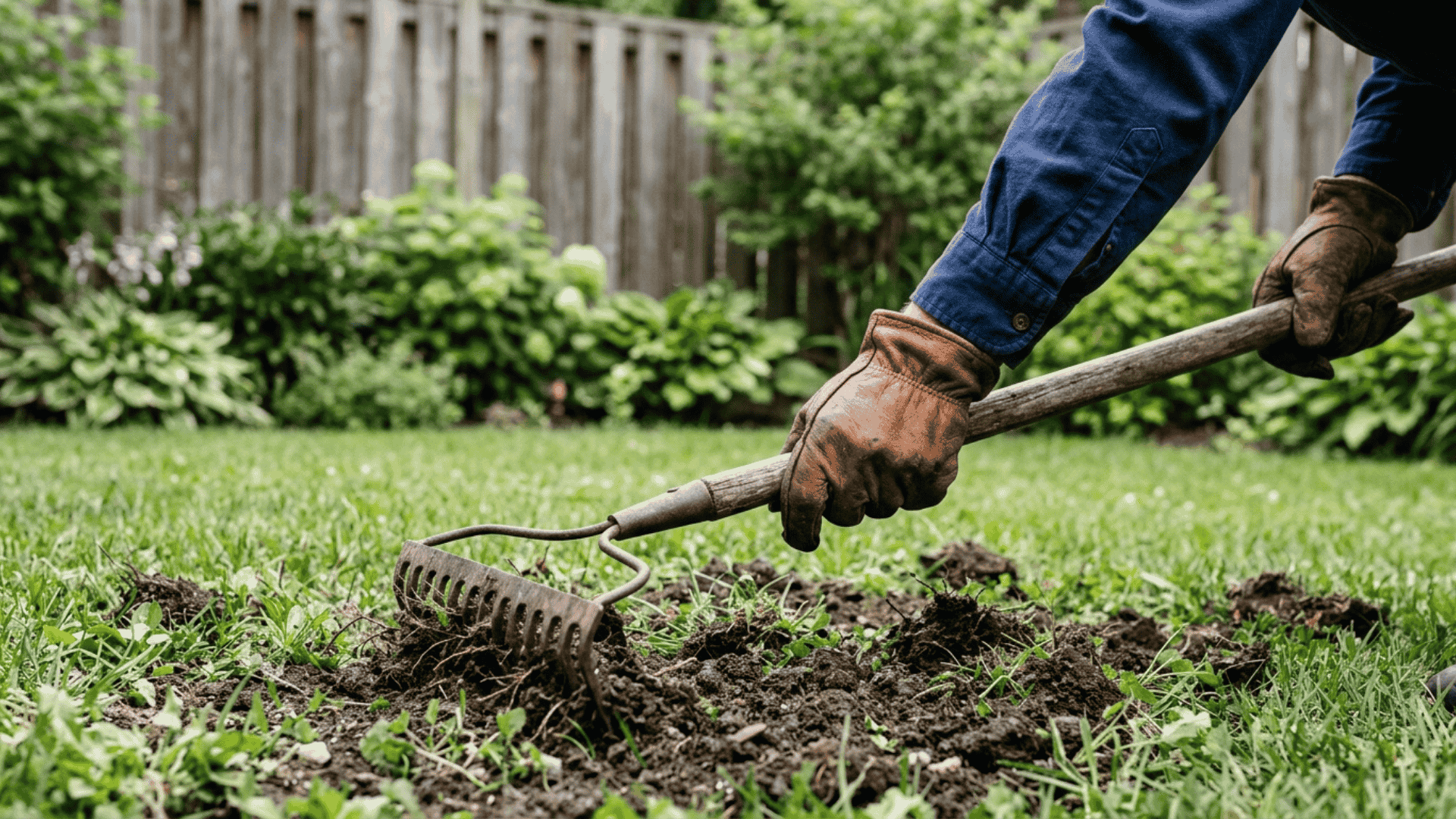
Loosening the top layer of soil is one of the most important steps in reseeding a lawn. Use a rake or aerator to break up the surface so seeds have room to sit and make contact with the soil.
Compacted soil makes it harder for seeds to take root. Even a light pass with a rake can make a noticeable difference.
The goal is to create small gaps in the soil where seeds can sit close to the ground and absorb moisture more effectively.
3. Spread Grass Seed Evenly

Load the spreader with the appropriate grass seed and walk at a steady pace across the lawn. Moving in straight, overlapping passes helps avoid gaps or heavy spots.
Pay closer attention to thin and bare areas. Those sections typically need a slightly higher seed concentration.
Inconsistent coverage is one of the main reasons lawns come back patchy, so taking time with this step leads to noticeably better results.
4. Cover Seeds Lightly

Once the seed is down, the next step in reseeding a lawn is to add a thin layer of topsoil or compost over the surface. This light covering protects seeds from wind, birds, and quick surface drying.
Keep the layer thin, roughly a quarter inch or less. Too much covering can actually block germination. The idea is to protect the seed while still allowing sunlight and water to reach it during the early growth phase.
5. Apply Fertilizer After Seeding

A starter fertilizer applied after seeding gives new roots the nutrients they need to develop quickly. Look for a formula designed specifically for new grass rather than a general-purpose feed.
Avoid using too much. Over-fertilizing at this stage can stress young growth before it has a chance to establish.
Follow the product instructions closely and distribute it across the seeded area to support consistent root development.
6. Water to Support Germination
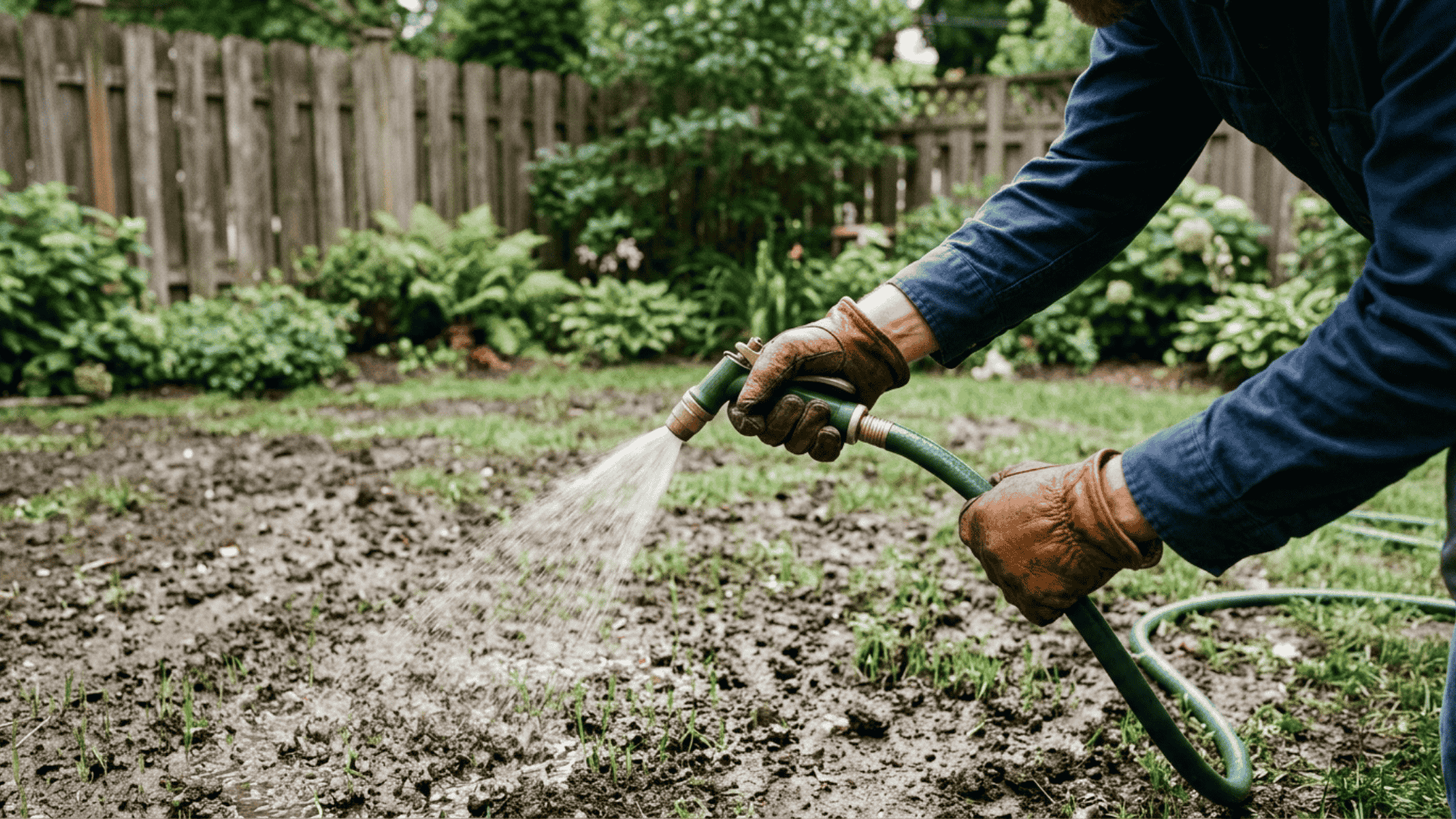
Watering correctly is a critical part of successfully reseeding a lawn. After seeding, water the area gently to avoid displacing seeds or washing them into uneven patches.
Consistency matters more than quantity at this stage. The soil should stay moist but not waterlogged.
Light watering once or twice a day, depending on weather conditions, is usually enough to keep germination on track until new grass begins to appear.
7.Expected Results After Reseeding

Within 2 to 3 weeks, new grass should start filling in the thin, bare areas. Early growth may appear lighter in color compared to the existing lawn, which is completely normal.
This difference fades as the grass matures. As new blades grow taller and roots strengthen, the lawn gradually becomes more uniform and fuller.
Patience during this period is important, as the pace of growth differs based on seed variety, soil quality, and current weather patterns.
Follow-Up Care Tips After Reseeding
Proper follow-up care after learning how to reseed a lawn is what separates lawns that recover well from those that struggle to establish.
- Water Lightly and Often: Keep the soil consistently moist, especially during the first 2–3 weeks. Avoid heavy watering that can wash seeds away.
- Avoid Foot Traffic: Stay off the lawn as much as possible to prevent disturbing new seeds and fragile sprouts.
- Mow at the Right Time: Wait until the new grass reaches about 3–4 inches before the first mow. Use sharp blades to avoid pulling young roots.
- Use Starter Fertilizer: Apply a gentle starter fertilizer to help new grass grow stronger and faster.
- Watch for Weeds: Remove weeds carefully by hand. Avoid harsh weed killers until the grass is well established.
- Adjust Watering Later: Once the grass starts growing, switch to deeper, less frequent watering to encourage strong root growth.
- Be Patient with Growth: Grass may take a few weeks to fill in. Give it time before expecting a full, thick lawn.
Conclusion
A lawn that looks thin or patchy doesn’t need to stay that way. Knowing how to reseed a lawn gives any homeowner a straightforward path to restoring density and improving overall growth without starting from scratch.
The process is straightforward when each step is carried out in the correct order: solid groundwork, careful seed application, and steady care through the early growth phase.
Results won’t appear overnight. But with the right seed, good timing, and steady aftercare.
The lawn can recover and grow back more evenly over time. Focus on the basics, stay consistent, and the results will come.

With a Master’s in Landscape Architecture from the University of Virginia, Sophia Stephenson has dedicated the last 20 years to creating and maintaining vibrant outdoor spaces. Her professional journey started in landscape design, where she gained a reputation for innovative and sustainable approaches. Sophia became a part of our editorial team as a freelancer in 2019, offering a fresh perspective on outdoor living. Since 2020, she has been the chief for our outdoor design content, blending aesthetic appeal with environmental stewardship. In her leisure time, Sophia is a keen photographer, capturing the beauty of natural landscapes, a hobby that complements her professional expertise.